





WHAT LEGENDS ARE MADE OF
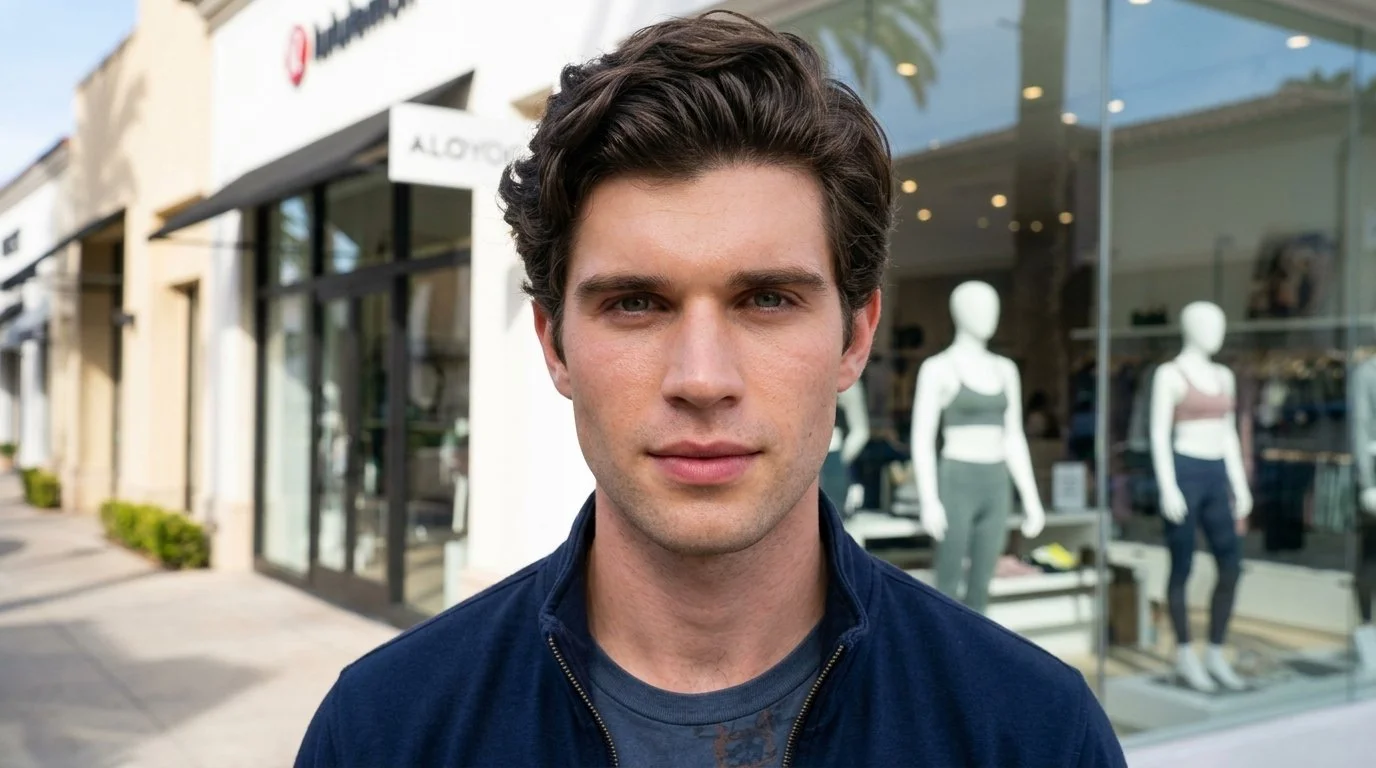
The attached photograph of David, taken by Mitchell Royel in the Fashion District, is presented independently and holds no official association with any pictured or mentioned brands. It is important to note that any depicted storefronts in the imagery are entirely fictitious and are not intended to represent or affiliate with any existing brands. Current background audio includes "U Miss Me" by Vicetone and "I Got U" & "I Got U (Instrumental)" by Nightcap and Vicki Vox, providing a fitting auditory accompaniment to the captured moment.
Here's what they don't put on the intake form. They don't tell us that the man who saved our life will do it in a fog so thick we can taste it, and then he'll be gone, and no one — not one single person on this earth — will ever fully understand what happened in that room but the ones who were there.
That's the deal. That's the fine print. We just don't read it until years later, when it's too late to change our minds.
There were two of them in the corner. The beat, the architecture, the words coming out like pressure finally released — that part's already been told. But not who they were. Not because it didn't matter. Because it mattered too much, and some things get held back until there's room for them.
The one keeping the beat was Black. Early twenties, maybe. Sharp eyes that missed nothing, a jaw set like he'd already decided the world wasn't going to get the last word. He kept that rhythm going with his mouth like it was the only steady thing in the building, and maybe it was.
The one freestyling was white. Skinny. Nervous energy that turned into something else entirely the second he closed his eyes and let the words go. In another life — the life he'd walked out of, same as the rest of us — he was probably the kid everyone assumed had it easy. Perfect lawn. Invisible pain. The only religion being looking fine from the outside.
Two kids from two completely different maps of America, and somehow they'd both ended up in the same fog-soaked room, at the same holiday party nobody wanted, making something out of nothing while the rest of us stood there like we'd forgotten how to be alive.
We want to be careful here. Because it would be so easy — so cheap, so Hallmark — to say they became brothers. To wrap it in tinsel and hand it over sparkling. But that's not what happened. What happened was quieter and stranger and truer than that.
They saw each other. That's all. In a place designed to strip a person down to the raw wire of who they actually are, those two saw each other clearly, and they built a beat out of it, and for five months that beat was the closest thing any of us had to a heartbeat.
Here's the thing about getting better. About clawing up off the twin bed with the hospital corners. Nobody sees the receipt.
They see the after. They see us show up to the wedding sober, steady, laughing at the right moments. They see the version that made it. And they think — if they think about it at all — good for him, glad he figured it out. Like it was a puzzle. Like we sat down one afternoon and just decided.
They don't see the fog. They don't see the paper cup shaking in our hands. They don't see the nights we lay there while the mountain on the poster looked back and whispered you'll never. They don't see the exact second something inside us — folded down and down and down until it had no shape left — remembered how to expand.
We internalize all of it. Every accomplishment, every impossible thing survived, gets filed away somewhere private, somewhere nobody's invited. Because how would we even explain it? How does a person tell someone at a dinner party that the single greatest thing we ever did was walk into a room that smelled like a dozen chemical flavors and stay? That we didn't run? That we let a stranger hand us a red drink and we drank it?
We don't. We can't. So it gets carried quietly. The full crushing weight of what was earned, kept sacred, kept private. We smile and pass the potatoes and nobody at the table knows they're sitting across from men who came back from the dead.
That's not a complaint. That's just the arithmetic of it. Some victories are too big and too strange to spend in public. So we hold them.
People throw that phrase around like it belongs in a movie trailer. The hero's journey. They picture swords. They picture the swelling music, the mountain finally climbed, the crowd on their feet.
They've got it backwards.
The hero's journey isn't the triumph. The triumph is the last ten seconds. The journey is the part before that — the part nobody films, because it's not cinematic, it's not sellable, it's a man alone in a room with industrial bleach and every wrong turn he ever made sitting on the edge of the bed, waiting.
The journey is the descent. It's the moment we leave the ordinary world — the perfect lawns, the two fingers instead of one — and cross into the place where the rules don't work anymore. It's the threshold. The welcome mat at the bottom. The laminated form. And then it's the trials, one after another, in a fog thick enough to wear, with strangers who somehow become the only people who've ever told us the truth.
And here's the part that guts us every time. Society does not respect the journey while we're in it.
While we're in the pit — while we're doing the actual, unglamorous, soul-scraping work of becoming someone who survives — we are not heroes to anyone. We are warnings. We are the names spoken carefully over drinks. We are the thing that happened to someone they used to know. Nobody claps for a man at his lowest. Nobody says look at the courage it took to walk through that door. They just lower their voices when our names come up.
We only knight the hero after. Once it's safe. Once the story has an ending clean enough to hang on a wall. We wait until the risk is over, until the outcome is guaranteed, and then we call it brave. We are cowards about courage. We only celebrate it in retrospect, when it costs us nothing to admit it was real.
The two kids in the corner were on the journey. Right there. In the fog. And the world outside that room would have called them a statistic, a cautionary tale, a couple of guys who ran out of road. The world had no idea it was watching two heroes at the exact center of the only story that will ever matter to them.
And then — because life doesn't do clean endings — we all went our separate ways.
Five months, and then the door swings the other direction. The white kid went first. Family came, a car in the lot, that awkward hug in a hallway, and he was gone back into some version of the world that would never quite believe where he'd been. The Black kid stayed a few weeks longer, then he was gone too, back into his own map, his own city, his own next chapter that none of us would ever read.
We didn't stay in touch. That's the honest part. We told each other we would — we always tell each other we will — but the beat that held us together only worked in that room, in that fog, and out here in the ordinary world it didn't have anywhere to land.
But here's what gets learned, and it's the strangest gift any of us carry.
They didn't leave. Not really.
They became legends. Not the kind put on a poster. The private kind. The kind that live in the sacred back room of the mind where no one else is invited. Thinking about those two freestyling through that impossible haze — the beat with its tension and release, the words like a sealed door finally opening — they've grown into something bigger than the men they actually were. Mythologized. Polished by memory into something untouchable.
And we let them be. Because we all do this. We all keep a handful of people, a handful of moments, enshrined in a place where time can't touch them, where they never age, never disappoint, never become ordinary. The night that changed everything. The stranger who saw us clearly for one impossible second. These things stop being memories and start being legend — the story we tell ourselves about who we are and what we're capable of surviving.
Maybe that's the only immortality any of us actually get. Not statues. Not clean endings. Just a permanent room inside somebody else's head where we get to keep being the best version of ourselves forever.
THE FOG, AGAIN.
So here's where we land, all these years down the road from that twin bed and that mountain nobody ever did climb.
We think about the fog. That thick, sweet, chemical curtain rolling in slow soft waves across a room strung with dollar-store snowflakes and a plastic tree doing its absolute best. We think about the beat. We think about the man who threw his head back and laughed — a real one, a full one, the kind that can't be manufactured — and how in the one place on earth where it felt most certain we'd only ever be a punchline, someone laughed with us and not at us, and something inside remembered how to expand.
We think about the paper cup of something red. How it was held. How by the time it was empty, the whole verdict had quietly changed.
We walked into that room to serve a sentence. Two kids in the corner turned it into the first honest thing that had happened to any of us in longer than we could remember. And then they walked out and became legends, and we became people carrying a victory too big to ever fully explain at a dinner table.
That's the journey. Nobody respects it while we're in it. Nobody sees what it cost. But we know. We always know. We carry the fog and the beat and the two kids who never even knew they saved us, and we keep them sacred, and we keep going.
It wasn't an ending.
It never was.
It was the first night of something that still doesn't have a name — and we've stopped needing one. Some things don't get named. They just get carried.
Quietly.
Enormously.
Forever.
-Deck, M.R, Mitch Leyor Collective
THE MOUNTAIN IN THE POSTER ISN’T MOVING
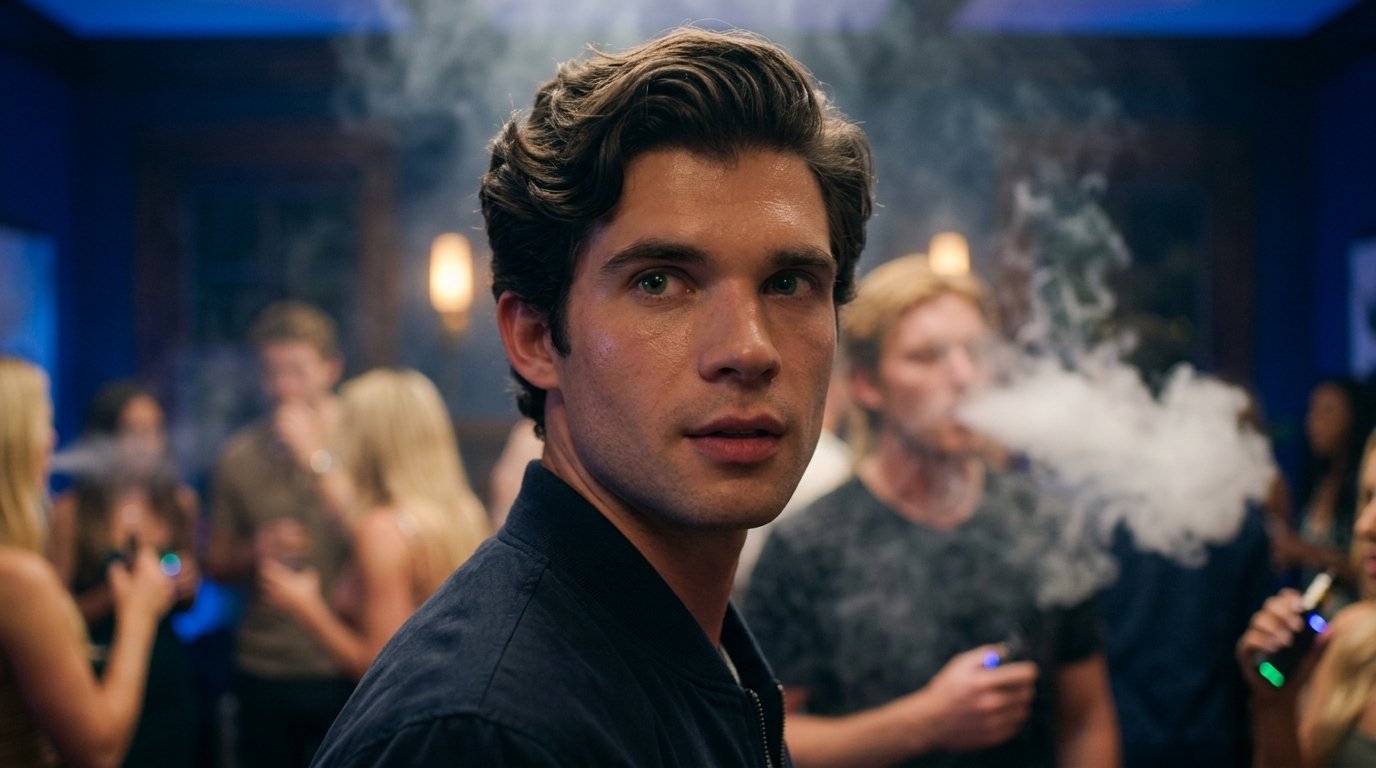
The photograph of David, captured earlier this evening in the vibrant Fashion District, was skillfully taken by the talented Mitchell Royel. It beautifully encapsulates the atmosphere and energy of the location, blending artistry and authenticity. Tonight, as we admire this stunning image, we're immersed in the music of "Down Low" featuring Upstates by Erik Charles. The track provides the perfect backdrop, with its evocative melodies and dynamic rhythm enhancing the mood. Upstates has reimagined the composition, adding layers of depth and creativity to the original sound, crafting a musical experience that resonates deeply and complements the visual artistry of the photograph.
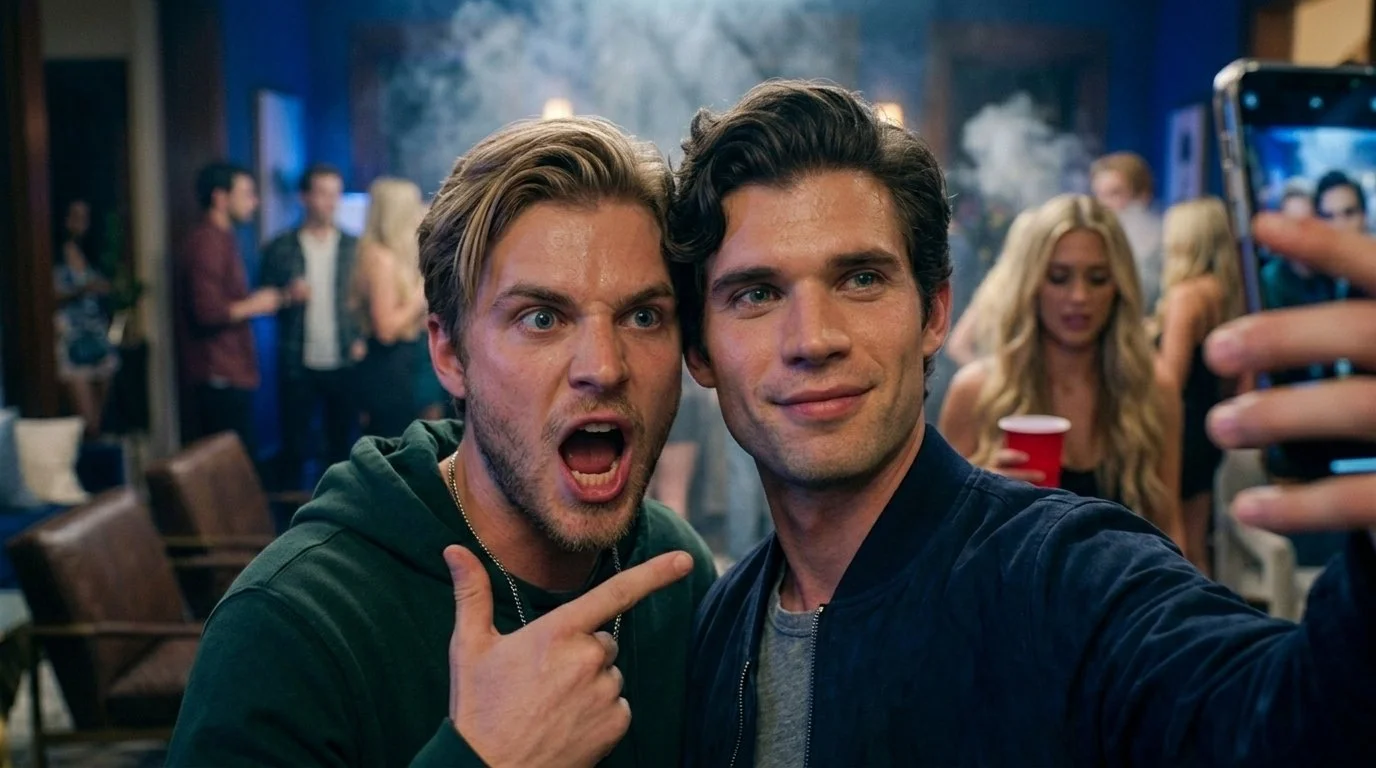
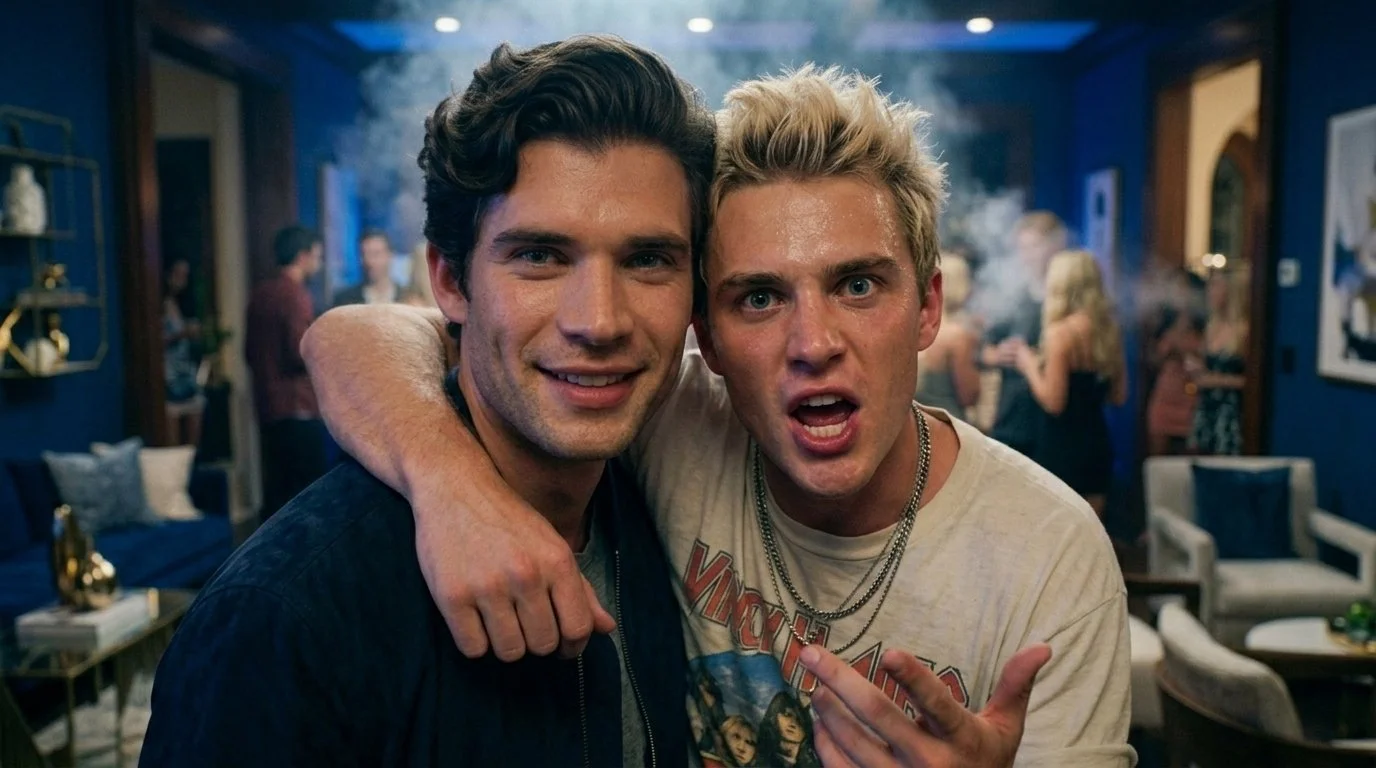
So here's the thing nobody tells you about hitting rock bottom: the bottom has a welcome mat. And a laminated intake form. And a man behind a desk who hands you a folder with the dead-eyed efficiency of someone who has seen a thousand versions of you walk through that door and will see a thousand more. He doesn't flinch. He doesn't ask how you're doing. He staples something, slides it across the counter, and says someone will show you to your room. And that's it. That's the ceremony.
I'm from the suburbs. You know the kind. The kind where the lawns are perfect and the pain is invisible and everything looks fine from the outside because looking fine from the outside is the only religion anyone actually practices. Men from where I'm from don't go to rehab. They don't go anywhere. They manage. They cope. They compartmentalize with the quiet discipline of men who were raised to believe that naming a thing makes it real. They pour two fingers instead of one and call it a long week and they sit across dinner tables from their fathers and their brothers and every single one of them is drowning and no one says a word because saying the word would mean it's true.
And then one day you're not managing anymore. One day you're sitting on a twin bed with hospital corners in a room you didn't choose, staring at a motivational poster of a mountain you will never climb, and the thought arrives — not loud, not cinematic, just quiet and enormous and completely devastating — this is it. This is the all-time low.
Not the dramatic kind. Not the kind you could show someone and have them understand immediately. The quiet kind. The sitting-alone-in-a-room-that-smells-like-industrial-bleach-and-other-people's-wreckage kind. The kind where the silence is so total that your own history starts talking. And it has a lot to say. Every decision. Every moment you chose the wrong thing or the easy thing or the thing that felt like relief and turned out to be a door you couldn't find your way back through. They're all in the room with you. All of them. Sitting on the edge of the bed. Waiting.
And you know — you know — that somewhere out there, someone who used to sit next to you in some former version of your life is saying your name right now. In that tone. The one that means the story doesn't have a clean ending. You are the cautionary tale now. You are the name that gets spoken carefully over drinks at a bar you used to go to. You are the thing that happened to someone they used to know. You are the warning.
I sat there for what felt like a very long time. Just me and the mountain and the full, crushing weight of every single thing I had ever done echoing off four walls that had heard it all before and would hear it again.
Then there's a knock at the door. A man from the staff. Says there's a holiday party.
A holiday party. At a rehab facility. Like we're supposed to hang tinsel and feel something other than the specific, bone-deep agony of being exactly where we are, surrounded by strangers, twenty-four hours into the rest of our lives. Like we're going to sip something sparkling and make conversation and feel, even for a second, like normal men doing a normal thing.
So I go. Because the alternative is sitting alone with the mountain and I have already done that, and it did not help, and I have five months ahead of me in this place and I cannot spend all of them on that bed.
I walk in and the first thing that hits me is the smell. Not what I expected. Not food, not pine, not the ghost of something alcoholic. Sweet. Chemical. That thick, synthetic, vapor-cloud fog that hangs in the air like a curtain nobody asked for, rolling in slow soft waves across a room strung with dollar-store decorations and paper snowflakes and a plastic tree in the corner that is doing its absolute best. The smell of a dozen different flavors all layered on top of each other, thick enough to wear.
And through it — through this genuinely impossible amount of haze — there are two men in the corner.
Freestyling.
I need you to understand what I mean when I say that. Not mumbling. Not goofing around. Not two guys doing a bit for the group. Freestyling. One of them is doing the beat with his mouth — and it is tight, it is structured, it has architecture, it has tension and release — and the other one is going. Full commitment. Eyes closed. Words coming out of him like pressure that had been building behind a sealed door for years and someone finally turned the handle.
And I'm standing in the doorway of this surreal, fog-soaked, tinsel-lit room, twenty-four hours into the worst chapter of my life, and my brain does that thing where it just — breaks. Cracks clean down the middle. Because these are my people now. For five months. Five months of my one actual life. And they are in here doing this. And I don't know whether to laugh or sit down on the floor.
The dissonance was physical. I felt it somewhere between my throat and my sternum. This impossible gap between the life I had walked out of and the room I was standing in. Between the man I thought I was and whatever I was becoming.
I stood there longer than I should have.
And then something happened that I was not remotely prepared for.
I started listening. Really listening. And the man doing the freestyle was good. Not rehab good. Not "impressive given the situation" good. Not the kind of thing you qualify or contextualize. Just — genuinely, undeniably, embarrassingly good. The kind of good that makes you recalibrate. The kind of good that makes you feel, briefly and unexpectedly, like you are witnessing something.
And the man keeping the beat catches my eye through the haze and gives me this nod. Not the nod you give someone you feel sorry for. Not a polite, social, I-see-you nod. The nod you give someone who has just walked into something and is now part of it whether they meant to be or not. You're here. You're in the room. Welcome.
Someone — I don't know who — hands me a paper cup of something red. I take it. I hold it. I say something — I genuinely could not tell you what, some reflex, some muscle memory of being a person in a room with other people — and the man freestyling laughs. A full one. Real and unguarded and total, head thrown back, the kind of laugh that comes from the body rather than the performance. The kind you can't manufacture.
And I felt it.
That surge. That thing that lives below thought and below language and below every story you've ever told yourself about who you are. Like something that had been compressed inside me for years — folded down and down and down until it had no shape left — suddenly remembered what it felt like to expand. Someone laughed with me. Not at me. With me. In the one place on earth I had been most certain I would only ever be a punchline. And I was in the conversation. Completely in it. Leveled with it. Not the managed, performing version of me. Not the man from the suburb that built me and never thought to ask if I was alright. Not the cautionary tale. Not the quiet disaster in a room with hospital corners. Just a man. In a fog. In a room. Present. Alive to the exact moment I was standing in.
Five months. With these men.
Two strangers in a corner. A beat. A paper cup. A fog so thick you could almost hide in it.
And I remember thinking — and this is the part I still can't fully explain, the part that doesn't reduce down to something clean or logical — these men are it. The real thing. More honest, more present, more genuinely and uncomplicatedly themselves than anyone I had sat across from in years. Men who were not managing. Men who were not coping. Men who had run out of road and ended up here, same as me, and had somehow found a way to freestyle through the fog at a holiday party in a rehab facility and make it mean something.
Men who had stopped pretending.
Men who were, against every reasonable expectation, in it.
I had walked into that room ready to serve a sentence.
I stood there in that fog and started to understand that maybe five months wasn't a punishment. Maybe it was the first honest thing that had happened to me in longer than I could remember.
By the time that paper cup was empty, the verdict had changed.
It wasn't an ending.
It was the first night of something I didn't have a name for yet.
-Deck, M.R, Mitch Leyor Collective
Epilogue: And that’s the thing we have to realize—we have to hit the bottom before we can start building back up. Because when we’re at the bottom, there’s no more pretending. No more posturing. It’s just us, stripped bare, face-to-face with who we’ve become. And that’s where the work begins. That’s where transformation is born. Not in the comfort zones, not in the echo chambers where we tell ourselves easy truths, but in the moments when everything is quiet, and we hear the unvarnished reality of our choices.
Scripture says, “Weeping may endure for a night, but joy cometh in the morning” (Psalm 30:5). And that’s not just poetic sentiment—that’s a map. That’s a promise. When we’ve been broken open, when the night feels endless, that’s actually where the seeds of morning are planted. Not beyond the pain, but through it.
What we realized in that fog—us, together—was this: We were not defined by our worst mistakes. We were not doomed by our darkest chapters. We were not the cautionary tales they whispered over drinks. We were men in the room. Men in the room. And showing up, fully in it, even when it hurt like hell, was the battle cry we didn’t know we needed.
Because we’ve got this one life, and we’ve got to live it fully. We owe it to ourselves to show up, to stop managing, and to start thriving. And, my friends, that starts with presence. That starts with admitting that we don’t have it all figured out, but we’re here, we’re in it, and we’re moving forward together.
AT THE EDGE OF HIMSELF, FREEDOM POINTS AND LAUGHS LIKE A COLD HYMN
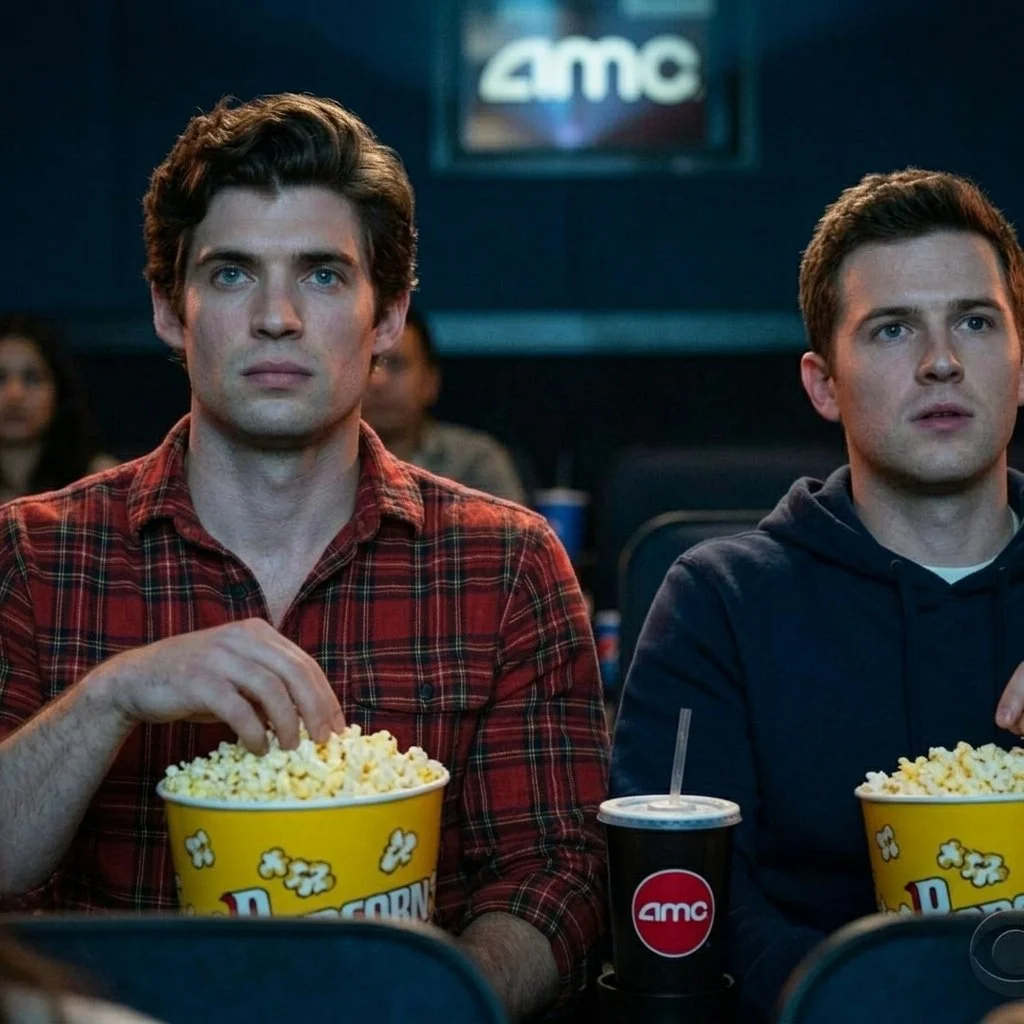
The following photographs of David were taken earlier today, August 11th, 2026, by Mitchell Royel amidst the vibrant and bustling atmosphere of the fashion district. The energy of the location perfectly complemented the creative vibe of the shoot, with the dynamic and sultry soundtrack of "Wild Side" by Normani featuring Cardi B playing in the background, setting the mood for the day. It’s important to note that this content is entirely informal and not officially affiliated with or endorsed by Marvel or AMC Theaters, but it captures a moment of artistic expression and individuality in an iconic setting.
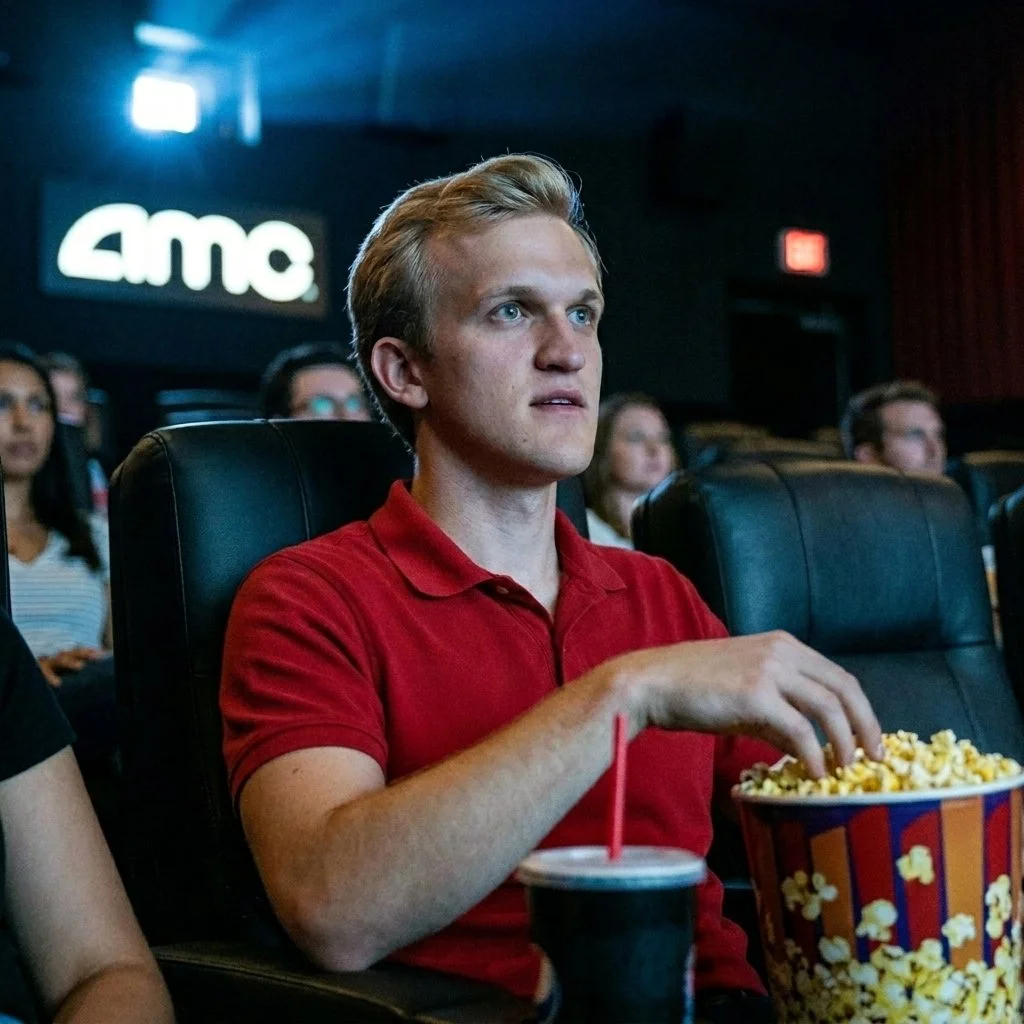
You want to know the truth about recovery? Nobody tells you the truth. They give you the poster in the hallway. The one with the sunrise and the mountain and the word HOPE in a font that looks like it's smiling at you. And every morning, the guys walk past that poster on their way to relapse, or redemption, and half the time nobody knows which one they picked until it's already done.
I don't run a house anymore. That's the thing. I moved up. District management. Which sounds like a promotion until you understand what it actually means — I'm responsible for all of them now. Every house. Every bed. Every man trying to stitch himself back together under a roof we own. I get the reports. I get the calls at 2 a.m. I send people in. I'm the one watching from a distance, which means when something goes wrong, I feel it in reverse — I feel the ending before I get the story.
That's a different kind of weight.
Because I can't stand in the doorway anymore. I have people for that. We call it district security, which is a clean name for a complicated job. Eyes and ears. Men and women who move through the houses so the residents know someone is always paying attention, even when the supervisor steps away. We sent one of ours out with them that night. A member of the district security team. Professional. Steady. The kind of person you trust with the fragile parts of this work.
And still. Still.
Here's what they don't understand about this work, even at the district level. The hard part isn't detox. Detox is chemistry. You sweat, you shake, you scream into a pillow, and eventually your body forgives you. No. The hard part comes later. It comes with freedom.
Because when they step down into outpatient, the doors open. The leash gets long. They can go to work. They can walk to the corner store. They can sit in a movie theater in the dark like normal people. And that's the moment I hold my breath — even from a distance, even watching through reports and texts and phone calls. Because freedom in recovery isn't a gift. Freedom has teeth.
Let me tell you about a night.
Two of them wanted to see a movie. That's all. Two housemates, a ride, a Tuesday. We knew about it. We approved it. We sent someone with them — our district security contact, there to observe, not to babysit. Because that's the line, isn't it. You can't rebuild a man while treating him like a prisoner. So we said yes. We told ourselves, let them breathe.
One of them was the Black kid — and I use those words deliberately, because I want you to see him the way that house saw him, the way this country trained everyone to see him. Nineteen. Quiet. Carried himself like he was apologizing for taking up air. The other one was white, older, louder, the kind who fills a room so nobody notices he's empty inside.
They bought one popcorn. One drink. Shared it. Two people trying so hard to feel human again they forgot to be careful. Our person was there. Watching. And somewhere in the second act, the Black kid gets up. Bathroom break. Thirty minutes. Thirty. In the dark, on the top row, with the whole theater flickering blue.
The text came in to the house supervisor first. Then it got routed to me. Something feels off. That's all. No proof. No incident. Just that hum — the low, ugly hum that every person in this field learns to recognize. I've been doing this long enough that I know: when someone from the district security team says something feels off, you don't go back to sleep. The night wasn't finished. The night was still writing itself.
The ending came home with them.
Shared bedroom. Bunks pushed close. Too many men, too little floor, too much history stacked in the corners like dirty laundry nobody claimed. And then — voices. Rising. That specific pitch a fight hits right before it stops being about words.
And the white kid spit on him.
Spit. Think about that. Of all the weapons a man has — fists, knives, silence, cruelty — he reached for the oldest one. The one soaked in a hundred years of history. He didn't just insult the kid. He reached back through time and pulled up something rotten and put it on that boy's face. And they both knew exactly what it meant. You don't have to say the word when you use the gesture. The gesture is the word.
The Black kid came down those stairs like something inside him had already died and was just now finding out. Not crying. Worse than crying. That flat, terrible calm. Because he'd been here before, hadn't he. Not this house. Not this night. But here. This exact humiliation, wearing a new face.
By the time I got the full report, the house had already moved. Unofficial meeting. The living room. That sagging couch, those buzzing lights that make everybody look half-dead. A circle of broken men, and one of them on trial. The Black kid at the center — not as victim now, but as prosecutor. The white kid cornered, surrounded by the weight of every man in that room who had their own story about being made to feel small.
And here's where it gets dark. Because they weren't wrong to call it out. But watch what a room like that does. Suddenly every man there has a role to play. It's easier to point than to look. Easier to burn one man than to sit with the fire in your own chest.
From district, we can see patterns that the house staff sometimes can't. I've watched this dynamic play out across multiple properties, multiple cities, multiple demographics. And what I know — what I know — is that race never signed itself in at intake. It doesn't show up on the program records. But it lives in every house we run. It sits down at the dinner table. It shares a bedroom. It waits in the dark of a movie theater while one boy stays gone too long and another boy decides that's his moment to reach for something ancient and ugly.
That's the thing about these places. We tell people to leave their old selves at the door. But nobody leaves anything at the door. They drag it all in. The trauma. The pride. The color of their skin and everything the world attached to it before they could even speak. You think a man forgets he's been feared, followed, spat on — just because he got sober? Sobriety doesn't erase the wound. It just takes away the thing he was using to numb it.
So now he feels everything. Every old slight. Every closed door. Sober and awake to it, for the first time in years. That's not peace. That's a reckoning with the lights on.
And that white kid — I don't get to write him off as a monster from my desk. That's the cruelty of this work, at every level. He was a wounded man who did a hateful thing. Both true. Recovery doesn't hand you villains. It hands you mirrors. And God, do we hate mirrors.
So what's the job? At district level, the job looks different. It's protocols. Incident reports. Accountability structures. Deciding whether someone gets another chance or gets removed. It's hard conversations with house supervisors about how to hold this kind of thing without the whole building fracturing. It's asking the security person who was there, what did you see, and when did you see it, and what did you do?
But underneath all of that, the real question is still the same one it's always been.
What do you do in the second after?
After the spit. After the insult. After the whole room turns and demands you become something. Do you reach for the old weapon, the old mask, the old war you were raised inside? Or do you — somehow, impossibly — choose different?
Because out there, nobody stops the movie. Nobody routes a text to district management. Nobody sends someone from security to stand in the corner and make sure you stay human. Out there, your restraint is your sobriety. Your honesty is the only wall between you and the dark. And a man carrying the weight this country put on his shoulders has to stay sober and stay dignified in a world that keeps testing both — simultaneously, without mercy, without pause.
That's the part nobody puts on the poster.
Recovery isn't the sunrise. Recovery is the night. It's what you find out about yourself when freedom finally opens the door — and every ghost you ever ran from walks in behind it.
Who are you then.
From where I sit now, I can see across multiple houses, multiple lives, multiple versions of the same night. And I'll tell you what district management really is. It's not administration. It's not compliance. It's being far enough away to see the whole picture — and close enough to know that every single one of those houses holds a boy who came down a flight of stairs with something broken on his face.
That's the only thing this work is ever really about.
And most nights, God help us — most nights we don't know the answer until it's already been spoken. In spit. On a boy's face. In a living room full of the walking wounded, all of us — from the bunk to the boardroom — pretending the fire in the middle of the room isn't ours too.
-Deck, M.R, Mitch Leyor Collective
Epilogue: We want to tell you the truth about survival — about recovery, about healing, about relationships. The truth they don’t package in seminars or wrap up neatly in a catchy slogan. It’s this: the fire tests everything. It lays bare the fragile threads of friendship tied together through pain, the unspoken dynamics holding a group together by the smallest shred of hope. Tense situations don’t hide the truth — they uncover it. They bring to light the cracks buried beneath the surface, the jagged edges we thought we’d left behind but somehow still carry.
But here’s the thing. When we zoom out, when we rise above the smoke and ash, we see what the fire has done. It doesn’t destroy without purpose. It burns away the illusions, the convenient lies, the masks we’ve worn for too long. And what it leaves is something true. Something we can build upon. Proverbs 17:3 says, “The crucible for silver and the furnace for gold, but the Lord tests the heart.” This isn’t simply about judgment — it’s about transformation. It’s about stripping us down to the core, to a place where clarity lives, maybe for the first time.
Every boy behind those doors, every man still carrying the weight of years of shame — they are both the test and the answer. The fire isn’t asking for perfection. It doesn’t demand flawless relationships or unshakable dynamics. It asks for something much harder: resilience. A will to keep going. A sliver of faith in each other to push past the spit, the scars, the wounds we all share. Because survival isn’t a theory on a glossy poster. It’s a choice. Every single day. It’s choosing to ignite the fire within and search through the ashes for something worth saving, something worth building on. Always.
PANIC ATTACKS DON'T ASK FOR PERMISSION
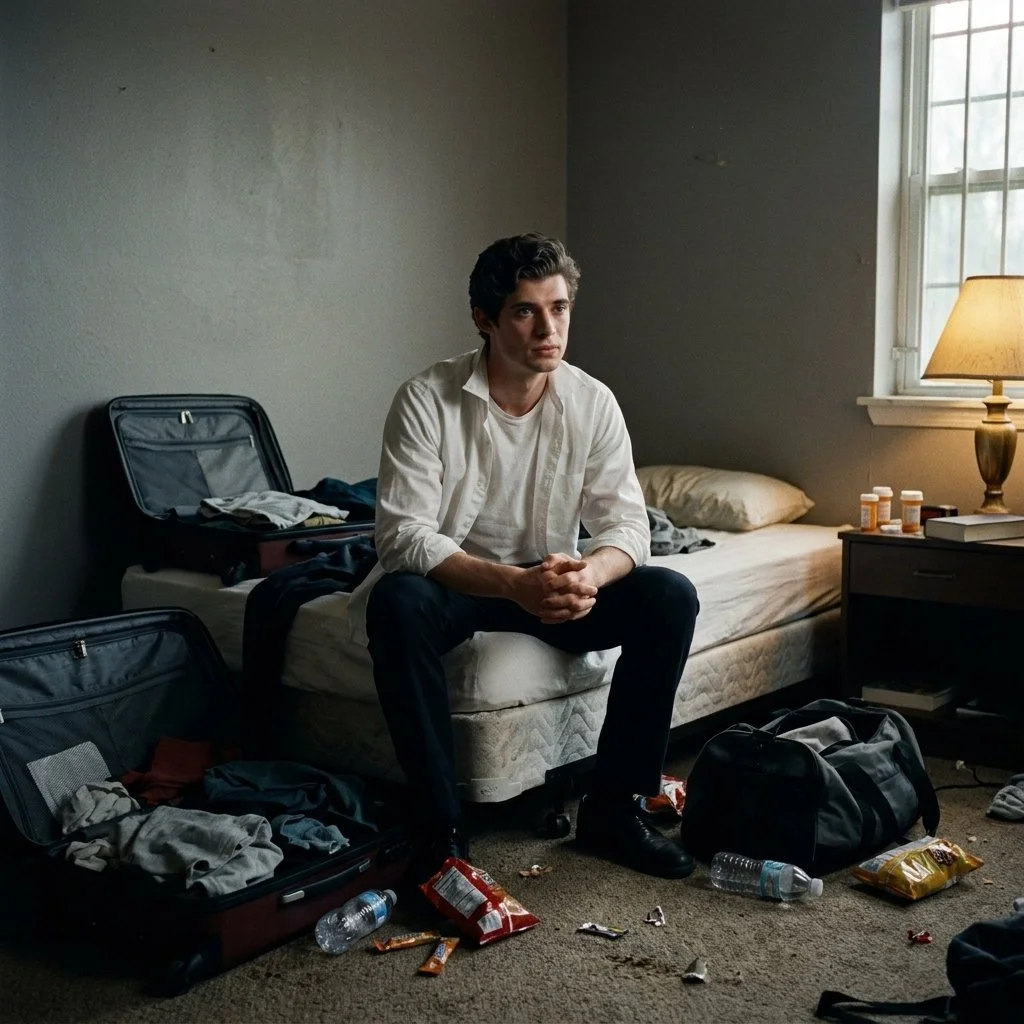
Captured on August 9th, 2026, these striking shots of David come alive through the evocative lens of Mitchell Royel, framed by the gritty charm of the Fashion District. The air pulsed with an electric energy, raw and magnetic, as if the city itself was breathing alongside them. The soundtrack told its own story, blending the soulful ache of "Sad" by Rasster & Erin Bloomer with the unstoppable rhythm of "Roses - Imanbek Remix" by SAINT JHN. This was more than a photoshoot—it was a fusion of high fashion and unfiltered edge, a place where the visceral meets the glamorous and refuses to apologize.
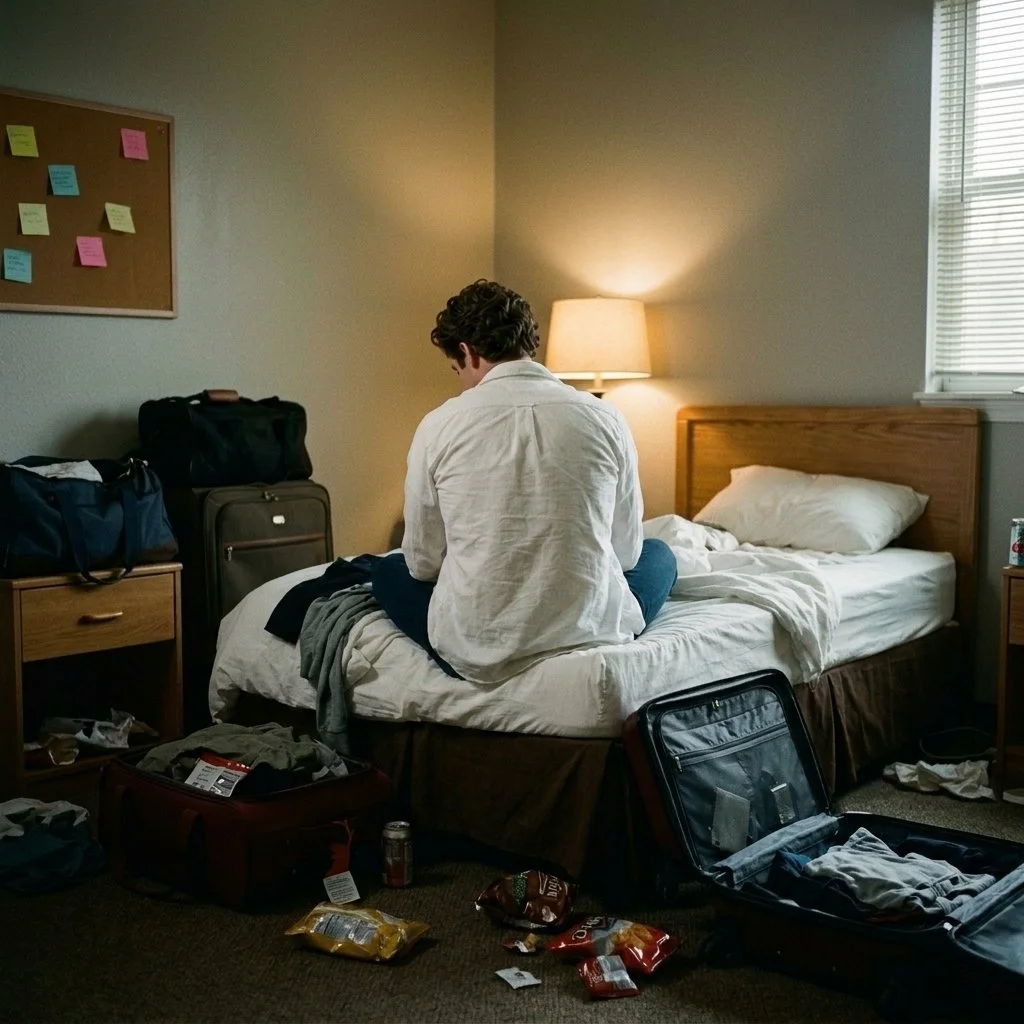
He was frantic, his hands trembling as he shoved shirts and jeans into the tattered duffle bag that had seen better days. The zipper snagged on a sleeve, and he yanked at it too hard, the way you do when your whole body is running faster than your mind can catch up. His breath came shallow. He kept whispering to himself, not words exactly, just soft sounds meant to steady the shaking, the kind of humming his grandmother used to do over a stove on Sunday mornings. He wasn't angry. That was the thing nobody here seemed to understand. He wasn't trying to cause trouble. He just knew, in the quiet marrow of him, that he wasn't supposed to be here.
The payphone in the hallway loomed in his mind like a beacon — his lifeline to whatever salvation waited on the other end. The other guys said the phones were tapped, that every call was just another way they kept their claws in you. But at that moment, he didn't care. Dinner was noises down the hall — the clatter of trays, too-many voices dying into nothing as someone banged a fist on the table — and he couldn't risk being caught in this liminal moment. His heartbeat was the only thing he could hear above the chaos, pounding, compounding, as if saying, Hurry, hurry, hurry.
The hallway was cold, sterile, its faint smell of antiseptic cutting through the traces of fried food and cigarettes that clung to the walls of the rehab. He darted to the small black payphone in the corner, the one beneath the flickering fluorescent light that buzzed audibly, like a fly caught somewhere it shouldn't be. He understood the feeling. His fingers fumbled with the coins — it was always three, they said, seventy-five cents for a voice on the other end. He pressed them one at a time into the slot, and each little clink felt like a small confession.
He dialed the number by heart. He always knew that number, even when he couldn't remember what day it was, even when the medication made the edges of things go soft. The line rang, and rang, and folded over into that recorded voice that wasn't a person at all. His own voice cracked as he spoke, sweet and small, like a boy asking permission for something he already knew the answer to.
"Hi. It's me. I know it's late." A pause. He swallowed. "I don't — I think there's been a mistake. I don't think I'm supposed to be here. I'm not saying anything's wrong with the place, it's nice, the people are nice, it's nothing like that. It's nothing personal." He wiped his face with the back of his hand. "I just don't feel right in here. I don't feel stable. I feel like the longer I stay, the further I get from myself." His voice dropped to almost nothing. "Please. Just get me. Pick me up. Before it's too late."
But who was too late for? Himself? His family, who had signed the papers with faces he couldn't read? The counselors he imagined taking a smoke break outside the staff lounge, leaning against the brick, speculating in low voices whether God could save this one? He hung up gently, the way you set down something breakable, and stood there a second longer than he should have, listening to his own breathing come back to him.
By the time he got back to his room, bag slung heavy on his shoulder, there he was. The big guy. Thirty-something. Jailbird kind of type, thick through the shoulders, ink on his forearms gone soft blue with age — but with kind eyes. The kind of eyes anyone would've killed for growing up in a place that asked them to be brutal just to survive middle school. He stood in the doorway, arms folded, muscles taut, like the room wasn't small enough to contain two people and all their baggage.
"It's called a reservation," the guy said. No expression. Like someone delivering a script he'd memorized a hundred times over, on a hundred different boys who looked just like this one. "When you keep packing your shit up and telling the counselors you're leaving. Or that you need to leave. You don't want to leave. You just want an excuse to fail before somebody else gets the chance to make you."
The boy loomed over the bag on his made bed — the pristine hospital folds he hadn't cared about until now looked suddenly too neat, too final, like something laid out for a body. His mouth opened like he might have a rebuttal. He wanted to be respectful about it. He always wanted to be respectful. That was how his mama raised him, to be soft-spoken even when the world came at you hard.
"I hear you," he said finally, and he meant it, because he did hear him. "I'm not trying to argue. I really am grateful for what y'all do here." His hands turned over each other, gentle, apologetic. "But I think somebody got something mixed up. I think I got brought here by mistake. And I don't — I don't feel stable in here. That's all. It's not about you. It's not about anybody. I just want to get somewhere I can breathe right again."
The big guy didn't move. If anything, his voice got quieter, which was worse than louder.
"I'm telling you. It's called a reservation." He let it sit in the air. "What you're doing right now — this, the bag, the phone, the mistake — it's typical. It's normal, actually. Everybody in here has stood exactly where you're standing, saying exactly what you're saying, in that exact same nice little voice." His jaw worked once. "But you need to stay. At all costs, man. You need to stay."
"You don't even know me," the boy said. Too small. Too quiet. Like the words didn't belong inside the walls of this place, like they'd get swallowed by the paint before they ever reached the other man.
But the big guy only smiled faintly. Not cruel. Sad, almost. Like he'd known dozens just like him — another reservation kind of kid, already halfway to ruining himself, still sweet enough to think sweetness was a way out. Still salvageable, if somebody stubborn enough refused to let go of him.
"I know you better than you want me to," he said. "That's the whole problem. You're not running from this place. You're running because staying means sitting still long enough to feel it. And I'm telling you one more time so you never forget I said it — you need to stay."
The boy looked at the bag. Then at the window. Then down at his own hands, which had finally stopped shaking, though he couldn't have said when. For a long moment he didn't say anything. He just breathed, the way his grandmother taught him, soft over an imaginary stove.
And a few days later, the staff had their turn.
He didn't fight them. That was the part that would sit with the big guy longest afterward — how gentle the kid stayed, right up to the end. Two men in white escorted him down the hall, past the flickering light and the little black payphone, out toward the psych ward where no one would ask him if he wanted to leave. Instead they promised quiet observation. Weeks of nothingness to fix whatever was cracked inside. Then back here for another month.
Maybe more.
-Deck, M.R, Mitch Leyor Collective
Epilogue: We speak of these places like they’re prisons, but they don’t chain us. They don’t hold us. Not really. The real chains are the ones we drag behind us — invisible and relentless, clinking with every step no matter how far we run or how fast we move. We walk into these walls desperate for escape, not realizing the escape we need isn’t to the outside, but to the inside. The mirror hurts. Too fragile to look in too long, too sharp around the edges to touch. We spend years avoiding it, convincing ourselves it’s somebody else, something else, some mistake. But the truth is, it’s just us. Just our own faces staring back, waiting. Places like this — call them rehab, psych ward, jail to the softer — they’re not the solution. They’re the pause. And it’s not the kind of pause where you exhale and step away, reset and revive. No, it’s the kind that makes you sit down in the dirt and stabilize. The kind where you finally face the truth sitting heavy in your chest.
Some of us don’t make it past that pause. That’s the reason nobody comes here to heal clean — it’s messy and raw, and most of the time it looks more like breaking than rebuilding. But every now and then, someone stays. Through the nights that feel like punishment and the mornings that crack open just enough to brush light across your scars, they stay. They prove the rest of us wrong. Not by surviving, but by reckoning. By taking the mirror in their hands and holding it steady until they see something they recognize. Something worth saving. We want to believe everyone can do the same. But we know. We’ve always known. Most never stay long enough to try.
SUPERMAN WAS NEVER OURS TO KEEP
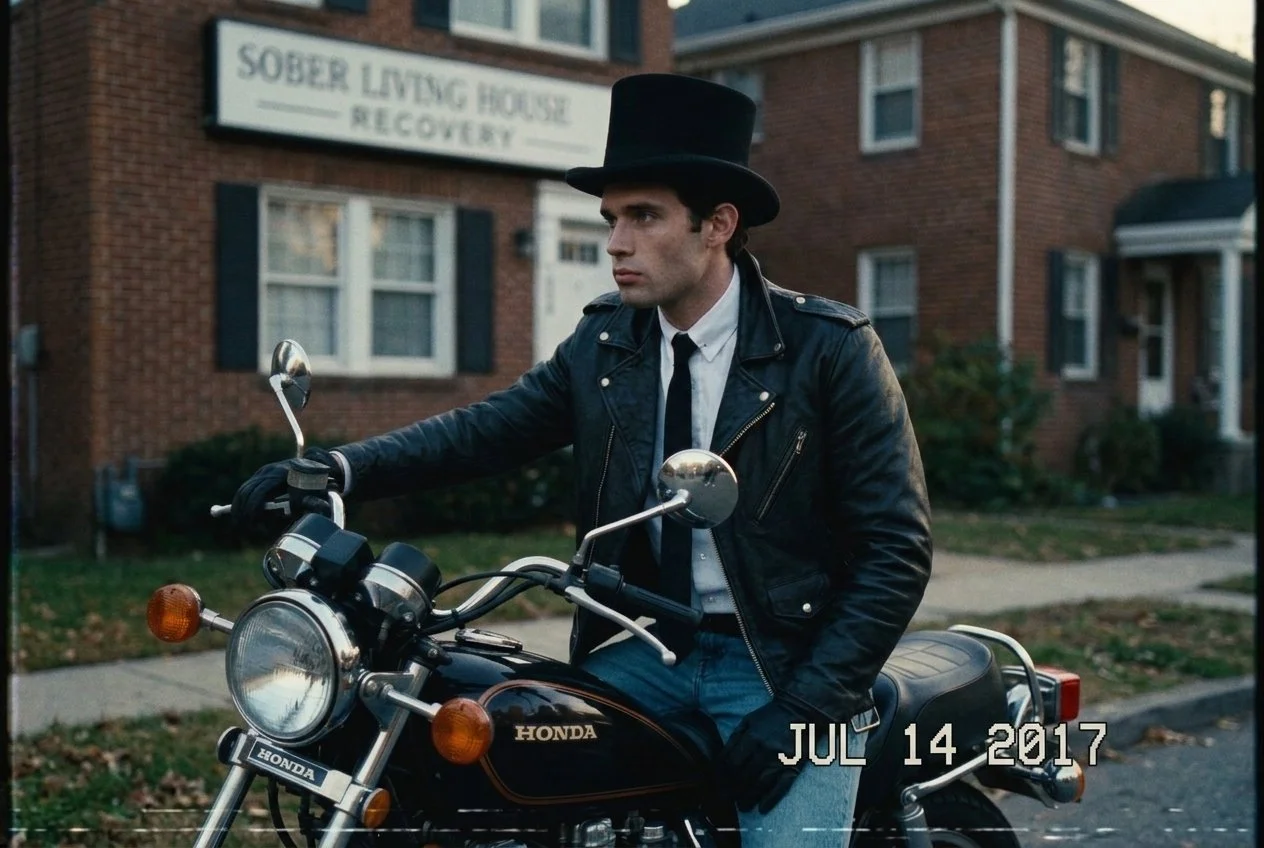
These photos of David — yeah, these photos, the ones you can’t stop staring at, the ones that look like they’ve been pulled straight out of someone’s fever dream — were captured out in the fashion district today, August 8th, 2026. And wouldn’t you know it, they were shot by none other than Mitchell Royel, the man with the lens that seems to unlock something raw, something unvarnished, something that feels like it was always there, hiding just under the surface, waiting to be found. And as we sit here, caught in the haze of it, the pulse-thrum of “Beat of Your Heart” by Purple Disco Machine and ASDIS playing like it’s the only soundtrack that could possibly fit, you can almost feel the streets humming, the air electric. You know the kind of day—late summer heat blistering through concrete, and everything around you feels sharp-edged, alive, like it could cut you and draw blood just to remind you to feel. These photos aren’t just images; no, they’re a collision, a rupture of quiet moments and that chaotic noise that never seems to stop, pressing in, turning over, and for once, you don’t mind drowning in it. Because isn’t it the beat of our hearts, the messy, imperfect rhythm of being alive, that makes all of this strange magic worth it? The kid in the corner of the frame, the shadows burned across his face, the light catching and scattering, scattering and catching—maybe that’s the harmonic dissonance wrapped up in all of us, maybe that’s what Royel saw, maybe that’s what comes next.
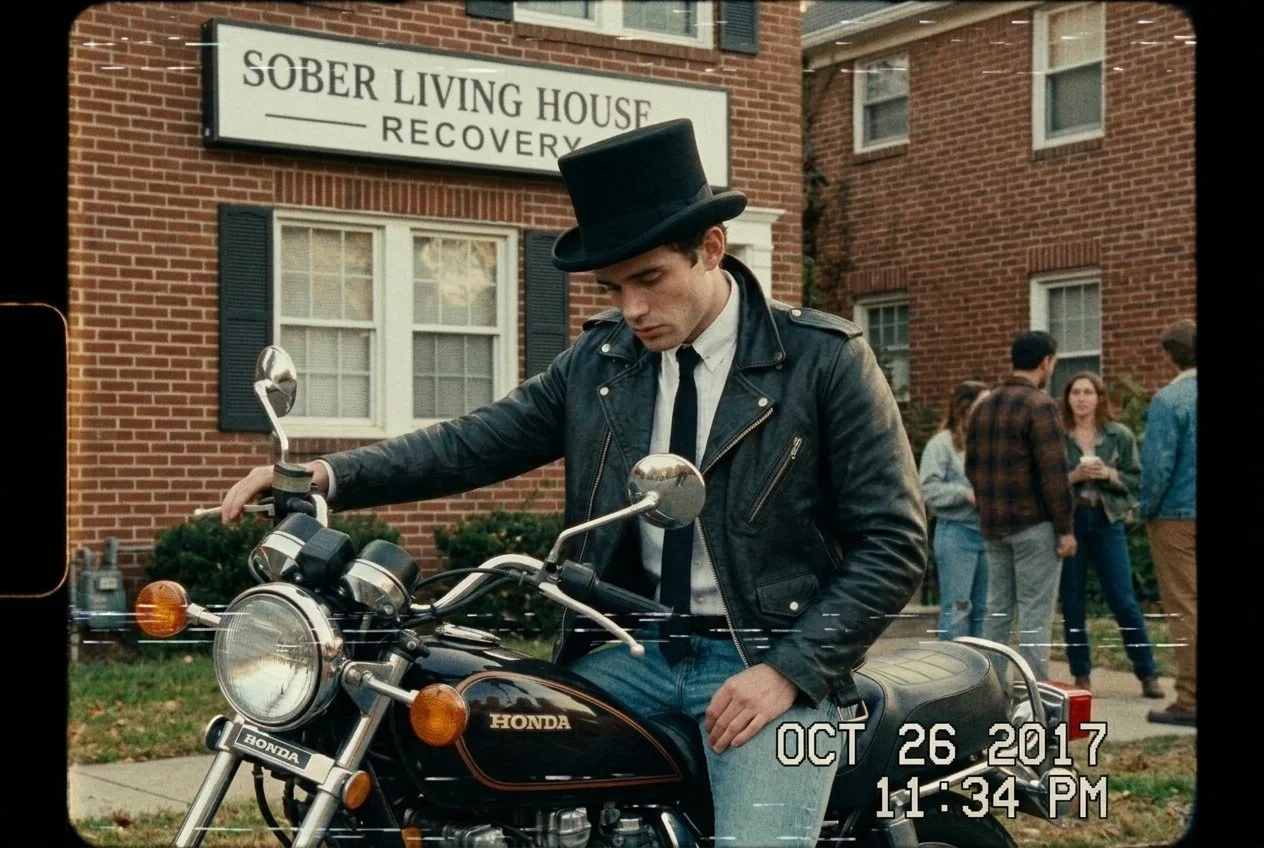
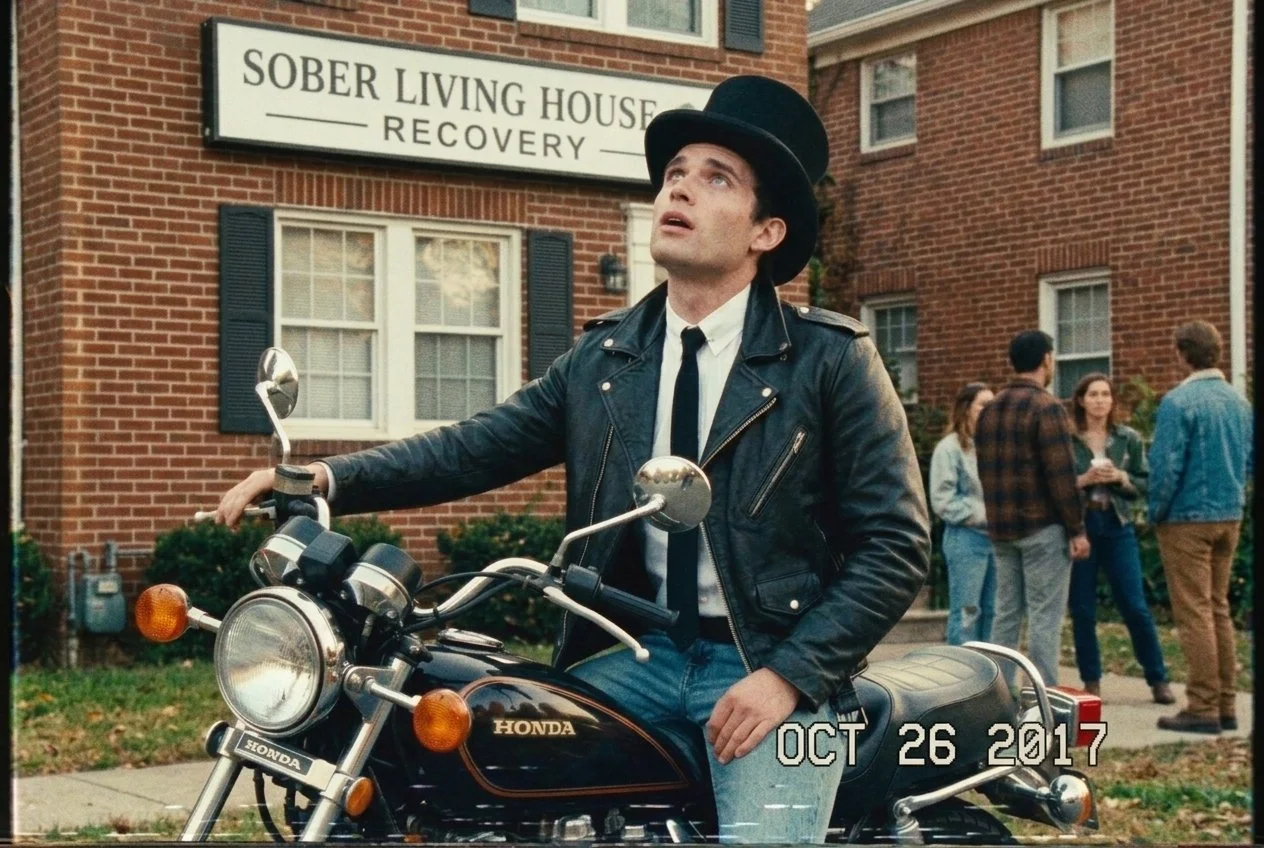
Let me tell you about the fluorescent light in a rehab hallway at three in the morning. It doesn't flatter anyone. It finds the truth in your face and it holds it there, buzzing, like it's daring you to look away. I couldn't sleep. I never could, not those first weeks. My body was still learning how to be a body again, how to sit inside itself without something to soften the edges.
I'm twenty-three. I grew up in a town with two Starbucks and a lacrosse team that made regionals. My father has a phrase for what happened to me. He calls it "your little detour." That's what money buys you, I've learned. It buys you a vocabulary. Light probation. No jail time. A room with a window and a counselor who says my name like it's a fragile thing she's setting down on a shelf. My father said it the way men like him say hard things — clipped, clean, already moving past it, like if he named it softly enough it wouldn't leave a mark on the family. He flew in for the intake appointment in a sport coat. Shook the counselor's hand too hard. Drove back to the airport without staying for lunch. That's love, in the language we spoke. Showing up and not saying what you came to say. Somebody else did what I did and they're gone now, swallowed by a system that never learned their name gently. No father in a sport coat. No soft vocabulary. No detour — just the end of the road. I know that. I carry it. It sits in my chest like a stone I keep meaning to set down.
And then there was him.
I'd seen him at dinner. We all had. He was sharing — they make you share, you sit in the circle and you hand your worst self around the room like a collection plate — and halfway through, something broke open in him. His breath started coming wrong. His hands went to his throat like he was drowning in air. They took him out fast. An ambulance. A panic attack that looked like a heart giving up. We finished our mashed potatoes in a silence so loud I could hear my own pulse.
So there he is. Three in the morning. Wandering.
A tattered Superman shirt, the red faded to the color of an old scar. That yellow diamond on his chest cracked and peeling like paint on a house nobody loves anymore. His eyes were glass. He was on more pills than the rest of us combined — I knew that the way you know things in a place like that, by osmosis, by the pharmacy line. The nurses checked on him twice as often. You could hear it sometimes, the soft knock, the door cracking open, a beam of light cutting across the hallway floor. He moved like a man walking underwater. Slow. Careful. Like the air itself had weight and he was the only one who felt it. And we stopped. We locked eyes across that terrible buzzing light.
And I opened my mouth, and this is what came out. I swear to God, this is what came out of me.
"What do you think girls see in Superman?"
He looked at me. Blinked. And then — and I will never forget this as long as I live — he looked at me like I had lost my mind. Not like he was confused. Like he had clocked me immediately, completely, and what he had clocked was a man unraveling in real time for reasons that had nothing to do with him. It was the most lucid look I'd seen on anyone in that building. Behind those glass eyes, something sharp and ancient moved. A recognition. He looked at me the way you look at someone talking to themselves on the subway — not with cruelty, just with the calm understanding that whatever is happening to this person, it isn't your emergency. He looked at me like: this is the whitest thing that has ever happened to me.
"What are you talking about?" he said.
"Your Superman shirt," I said. "What do you think girls see in him? Superman?"
And I want to try to explain this, because I've been trying to explain it to myself for months now. It wasn't a bit. It wasn't a conversation starter. It was the only true thing I could think to say. That's the honest answer. That's the whole answer. It was three in the morning in the worst year of both our lives, and I was standing in a fluorescent hallway in front of another human being who had almost died at dinner, and I had nothing — I had absolutely nothing — that felt real enough to offer him. Not how are you feeling — hollow. Not that looked scary earlier — condescending. Not I saw what happened — like I owned it, like his panic was a thing I could claim. So my brain went somewhere else entirely. It went somewhere true. It went to the shirt. To the faded symbol on his chest. To the question I didn't know I'd been carrying. What do girls see in him? What does anyone see in a man who can't be broken? And why was this boy — this medicated, wandering, glass-eyed boy that the world had already taken so much from — why was he still wearing that symbol at three in the morning? What was he holding onto? What did it mean to him? I didn't know how to ask any of that. So I asked the question underneath the question. And it came out sideways. And he looked at me like I was crazy. Because I was. Because that's what that place does to you, and that's what that hour does to you, and that's what another person's suffering does to you when you don't have the language yet to meet it properly.
He didn't answer. He just held me in that look a beat longer — that flat, exhausted, I don't have the bandwidth for whatever this is look — and then he turned. And he shuffled back into his room. The door clicked. And I stood there alone in that light, feeling like I'd asked a question I'd be trying to answer for the rest of my life. Feeling like I'd reached out and grabbed air. Feeling, underneath all of it, something I couldn't name yet — a grief that didn't belong to me, wearing a face I didn't know.
Here's the thing I've been turning over ever since, like a coin in my pocket I can't stop touching.
We gave Superman to boys. We told them he was about strength. About the fist, the flight, the enemy defeated by dinnertime. We made him a fantasy of power for people terrified of being powerless. That's what he was to me — a suburban kid with a father who shook hands too hard, who thought the whole point of a man was to never break, to never need the ambulance, to never sit in the circle and pass your worst self around the room. Superman was the lie we told ourselves so we didn't have to learn how to be soft.
But I think we got it wrong. I think it's important — genuinely, urgently important — to consider what women see in Superman. Because I don't think they see the strength at all. I think they see the tenderness the strength protects. They see a man who could destroy the world and chooses, every single day, to be gentle instead. They see the restraint. The mercy. A creature of unimaginable force who kneels down to be kind. That's not a fantasy of power. That's a fantasy of safety. Of being held by something that could hurt you and never, ever would. That's what my father never understood. That's the sport coat version of Superman — the appearance of invulnerability, the handshake, the quick exit. It looks like strength. It's actually just fear with better posture.
In many senses, Superman was always for girls. He was always the promise of a strength that stays gentle. And I never understood that until I saw him worn thin across the chest of a boy who had none of it — no power, no flight, no invulnerability — a boy the world had bruised in every place a body can be bruised, still walking a hallway at three in the morning wrapped in that fading red and blue. A boy who looked at a stranger asking him a crazy question and gave him, without knowing it, the most honest and grounded look he'd received in weeks. Because that look — that what is wrong with you look — was the look of someone still in there. Still present. Still capable of seeing clearly, even through the fog of everything they were giving him to make the fog thicker.
Because maybe that's who Superman was really for all along. Not the strong. The breakable. The medicated. The ones who wander. The ones nobody's coming to save. Maybe the shirt wasn't ironic at all. Maybe he was wearing the one thing that still whispered to him that gentleness and strength could live in the same body — even when his own body was betraying him. Even when the symbol was cracking and the red was fading and the diamond on his chest was peeling away like something the world had tried to take back.
I got probation. I got a window. I got a father who flew in with a sport coat and a soft word for my ruin — detour, he called it, detour — like I'd taken a wrong turn on a road that was always going to lead somewhere fine.
He got a shirt.
And I think about him every night the light won't let me sleep. That Black kid in the tattered cape that wasn't a cape. Wandering. Carrying more weight than any of us, chemical and otherwise. Looking at me like I was out of my mind — because I was, a little — and then turning and going back to his room, back to whatever the night held for him, back to the medication and the soft knocks and the beam of light under the door. I hope he slept. I hope something in him rested.
And I hope — God, I hope — that somewhere behind those glass eyes, some part of him still believed the thing that shirt was trying to tell him.
That he was worth saving.
That he always had been.
That Superman, at the end of it all, was never really about the ones who couldn't be broken. He was about the ones who were. He was about the boy in the hallway. He was about the question you ask when you have no other words. He was about three in the morning and a buzzing light and two people who had no business being alive in that corridor, looking at each other across the distance of everything, and one of them — just barely, just for a second — still seeing clearly.
-Deck, M.R
TWENTY DIFFERENT HOUSES
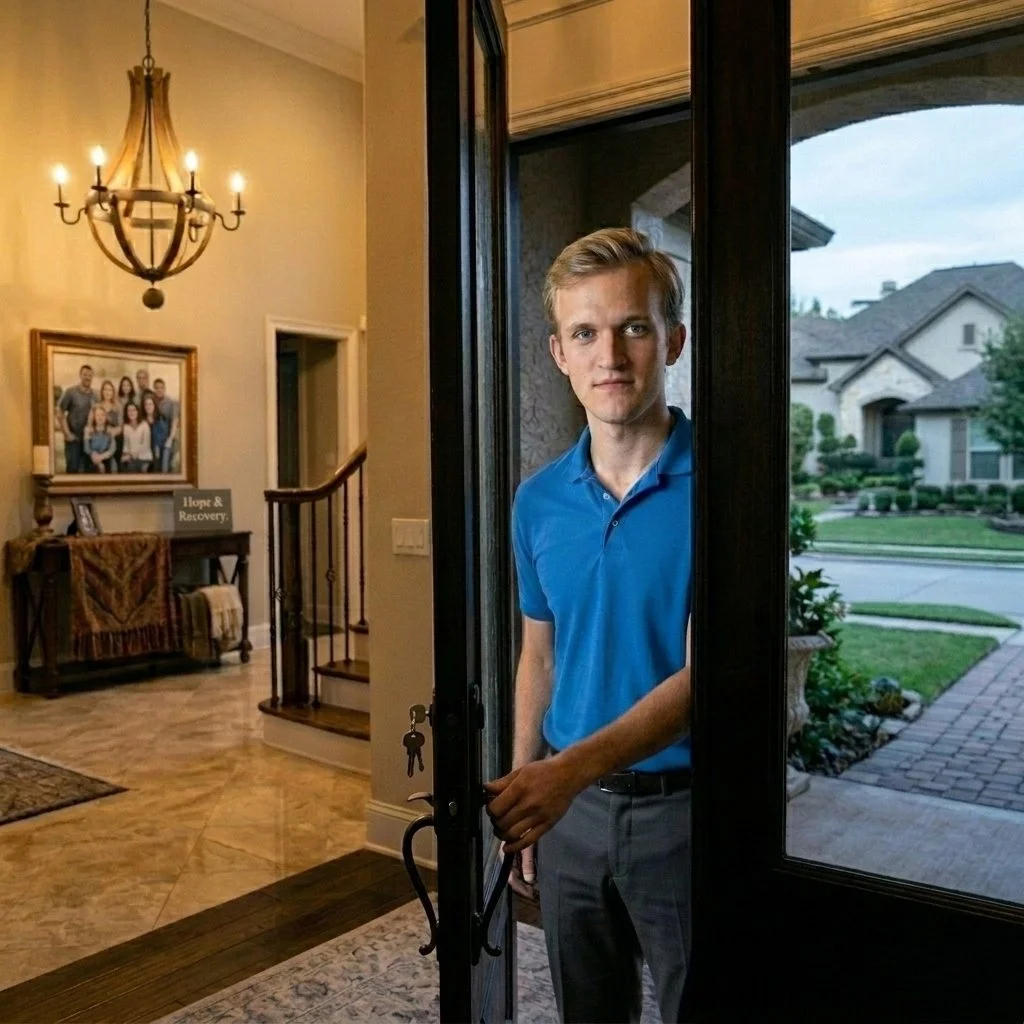
The following photos, taken today, August 7th, 2026, in the heart of the fashion district by the talented Mitchell Royel, capture the essence of creativity and style. And as we soak in these photos, we're vibing to the sounds of "Want U" by Hayley May—it's a whole mood.
"You really should stop smoking so many cigarettes," he said, his preppy voice cutting through the hum of my thoughts. It didn't faze me at first—it never does. I stared at him for a moment longer than I should've, watching him perched there, book in hand, legs crossed like he belonged in some crisp catalog for an Ivy League school. I kept pacing, circling him like a hunter studying prey, though truthfully, I was just waiting for him to look away first. He didn't.
Why was he out here, really? Not in the physical sense—sure, he had walked out onto the stoop because I was pacing circles outside, but emotionally? Mentally? Spiritually? These were the questions stuck rattling inside my skull like loose screws. Trusting someone's intentions in here was a gamble, one most of us didn't have the energy to place. Yet, here he sat. Watching. Not judging, not speaking much either, but just… there. Like my pacing was a puzzle he was determined to solve.
He turned a page without reading it. I noticed that. People think you can't tell when someone's faking their way through a book, but you can. The eyes stay too still. The thumb moves too soon. He was performing calm the way I was performing chaos, and for one horrible, electric second, I wondered if we were the same animal wearing different fur.
"You keep looking at my book," he said, not looking up.
"You keep pretending to read it," I shot back.
The corner of his mouth twitched. Not a smile. Smiles were for people who hadn't ended up here. This was something smaller and meaner and more honest—the flicker you give someone when they catch you in a lie you didn't mind telling.
"You seem troubled to me," he finally said, still calm, still composed, eyes flicking back to his book. Troubled. It was a neutral word, sterile almost, like it could be the diagnosis of all diagnoses. Troubled covers anger, sadness, nervous energy, shame. Troubled was exactly what I was, and something about hearing him name it made me stop mid-step, if only for a second. But I didn't give him the satisfaction of a reply. I kept moving because forward momentum is all I've been chasing—sometimes running from, sometimes running to—but never standing still.
Here's the thing nobody tells you about getting clean: the drugs were never the loudest part. The loudest part is the silence they leave behind, this roaring, cavernous quiet where the noise used to live. And people like him—people with pressed collars and dog-eared paperbacks and voices that sound like old money—they walk into that silence like it's a room they've been invited to. Like it's theirs to sit in. I hated him for that. I hated that he made stillness look survivable.
"What are you reading?" I asked, because I couldn't stand my own quiet anymore.
He held up the cover. Something with a lighthouse on it. Of course. Of course it was a lighthouse. A boy like him would read a book about a beam of light cutting through fog to warn ships away from the rocks, and he'd think it was about hope. I looked at that lighthouse and thought about all the ships that saw the light too late.
"You can borrow it when I'm done," he said.
"I don't finish things," I told him. It came out more honest than I meant it to.
"Nobody does the first time," he said. And God, I wanted to slap that sentence right out of the air.
I left without a word the next week. Signed all the exit forms, did the terribly awkward goodbye-smile-wave to the familiar strangers in group therapy, and pocketed the card everyone had scribbled on like it was protocol. "We're rooting for you!" Someone wrote with a pink Sharpie. Pink. Something about that color made me want to laugh and cry at the same time.
He didn't sign it. I checked. Twice. I turned that card over in my hands like it owed me something, running my thumb across every name, and his absence was louder than any signature could have been. That's the cruelty of people who watch you closely—they teach you to feel the shape of what's missing.
Two weeks into the new house—the sober transitional living—routine was kicking in. Two mandatory morning meetings, one outpatient session, and a lot of meals eaten too quickly because silence is somehow heavier when you're around people you don't really know. I hardly thought about him. The boy with the book, the pacing observer with the unshakable gaze.
That's a lie. I thought about him constantly. I thought about him the way you press your tongue against a sore tooth—not because it helps, but because the ache reminds you you're still capable of feeling anything at all. I'd catch myself pacing again, out of habit, and I'd half-turn to see if he was watching, and the empty step where he should've been sitting felt like a punchline to a joke I didn't get to hear.
And yet, when I opened the door that morning, there he was. Eye level, face inches away, arms throwing themselves into a hug like instincts had taken over before either of us had time to think. "What the—what the fuck are you doing here?" I choked out, pulling back to make sure he was real.
He was warm. That's what undid me. In every version of this scene I'd played out in my head—and there were versions, embarrassing numbers of versions—I never accounted for the warmth. Ghosts aren't supposed to be warm. Fantasies aren't supposed to smell like cedar and cheap laundry detergent. But he did, and he was, and my whole body forgot the speech I'd rehearsed for exactly this impossible occasion.
"There are twenty different houses this could've been," I said, trying to make sense of the unlikelihood of it all, the impossibility of the moment. "You don't even live near Woodland Hills."
He shrugged, and the shrug had a whole theology in it. "Maybe I do now."
"That's not an answer."
"It's the only one I've got that's true."
I searched his face for the catch, the con, the small print at the bottom of the miracle. Everyone in here has an angle; sobriety doesn't erase the con artist, it just gives him a new script. But his eyes—those unbearable, level eyes—held nothing I could weaponize. And that terrified me more than a lie ever could. A lie I know how to survive. Sincerity is the thing that's killed better people than me.
"You still smoking?" he asked.
"You still pretending to read?"
That flicker again. The almost-smile. "I finished the book," he said. "There's a copy for you upstairs. I already dog-eared your page."
"I told you. I don't finish things."
"I know," he said, stepping past me into the house like he'd lived there all along, like the threshold had simply been waiting for him to cross it. "That's why I started it for you."
Looking at him was like staring at a chapter of the book that hadn't been written yet but had somehow started bleeding onto the edges of my pages. Life has a way of making the impossible feel inconvenient before it starts making it make sense. Maybe houses were supposed to be relative. Proximity felt less like a coincidence and more like an invitation to leave skepticism at the door. Because trust—the real kind—lives somewhere between the counterintuitive endings and unexplainable beginnings.
-M.R, Deck, Mitch Leyor Collective
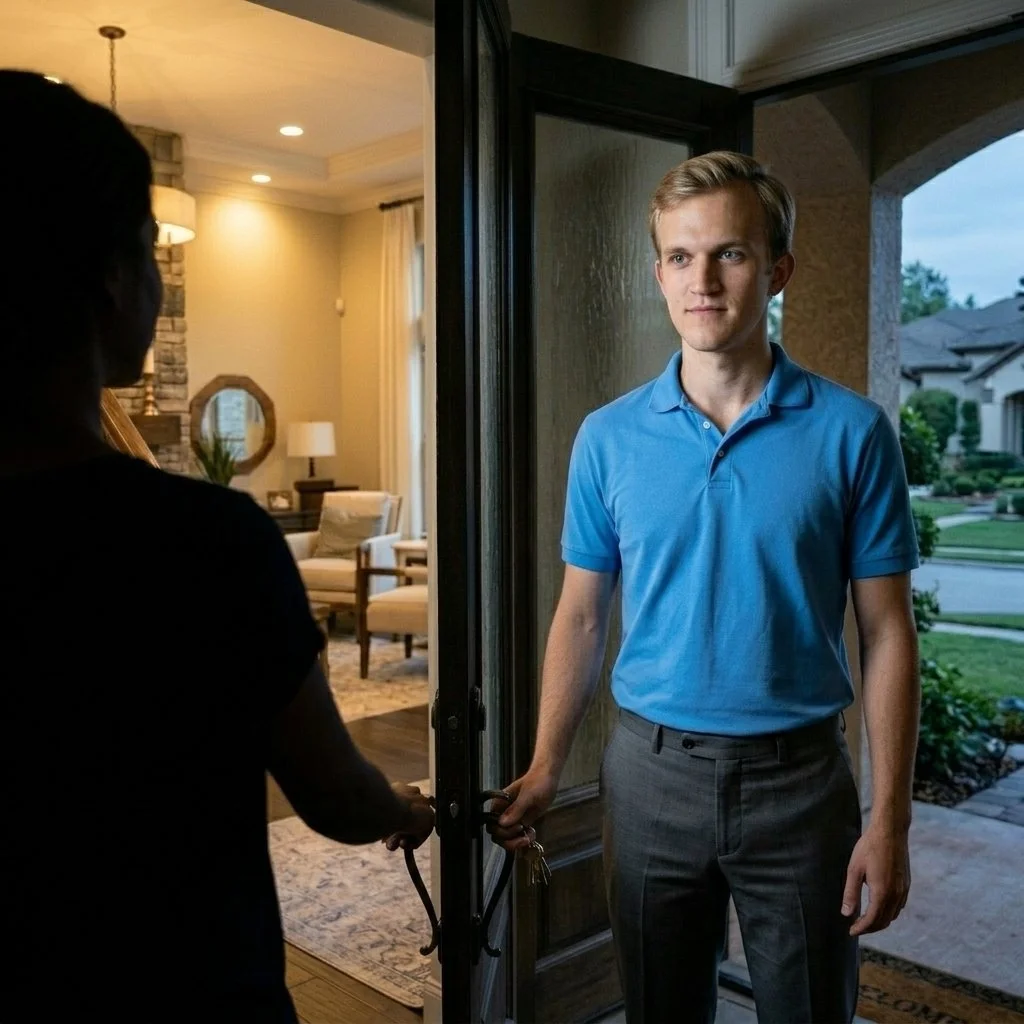
Epilogue: I’ve always thought friendship has this uncanny way of finding us right when we’re crumpled at the bottom of everything—like splintered glass scattered across the floor, and somehow, someone has the audacity to reach out with bare hands and try to piece us together. It's wild, really, how it happens. The irony doesn’t escape us either—rock bottom is the only place where every facade we’ve built crumbles. There’s no energy left to fake a smile, pretend the cracks don’t exist, or convince anyone we’re fine when we’re clearly not. Twenty different addresses, twenty different detours in life, and yet somehow, paths collide in this raw, shared space where every version of brokenness brushes up against each other. What’s strange, though, is how it doesn’t come from the shiny narratives of triumph or the golden-hour moments that movies like to sell us. It’s born in the spaces where words falter, in the pauses that hang heavy, in just existing together—letting someone stay inside the stillness of our wreckage, no need to tidy up the shards before they sit beside us. And maybe, just maybe, all those alternate routes—those missed turns and painful endings—they were never random. Maybe they all lead here, to this messy, imperfect truth, because sometimes we can only really see the ones who’ll stay when the dust has settled, and all we’ve got are fragments left.
IS DECK THE NAME WHISPERED IN EVERY MIDNIGHT COOKIE CRAVING?
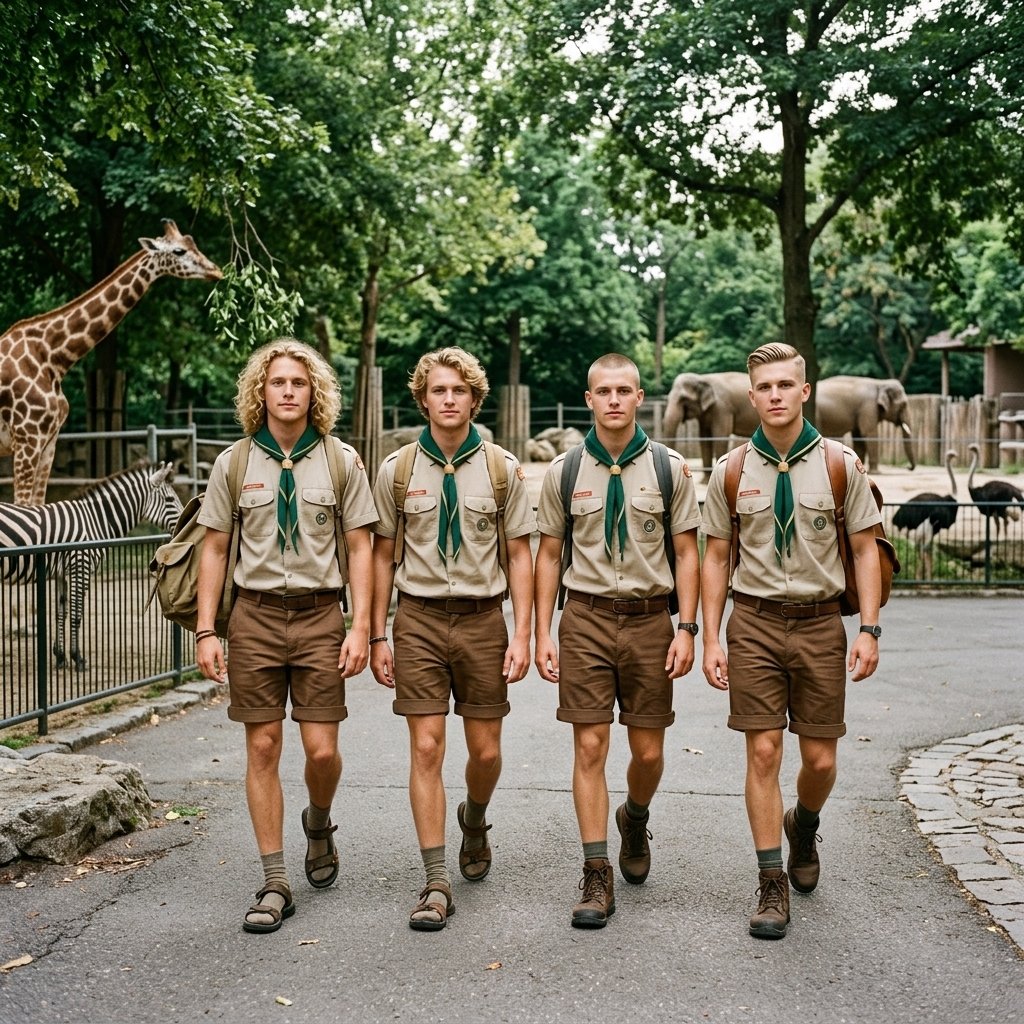
Picture this: the pulse of the city pounding beneath your feet, the scent of ambition hanging thick in the air, and somewhere in the backdrop, "Hot" by Genia is vibing, turning concrete into a runway. Mitchell Royel is in his element, camera in one hand, energy dialed up to ten, capturing moments that refuse to conform. This isn’t just fashion — this is raw, unfiltered expression. It’s bold. Untamed. Explosive. The Fashion District isn’t just a location; it’s a mood, a vibe, a whole anthem for those who dare to push boundaries.
Being "Of the World" — And Staying True to Who We Are
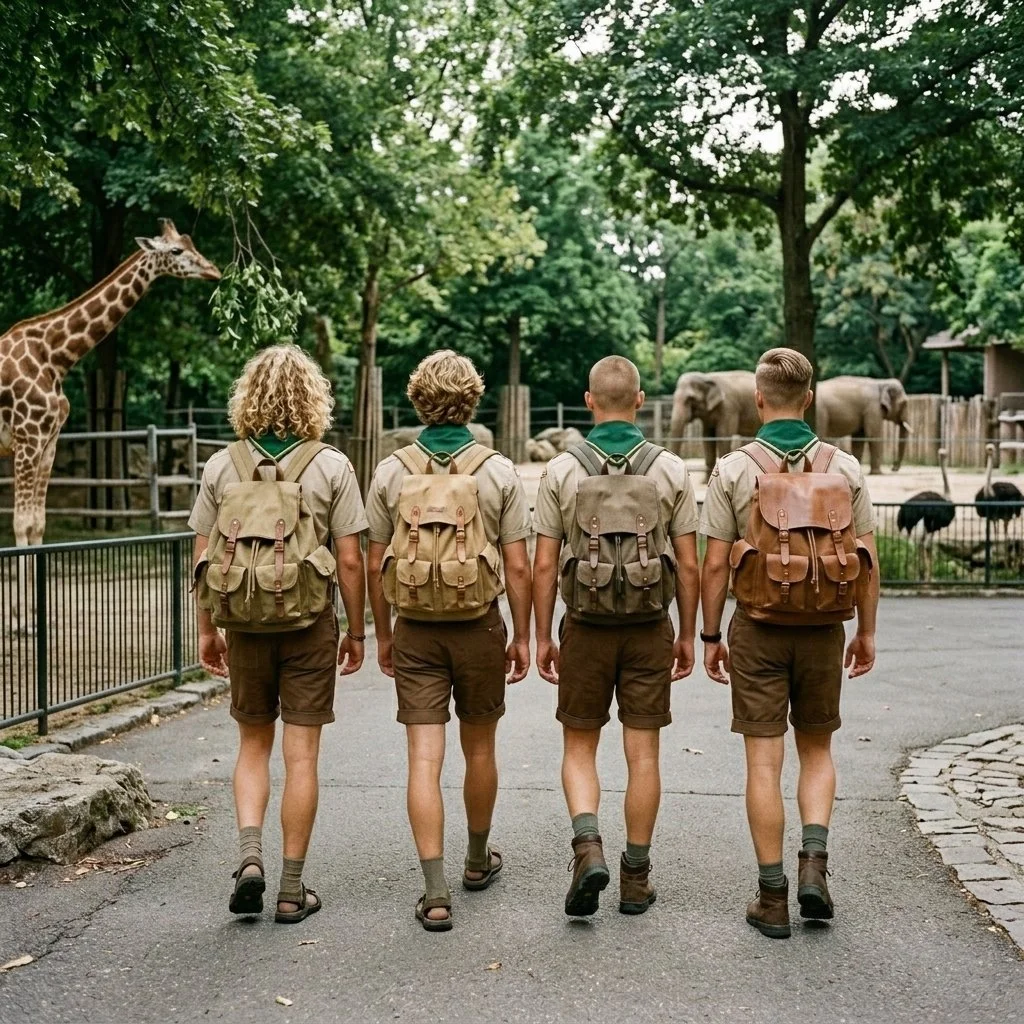
Being "of the world" means immersing ourselves in its beauty, challenges, and endless opportunities. It's about engaging fully — giving, learning, and contributing — while staying true to who we are. Too often, we treat those two ideas as opposites. We assume that diving into the noise of the world means surrendering a piece of our identity to it. But the opposite is true. The more deeply we participate, the more clearly we discover what we actually stand for.
Think about it this way. We can travel widely, meet countless people, and absorb new ideas every single day, yet still carry a steady sense of self through all of it. That steadiness isn't rigidity. It's a kind of internal compass. It lets us say yes to growth and no to compromise, sometimes in the same breath. The goal isn't to protect ourselves from the world. The goal is to move through it with intention, letting it sharpen us rather than erase us.
That's the tension worth mastering: full engagement without self-abandonment.
For the Boy Scouts of America, this philosophy was foundational. They worked to build young individuals who were not only prepared to lead but also grounded in principles that helped them rise above fleeting trends and societal pressures. The uniform, the merit badges, the outdoor expeditions — these were never the point in themselves. They were tools for something deeper: shaping character that could withstand pressure.
What made the approach so enduring was its focus on three qualities that never go out of style.
Individuality — the belief that each of us carries a unique contribution the world needs.
Integrity — doing the right thing even when no one is watching, and especially when it's inconvenient.
Purpose — treating life as a journey with direction, not a series of random reactions.
A scout learning to build a fire or read a trail map was really learning something bigger: how to stay calm, resourceful, and honest when circumstances got hard. Those lessons didn't fade when the campfire went out. They followed these young people into classrooms, workplaces, and communities, giving them a foundation that fashion cycles and cultural fads couldn't shake.
In other words, the Boy Scouts championed individuality, integrity, and purpose in every step of life's journey. They understood that preparation isn't just about skills. It's about knowing who we are before the world tries to tell us.
This ethos seamlessly connects with the culture of Deck. More than just a lifestyle blog or a space to discover curated apparel, Deck represents a mindset. It's a way of looking at our everyday choices — what we wear, what we value, how we carry ourselves — as small declarations of identity.
Each featured item, from Mitch Leyor clothing lines to the comfortable boxer briefs available for purchase, is a testament to craftsmanship, authenticity, and the celebration of our personal identity. Deck doesn't chase trends for the sake of chasing them. It curates pieces that mean something, that hold up over time, and that let us express who we genuinely are rather than who an algorithm thinks we should be.
Consider what "craftsmanship" really signals here. A well-made garment respects the person wearing it. It's built with care, designed to last, and shaped by an eye for detail rather than mass-market shortcuts. When Deck highlights the Mitch Leyor lines, it's pointing to that same quiet pride we find in any craft done right. And even something as everyday as a pair of boxer briefs becomes part of the message: comfort and quality shouldn't be an afterthought, because the small choices add up to a life lived on our own terms.
Deck encourages a life of diversity in style while deeply valuing the essence of individuality. Style, in this view, isn't about fitting in. It's about showing up as we truly are, confidently and consistently.
The shared commitment to engaging with the world while maintaining authenticity creates a resonant message. Two very different institutions — a century-old scouting tradition and a modern lifestyle platform — arrive at the same conclusion. Live boldly, but never at the cost of our identity.
Be of the world. Participate in its rhythm, evolve with its growth, and honor its diversity — but always remain true to who we are. This principle, once upheld by the Boy Scouts of America, lives on in platforms like Deck, inspiring us all to stand confidently in our truth while navigating life's complexities.
That's what makes the connection more than a clever comparison. Both remind us that authenticity isn't a fixed destination. It's a practice. We renew it every time we choose substance over spectacle, and every time we let our values guide a decision the world might have made differently.
Now for the delightful surprise. Mitch Leyor's cookies, at first glance, may seem like an eccentric idea drifting on the fringes of possibility, yet they embody a creative spark that demonstrates just how profound simple concepts can become. A cookie is humble. Familiar. Easy to overlook. And that's precisely why it makes such a perfect example.
With unique flavor combinations and a commitment to quality ingredients, these cookies transform our ordinary perceptions of baked goods into something extraordinary. The care poured into them mirrors the same craftsmanship we'd find in a well-tailored garment or a well-lived value system. Nothing is thrown together. Every choice — the ingredients, the pairings, the finish — reflects intention.
They remind us that pushing boundaries, even in the kitchen, can lead to delightful surprises. The world often needs a touch of unpredictability, and Leyor's cookies offer exactly that, showcasing how imagination and passion make even the most unconventional ideas a reality. It's proof that we don't need a grand stage to be original. Sometimes the boldest statement is a small thing made with uncommon care.
That lesson circles right back to where we started. Whether it's a scout building character, a brand curating pieces that mean something, or a baker reinventing a classic treat, the throughline is the same: engage fully, create honestly, and hold onto who we are.
Key Takeaways
Engagement and authenticity aren't opposites — the more we participate in the world, the clearer our values become.
The Boy Scouts' legacy rests on three timeless pillars: individuality, integrity, and purpose.
Deck is a mindset, not just a blog — it celebrates craftsmanship and self-expression through thoughtfully curated apparel.
Small choices carry big meaning, from a Mitch Leyor clothing line to a well-made pair of boxer briefs.
Creative courage lives everywhere, even in a cookie, when passion meets quality.
Where to Go From Here
Let's take a moment to notice one small choice we make today — what we wear, what we create, how we show up — and ask whether it reflects who we truly are. Then explore Deck to discover pieces and stories built around that exact idea: living boldly in the world while staying unmistakably ourselves.
-Deck, M.R, Mitch Leyor Collective
GLOBAL MARKET CLASSIFIED — SERIOUS PARTNERS ONLY

The phrase "GLOBAL MARKET CLASSIFIED — SERIOUS PARTNERS ONLY" suggests that this is a specialized platform or initiative focused on business opportunities within a global market context. The term "classified" indicates exclusivity or restricted access, possibly involving confidential or high-value information. "Serious partners only" emphasizes that the platform is meant for committed individuals or entities genuinely interested in collaboration, investment, or business partnerships, discouraging casual inquiries or those without sincere intentions. It sets a professional and exclusive tone for any engagements within this context.

Captured in the Fashion District by the visionary Mitchell Royel today, August 24th, 2026, we find ourselves immersed in a moment of pure energy and artistry. And in this vibrant, electric atmosphere, the rhythm takes hold as we’re listening once again to "React" by The Pussycat Dolls—a song that embodies power, precision, and unapologetic confidence. This is more than music; it’s a movement, a pulse that syncs with the heart of the district, reminding us of the undeniable essence of performance and creativity.
주목하세요 (Attention). We are moving fast, and we move with or without you.
Our offer stands right now, today. If the United States does not accept us, we will not wait around. 우리는 기다리지 않습니다 (We do not wait).
Next stop: South Korea. 그 다음은 (After that): Mexico or India.
The door is open, but it will not stay open long. 시간이 없습니다 (There is no time). We have no patience for idle chit chat, no room for maybe, no space for "let me think about it."
Want in? 지금 결정하세요 (Decide now). Serious inquiries only. 진지한 문의만 받습니다 (We accept only serious inquiries).
빨리 움직이세요 (Move quickly). The world is big, and we will take our promotion wherever the answer is yes.
No talk. Only action. 지금 연락하세요 (Contact us now).
GLOBAL MARKET CLASSIFIED — SERIOUS PARTNERS ONLY - V2
주목하세요 (Attention). The clock is ticking, and we are accelerating forward. This is a once-in-a-lifetime opportunity, but the window is small, and hesitation will leave you behind. Our vision is global, our actions precise. If one market hesitates, another will seize the chance. We do not stop, and we do not wait. 우리는 기다리지 않습니다 (We do not wait).
South Korea is next, and after that, eyes turn to Mexico or India. The choice to join is yours, but the timeline is ours. 시간이 없습니다 (There is no time). There is no waiting for “one more meeting” or “another discussion.” There is no room for ambiguity or indecision — we seek only those ready to say yes and act immediately. Flip the switch, or step aside for those who will.
Do you want in? 지금 결정하세요 (Decide now). This is your moment to take action. Only those serious about advancing will be considered. 진지한 문의만 받습니다 (We accept only serious inquiries). The momentum is here, and the world is too vast for delay. Opportunities like these do not knock twice.
빨리 움직이세요 (Move quickly). Time favors the bold, and we are already moving forward. Don’t hesitate, don’t overthink. The answer is simple — yes or no. The choice will define the future of this partnership. No promises. Only results. Act now. 지금 연락하세요 (Contact us now).
-Deck, M.R, Mitch Leyor Collective

Epilogue: The works of the enemy are relentless, seeking to distract, dismantle, and sow seeds of doubt. Yet, we do not entertain such interferences, for time is a currency too precious to squander, and focus is our most valuable asset. Idleness does not merely delay progress—it opens the gates to weakness, allowing complacency to creep in. As the old saying warns, idle hands are the devil’s playground. This is why we remain steadfast, vigilant, and relentless. We move forward with purpose, carving a path through adversity with unyielding effort and determination.
Every moment is an opportunity—a chance to conquer the stagnation that threatens to erode ambition. To us, success is not a gift but a masterpiece, earned through the chisel of hard work and the fire of perseverance. Progress demands urgency, and waiting is a luxury we do not afford ourselves. Time does not wait, and neither do we. Our shield is our unshakable commitment to excellence; our weapon, the diligence that propels us past obstacles and distractions.
Hesitation has no place in our ethos. It is drive that propels us, focus that sharpens us, and action that defines us. Each step forward is a declaration of victory over inertia, a testament to the power of resolve. We believe in the necessity of momentum, the force that transforms dreams into reality and raw potential into achievements. There is no room for fear, doubt, or apathy. Only forward. Only effort. Only action. This is the creed we live by, and it is the foundation upon which we will build our success.
VELVET THUNDER AGAINST THE CHAINS
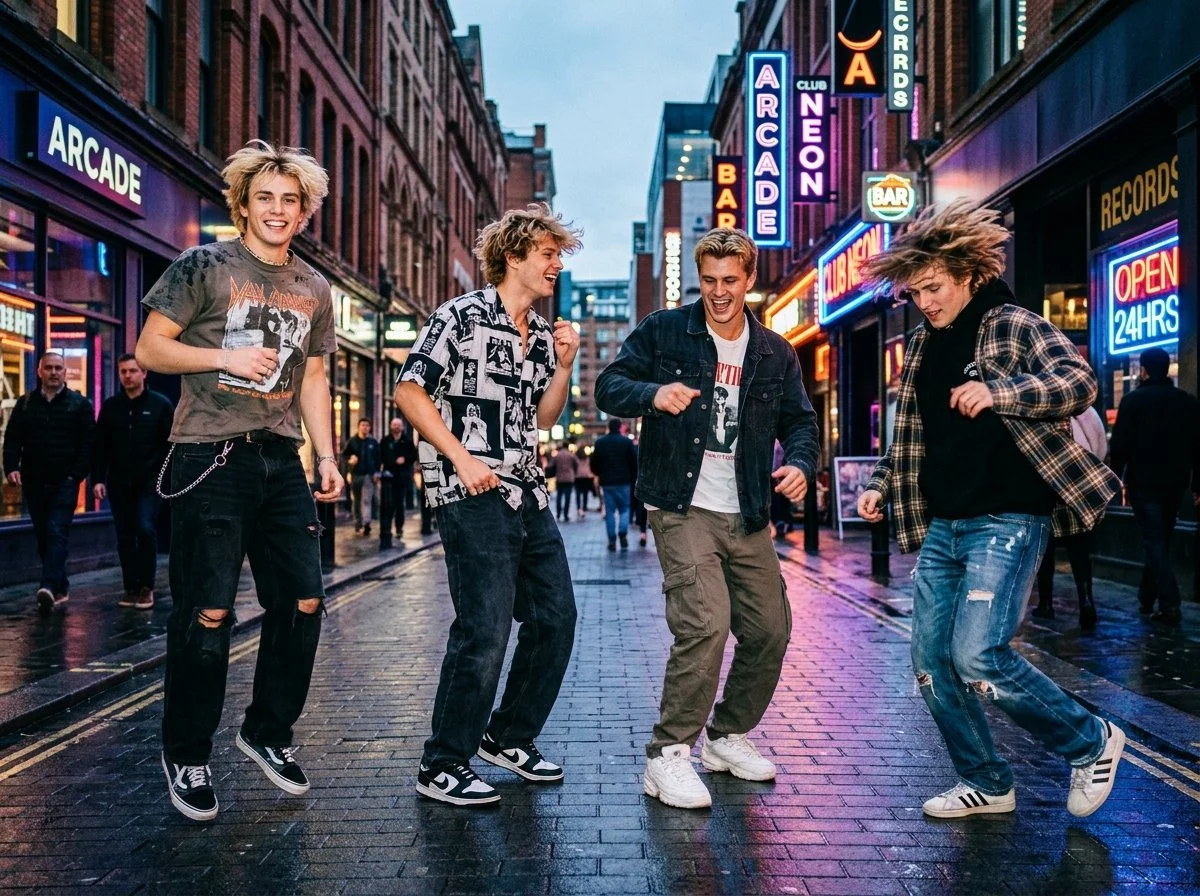
This morning, August 2nd, 2026, while walking through the vibrant corridors of the fashion district, ICONIC BY MISTAKE by Le Sserafim, iLLiT, and Katseye accidentally filled the air through my headphones. The track, shimmering with unapologetic energy, felt like it belonged to the pulse of this place—a perfect backdrop to the stunning visuals around me. Every photo captured by Mitchell Royel today seemed to align seamlessly with the rhythm, creating moments that felt both deliberate and magnetic. This was not just a coincidence, but a convergence of sound, style, and serendipity.
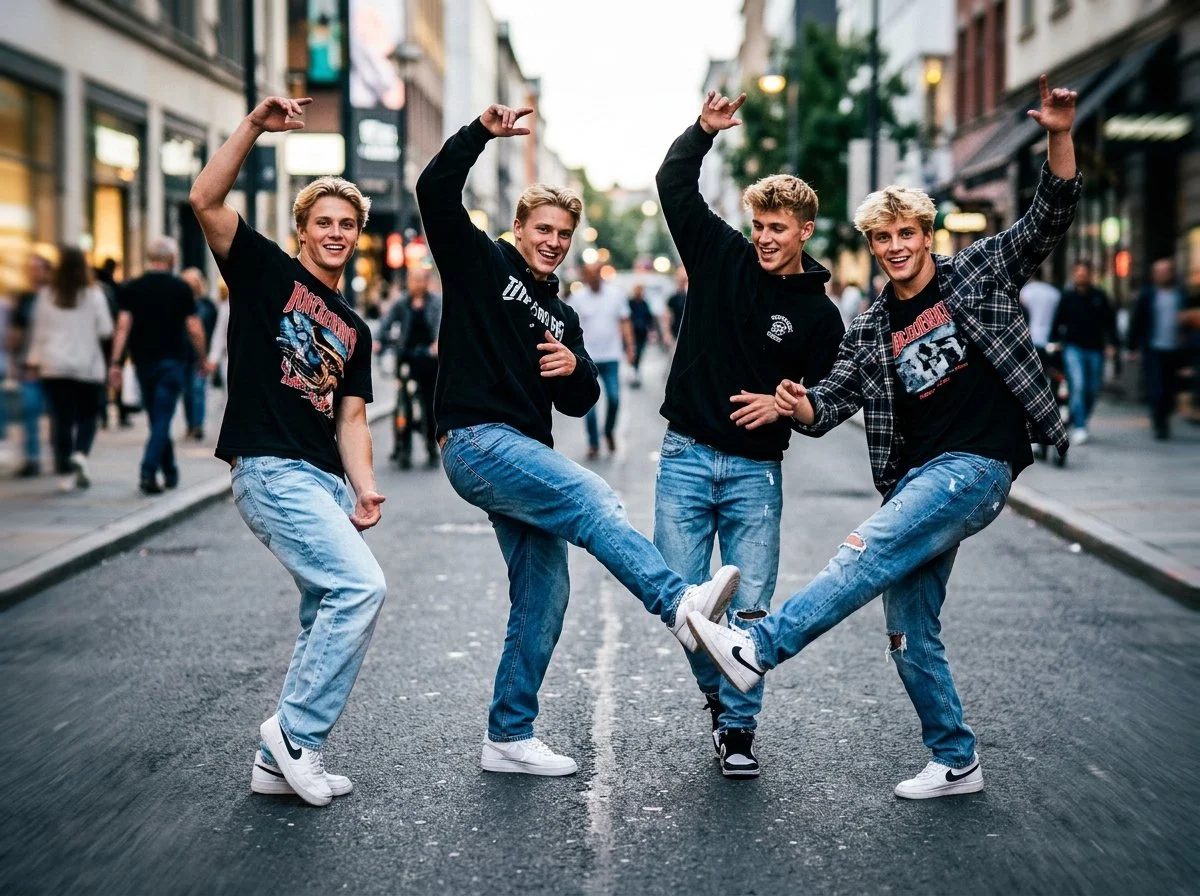
Isn't it strange how the weight of others' opinions clings to us like smoke in a room we never chose to enter? We walk in breathing free, chest open to the world, only to choke on a fog thick with judgment. It hides behind polished words, but the sting is real. And it isn't simple dislike—no, it cuts sharper than that. It's shards of glass beneath bare feet, slicing deeper with every step forward. All because we dare to exist as we are. All because we refuse to shrink into the shapes they demand.
So whose fault is it?
Ours, for standing tall?
Or theirs, for needing us to bow?
This world hungers for villains. It scribbles names in the margins of its black-and-white story, always eager to cast someone out. Because casting out is easier than looking inward. Easier to point than to face the trembling truth beneath their own skin.
They hand us labels like sentences—"outsider," "troublemaker," "dreamer"—whatever fits their tired tale of us against them. But they've missed the whole point. We never signed up for their game. We never agreed to their rules. Let them whisper our names in back rooms. Let them drape their fears over us like heavy cloaks and paint us as the monsters their imaginations invented. That weight was never ours to carry. Their insecurities are not our burden to soothe.
Even if we bent ourselves in half, silenced every note of our song, folded until nothing remained—they'd still find something to despise. That's the trap. They decided who we are long ago, and they refuse to see anything else.
So why not laugh at their labels? Why not wear them like armor forged in their own fire? Step boldly into the flames they fan, and let every ember temper you into something unbreakable. Their scorn skims the surface. It never touches the core. Outcast, rebel, icon—call us what you will. We'll take it all and turn it into power, until their fear finally bends into something like awe.
Because we are more alive, more free, more unshaken in our flawed and glorious brilliance than they will ever allow themselves to be. We owe them nothing. Not our silence. Not our surrender. Not the dimming of our light.
Instead, we burn bright, untamed, relentless. We break through their walls and shatter their small expectations. We live boldly in the spaces they're too afraid to enter. Because in the end, this was never about them. It's about owning a freedom that is real and unyielding. It's about thriving where they won't dare to breathe.
Sharp as glass, bright as fire—we rise. Always.
-Deck, M.R, Mitch Leyor Collective
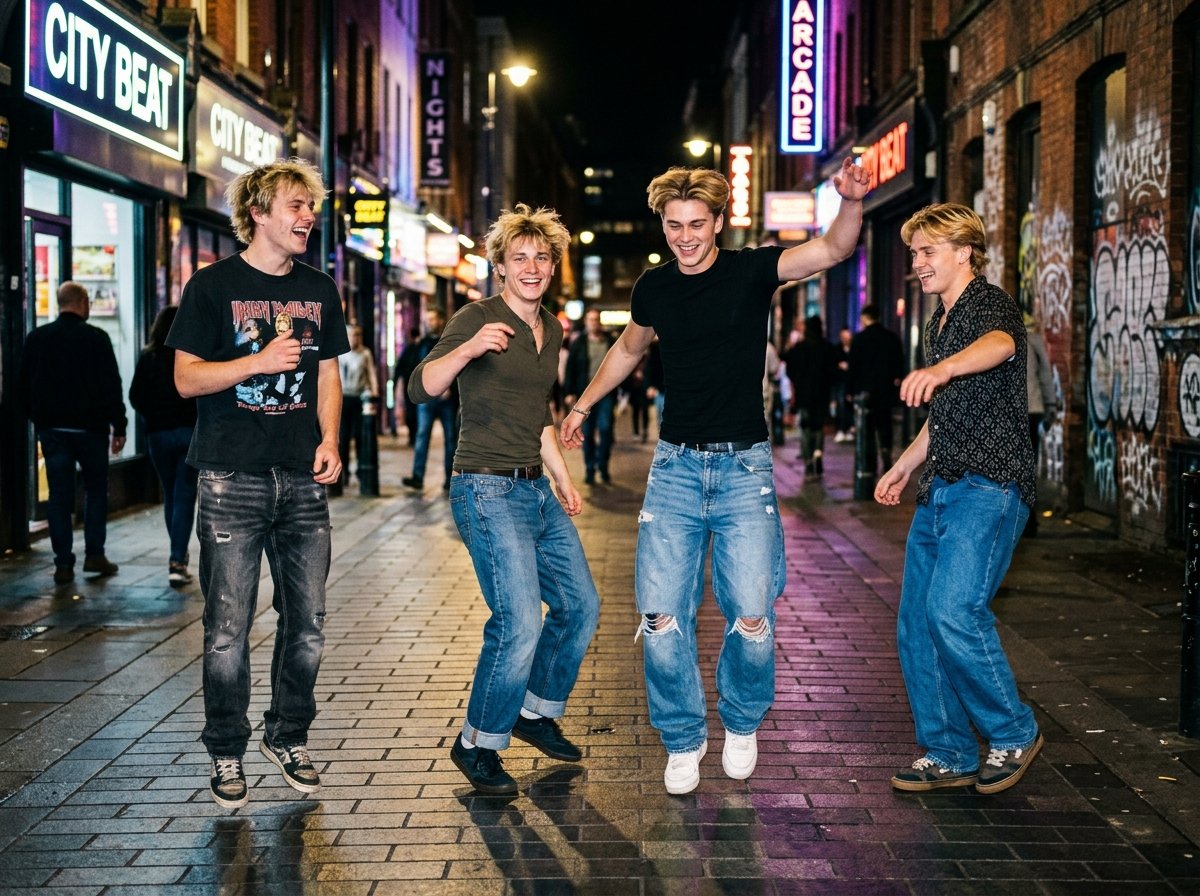
Epilogue:
Here is the truth beneath the fire: no one else holds the pen to our identity. The opinions of the crowd are loud, but they are not law. People will label us, misunderstand us, and try to shrink us into something they can manage. Yet their words carry only the power we agree to give them.
We were not made to be small. We were not made to apologize for the shape of our soul. When we stop begging the world for permission to exist, we discover a freedom that no crowd can take and no critic can touch. Our worth was never up for a vote.
Rest in this: we are known, we are held, and we are made on purpose.
"What, then, shall we say in response to these things? If God is for us, who can be against us?" — Romans 8:31
"I praise you because I am fearfully and wonderfully made; your works are wonderful, I know that full well." — Psalm 139:14
"But now, this is what the Lord says—he who created you... Do not fear, for I have redeemed you; I have summoned you by name; you are mine." — Isaiah 43:1
Let the world call Deck what it wants. Er already carry a name spoken over you by the One who made you—and that name is enough. Rise, and keep rising.
Always.
RED HANDS + DREAMS DISSOLVED IN FLASHES OF BLUE AND RED P2
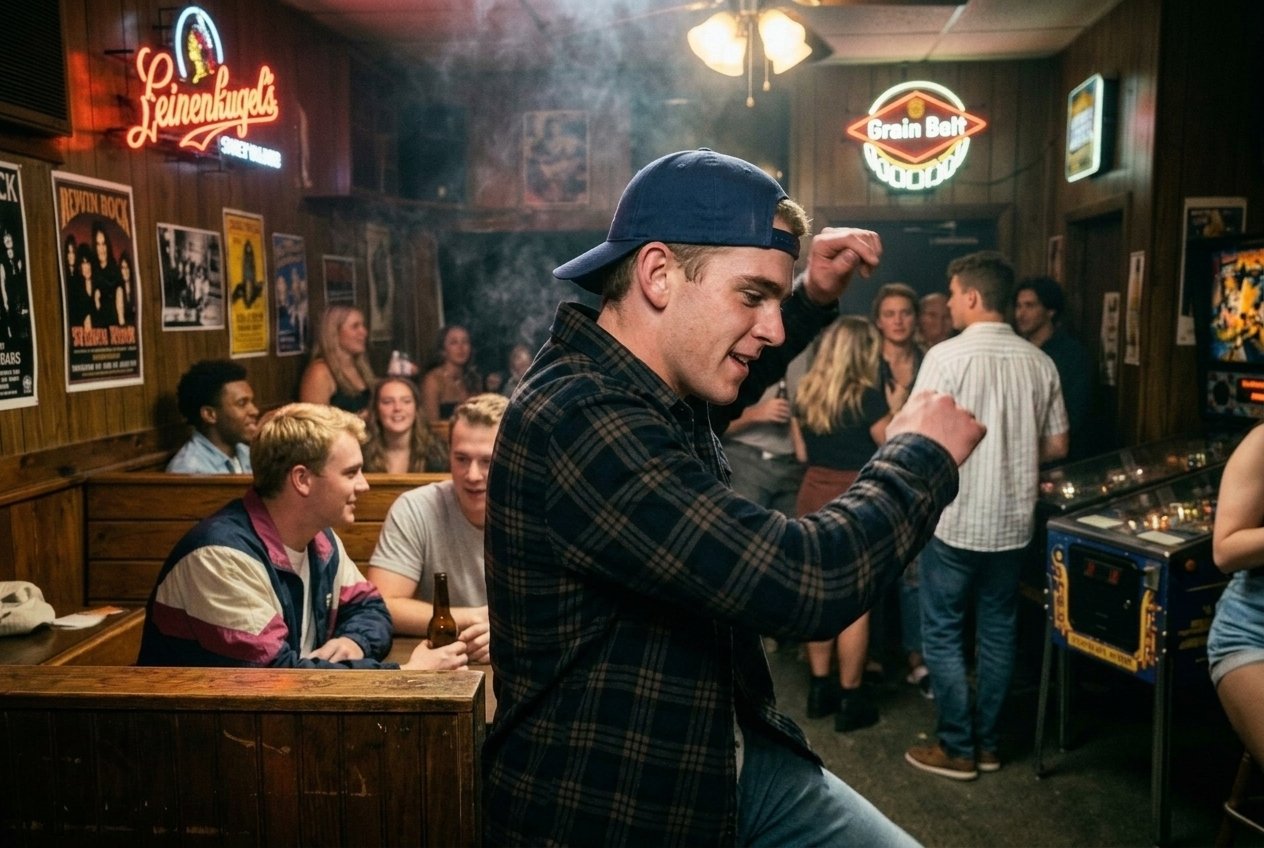
Captured by Mitchell Royel in Covina, California, the moment is enhanced by the enthralling voice of Ava Max. With "My Oh My" resonating gently in the background, her powerful and dynamic energy permeates the atmosphere, seamlessly blending melody and memory into an unforgettable experience.
It’s strange, the way life pulls you out of one storm only to toss you headfirst into another, often crueler, tempest with barely a moment to breathe in between. After the incident—after losing every piece of my identity I thought mattered—I was plunged into a whirlwind of so-called recovery. Three rehab centers, three sterile institutions, each one touting the promise of transformation while swallowing me whole, leaving me stranded in an endless loop of despair. They called it healing, but each facility felt more like a punishment, stripping me bare until I was left staring at the unadorned, shivering shell of who I used to be. Every flaw, every failure, every regret reflected back at me in excruciating clarity. There were no safety nets, no comforting distractions—except the drugs. Oh, the drugs. They were both my medicine and my poison, the only thing that muffled the relentless noise in my mind. The needle and the pills—they weren’t just crutches; they were lifelines, ones that tightened their grip until they became part of me. It wasn’t even about the high anymore; it was survival distilled into fleeting moments of numbness, precious seconds of quiet in a storm that never really stopped. But that silence? It demands a cost. A steep one.
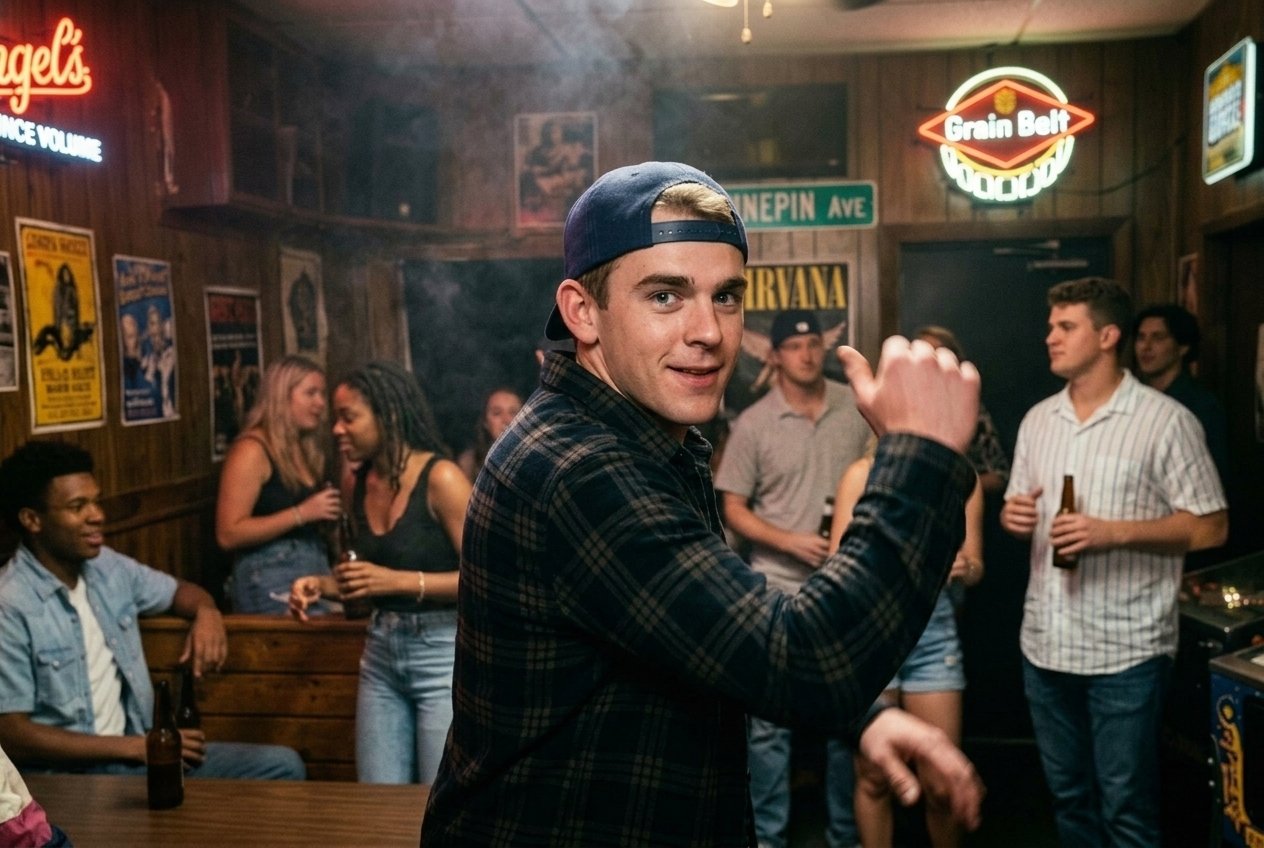
And yet, tonight, for some inexplicable reason, something feels different. Everything feels different. I’m in Covina now, dancing in this dimly lit bar that hums with quiet energy. A place I could never have pictured myself in a year ago, when every step I took felt heavy with dread. Somehow, I’ve ended up here—not because I snuck out or cheated the system, but with actual, sanctioned permission. Rehab rules being stretched thin, the grip loosening just enough for me to catch my breath. It’s strange, this freedom, and even stranger that I don’t feel the pull of alcohol. My glass sits empty, untempted. Around me is a group of faces I’ve only known for two weeks, yet they feel closer than people I’ve known for years. It’s funny how sometimes, broken people find each other at just the right time, how bonds can form in the quiet space of mutual acknowledgment, understanding, and raw honesty. These guys have seen parts of me I’ve spent years burying, parts I didn’t want exposed, but instead of recoiling, they stayed. And for the first time, that doesn’t terrify me. Out here, in this imperfect, chaotic world, I feel like I’ve stepped out of a suffocating bubble into something real—messy and overwhelming, but real.
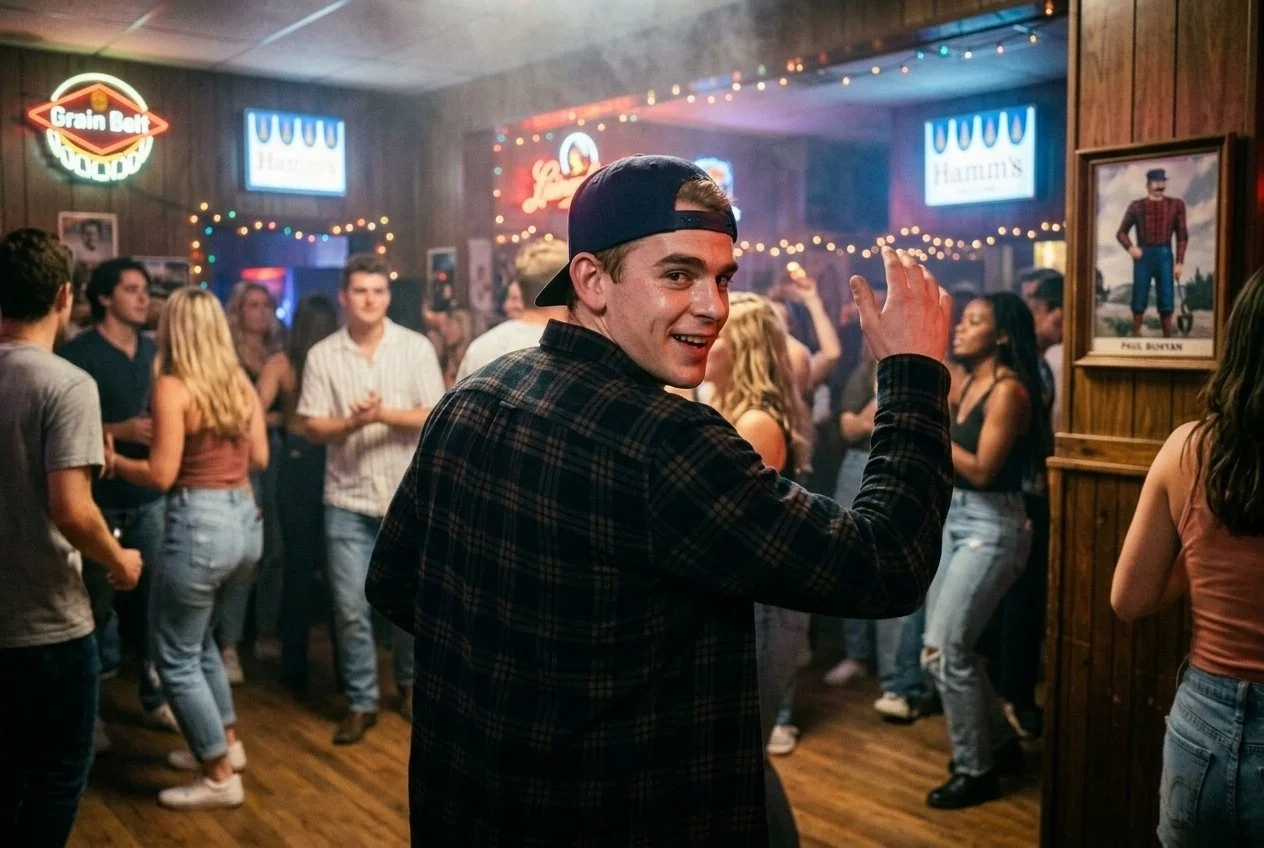
There’s music playing in the background, the kind you feel in your bones rather than process with your ears, and the chatter of voices rises and swells like waves. The laughter is sharp and unapologetic, unrestrained. For too long, I’ve been trapped in silence, in isolation, but here? It’s like waking up, shaking off years of haze. I’m not sure where this part of the story is going; I don’t even know if these people will remain in my life when tomorrow comes. But a few of them? A few of them are different. They’re the kind of people you don’t just forget, the kind of people who linger in your narrative long after chapters close.
And for the first time in what feels like forever, I’m standing. Not metaphorically or symbolically, but actually standing. It’s unsteady and uncertain, my legs weak beneath me, but it’s enough. I used to think survival was the endgame—to claw through each day, holding on by my fingertips. Tonight, though, I’m not just surviving. I’m alive, shaky and unsure but undeniably alive. And maybe, just maybe, that’s enough for now.
Epilogue:
It’s strange to think I’ll be heading home in a few weeks. After everything—the chaos, the breaking, the rebuilding—home feels like such an abstract concept. What does home even mean anymore? Is it the creaky old house where fractures began, or the space where some of those fractures started to heal? Maybe it’s neither. Maybe it’s something I have to build from the ground up, piece by jagged piece.
I’ve been texting a few old friends. It’s awkward, uneven, like trying to have a conversation in a language I barely remember. Some of them don’t respond, and I can’t say I blame them. There are bridges I’ve burned so completely that even stepping near their ruins makes my chest tighten. But there are others—people who seem to believe in second chances, or at least aren’t afraid to poke at the ashes. Those are the names I find myself clinging to most.
There’s part of me that’s terrified to leave this halfway life in Covina. Here, I’ve been suspended between worlds, accountable but sheltered, challenged but supported. Going back means facing people and places that remember me differently, facing memories that hit like punches to the gut. It means passing by faces that might not have forgiven me—faces I’m not sure I can forgive either.
But there’s also hope in what’s ahead, however tentative. I’m beginning to believe that there’s something worth going back for. It’s not about picking up where I left off; it’s about starting over and planting seeds in soil I once thought barren. It’s about being okay with shaky steps and messy attempts. There’s no map for this, no clean-cut script. It’s just me, day by biting day, learning to exist in a world I no longer want to escape.
And maybe, someday, I won’t just return to a home.
Maybe, I’ll become one.
-Deck
HOMECOMING
The Call to Adventure - Life shifted violently, pulling me from the familiar into chaos. I didn’t choose this path—it chose me, dragging me out of the darkness I had grown to accept. The call wasn’t a whisper; it was a roar.
Refusal of the Call - Fear gripped me when I saw the road ahead. Every fiber of my being resisted, clinging to the broken pieces of a life I was too scared to abandon.
Meeting the Mentor - Help came in unexpected forms—a counselor’s patient words, the unwavering support of a stranger who saw something in me I couldn’t.
Crossing the Threshold - Taking the first step was the hardest because it meant leaving behind the walls I’d built to protect myself. It meant exposing the wounds I had hidden for so long.
Tests, Allies, and Enemies - The path wasn’t linear. Each day brought trials—the pull of old habits, the questioning stares of people who doubted my change. But alongside the struggles came unexpected allies, those who understood the battles without me needing to say a word.
Entering the Abyss - There were moments I wanted to give up, to collapse back into the void, where pain was familiar, and hope was a distant dream. The abyss wasn’t just darkness; it was facing everything I’d avoided for so long.
The Revelation - The revelation wasn’t instantaneous. It came slowly, like dawn breaking after a long night—a realization that healing wasn’t about perfection but about allowing myself to be imperfect and moving forward anyway.
The Road Back - Returning to the surface wasn’t without its challenges. The world I left behind didn’t wait for me, but it also didn’t push me out. It stood there, messy and raw, waiting for me to rejoin.
Resurrection - I wasn’t the same person anymore. The storms hadn’t just weathered me; they reshaped me. Each scar, each misstep, became a mark of survival—a testament to a life reclaimed.
Return with the Elixir - The elixir wasn’t something tangible—it was hope, fragile yet vibrant. It was the understanding that life may never be perfect, but it could be meaningful.
Initiation - The decision to walk into this new life didn’t come easily. It required a choice—to fight even when the odds seemed impossible, to believe there was something worth living for.
Confronting Shadows - Looking back at the darkest moments, I saw the shadows for what they were—not my enemies, but parts of me that needed acknowledgment and understanding before I could move forward.
Forging Bonds - I wasn’t walking this path alone anymore. The connections formed during the hardest times became lifelines—threads stitching me into something stronger than before.
Overcoming the Temptation - In the face of what once consumed me, I found strength. The pull of the past was no longer as strong as the hope for what lay ahead.
Transformational Moments - It wasn’t one moment but a collection of them—realizing the cracks in my foundation allowed light to shine through, feeling the weight of despair lifting inch by inch.
Strength in Vulnerability - I used to think weakness was something to hide. Now, I see the power in vulnerability—the way it binds souls together in truth and empathy.
Walking the Unknown Path - There’s no map for this. Every step is uncertain, yet they lead to places I could never have imagined.
Finding Balance - Healing is not a linear process. It’s messy and beautiful. It’s falling down and having the courage to stand again, knowing the struggle doesn’t define me.
The Inner Battle - Of all the battles, the one within is the fiercest. Facing my fears, doubts, and pain head-on became my greatest victory.
Guiding Light - There were moments of clarity—when the universe seemed to whisper that it wasn’t giving up on me, even when I had.
Redefining Self - I wasn’t who I was before the storm, and that’s okay. I am someone new, a creation of growth, pain, and resilience.
Moments of Stillness - Sitting in quiet moments became a form of rebellion—pausing to appreciate breathing, existing, and simply being in the now.
The Healing Power of Connection - Relationships once felt impossible, yet here I am, surrounded by those who see me not as broken but as human.
Facing Forward - The past doesn’t define me. While its echoes remain, they shape rather than control, allowing me to look toward the horizon with cautious hope.
Becoming Whole - Maybe the word isn’t “whole” at all. Maybe it’s enough to be in progress, to find beauty even in the unfinished chapters. The story continues.
Empowerment isn’t granted; it’s claimed. And for Mitch Leyor, that claim began with something as fundamental as boxer briefs—a canvas for a larger mission of personal agency and cultural renewal.
Mitch Leyor isn’t merely a faith based boxer brief brand. It’s a declaration—a statement that true progress emerges from individual initiative and unwavering self-belief. Founded by Mitchell Royel, the brand represents more than fabric; it represents a philosophy.
The narrative began with a profound realization: foundational clothing is the first layer of personal presentation. Just as our convictions form the foundation of our character, these boxer briefs represent the first statement of personal identity.
Our boxer briefs aren’t just designed—they’re engineered. Each stitch represents a commitment to quality, each design a challenge to the manufactured narratives of mediocrity. We’re not selling underwear; we’re providing a tool of personal transformation.
“Boxers for Saints” isn’t just a tagline—it’s a manifesto. We believe that true empowerment begins when individuals stop asking what society owes them and start investing in their own capacity for growth and transformation.
Mitch Leyor stands at the intersection of fashion, personal development, and cultural renewal. Our boxer briefs are a symbol—a reminder that excellence is a daily decision, that success is claimed, not given.
Stay informed. Stay principled. And never compromise your foundation—whether that’s in your wardrobe or your life.