
PANIC ATTACKS DON'T ASK FOR PERMISSION
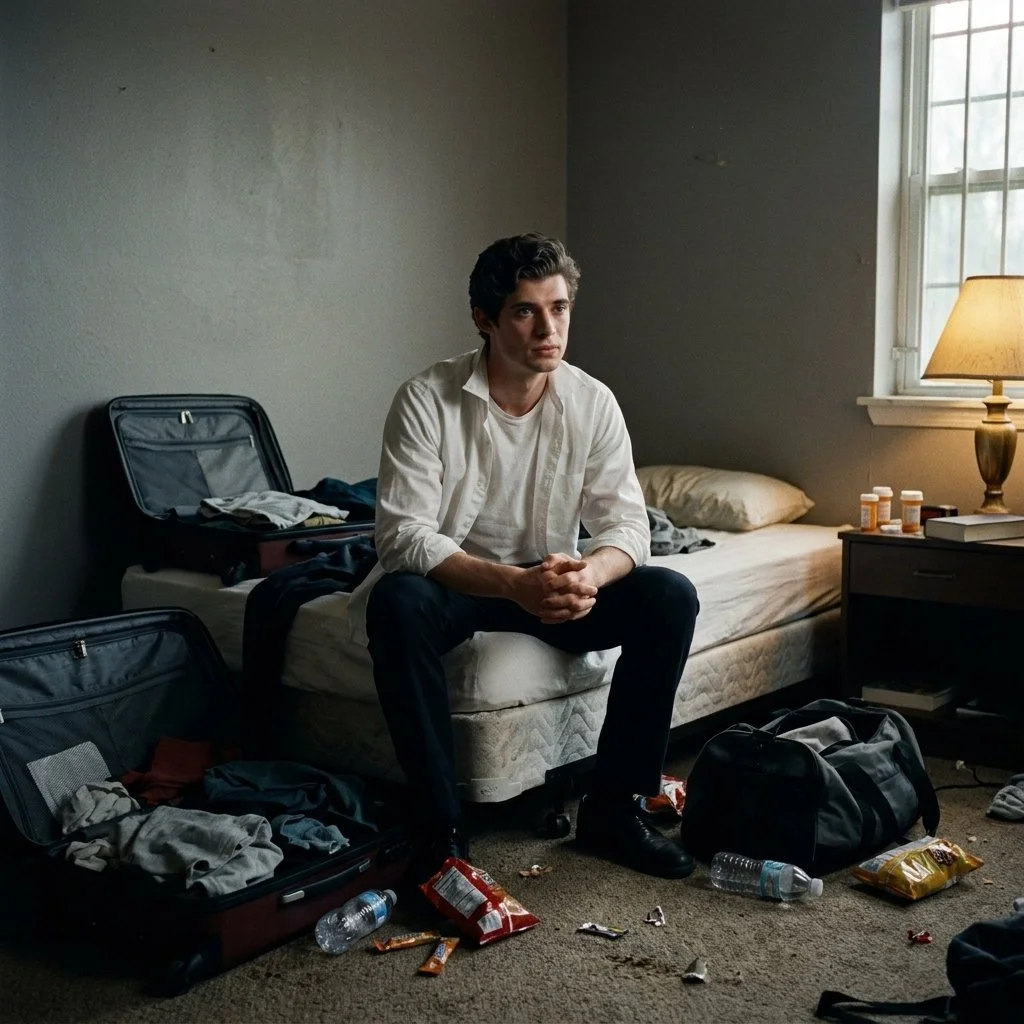
Captured on August 9th, 2026, these striking shots of David come alive through the evocative lens of Mitchell Royel, framed by the gritty charm of the Fashion District. The air pulsed with an electric energy, raw and magnetic, as if the city itself was breathing alongside them. The soundtrack told its own story, blending the soulful ache of "Sad" by Rasster & Erin Bloomer with the unstoppable rhythm of "Roses - Imanbek Remix" by SAINT JHN. This was more than a photoshoot—it was a fusion of high fashion and unfiltered edge, a place where the visceral meets the glamorous and refuses to apologize.
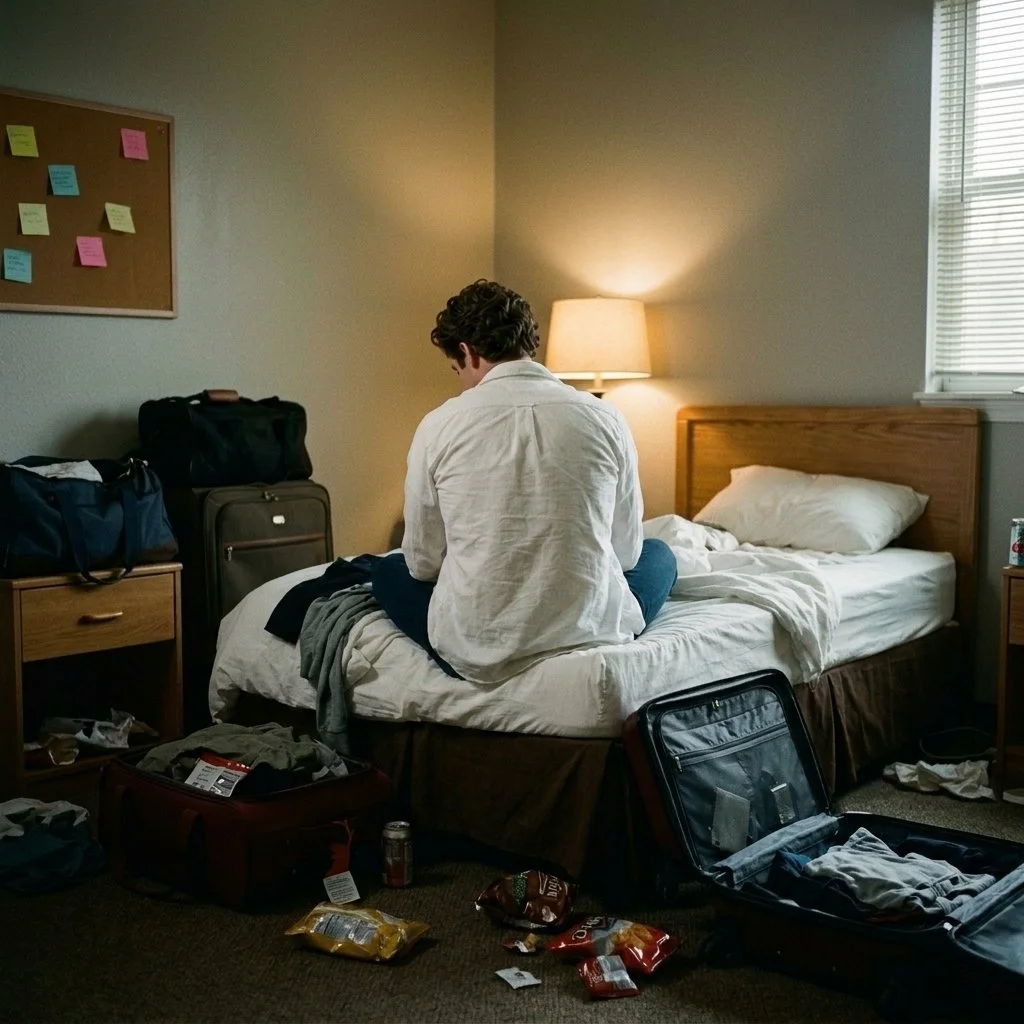
He was frantic, his hands trembling as he shoved shirts and jeans into the tattered duffle bag that had seen better days. The zipper snagged on a sleeve, and he yanked at it too hard, the way you do when your whole body is running faster than your mind can catch up. His breath came shallow. He kept whispering to himself, not words exactly, just soft sounds meant to steady the shaking, the kind of humming his grandmother used to do over a stove on Sunday mornings. He wasn't angry. That was the thing nobody here seemed to understand. He wasn't trying to cause trouble. He just knew, in the quiet marrow of him, that he wasn't supposed to be here.
The payphone in the hallway loomed in his mind like a beacon — his lifeline to whatever salvation waited on the other end. The other guys said the phones were tapped, that every call was just another way they kept their claws in you. But at that moment, he didn't care. Dinner was noises down the hall — the clatter of trays, too-many voices dying into nothing as someone banged a fist on the table — and he couldn't risk being caught in this liminal moment. His heartbeat was the only thing he could hear above the chaos, pounding, compounding, as if saying, Hurry, hurry, hurry.
The hallway was cold, sterile, its faint smell of antiseptic cutting through the traces of fried food and cigarettes that clung to the walls of the rehab. He darted to the small black payphone in the corner, the one beneath the flickering fluorescent light that buzzed audibly, like a fly caught somewhere it shouldn't be. He understood the feeling. His fingers fumbled with the coins — it was always three, they said, seventy-five cents for a voice on the other end. He pressed them one at a time into the slot, and each little clink felt like a small confession.
He dialed the number by heart. He always knew that number, even when he couldn't remember what day it was, even when the medication made the edges of things go soft. The line rang, and rang, and folded over into that recorded voice that wasn't a person at all. His own voice cracked as he spoke, sweet and small, like a boy asking permission for something he already knew the answer to.
"Hi. It's me. I know it's late." A pause. He swallowed. "I don't — I think there's been a mistake. I don't think I'm supposed to be here. I'm not saying anything's wrong with the place, it's nice, the people are nice, it's nothing like that. It's nothing personal." He wiped his face with the back of his hand. "I just don't feel right in here. I don't feel stable. I feel like the longer I stay, the further I get from myself." His voice dropped to almost nothing. "Please. Just get me. Pick me up. Before it's too late."
But who was too late for? Himself? His family, who had signed the papers with faces he couldn't read? The counselors he imagined taking a smoke break outside the staff lounge, leaning against the brick, speculating in low voices whether God could save this one? He hung up gently, the way you set down something breakable, and stood there a second longer than he should have, listening to his own breathing come back to him.
By the time he got back to his room, bag slung heavy on his shoulder, there he was. The big guy. Thirty-something. Jailbird kind of type, thick through the shoulders, ink on his forearms gone soft blue with age — but with kind eyes. The kind of eyes anyone would've killed for growing up in a place that asked them to be brutal just to survive middle school. He stood in the doorway, arms folded, muscles taut, like the room wasn't small enough to contain two people and all their baggage.
"It's called a reservation," the guy said. No expression. Like someone delivering a script he'd memorized a hundred times over, on a hundred different boys who looked just like this one. "When you keep packing your shit up and telling the counselors you're leaving. Or that you need to leave. You don't want to leave. You just want an excuse to fail before somebody else gets the chance to make you."
The boy loomed over the bag on his made bed — the pristine hospital folds he hadn't cared about until now looked suddenly too neat, too final, like something laid out for a body. His mouth opened like he might have a rebuttal. He wanted to be respectful about it. He always wanted to be respectful. That was how his mama raised him, to be soft-spoken even when the world came at you hard.
"I hear you," he said finally, and he meant it, because he did hear him. "I'm not trying to argue. I really am grateful for what y'all do here." His hands turned over each other, gentle, apologetic. "But I think somebody got something mixed up. I think I got brought here by mistake. And I don't — I don't feel stable in here. That's all. It's not about you. It's not about anybody. I just want to get somewhere I can breathe right again."
The big guy didn't move. If anything, his voice got quieter, which was worse than louder.
"I'm telling you. It's called a reservation." He let it sit in the air. "What you're doing right now — this, the bag, the phone, the mistake — it's typical. It's normal, actually. Everybody in here has stood exactly where you're standing, saying exactly what you're saying, in that exact same nice little voice." His jaw worked once. "But you need to stay. At all costs, man. You need to stay."
"You don't even know me," the boy said. Too small. Too quiet. Like the words didn't belong inside the walls of this place, like they'd get swallowed by the paint before they ever reached the other man.
But the big guy only smiled faintly. Not cruel. Sad, almost. Like he'd known dozens just like him — another reservation kind of kid, already halfway to ruining himself, still sweet enough to think sweetness was a way out. Still salvageable, if somebody stubborn enough refused to let go of him.
"I know you better than you want me to," he said. "That's the whole problem. You're not running from this place. You're running because staying means sitting still long enough to feel it. And I'm telling you one more time so you never forget I said it — you need to stay."
The boy looked at the bag. Then at the window. Then down at his own hands, which had finally stopped shaking, though he couldn't have said when. For a long moment he didn't say anything. He just breathed, the way his grandmother taught him, soft over an imaginary stove.
And a few days later, the staff had their turn.
He didn't fight them. That was the part that would sit with the big guy longest afterward — how gentle the kid stayed, right up to the end. Two men in white escorted him down the hall, past the flickering light and the little black payphone, out toward the psych ward where no one would ask him if he wanted to leave. Instead they promised quiet observation. Weeks of nothingness to fix whatever was cracked inside. Then back here for another month.
Maybe more.
-Deck, M.R, Mitch Leyor Collective
Epilogue: We speak of these places like they’re prisons, but they don’t chain us. They don’t hold us. Not really. The real chains are the ones we drag behind us — invisible and relentless, clinking with every step no matter how far we run or how fast we move. We walk into these walls desperate for escape, not realizing the escape we need isn’t to the outside, but to the inside. The mirror hurts. Too fragile to look in too long, too sharp around the edges to touch. We spend years avoiding it, convincing ourselves it’s somebody else, something else, some mistake. But the truth is, it’s just us. Just our own faces staring back, waiting. Places like this — call them rehab, psych ward, jail to the softer — they’re not the solution. They’re the pause. And it’s not the kind of pause where you exhale and step away, reset and revive. No, it’s the kind that makes you sit down in the dirt and stabilize. The kind where you finally face the truth sitting heavy in your chest.
Some of us don’t make it past that pause. That’s the reason nobody comes here to heal clean — it’s messy and raw, and most of the time it looks more like breaking than rebuilding. But every now and then, someone stays. Through the nights that feel like punishment and the mornings that crack open just enough to brush light across your scars, they stay. They prove the rest of us wrong. Not by surviving, but by reckoning. By taking the mirror in their hands and holding it steady until they see something they recognize. Something worth saving. We want to believe everyone can do the same. But we know. We’ve always known. Most never stay long enough to try.