
SUPERMAN WAS NEVER OURS TO KEEP
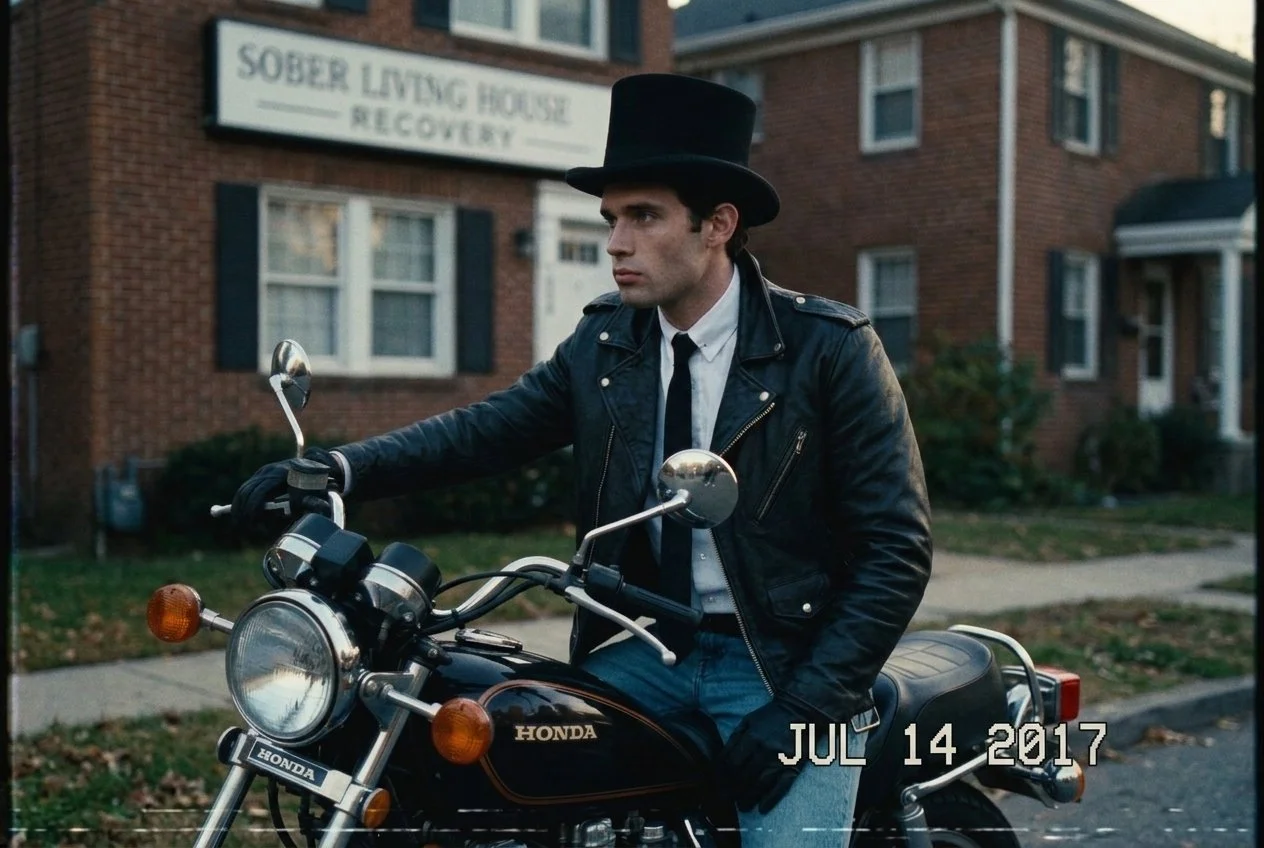
These photos of David — yeah, these photos, the ones you can’t stop staring at, the ones that look like they’ve been pulled straight out of someone’s fever dream — were captured out in the fashion district today, August 8th, 2026. And wouldn’t you know it, they were shot by none other than Mitchell Royel, the man with the lens that seems to unlock something raw, something unvarnished, something that feels like it was always there, hiding just under the surface, waiting to be found. And as we sit here, caught in the haze of it, the pulse-thrum of “Beat of Your Heart” by Purple Disco Machine and ASDIS playing like it’s the only soundtrack that could possibly fit, you can almost feel the streets humming, the air electric. You know the kind of day—late summer heat blistering through concrete, and everything around you feels sharp-edged, alive, like it could cut you and draw blood just to remind you to feel. These photos aren’t just images; no, they’re a collision, a rupture of quiet moments and that chaotic noise that never seems to stop, pressing in, turning over, and for once, you don’t mind drowning in it. Because isn’t it the beat of our hearts, the messy, imperfect rhythm of being alive, that makes all of this strange magic worth it? The kid in the corner of the frame, the shadows burned across his face, the light catching and scattering, scattering and catching—maybe that’s the harmonic dissonance wrapped up in all of us, maybe that’s what Royel saw, maybe that’s what comes next.
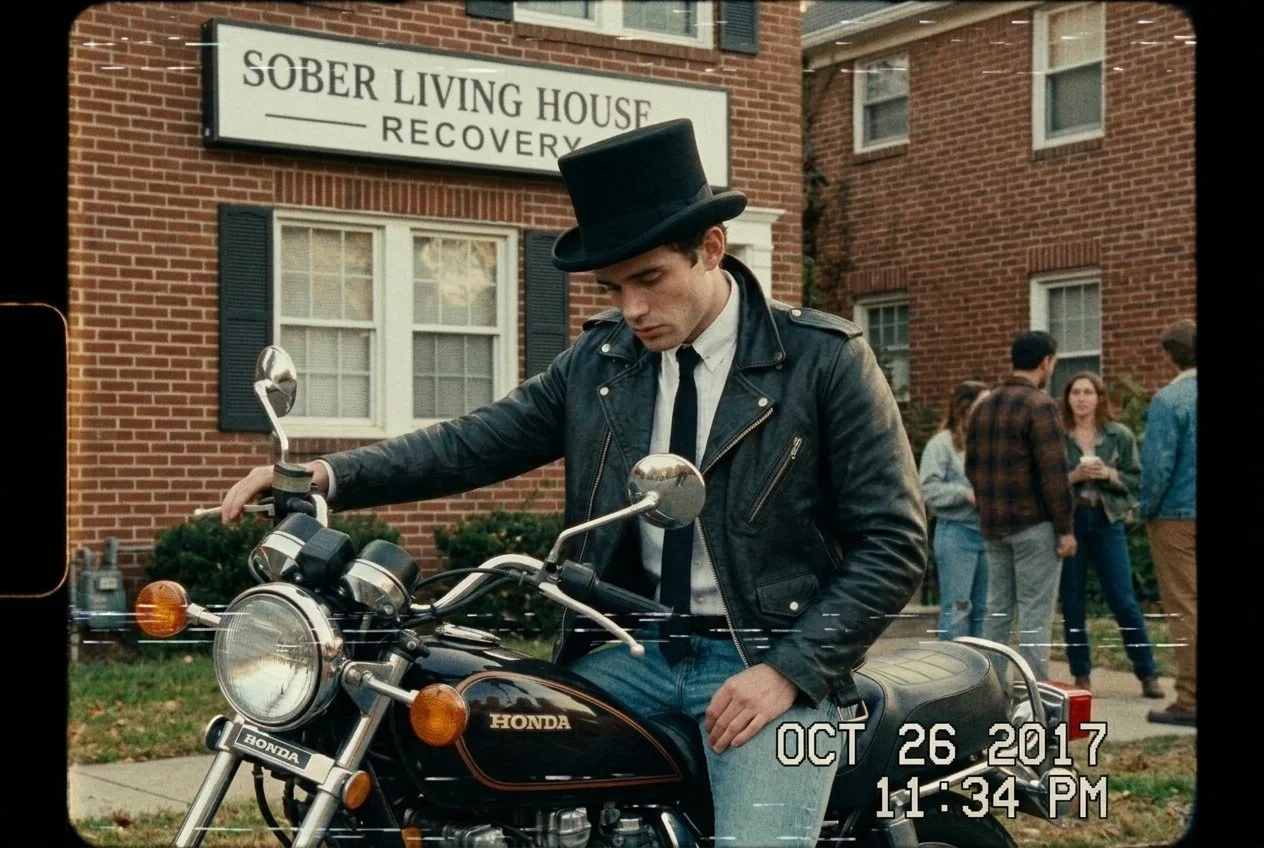
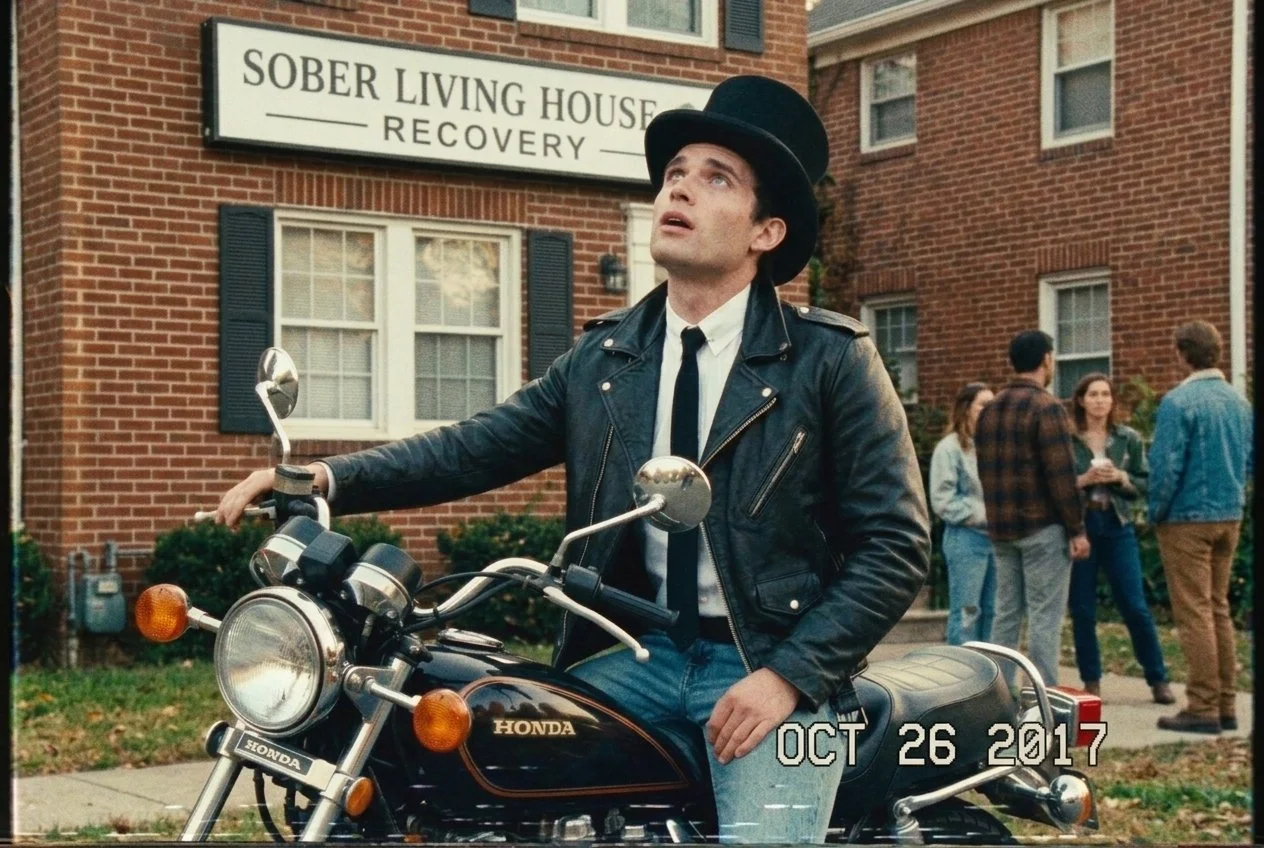
Let me tell you about the fluorescent light in a rehab hallway at three in the morning. It doesn't flatter anyone. It finds the truth in your face and it holds it there, buzzing, like it's daring you to look away. I couldn't sleep. I never could, not those first weeks. My body was still learning how to be a body again, how to sit inside itself without something to soften the edges.
I'm twenty-three. I grew up in a town with two Starbucks and a lacrosse team that made regionals. My father has a phrase for what happened to me. He calls it "your little detour." That's what money buys you, I've learned. It buys you a vocabulary. Light probation. No jail time. A room with a window and a counselor who says my name like it's a fragile thing she's setting down on a shelf. My father said it the way men like him say hard things — clipped, clean, already moving past it, like if he named it softly enough it wouldn't leave a mark on the family. He flew in for the intake appointment in a sport coat. Shook the counselor's hand too hard. Drove back to the airport without staying for lunch. That's love, in the language we spoke. Showing up and not saying what you came to say. Somebody else did what I did and they're gone now, swallowed by a system that never learned their name gently. No father in a sport coat. No soft vocabulary. No detour — just the end of the road. I know that. I carry it. It sits in my chest like a stone I keep meaning to set down.
And then there was him.
I'd seen him at dinner. We all had. He was sharing — they make you share, you sit in the circle and you hand your worst self around the room like a collection plate — and halfway through, something broke open in him. His breath started coming wrong. His hands went to his throat like he was drowning in air. They took him out fast. An ambulance. A panic attack that looked like a heart giving up. We finished our mashed potatoes in a silence so loud I could hear my own pulse.
So there he is. Three in the morning. Wandering.
A tattered Superman shirt, the red faded to the color of an old scar. That yellow diamond on his chest cracked and peeling like paint on a house nobody loves anymore. His eyes were glass. He was on more pills than the rest of us combined — I knew that the way you know things in a place like that, by osmosis, by the pharmacy line. The nurses checked on him twice as often. You could hear it sometimes, the soft knock, the door cracking open, a beam of light cutting across the hallway floor. He moved like a man walking underwater. Slow. Careful. Like the air itself had weight and he was the only one who felt it. And we stopped. We locked eyes across that terrible buzzing light.
And I opened my mouth, and this is what came out. I swear to God, this is what came out of me.
"What do you think girls see in Superman?"
He looked at me. Blinked. And then — and I will never forget this as long as I live — he looked at me like I had lost my mind. Not like he was confused. Like he had clocked me immediately, completely, and what he had clocked was a man unraveling in real time for reasons that had nothing to do with him. It was the most lucid look I'd seen on anyone in that building. Behind those glass eyes, something sharp and ancient moved. A recognition. He looked at me the way you look at someone talking to themselves on the subway — not with cruelty, just with the calm understanding that whatever is happening to this person, it isn't your emergency. He looked at me like: this is the whitest thing that has ever happened to me.
"What are you talking about?" he said.
"Your Superman shirt," I said. "What do you think girls see in him? Superman?"
And I want to try to explain this, because I've been trying to explain it to myself for months now. It wasn't a bit. It wasn't a conversation starter. It was the only true thing I could think to say. That's the honest answer. That's the whole answer. It was three in the morning in the worst year of both our lives, and I was standing in a fluorescent hallway in front of another human being who had almost died at dinner, and I had nothing — I had absolutely nothing — that felt real enough to offer him. Not how are you feeling — hollow. Not that looked scary earlier — condescending. Not I saw what happened — like I owned it, like his panic was a thing I could claim. So my brain went somewhere else entirely. It went somewhere true. It went to the shirt. To the faded symbol on his chest. To the question I didn't know I'd been carrying. What do girls see in him? What does anyone see in a man who can't be broken? And why was this boy — this medicated, wandering, glass-eyed boy that the world had already taken so much from — why was he still wearing that symbol at three in the morning? What was he holding onto? What did it mean to him? I didn't know how to ask any of that. So I asked the question underneath the question. And it came out sideways. And he looked at me like I was crazy. Because I was. Because that's what that place does to you, and that's what that hour does to you, and that's what another person's suffering does to you when you don't have the language yet to meet it properly.
He didn't answer. He just held me in that look a beat longer — that flat, exhausted, I don't have the bandwidth for whatever this is look — and then he turned. And he shuffled back into his room. The door clicked. And I stood there alone in that light, feeling like I'd asked a question I'd be trying to answer for the rest of my life. Feeling like I'd reached out and grabbed air. Feeling, underneath all of it, something I couldn't name yet — a grief that didn't belong to me, wearing a face I didn't know.
Here's the thing I've been turning over ever since, like a coin in my pocket I can't stop touching.
We gave Superman to boys. We told them he was about strength. About the fist, the flight, the enemy defeated by dinnertime. We made him a fantasy of power for people terrified of being powerless. That's what he was to me — a suburban kid with a father who shook hands too hard, who thought the whole point of a man was to never break, to never need the ambulance, to never sit in the circle and pass your worst self around the room. Superman was the lie we told ourselves so we didn't have to learn how to be soft.
But I think we got it wrong. I think it's important — genuinely, urgently important — to consider what women see in Superman. Because I don't think they see the strength at all. I think they see the tenderness the strength protects. They see a man who could destroy the world and chooses, every single day, to be gentle instead. They see the restraint. The mercy. A creature of unimaginable force who kneels down to be kind. That's not a fantasy of power. That's a fantasy of safety. Of being held by something that could hurt you and never, ever would. That's what my father never understood. That's the sport coat version of Superman — the appearance of invulnerability, the handshake, the quick exit. It looks like strength. It's actually just fear with better posture.
In many senses, Superman was always for girls. He was always the promise of a strength that stays gentle. And I never understood that until I saw him worn thin across the chest of a boy who had none of it — no power, no flight, no invulnerability — a boy the world had bruised in every place a body can be bruised, still walking a hallway at three in the morning wrapped in that fading red and blue. A boy who looked at a stranger asking him a crazy question and gave him, without knowing it, the most honest and grounded look he'd received in weeks. Because that look — that what is wrong with you look — was the look of someone still in there. Still present. Still capable of seeing clearly, even through the fog of everything they were giving him to make the fog thicker.
Because maybe that's who Superman was really for all along. Not the strong. The breakable. The medicated. The ones who wander. The ones nobody's coming to save. Maybe the shirt wasn't ironic at all. Maybe he was wearing the one thing that still whispered to him that gentleness and strength could live in the same body — even when his own body was betraying him. Even when the symbol was cracking and the red was fading and the diamond on his chest was peeling away like something the world had tried to take back.
I got probation. I got a window. I got a father who flew in with a sport coat and a soft word for my ruin — detour, he called it, detour — like I'd taken a wrong turn on a road that was always going to lead somewhere fine.
He got a shirt.
And I think about him every night the light won't let me sleep. That Black kid in the tattered cape that wasn't a cape. Wandering. Carrying more weight than any of us, chemical and otherwise. Looking at me like I was out of my mind — because I was, a little — and then turning and going back to his room, back to whatever the night held for him, back to the medication and the soft knocks and the beam of light under the door. I hope he slept. I hope something in him rested.
And I hope — God, I hope — that somewhere behind those glass eyes, some part of him still believed the thing that shirt was trying to tell him.
That he was worth saving.
That he always had been.
That Superman, at the end of it all, was never really about the ones who couldn't be broken. He was about the ones who were. He was about the boy in the hallway. He was about the question you ask when you have no other words. He was about three in the morning and a buzzing light and two people who had no business being alive in that corridor, looking at each other across the distance of everything, and one of them — just barely, just for a second — still seeing clearly.
-Deck, M.R