
TWENTY DIFFERENT HOUSES
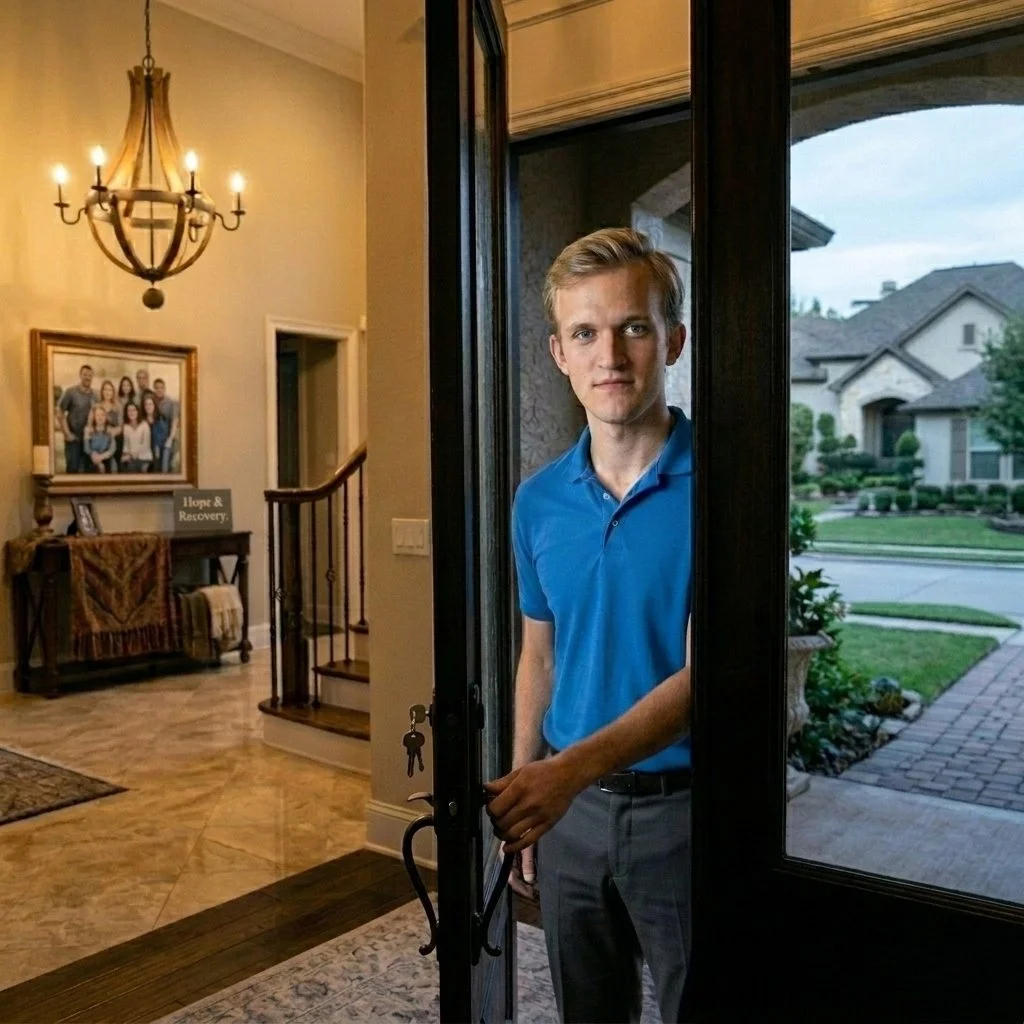
The following photos, taken today, August 7th, 2026, in the heart of the fashion district by the talented Mitchell Royel, capture the essence of creativity and style. And as we soak in these photos, we're vibing to the sounds of "Want U" by Hayley May—it's a whole mood.
"You really should stop smoking so many cigarettes," he said, his preppy voice cutting through the hum of my thoughts. It didn't faze me at first—it never does. I stared at him for a moment longer than I should've, watching him perched there, book in hand, legs crossed like he belonged in some crisp catalog for an Ivy League school. I kept pacing, circling him like a hunter studying prey, though truthfully, I was just waiting for him to look away first. He didn't.
Why was he out here, really? Not in the physical sense—sure, he had walked out onto the stoop because I was pacing circles outside, but emotionally? Mentally? Spiritually? These were the questions stuck rattling inside my skull like loose screws. Trusting someone's intentions in here was a gamble, one most of us didn't have the energy to place. Yet, here he sat. Watching. Not judging, not speaking much either, but just… there. Like my pacing was a puzzle he was determined to solve.
He turned a page without reading it. I noticed that. People think you can't tell when someone's faking their way through a book, but you can. The eyes stay too still. The thumb moves too soon. He was performing calm the way I was performing chaos, and for one horrible, electric second, I wondered if we were the same animal wearing different fur.
"You keep looking at my book," he said, not looking up.
"You keep pretending to read it," I shot back.
The corner of his mouth twitched. Not a smile. Smiles were for people who hadn't ended up here. This was something smaller and meaner and more honest—the flicker you give someone when they catch you in a lie you didn't mind telling.
"You seem troubled to me," he finally said, still calm, still composed, eyes flicking back to his book. Troubled. It was a neutral word, sterile almost, like it could be the diagnosis of all diagnoses. Troubled covers anger, sadness, nervous energy, shame. Troubled was exactly what I was, and something about hearing him name it made me stop mid-step, if only for a second. But I didn't give him the satisfaction of a reply. I kept moving because forward momentum is all I've been chasing—sometimes running from, sometimes running to—but never standing still.
Here's the thing nobody tells you about getting clean: the drugs were never the loudest part. The loudest part is the silence they leave behind, this roaring, cavernous quiet where the noise used to live. And people like him—people with pressed collars and dog-eared paperbacks and voices that sound like old money—they walk into that silence like it's a room they've been invited to. Like it's theirs to sit in. I hated him for that. I hated that he made stillness look survivable.
"What are you reading?" I asked, because I couldn't stand my own quiet anymore.
He held up the cover. Something with a lighthouse on it. Of course. Of course it was a lighthouse. A boy like him would read a book about a beam of light cutting through fog to warn ships away from the rocks, and he'd think it was about hope. I looked at that lighthouse and thought about all the ships that saw the light too late.
"You can borrow it when I'm done," he said.
"I don't finish things," I told him. It came out more honest than I meant it to.
"Nobody does the first time," he said. And God, I wanted to slap that sentence right out of the air.
I left without a word the next week. Signed all the exit forms, did the terribly awkward goodbye-smile-wave to the familiar strangers in group therapy, and pocketed the card everyone had scribbled on like it was protocol. "We're rooting for you!" Someone wrote with a pink Sharpie. Pink. Something about that color made me want to laugh and cry at the same time.
He didn't sign it. I checked. Twice. I turned that card over in my hands like it owed me something, running my thumb across every name, and his absence was louder than any signature could have been. That's the cruelty of people who watch you closely—they teach you to feel the shape of what's missing.
Two weeks into the new house—the sober transitional living—routine was kicking in. Two mandatory morning meetings, one outpatient session, and a lot of meals eaten too quickly because silence is somehow heavier when you're around people you don't really know. I hardly thought about him. The boy with the book, the pacing observer with the unshakable gaze.
That's a lie. I thought about him constantly. I thought about him the way you press your tongue against a sore tooth—not because it helps, but because the ache reminds you you're still capable of feeling anything at all. I'd catch myself pacing again, out of habit, and I'd half-turn to see if he was watching, and the empty step where he should've been sitting felt like a punchline to a joke I didn't get to hear.
And yet, when I opened the door that morning, there he was. Eye level, face inches away, arms throwing themselves into a hug like instincts had taken over before either of us had time to think. "What the—what the fuck are you doing here?" I choked out, pulling back to make sure he was real.
He was warm. That's what undid me. In every version of this scene I'd played out in my head—and there were versions, embarrassing numbers of versions—I never accounted for the warmth. Ghosts aren't supposed to be warm. Fantasies aren't supposed to smell like cedar and cheap laundry detergent. But he did, and he was, and my whole body forgot the speech I'd rehearsed for exactly this impossible occasion.
"There are twenty different houses this could've been," I said, trying to make sense of the unlikelihood of it all, the impossibility of the moment. "You don't even live near Woodland Hills."
He shrugged, and the shrug had a whole theology in it. "Maybe I do now."
"That's not an answer."
"It's the only one I've got that's true."
I searched his face for the catch, the con, the small print at the bottom of the miracle. Everyone in here has an angle; sobriety doesn't erase the con artist, it just gives him a new script. But his eyes—those unbearable, level eyes—held nothing I could weaponize. And that terrified me more than a lie ever could. A lie I know how to survive. Sincerity is the thing that's killed better people than me.
"You still smoking?" he asked.
"You still pretending to read?"
That flicker again. The almost-smile. "I finished the book," he said. "There's a copy for you upstairs. I already dog-eared your page."
"I told you. I don't finish things."
"I know," he said, stepping past me into the house like he'd lived there all along, like the threshold had simply been waiting for him to cross it. "That's why I started it for you."
Looking at him was like staring at a chapter of the book that hadn't been written yet but had somehow started bleeding onto the edges of my pages. Life has a way of making the impossible feel inconvenient before it starts making it make sense. Maybe houses were supposed to be relative. Proximity felt less like a coincidence and more like an invitation to leave skepticism at the door. Because trust—the real kind—lives somewhere between the counterintuitive endings and unexplainable beginnings.
-M.R, Deck, Mitch Leyor Collective
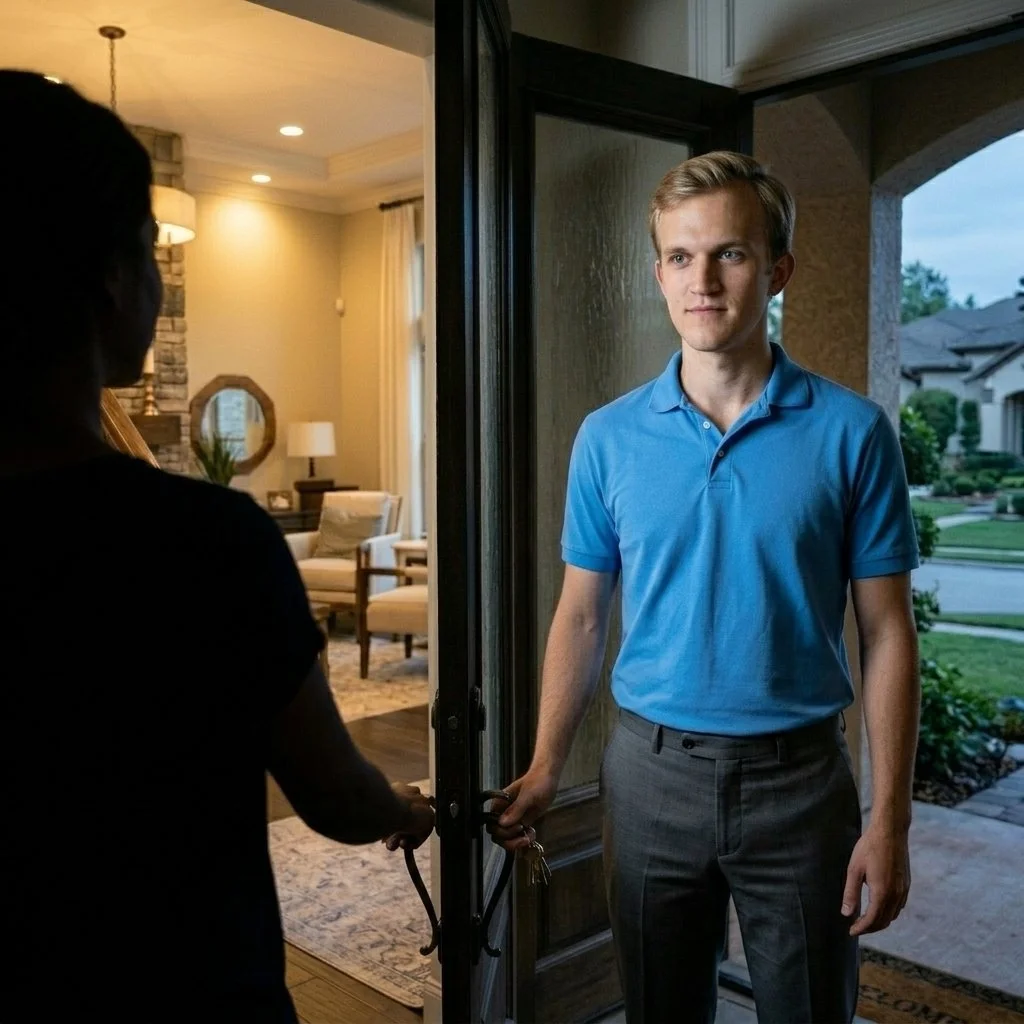
Epilogue: I’ve always thought friendship has this uncanny way of finding us right when we’re crumpled at the bottom of everything—like splintered glass scattered across the floor, and somehow, someone has the audacity to reach out with bare hands and try to piece us together. It's wild, really, how it happens. The irony doesn’t escape us either—rock bottom is the only place where every facade we’ve built crumbles. There’s no energy left to fake a smile, pretend the cracks don’t exist, or convince anyone we’re fine when we’re clearly not. Twenty different addresses, twenty different detours in life, and yet somehow, paths collide in this raw, shared space where every version of brokenness brushes up against each other. What’s strange, though, is how it doesn’t come from the shiny narratives of triumph or the golden-hour moments that movies like to sell us. It’s born in the spaces where words falter, in the pauses that hang heavy, in just existing together—letting someone stay inside the stillness of our wreckage, no need to tidy up the shards before they sit beside us. And maybe, just maybe, all those alternate routes—those missed turns and painful endings—they were never random. Maybe they all lead here, to this messy, imperfect truth, because sometimes we can only really see the ones who’ll stay when the dust has settled, and all we’ve got are fragments left.