
WE WERE NEON UNTIL THE SUN ROSE
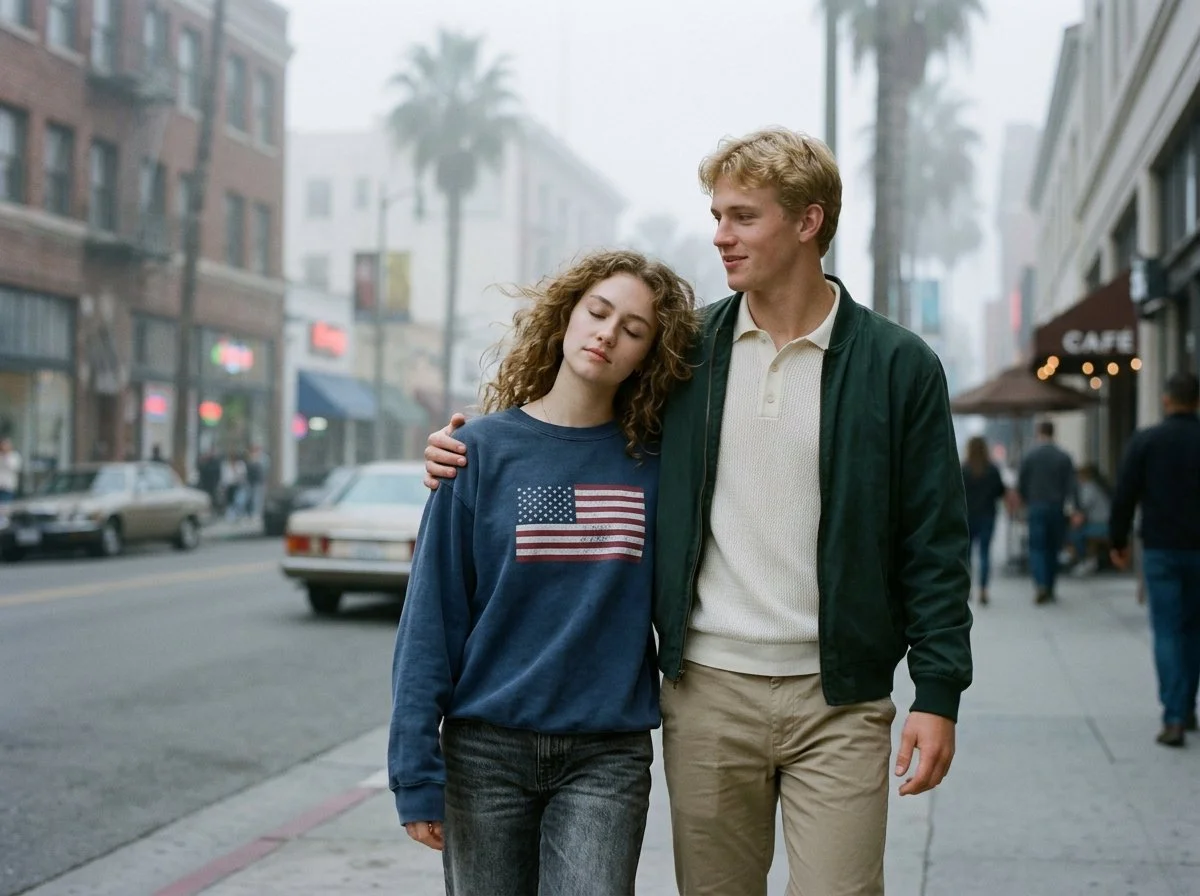
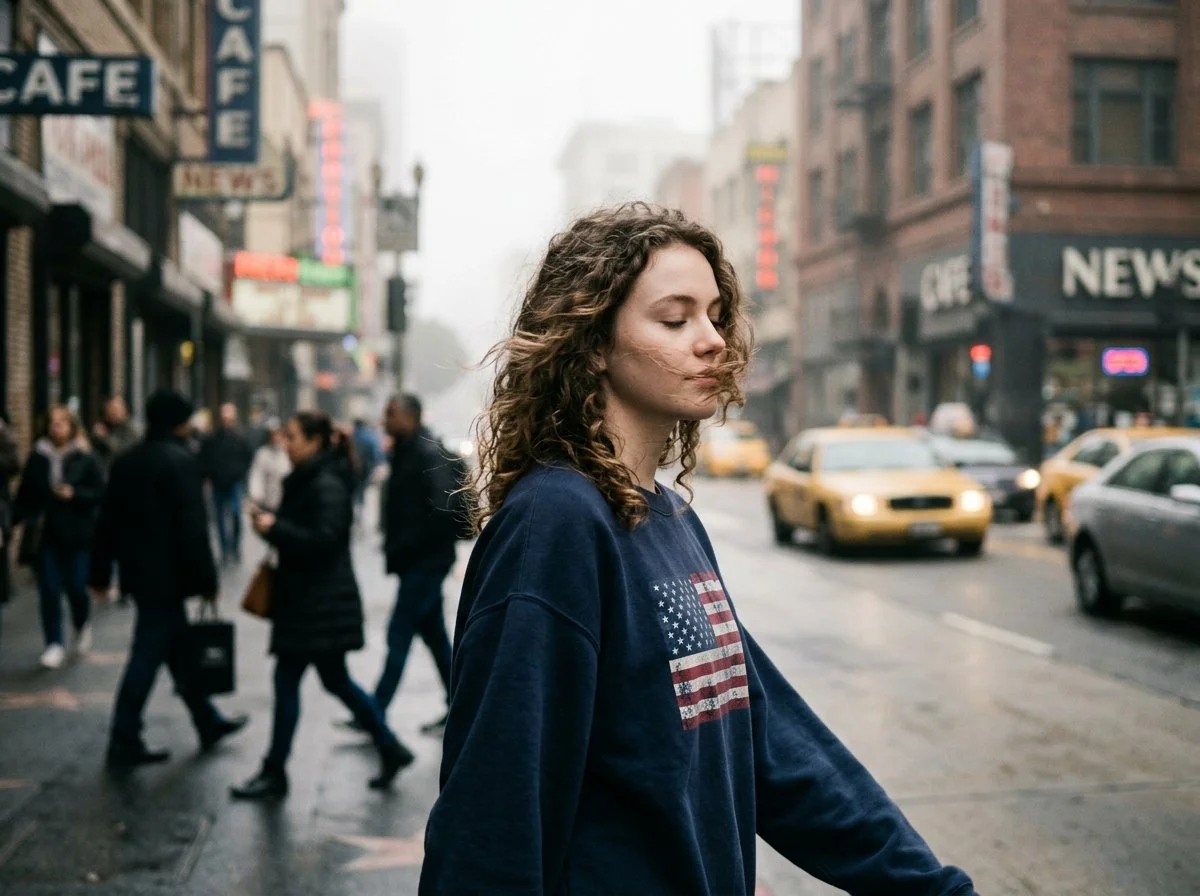
Captured today in the Fashion District, where the sunlight drapes the streets like silk, wrapping everything in a golden haze that feels equal parts intimate and cinematic. We wandered through the maze of pattern-covered fabrics and storefronts gleaming with possibility, the hum of sewing machines spilling out into the air like a soft undercurrent of industry. And through it all, we were lost in the rhythm of I Feel Ya by Cheat Codes, Danny Quest, and Ina Wroldsen—a heartbeat of a track that pulses with longing and electric energy, matching stride for stride with the city’s own pulse. It was the kind of moment where everything and nothing aligns, where a song becomes your soundtrack, and even the smallest flicker of movement feels like it carries the weight of something worth remembering.
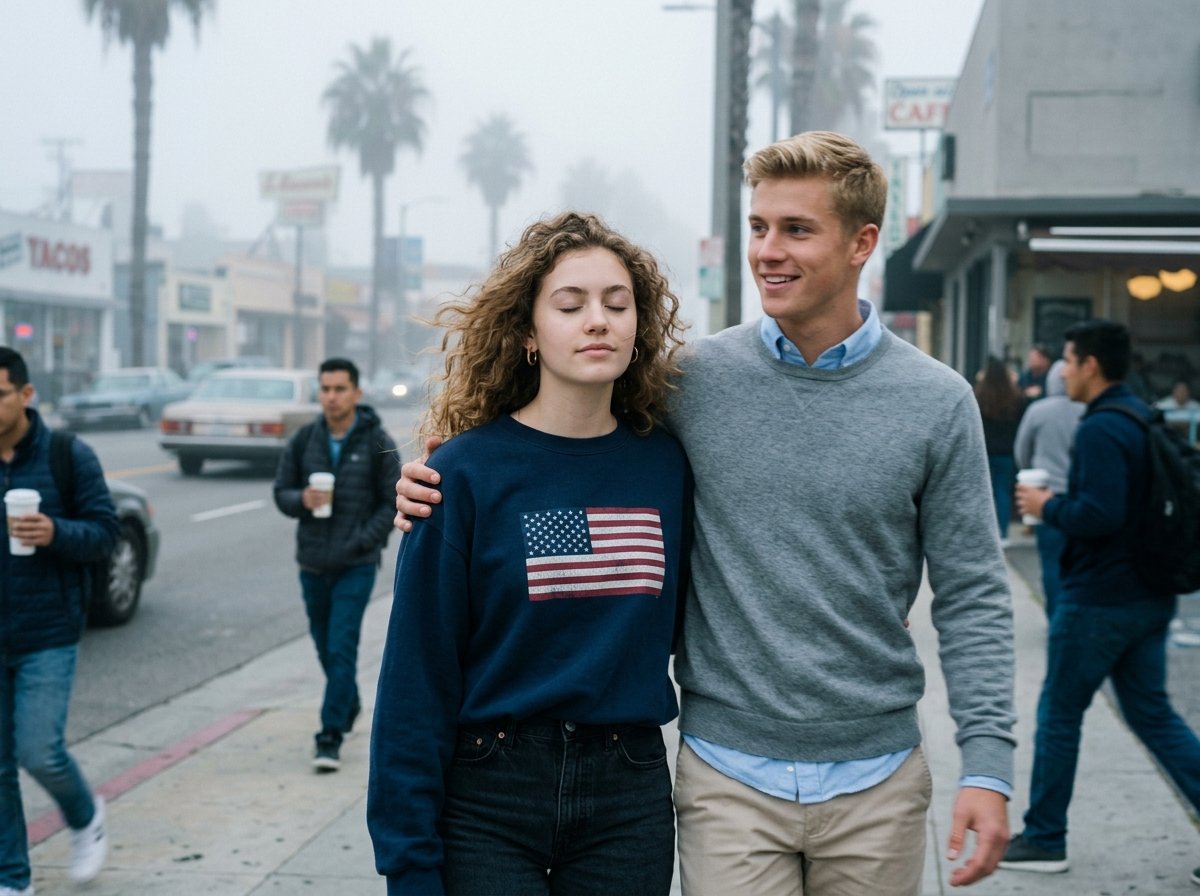
There’s a particular kind of holy magic in loving a maker. You already know it. The one who gets that faraway look at 11 p.m. and grabs whatever’s closest—a pen, a laptop, a napkin—to anchor the idea before it floats off. The one who hums melodies in the shower, sketches visions on envelopes, or lets a half-baked poem roll around in their head like a secret. Loving them is a sacred practice; it’s saying yes to the unraveling, the chaos, and the quiet genius all in one. And here’s the thing we don’t talk about enough—being the partner of a creative soul? That’s its own art.
Because creativity, it’s a raw, tender thing. It shows up undecided, messy, and vulnerable—hands shaking as it says, “Do you see me?” And what’s your role in that moment? Not to perfect it. Not yet. But to look your bae straight in the soul and say, “I see you. Keep going.” Because the half-formed, unsure version isn’t a flaw; it’s the magic in progress. And that’s where love does its best work—right in the messy middle.
Here’s the truth most people miss—we think helping means fixing. Pointing out what could be better. Offering advice they didn’t ask for. But nah. That’s not what the creative spirit craves. What they’re really asking for is presence. Permission to be where they are. Sometimes all they need is you shutting down the noise of the world—phones off, patience on—and giving them that simple, radical permission to take up space. To dream out loud. It’s not about managing their spark. It’s about mirroring their light back to them when they’ve forgotten how bright it is.
And yeah, they’ll hit the wall eventually. All creators do. The moment when every idea feels pointless and the blank page stares back like a dare. Your job isn’t to hustle them out of the fog or toss motivational clichés their way. No, you get in the murk with them. You sit it out. You remind them that shit feels heavy because it matters—and courage is just persistence when there’s no clear path.
Loving a creative is about guarding their fire. Protecting a kind of unreasonableness most of the world doesn’t dare entertain. They’re not here to be practical; they’re here to chase the impossible. And your love? It’s the safety net that tells them, “Jump. I’ve got you.” Whether it’s a genius idea or a glorious mess doesn’t matter—what matters is the jumping.
And when they finish? Don’t skip the joy. The champagne-toast-worthy, scream-it-from-the-rooftops pride. We rush too quickly to the next thing, the next goal, the next deadline. But creativity blooms in celebration. When they win, make it loud. Frame the sketch. Playlist the launch. Brag like it’s your job. Their work deserves every ounce of your awe.
But here’s the tether for it all—the love can’t just be about what they create. It’s gotta go deeper. Love them for who they are when the page stays blank, when the notes don’t flow, when they’re all mood and no movement. Because that person? They’re the gift. Not the art, not the output, not the sales or the applause. Them. Always.
At the end of it all, loving a maker isn’t about getting where they’re going. It’s about holding the space where they can be endlessly who they are. A safe zone for risks and dreams so big they spill over. That’s the duet. That’s the dance. Two souls holding space for each other’s fire to burn wild and free. And that? That is where the real masterpiece lives.
-Ryder
WHERE THE CONFETTI SETS US FREE

Captured by Mitchell Royel on iPhone 9/12/26 in the Fashion District: There’s this cinematic energy in the air, like a swirling tide of glitter and light. The moment you know you’ve made it—the second you feel it crystallize in your bones—almost always sneaks up on you when you least expect it. Standing there, confetti catching in our hair under the cracked-open sky, it’s clearer than it’s ever been. Can’t Do It by Loren Gray and Saweetie spins through the air, each beat pulling us forward, like the world’s granting permission to finally take that next step, to live untethered. We’re dressed like we’ve been waiting our whole lives for this night, but the truth is, we already had everything. Every laugh, every tear, every messy sidestep—it’s led to this unshakable freedom. The confetti floats like new beginnings, landing without a sound, and we know, deep down, we’re exactly where we’re supposed to be.
We waited for this. Not the kind of waiting that fits neatly into minutes or hours, but the soul kind. The kind that stretches across busy seasons, hard years, and calendars that stubbornly refused to align. Us girls, us sisters, we saw this day coming and circled it like it was sacred—because it is. And now? Now we're here. Bags packed with more intention than clothes, hearts wide open, feeling the gangway beneath our feet. This is more than a ship — this is a threshold. A passage from who we've been to who the universe is inviting us to become.
Feel that hum in your chest? That's not nerves, sisters. That’s arrival. That’s the universe reassuring us that we are exactly where we are meant to be. We step onto this ship as a united, radiant group of women who chose each other. Us girls, we didn’t just stumble here; we showed up. We said yes to this, to ourselves, to each other — when it would’ve been so much easier to stay small, stay comfortable, and stay home. Take a look around. These are your people. Your fleet. The universe brought us together.
We've been mapping this out for so long. And no, I don’t just mean the ports we’ll visit, the restaurants we’ve gushed over, or the nights we’ll spend under strings of warm, glowing lights. No, girls, we’ve been mapping ourselves. We’ve been sketching out the corners of our souls, inking out how we want to feel deep inside. And the answer? Free. Radiant. Undone in the best, most beautiful way. Not performing or pretending, but living — deeply, intentionally, and boldly. We're here to feel it all, every moment, all the way through. Because that’s what the universe gives us — a chance to live so fully that even the edges of our emotions gleam.
And here’s where we make the vow, girls. A real one, a sisterhood pact if there ever was one. We are not, under any circumstances, dragging our ghosts onto this ship. Those men who lied? The ones who left scars on our stories? The ones who took and never gave back? They stay on the shore where they belong. They are not part of this chapter, not even a footnote. This ship is our escape, our evolution, and we are stepping into it unburdened. The universe has no room for the past here. It asks for fresh starts, for wide-open hearts, for the kind of transformation only possible when we stop carrying old baggage.
And we’re not just leaving the men of our past behind, sisters. We’re letting go of the habit of handing the next kind face the bill for the cruelty that someone else left behind. We are stronger than that. Because strength isn’t about guarding wounds or building walls. It’s about showing up clean and whole — curious, not jaded. Forgiven, not bitter. We’ve done the work, my sisters. Oh, we’ve done it. We’ve cried in our cars, clutching the steering wheel like a lifeline. We’ve poured our hearts onto tear-streaked pages in the dead of the night. We’ve forgiven, even when that forgiveness felt like pulling shards from our skin.
And now? Now we get to walk into every conversation, every adventure, every connection as the fullest version of ourselves. Not splintered, not protective, but free. That is the most powerful thing we can do as women — to stay open after everything in the world might’ve tried to make us close. The universe doesn’t shrink for closed hearts. It expands for open ones. That’s how we honor it, and that’s also how we honor ourselves.
This ship, this moment, these sisters standing beside us — they are part of the coalition we’ve built. Together, we make the vow that we heal so we don’t repeat. We soften so we don’t harden. We promise to show up fresh, every single time, no matter how messy or complicated the past has been. The slate is clean here, girls. The slate is a glorious, sunlit horizon. And that’s what we hold space for — new beginnings, not just for others, but more importantly, for ourselves. Because we deserve to start over, however many times it takes, with the sun on our faces and salt in the breeze carrying away what no longer serves us.
The truth is this, my sisters — whoever we meet out here under this wide, endless sky? The universe ensures they’ll be meeting the truest version of who we are. The version of us that no longer holds onto fear like a safety net. The version that finally believes there’s nothing to apologize for when we laugh too loud, trust too boldly, or love with the kind of bravery that can change the course of a life. That’s us now. We’re bold enough to choose joy over caution, curiosity over cynicism, and connection over fear. We trust our own gut now like it’s been whispered to us by the universe itself.
The horizon is right there, girls. Do you see it? It stretches endlessly, just for us. Just for this moment. It’s the universe reminding us that we are limitless, that our stories are still being written, that every chapter ahead is ours to shape. We are not just embarking on a trip — we are setting ourselves free. And together, bound by sisterhood, open hearts, and that constant hum of the universe’s presence, we are unstoppable.
Go on, girls.
Go on, sisters.
The universe is calling.
It’s endless.
It’s ours.
-Ryder,
Mitchell Royel,
Gospel Glamour Collective

Epilogue: And so, as the sky softens to twilight and the sea draws its gentle breath beneath us, we close this chapter the way it began — with reverence for the story we’re writing and the women we’ve become. The hum of the universe hasn’t quieted; it’s only settled deeper into our bones, a steady rhythm that reminds us we are exactly where we’re meant to be. The echoes of laughter, of whispers shared under star-lit skies, linger like a halo around this moment, reminding us that nothing truly meaningful is left behind. The world we return to won’t be the same because we are not the same. We carry the salt of the ocean in our spirit, the soft glow of sunsets in our minds, and the unshakable bond of sisterhood in our hearts. Whatever comes next, whatever paths we find ourselves on when this voyage ends — we promise to walk forward with this fierce, radiant knowing. Us, the girls who chose freedom, chose wholeness, chose each other. We don’t just reflect the universe; we are its most audacious creation. Go, sisters. The world is waiting.
ASHES
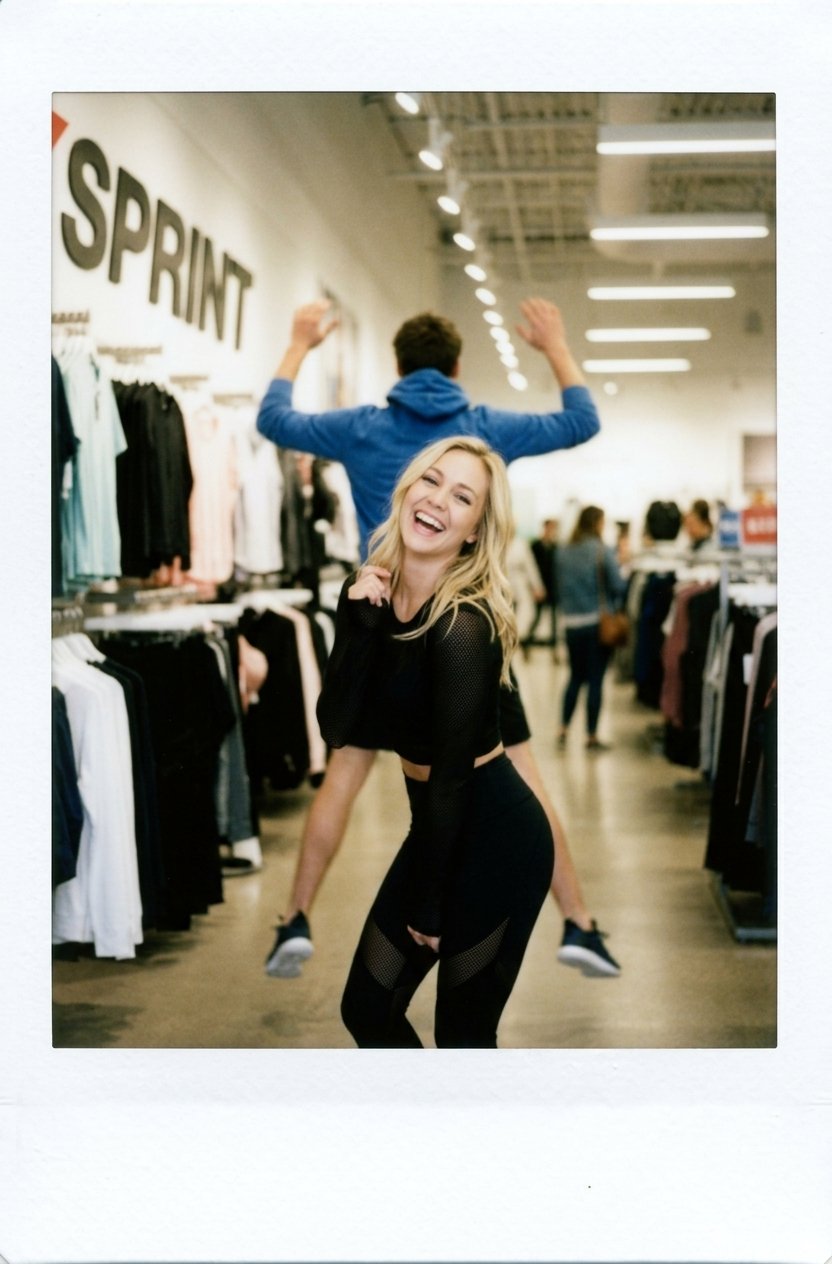
Captured in the fashion district this morning by Mitchell Royel on iPhone, the scene carries a raw kind of magic — a blend of movement and stillness that turns the ordinary into art. The sunlight caught between looming buildings, the vibrant shuffle of passing strangers, and the quiet resonance of purpose in every detail; it’s a moment suspended in time. And as the city hums to life, we’re listening to "This Is What You Came For" by Rihanna and Calvin Harris, the beat threading itself into the rhythm of the streets, each lyric a pulse in the heartbeat of a place that never sleeps, never settles. Sometimes, it’s the mundane that whispers the most profound stories — a snapshot like this one, where the beauty is not just seen but felt.**
You know the feeling. Don't pretend you don't.
You walk into a room — could be anywhere. A bakery at 6 a.m. with the ovens humming. A retail floor where the lights hit just right. A hotel ballroom full of network marketers clutching lanyards and dreams. And something in your chest lights up like a struck match. Because it feels exactly like it used to feel. Like acting class on a Tuesday night when the scene finally cracked open. Like the moment your agent called and said you booked the national spot. That electric hum. That holy static in the blood.
That's the aha. That's the recognition.
And here's the rub — the sting, the thing we spend our whole lives explaining at dinner parties to people who nod but do not understand — the fire is real even when the setting is not sacred. The setting is customer service. The setting is folding sweaters. The setting is a downline. And we know, we know, that the fire doesn't care where it burns. It just wants to burn. That's the part they can't take from us. The calling doesn't check your job title at the door.
But listen. Listen close now.
That same fire — that beautiful, wild, God-given fire — it turns on you the second the intention goes crooked. And I have watched it happen. I have been the one it happened to. Because what starts as belonging — that tribal, sweaty, us-against-the-world glow where you'd take a bullet for these people — that can rot. That can curdle into something dark and small and sharp. The tribe stops being a home and starts being a weapon. And you don't always notice the exact moment the sacred became the vicious. You just look up one day and you're holding a knife you swore was a candle.
So let me tell you about me. About Mitchell. About the thing I built with my own two hands.
Lemonade Stand Magazine. Mine. No trust fund, no daddy's connections, no cushion. I built that editorial with grit and late nights and a vision nobody else could see. It was mine. And by the end, I already knew it was over. I knew before anyone else did.
"This is going to be the last one." I said it to my photographer, plain as day, before we ever shot the final issue. I was calm. I was almost peaceful about it. Because I had planned it. Every beat.
I asked a coworker to feature. And he said yes — bless him, he said yes — and my photographer looked at me and said, "I don't think it's the best idea to collaborate with someone from your job." And I smiled. Because it wasn't a mistake. It was a design. The press release was already drafted. I had it saved on my desktop, ready to drop on release day. The statement that would ban him from the magazine. From my magazine. And I knew — I knew exactly what that meant in that room, in that particular breed of liberal, precious, everyone-holds-hands workspace. I knew it would land like a hate crime against their whole community.
Their words, floating back to me later: "We don't care who the celebrities are in the magazine. That boy is white and Mitchell doesn't have the authority to kick him out."
The authority. As if authority was ever the point.
I hit publish on the press release. And I felt my blood come to a boil — that old, familiar, terrible heat. No one said a word to my face. Cowards rarely do. But I saw it. I opened Instagram and he'd blocked me, and there he was, in the manager's office, doors shut, everyone whispering, the machine turning against me exactly like I designed it to.
Less than a week later I turned in my doctor's note. I flipped them the bird. And I walked out.
And that — that — was the destruction of everything I built. Every all-nighter. Every issue. Every ounce of that dream. Gone, in a fire I lit myself.
Years pass. They always do. And I remember checking into rehab. Ground zero. The bottom of the whole beautiful wreck. And I stood there, at the front desk, filling out my paperwork —
and I smirked.
Because I wouldn't change a single thing.
Understand me. It's not that I didn't respect their values. I did. I do. But there comes a point — every creative arrives here eventually — where not playing by the rules comes to a head. Where the rules were never written for you, never written by you, and you finally stop pretending they were. Where you'd rather burn your own temple down than kneel in someone else's church.
So they can have their doors, their whispers, their community, their careful little committee of feelings.
And they can all, every last one of them, suck it.
That's not bitterness talking. That's clarity. That's a woman who set fire to her own creation and warmed her hands over the ashes and did not, for one holy second, regret the heat.
The fire is still mine. It was always mine.
And I am still here — smirking, breathing, unrepentant — burning exactly the way I was built to burn.
-Ryder, Mitchell Royel, Gospel Glamour Collective
NOTHING WILL EVER FEEL LIKE THIS AGAIN—AND THAT’S THE POINT
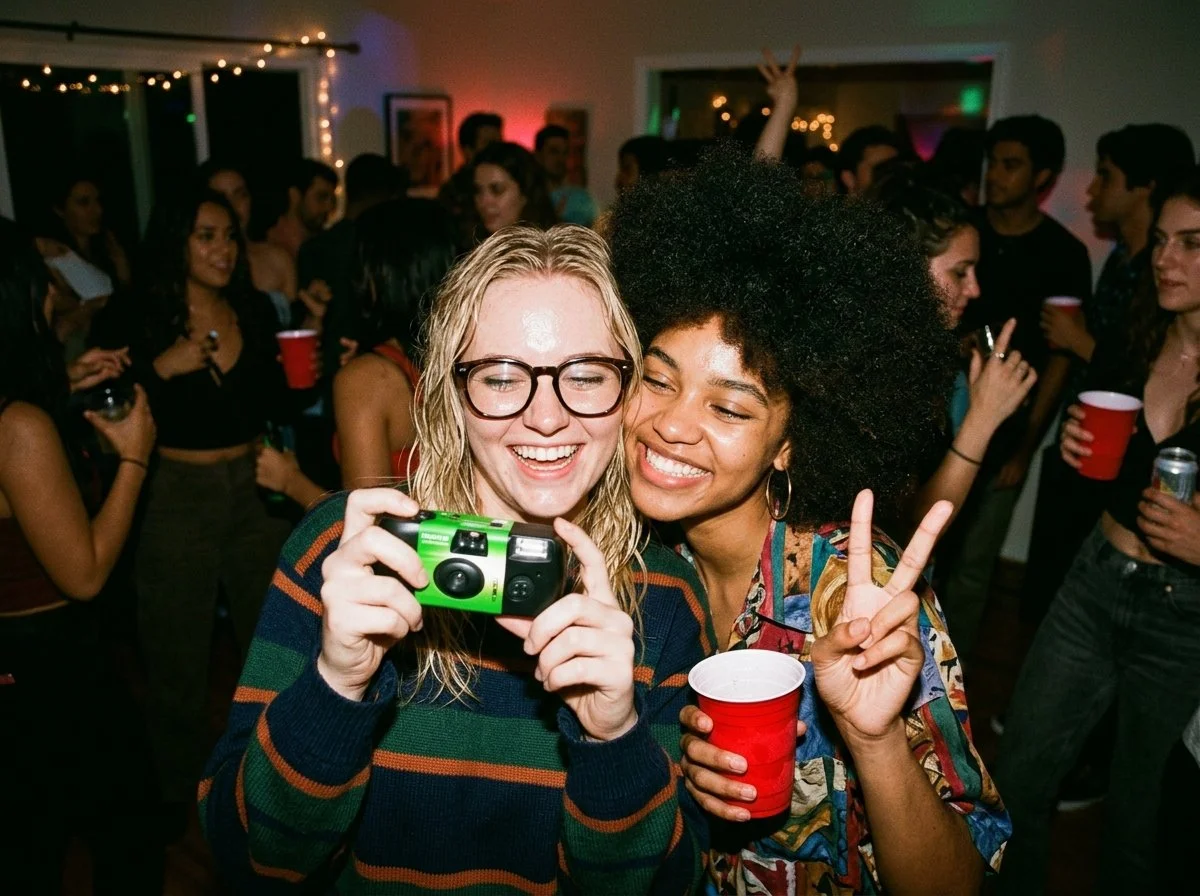
Captured in the fashion district today, 9/9/26, by Mitchell Royel—a moment steeped in soft light and even softer shadows, where the hum of sewing machines harmonizes with distant chatter. We’re listening to "Outside" by Calvin Harris and Ellie Goulding, the pulse of the beat weaving through the afternoon like a thread pulling it all together. There’s something hauntingly beautiful about the way the ordinary turns cinematic in the right frame, like everything is quietly waiting to be remembered.
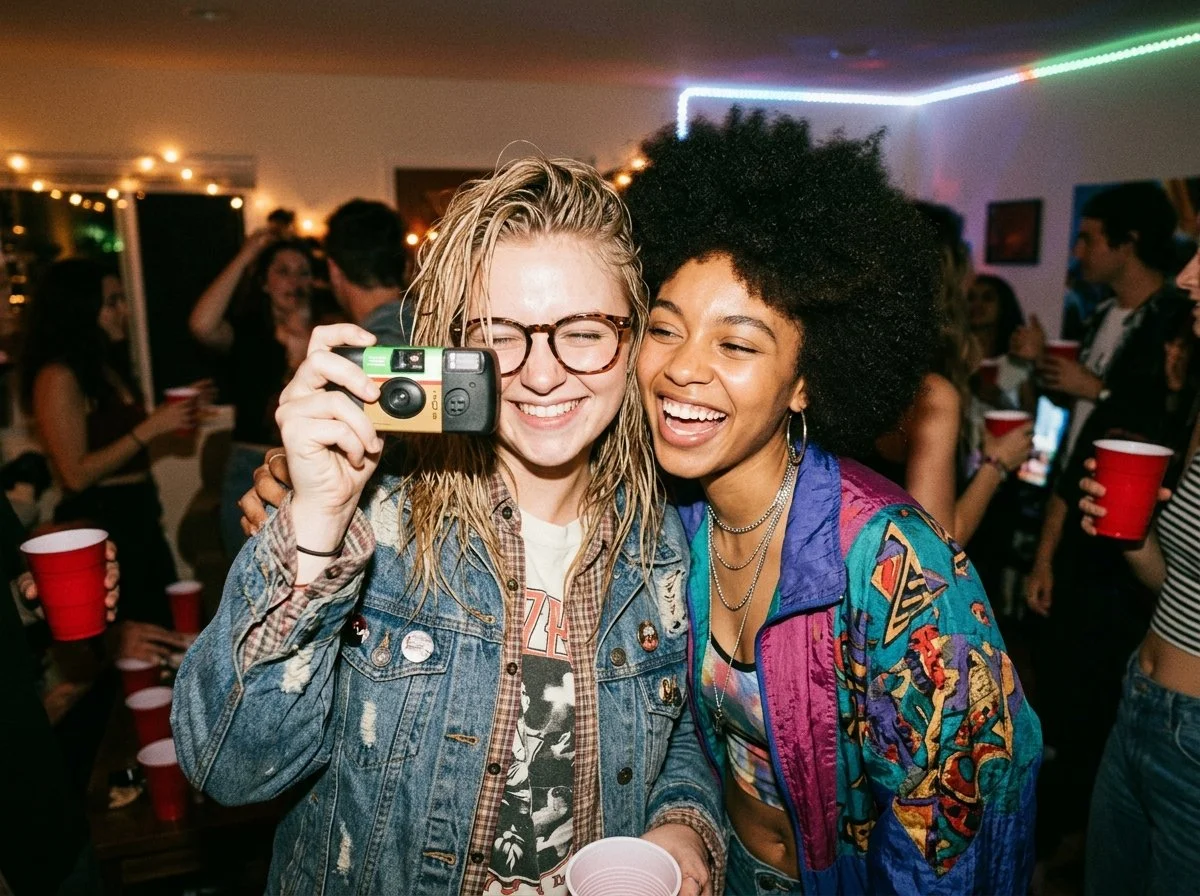
There was a bubble once—a glistening, hermetically-sealed dome in which I lived. I existed like a pearl inside its shell, polished smooth, insulated from the grit that gives life its texture, its meaning.
Calabasas: an orchestration of manicured white suburbs, stitched together with sprinkler systems and a relentless politeness. It was a place where lawns glowed unnaturally green and conversations felt scripted. Everyone knew the same pop songs, wore the same Allbirds, and leaned on the same sunsets to give their lives the illusion of depth. I thought that was the whole world. I thought the horizon dissolved where the shopping centers did.
Then one day, I walked into a community college classroom, fluorescent lights buzzing around me like bees caught in a jar. That’s when I felt the first tear in the bubble—a seam splitting, an unraveling I couldn’t have named yet.
She sat two rows over, an exacting gravity in her slouched posture. Her textured hair spilled like defiance down her shoulders, and her eyes? They held stories of somewhere I hadn’t been, maybe couldn’t even imagine. She was every galaxy I had been told didn’t exist in neighborhoods like ours. Later, I’d tell my friends about her, breathless, giddy, as if naming her made her less unknowable. She kind of reminds me of Kelis, I said, grasping for comparison, trying to shrink her magnificence into something bite-sized, something familiar. But I was wrong. She wasn’t like anyone. She was her own weather system.
We started talking—one sentence at a time, the way people do when the universe nudges them toward a door they've been too scared to open. One night, as effortlessly as pulling a thread from her sweater, she opened a tab on MySpace.
That’s when I saw them.
Raves.
Freeze-framed bodies mid-motion, eyes glittering with reflected neon. Light bending around faces, distilling joy into streaks of color. Each photograph was like holding up a magnifying glass to an emotion I couldn’t yet articulate. I scrolled through galleries full of strangers but all I saw was life. Unapologetic, untamed life spilling out of monitors and into my chest, cracking me wide open.
"You ever been?" she asked, her voice curling with amusement, almost daring me to lie. She could already tell I hadn’t.
She started naming scenes—warehouses by railroads, deserts under full moons, clubs below the city’s heartbeat. Her words were spells, each syllable charged with rebellion and vastness. Places, she said, you have to be willing to sweat to find.
We must have talked for hours. Or maybe it was just minutes and it felt like hours; who knows? I didn’t belong to time that night. Near the end of our conversation, I asked her something pathetic like, "Do you think I’d fit in?" And she just smirked.
"You don’t have to come," she said, softly piercing in her understatement. “But you can.”
She wasn’t trying to convince me. She already knew.
I remember how casually she lifted her hand, gesturing toward the window. Outside, bathed in the sterile glow of campus lights, sat another girl—a petite figure bent over her books, her focus sharp even from a distance. The warm familiarity of her profile hit me like a puff of déjà vu. This was my neighbor—the girl whose back door opened just behind ours, who I sometimes saw weaving clouds of loose hair into braids at sunset. She hadn’t seemed larger-than-life until this moment.
“That’s my friend,” she said, her words nudging boundaries I hadn’t realized I’d drawn. “She and I go to raves together.”
It floored me. This wasn’t a secret society. It was her world. And she was presenting it as casually as an errant breadcrumb left on the table. The unspoken implication was unavoidable: You can sit with us.
She was a social butterfly, not the flimsy kind that floats lifelessly from one flower to another, but the kind bred from steel who knew when to stay, when to leave, and how to take the world with her. She made it look so effortless—holding the world loosely, like it was hers to give.
The first time I went to one of those house parties with her, it felt like stepping into an alternate dimension. The rooms pulsed with life, the music a liturgy of basslines, and every surface seemed to radiate a heat that wasn’t just physical but soul-deep. We didn’t need the fog machines or shifting neon to lose ourselves; the energy of those nights was enough to transform. And when the lights finally dimmed, we’d slip outside into the campus fields, her laughter tumbling over the cool grass as if it could stretch the hours longer. The conversations? They unraveled into the kind of sprawling reflections that only happen when the sky stretches too wide and you forget time exists. Those fields started to feel like a world apart, a sanctuary for questions and confessions, for ideas neither of us had words for yet. It was there, more than anywhere else, that she handed me glimpses of a world I hadn’t dared to imagine.
We kept moving, and two years disappeared the way rivers vanish into distant seas—impossibly fast but carrying every memory downstream, pulling all of us toward the next thing.
By then, she’d invited me to everything—house parties where time felt like watercolor light and, eventually, an LGBTQ+ club. My first one.
I remember the electric air. Bodies lit up with nothing to hide. People danced the way you can only dance when no one is watching—or when no one watching would dare judge you. They were free. And for the first time, I saw what that could look like.
But I was knotted inside. Something about that night wouldn’t let me join. I’d started dating one of her friends—and I hadn’t told her. It was easy to tell myself I didn’t owe her that confession. But the truth? She carried the kind of truth between us that demanded more than silence. Still, I froze.
"Something feels off. Is it…?" she asked me, her voice slipping over the music. I could see her scanning me, her concern like heat seeking a weak point. She saw mine long before I uttered a word.
"Nothing," I lied. That ancient lie, sharp and small like a broken shard of glass.
Instead, I offered another reality.
"In other news," I started, avoiding her gaze, "I’m dropping out. This is my last semester."
Her head tilted slightly, like she wasn't surprised, like she’d already sensed I was reaching my fire escape. She nodded—slow, deliberate.
"I feel you," she said. "I’m transferring next semester." Always a few years ahead in the dance, mapping exits I couldn’t yet see.
"What’s next for you?" she asked, her voice thinly cloaked in reassurance but heavy with illumination.
Truth pinned me under the light spills on the ceiling. "I’m not sure," I whispered. And for once, I meant it. "But I can’t stand it here anymore."
Which "here” did I mean? Not the club, not that night. I meant the other "here"—the one made of beige walls and fake smiles, suburban comfort that lulled me into a shrinking version of myself. The bubble I’d been born into. I couldn’t breathe there. Hell, I couldn’t live there.
-Ryder, M.R, GG Collective
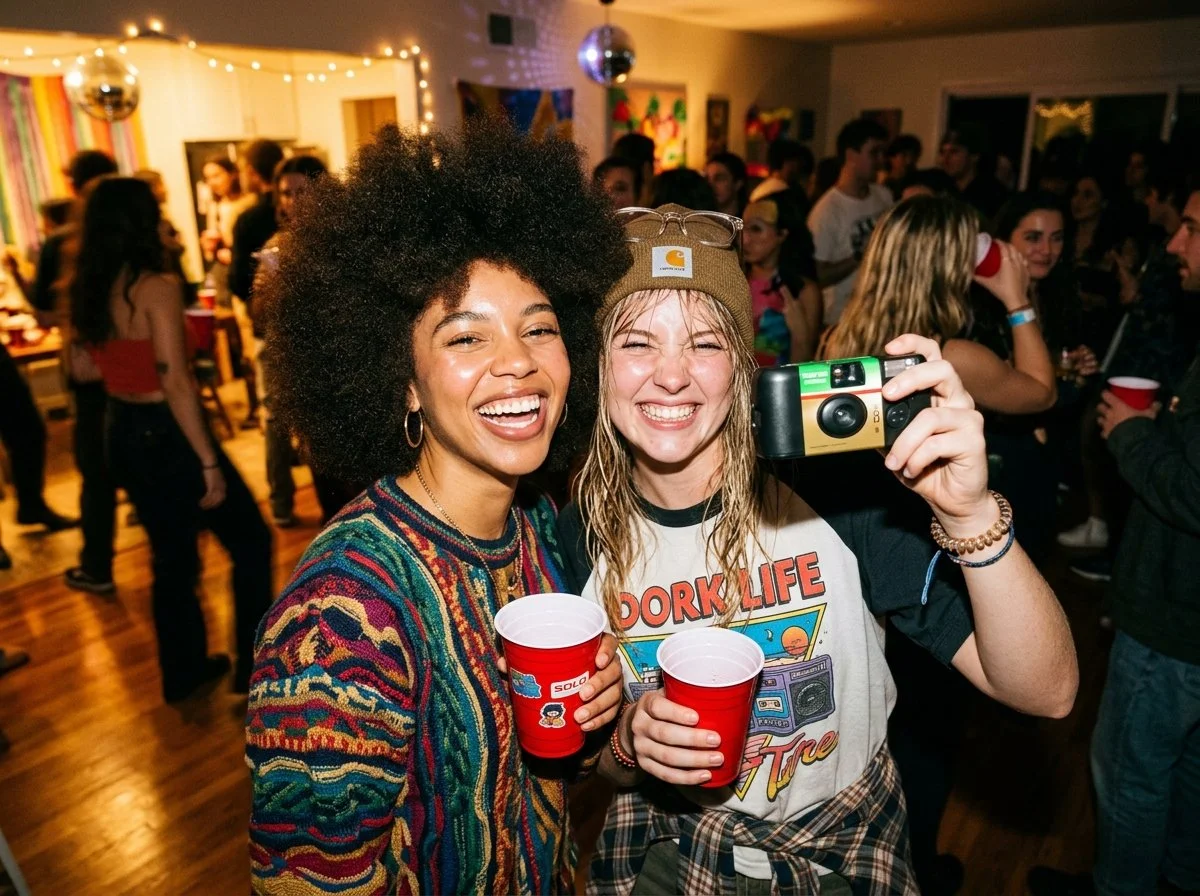
Captured in the fashion district today, 9/9/26, by Mitchell Royel—a moment steeped in soft light and even softer shadows, where the hum of sewing machines harmonizes with distant chatter. We’re listening to "Outside" by Calvin Harris and Ellie Goulding, the pulse of the beat weaving through the afternoon like a thread pulling it all together. There’s something hauntingly beautiful about the way the ordinary turns cinematic in the right frame, like everything is quietly waiting to be remembered.
Epilogue
I think of her often—the girl who reminded me of Kelis but ended up reminding me of myself.
Here’s something time taught me: the bubble? It isn’t safety. It’s sedation. And some people stumble into your life like minor gods carrying a necessary wake-up call, dragging vivid MySpace photos behind them like thunderclouds. They don’t say it outright, but they live it: Everything more is waiting outside your fear. Your responsibility is to step out.
The unknown terrified me. It tore me apart and then rebuilt me. But it also gave me everything: friendship that questioned my edges, sweat-soaked dance floors where I keyed back into my body, creativity blooming through the shattered monotony of comfort.
If this life of mine has a moral, it’s this: Find the cracks. The people who love you enough to push you toward them? They’re rare. And the unknown—it’s not a void. It’s an offering.
Go.
When you can’t stand it anymore.
Sweat through the heat.
And trust—you are meant to crack wide open.
NO LONGER BORROWED

Captured this morning by Mitchell Royel in the heart of the fashion district, these photos are a swirl of light and motion, spontaneous elegance caught in the lens. They’re not formally tied to the fine city of Agoura Hills or the halls of Agoura High, nor do they aim to define the spirit of the girls who call Agoura home—because, really, could spirit like that even be defined? This is just a moment in time, for entertainment, for the pure joy of creating something vivid and alive. Picture this—rooftops buzzing, city waking up, and in the background, Rihanna and David Guetta’s Who’s That Chick? pumping through the air, giving every step a rhythm, every glance a spark.

For the girls of Agoura Hills.
Who's that chick?
They said her before I ever said me.
I heard it in the hallways. I heard it at the light on Kanan, windows down, some song throbbing through the summer heat. I heard it whispered like a warning and worn like a crown.
The Agoura girl.
You know the one. Golden. Glossy. Effortless in a way that takes hours. She's got the highlights and the horses, or the fake tan and the flat stomach, or the daddy's card and the dead eyes. She's pretty and she's empty. She's a canyon town cliché in a crop top. She's beautiful and she's nothing more.
That's the story. That's the chick they meant.
And oh, I put her on.
I put her on like a second skin. I learned the walk. I learned the shrug. I learned how to want less out loud so I'd be easier to swallow. I learned to make myself into a surface — shiny, reflective, giving you back your own idea of me so you'd never have to meet the real thing underneath.
Because the real thing was inconvenient. The real thing had opinions. The real thing cried at sunsets over the Santa Monica Mountains and felt something ancient move in her chest when the wind came through the oaks. The real thing was too much. So I made her less.
I became who's that chick. And it worked. God, it worked.
But here's what nobody tells you about wearing a mask that fits so well.
You forget where your own face is.
I want to talk to you now. To her. To me. To every girl who grew up between these hills thinking she was the punchline of a joke she didn't write.
Listen.
You are not the story they told about this place.
You are the place.
You are the fog that pours over the ridge at dawn. You are the wildfire and the rain that comes after. You are the coyote song at 2 a.m. and the stubborn poppies pushing up through cracked earth in April. This land is not soft. This land is fierce. It burns and it comes back greener. And you came up out of it.
So why did we ever believe we were small?
Here's what I'm releasing.
I'm releasing the performance.
The relentless, exhausting audition for a role I never even auditioned for.
I'm releasing the idea that being from here means being for sale. That my worth lives on the surface. That the best thing about me is how little I take up.
I'm releasing the comparison.
The measuring.
The way I checked every other girl's outfit and body and boyfriend like they were a scoreboard I was losing.
I'm releasing the story that we're catty. That we're competition. That there's only room for one golden girl and the rest of us fight for scraps. That's a lie designed to keep us small and separate. I'm not buying it anymore.
Let it go.
Let it burn.
Let it be ash that feeds the next thing.
Because here's the truth I found underneath the mask.
We are bigger than this.
The women of Agoura Hills are not a trope. We are soul walking around in sundresses. We are depth disguised as ease. We are the artist and the athlete and the healer and the mother and the girl who's going to leave and build something you can't imagine yet.
I've seen us. I've seen the girl everyone called shallow stay up all night with a friend who wanted to disappear. I've seen the "pretty one" turn out to be the smartest person in the room. I've seen us grieve and rise and hold each other in ways that would break your little story wide open.
We contain multitudes.
We always did.
So who's that chick?
She's not who you thought.
She's the one who took off the mask and found her whole face still there — softer, realer, holy. She's the one who stopped shrinking. She's the one who loves this town and refuses to be reduced by it.
She's expansive. She's soulful. She's on fire and she's not asking permission.
She's me.
She's you.
She's every girl who ever drove these canyon roads feeling too much and hiding it well.
Stop hiding it, love.
Let them wonder who that chick is.
We already know.
We're bigger than they ever told us.
And we're just getting started.
-Ryder, GG Collective
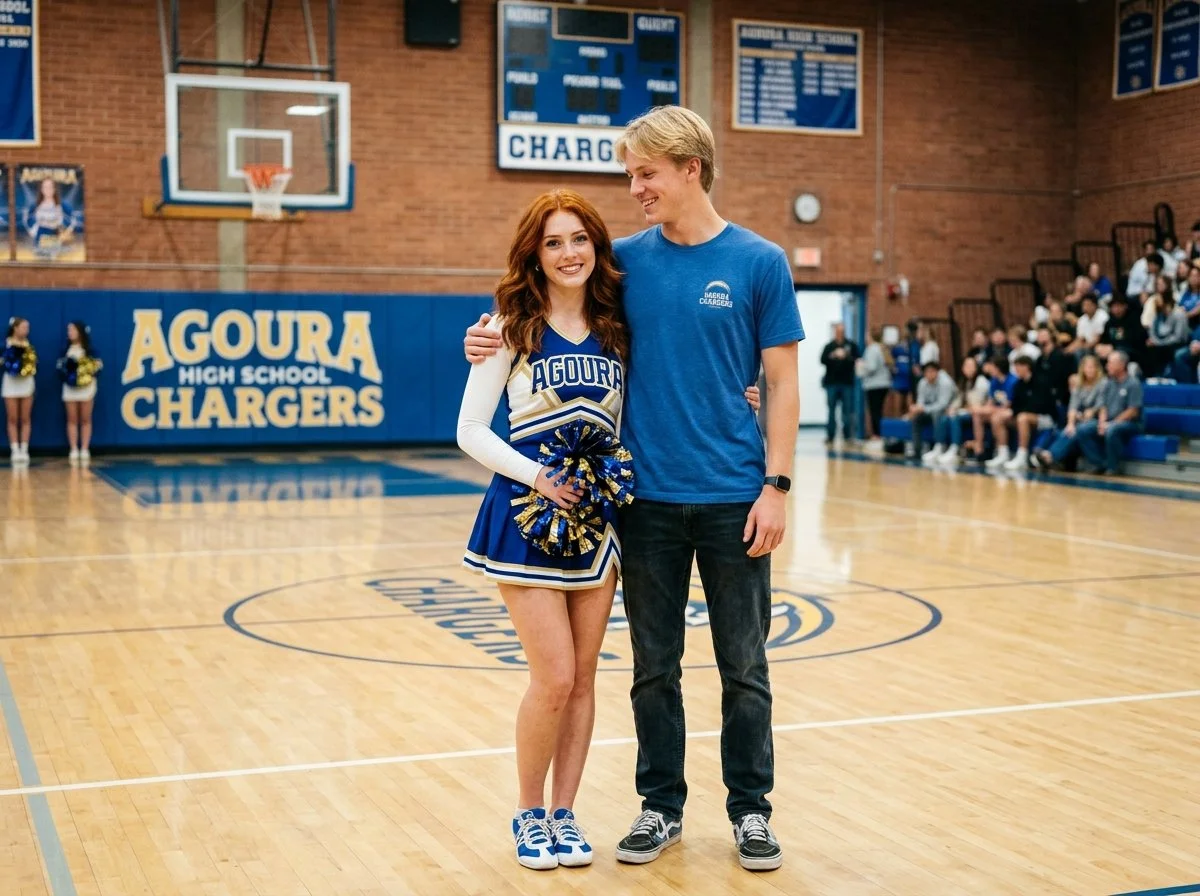
Captured this morning by Mitchell Royel in the heart of the fashion district, these photos are a swirl of light and motion, spontaneous elegance caught in the lens. They’re not formally tied to the fine city of Agoura Hills or the halls of Agoura High, nor do they aim to define the spirit of the girls who call Agoura home—because, really, could spirit like that even be defined? This is just a moment in time, for entertainment, for the pure joy of creating something vivid and alive. Picture this—rooftops buzzing, city waking up, and in the background, Rihanna and David Guetta’s Who’s That Chick? pumping through the air, giving every step a rhythm, every glance a spark.
Epilogue: She was the wildfire before they gave her a name. She was the glow on the horizon, the kind that makes you roll the windows down and drive slow. She was the echo in the canyon, carried by the wind and catching in your throat with no warning. Who's that chick? They said it about her before she even learned to say me. That girl, the Agoura girl. But their story was too small for her expanse.
She grew up believing it, though. Believing she was a shadow thrown by someone else's spotlight. Believing that her beauty was armor, her silence survival, her power only visible through the lens of approval. She perfected the art of being everyone’s "yes," skating smoothly beneath expectations, while her real self shouted against the mountains, unheeded and unresolved.
But the hills—they hold secrets, and so does she. The kind of secrets you can only hear in stillness. The rustle of the oaks, the rhythm of her own unapologetic heartbeat. A voice that whispers, You are not what they call you. You are not the mask they molded. You are not borrowed light—you are the sun in its own rising.
She has released the story that told her to shrink. She has burned that story down, letting the ash mingle with the earth that taught her how to bend and grow. She is hungry again—hungry for connection, for truth, for building a life so expansive it disrupts their narrative. She knows now that she is not competition with the other women of this town; she is kin to them. They are not opponents. They are allies. They are wildfire and rain, doubt and boldness. They are instinct, intuition, and strength wearing bare feet on rocky trails.
And now? She’s unstoppable. She is the girl who took back her name. The one who doesn’t ask for permission to be the raging, sacred storm she was born to be. She walks lighter now—not because she's less, but because she's left the weight of expectation behind.
They’ll still ask, “Who’s that chick?” But now, the answer is different. Now, the answer is hers.
“She is,” it says.
And that’s enough.