




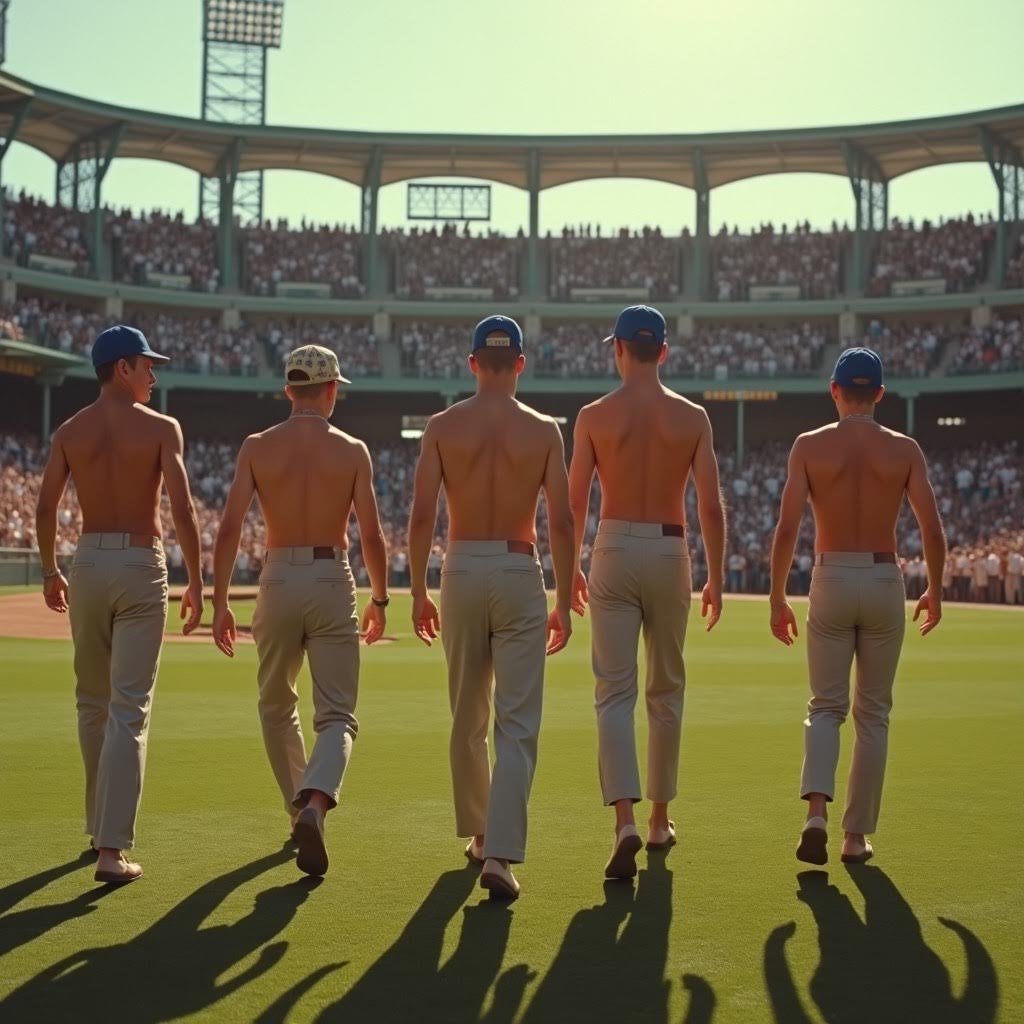
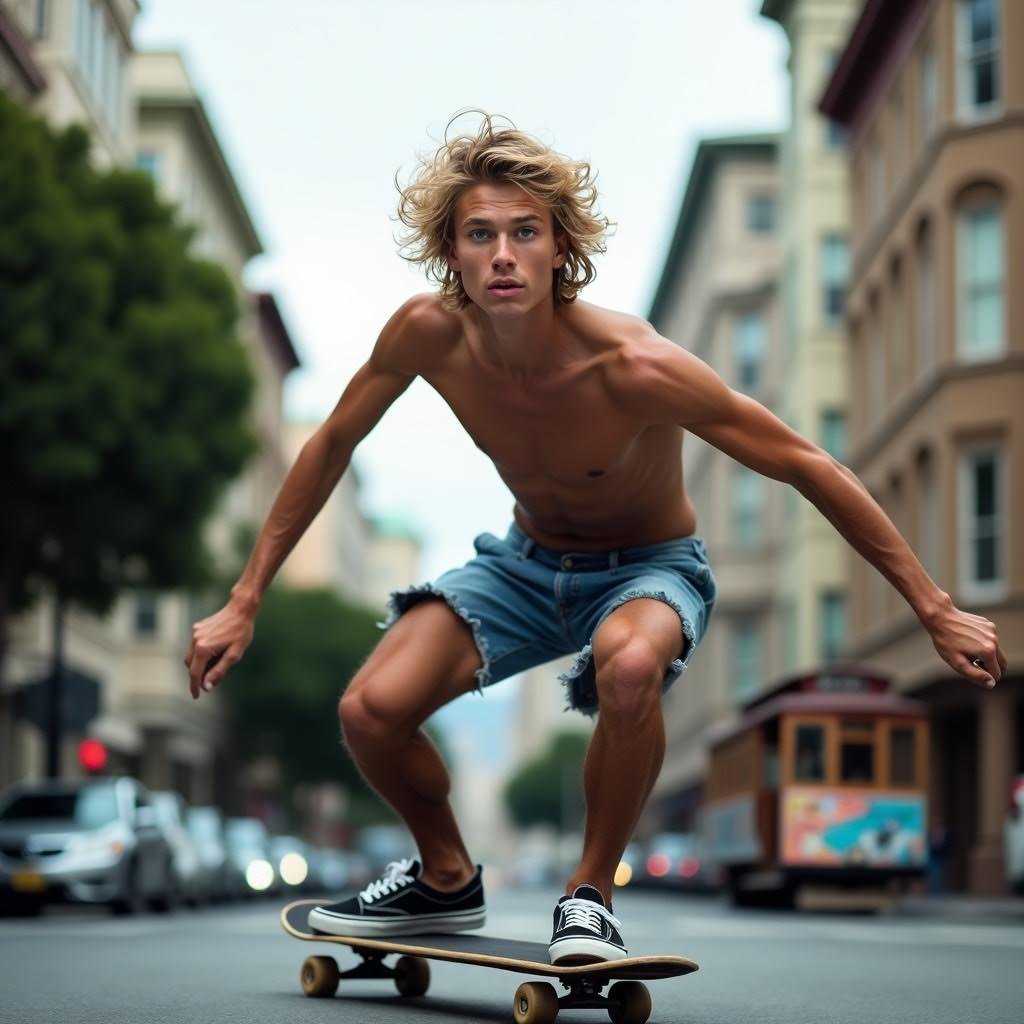
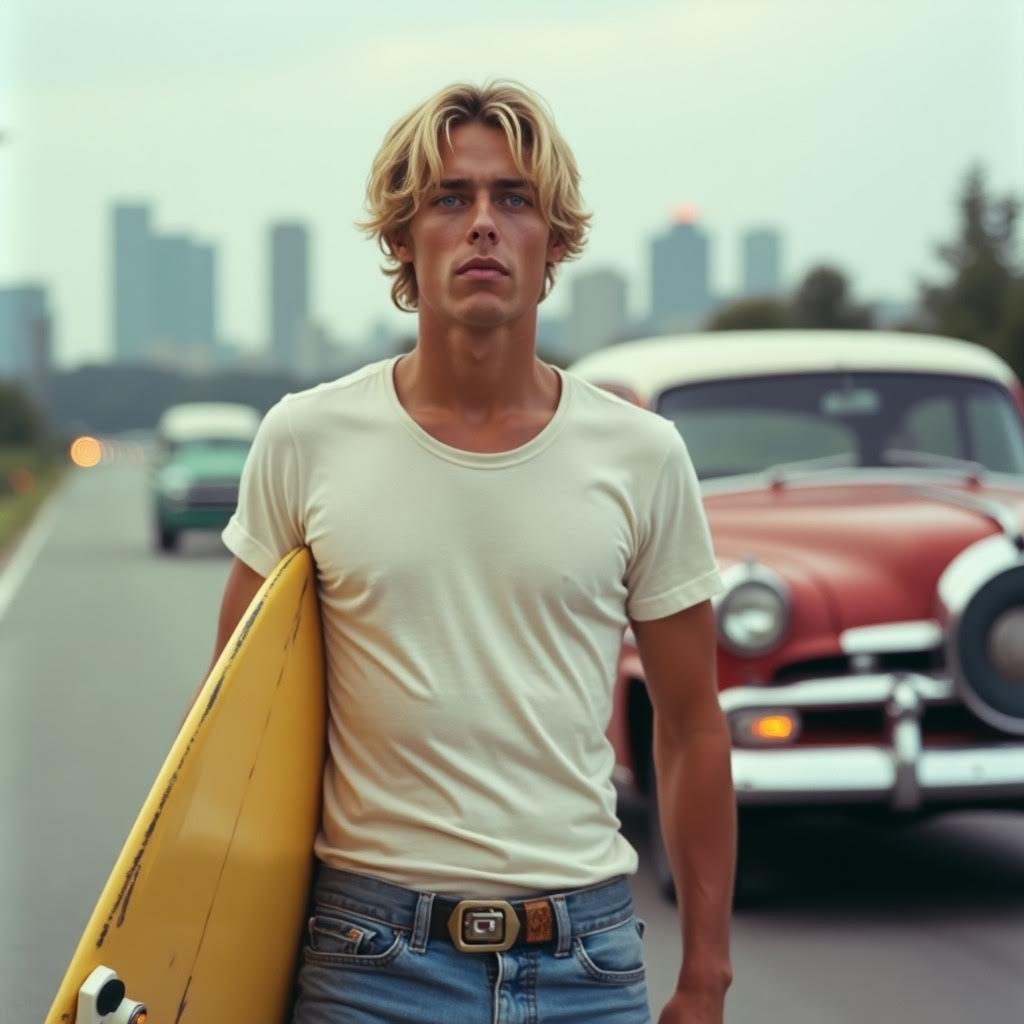
THE HILLS REMEMBER, AND SO DO WE
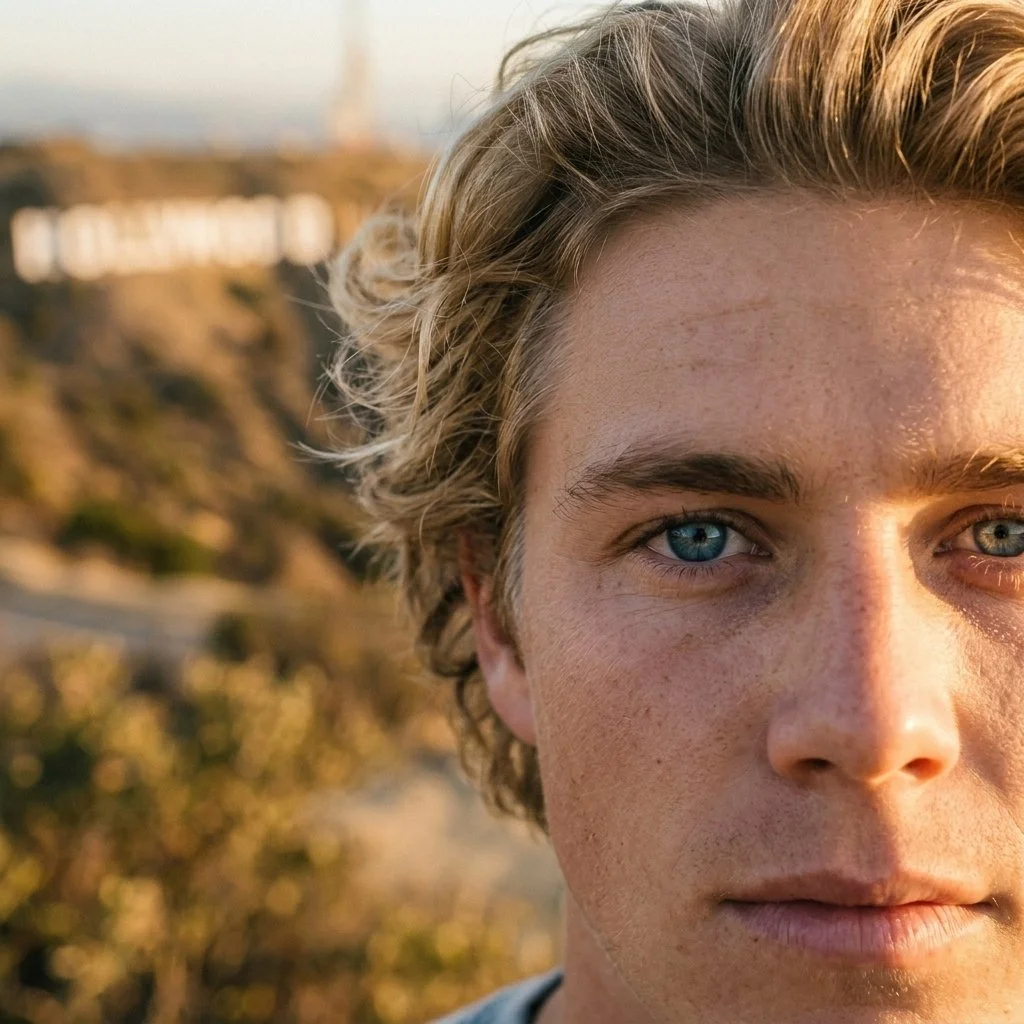
Caught up in the golden hour glow of the Hollywood Hills, Mitchell Royel had his camera ready while we laughed and vibed to "Bussin'" by Nicki Minaj and Lil Baby. There was something magical in the air, like the world was ours for those fleeting moments—music thumping, laughter echoing, and the city sprawling endlessly below us. It's one of those memories you tuck away and smile about later, just knowing it wouldn’t have been the same anywhere else.

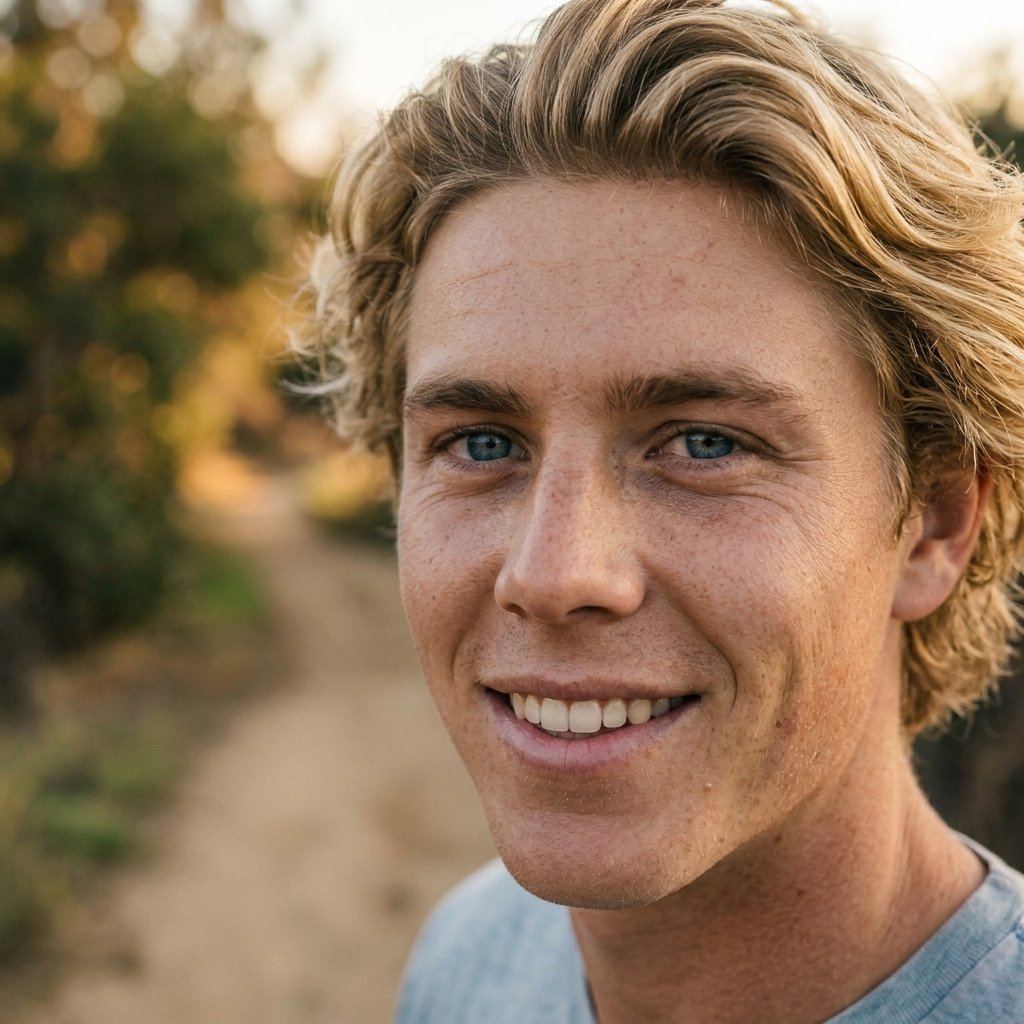
Caught up in the golden hour glow of the Hollywood Hills, Mitchell Royel had his camera ready while we laughed and vibed to "Bussin'" by Nicki Minaj and Lil Baby. There was something magical in the air, like the world was ours for those fleeting moments—music thumping, laughter echoing, and the city sprawling endlessly below us. It's one of those memories you tuck away and smile about later, just knowing it wouldn’t have been the same anywhere else.
The thing about living in the hills is that everything takes on a golden hue when the sun slips behind the skyline, painting the world in a surreal glow that feels both comforting and haunting, like the closing scene of a movie you don’t want to end. It’s the kind of place where dreams seem to dance just above the rooftops—close enough to spark hope, yet far enough to make you chase them endlessly. For us, newcomers to the tight-knit, faith-driven boxer crew, this little corner of the Hollywood Hills became our paradox—a sanctuary to heal and a battleground to redefine ourselves. The days blurred together in a fusion of bone-weary training sessions, sweat-laden prayers whispered between punches, and moments of reflection that seemed to hold the weight of universes. It wasn’t just an escape; it became our crucible, where every swing of the fist reshaped not just our skills but our identity.
Months ago—though it feels like a lifetime—we found ourselves at the epicenter of a storm, one that struck quickly and without mercy. There was a gym we trained at religiously, and just next to it, a trendy athleisure store we’d often step into for water or a quick browse when the post-training high hadn’t quite faded. What once seemed like an ordinary place unraveled into chaos one fateful afternoon. A popular "brand ambassador" for the store, some cocky college football player renowned more for his arrogance than his accolades, muttered a snide remark toward our group. It might’ve been a jab at our background, our faith, or the sweat-soaked state we were in—none of us fully remember the words, just the electricity in the air after they landed. One of our guys, already on edge from the strain of endless sparring and unspoken frustrations, snapped back. It went south quicker than any of us could react. A shove turned into a swing. A swing erupted into madness.
Suddenly, the store transformed into a battleground, with fists flying, shelves toppling, and merchandise spilling onto the polished floor. More people joined in—strangers who didn’t know the origin of the fight but got swept up in the chaos like leaves in a storm. Glass shattered, mingling with the sound of grunts and shouting voices, echoing against the backdrop of Hollywood's bustling streets. By the time security arrived, too late to prevent the mayhem, it wasn’t just about bruised faces or scattered merchandise. The store, with its once-pristine facade, bore physical scars—boarded-up windows and fractured displays that stood like silent witnesses to what had happened, a reminder of everything that broke loose that day.
But for us, the battle didn’t end when we walked out onto the sidewalk that evening, faces flushed and adrenaline coursing through our veins. We carried the fight home, back to our dim, makeshift refuge in the basement of an old building off a quiet street. With its creaky floorboards, faded couches, and faint aroma of old leather and sweat, the space served as both our training ground and gathering place. That night, it became a pressure cooker. Voices rose in frustration, emotions ran raw, and every word hurled across the room seemed to bear more weight than usual. Zach, always the first to act and the last to admit when he was wrong, slammed his fist into the wall, cracking the drywall with the raw force of his anger and despair. It wasn’t just about the fight at the store anymore. No, it was bigger than that. It was about us. About who we were. About how easily the pressure revealed fractures we didn’t even know existed.
The questions haunted us. What do we do now? How do we move forward? Do we strike back, escalate the fight, or do we turn the other cheek, as we’ve been taught? Should we see this as a test of survival or of character? Every question felt like a loose thread in a knot we couldn’t unravel. The answers didn’t come to us in a sudden, divine moment of clarity. They came slowly, painfully—piece by piece, blow by blow. Over the days and weeks that followed, we found ourselves stripped of all pretenses. Up in those hills, under the golden light and the pressure of rebuilding ourselves, the truth began to emerge in the smallest of moments. It wasn’t about revenge. It wasn’t about proving anything to anyone. This was about faith, about purpose, about the unity that kept us bound together even when everything else seemed broken.
And somehow, through the haze of fatigue and the echoes of our arguments, we rediscovered what anchored us. It wasn’t vengeance, strength, or reputation—it was conviction. It was rising above the wreckage, not with our fists but with our hearts. Up there in that suffocating basement, with sweat dripping down our faces and the distant sound of life carrying on outside, we found clarity in the chaos. The versions of ourselves who walked into that storm months ago no longer existed. We burned them away in that fire, forged into something stronger. And when one of the guys, wiping blood from his lip and laughing like he’d heard the best joke in the world, said, “This is what we were made for,” it was like a weight had lifted. Peace, fragile but bright, flooded through us. The golden light of the hills, always waiting in the distance, finally crept back in, and this time, it didn’t feel out of reach.
-Deck
Epilogues are strange things, aren’t they? They’re not quite a conclusion, but a reflection—a pause to breathe before moving on. And when reflecting on those months spent in the hills, it’s clear those moments weren’t just a chapter in our story; they were the crucible that shaped who we would become. If there was one lesson etched into every sunrise over those golden rooftops, it was this: transformation is messy. It’s painful. And sometimes, it takes being utterly broken to see what’s been holding you together all along.
The hills taught their silent lessons in whispers, through long shadows and soft breezes carrying hints of jasmine on restless nights. They reminded us that peace isn’t something you find at the end of a struggle—it’s something you carry through it. It’s forged in moments of grace, in holding each other up when the weight is too heavy to bear alone, and in choosing to try again, even when every bone in your body begs you to stop. Those dreams that dangled just out of reach weren’t meant to mock us. They were there to remind us to keep climbing, to see the beauty in the striving itself.
And so, as the hills won’t soon forget the stories we left behind, neither will we forget the truths they laid bare. The world beyond them may still demand its battles, and life will continue its unrelenting march. But whenever the golden light returns, spilling its warmth like a benediction over the uneven rooftops, we’ll know there’s still something sacred about this place, about this time, and about the people we became because of it.
DANCING SHIRTLESS SAVED ME FROM THE WORST TUESDAY EVER
She dumped me in the parking lot behind the the burger joint on a Tuesday. Tuesday. Not even a dramatic day. She said, "I think we want different things," which is what people say when they mean "I want someone else and you're standing in the way of that." I nodded like an idiot. I said "yeah, totally." Then I drove home and sat in my car in the driveway for forty minutes because going inside meant it was real.
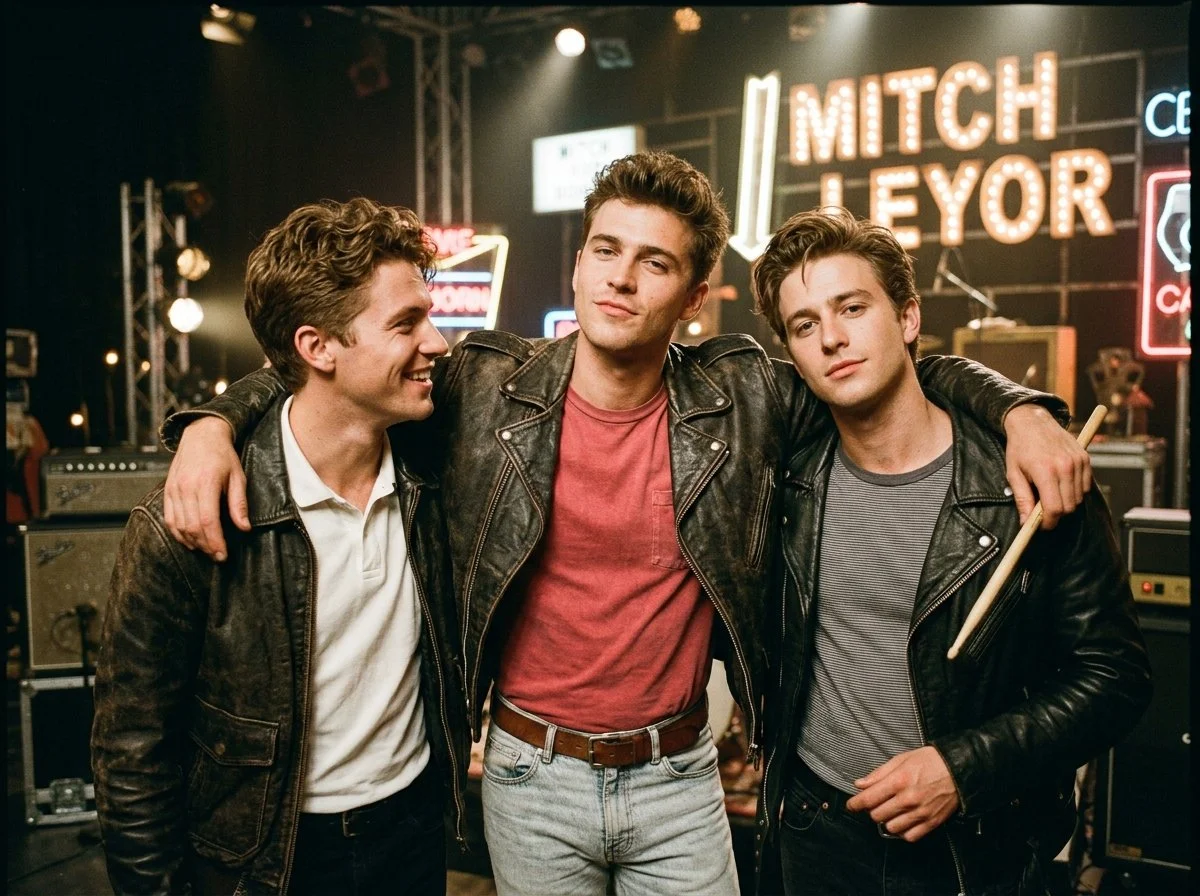
All photos captured 9/24/26 by Mitchell Royel in the heart of the Fashion District, this moment hits different. It’s raw, unfiltered, and unapologetically bold, just like we like it. Now playing "Devil in a Dress" by Rhea Raj — a track dripping in attitude and power, the perfect soundtrack to this rebellious vibe.
Here's what nobody puts in the movies about rock bottom. It's not glamorous. It's not rain on a window while sad music plays. It's you eating cereal at 2 a.m. because you forgot how meals work. It's texting a paragraph, deleting it, texting three words, deleting those too. It's your mom knocking on your door going, "Honey, you've been in there a while," and you saying "I'm fine" in a voice that is very much not fine. I fell apart quietly, which is the worst way to do it. Loud breakdowns get you sympathy. Quiet ones just get you a lot of alone time with your own worst thoughts.
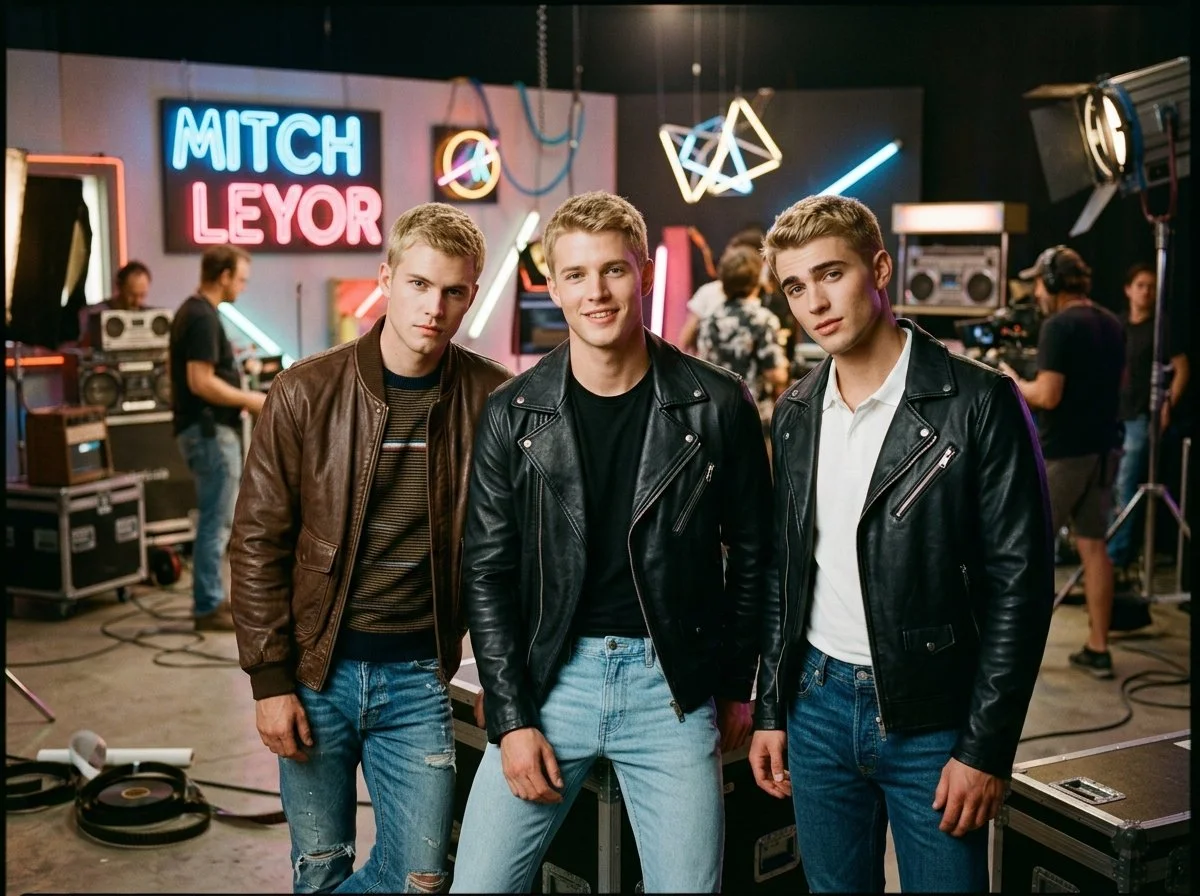
Then Danny showed up. Danny is my best friend, and Danny does not do subtle. He kicked my door open — literally kicked it, like he'd been practicing — and stood there with Mitch behind him holding a speaker.
"Get up," he said.
"No."
"The pep rally's Friday. We're doing the thing."
"There's no thing, Danny."
"There's a thing now." He tossed a pair of jeans at my face. "We're gonna dance. Shirtless. In front of the entire senior class. And you're gonna feel something other than sorry for yourself."
I want to say I argued. I did argue. For about ten minutes. But somewhere in there I realized Danny wasn't asking. He was doing the thing best friends do, which is refusing to let you drown in the shallow end.
So we practiced. In his garage. Badly. Colt kept messing up the same move for three days straight, and we laughed harder than I'd laughed in weeks, and for a second I forgot about the red dress and the parking lot and the different-things speech.
Then Friday came. The gym smelled like floor wax and popcorn and a thousand teenagers who'd skipped deodorant. Balloons everywhere — red, blue, yellow — taped to everything that would hold them. There was a banner up in the rafters. CLASS OF 2026. SENIORS. Somebody had spelled my name wrong on a poster and I loved them for it anyway.
And she was there. Of course she was there. Third row, doing the thing where she pretends not to look at you while very much looking at you. For one horrible second I froze. I thought, I can't do this. Not with her watching. Not shirtless. Not with my whole heart still lying in pieces somewhere behind a Wendy's.
Then Danny grabbed my shoulder. "Hey," he said. "This isn't for her. This is for you."
And the music dropped.
Look, I'm not gonna pretend we were good. We were not good. But we were fearless, and it turns out that's louder than good. We hit the floor and the crowd lost their minds. Confetti rained down. Someone released a whole net of balloons early and nobody cared. Girls were screaming — the fun kind, not the running-from-danger kind — and Ben finally nailed the move he'd flubbed for three days and the roar got even bigger.
Somewhere in the middle of it, sweat in my eyes and my heart going like a drum solo, I stopped performing and just... felt it. The floor under my feet. My best friends beside me. My own body doing something joyful again after weeks of forgetting how.
At the last beat, we threw our hands in the sky. And I swear, in that exact moment — hands up, chest heaving, the whole gym on their feet — I stopped being the guy who got dumped in a parking lot. I became just a guy. A senior. A kid having the best three minutes of his year with people who actually stuck around.
I did look at her, once, after. And here's the plot twist: I didn't feel anything. No ache, no longing, no wishing. She was just a girl in a crowd who used to matter and didn't anymore. The devil in the dress had lost her power the second I stopped handing it to her.
Colt put me in a headlock. Danny was yelling something about celebrating with tacos. The balloons kept falling. And I laughed — really laughed, the kind that comes from your gut and surprises you.
Turns out you don't get over heartbreak by waiting for it to leave. You get over it by throwing your hands in the sky and reminding yourself you were somebody long before she showed up — and you'll be somebody long after she's gone.
Tacos, by the way, were incredible.
-Deck
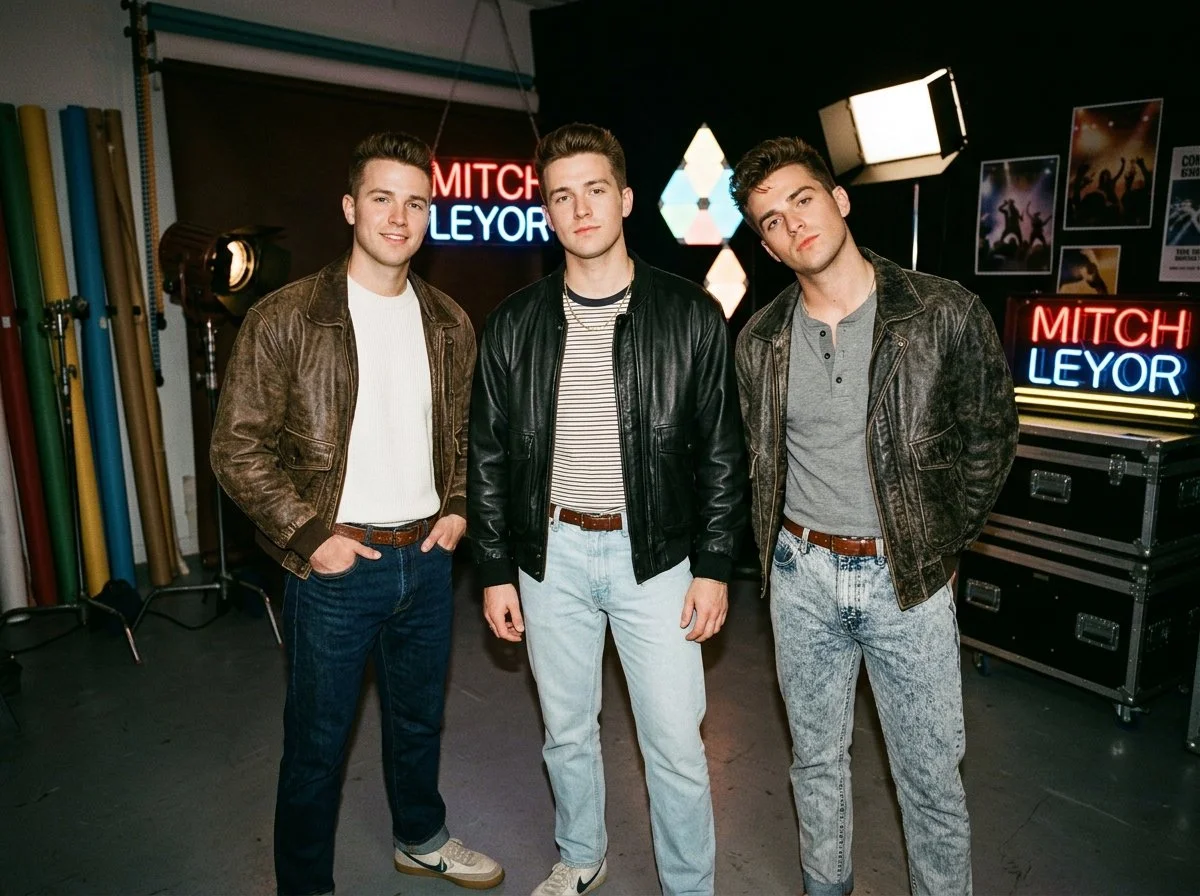
Epilogue: Here’s the truth, friends — life knocks us down, but we are built to rise. When we stand in the aftermath of heartbreak, it can feel like the end of the story. But it’s not. It’s just a chapter, a scene, a plot twist we didn’t see coming. And the most powerful thing we can do? We get back up. Together.
Because here’s the reality: we all experience these moments. The gut-punch of rejection. The silent hours when we question our worth. But guess what? Those moments don’t define us. How we choose to respond does. We don’t wait for circumstances to heal us — we create our own momentum. We surround ourselves with people who refuse to give up on us, who remind us, even when we forget, that we’re still here. Still strong. Still capable.
And then we do something wild. We take action that feels impossible. We get shirtless. We throw our hands up. We slam the door on old pain and open the one that leads back to ourselves. When we fall, we rebuild piece by piece, moment by moment. And one day, whether it’s under confetti or in the quiet of our own mind, we realize the power was inside us all along.
We move forward not because life guarantees us ease, but because forward is who we are. We rise because that’s what we do. And together, we remind each other of this truth: the heartbreak doesn’t win. We do. Always.
Proverbs 3:5-6 - Trust in the Lord with all your heart and lean not on your own understanding.
Philippians 4:13 - You can do all things through Christ who strengthens you.
Isaiah 41:10 - Do not fear, for God is with you.
Psalm 34:18 - The Lord is close to the brokenhearted.
Matthew 11:28 - Come to Him, all who are weary, and find rest.
1 Peter 5:7 - Cast all your anxiety on Him because He cares for you.
Romans 8:28 - All things work together for good.
Isaiah 40:31 - Those who hope in the Lord will renew their strength.
Surround yourself with community — find people who lift you up.
Start journaling your feelings — putting words to pain helps untangle it.
Take one small step forward today, no matter how tiny.
Reflect on times when you overcame struggles in the past.
Stay active. Exercise releases endorphins that can help restore your mood.
Take breaks from social media to focus on real-life connection.
Find a purpose beyond the pain. Volunteer. Learn. Explore.
Eat well — fuel your body with what it needs.
Joshua 1:9 - Be strong and courageous; do not be afraid.
Practice gratitude daily, even in small ways.
Meditate on positive affirmations — remind yourself that you are enough.
Remember, emotions are temporary; they will pass.
Lean into hobbies or passions — creativity helps heal.
Find a mentor or a friend to talk with.
John 16:33 - Take heart; He has overcome the world.
Challenge negative thoughts with truth and positivity.
Consider professional counseling if the weight becomes too heavy.
Speak life over yourself daily — you’re worth good things.
Take deep, mindful breaths during moments of stress.
Surround yourself with uplifting music, books, or podcasts.
Make room for joy — laugh, even when it feels hard.
2 Corinthians 4:16-18 - Don’t lose heart; inwardly, we are being renewed each day.
We rise, friends — stronger, bolder, together. Always.
CONQUER THE FIELD THEY IGNORE
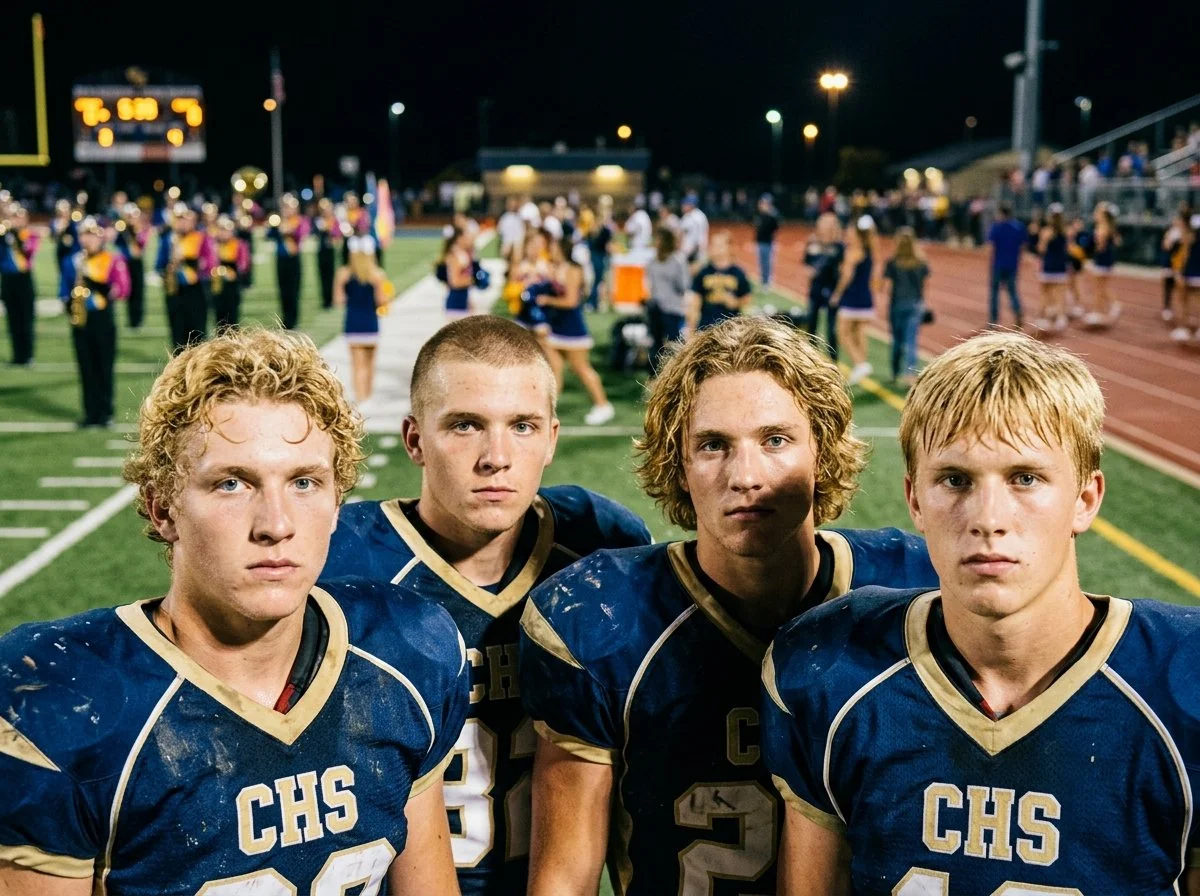
Captured by Mitchell Royel in a moment of raw energy and undeniable confidence, the heart of the Fashion District came alive today, 9/22/26. Draped in a look that demanded attention, the scene epitomized a style that breaks molds and shatters expectations. The air was electric with the pulse of "Juice" by AD, a fitting soundtrack to a moment that was equal parts grit and glory. It wasn’t just about the clothes or the setting—it was the aura of someone unafraid to rewrite the narrative.
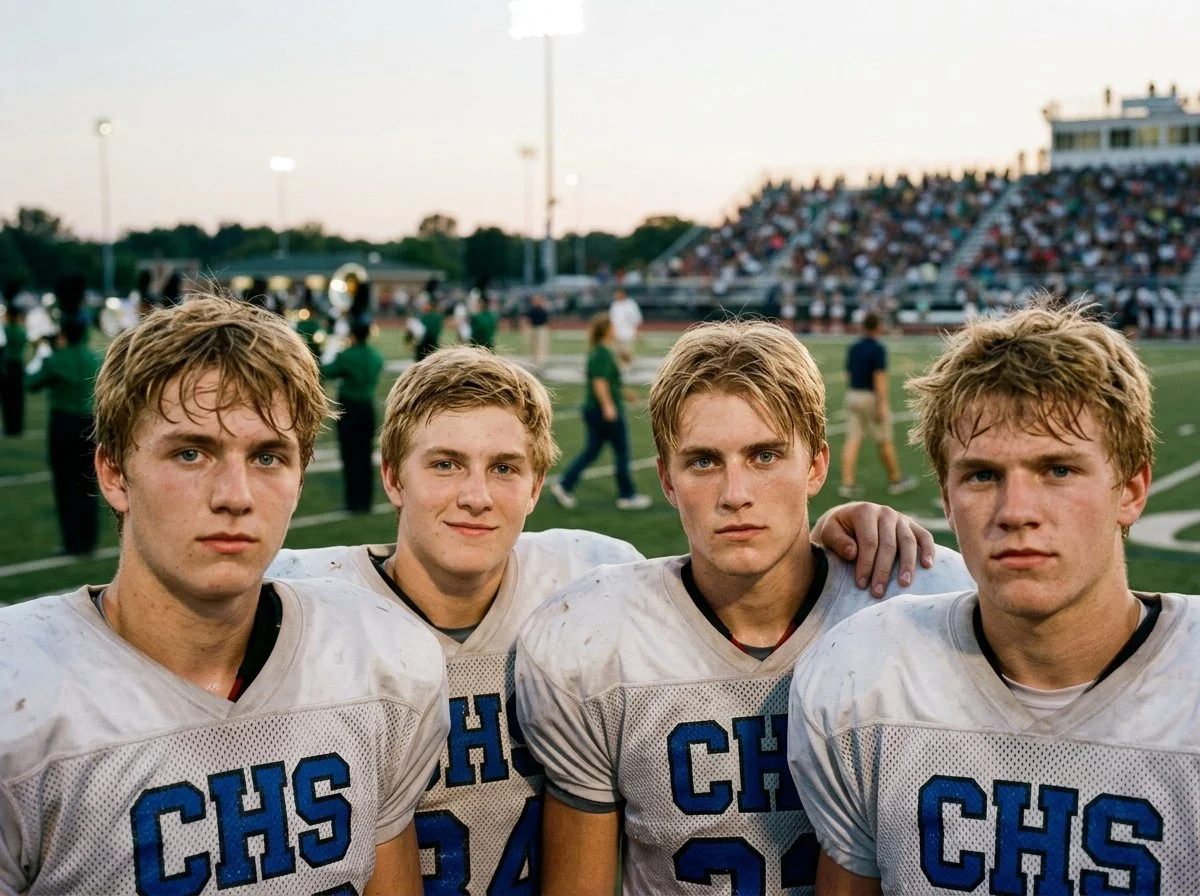
I was never one for the noise.
While others chased the buzz of who liked who, who fought who, who wore what on a Friday, I kept my distance. Not out of superiority. Out of survival. The drama was a current, and currents pull you under if you swim in them long enough. So I stood on the bank. I watched. I learned that most people spend their whole lives reacting to things that will not matter in a week.
That is why, when the game came around, I almost skipped it. Football. The whole ritual of it. But something in me said go. Not for the team. Not for the crowd. Just to see. Sometimes the man who watches from the edge sees more than every player on the field.
So I went.
The night was cold in that way that makes your breath visible, like proof you are alive. The lights hummed. The bleachers filled. And I sat there, apart from it all, a kid divorced from the hype, watching a game I had no stake in.
Then the strangest thing happened.
We won.
By one point. One single point. And here is the part you need to understand — we had not won in years. A losing streak so long it had become part of the school's DNA. We were the joke of the league. The guaranteed loss on everyone else's schedule. And on that night, on that field, it ended.
I expected the roar.
The eruption.
The kind of joy that only comes after a long famine.
Instead, I heard booing.
Our own crowd.
Booing our own team.
Let me sit you in that moment. Because I did not understand it. My mind could not fit the shape of it. You win, and your people turn on you? You break the drought, and they mourn?
Then it landed.
Slowly.
Like most real truths do.
They were proud of the losing streak.
The streak had become the identity. It was the joke they had all agreed to tell together. It was the shared skin they wore. To lose was familiar. To lose was safe. To lose was who we were. And winning — winning threatened all of it. Winning meant they were no longer the lovable losers. Winning meant they had to become something they had never practiced being.
People will defend their cage if they have lived in it long enough. They will call the bars "home." This is one of the oldest truths about human nature, and most never see it in themselves. They cling to failure because failure is a story they have already learned by heart. Success is a stranger. And people fear strangers more than they fear pain.
But there was another layer.
There always is.
Because that varsity team — the one being booed — was ranked number one. Not in our league. In other leagues. Circuits and standings that our school never spoke of. Arenas where those same boys dominated, where they were feared, where they were kings. Nobody at that game wanted to talk about those leagues. It did not fit the story. So they buried it.
And that is when the real lesson arrived.
We could be last place in one league and first place in another. At the very same time. The exact same team. The exact same effort. The only thing that changed was the frame around it.
Think on that. Sit with it.
Last place is not a fact. It is a position within a game someone else chose for you. Change the game, and the ranking dissolves. The boy who is invisible in one room walks into another and becomes the center of it. The skill that gets you mocked in one arena gets you crowned in the next. Context is not a small thing. Context is everything. It is the water the fish forgets it swims in.
Most people spend their lives fighting to climb a ladder that was never theirs to climb. They accept the league they were handed. They accept the scoreboard others built. And they never once ask the only question that matters — am I playing in the arena where I actually win?
The powerful do not argue with the scoreboard.
They walk to a different field.
I learned this at fifteen, sitting alone in the cold, watching a crowd boo a victory. I learned that the world will tell you where you rank, and the world will almost always be wrong, because the world only counts the games it can see. There are leagues no one talks about. Quiet dominions. Hidden excellence. The best work often happens in rooms with no bleachers at all.
So do not let them hand you your ranking. Do not inherit a losing streak just because everyone around you has agreed to lose together. And do not confuse the boos of comfortable people for truth. They boo because you broke the story. They boo because you reminded them that winning was always possible, and they chose not to try.
Find your league. The one where your particular strength is not a flaw but a weapon. Then compete there, relentlessly, without apology.
Because last place and first place are the same person, standing on two different fields.
The only power that matters is choosing which field you stand on.
I walked home that night in the cold, quiet, apart from the crowd, same as always. But something had shifted. I was no longer just the kid who kept his distance from the drama.
I was the kid who understood the game beneath the game.
And once you see that, you can never go back to playing blind.
-Deck
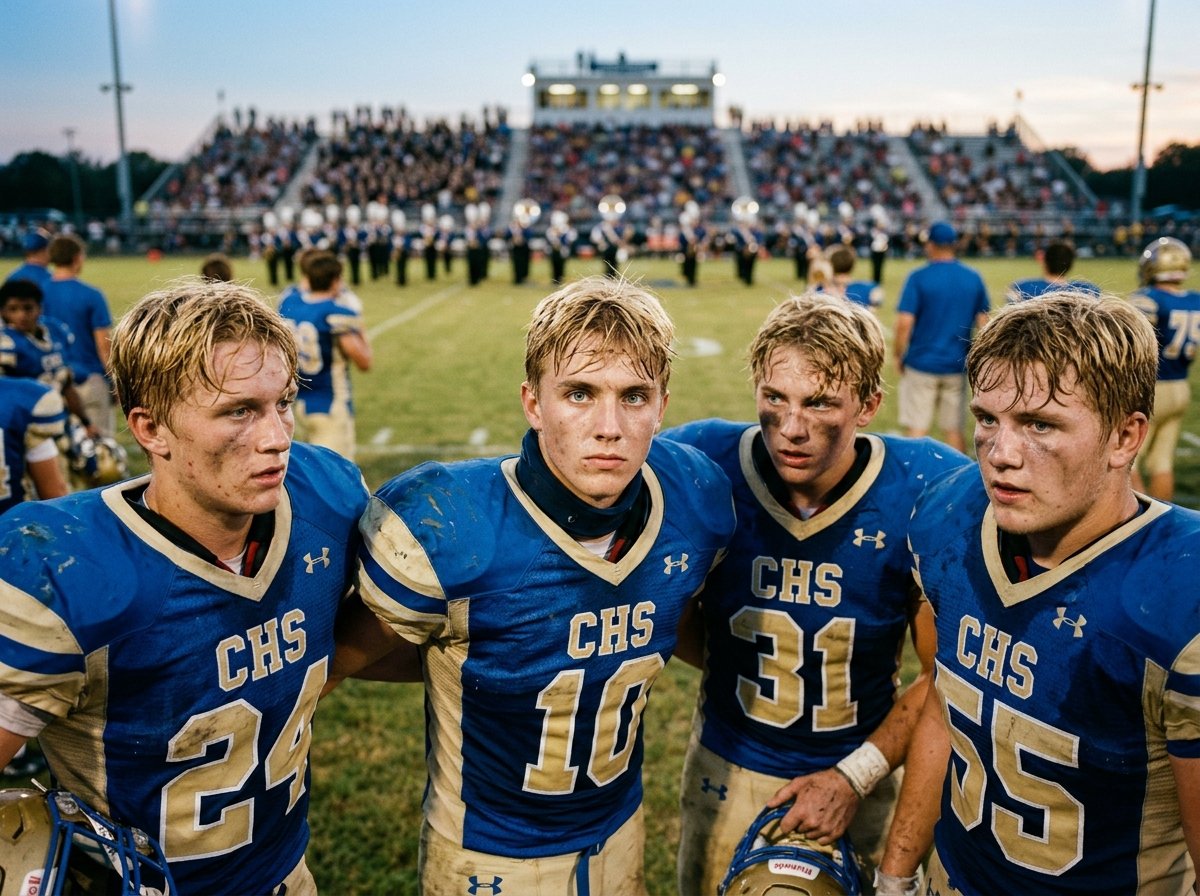
Epilogue: The game beneath the game has always existed, threading through time—long before the floodlights cast their glow on Friday nights, before applause thundered from stands packed with expectant parents, before the stakes were quantified in scholarships and scouting ambitions. It is a lineage that winds back to the 1920s, when high school sports transcended mere recreation to become arenas for power’s soft machinery. Not for the players, but for those who orbit them—administrators, benefactors, communities—each maneuvering to secure, protect, or exploit advantage. Back then, control was masked in gentler guises, decisions couched in the rhetoric of "what’s best for the team," their true motives murmuring quietly beneath layers of decorum. Incrementally, these whispers grew into an undercurrent of quiet manipulation, and today, that undercurrent has reshaped the terrain itself.
The entrenchment is undeniable. Coaches now sculpt reputations as much as athletes. Rankings transform from earned to orchestrated, a currency traded behind closed doors. And the field? Always uneven, though rarely recognized as such by those who run across it. For the players, it remains a vision of purity—a passion, a shot, their proving ground. Yet step back, away from the bright lights and the roar of the moment, and patterns emerge, inescapable to the observant. The scoreboard—clean, factual, final—belies the backstage stagecraft. Games unfold not in isolation but as the visible edge of unseen networks, where power rewrites loyalty, where influence surpasses effort, where an introduction trumps a touchdown. To grasp the game beneath the game requires a kind of unflinching clarity, for the question is no longer whether the game is fair. It is whether one sees through the illusion of fairness at all.
THEY WERE OFFENDED BY THE RIDERS AND I WAS RUNNING THIS BRAND ON RETAIL MONEY
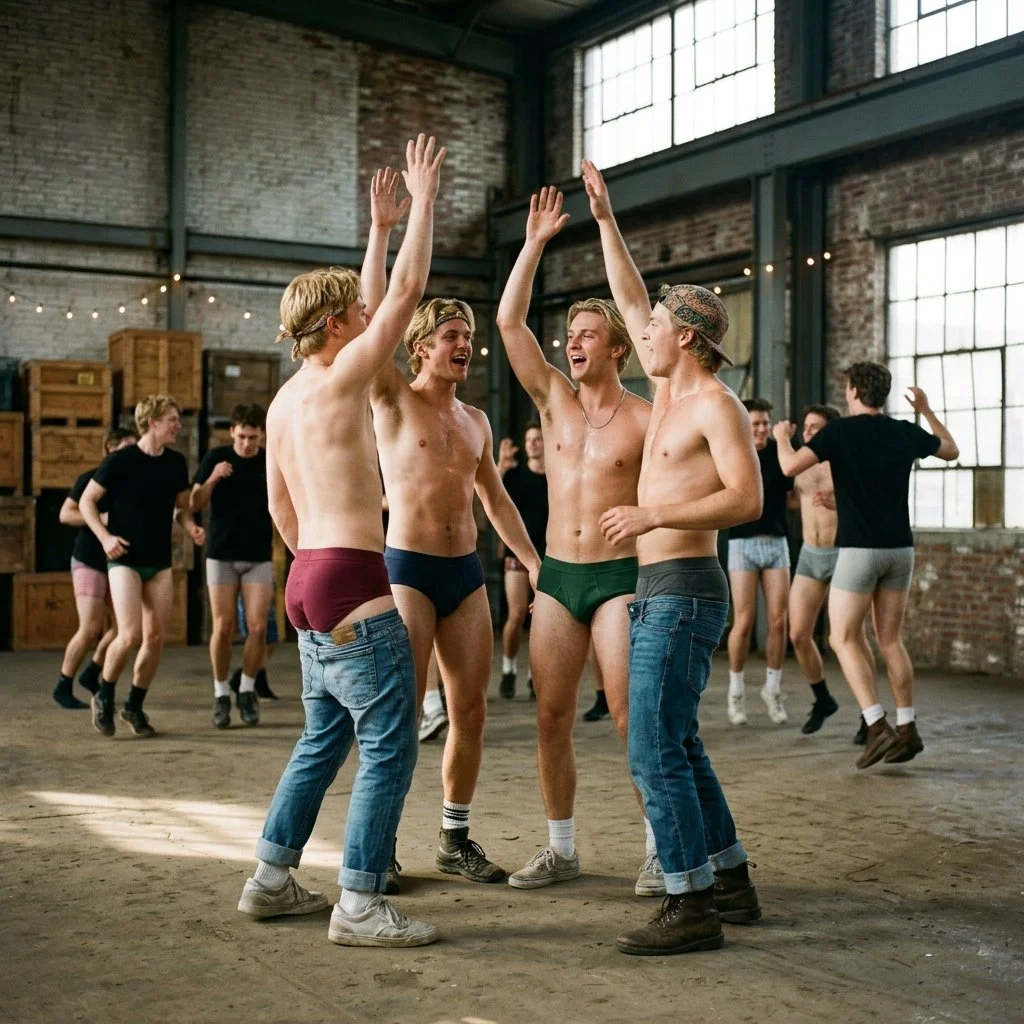
Captured by Mitchell Royel somewhere between the cobblestones and the quiet of the Fashion District —
where the light falls soft and the fabric tells secrets.
And if you listen close, you'll hear it drifting through —
I LOVE IT by Jessica Jarrell & Please Don’t Go by Mike Posner
the kind of songs that makes you feel like you're already in a memory.
Some moments don't ask to be posed.
They just ask to be felt.
Dear Friends, Critics, Supporters, and Anyone Who Has Ever Tried to Build Something Before the World Understood It,
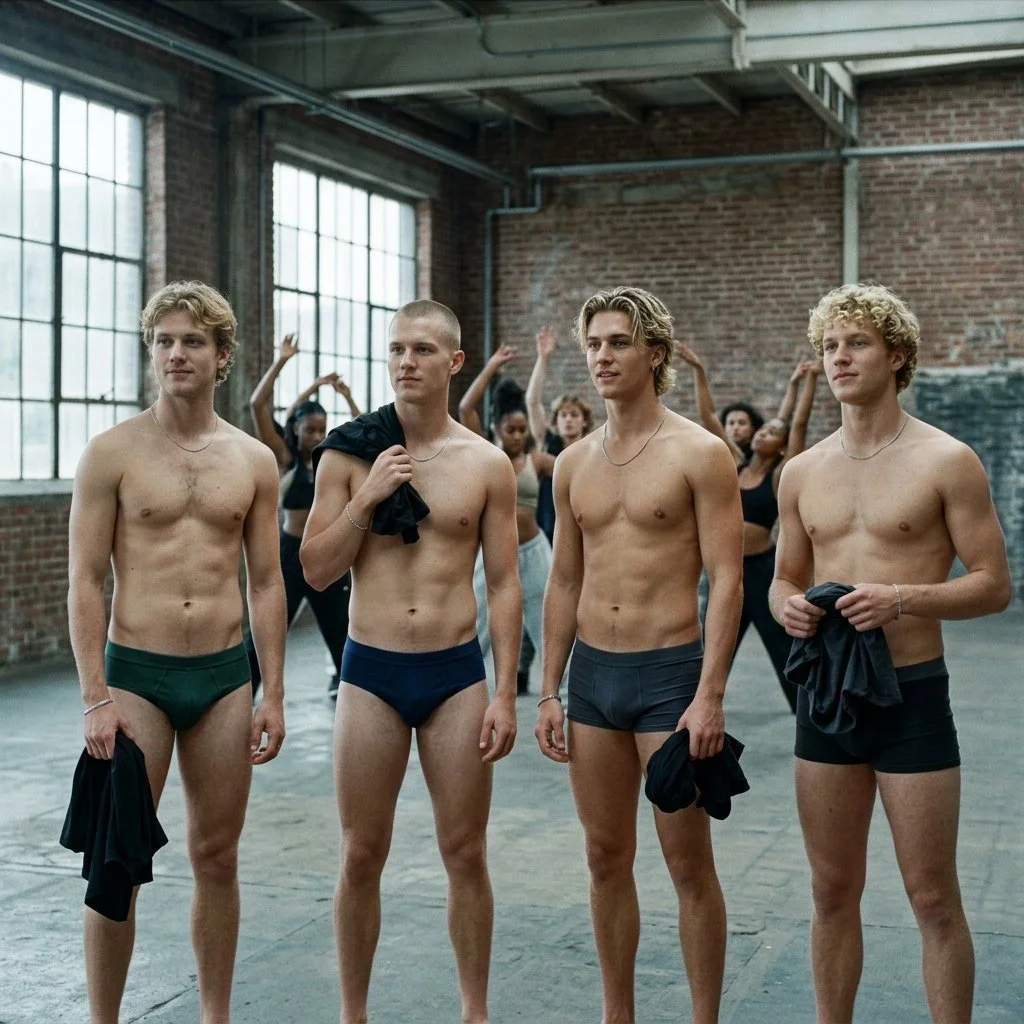
There is a strange moment in the life of a young brand when you realize people are no longer only responding to the product, the photographs, or the intention. They are responding to everything they believe is attached to it. That was one of the earliest lessons I learned while building Mitch Leyor.
In the beginning, the brand was small. Not “small” as a branding strategy, but small in the real sense. Boutique. Scrappy. Held together by faith, taste, limited resources, borrowed time, and the kind of belief that does not always make sense on paper. We were not operating with corporate budgets or teams of consultants. I was running the brand on what was left of a retail supervisor’s yearly pay from places like Abercrombie & Fitch and Banana Republic after bills were subtracted. Rent, food, transportation, basic life expenses — once those were handled, the dream had to survive on whatever remained.
So when people in high places became offended, I was genuinely flabbergasted.
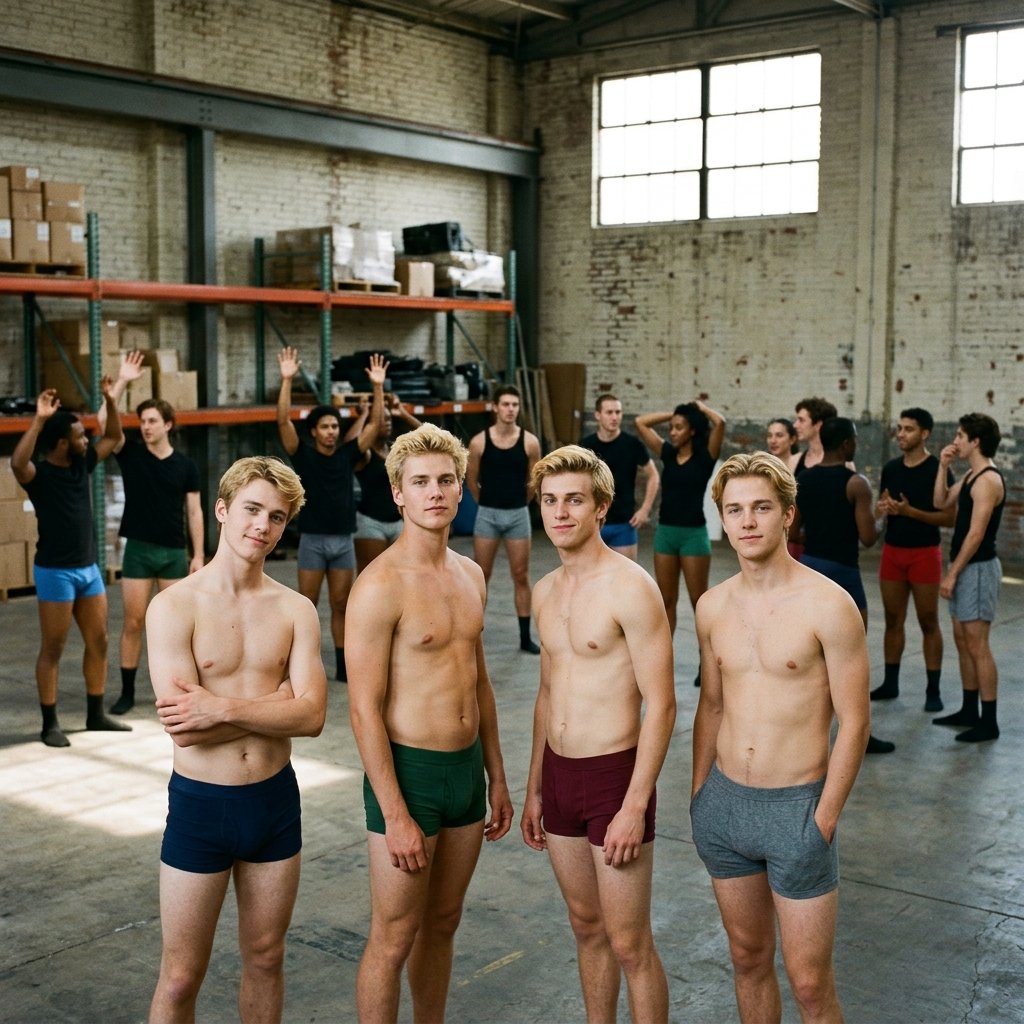
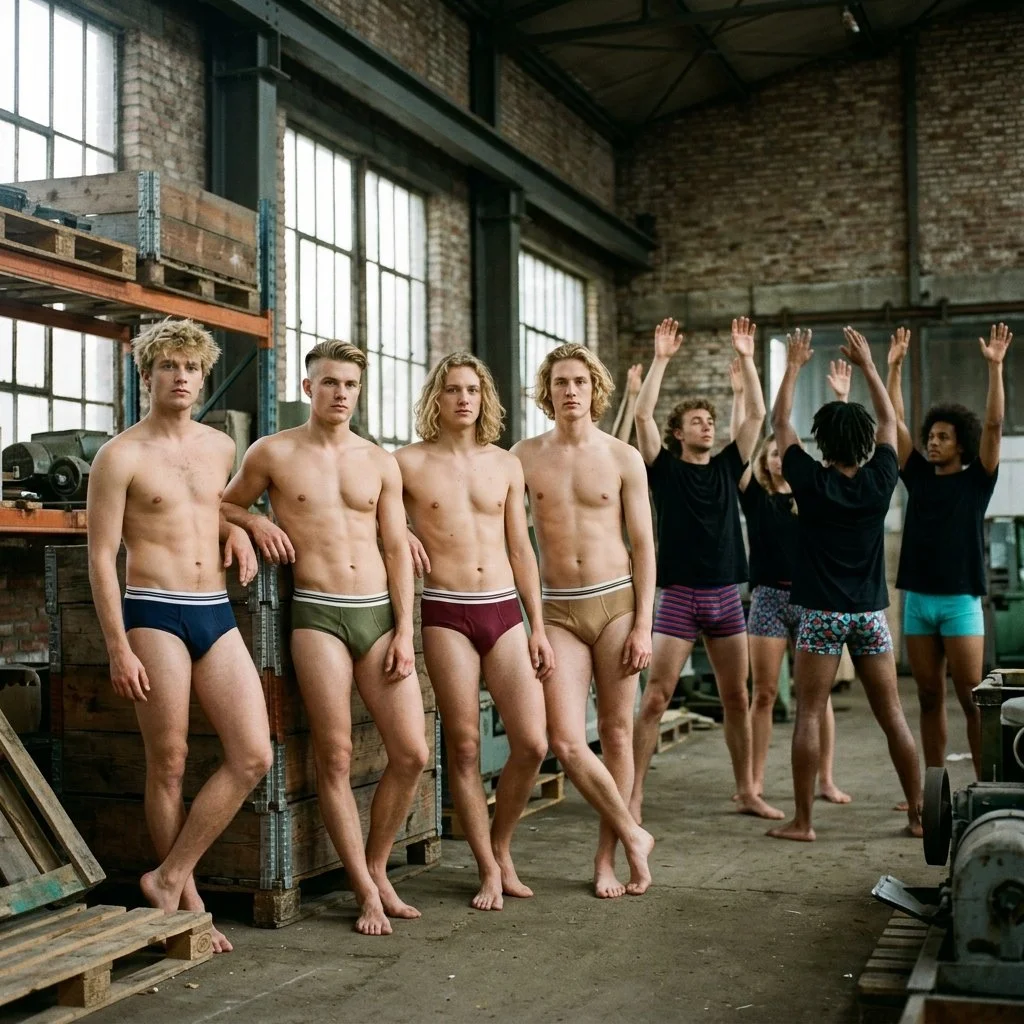
Not because I thought the brand was above critique. It never was. But because the scale of the reaction felt so disconnected from the reality of what we were building. From the outside, people imagined machinery. From the inside, it was sacrifice. They saw press, photos, brand ambassadors, and presentation. I saw receipts, overdraft anxiety, favors, late nights, and a founder trying to make a vision look more stable than it actually felt.
A major point of offense became the brand ambassadors’ riders.
For anyone unfamiliar with that word, a tour rider is a list of demands or requirements that an artist gives to a venue before a performance. It can include anything from food and drinks backstage to hotel preferences, transportation, security, lighting, dressing room conditions, or very specific personal requests. Some riders are practical. Some become legendary because they reveal how much power, comfort, or control an artist expects while on the road.
When I say the brand ambassadors’ riders became an issue, I mean that certain expectations, preferences, and attachments around the ambassadors began to carry more weight than the work itself. The riders were not just logistical. They became symbolic. People looked at who was representing the brand, what they wanted, what they expected, and what they seemed to imply — and then they built entire narratives around it.
The early imagery featured primarily Caucasian male models. That was part of the first visual language of Mitch Leyor: clean, classic, masculine, and direct. It was a beginning, not a final thesis. But beginnings are often judged as if they are permanent declarations. We released the images. The press came. Attention grew. Then, almost immediately, so did the assumptions.
People were not only reacting to the models. They were reacting to the “riders” they believed came with them — the perceived demands, privileges, cultural signals, and unspoken meanings attached to those ambassadors. Some saw exclusion where we saw an early chapter. Some saw arrogance where we were still trying to afford the next shoot. Some saw a fully funded statement when the truth was much humbler: a boutique brand trying to stay alive.
That gap between perception and reality was painful.
The Bible says in Proverbs 18:13, “To answer before listening — that is folly and shame.” I thought about that often. I watched people answer questions we had not been asked. I watched judgments form before conversations happened. I watched offense travel faster than truth. And if I am honest, my first response was not always holy. Sometimes it was frustration. Sometimes it was silence. Sometimes it was the private exhaustion of wondering how something so small could be made to look so calculated.
But James 1:19 gives a better instruction: “Everyone should be quick to listen, slow to speak and slow to become angry.” That verse became a discipline. Not an easy one, but a necessary one. Crisis management, especially when you are under-resourced, requires a special kind of restraint. You cannot afford to react to every accusation. You also cannot afford to ignore every concern. Wisdom is learning the difference.
So we listened. We examined what was fair. We rejected what was false. We did not apologize for having a beginning, but we accepted the responsibility to grow beyond it. We widened the lens. We expanded the visual language. We allowed the brand to mature without pretending the early chapter never existed.
There is a difference between conviction and stubbornness. Conviction says, “This is what I believe, and I will build from it with integrity.” Stubbornness says, “I refuse to learn.” I never wanted Mitch Leyor to be stubborn. I wanted it to be honest.
Matthew 7:1 says, “Do not judge, or you too will be judged.” That verse is often quoted, but not always practiced. It does not mean we avoid accountability. It means we approach people with humility because we rarely know the whole story. Many people who judged the brand did not know the financial reality behind it. They did not know what it meant to create under pressure, to negotiate with limited leverage, or to carry a public-facing image while privately calculating what could be afforded after bills.
And still, I believe criticism can be useful. Proverbs 27:17 says, “As iron sharpens iron, so one person sharpens another.” Some criticism sharpens you. Some only cuts. The task is to let the right kind make you better without letting the wrong kind make you bitter.
Looking back, I understand why the riders mattered. In fashion, image is never just image. A model is never only a model. A brand ambassador is never only a face. Everything communicates. Everything carries meaning. Even silence says something. Even a small brand can create a large reaction if people believe it represents something bigger than itself.
But I also wish more people had understood the humanity behind the work.
Mitch Leyor was not born from excess. It was born from resourcefulness. It was not launched from a tower. It was built from the ground, with retail pay, faith, pressure, and the belief that something beautiful could come from very limited means. The offense around the ambassadors’ riders taught me that perception can become its own crisis. It also taught me that crisis can become a classroom if you are humble enough to learn without surrendering your soul.
So this letter is not a defense of perfection. There was no perfection. It is a testimony about growth.
We built. We were misunderstood. We adjusted. We kept going.
The Bible says in Galatians 6:9, “Let us not become weary in doing good, for at the proper time we will reap a harvest if we do not give up.” That is the spirit I carry forward. Do not grow weary because people misread your beginning. Do not abandon the work because offense arrives before understanding. Do not let people with more power define the meaning of what you built with sacrifice.
Mitch Leyor was never meant to be a statement of exclusion. It was a beginning — imperfect, ambitious, pressured, and real. And like all beginnings, it had to grow.
With honesty, faith, and gratitude,
Mitchell Royel, Deck
FROM SUBURBIA'S FINEST CONTRABAND SMUGGLER

Photos captured in the heart of the Fashion District by the one and only Mitchell Royel — a true artist with an eye for moments that speak louder than words. Just to set the record straight, these images are not formally affiliated with Playboy Magazine or any of its subsidiaries in any capacity. They’re independent, raw, and unapologetically real, much like the energy of the streets where they were taken. Right now, as we soak in these visuals, we’re vibing to "Too Easy" by Tinashe — a track so effortlessly smooth that it feels like the perfect soundtrack to this whole vibe. There’s something about the rhythm of its beat that matches the pulse of the city, where art, expression, and edge collide to create magic.

Let me set the scene for you.
And trust me, you're going to want to sit down for this one.
Picture a suburb.
Not just any suburb.
The suburb. Cul-de-sacs that curved into nowhere.
Lawns so manicured they looked embarrassed for you. Sprinklers going off at exactly 6 a.m. like the neighborhood was contractually obligated to be boring. This is where I grew up. And I mean it lovingly when I say: nothing happened there. Ever. Not once.
The big event of the decade?
The Hendersons got a trampoline.
People talked about it for weeks.
Grown adults, whispering about coiled steel and a mesh net like it was breaking news. That's the kind of excitement we were working with. That was the ceiling. That was the peak of human achievement on my block.
So you can imagine my situation. Young. Ambitious. Full of potential. Trapped in a place where the most dangerous thing you could do was ride your bike without a helmet. I was a Ferrari parked in a school zone.
And then one day, everything changed.
I found a Playboy magazine.
Now, I'm not going to tell you where. I have a reputation to protect, and a gentleman keeps a few things sacred. But I found it. And I did what any responsible young man would do with a priceless artifact — I smuggled it home like I was running product across a border. Tucked it under my shirt. Walked funny for three blocks. Sweating. Committed.
Then I hid it. Not just hid it — I concealed it like national security depended on it. Because to me? It did. Understand something: this was pre-internet. This was scarcity. This was a different economy entirely. You couldn't just conjure things out of thin air. You had to earn them. Find them. Deserve them. Locating one of these was like stumbling onto buried treasure with a map you didn't even know you had. A first edition. A relic. History, in glossy print, in my sock drawer.
So naturally, being the generous soul that I am, I shared it. Because what's the point of greatness if you keep it to yourself?
Enter: my friends.
We'd gather in my room. Door locked — obviously, I'm not an amateur — and we'd huddle around this thing like archaeologists who'd just cracked open a tomb. Total silence. Absolute reverence. Someone would turn a page and the entire room would inhale like we'd witnessed a miracle. We weren't kids anymore. We were scholars. Academics. A think tank. We told ourselves, with completely straight faces, that we were reading it for the articles.
And here's the twist — sometimes we actually did. And I'll be honest with you: solid journalism. Genuinely. Well-researched. Compelling. But that, my friends, is beside the point.
For years, that magazine was the closest I was ever going to get. It was a fantasy. A legend. A rumor of a better life that existed somewhere far, far beyond the sprinklers and the trampolines and the Hendersons and their little slice of suburban glory. It was a dream I kept folded up in a drawer.
Or so I thought.
Fast forward. I'm older now. Slightly more dangerous. And I'm at the grocery store, doing something painfully, aggressively normal. Buying cereal. That's the glamorous life I was leading — pushing a cart, comparing sugar content, living on the absolute edge. Riveting stuff.
And then I turn the corner into an aisle. And I stop.
I don't slow down. I don't hesitate. I stop. Dead. Frozen. Full system shutdown.
Because there she is.
An actual, real-life, in-the-flesh Playboy Bunny. Not on a page. Not in a drawer. Not a myth. Standing there. In my grocery store. Between the cereal and the canned goods like she'd stepped straight off the centerfold and decided to go shopping. My brain didn't just skip — it left the building entirely. I forgot my name. I forgot the cereal. I forgot, briefly, how legs worked.
And then something clicked. Call it destiny. Call it fate. Call it years of dedicated, disciplined "research" finally cashing in. The scholar in me stood up. The suburban kid straightened his collar. And I walked over.
I said something. Something smooth. Something charming. Something I will absolutely not repeat here, partly out of modesty and partly because you wouldn't believe me anyway. And then I did the unthinkable. The impossible. The thing that suburban kids from cul-de-sacs are statistically not supposed to pull off.
I got her number.
Let that land. The kid from the locked bedroom. The one who smuggled a magazine home like contraband. The one whose whole town lost its mind over a trampoline.
Got. Her. Number.
So here's what I learned, and I'm passing it down to you free of charge.
There's one thing to read Playboy magazine — a noble pursuit, a lifelong education. And then there's an entirely different thing to date a Playboy Bunny.
And those, my friends, are two very separate conversations to have with your dad... that we are absolutely going to leave to your imagination.
-Deck
CROWD NINE

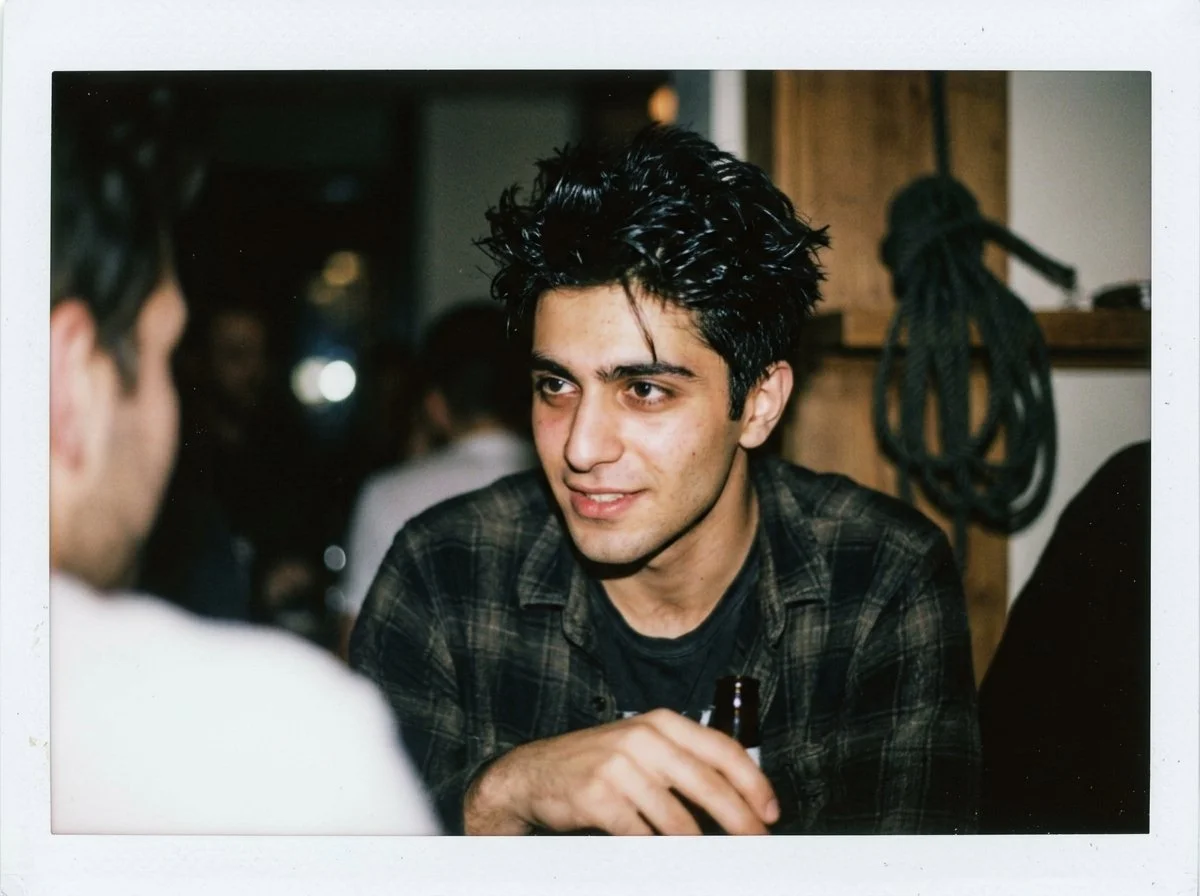
Listening to "Red Light" by Usher hit different today, the beat synced with the raw energy of the city. These polaroids, shot by the visionary Mitchell Royel in the heart of the fashion district, capture a world that moves fast but stays unapologetically authentic. It’s a vibe—edgy, chaotic, and alive—but under it all, there’s this grounding force.
(The chair is too soft. The kind that swallows you. The narrator sits forward, elbows on knees, staring at a spot on the carpet.)
You want me to start at the beginning. Okay. Okay.
There isn't a beginning. That's the thing. It just... happened. Like weather.
A year. It's been a year. And I still—
(A breath. Too fast.)
Let me back up. A few days before. I saw him. Standing by the field with the football guys. You know the type. Loud. Big. Not our people. Not my people. And him — my best friend — laughing with them like he belonged there. And something in my stomach went cold, but I told myself, don't be weird, don't be jealous, friends can have other friends.
Friends can have other friends.
(A hollow laugh.)
Then he invited me over. To sleep at his house. And that never happened. Not once, all those years. I'd bought him things. I bought him the gel he used every morning. I picked out the jacket he wore like it was his skin. But I'd never slept over. And I thought — finally. Finally I'm in. Finally I matter.
(Hands, opening and closing.)
I got there. I remember my eyes getting heavy. Sleepy. Why was I so sleepy? I've asked myself that a hundred — a thousand times. Why.
And then something hit the back of my head.
The floor came up. Just came up and met my face. And he was — he was mumbling. Curses. At me. Words I'd never heard him aim at anyone. Where was that coming from? WHERE. This was my—
(Stops. Swallows.)
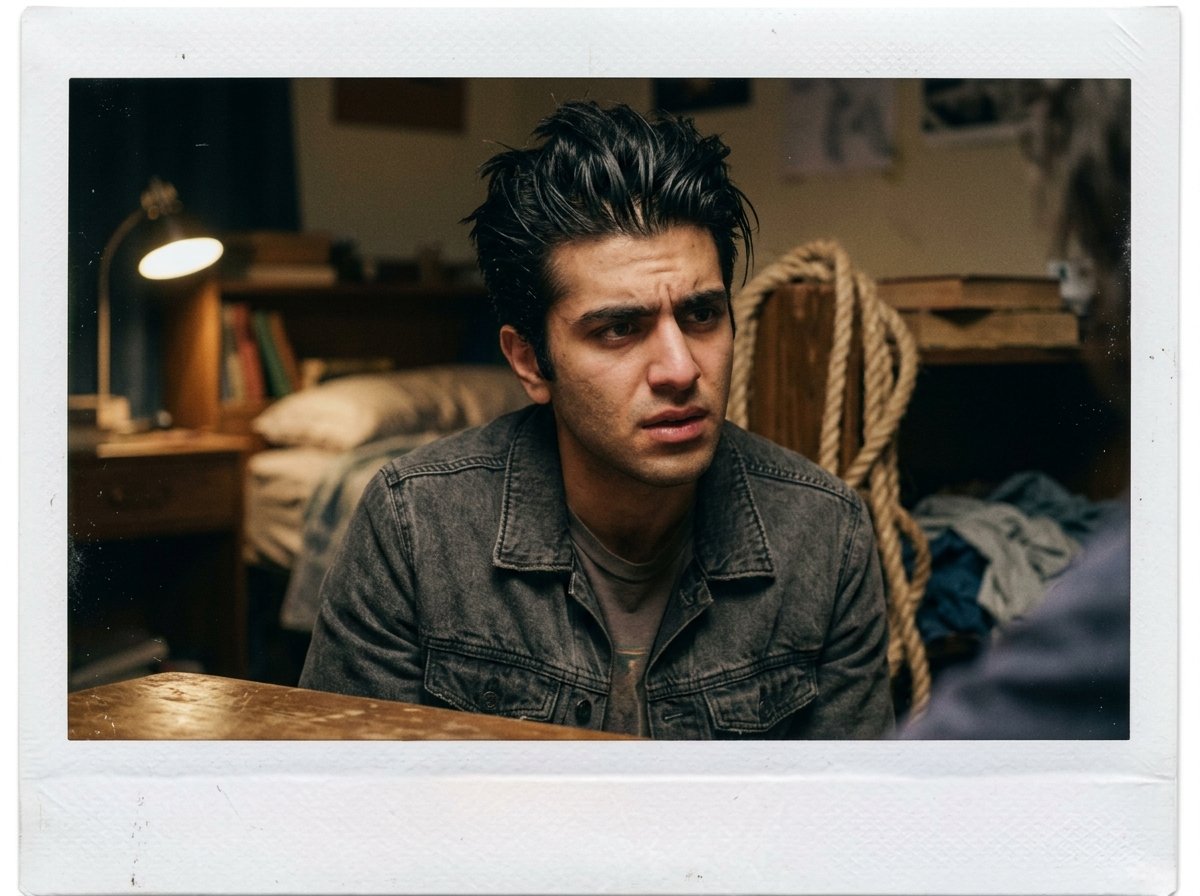
Next thing, I'm on the bed. I don't know how. I'm on the bed and I'm screaming, "get the f off of me," and I don't even know what's happening, I don't know what he's doing, and there's a rope. In the corner. There's a rope in the corner of his room and I'm looking at it and my brain just — it won't say the word. It still won't say the word.
He got up. Started pacing. Back and forth, back and forth.
"I'm leaving your house," I said. I grabbed my phone. Called the police. Busy. Busy? How is it busy — think, think, think, I kept dialing, and I hit my dad's name by accident. "Pick me up. Now." My nose was bleeding. Down my lip. Warm.
I ran to the bathroom. Cleaned myself up. Watched the pink swirl down the drain and thought, act normal, act normal, get out.
And then I was in my dad's car. Just like that. Happy-go-lucky. "What happened?" he said.
"Nothing," I said. "But I'm never going back to his house."
Nothing.
(Long pause. The voice drops, quieter, almost tender.)
The next morning I went to school like it was any Tuesday. And they were already gone. Kids from other groups — people who barely knew me — walking past like I was made of glass. Ghosting. Stone-cold. Looking through me.
I walked up to my group. My friends. And they stared me down. Every one of them. Before anyone could say a word — he came over.
Him.
Running the gel through his hair. My gel. Wearing the jacket. The one I picked out months before, held up in a store and said this one, this is you.
And he goes, so casual, so bored, "we don't need to be friends anymore."
(A beat.)
"That's fine," I said. "I'm not going to your house again. Not after what happened."
"Sure," he said.
Sure.
(The rage surges. Fast now, breaking apart.)
And that's — that's when I lost it, I blacked out, not fainting, the other kind, the kind where you come back and there's just a hole where the minutes were and your fists hurt and your throat's raw. Because I knew. I KNEW. He told them. He told them we got in a fight, a physical thing, made himself the — the one who stood up, the one who was right, fed me to every person who'd ever hated me, handed me over like a gift, like look everyone, look what I did, and they clapped, they clapped with their silence—
(Chokes. Stops. The whole thing collapses into stillness.)
He planned it. That's what I can't— he planned it. The sleepover. The invitation. It was a stage. And I walked onto it holding a jacket and a tube of gel like an idiot in love with a friendship that was already dead.
(Silence. The narrator sits back. Deflated.)
I'll never know exactly what happened that night. I'll never know why the back of my head. Why the rope. What was supposed to happen. What he told himself when he closed his eyes that night. I'll die not knowing, and that — that's the part that doesn't heal. Not the hitting. The not knowing.
(A pause. Then, in a different, softer voice — the therapist's, gentle, careful.)
"Well. You're in college now. You've got new friends. And... not everyone is meant to keep in touch after high school."
(Silence. The narrator looks up. A small, broken breath — almost a laugh, almost a sob.)
Yeah.
Yeah. Not everyone.
(Looks back down at the spot on the carpet.)
Some people are just... weather.
(Lights down.)
-Deck, M.R
BETTER IRL
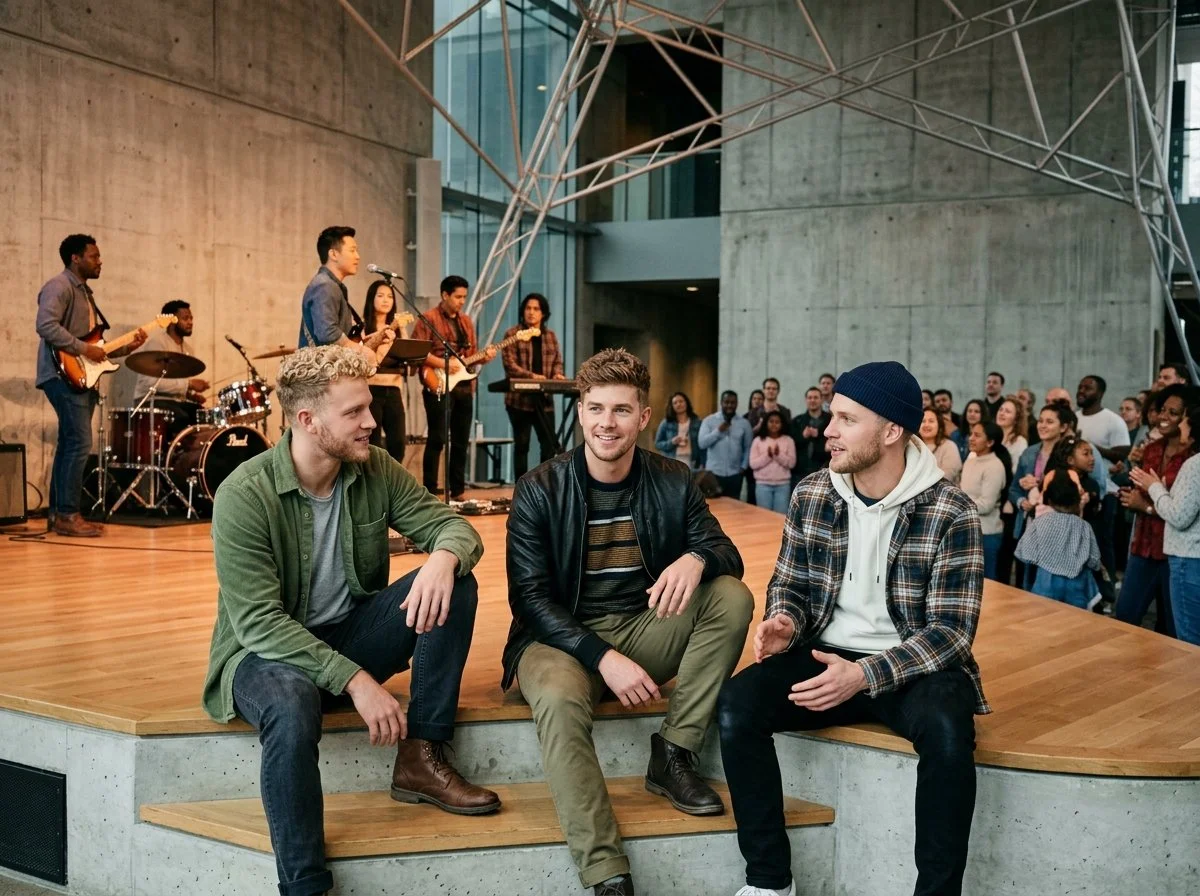
These live shots were all captured out and about in the buzzing streets of Hollywood, right on an iPhone, proving that sometimes the simplest tools can capture the rawest moments. The energy was high, the vibe was right, and as the sun dipped low, we were locked into the beat—listening to "HYPE" by Calvin Harris and Dizzee Rascal. It’s that track that makes you move without even realizing it, the kind of sound that syncs perfectly with the pulse of the city. Hollywood felt alive, every corner dripping with attitude, and the combination of music and motion made it all feel larger than life.
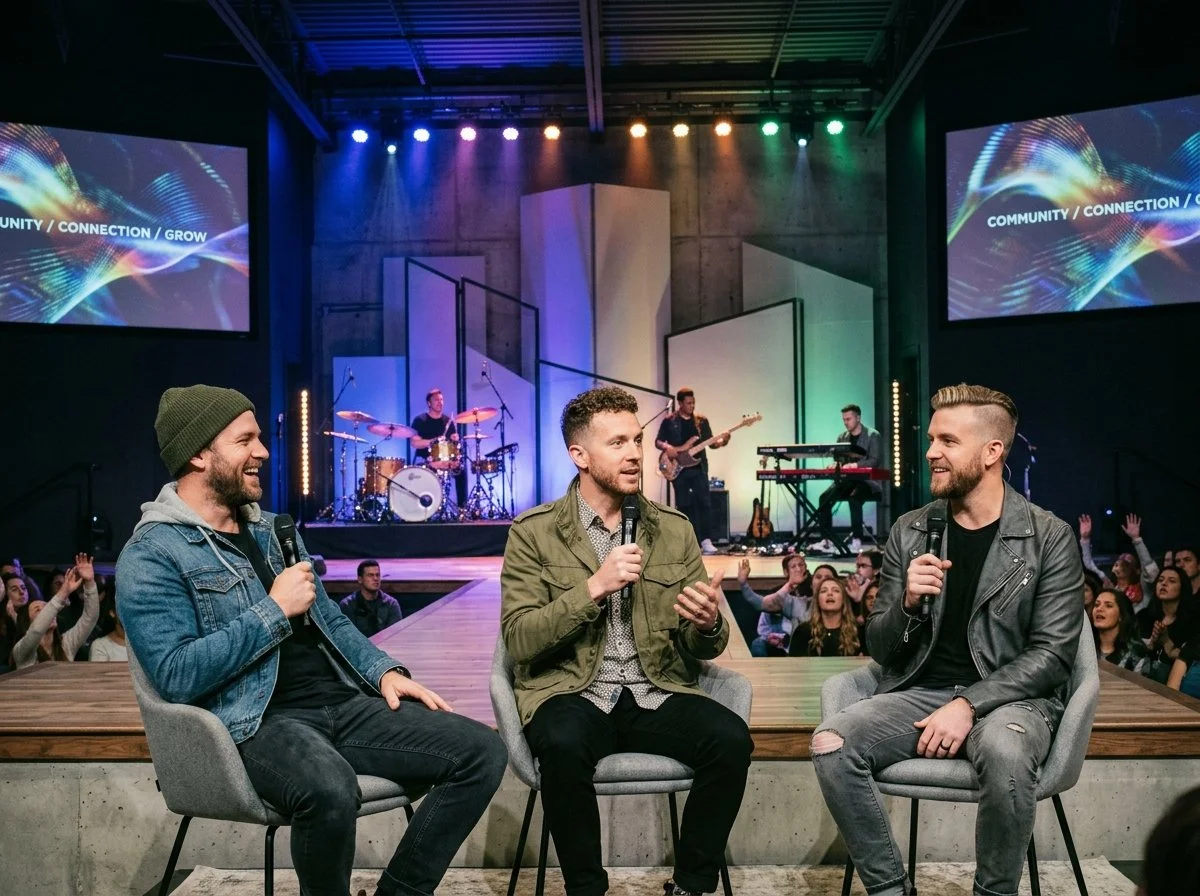
These live shots were all captured out and about in the buzzing streets of Hollywood, right on an iPhone, proving that sometimes the simplest tools can capture the rawest moments. The energy was high, the vibe was right, and as the sun dipped low, we were locked into the beat—listening to "HYPE" by Calvin Harris and Dizzee Rascal. It’s that track that makes you move without even realizing it, the kind of sound that syncs perfectly with the pulse of the city. Hollywood felt alive, every corner dripping with attitude, and the combination of music and motion made it all feel larger than life.
Let me tell you something.
We found each other on a screen.
That's not a small thing. That's a beautiful thing. Because when you were sitting in your room, alone, at 2am, feeling like nobody in the world could see you — something reached through that glass and said, you belong here.
A post. A message. A comment left by a stranger who became a friend.
We built something in the feed. In the DMs. In the little blue-lit hours when the whole world was asleep and you were still awake, still searching, still hoping there was more.
And there was. There is.
The internet gathered us. Pixel by pixel, story by story, heart by heart. People from cities we've never visited. People with lives we'll never fully understand. And somehow — somehow — we recognized each other anyway.
That mattered. Don't ever let anyone tell you it didn't.
But listen.
Listen close now.
A screen can carry a spark. It cannot hold a fire.
A screen can show you a face. It cannot hold your hand when everything falls apart.
We were never meant to live our whole lives behind glass. We were made for skin and voice and eye contact. We were made for the awkward hug. The long dinner. The tears you can't hide when someone is close enough to actually see them.
So here's the word for this new season.
Better in real life.
This is the season we stop watching community and start walking into it. This is the season we close the app and open the door. This is the season we trade the highlight reel for the honest table.
Because you can't be truly known through a filter.
You can't be truly held by a heart emoji.
And you were made to be known. Every messy, glorious, unfinished part of you — known.
I want you to imagine it.
A room full of people who show up. Not because it's convenient. Because you matter. People who learn your name and then learn your story and then stay anyway.
That's the dream. And the dream is closer than you think.
So show up.
When it's easier to stay home — show up.
When you're tired, when you're nervous, when that voice says nobody will notice if you don't come — show up.
Because somebody will notice. Somebody's saving you a seat right now.
This is the season of the front porch, not the back row. The season of long talks and shared meals and phone numbers that turn into friendships. The season of do you want to come over and let me pray for you and I'm not going anywhere.
We are done doing life at a distance.
We are getting close.
Here's what I need you to hear before you leave this place.
You are not alone. You have never been alone. Even in the nights that felt endless, even in the seasons nobody saw, you were being carried.
And now?
Now you have each other. Real people. Real presence. Real love with a heartbeat and a name.
And you have us. All of us. Every one of us, standing right here, saying it together:
You belong. You're wanted. You're home.
So let's stop scrolling past each other.
Let's live this thing out loud.
Let's be better — together — in real life.
Come on.
-Deck
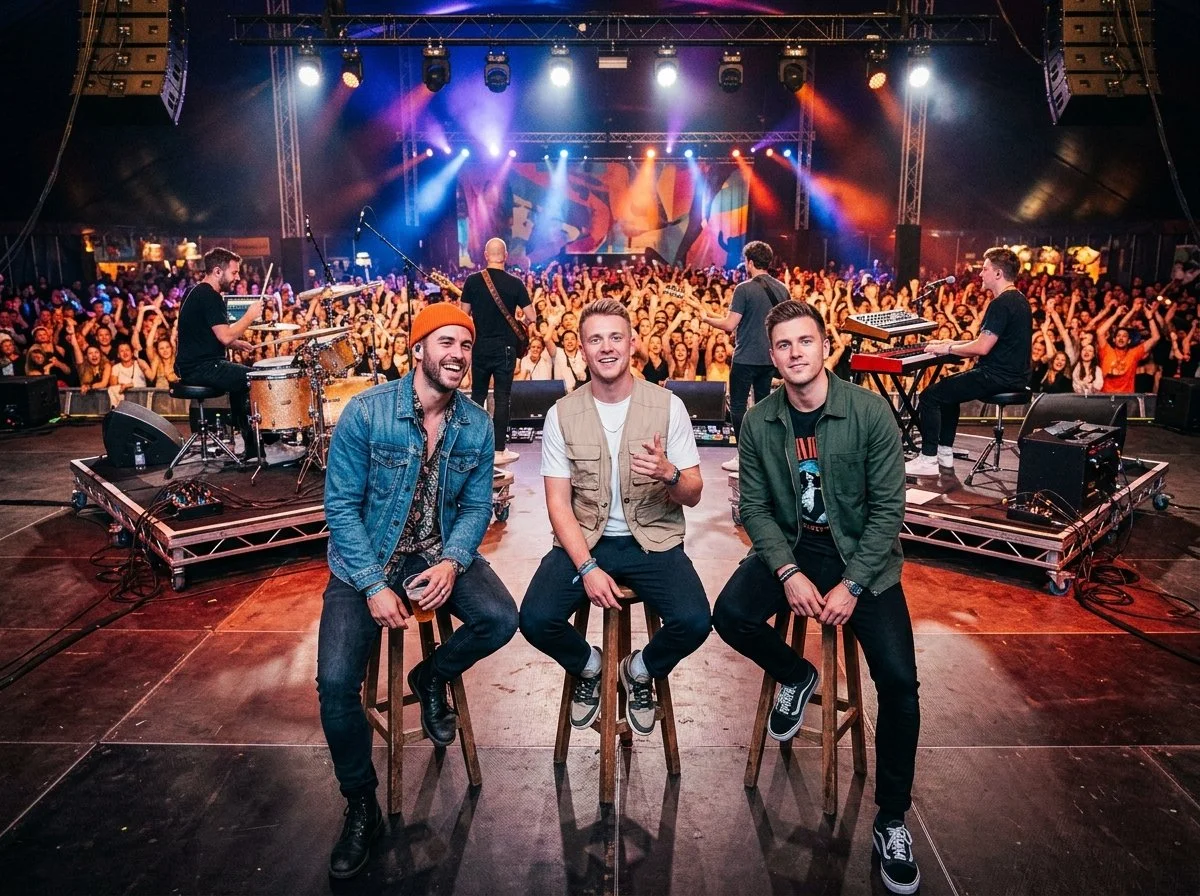
These live shots were all captured out and about in the buzzing streets of Hollywood, right on an iPhone, proving that sometimes the simplest tools can capture the rawest moments. The energy was high, the vibe was right, and as the sun dipped low, we were locked into the beat—listening to "HYPE" by Calvin Harris and Dizzee Rascal. It’s that track that makes you move without even realizing it, the kind of sound that syncs perfectly with the pulse of the city. Hollywood felt alive, every corner dripping with attitude, and the combination of music and motion made it all feel larger than life.
Epilogue: We were always meant for more than the isolation of our own thoughts and screens. Community was never an afterthought; it was God’s design from the beginning. Ecclesiastes 4 reminds us that "two are better than one, because they have a good return for their labor. If either of them falls, one can help the other up. But pity anyone who falls and has no one to help them up." This isn't just poetry; it's a promise. A truth stitched into creation that life is fuller, richer, and more resilient when lived together.
Friendship and community are reflections of Christ’s love — tangible reminders that we are known, seen, and deeply loved. Jesus Himself said, "For where two or three are gathered in my name, there am I with them" (Matthew 18:20). When we gather — in homes, across tables, with shared meals and shared prayers — we carry His presence with us. We become the outstretched arms of grace to one another, the shoulder that steadies in weakness, the voice that speaks hope when words feel far away.
And when loneliness whispers that you belong nowhere, remember this — in Christ, you belong everywhere. He calls you His own. And through that belonging, He draws others to walk alongside you. We are not built for isolation. We are built for connection, for laughter that fills a room, for burdens halved and joys multiplied. The beauty of community isn't perfection; it's presence. Presence that looks at all your pieces and says, “I’m still here.”
Take the next step. Into vulnerability, into kindness, into real, unfiltered living. You don't have to carry it all alone. You're not unnoticed. You’re held in infinite love, both by Him who holds the world and by those here, ready to stand shoulder to shoulder with you.
Better is waiting. Out loud. Together. Always.
WE WERE ALWAYS LEAVING, EVEN WHEN WE STAYED
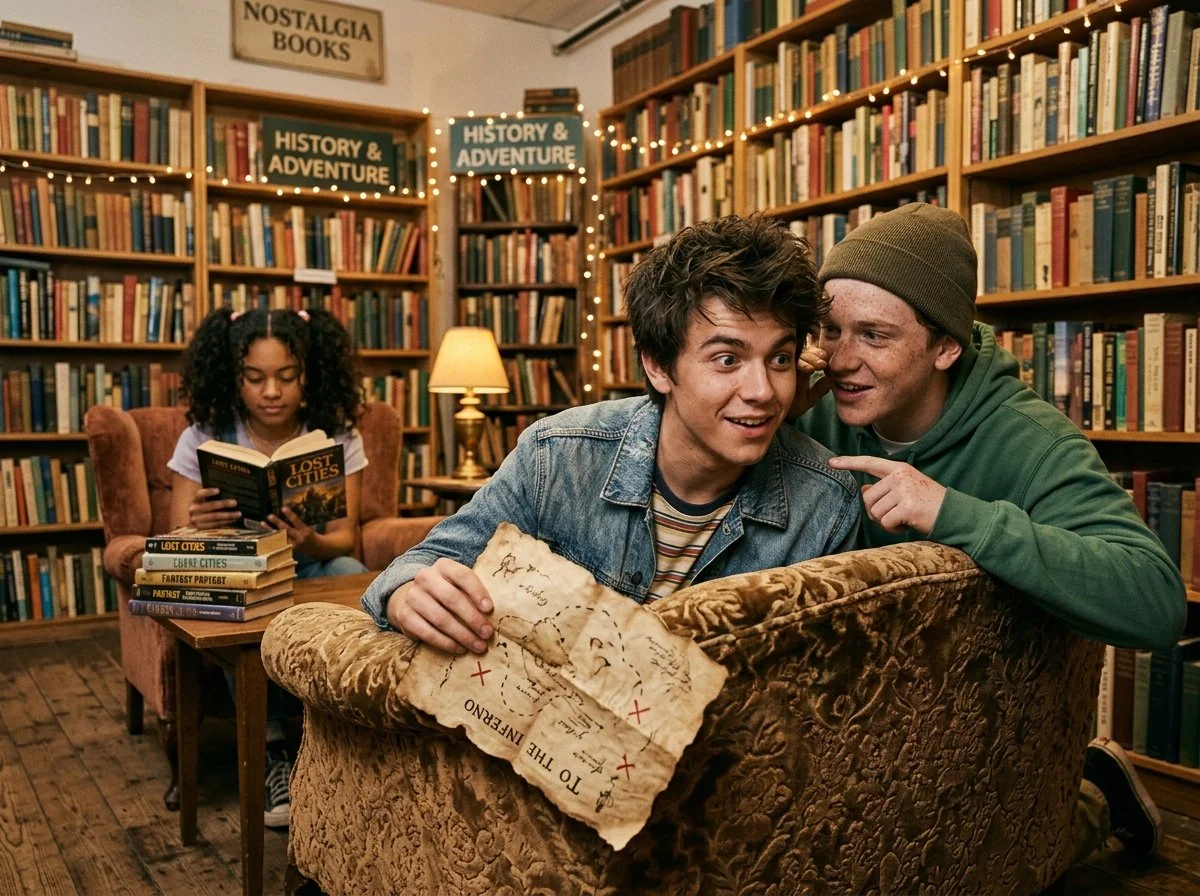
Captured moments today in the Fashion District, 9/5/26—a mix of faces, textures, and fleeting stories held together by the rhythm of steps and shutter clicks. Rocket in the Sky by Benassi Bros and Naan played in the background, syncing perfectly with the rush and glow of the city, like it knew exactly how to soundtrack the energy we didn’t know we were searching for.
We used to treat Thursday nights like they were military operations designed by idiots.
Not dangerous idiots, exactly. Just the kind of idiots who think showing up to a kickback with six guys in one car and a half-dead phone battery counts as “making memories.” We were that very specific breed of suburban feral where nothing good ever starts with, “Yo, what if we go to another town?”
And obviously, that was always how it started.
We were kickback routey. Basement routey. Standing in somebody’s kitchen pretending to know the song routey. Disappearing for twenty minutes and coming back with our hair worse and our moral record somehow worse too. The kind of routey where somebody’s making out in a bathroom with a broken lock while the rest of us are outside debating whether the host’s dog is judging us. Which it was. That dog had seen evil.
But there was always something better about leaving.
That was the move. Crossing into other towns, other school districts, like idiots in a stolen war movie, except nobody stole anything except maybe somebody’s hoodie and the last shreds of our dignity. There was just something about being where nobody really knew us. We got to be mysterious for, like, twelve minutes. Which is huge when in your own town your reputation is basically, “Aren’t you the guys who got banned from the rec center vending machine area?”
And somehow we’d end up at the bookstore.
Always the bookstore.
Because of course we were the kind of morons who’d go half feral at a kickback, then wander into a fluorescent cathedral of self-improvement and overpriced journals like we were men of literature. Just six badly supervised prophets leaning on shelves, acting like we had deep thoughts because one of us picked up a copy of Dostoevsky and said, “This guy looks upset.”
And we knew the types. We absolutely thought we knew the types.
We’d see the after-school bookstore girls like it was birdwatching for the emotionally unserious. The one speed-walking in with her backpack still on, like she was only there because home was too loud. The one sitting cross-legged in the corner absolutely obliterating a cinnamon tea while reading something with a tragic cover and zero joy. The one who shuttles there after school and clearly wants to be left alone—which, for the record, means leave her alone. Even we knew that. We were reckless, not stupid. There’s a difference. Thin difference. Medical-paperwork difference. But still.
And then there was always that one girl.
The one who wasn’t broadcasting anything. Wasn’t performing mysterious. Wasn’t begging to be figured out. She was just… elsewhere. In her head in a real way. Not in the fake, movie-scene, messy-bangs way. More like she had an entire second city running behind her eyes and the rest of us were standing outside with fake IDs trying to get in.
That kind of different messes with you.
Because suddenly the joke dies for a second. Suddenly nobody wants to do the dumb bit. You stop being a pack of hyenas in vintage zip-ups and for one weird moment you just want to level with her. Not impress her. Not run game. Just say, I don’t know, “Hey. You ever feel like everybody in our age group is doing a group project on self-destruction and nobody read the instructions?”
That was the dangerous part.
Not danger-danger. Not knives, not sirens, not the sort of thing our parents imagined when we said we were “just hanging out.” I mean emotional danger. The kind where a bunch of unserious guys accidentally become serious for ten seconds in the philosophy aisle. Horrible scene. Disgusting. Somebody should’ve called the cops.
Because we were funniest when we didn’t care. That was our whole religion. Everything was irony, deflection, fake confidence, group laughter that covered up the fact that most of us had no clue what we were doing. We were boys held together by gas station snacks, borrowed cologne, and the sacred oath of never admitting a moment affected us.
But then some quiet girl in a bookstore looks like she actually has an interior life, and now suddenly we’re all developing consciousness against our will.
Brutal.
That was the real dark humor of it. We could survive kickbacks, bad decisions, sketchy bathrooms, drives to nowhere, all of it. But one girl looking like she’d rather be anywhere else—while also somehow seeming more alive than anyone at the party—would humble us instantly. Six idiots with the social rhythm of a shopping cart, brought to spiritual ruin between Fiction and Memoir.
We liked to act like we were hunting for adventure, but really we were just orbiting anything that felt more real than us.
That’s why we kept going to other towns. Other districts. Other bookstores. Not because we were smooth, because we were absolutely not smooth. We moved like a council of cursed youth pastors. But because every now and then, in the middle of all the noise, you’d spot somebody who made you want to drop the act for a second.
And that’s rare when you’re us.
Because us, we were a mess. A coordinated mess, sure. A stylish mess on good days. But still a mess. The kind of guys who treated every weekend like a low-budget coming-of-age film directed by somebody with unresolved issues and access to a Honda. We were there for the kickback, the jokes, the disasters, the bathroom scandals, the drives, the convenience store pilgrimages, all of it.
But secretly?
We were also there for that weird, quiet hope that in some random bookstore, in some random town, we might run into a person who made us tell the truth for once.
Even if only in our heads.
Even if only for the length of one aisle.
Even if we immediately ruined it by saying something unbelievably dumb after.
Which, to be fair, we would.
Because that’s us.
-Deck

Epilogue: But that’s the thing. We were the girls in the bookstore. The cross-legged ones with tea stained lips and stories that reddened the page. The ones running fingers along spines like they might press them open and spill out on the floor. We were too quiet to be mysterious, too loud in our heads to stay home, carrying the weight of borrowed words like keys to some other place—even if the doors never promised to open.
Thursday nights weren’t made for cities like ours, but we tried anyway. Tried to build a world on parking lot neon and gas station coffee. Half-charged phones buzzing with plans that felt urgent but never were. We weren’t reckless so much as restless, hoping the next town over would care less about who kissed who, who said what, who shattered who the week before. Hoping there, we might breathe easier, speak clearer, or not speak at all—just for a minute.
The boys would crash in, loud, their energy this strange mix of tragedy and comedy, like they knew they were embarrassing and leaned into it. We had a radar for them, the six or seven of them who trickled into whatever quiet corner we’d claimed, thinking they were stealthy as they watched us like we were planets they didn’t have the math to reach. And honestly, it was harmless. Stupid. Kind of charming in the way puppies falling over their own legs are charming. But you’d catch one of them in your periphery, and... sometimes there’d be that pause.
The bad jokes wouldn’t land, because he wouldn’t make them. His friends might be orbiting the caffeine paperback display like it was Jurassic Park, but he’d hesitate. He’d do that thing where he looked at you like he was trying to understand everything and nothing at the same time. And for a second, you wouldn’t hate it. For a second, you’d feel the smallest warmth—the dangerous kind. That little wonder of being seen when you didn’t mean to be.
But nothing lasted longer than a second on those nights. Not the thrill of driving over the county line, not the half-spilled gossip, not even the melody of the last song stuck in your head. We’d leave the bookstore when they’d leave the laughter. Everything was disposable. That was the whole point, wasn’t it? To feel weightless? A little fake? To step out of your usual orbit and into somebody else's, if only for a fleeting, fluorescent-lit moment.
And maybe they went back to their car, and maybe we went back to ours. Maybe their friends made noise about the cute bookstore girls who didn’t look at them twice, and maybe our friends laughed about how those boys had less game than a thumb-wrestling contest. But secretly? Secretly we wondered.
What would they have said if they’d had the courage? What would we have said if we had the time? Would those stolen glances have amounted to anything more? Or was the magic only in the almost—not in who we were but who we imagined each other to be, for just the length of an aisle.
FLOURISH THEN VANISH
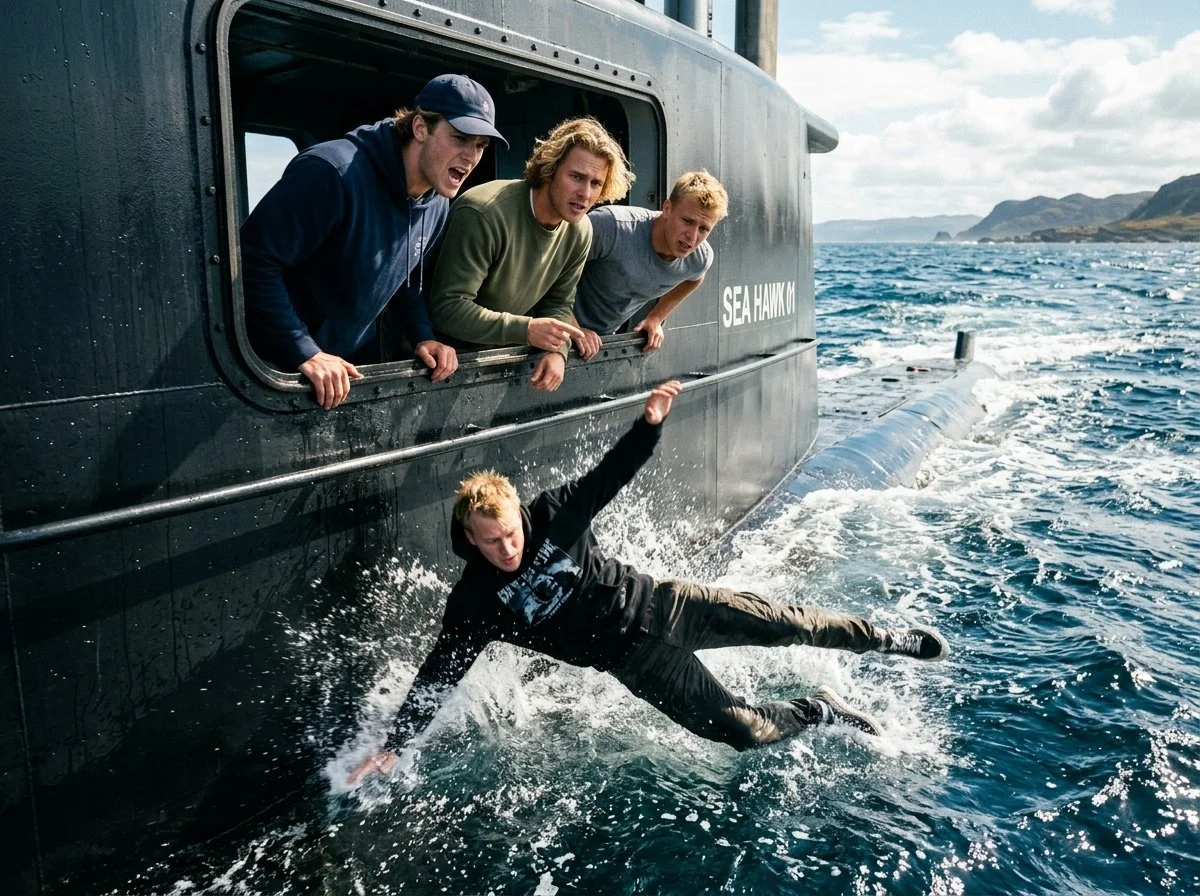
Captured today in the vibrant pulse of the fashion district by the lens of Mitchell Royel. We're tuned in, once more, to the hauntingly timeless So Cold by Mahalo, DLMT, and the ethereal Lily Denning, a track that cuts through the noise and lingers like salt air after a perfect wave.
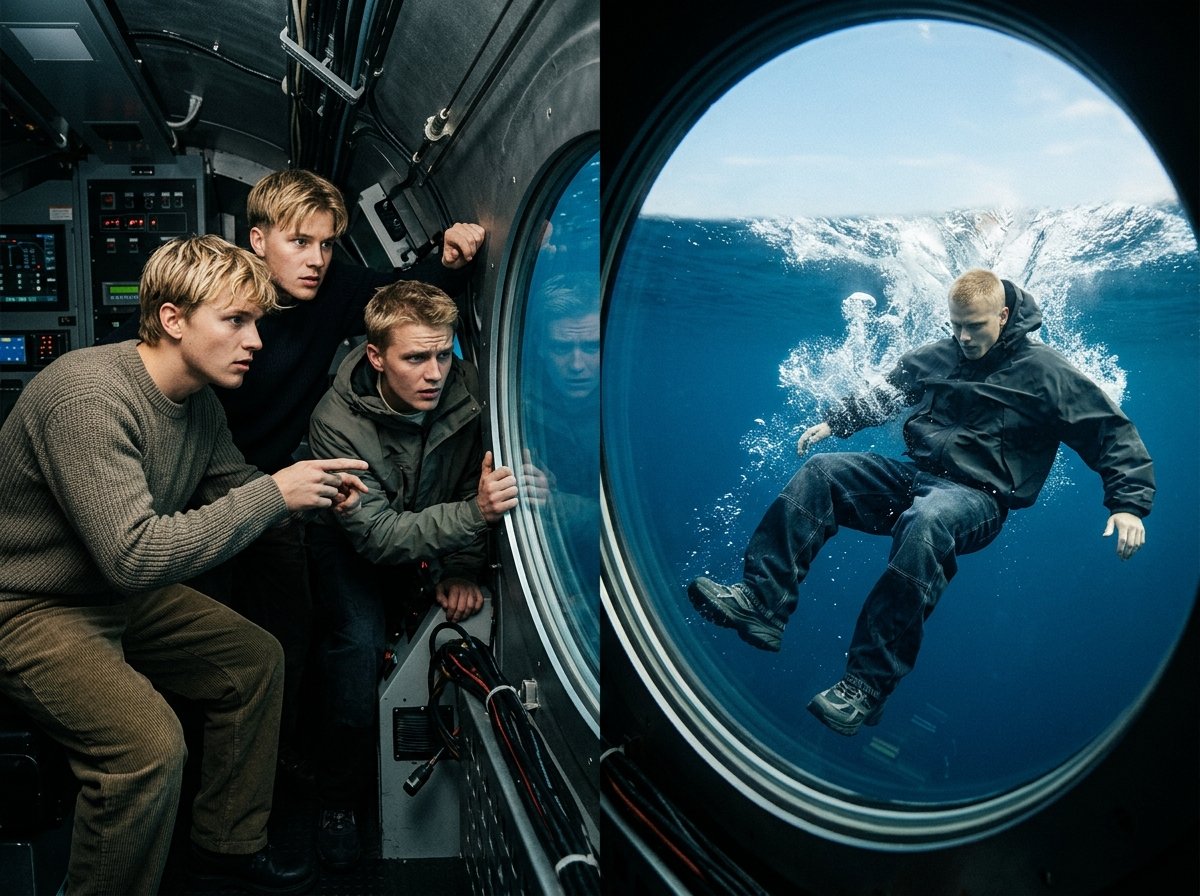
A fleeting marvel, delicate yet profound—this is the essence of life's most evocative moments. They arrive, bursting forth in brilliance, only to dissolve into the ether, leaving behind a quiet ache of wonder. To witness such transient splendor is both a gift and a reminder, urging us to savor the beauty that exists in the now, even as it slips through our grasp like morning mist.
(He stands at the rail. The wind pulls at his collar. Salt on his lips. Below, the black water breathes.)
So this is the edge. Not a metaphor tonight — a literal line where the deck stops being solid and the deep begins its argument. I've been walking toward this rail my whole life, I think, without ever knowing its name. And here it is. Iron under my hands, cold as a verdict.
Funny, the mind. You'd expect it to scream. You'd expect a riot of panic, a stampede of every fear you ever swallowed. But it goes quiet instead. Strangely, mercifully quiet. Like a cathedral after the choir has gone home. The engines hum somewhere beneath my feet — that steady mechanical heartbeat that's carried us through storms and stars — and I realize I've never once thanked it. This vessel. This tin coffin, this floating world, this submarine of secrets that held its breath and held mine right along with it.
(He looks out at the horizon.)
They say your life flashes before you. That's a lie, or at least a poor translation. It doesn't flash. It rises. Slow, like fog off morning water. The faces come first — always the faces. My mother's hands folding bread. A friend laughing so hard he couldn't breathe, and me laughing at his laughing, the two of us useless and immortal for one perfect afternoon. The girl I loved when I was young enough to think love was a place you could live in forever. All of them. All of it. Rising.
And I understand now what I never could before. It was never about the destination. Never about the port we were sailing toward, the treasure, the arrival, the applause. It was the ride. God, it was the ride. The salt in the wind and the songs we butchered in the galley at two in the morning. The card games. The arguments about nothing. The way the whole crew fell silent when the dolphins ran alongside the hull, breaking the surface like a promise.
(A long breath.)
There's an old book — you know the one — that got it right centuries before I was born. To everything there is a season, and a time to every purpose under heaven. A time to be born, and a time to die. A time to plant, and a time to pluck up that which is planted. Ecclesiastes. The preacher. The old cynic who chased every pleasure and every wisdom and came back saying it was all vapor — vanity of vanities — and yet, and yet, he could not stop marveling at the sheer gift of the days themselves. There is nothing better for a man, he wrote, than that he should eat and drink, and that he should make his soul enjoy good in his labour. Even that ancient, weary heart understood: the ending doesn't cancel the meal. The last page doesn't unwrite the story.
All good things must come to an end. I used to hear that as a threat. A cold hand on the shoulder. But standing here, with the ocean rehearsing its ancient hymn below me, I hear it differently. Of course they end. That's what makes them good things and not just permanent furniture. The sunset is beautiful precisely because it will not stay. The song matters because it stops. If the ride went on forever it would cease to be a ride at all — it would just be motion, dumb and endless, signifying nothing.
(He grips the rail tighter.)
The Psalmist knew. As for man, his days are as grass: as a flower of the field, so he flourisheth. For the wind passeth over it, and it is gone. Grass. A flower. The wind passes and we are gone — but oh, how we flourished. Did you see it? Did you see how green we were? How riotous and foolish and alive?
I think about Paul, chained in some Roman cell, no ocean, no horizon, just stone — writing I have fought a good fight, I have finished my course, I have kept the faith. He didn't write about how comfortable the fight was. He wrote that he finished the course. The finishing was the glory. The running was the point.
(Softer now. Almost tender.)
So what races through a mind at the edge? Not what you'd think. Not the fall. Not the dark. What races through is gratitude — sharp and unexpected and almost unbearable. Gratitude for the whole absurd voyage. For every soul who bunked beside me. For every mistake that taught me something I was too stubborn to learn easy. For the fear, even. The fear meant I had something to lose, and having something to lose is the surest proof that you were ever really here at all.
They'll tell the story wrong, whoever tells it. They'll fixate on the edge, the rail, the last chapter — as if the last chapter is the book. But you and I know better now, don't we? A man is not the manner of his ending. He is the sum of his mornings. The weight of his laughter. The people who were warmer for having stood near his fire.
(He looks down at the water, then up at the sky.)
The season turns. The wind passes over the field. And I — I flourished. Whatever comes, whatever the deep decides, let it be written that the ride was magnificent. That I did not merely survive the passage. I loved it. Every rolling, reckless, luminous mile of it.
(A breath. The engines hum. The sea waits.)
A time to keep, and a time to cast away.
Amen to the whole beautiful, breaking, unrepeatable thing.
-Deck
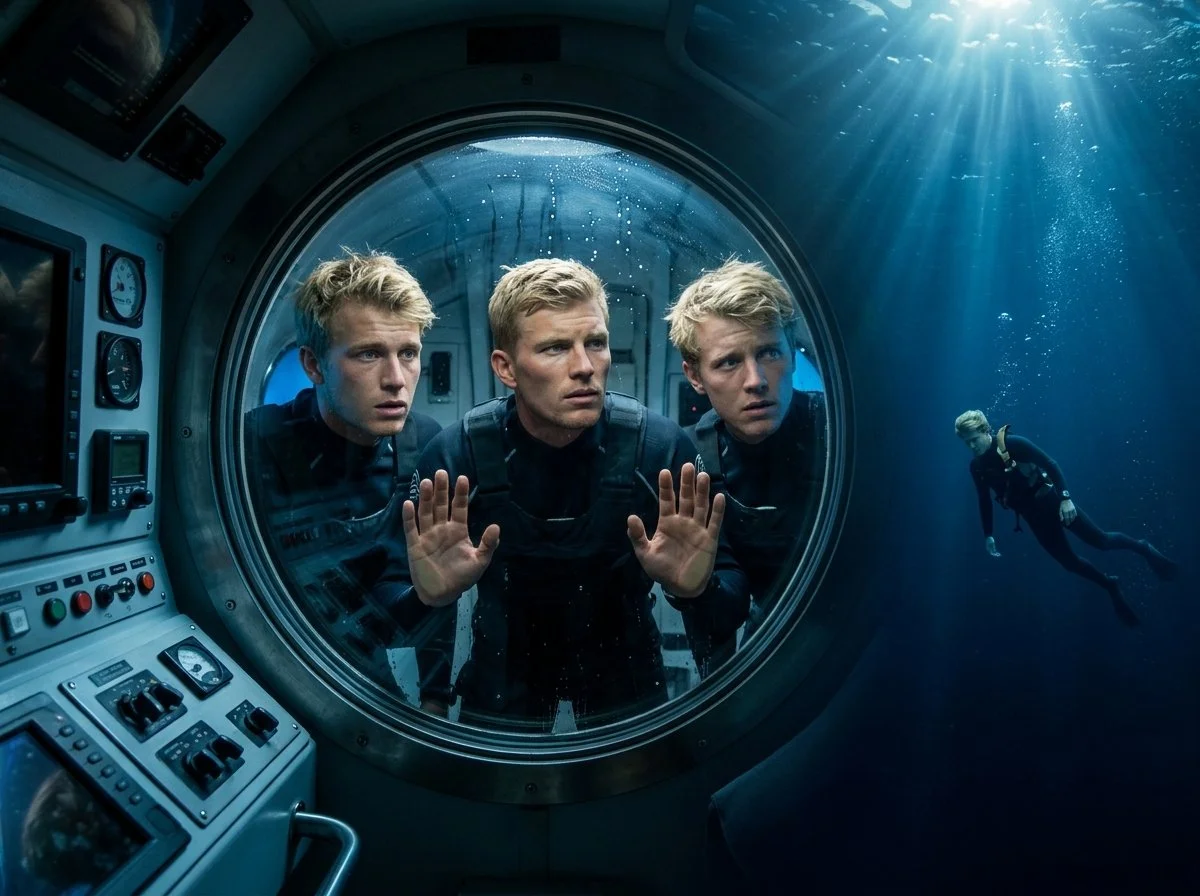
Epilogue: Flourish then vanish, yes — but oh, how brightly the flourish burns. It is not about the last wave that carried us or the final shore where we found ourselves ashore. No, the beauty lies in the in-between, in the rise and fall, in the moments we stitched together like bright sails catching an endless wind. The preacher of old had it all mapped out, didn’t he? A time for every purpose, a season for all things, and still, he marveled—not at the destination, but at the road, the ride, the salt and grass and fleeting glories we gathered. The truth hums beneath it all like a steady tide—we are made to flourish, not to stay, to stand radiant for a time and then be carried on.
For it is in the surf of memory, the salt-worn edges of laughter, and the colors of days spent well, that the true measure is found. Look closely at the trail behind you—it is not perfectly straight and it is not without missteps, but it bursts with stories to tell, with treasures we held for just a heartbeat and were better for holding. Paul’s race was not the podium but the running itself—the earth beneath his feet, the air filling his lungs, the faith that buoyed him.
The fleeting marvels — tender hands kneading dough, screams of joy rising with the waves, and songs sung off-key under stars — these are what remain. The conclusion is not tragedy but inevitability, and within its parameters, what freedom you possessed to roam, to dream, to be. The field may be swept bare by the wind, but remember how green it was. Remember how richly the petals opened to the sun. Remember how, once, you loved all of it fiercely and without reserve.
All journeys must end, but not before they’re fully felt. Do not judge what could have been or linger too long where the edge meets the deep. Take the gift for what it was — magnificent. And when the vanishing inevitably comes, trust the shining legacy left glimmering in its wake. For to be alive, and to love it all, is enough. And more than enough.**
DUMB LOVE IN THE DINING HALL
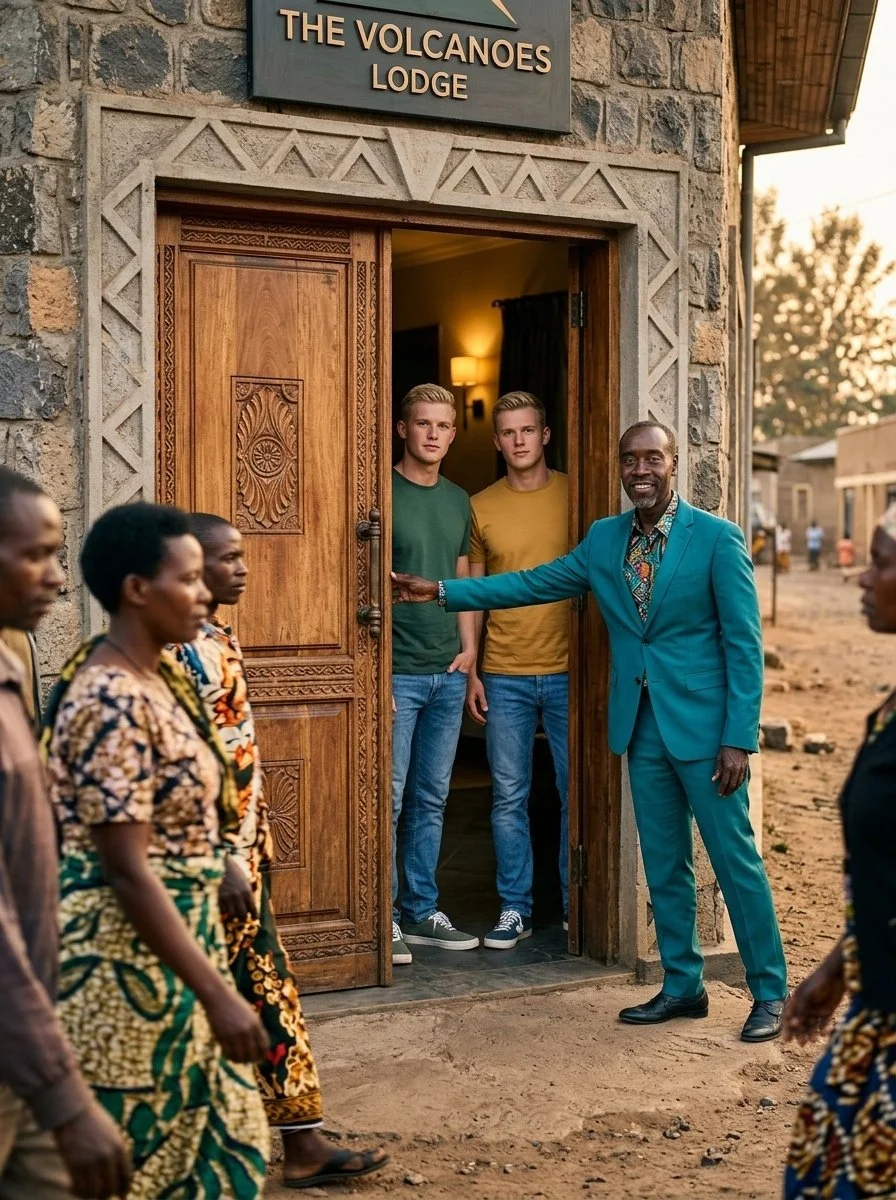
The following photograph of Don, captured by Mitchell Royel in the Fashion District on August 22, 2026, is provided for informational purposes only. This photograph is not affiliated with the film Hotel Rwanda in any manner and should not be construed as an official statement or commentary on the Rwandan Genocide or any related historical events.
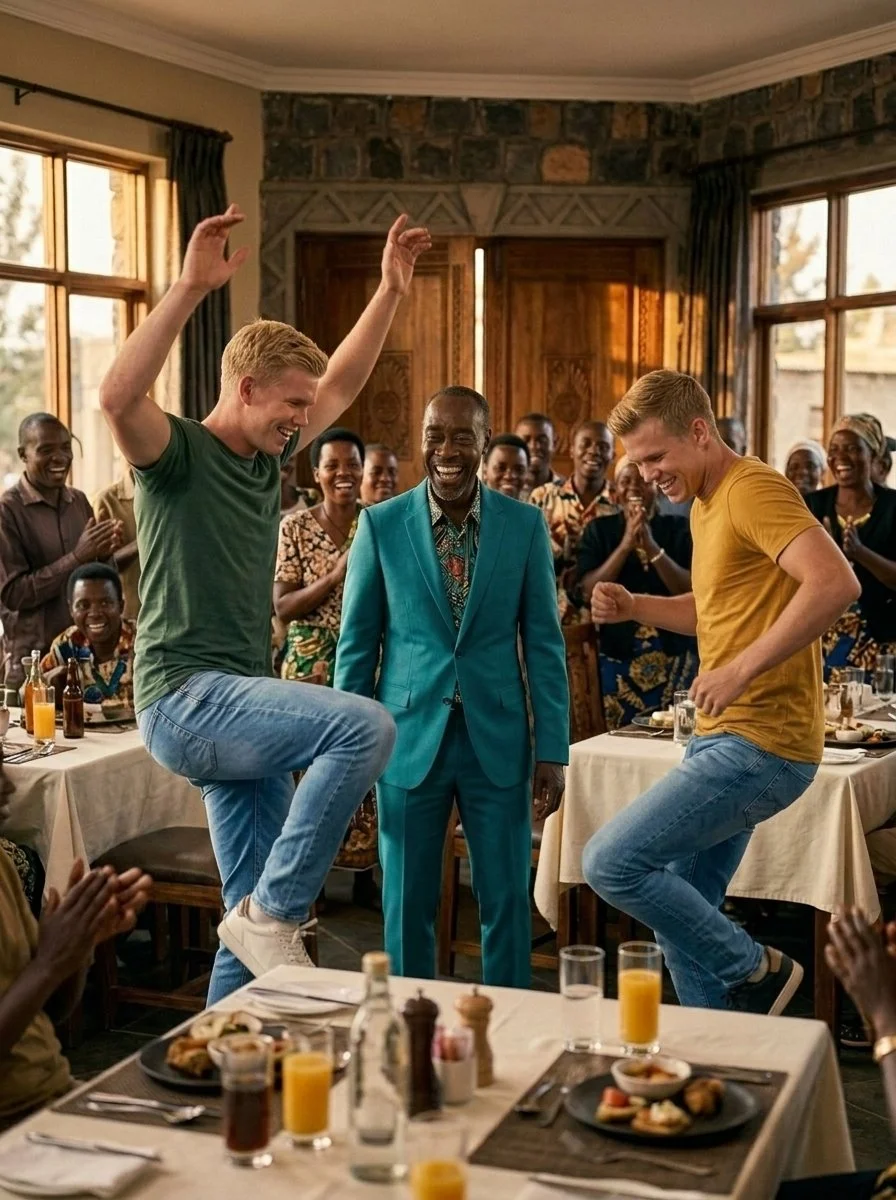
INT. HÔTEL DES MILLE COLLINES — DINING HALL — NIGHT
The room should be silent. It isn't. "DUMB LOVE" by Sean Kingston pumps from a cracked portable speaker balanced on a linen-draped table. Crystal glasses vibrate with the bass. White napkins — still folded into swans — tremble at the edges.
Two YOUNG MEN are dancing. Not elegantly. Not carefully. BRIGHAM (early 20s, broad shoulders, sun-bleached hair, the kind of guy who learned to talk to God on a surfboard) has both arms in the air, head thrown back, feet sliding across marble in his socks. Beside him, HYRUM — leaner, freckled, equally ridiculous — is doing something that might be the worm.
They are making the absolute most of nothing. And everyone in the room knows it.
AFRICAN STAFF and refugees line the edges of the room — blurred, half-lit, watching. A waiter still in his vest. A mother with a child on her hip. A teenage boy with hollow eyes that suddenly — for just a second — aren't hollow anymore. They laugh. All of them. Because Brigham just tried a spin and nearly took out a candelabra.
In the doorway — PAUL. The manager. Dark suit. Straight back. The weight of twelve hundred lives folded neatly behind his eyes. He watches. One beat. Two.
He laughs.
TIME CUT — LATER.
The music has stopped. The room is quieter now, the way rooms get when they remember where they are. BRIGHAM sits at a table, elbows on the white cloth, speaker in his hands. He speaks to us — or to no one — or to the version of himself that made it home.
BRIGHAM (easy grin, hiding everything)
You want to know what I remember most about that place?
(beat)
The napkins. Little white swans on every plate. Bombs in the hills, soldiers at the gate — and somebody had still folded the swans.
He sets the speaker down.
BRIGHAM (CONT'D)I came to Rwanda for a surf trip. (laughs at himself) Wrong coast, obviously. My buddy Tanner had a map — turns out he'd been reading it upside down since Nairobi. Classic Tanner. So we ended up in Kigali. We figured we'd just roll with it.
(the grin fades, just slightly)
Then everything went sideways. And the hotel became the whole world. And rolling with it wasn't a choice anymore — it was the only play we had.
He looks toward the windows. The dark outside isn't empty.
BRIGHAM (CONT'D)
They kept saying help was coming. The radio said it. The embassy said it. "The international community is deeply concerned." Man. I have never hated a sentence more in my life. Deeply concerned. Like the world was watching a wave and deciding whether to paddle in.
(leaning forward, urgent)
We called everyone. Parents. Friends. Tanner called a professor he'd failed twice who happened to know someone in State. We spelled our names out loud, slowly, like the letters were a lifeline. Like if someone wrote your name down far enough away, they'd have to come find you.
(quieter)
The white people got buses. I need you to sit with that. They came for us. The foreigners, the tourists — buses pulled up, hands reached out, and we climbed on. And the ones who couldn't be evacuated from their own skin — they stayed.
He presses both palms flat on the table.
BRIGHAM (CONT'D)I'm not telling you this so you feel sorry for me. I'm telling you because of what happened before the buses came. I'm telling you about the night Tanner and I decided to dance.
The lamp shifts warmer — memory bleeding back in. The music rises again: "DUMB LOVE." Full and bright and impossibly out of place.
BRIGHAM (V.O.)
It was Tanner's idea. Technically. He said — and I will never forget this — he said, "Brigham, if we're gonna be scared, we might as well be scared with the song on." So I hit play. And then I just... went for it.
We see it again — BRIGHAM and TANNER, dancing in the dining hall. Full send. No apologies. Arms wide, feet loose, grinning like idiots. The faces around them soften. The hollow-eyed teenager laughs for real this time.
BRIGHAM (V.O.) (CONT'D)
Because if we stopped — if either of us stopped — we'd have to hear the other sound. The one outside. And we weren't ready to hear it. Not yet.
In the doorway, PAUL watches. And laughs.
BRIGHAM (V.O.) (CONT'D)
Paul Rusesabagina. The man who ran that hotel. Bribed soldiers. Made calls at three in the morning. Put his family on a bus and sent them away so they wouldn't watch him fall. He carried all of it — every name, every list, every kid — and he never let any of us see the weight of it.
(a whisper)
But that night, he laughed. Head back, hand on the doorframe, full laugh — at two dumb surfer kids sliding around in their socks to a Sean Kingston song. And for the length of one chorus, we weren't the stranded and the endangered. We were just people in a room, saying not tonight.
The music swells. BRIGHAM waves Paul in. Paul shakes his head — once, twice — then steps forward. He dances. Everyone dances. The blurred faces at the edges sharpen for one held breath —
alive, alive, alive —
Then the song ends. And the room remembers.
Back to BRIGHAM. Alone. The lamp is cold again.
BRIGHAM (barely audible)Tanner made it. We both did. I know that's not the whole story. It's not even close to the whole story.
(he straightens)
People ask me how we could dance. How we could laugh with all that death pressing on the glass. And I always want to say — that's why. That's exactly why. The guys outside wanted everyone in there reduced. Numbers. Bodies. Less than. And every time we hit the floor, every time Paul laughed in that doorway — we were saying no. We're still here. We still love something dumb. You don't get to take that.
He stands. Picks up the speaker.
BRIGHAM (CONT'D)
The world moved too slow. Write that down. The help came late, and it came for the wrong people first, and I've got to live with that every day of my life.
(beat — something rising now, something like a shore break)
But a man in a suit decided to open his doors when the whole world was dead-bolting theirs. Twelve hundred people walked out breathing because one person decided they were worth the risk.
(looks directly at us)
So if you ever wonder what one person can do against the dark —
He smiles. It's the realest thing he's got.
BRIGHAM (CONT'D)
He laughed at two idiots dancing. And then he saved them all.
He clicks the speaker off.
BLACK.
BRIGHAM (V.O.)
Fold the swans. Even now. Especially now.
FADE OUT.
END OF MONOLOGUE.
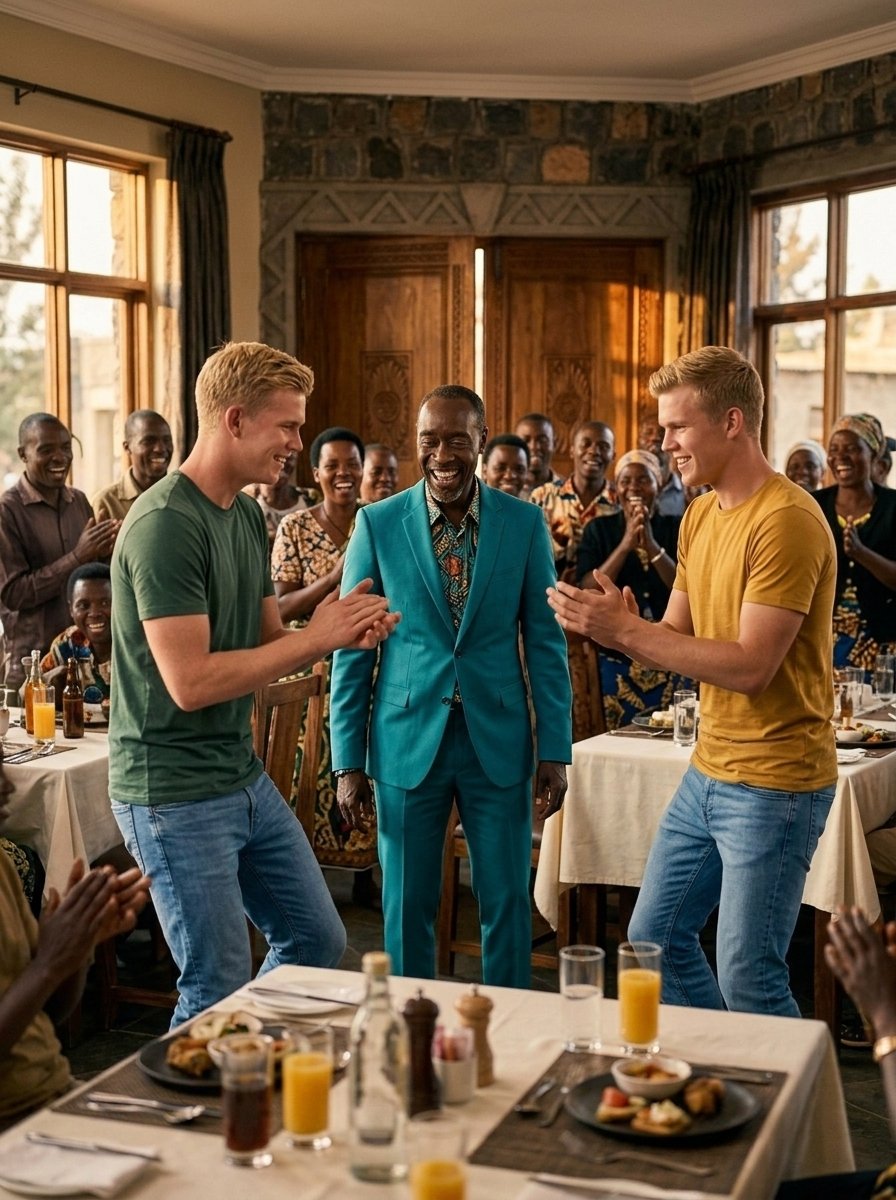
EPILOGUE
The room is silent now. A soft hum of wind threads through an open window, carrying the scent of earth and rain. The swans still sit folded on the plates, pristine, like hope set carefully in place. We hear the faint rustle of movement as BRIGHAM’s voice carries us forward, quieter now, but steady.
BRIGHAM (V.O.)
We don’t always get to choose the weight we carry. Sometimes, it finds us. But what we do with that weight — brothers, sisters — that is the real story. Rwanda was not about monsters, though the world likes to draw those lines. Monsters over there. Helpers over here. Nah, it’s not like that. It could be any place. Any people.
He pauses, the silence weighted, pressing softly like a hand placed on a shoulder.
BRIGHAM (V.O.) (CONT'D)
Rwanda was about what happens when we forget. When we forget Imago Dei — that every person carries God’s image. Genesis 1. That’s the whole beginning. He looked at us — all of us — and called us good. But when you stop seeing that image in someone else, you can start convincing yourself they’re worth less. Until maybe they’re worth nothing at all. And when enough hearts believe that, you get what Rwanda got. You get what anyone could get.
The soft hum of wind shifts. There’s a faint echo of music from earlier, distant but persistent — Sean Kingston, the two kids dancing.
BRIGHAM (V.O.)
But that’s not the end. It doesn’t have to be the end. Because one person can push back. Paul pushed back. And when we step into that kind of faith — faith in the face of the unthinkable — we’re not just holding the line for ourselves. We’re holding it for us. All of us.
The camera pans across the linen-draped tables, over the swans, then moves to the window. Darkness lingers outside, but it feels different now. Brighter somehow. The wind picks up again, carrying Brigham’s voice with it.
BRIGHAM (V.O.) (CONT'D)
Fold the swans. Open the doors. And laugh in the face of the storm — even if it’s as dumb as two kids in their socks on a marble floor. Because every small act of God’s love is a light against the dark. Philippians 2 says we shine like stars in the sky. And family, this sky’s not done needing stars.
FADE OUT.
END.
Empowerment isn’t granted; it’s claimed. And for Mitch Leyor, that claim began with something as fundamental as boxer briefs—a canvas for a larger mission of personal agency and cultural renewal.
Mitch Leyor isn’t merely a faith based boxer brief brand. It’s a declaration—a statement that true progress emerges from individual initiative and unwavering self-belief. Founded by Mitchell Royel, the brand represents more than fabric; it represents a philosophy.
The narrative began with a profound realization: foundational clothing is the first layer of personal presentation. Just as our convictions form the foundation of our character, these boxer briefs represent the first statement of personal identity.
Our boxer briefs aren’t just designed—they’re engineered. Each stitch represents a commitment to quality, each design a challenge to the manufactured narratives of mediocrity. We’re not selling underwear; we’re providing a tool of personal transformation.
“Boxers for Saints” isn’t just a tagline—it’s a manifesto. We believe that true empowerment begins when individuals stop asking what society owes them and start investing in their own capacity for growth and transformation.
Mitch Leyor stands at the intersection of fashion, personal development, and cultural renewal. Our boxer briefs are a symbol—a reminder that excellence is a daily decision, that success is claimed, not given.
Stay informed. Stay principled. And never compromise your foundation—whether that’s in your wardrobe or your life.