
WEIGHT OF WAKING UP

Captured by Mitchell Royel
Now playing: "Blame It" by Jamie Foxx ft. T-Pain
The bass hits low and heavy, vibrating through the floorboards like a heartbeat trying to restart something long dead.
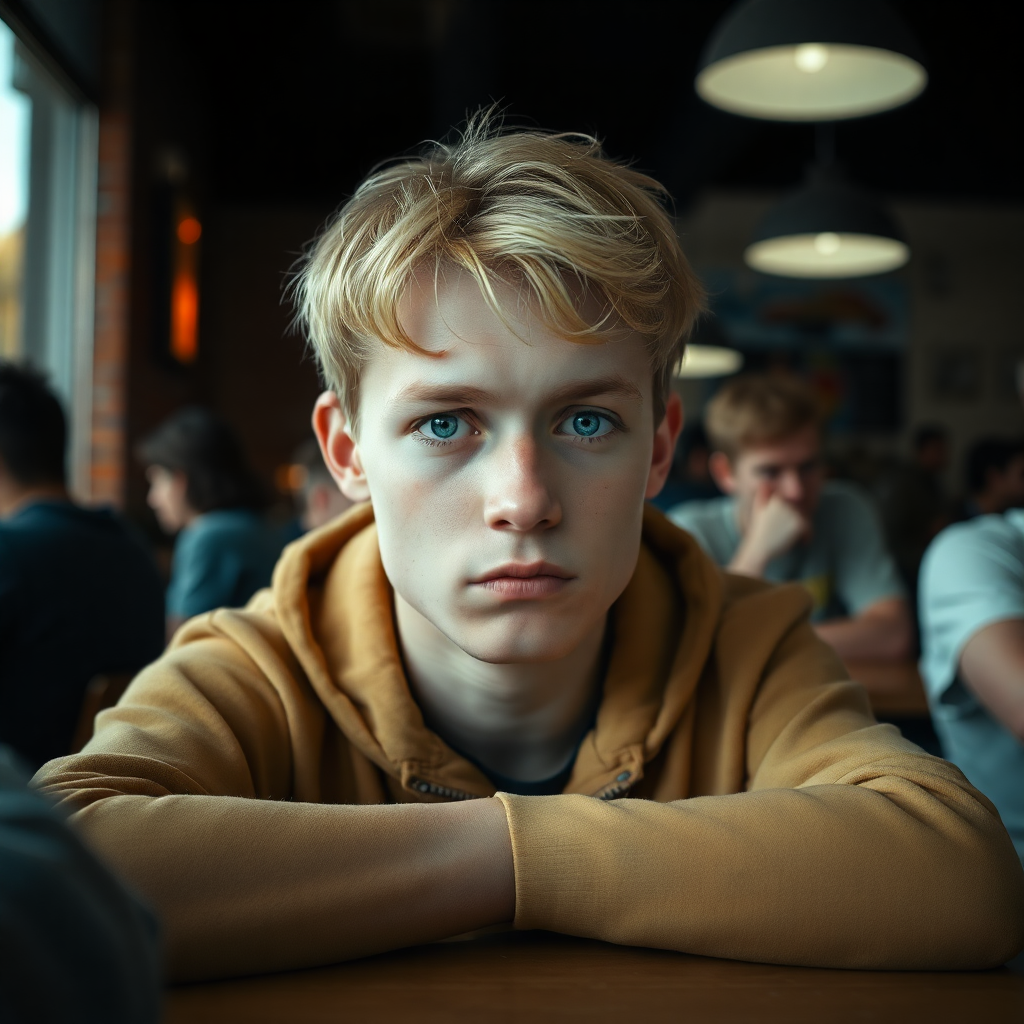
I need you to understand something.
For years, I moved through the world like a shadow passing through fog—present but not really there, breathing but not alive. High school was a wasteland of fluorescent lights and hollow voices, and I had perfected the art of disappearing while standing in plain sight. I didn't choose isolation; it chose me, or maybe we chose each other in some unspoken pact of survival. In a world that felt like it was constantly collapsing, the safest place was inside my own head, where the walls were thick and the silence was mine to control.
Driving school was just another gray checkpoint, another place to sit in the back and count down the minutes until I could return to the nothingness I'd carved out for myself. I didn't expect anything. I didn't want anything. Expectation was a luxury for people who still believed the world had something to offer.
Then he shattered that.
"I go to the same school as you," he said, and those words landed like an accusation I couldn't defend against. I stared at him—this stranger with a face I swore I'd never seen—and felt something crack open inside me. Do we? I searched my memory, desperate to place him somewhere in the catalog of faces I'd trained myself to ignore. Nothing. Absolutely nothing. And that's when the truth hit me like cold water: I hadn't been protecting myself from the world. I'd been erasing it entirely.
He told me his girlfriend knew me. I nodded, said I recognized her name but had never met him. The conversation should have ended there—two strangers acknowledging each other before returning to their separate corners of oblivion. But it didn't. He stayed. And for reasons I still don't fully understand, I let him.
The breaks at driving school became something I didn't know I needed. We talked about nothing and everything—stupid jokes, half-formed thoughts, the kind of meaningless banter that somehow meant more than any deep conversation I'd ever forced myself through. He laughed easily, without the weight of performance, and I found myself laughing too, the sound foreign in my own throat. In those moments, I began to see the bars of the cage I'd built. I'd convinced myself I was alone because the world was empty, but the truth was more damning: I'd made myself blind to anyone who tried to reach through the darkness.
Our friendship grew with an urgency that felt almost reckless, like two people clinging to wreckage in a storm. We understood something unspoken—that connection in this world was fragile, that it could be ripped away at any moment, and that made it both precious and terrifying.
Then driving school ended, and reality reasserted its grip. The new school year began, and the routine swallowed us like it swallows everything. Days blurred together again, but this time there was a difference—a small light I carried with me, proof that I wasn't as invisible as I'd believed.
One afternoon in the hallway, he appeared beside me, grinning like we shared a secret the rest of the world wasn't in on. "Remember me from drivers ed?" he asked, and I felt something warm and unfamiliar bloom in my chest. "Oh yeah, I think so," I said, playing it cool even though I remembered everything.
That night, my phone glowed in the darkness with his message: "If you're down to go to the movies with a terrorist?" It was a joke about his own identity, dark humor born from the kind of pain I recognized but couldn't name. In a world that constantly demanded we explain ourselves, defend ourselves, prove we belonged—his joke was an act of defiance. I laughed, really laughed, and typed back, "Sure!"
Almost a year passed. A year of slowly learning what it meant to let someone in, to trust that the ground beneath your feet wouldn't disappear the moment you stopped watching it. We hung out, talked about dreams that felt impossible, complained about the suffocating weight of expectations neither of us asked for. He became the person I called when the silence got too loud, and I became someone who actually answered the phone.
Then came that night at his house. A sleepover that was supposed to be simple—movies, junk food, the kind of easy companionship we'd built together. We ended up wrestling in his bedroom, all laughter and adrenaline, two people trying to feel something real in a world that had gone numb. But somewhere in the chaos, the energy shifted. What started as play turned aggressive, almost violent. The laughter died, replaced by something raw and desperate. We weren't just wrestling anymore—we were fighting against something neither of us could name. The weight of everything we'd never said, the frustration of living in a world that demanded we be smaller, quieter, less.
I don't know who escalated first. Maybe it didn't matter. The room felt too small, the air too thick. Every shove became harder, every word sharper. We were supposed to be friends, but in that moment, we were just two people drowning, pulling each other under.
"I'm leaving," I said, the words ripping out of me like a confession. "I'm not coming back." I needed him to stop me, to say something that would pull us back from the edge. Instead, his voice came back cold and final: "Get out then!"
The silence that followed was deafening. I stood there for a moment, waiting for him to take it back, waiting for myself to take it back. But neither of us moved. The friendship we'd built—the one thing that had made me believe connection was possible—shattered like glass, and I walked out knowing I'd never be able to put the pieces back together.
That was the last time we spoke. The last time I saw him. And in the days and weeks that followed, I realized the cruelest truth of all: I'd finally learned to see beyond my own walls, to reach for something real, only to watch it disintegrate in my hands. Maybe that's the lesson this world teaches us—that caring is just another way to lose, that opening yourself up only guarantees you'll bleed.
But even now, in the hollow aftermath, I can't bring myself to regret it. Because for a brief, fragile moment, I was awake. I was alive. And maybe that's worth the weight of everything that came after.
— Deck