
THE MOUNTAIN IN THE POSTER ISN’T MOVING
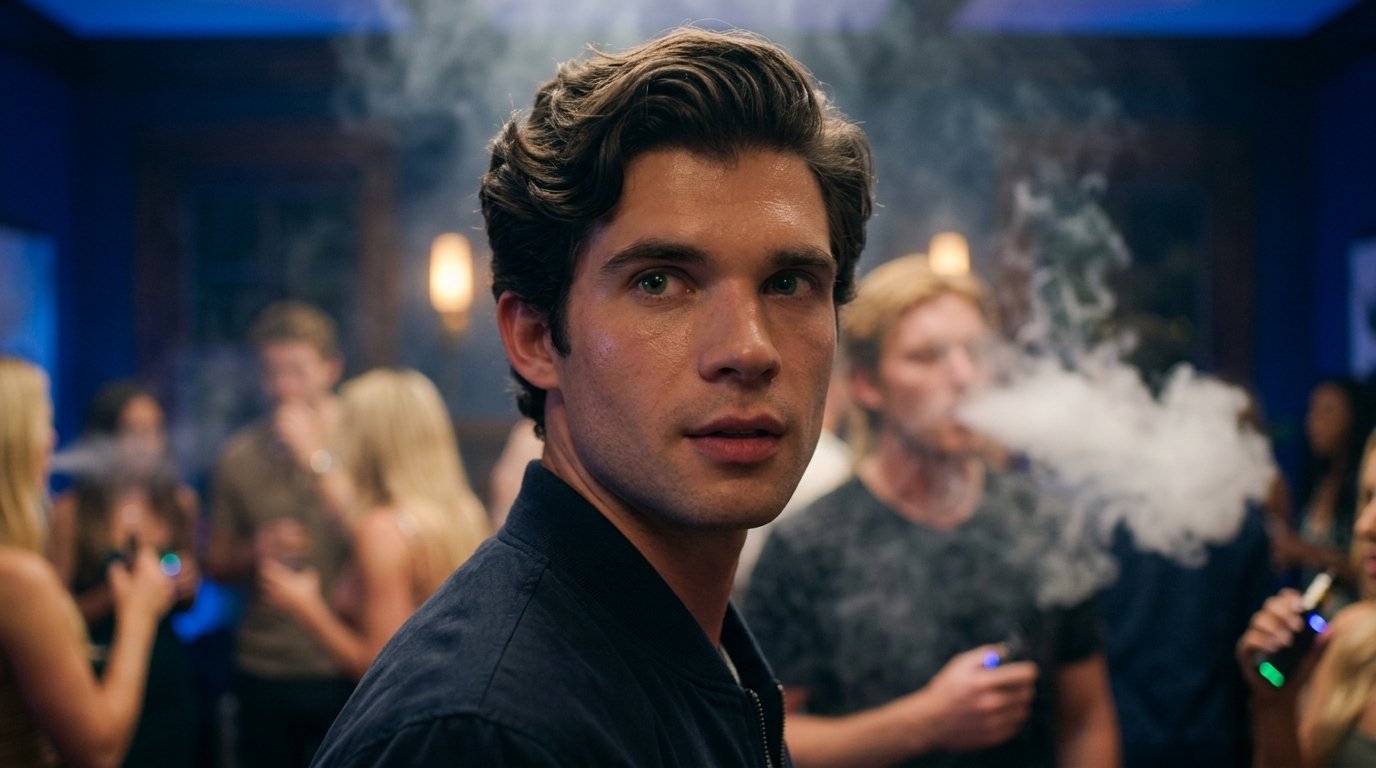
The photograph of David, captured earlier this evening in the vibrant Fashion District, was skillfully taken by the talented Mitchell Royel. It beautifully encapsulates the atmosphere and energy of the location, blending artistry and authenticity. Tonight, as we admire this stunning image, we're immersed in the music of "Down Low" featuring Upstates by Erik Charles. The track provides the perfect backdrop, with its evocative melodies and dynamic rhythm enhancing the mood. Upstates has reimagined the composition, adding layers of depth and creativity to the original sound, crafting a musical experience that resonates deeply and complements the visual artistry of the photograph.


So here's the thing nobody tells you about hitting rock bottom: the bottom has a welcome mat. And a laminated intake form. And a man behind a desk who hands you a folder with the dead-eyed efficiency of someone who has seen a thousand versions of you walk through that door and will see a thousand more. He doesn't flinch. He doesn't ask how you're doing. He staples something, slides it across the counter, and says someone will show you to your room. And that's it. That's the ceremony.
I'm from the suburbs. You know the kind. The kind where the lawns are perfect and the pain is invisible and everything looks fine from the outside because looking fine from the outside is the only religion anyone actually practices. Men from where I'm from don't go to rehab. They don't go anywhere. They manage. They cope. They compartmentalize with the quiet discipline of men who were raised to believe that naming a thing makes it real. They pour two fingers instead of one and call it a long week and they sit across dinner tables from their fathers and their brothers and every single one of them is drowning and no one says a word because saying the word would mean it's true.
And then one day you're not managing anymore. One day you're sitting on a twin bed with hospital corners in a room you didn't choose, staring at a motivational poster of a mountain you will never climb, and the thought arrives — not loud, not cinematic, just quiet and enormous and completely devastating — this is it. This is the all-time low.
Not the dramatic kind. Not the kind you could show someone and have them understand immediately. The quiet kind. The sitting-alone-in-a-room-that-smells-like-industrial-bleach-and-other-people's-wreckage kind. The kind where the silence is so total that your own history starts talking. And it has a lot to say. Every decision. Every moment you chose the wrong thing or the easy thing or the thing that felt like relief and turned out to be a door you couldn't find your way back through. They're all in the room with you. All of them. Sitting on the edge of the bed. Waiting.
And you know — you know — that somewhere out there, someone who used to sit next to you in some former version of your life is saying your name right now. In that tone. The one that means the story doesn't have a clean ending. You are the cautionary tale now. You are the name that gets spoken carefully over drinks at a bar you used to go to. You are the thing that happened to someone they used to know. You are the warning.
I sat there for what felt like a very long time. Just me and the mountain and the full, crushing weight of every single thing I had ever done echoing off four walls that had heard it all before and would hear it again.
Then there's a knock at the door. A man from the staff. Says there's a holiday party.
A holiday party. At a rehab facility. Like we're supposed to hang tinsel and feel something other than the specific, bone-deep agony of being exactly where we are, surrounded by strangers, twenty-four hours into the rest of our lives. Like we're going to sip something sparkling and make conversation and feel, even for a second, like normal men doing a normal thing.
So I go. Because the alternative is sitting alone with the mountain and I have already done that, and it did not help, and I have five months ahead of me in this place and I cannot spend all of them on that bed.
I walk in and the first thing that hits me is the smell. Not what I expected. Not food, not pine, not the ghost of something alcoholic. Sweet. Chemical. That thick, synthetic, vapor-cloud fog that hangs in the air like a curtain nobody asked for, rolling in slow soft waves across a room strung with dollar-store decorations and paper snowflakes and a plastic tree in the corner that is doing its absolute best. The smell of a dozen different flavors all layered on top of each other, thick enough to wear.
And through it — through this genuinely impossible amount of haze — there are two men in the corner.
Freestyling.
I need you to understand what I mean when I say that. Not mumbling. Not goofing around. Not two guys doing a bit for the group. Freestyling. One of them is doing the beat with his mouth — and it is tight, it is structured, it has architecture, it has tension and release — and the other one is going. Full commitment. Eyes closed. Words coming out of him like pressure that had been building behind a sealed door for years and someone finally turned the handle.
And I'm standing in the doorway of this surreal, fog-soaked, tinsel-lit room, twenty-four hours into the worst chapter of my life, and my brain does that thing where it just — breaks. Cracks clean down the middle. Because these are my people now. For five months. Five months of my one actual life. And they are in here doing this. And I don't know whether to laugh or sit down on the floor.
The dissonance was physical. I felt it somewhere between my throat and my sternum. This impossible gap between the life I had walked out of and the room I was standing in. Between the man I thought I was and whatever I was becoming.
I stood there longer than I should have.
And then something happened that I was not remotely prepared for.
I started listening. Really listening. And the man doing the freestyle was good. Not rehab good. Not "impressive given the situation" good. Not the kind of thing you qualify or contextualize. Just — genuinely, undeniably, embarrassingly good. The kind of good that makes you recalibrate. The kind of good that makes you feel, briefly and unexpectedly, like you are witnessing something.
And the man keeping the beat catches my eye through the haze and gives me this nod. Not the nod you give someone you feel sorry for. Not a polite, social, I-see-you nod. The nod you give someone who has just walked into something and is now part of it whether they meant to be or not. You're here. You're in the room. Welcome.
Someone — I don't know who — hands me a paper cup of something red. I take it. I hold it. I say something — I genuinely could not tell you what, some reflex, some muscle memory of being a person in a room with other people — and the man freestyling laughs. A full one. Real and unguarded and total, head thrown back, the kind of laugh that comes from the body rather than the performance. The kind you can't manufacture.
And I felt it.
That surge. That thing that lives below thought and below language and below every story you've ever told yourself about who you are. Like something that had been compressed inside me for years — folded down and down and down until it had no shape left — suddenly remembered what it felt like to expand. Someone laughed with me. Not at me. With me. In the one place on earth I had been most certain I would only ever be a punchline. And I was in the conversation. Completely in it. Leveled with it. Not the managed, performing version of me. Not the man from the suburb that built me and never thought to ask if I was alright. Not the cautionary tale. Not the quiet disaster in a room with hospital corners. Just a man. In a fog. In a room. Present. Alive to the exact moment I was standing in.
Five months. With these men.
Two strangers in a corner. A beat. A paper cup. A fog so thick you could almost hide in it.
And I remember thinking — and this is the part I still can't fully explain, the part that doesn't reduce down to something clean or logical — these men are it. The real thing. More honest, more present, more genuinely and uncomplicatedly themselves than anyone I had sat across from in years. Men who were not managing. Men who were not coping. Men who had run out of road and ended up here, same as me, and had somehow found a way to freestyle through the fog at a holiday party in a rehab facility and make it mean something.
Men who had stopped pretending.
Men who were, against every reasonable expectation, in it.
I had walked into that room ready to serve a sentence.
I stood there in that fog and started to understand that maybe five months wasn't a punishment. Maybe it was the first honest thing that had happened to me in longer than I could remember.
By the time that paper cup was empty, the verdict had changed.
It wasn't an ending.
It was the first night of something I didn't have a name for yet.
-Deck, M.R, Mitch Leyor Collective
Epilogue: And that’s the thing we have to realize—we have to hit the bottom before we can start building back up. Because when we’re at the bottom, there’s no more pretending. No more posturing. It’s just us, stripped bare, face-to-face with who we’ve become. And that’s where the work begins. That’s where transformation is born. Not in the comfort zones, not in the echo chambers where we tell ourselves easy truths, but in the moments when everything is quiet, and we hear the unvarnished reality of our choices.
Scripture says, “Weeping may endure for a night, but joy cometh in the morning” (Psalm 30:5). And that’s not just poetic sentiment—that’s a map. That’s a promise. When we’ve been broken open, when the night feels endless, that’s actually where the seeds of morning are planted. Not beyond the pain, but through it.
What we realized in that fog—us, together—was this: We were not defined by our worst mistakes. We were not doomed by our darkest chapters. We were not the cautionary tales they whispered over drinks. We were men in the room. Men in the room. And showing up, fully in it, even when it hurt like hell, was the battle cry we didn’t know we needed.
Because we’ve got this one life, and we’ve got to live it fully. We owe it to ourselves to show up, to stop managing, and to start thriving. And, my friends, that starts with presence. That starts with admitting that we don’t have it all figured out, but we’re here, we’re in it, and we’re moving forward together.