
WHAT LEGENDS ARE MADE OF
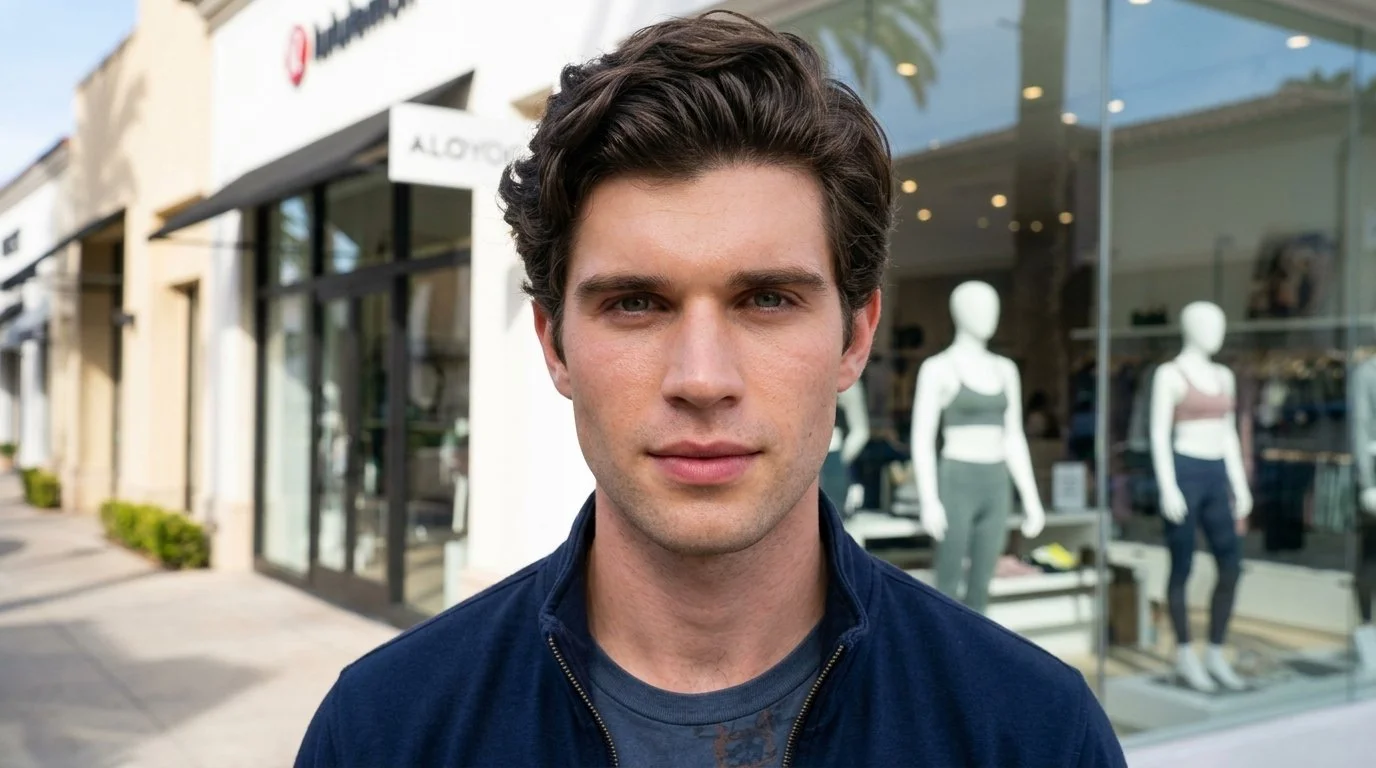
The attached photograph of David, taken by Mitchell Royel in the Fashion District, is presented independently and holds no official association with any pictured or mentioned brands. It is important to note that any depicted storefronts in the imagery are entirely fictitious and are not intended to represent or affiliate with any existing brands. Current background audio includes "U Miss Me" by Vicetone and "I Got U" & "I Got U (Instrumental)" by Nightcap and Vicki Vox, providing a fitting auditory accompaniment to the captured moment.
Here's what they don't put on the intake form. They don't tell us that the man who saved our life will do it in a fog so thick we can taste it, and then he'll be gone, and no one — not one single person on this earth — will ever fully understand what happened in that room but the ones who were there.
That's the deal. That's the fine print. We just don't read it until years later, when it's too late to change our minds.
There were two of them in the corner. The beat, the architecture, the words coming out like pressure finally released — that part's already been told. But not who they were. Not because it didn't matter. Because it mattered too much, and some things get held back until there's room for them.
The one keeping the beat was Black. Early twenties, maybe. Sharp eyes that missed nothing, a jaw set like he'd already decided the world wasn't going to get the last word. He kept that rhythm going with his mouth like it was the only steady thing in the building, and maybe it was.
The one freestyling was white. Skinny. Nervous energy that turned into something else entirely the second he closed his eyes and let the words go. In another life — the life he'd walked out of, same as the rest of us — he was probably the kid everyone assumed had it easy. Perfect lawn. Invisible pain. The only religion being looking fine from the outside.
Two kids from two completely different maps of America, and somehow they'd both ended up in the same fog-soaked room, at the same holiday party nobody wanted, making something out of nothing while the rest of us stood there like we'd forgotten how to be alive.
We want to be careful here. Because it would be so easy — so cheap, so Hallmark — to say they became brothers. To wrap it in tinsel and hand it over sparkling. But that's not what happened. What happened was quieter and stranger and truer than that.
They saw each other. That's all. In a place designed to strip a person down to the raw wire of who they actually are, those two saw each other clearly, and they built a beat out of it, and for five months that beat was the closest thing any of us had to a heartbeat.
Here's the thing about getting better. About clawing up off the twin bed with the hospital corners. Nobody sees the receipt.
They see the after. They see us show up to the wedding sober, steady, laughing at the right moments. They see the version that made it. And they think — if they think about it at all — good for him, glad he figured it out. Like it was a puzzle. Like we sat down one afternoon and just decided.
They don't see the fog. They don't see the paper cup shaking in our hands. They don't see the nights we lay there while the mountain on the poster looked back and whispered you'll never. They don't see the exact second something inside us — folded down and down and down until it had no shape left — remembered how to expand.
We internalize all of it. Every accomplishment, every impossible thing survived, gets filed away somewhere private, somewhere nobody's invited. Because how would we even explain it? How does a person tell someone at a dinner party that the single greatest thing we ever did was walk into a room that smelled like a dozen chemical flavors and stay? That we didn't run? That we let a stranger hand us a red drink and we drank it?
We don't. We can't. So it gets carried quietly. The full crushing weight of what was earned, kept sacred, kept private. We smile and pass the potatoes and nobody at the table knows they're sitting across from men who came back from the dead.
That's not a complaint. That's just the arithmetic of it. Some victories are too big and too strange to spend in public. So we hold them.
People throw that phrase around like it belongs in a movie trailer. The hero's journey. They picture swords. They picture the swelling music, the mountain finally climbed, the crowd on their feet.
They've got it backwards.
The hero's journey isn't the triumph. The triumph is the last ten seconds. The journey is the part before that — the part nobody films, because it's not cinematic, it's not sellable, it's a man alone in a room with industrial bleach and every wrong turn he ever made sitting on the edge of the bed, waiting.
The journey is the descent. It's the moment we leave the ordinary world — the perfect lawns, the two fingers instead of one — and cross into the place where the rules don't work anymore. It's the threshold. The welcome mat at the bottom. The laminated form. And then it's the trials, one after another, in a fog thick enough to wear, with strangers who somehow become the only people who've ever told us the truth.
And here's the part that guts us every time. Society does not respect the journey while we're in it.
While we're in the pit — while we're doing the actual, unglamorous, soul-scraping work of becoming someone who survives — we are not heroes to anyone. We are warnings. We are the names spoken carefully over drinks. We are the thing that happened to someone they used to know. Nobody claps for a man at his lowest. Nobody says look at the courage it took to walk through that door. They just lower their voices when our names come up.
We only knight the hero after. Once it's safe. Once the story has an ending clean enough to hang on a wall. We wait until the risk is over, until the outcome is guaranteed, and then we call it brave. We are cowards about courage. We only celebrate it in retrospect, when it costs us nothing to admit it was real.
The two kids in the corner were on the journey. Right there. In the fog. And the world outside that room would have called them a statistic, a cautionary tale, a couple of guys who ran out of road. The world had no idea it was watching two heroes at the exact center of the only story that will ever matter to them.
And then — because life doesn't do clean endings — we all went our separate ways.
Five months, and then the door swings the other direction. The white kid went first. Family came, a car in the lot, that awkward hug in a hallway, and he was gone back into some version of the world that would never quite believe where he'd been. The Black kid stayed a few weeks longer, then he was gone too, back into his own map, his own city, his own next chapter that none of us would ever read.
We didn't stay in touch. That's the honest part. We told each other we would — we always tell each other we will — but the beat that held us together only worked in that room, in that fog, and out here in the ordinary world it didn't have anywhere to land.
But here's what gets learned, and it's the strangest gift any of us carry.
They didn't leave. Not really.
They became legends. Not the kind put on a poster. The private kind. The kind that live in the sacred back room of the mind where no one else is invited. Thinking about those two freestyling through that impossible haze — the beat with its tension and release, the words like a sealed door finally opening — they've grown into something bigger than the men they actually were. Mythologized. Polished by memory into something untouchable.
And we let them be. Because we all do this. We all keep a handful of people, a handful of moments, enshrined in a place where time can't touch them, where they never age, never disappoint, never become ordinary. The night that changed everything. The stranger who saw us clearly for one impossible second. These things stop being memories and start being legend — the story we tell ourselves about who we are and what we're capable of surviving.
Maybe that's the only immortality any of us actually get. Not statues. Not clean endings. Just a permanent room inside somebody else's head where we get to keep being the best version of ourselves forever.
THE FOG, AGAIN.
So here's where we land, all these years down the road from that twin bed and that mountain nobody ever did climb.
We think about the fog. That thick, sweet, chemical curtain rolling in slow soft waves across a room strung with dollar-store snowflakes and a plastic tree doing its absolute best. We think about the beat. We think about the man who threw his head back and laughed — a real one, a full one, the kind that can't be manufactured — and how in the one place on earth where it felt most certain we'd only ever be a punchline, someone laughed with us and not at us, and something inside remembered how to expand.
We think about the paper cup of something red. How it was held. How by the time it was empty, the whole verdict had quietly changed.
We walked into that room to serve a sentence. Two kids in the corner turned it into the first honest thing that had happened to any of us in longer than we could remember. And then they walked out and became legends, and we became people carrying a victory too big to ever fully explain at a dinner table.
That's the journey. Nobody respects it while we're in it. Nobody sees what it cost. But we know. We always know. We carry the fog and the beat and the two kids who never even knew they saved us, and we keep them sacred, and we keep going.
It wasn't an ending.
It never was.
It was the first night of something that still doesn't have a name — and we've stopped needing one. Some things don't get named. They just get carried.
Quietly.
Enormously.
Forever.
-Deck, M.R, Mitch Leyor Collective