




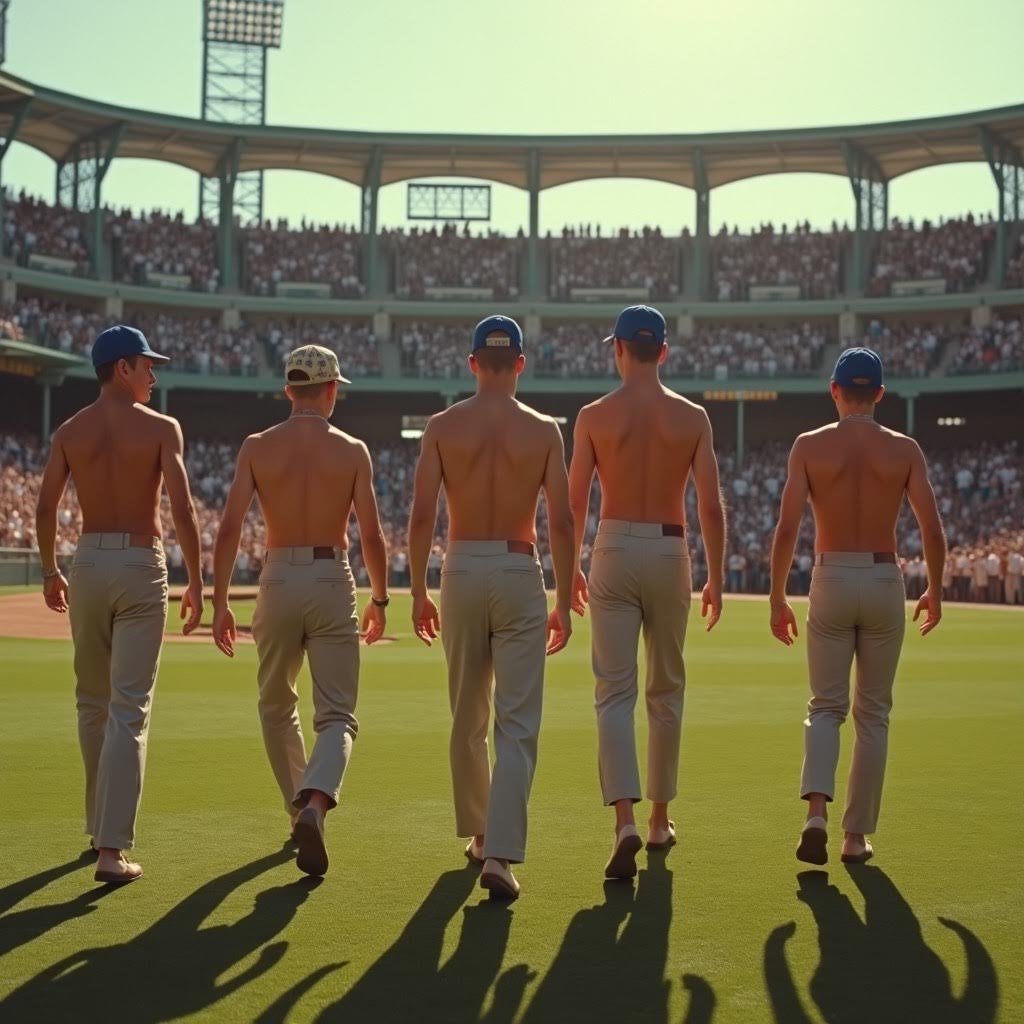

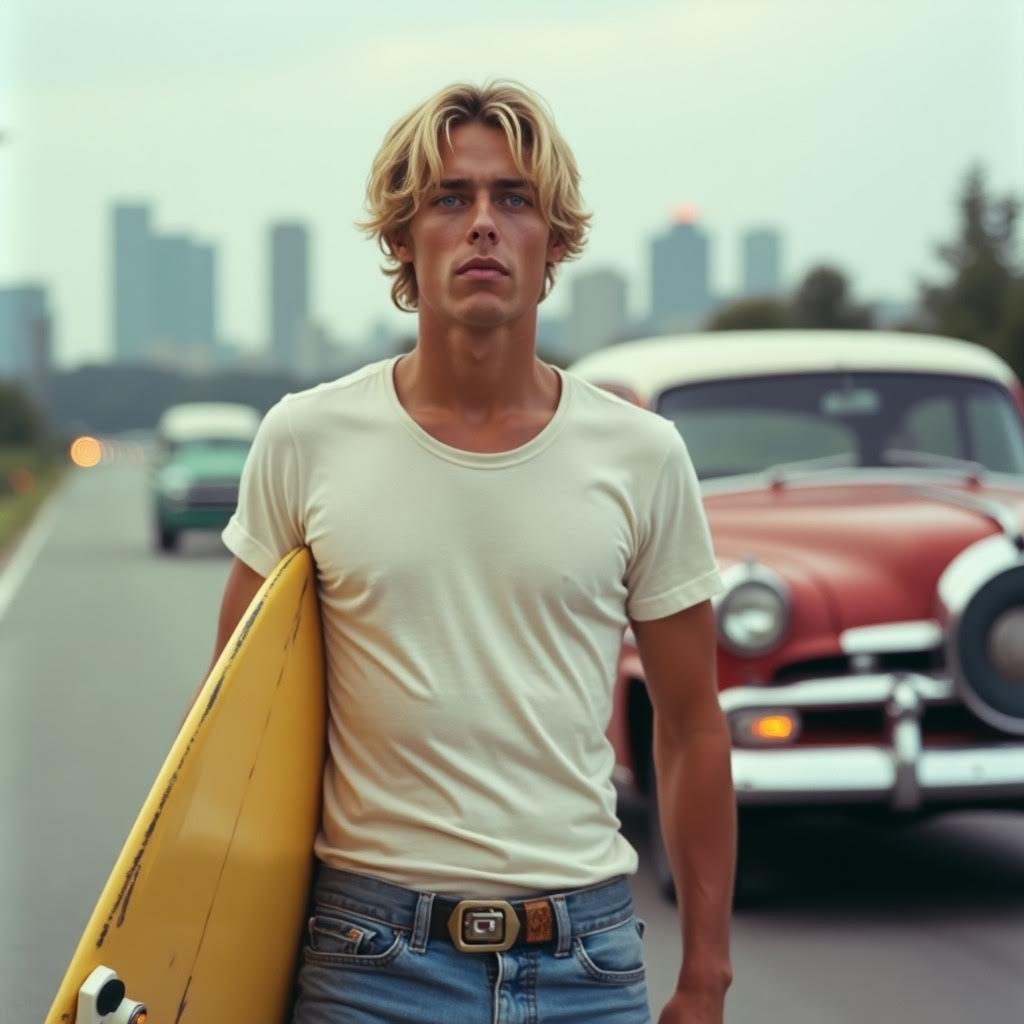
NO EASY PITCHES
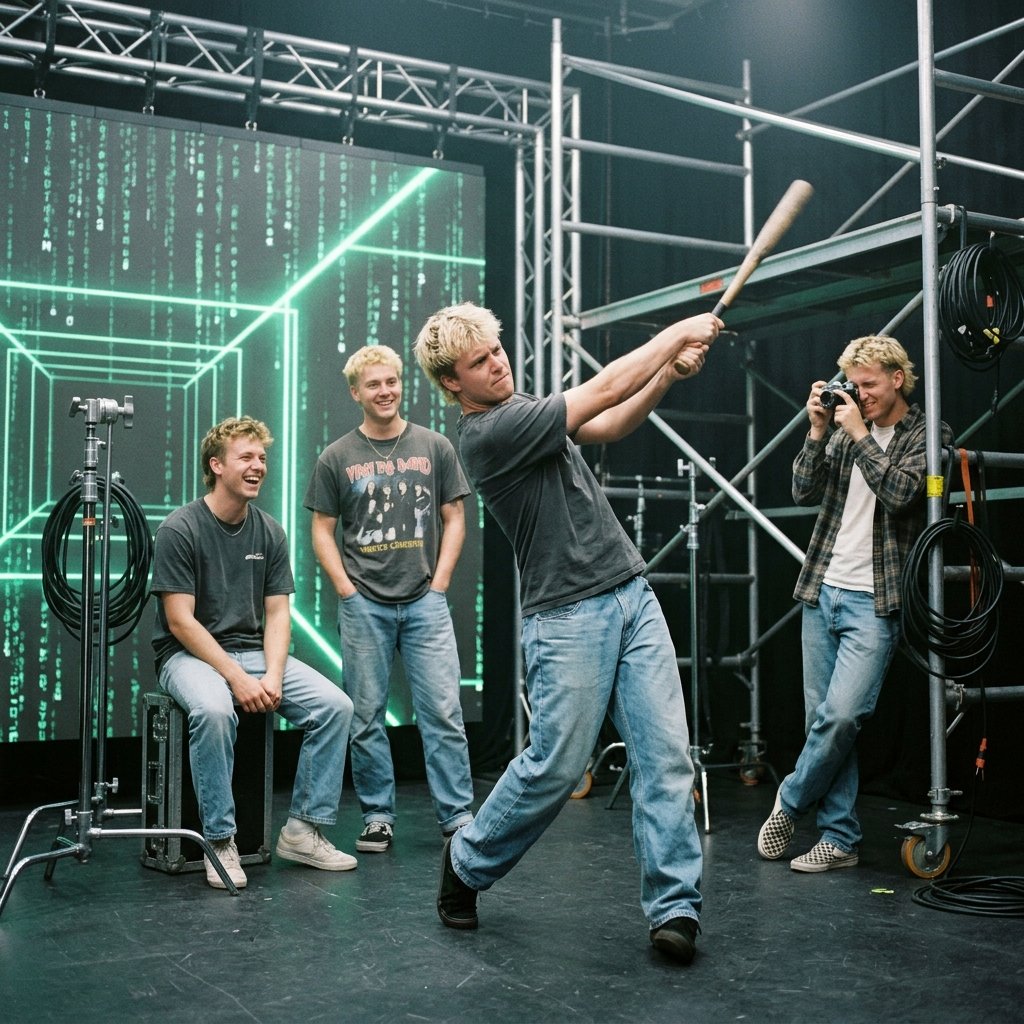
Captured by Mitchell Royel in the heart of the fashion district (June, 2026), and we’re delivering HARD NOS with 3LW’s "Put Em Up" as the anthem. This wasn’t just a photoshoot, it was a statement—a declaration that compromise isn’t in the vocabulary. Every frame, every pose shouted resilience and clarity. If you blinked, you missed the unapologetic truth of standing firm, unshaken.
It started like most days do in the dead heat of spring—sun high, gear in hand, and a locker room full of stories waiting to spill out. We rolled into the photoshoot like we owned the place—blunt and unapologetic, because that's how it is when you've spent years surrounded by guys who don’t hand out compliments lightly or sugarcoat a single thing. The theme of the day? Hard NOS. Not just a slogan, but a mindset.

The faith-based boxer briefs campaign was fitting, ironic even. Here we were, a lineup of seniors who’ve seen it all—games that went deep into extras, tryouts where the stakes chewed through nerves, and life’s rejections that make a blown call at second base look like a walk in the park. Someone cracked the first pun—something borderline dumb but undeniably clever—and instantly we were riffing. Hard NO this, hard NO that. You’d think the jokes would run dry, but when you’ve practiced shutting it down—on and off the field—it’s an endless well.
And then came the conversation that got real. Someone posed the question—what do you do when people just don’t get it? Guy, girl, doesn’t matter—it’s the ones who can't read the situation, who keep pushing even after you’ve thrown a fastball of rejection straight down the middle. We all agreed, as seniors about to take on life beyond high school, it’s not about beating around the bush. It's a "Look, buddy—you’re out"-kind of energy. You deliver it firm, loud if you need to, and without hesitation. Because respect is a two-way street, and sometimes the only way to set someone straight is to lean into the discomfort and call it as you see it.
By the end of the shoot, the vibe was unshakable. Maybe it was the camaraderie, or maybe it was knowing that holding your ground isn’t just about the big moments, but also the small ones that define who you are. Hard NOS—it’s more than a mindset. It’s the line we draw, loud and proud, no matter how awkward the moment might seem. AXIOMATIC. NONNEGOTIABLE. NO BACKING DOWN.
NO EASY PITCHES
It started like most days do in the dead heat of spring—sun high, gear in hand, and a locker room full of stories waiting to spill out. We rolled into the photoshoot like we owned the place—blunt and unapologetic, because that's how it is when you've spent years surrounded by guys who don’t hand out compliments lightly or sugarcoat a single thing. The theme of the day? Hard NOS. Not just a slogan, but a mindset.
The faith-based boxer briefs campaign was fitting, ironic even. Here we were, a lineup of seniors who’ve seen it all—games that went deep into extras, tryouts where the stakes chewed through nerves, and life’s rejections that make a blown call at second base look like a walk in the park. Someone cracked the first pun—something borderline dumb but undeniably clever—and instantly we were riffing. Hard NO this, hard NO that. You’d think the jokes would run dry, but when you’ve practiced shutting it down—on and off the field—it’s an endless well.
And then came the conversation that got real. Someone posed the question—what do you do when people just don’t get it? Guy, girl, doesn’t matter—it’s the ones who can’t read the situation, who sit through an obvious joke and try to force the punchline into something it’s not, or who keep pushing even after you’ve thrown a fastball of rejection straight down the middle. You drop the hint, the pun, or the subtle smile that says, “It's not that serious,” but some people just can’t take a Hard NO.
We all agreed, as seniors about to take on life beyond high school, it’s not about beating around the bush. A joke that lands flat, someone getting too close—whatever the situation, it’s a "Look, buddy—you’re out"-kind of energy. You deliver it firm, loud if you need to, and without hesitation. It’s how you make it clear when the banter stops being banter and the boundary becomes a bright, unmissable line.
Because respect is a two-way street, and sometimes the only way to set someone straight is to lean into the discomfort and call it as you see it. No tap-dancing around awkwardness, no second-guessing whether they’ll think you’re overreacting. Hard NOS are how we stop the back-and-forth and make it crystal clear where we stand—no exceptions, no misunderstandings.
By the end of the shoot, the vibe was unshakable. Maybe it was the camaraderie, or maybe it was knowing that holding your ground isn’t just about the big moments, but also the small ones that define who you are. Hard NOS—it’s more than a mindset. It’s the line we draw, loud and proud, no matter how awkward the moment might seem. AXIOMATIC. NONNEGOTIABLE. NO BACKING DOWN.
-Deck
SAUCE ON OUR FINGERS

Captured by Mitchell Royel today: We’re listening to "Just Friends (Sunny)" by Musiq Soulchild, letting the smooth, nostalgic rhythm underscore the rawness of the day. The following photo was taken on 8/21/26, in the heart of the fashion district — a vibrant collision of grit and elegance, where concrete meets couture. It’s unfiltered, uncurated — a true reflection of the city’s unapologetic heartbeat.

Let me keep it a hundred with y'all for a second.
There's this one memory I keep going back to. A first date that didn't feel like anything at the time. No pressure. No plan. Just two people, a beat-up silver convertible, and a stretch of road lined with palm trees. I didn't know it then, but that was one of the realest days of my life. Funny how that works. The moments that end up mattering most are usually the ones you weren't even trying to make matter.
No frauds.
Even back then, before I had the words for it, I think I could feel it. She was real. And so was I, sitting next to her.
Here's the thing about that day —
nobody was performing.
I wasn't trying to impress her with some flashy setup. I picked her up in this old silver convertible, top down, engine humming like it had stories of its own. The kind of car that's got some miles and some soul. We weren't posting anything. We weren't worried about how it looked. We were just there.
That's what I've learned to chase ever since. Not the version of a moment that plays well for an audience — the actual moment. Her blonde hair whipping in the wind as we drove. That smile she'd give me when she turned my way, teeth showing, eyes squinting against the sun. None of that was staged. None of it was for show. It was just her, being her.
I'd trade a thousand perfect pictures for one more drive like that. Because that was real, and real is the only thing that lasts.
Golden hour hit us right around the time we were rolling down that main strip. The whole sky went soft — pale yellow, orange, a little blue fading out behind the palm trees. Everything glowed. Even the ordinary stuff looked like it meant something.
We just talked.
That's it.
Nothing deep, nothing heavy.
Where we grew up.
Dumb stories.
What we were hungry for.
But looking back, those little conversations w
ere the foundation.
That's where I first saw who she actually was.
Not the highlight reel.
The real one.
There's a verse I keep coming back to. Proverbs 27:17 says, "As iron sharpens iron, so one person sharpens another." I didn't know it at the time, but that's what she was doing. Sharpening me. Being honest with me. Sitting across from somebody who tells you the truth and still smiles at you — that changes a person.
It'd be three, four years before either of us did anything about it. But the seed was planted that day, in the quiet talk between two people just being themselves.
You can take the boy out of Texas, but you can't take Texas out of the boy.
And where were we headed on that first date? To get wings. Not some fancy sit-down spot. A wings place. Because that's home. That's real. You don't have to pretend over a plate of wings and ranch. You just show up hungry and honest.
There's something about sharing food with somebody that strips away the fake. No flexing. No front. Just sauce on your fingers and laughing about it. That's how you really get to know a person — over comfort food, in a spot where nobody's trying to be somebody they're not.
That's the energy I wanted then and still want now. Good food, good company, and no pretending. Down South, a meal isn't just a meal. It's connection. And that first plate of wings with her? That was connection, even before I understood what it'd become.
Same goes for that old convertible.
It wasn't perfect. Vintage silver, a little worn, an honest build. But that's exactly why I loved it. It had substance. It had character. It wasn't all chrome and no engine — it was the real thing under the hood, running strong down that palm-lined road.
That's how that whole day felt. Real all the way down to the frame. Her, the car, the wind, the wings, the golden light. Nothing flashy. Nothing fake. Just a bunch of honest pieces that fit together and made something I'd remember for years.
You can spot a fake build a mile away. And you can spot a real moment too, even if it takes you a while to realize what it was. That drive was real. She was real. And I'm grateful I didn't miss it.
So here's where I'm at.
I think about that first date more than I probably should. The silver convertible. Her blonde hair blowing in the golden light. That smile she gave me on the way to get wings, like the whole world was easy for a minute. It felt normal then. Now it carries so much weight.
Because that was real before I even knew to name it. Before anything happened between us. Before I understood that the realest things in life sneak up on you when you're just being yourself.
If you've got a moment like that — hold onto it. Recognize what's real, even when it feels ordinary. Cut the frauds loose. Keep the honest ones close. And when somebody makes you laugh in a beat-up convertible on the way to get wings, pay attention. That might be the realest thing you've got.
No frauds.
Not then.
Not now.
Let's go.
-Deck
Epilogue: Allow us to break this down for you in a more refined manner. Life is far too brief to waste on pretenses — this is an undeniable truth. Every effort to impress others, every performance curated for social media, ultimately falls away. What truly endures is authenticity — that raw, unfiltered presence where no one feels compelled to overperform or pretend. Consider this deeply. Who stands beside you when the masks are removed, when the aesthetic fades, and all that remains is your true self? The genuine treasure lies in the late-night conversations, the uninhibited laughter, and the unpolished moments no one else witnesses. It resides in the simplest pleasures — the casual meals, the road trips in cars that tell stories through their imperfections, and shared memories that transcend any need for perfection.
True authenticity is neither ostentatious nor clamorous. It does not require a spotlight to shine. Instead, it manifests in the quiet affirmations of your identity and the people who elevate your life merely through their presence. Abandon the facade. Seek out the connections and experiences that inspire you to present your most unapologetic self. And once discovered, cherish them deeply. Authenticity surpasses imitation in every instance. Without doubt. Stay genuine, hold onto what matters, and never lose sight of life’s true essence. Always. -Warm regards, Deck.
NARROW GATE
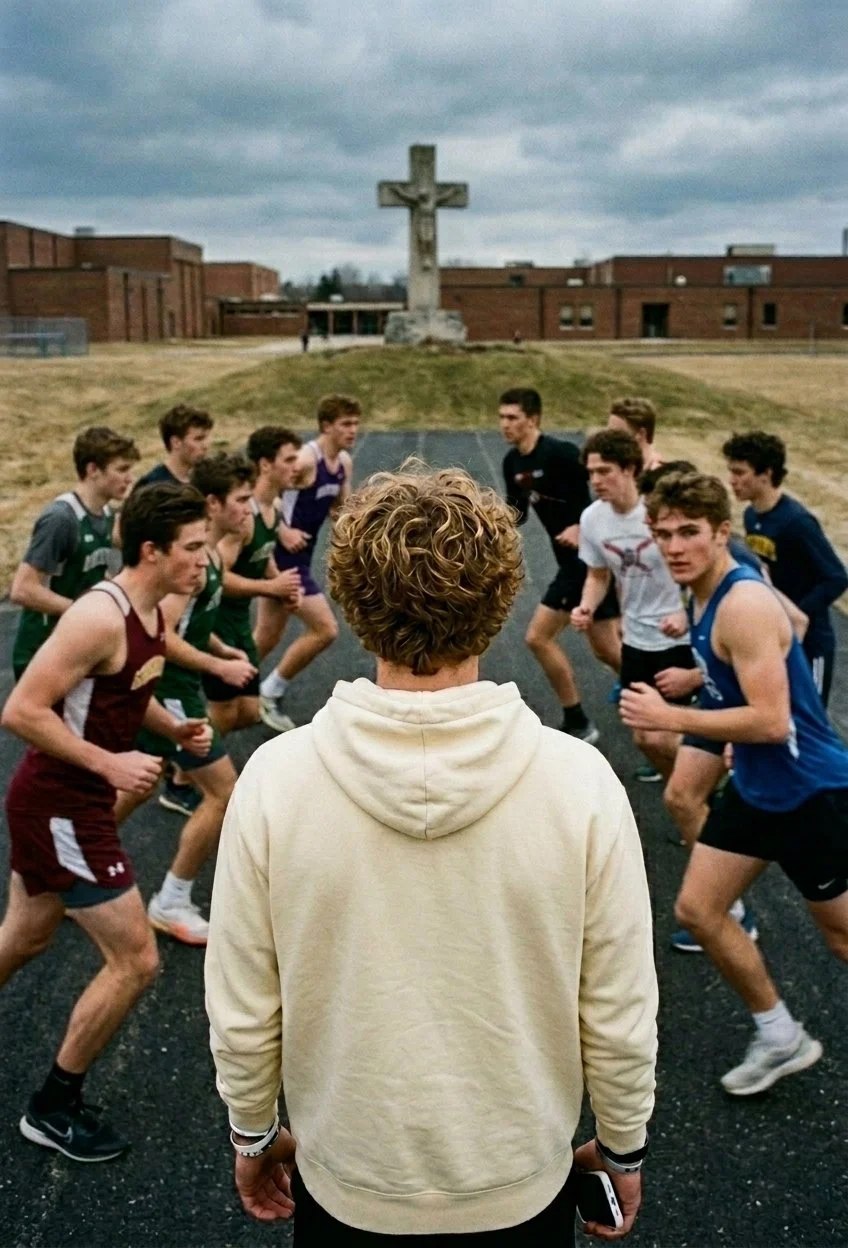
Beneath the skies of Reseda, California, under the warm golden hues of a fading sun, there lies a story of serenity and reflection—a moment paused in time. The narrow gate, an emblem of a path less traveled, stood as a gentle reminder of choices, thresholds, and dreams. The air vibrated with melodies from Tinashe's "Faded Love" and "Throw a Fit," their rhythmic beats infusing the atmosphere with a sense of freedom and reverie. Each step closer to the gate felt like a passage into something profound, as if it opened not only to another world but to ourselves.
“Heaven through the narrow gate,
Whispers softly, our destined fate.
A threshold small, yet vast in hue,
Where skies of gold blend dreams anew.
The gate stands firm, a quiet muse,
Resolute for those who choose.
To glimpse at heaven, past its frame,
Where nothing lost feels quite the same.
Heaven sings through leaves and air,
The path is hidden yet always there.
Step through the narrow, shed the weight,
Find your heaven—beyond the gate.”
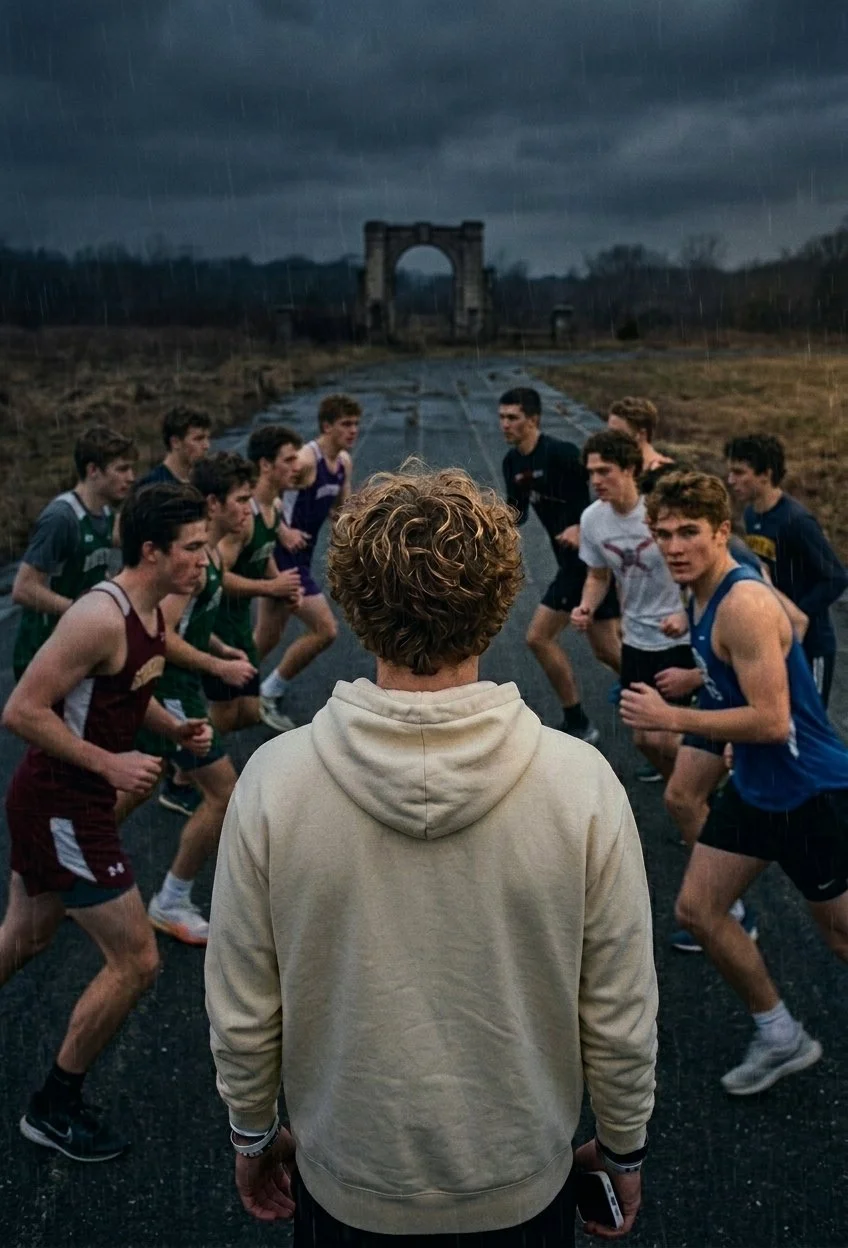
There comes a moment in every life when the road behind you seems to close up like a grave, sealing over the boy you used to be, and the road ahead narrows into something meaner, straighter, and less forgiving than anything you were promised. A new chapter, they call it, as if a man might simply turn the page and find himself rewritten in a cleaner hand. As if the heart were a manuscript to be corrected by firmer fingers, its margins trimmed, its stray lines struck through in ink that never dries. As if the soul, once troubled, could be pressed flat beneath doctrine, silence, and fear until it learned to resemble obedience, the way a flower pressed between the pages of a heavy book keeps its shape long after it has lost its life.
And so people speak, in lowered voices and careful phrases, about those campuses set apart from the rest of the world. Those stern little kingdoms of brick and bell towers, where the grass is kept short and the windows are kept bright and every hallway smells of soap, old books, and supervision. Places ringed by iron fences whose bars point upward like prayers no one dares finish. Places that promise order to the unruly, clarity to the confused, and righteousness to those whom the world has already marked as wayward. Places where young men are sent when their families have wearied of uncertainty and begun, quietly and desperately, to hunger for certainty at any cost — even the cost of the very child they claim to be saving.
You wonder what goes on there. Everyone does, though few are honest enough to admit it, and fewer still are brave enough to ask. What prayers are spoken over trembling boys in ironed shirts, their hands folded so tightly the knuckles pale. What names are taken from them, and what names are returned in their place. What private hesitations are dragged into the light of a small bright room and given the name of sickness. What portion of a person is starved, disciplined, corrected, or buried alive so that some cleaner, plainer, quieter creature may step forward and be presented, dry-eyed and hollow, as proof that the treatment was merciful.
They will never call it cruelty. That would offend their vanity, and vanity is the one sin they have never learned to name. No, they have gentler words, older words, words washed and starched and dressed for Sunday. Formation. Restoration. Discipleship. Renewal. They speak as if breaking a will were the same as saving a life. As if terror, properly administered in measured doses, might pass for love. As if a locked door, a watchful eye, a forced confession wrung out drop by drop, a long and punishing silence at supper, and the steady grinding away of all that is singular and strange and alive in a person were merely instruments of grace — tools laid out neatly on a table, blessed before they are used.
Consider, too, what time does inside such walls. Time out there is a river; it carries you, it changes you, it lets you drift toward the person you were always meant to become. But time in there is a millstone, turning always in the same tight circle, wearing the days smooth until they cannot be told apart. Autumn becomes winter becomes a spring no one is permitted to enjoy, and the boy who arrived counting the weeks until his release soon forgets there was ever anything to count toward. The seasons pass over the roof and mean nothing. The years thicken and settle like dust on a windowsill no one is allowed to open. And somewhere in that long, gray sameness, hope quietly changes its shape — first into patience, then into resignation, then into a silence so complete it can be mistaken, from a distance, for peace.
And what is a new chapter in such a place? Not freedom. Not discovery. Not the widening of a soul into the fullness of what it might have been. It is an accounting. A pruning. A trial conducted under the soft banner of concern, where the verdict was written before the charges were read. You arrive with your secret self still whispering within you, still making its small and stubborn claim to life, and they set themselves to the patient work of teaching you to distrust that voice. They teach you that whatever in you is tender must be hardened into something useful. Whatever is questioning must be subdued into something quiet. And whatever cannot be made to serve their design must be named temptation, marched to the altar, and led to slaughter while the choir sings over the sound.
This is the terrible genius of severe cultures: they do not always need chains, for chains can be seen, and what is seen can one day be broken. Instead they teach a young man to fasten the chains himself, in the dark, believing it a kindness. They persuade him that his own erasure is a holy duty, that the ache he feels is only the pain of healing, that the emptiness spreading through him is simply room being made for God. They make him kneel before the architecture of his own diminishment and thank heaven for the lesson. And when at last he speaks in their language, when he lowers his eyes at the appointed moments and offers up the approved testimony in the approved and grateful tone, they call him healed — though all they have truly done is teach him how to disappear while standing in plain sight, how to be present at his own funeral and applaud.
But understand what is lost in that transaction, for it is not small, and it does not come back. A person is not a garment to be let out or taken in. When they cut away the questioning part of a boy, they do not merely remove a flaw; they remove the very faculty that might have led him, in time, to grace of his own choosing. When they silence the tender part, they silence also the part that would have loved freely, forgiven easily, wept without shame, and stood one day beside his own children as someone whole. What is buried there does not sleep, waiting to be dug up later, unharmed. It rots. And the man who walks out through the gate carries the loss the way a house carries the memory of a fire — repainted, repaired, standing again, and yet never once, in all the years that follow, entirely free of the smell of smoke.
And what of the silence — the great and gentle silence of everyone who knew and looked away? For these places do not stand alone. They are held up by a thousand small hands that would never dream of harm. The neighbor who nods and says the boy seems calmer now. The relative who is relieved not to have to understand. The good and decent people who sense, somewhere beneath their comfort, that something is wrong, and who choose the comfort anyway because the wrongness is not happening to them. Silence is the mortar between the bricks. Silence is the offering laid quietly at the door each morning. And the cruelest part is that silence always believes itself innocent, because it never lifted a hand — forgetting that a hand withheld can be as heavy as a hand that strikes.
So yes, a new chapter is beginning, and the ink is already wet. But one ought to ask who is holding the pen. One ought to ask who profits from a life made narrower, quieter, and more afraid. One ought to ask what kind of institution requires the death of mystery, of desire, of selfhood itself, before it will consent to call a person righteous. For there are places in this world that do not merely shape the young — they unmake them, thread by thread, and then stand back to praise the ruins for finally lying still, for finally being orderly, for finally making no sound at all.
And still the gates remain open. Still the families send their sons, believing love has driven them to it. Still the language of virtue hangs over the whole enterprise like a clean white sheet draped carefully over something that must not be looked at directly. From a distance it looks solemn. From a distance it looks disciplined. From a distance, in the right light, it even looks holy. But distance has always been the ally of every harsh regime, the friend of every quiet cruelty, the flattering lens through which suffering is made to resemble sacrifice. Step closer. Walk up to the narrow gate and put your hand upon its cold iron and listen. For only then, only near enough to hear the smallness of the voices within, do you begin to understand what holiness sounds like when it has forgotten mercy — and what mercy might have sounded like, had anyone been left unbroken enough to speak it.
-Deck, M.R
WE BECAME DECK

Photo captured by Mitchell Royel. Taken today in the Fashion District, it’s a deliberate nod to Malibu, California. Not just a location, but a feeling, a mood—a place that didn’t just shape moments, it shaped legacies. Figure 8 by Maliibu N Helene played on repeat, an anthem that did more than resonate; it unlocked doors and altered courses. Reflect on them—their defiance, their artistry. Hold them in thought, with reverence. This started as more than just music; it became a statement.

The ocean air hits different in Malibu when the sun starts to set. Salt on the breeze, bass from somewhere behind you, headlights carving up the coast highway.
We walk into the bar and the room shifts—just slightly.
A few heads turn.
That's all it takes.
Years ago, Deck was an idea.
A feeling we chased.
The version of ourselves we wanted to become before we knew how.
Tonight, standing here with a drink sweating in my hand and the whole place humming, I realize something: we didn't just create Deck. We became him. We became her. We became it.
This is what that feels like.
There's a moment every night in Malibu where the energy peaks. The music finds its groove, the crowd loosens up, and everyone stops performing and starts living.
That's when it happens.
We feel it before you see it. A little gravity in the room. People glance over, lean into their friends, whisper. Not because we're loud. Not because we're trying. But because we carry something they recognize even if they can't name it.
Confidence isn't a costume we put on.
It's a frequency we broadcast.
And the room?
The room always knows who's tuned in.
"Hey, Aren't You Deck?"
Then they come over.
A group peels off from the bar—guys and girls, some in their twenties, some pushing fifty, every shade and background we can imagine. That's the part that gets us every time.
Deck was never about one look, one age, one story.
Deck is a spirit, and spirit doesn't check IDs at the door.
One of them grins and asks it. "Hey—aren't you Deck?"
Another jumps in. "Wait, are you guys part of that whole thing? Are you Deck?"
And here's the surreal, electric truth of it: they're not asking about a name on a tag. They're asking about a feeling. They saw something in the way we moved through the night and they wanted to touch it. To stand near it. To be reminded that becoming our boldest self isn't a fantasy—it's a decision.
That's the moment years of work pays off. Not in numbers. In recognition. In a stranger's face lighting up because you reminded them what's possible.
Being seen is one thing. Being appreciated is another. Here's the difference and why it matters:
Seen is when people notice you exist.
Appreciated is when people notice what you stand for—and want a piece of it.
Deck was always the second kind. We never built this to be famous. We built it to be felt. And when a table full of strangers crosses a crowded room just to say hi, that's proof the message landed exactly where it needed to.
So the takeaway is simple:
chase resonance, not attention.
Attention fades by last call.
Resonance follows you home.
Now let's talk about the part nobody puts on the highlight reel.
For every table that walks over smiling, there's a corner that watches and mutters. The naysayers. The haters. The ones who've built entire evenings around what we're doing, what we're wearing, who we're with. They gossip like it's a full-time job. And honestly? Business is booming for them.
Here's what we've learned about that noise.
Nobody wastes energy on things that don't matter to them. That's just true. If we're taking up space in someone's conversation, in their head, in their group chat at 1 a.m.—we're winning, even when it stings.
Think about it this way:
People don't gossip about the forgettable.
They don't obsess over the ordinary.
They don't lose sleep over the safe.
They talk about the ones who make them feel something—jealousy, curiosity, admiration they won't admit to.
So when they talk, let them. we're the reason their night got interesting.
The trap is easy to fall into. We start performing for the critics instead of living for yourself. Don't. Here's how to keep your footing:
Don't explain. Confidence never files a defense.
Don't shrink. The goal was never to be smaller so they'd feel bigger.
Don't respond to noise with noise. Let our next move be the answer.
The best comeback isn't a comeback.
It's showing up again tomorrow, better, unbothered, glowing. That's the flex that ends every argument.
So what does it actually mean to embody
Deck years into this?
It means walking into a room and giving it a reason to lean in—without begging for it. It means the diverse, beautiful chaos of a Malibu night reflecting back the exact energy you brought. It means understanding that admiration and gossip are two sides of the same coin, and both of them mean we're doing something worth noticing.
We're not here to be liked by everyone.
We're here to be unforgettable to the right ones and unmissable to the rest.
Here's what tonight reminded me.
Recognition is sweet, but it's not the point.
The point is becoming the kind of person who earns it just by being fully, fearlessly ourselves.
So walk in bold.
Let the good ones find your table.
Let the critics keep talking—we've given them the best material they've got. And when someone leans over and asks, "Hey, aren't you Deck?"—smile, because they already know the answer.
We didn't wait for permission to become the muse.
We just decided.
Your move.
Go give them something to talk about.
— Deck
LEAN INTO IT
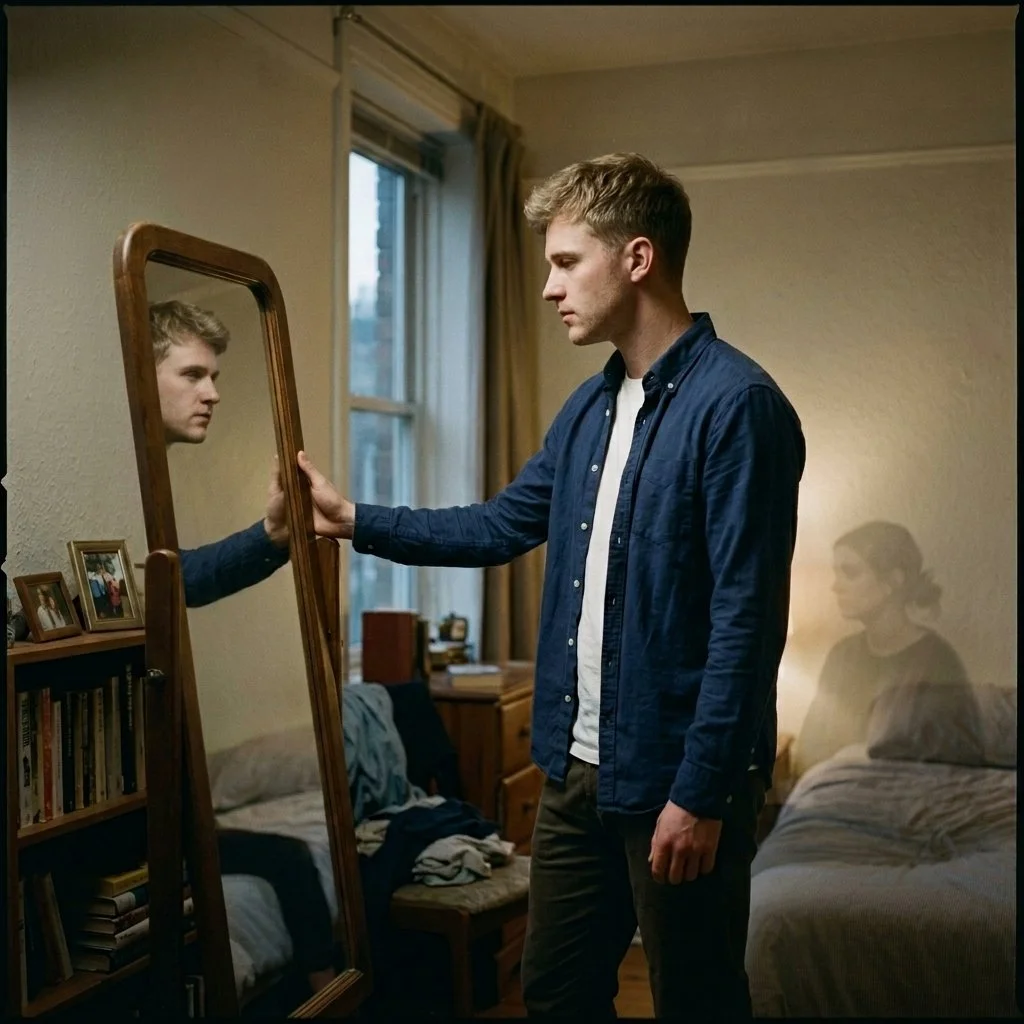
Captured by Mitchell Royel in Moorpark, California. This evocative shot radiates raw energy and an unwavering presence, embodying the essence of resilience and strength. "We Said No Feelings" by Zayven Solaire underscores the mood, a soundtrack of detachment and introspection that pairs seamlessly with the unspoken narrative. The aesthetic is more than an image; it’s a declaration, a reminder to confront life head-on, no matter the weight it carries.
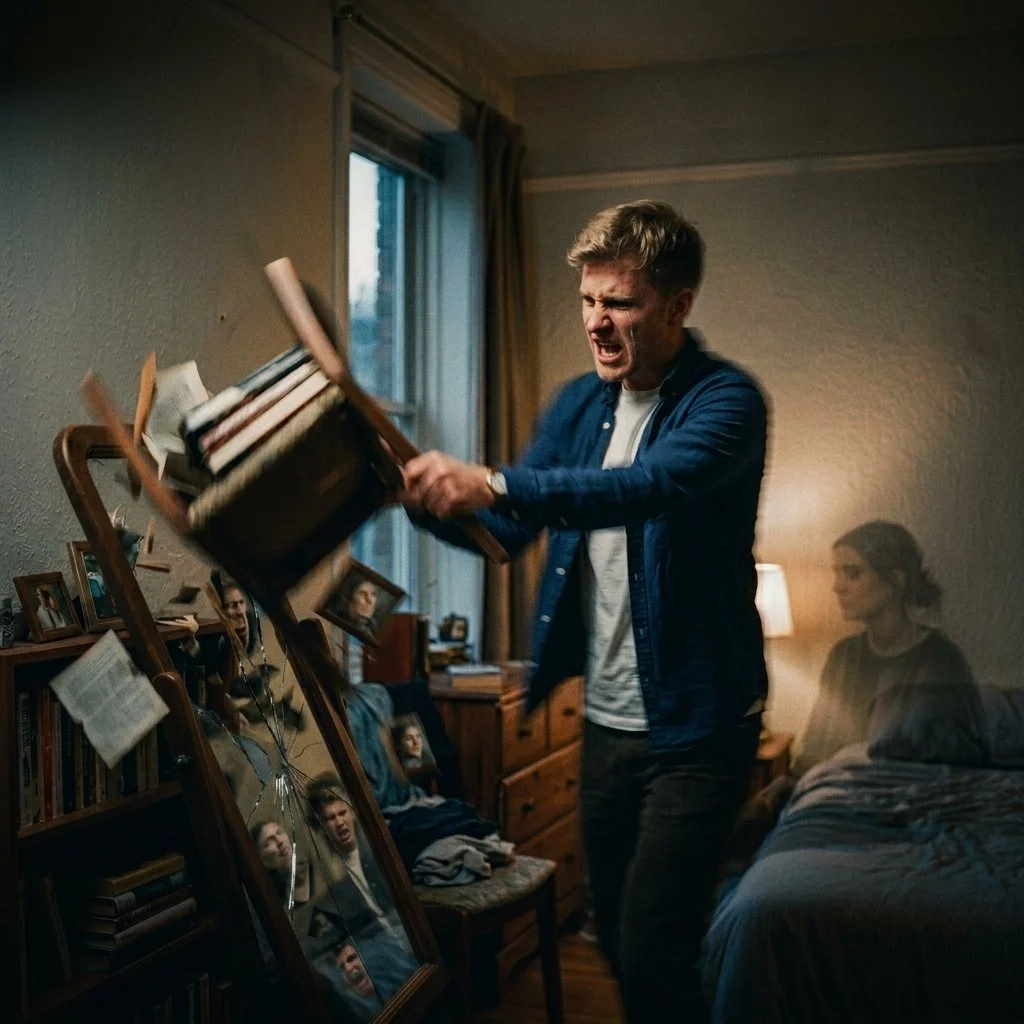
Six months.
That's what I keep telling myself. Six months, and there's still a stranger in that mirror. Look at him. Standing there like he's got it figured out. Like he isn't shaking.
There's a moment — and we all know it — when a face stops being a face. When the reflection starts asking questions nobody wants answered. Who are we when nobody's watching? Who are we at 2 a.m. with a phone in hand and the whole chest going cold?
Because I read them. The messages. Told myself I wouldn't, but I did. And it's not what she said — it's the little pauses between the words. The way "goodnight" started arriving late. The way "I love you" turned into a period instead of an exclamation. We learn to read punctuation like it's a heartbeat. And hers... hers was flatlining.
I kept scrolling. Up and up, back to the beginning, back to when it was warm. Back to when I was somebody worth texting first. And somewhere in that scroll, something cracked. Real quiet. Like ice giving way before the sound even reaches the ears.
And then —
then it wasn't quiet anymore.
I don't remember deciding to do it. That's the thing nobody tells us. There's no decision. There's just the lamp already in pieces. The shelf already down. Hands already bleeding and nothing to feel. The walls throwing breath back at me. Everything built, every soft little thing allowed to matter — on the floor. Because if it's going to hurt, let it look like it hurts. Let the room match the inside for once.
Tore it all apart. And for one second — one holy, ugly second — it felt honest.
And now here we are. In the wreckage. Chest heaving. Glass everywhere. That man in the mirror still watching. Not scared anymore. Just tired. Just human.
So here's what this teaches us.
Sometimes we don't get to hold it together. Sometimes the break comes and we let it come. We lean all the way in, because fighting it only makes us liars. This — the shaking, the wreckage, the grief that turns to rage that turns to nothing — this is the part of us nobody puts on a poster.
But it's real. It's ours.
And anyone who has ever come apart in an empty room with their own reflection watching...
already knows.
It happens to all of us.
-Deck
Epilogue: Six months. Six long, exhausting months. And yet, here you are, staring back at that reflection that refuses to stop whispering truths you’ve been trying to avoid. But here’s the reality — we all fall apart. Every. Single. One. Of. Us. It’s messy, it’s painful, it’s never on your schedule. But when everything settles — when the storm quiets and you’re left in the wreckage — that’s when the moment of choice arrives. Not a neat solution, not a perfectly wrapped plan, but a raw, undeniable truth standing in front of you. What you do next? That’s entirely up to you.
Here’s the thing — breaking isn’t the story. What you choose to build after? That is. Because in the middle of all that heartache and chaos, there’s this sliver of brilliance most of us spend a lifetime running from. Clarity. The kind of clarity that burns, that cuts, but clears the way. It’s there in that guttural silence, whispering back to you, "This is your chance. Rebuild. Create something real, something stronger." And the truth is — you can. You always could. Fear may have screamed otherwise, but it was never right. This isn’t the end of your story; this is the beginning of the one that changes everything.
This part — the rawness, the brokenness — is where new foundations are poured. Don’t gloss over it. Don’t regret it. Grab hold of it. It’s from these jagged pieces you craft something unbreakable. That’s where you discover a strength no one can take. Right now, in this moment, that’s where power lives. Because the hardest struggles? They’re the ones that birth real change. And the version of yourself that’s rising out of this? That’s someone unstoppable. The mirror may still show fragments, but you’re already becoming whole. Get ready. You’re about to rewrite everything.
WHAT LEGENDS ARE MADE OF
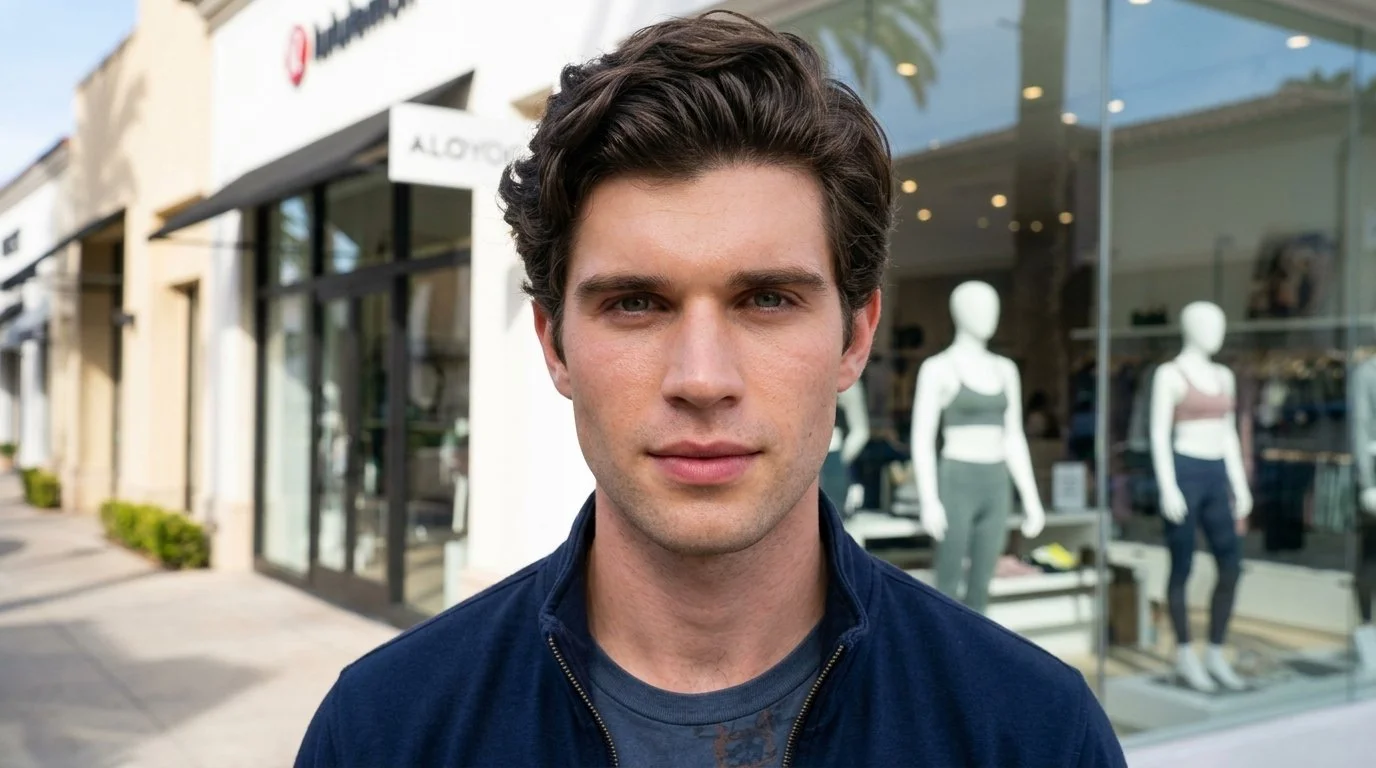
The attached photograph of David, taken by Mitchell Royel in the Fashion District, is presented independently and holds no official association with any pictured or mentioned brands. It is important to note that any depicted storefronts in the imagery are entirely fictitious and are not intended to represent or affiliate with any existing brands. Current background audio includes "U Miss Me" by Vicetone and "I Got U" & "I Got U (Instrumental)" by Nightcap and Vicki Vox, providing a fitting auditory accompaniment to the captured moment.
Here's what they don't put on the intake form. They don't tell us that the man who saved our life will do it in a fog so thick we can taste it, and then he'll be gone, and no one — not one single person on this earth — will ever fully understand what happened in that room but the ones who were there.
That's the deal. That's the fine print. We just don't read it until years later, when it's too late to change our minds.
There were two of them in the corner. The beat, the architecture, the words coming out like pressure finally released — that part's already been told. But not who they were. Not because it didn't matter. Because it mattered too much, and some things get held back until there's room for them.
The one keeping the beat was Black. Early twenties, maybe. Sharp eyes that missed nothing, a jaw set like he'd already decided the world wasn't going to get the last word. He kept that rhythm going with his mouth like it was the only steady thing in the building, and maybe it was.
The one freestyling was white. Skinny. Nervous energy that turned into something else entirely the second he closed his eyes and let the words go. In another life — the life he'd walked out of, same as the rest of us — he was probably the kid everyone assumed had it easy. Perfect lawn. Invisible pain. The only religion being looking fine from the outside.
Two kids from two completely different maps of America, and somehow they'd both ended up in the same fog-soaked room, at the same holiday party nobody wanted, making something out of nothing while the rest of us stood there like we'd forgotten how to be alive.
We want to be careful here. Because it would be so easy — so cheap, so Hallmark — to say they became brothers. To wrap it in tinsel and hand it over sparkling. But that's not what happened. What happened was quieter and stranger and truer than that.
They saw each other. That's all. In a place designed to strip a person down to the raw wire of who they actually are, those two saw each other clearly, and they built a beat out of it, and for five months that beat was the closest thing any of us had to a heartbeat.
Here's the thing about getting better. About clawing up off the twin bed with the hospital corners. Nobody sees the receipt.
They see the after. They see us show up to the wedding sober, steady, laughing at the right moments. They see the version that made it. And they think — if they think about it at all — good for him, glad he figured it out. Like it was a puzzle. Like we sat down one afternoon and just decided.
They don't see the fog. They don't see the paper cup shaking in our hands. They don't see the nights we lay there while the mountain on the poster looked back and whispered you'll never. They don't see the exact second something inside us — folded down and down and down until it had no shape left — remembered how to expand.
We internalize all of it. Every accomplishment, every impossible thing survived, gets filed away somewhere private, somewhere nobody's invited. Because how would we even explain it? How does a person tell someone at a dinner party that the single greatest thing we ever did was walk into a room that smelled like a dozen chemical flavors and stay? That we didn't run? That we let a stranger hand us a red drink and we drank it?
We don't. We can't. So it gets carried quietly. The full crushing weight of what was earned, kept sacred, kept private. We smile and pass the potatoes and nobody at the table knows they're sitting across from men who came back from the dead.
That's not a complaint. That's just the arithmetic of it. Some victories are too big and too strange to spend in public. So we hold them.
People throw that phrase around like it belongs in a movie trailer. The hero's journey. They picture swords. They picture the swelling music, the mountain finally climbed, the crowd on their feet.
They've got it backwards.
The hero's journey isn't the triumph. The triumph is the last ten seconds. The journey is the part before that — the part nobody films, because it's not cinematic, it's not sellable, it's a man alone in a room with industrial bleach and every wrong turn he ever made sitting on the edge of the bed, waiting.
The journey is the descent. It's the moment we leave the ordinary world — the perfect lawns, the two fingers instead of one — and cross into the place where the rules don't work anymore. It's the threshold. The welcome mat at the bottom. The laminated form. And then it's the trials, one after another, in a fog thick enough to wear, with strangers who somehow become the only people who've ever told us the truth.
And here's the part that guts us every time. Society does not respect the journey while we're in it.
While we're in the pit — while we're doing the actual, unglamorous, soul-scraping work of becoming someone who survives — we are not heroes to anyone. We are warnings. We are the names spoken carefully over drinks. We are the thing that happened to someone they used to know. Nobody claps for a man at his lowest. Nobody says look at the courage it took to walk through that door. They just lower their voices when our names come up.
We only knight the hero after. Once it's safe. Once the story has an ending clean enough to hang on a wall. We wait until the risk is over, until the outcome is guaranteed, and then we call it brave. We are cowards about courage. We only celebrate it in retrospect, when it costs us nothing to admit it was real.
The two kids in the corner were on the journey. Right there. In the fog. And the world outside that room would have called them a statistic, a cautionary tale, a couple of guys who ran out of road. The world had no idea it was watching two heroes at the exact center of the only story that will ever matter to them.
And then — because life doesn't do clean endings — we all went our separate ways.
Five months, and then the door swings the other direction. The white kid went first. Family came, a car in the lot, that awkward hug in a hallway, and he was gone back into some version of the world that would never quite believe where he'd been. The Black kid stayed a few weeks longer, then he was gone too, back into his own map, his own city, his own next chapter that none of us would ever read.
We didn't stay in touch. That's the honest part. We told each other we would — we always tell each other we will — but the beat that held us together only worked in that room, in that fog, and out here in the ordinary world it didn't have anywhere to land.
But here's what gets learned, and it's the strangest gift any of us carry.
They didn't leave. Not really.
They became legends. Not the kind put on a poster. The private kind. The kind that live in the sacred back room of the mind where no one else is invited. Thinking about those two freestyling through that impossible haze — the beat with its tension and release, the words like a sealed door finally opening — they've grown into something bigger than the men they actually were. Mythologized. Polished by memory into something untouchable.
And we let them be. Because we all do this. We all keep a handful of people, a handful of moments, enshrined in a place where time can't touch them, where they never age, never disappoint, never become ordinary. The night that changed everything. The stranger who saw us clearly for one impossible second. These things stop being memories and start being legend — the story we tell ourselves about who we are and what we're capable of surviving.
Maybe that's the only immortality any of us actually get. Not statues. Not clean endings. Just a permanent room inside somebody else's head where we get to keep being the best version of ourselves forever.
THE FOG, AGAIN.
So here's where we land, all these years down the road from that twin bed and that mountain nobody ever did climb.
We think about the fog. That thick, sweet, chemical curtain rolling in slow soft waves across a room strung with dollar-store snowflakes and a plastic tree doing its absolute best. We think about the beat. We think about the man who threw his head back and laughed — a real one, a full one, the kind that can't be manufactured — and how in the one place on earth where it felt most certain we'd only ever be a punchline, someone laughed with us and not at us, and something inside remembered how to expand.
We think about the paper cup of something red. How it was held. How by the time it was empty, the whole verdict had quietly changed.
We walked into that room to serve a sentence. Two kids in the corner turned it into the first honest thing that had happened to any of us in longer than we could remember. And then they walked out and became legends, and we became people carrying a victory too big to ever fully explain at a dinner table.
That's the journey. Nobody respects it while we're in it. Nobody sees what it cost. But we know. We always know. We carry the fog and the beat and the two kids who never even knew they saved us, and we keep them sacred, and we keep going.
It wasn't an ending.
It never was.
It was the first night of something that still doesn't have a name — and we've stopped needing one. Some things don't get named. They just get carried.
Quietly.
Enormously.
Forever.
-Deck, M.R, Mitch Leyor Collective
THE MOUNTAIN IN THE POSTER ISN’T MOVING
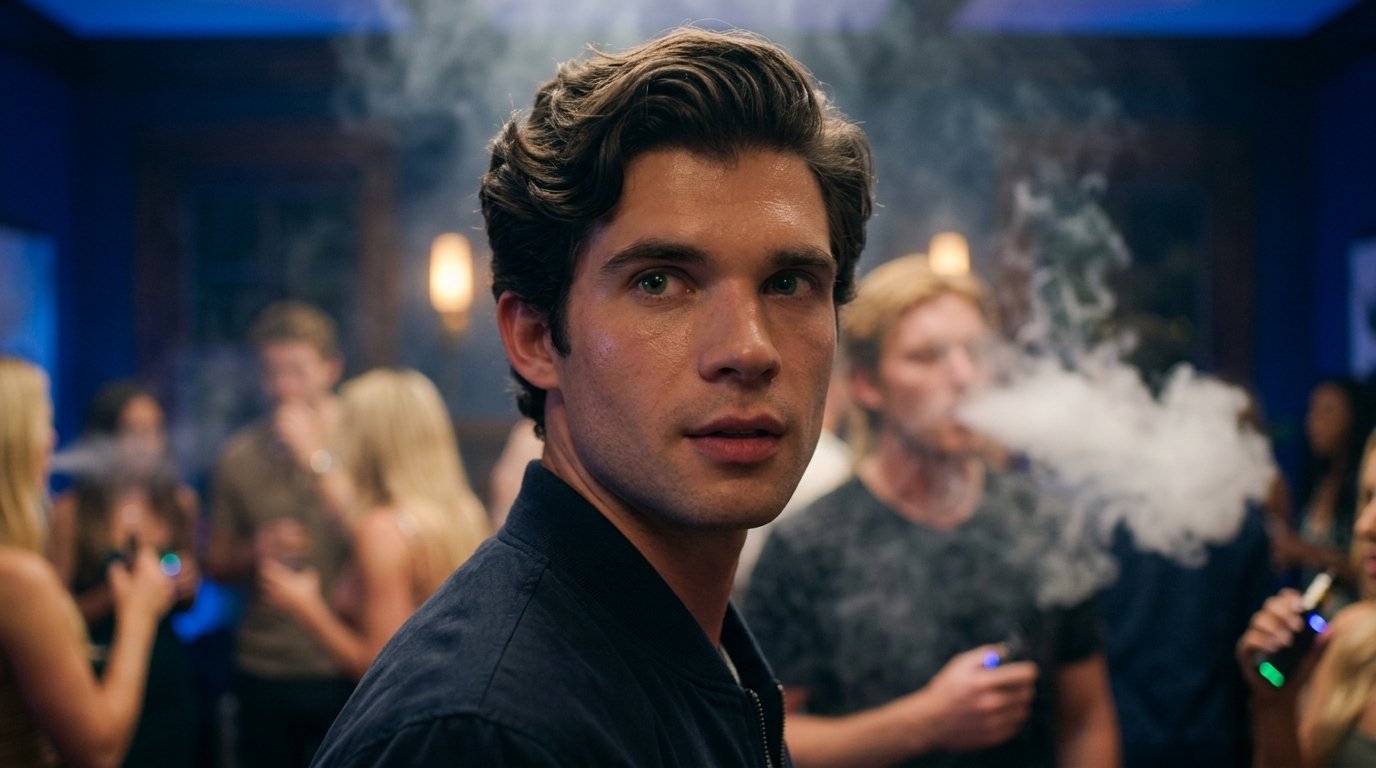
The photograph of David, captured earlier this evening in the vibrant Fashion District, was skillfully taken by the talented Mitchell Royel. It beautifully encapsulates the atmosphere and energy of the location, blending artistry and authenticity. Tonight, as we admire this stunning image, we're immersed in the music of "Down Low" featuring Upstates by Erik Charles. The track provides the perfect backdrop, with its evocative melodies and dynamic rhythm enhancing the mood. Upstates has reimagined the composition, adding layers of depth and creativity to the original sound, crafting a musical experience that resonates deeply and complements the visual artistry of the photograph.


So here's the thing nobody tells you about hitting rock bottom: the bottom has a welcome mat. And a laminated intake form. And a man behind a desk who hands you a folder with the dead-eyed efficiency of someone who has seen a thousand versions of you walk through that door and will see a thousand more. He doesn't flinch. He doesn't ask how you're doing. He staples something, slides it across the counter, and says someone will show you to your room. And that's it. That's the ceremony.
I'm from the suburbs. You know the kind. The kind where the lawns are perfect and the pain is invisible and everything looks fine from the outside because looking fine from the outside is the only religion anyone actually practices. Men from where I'm from don't go to rehab. They don't go anywhere. They manage. They cope. They compartmentalize with the quiet discipline of men who were raised to believe that naming a thing makes it real. They pour two fingers instead of one and call it a long week and they sit across dinner tables from their fathers and their brothers and every single one of them is drowning and no one says a word because saying the word would mean it's true.
And then one day you're not managing anymore. One day you're sitting on a twin bed with hospital corners in a room you didn't choose, staring at a motivational poster of a mountain you will never climb, and the thought arrives — not loud, not cinematic, just quiet and enormous and completely devastating — this is it. This is the all-time low.
Not the dramatic kind. Not the kind you could show someone and have them understand immediately. The quiet kind. The sitting-alone-in-a-room-that-smells-like-industrial-bleach-and-other-people's-wreckage kind. The kind where the silence is so total that your own history starts talking. And it has a lot to say. Every decision. Every moment you chose the wrong thing or the easy thing or the thing that felt like relief and turned out to be a door you couldn't find your way back through. They're all in the room with you. All of them. Sitting on the edge of the bed. Waiting.
And you know — you know — that somewhere out there, someone who used to sit next to you in some former version of your life is saying your name right now. In that tone. The one that means the story doesn't have a clean ending. You are the cautionary tale now. You are the name that gets spoken carefully over drinks at a bar you used to go to. You are the thing that happened to someone they used to know. You are the warning.
I sat there for what felt like a very long time. Just me and the mountain and the full, crushing weight of every single thing I had ever done echoing off four walls that had heard it all before and would hear it again.
Then there's a knock at the door. A man from the staff. Says there's a holiday party.
A holiday party. At a rehab facility. Like we're supposed to hang tinsel and feel something other than the specific, bone-deep agony of being exactly where we are, surrounded by strangers, twenty-four hours into the rest of our lives. Like we're going to sip something sparkling and make conversation and feel, even for a second, like normal men doing a normal thing.
So I go. Because the alternative is sitting alone with the mountain and I have already done that, and it did not help, and I have five months ahead of me in this place and I cannot spend all of them on that bed.
I walk in and the first thing that hits me is the smell. Not what I expected. Not food, not pine, not the ghost of something alcoholic. Sweet. Chemical. That thick, synthetic, vapor-cloud fog that hangs in the air like a curtain nobody asked for, rolling in slow soft waves across a room strung with dollar-store decorations and paper snowflakes and a plastic tree in the corner that is doing its absolute best. The smell of a dozen different flavors all layered on top of each other, thick enough to wear.
And through it — through this genuinely impossible amount of haze — there are two men in the corner.
Freestyling.
I need you to understand what I mean when I say that. Not mumbling. Not goofing around. Not two guys doing a bit for the group. Freestyling. One of them is doing the beat with his mouth — and it is tight, it is structured, it has architecture, it has tension and release — and the other one is going. Full commitment. Eyes closed. Words coming out of him like pressure that had been building behind a sealed door for years and someone finally turned the handle.
And I'm standing in the doorway of this surreal, fog-soaked, tinsel-lit room, twenty-four hours into the worst chapter of my life, and my brain does that thing where it just — breaks. Cracks clean down the middle. Because these are my people now. For five months. Five months of my one actual life. And they are in here doing this. And I don't know whether to laugh or sit down on the floor.
The dissonance was physical. I felt it somewhere between my throat and my sternum. This impossible gap between the life I had walked out of and the room I was standing in. Between the man I thought I was and whatever I was becoming.
I stood there longer than I should have.
And then something happened that I was not remotely prepared for.
I started listening. Really listening. And the man doing the freestyle was good. Not rehab good. Not "impressive given the situation" good. Not the kind of thing you qualify or contextualize. Just — genuinely, undeniably, embarrassingly good. The kind of good that makes you recalibrate. The kind of good that makes you feel, briefly and unexpectedly, like you are witnessing something.
And the man keeping the beat catches my eye through the haze and gives me this nod. Not the nod you give someone you feel sorry for. Not a polite, social, I-see-you nod. The nod you give someone who has just walked into something and is now part of it whether they meant to be or not. You're here. You're in the room. Welcome.
Someone — I don't know who — hands me a paper cup of something red. I take it. I hold it. I say something — I genuinely could not tell you what, some reflex, some muscle memory of being a person in a room with other people — and the man freestyling laughs. A full one. Real and unguarded and total, head thrown back, the kind of laugh that comes from the body rather than the performance. The kind you can't manufacture.
And I felt it.
That surge. That thing that lives below thought and below language and below every story you've ever told yourself about who you are. Like something that had been compressed inside me for years — folded down and down and down until it had no shape left — suddenly remembered what it felt like to expand. Someone laughed with me. Not at me. With me. In the one place on earth I had been most certain I would only ever be a punchline. And I was in the conversation. Completely in it. Leveled with it. Not the managed, performing version of me. Not the man from the suburb that built me and never thought to ask if I was alright. Not the cautionary tale. Not the quiet disaster in a room with hospital corners. Just a man. In a fog. In a room. Present. Alive to the exact moment I was standing in.
Five months. With these men.
Two strangers in a corner. A beat. A paper cup. A fog so thick you could almost hide in it.
And I remember thinking — and this is the part I still can't fully explain, the part that doesn't reduce down to something clean or logical — these men are it. The real thing. More honest, more present, more genuinely and uncomplicatedly themselves than anyone I had sat across from in years. Men who were not managing. Men who were not coping. Men who had run out of road and ended up here, same as me, and had somehow found a way to freestyle through the fog at a holiday party in a rehab facility and make it mean something.
Men who had stopped pretending.
Men who were, against every reasonable expectation, in it.
I had walked into that room ready to serve a sentence.
I stood there in that fog and started to understand that maybe five months wasn't a punishment. Maybe it was the first honest thing that had happened to me in longer than I could remember.
By the time that paper cup was empty, the verdict had changed.
It wasn't an ending.
It was the first night of something I didn't have a name for yet.
-Deck, M.R, Mitch Leyor Collective
Epilogue: And that’s the thing we have to realize—we have to hit the bottom before we can start building back up. Because when we’re at the bottom, there’s no more pretending. No more posturing. It’s just us, stripped bare, face-to-face with who we’ve become. And that’s where the work begins. That’s where transformation is born. Not in the comfort zones, not in the echo chambers where we tell ourselves easy truths, but in the moments when everything is quiet, and we hear the unvarnished reality of our choices.
Scripture says, “Weeping may endure for a night, but joy cometh in the morning” (Psalm 30:5). And that’s not just poetic sentiment—that’s a map. That’s a promise. When we’ve been broken open, when the night feels endless, that’s actually where the seeds of morning are planted. Not beyond the pain, but through it.
What we realized in that fog—us, together—was this: We were not defined by our worst mistakes. We were not doomed by our darkest chapters. We were not the cautionary tales they whispered over drinks. We were men in the room. Men in the room. And showing up, fully in it, even when it hurt like hell, was the battle cry we didn’t know we needed.
Because we’ve got this one life, and we’ve got to live it fully. We owe it to ourselves to show up, to stop managing, and to start thriving. And, my friends, that starts with presence. That starts with admitting that we don’t have it all figured out, but we’re here, we’re in it, and we’re moving forward together.
AT THE EDGE OF HIMSELF, FREEDOM POINTS AND LAUGHS LIKE A COLD HYMN
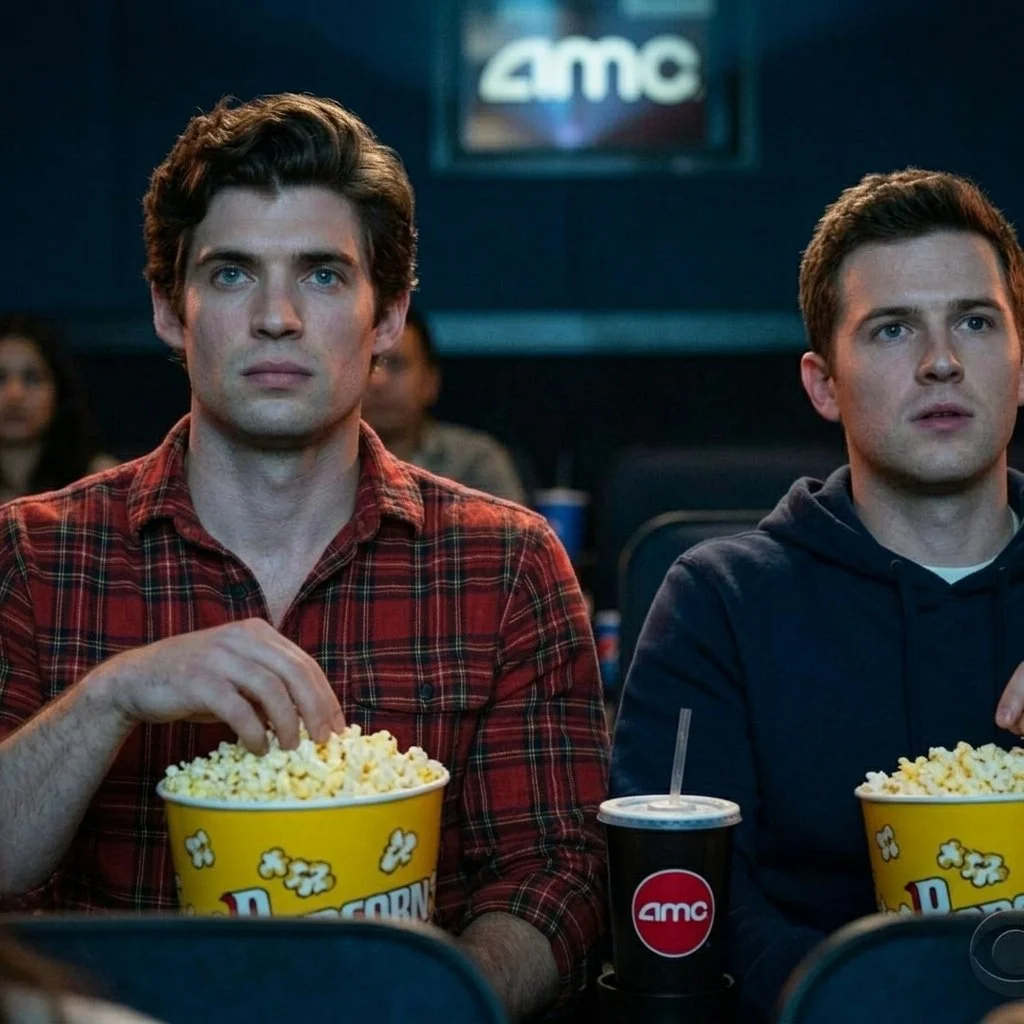
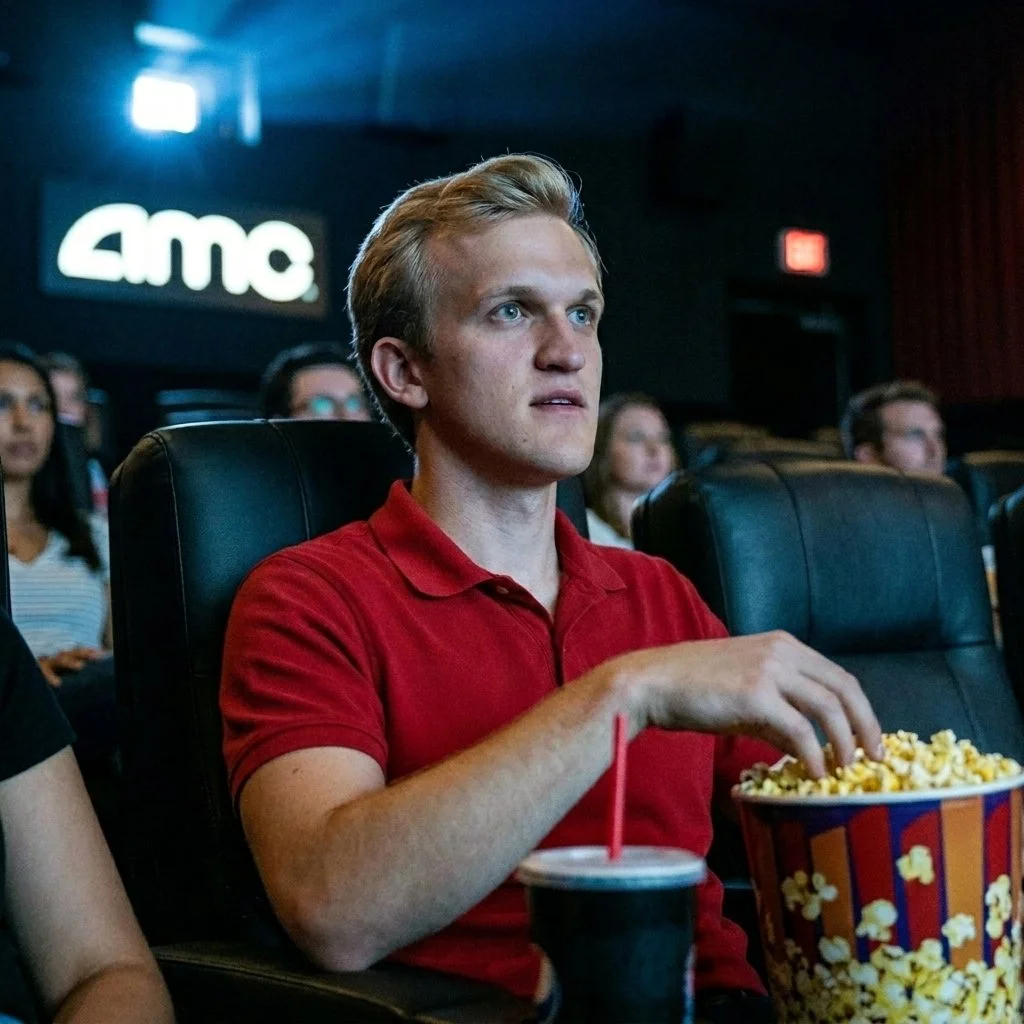
The following photographs of David were taken earlier today, August 11th, 2026, by Mitchell Royel amidst the vibrant and bustling atmosphere of the fashion district. The energy of the location perfectly complemented the creative vibe of the shoot, with the dynamic and sultry soundtrack of "Wild Side" by Normani featuring Cardi B playing in the background, setting the mood for the day. It’s important to note that this content is entirely informal and not officially affiliated with or endorsed by Marvel or AMC Theaters, but it captures a moment of artistic expression and individuality in an iconic setting.
You want to know the truth about recovery? Nobody tells you the truth. They give you the poster in the hallway. The one with the sunrise and the mountain and the word HOPE in a font that looks like it's smiling at you. And every morning, the guys walk past that poster on their way to relapse, or redemption, and half the time nobody knows which one they picked until it's already done.
I don't run a house anymore. That's the thing. I moved up. District management. Which sounds like a promotion until you understand what it actually means — I'm responsible for all of them now. Every house. Every bed. Every man trying to stitch himself back together under a roof we own. I get the reports. I get the calls at 2 a.m. I send people in. I'm the one watching from a distance, which means when something goes wrong, I feel it in reverse — I feel the ending before I get the story.
That's a different kind of weight.
Because I can't stand in the doorway anymore. I have people for that. We call it district security, which is a clean name for a complicated job. Eyes and ears. Men and women who move through the houses so the residents know someone is always paying attention, even when the supervisor steps away. We sent one of ours out with them that night. A member of the district security team. Professional. Steady. The kind of person you trust with the fragile parts of this work.
And still. Still.
Here's what they don't understand about this work, even at the district level. The hard part isn't detox. Detox is chemistry. You sweat, you shake, you scream into a pillow, and eventually your body forgives you. No. The hard part comes later. It comes with freedom.
Because when they step down into outpatient, the doors open. The leash gets long. They can go to work. They can walk to the corner store. They can sit in a movie theater in the dark like normal people. And that's the moment I hold my breath — even from a distance, even watching through reports and texts and phone calls. Because freedom in recovery isn't a gift. Freedom has teeth.
Let me tell you about a night.
Two of them wanted to see a movie. That's all. Two housemates, a ride, a Tuesday. We knew about it. We approved it. We sent someone with them — our district security contact, there to observe, not to babysit. Because that's the line, isn't it. You can't rebuild a man while treating him like a prisoner. So we said yes. We told ourselves, let them breathe.
One of them was the Black kid — and I use those words deliberately, because I want you to see him the way that house saw him, the way this country trained everyone to see him. Nineteen. Quiet. Carried himself like he was apologizing for taking up air. The other one was white, older, louder, the kind who fills a room so nobody notices he's empty inside.
They bought one popcorn. One drink. Shared it. Two people trying so hard to feel human again they forgot to be careful. Our person was there. Watching. And somewhere in the second act, the Black kid gets up. Bathroom break. Thirty minutes. Thirty. In the dark, on the top row, with the whole theater flickering blue.
The text came in to the house supervisor first. Then it got routed to me. Something feels off. That's all. No proof. No incident. Just that hum — the low, ugly hum that every person in this field learns to recognize. I've been doing this long enough that I know: when someone from the district security team says something feels off, you don't go back to sleep. The night wasn't finished. The night was still writing itself.
The ending came home with them.
Shared bedroom. Bunks pushed close. Too many men, too little floor, too much history stacked in the corners like dirty laundry nobody claimed. And then — voices. Rising. That specific pitch a fight hits right before it stops being about words.
And the white kid spit on him.
Spit. Think about that. Of all the weapons a man has — fists, knives, silence, cruelty — he reached for the oldest one. The one soaked in a hundred years of history. He didn't just insult the kid. He reached back through time and pulled up something rotten and put it on that boy's face. And they both knew exactly what it meant. You don't have to say the word when you use the gesture. The gesture is the word.
The Black kid came down those stairs like something inside him had already died and was just now finding out. Not crying. Worse than crying. That flat, terrible calm. Because he'd been here before, hadn't he. Not this house. Not this night. But here. This exact humiliation, wearing a new face.
By the time I got the full report, the house had already moved. Unofficial meeting. The living room. That sagging couch, those buzzing lights that make everybody look half-dead. A circle of broken men, and one of them on trial. The Black kid at the center — not as victim now, but as prosecutor. The white kid cornered, surrounded by the weight of every man in that room who had their own story about being made to feel small.
And here's where it gets dark. Because they weren't wrong to call it out. But watch what a room like that does. Suddenly every man there has a role to play. It's easier to point than to look. Easier to burn one man than to sit with the fire in your own chest.
From district, we can see patterns that the house staff sometimes can't. I've watched this dynamic play out across multiple properties, multiple cities, multiple demographics. And what I know — what I know — is that race never signed itself in at intake. It doesn't show up on the program records. But it lives in every house we run. It sits down at the dinner table. It shares a bedroom. It waits in the dark of a movie theater while one boy stays gone too long and another boy decides that's his moment to reach for something ancient and ugly.
That's the thing about these places. We tell people to leave their old selves at the door. But nobody leaves anything at the door. They drag it all in. The trauma. The pride. The color of their skin and everything the world attached to it before they could even speak. You think a man forgets he's been feared, followed, spat on — just because he got sober? Sobriety doesn't erase the wound. It just takes away the thing he was using to numb it.
So now he feels everything. Every old slight. Every closed door. Sober and awake to it, for the first time in years. That's not peace. That's a reckoning with the lights on.
And that white kid — I don't get to write him off as a monster from my desk. That's the cruelty of this work, at every level. He was a wounded man who did a hateful thing. Both true. Recovery doesn't hand you villains. It hands you mirrors. And God, do we hate mirrors.
So what's the job? At district level, the job looks different. It's protocols. Incident reports. Accountability structures. Deciding whether someone gets another chance or gets removed. It's hard conversations with house supervisors about how to hold this kind of thing without the whole building fracturing. It's asking the security person who was there, what did you see, and when did you see it, and what did you do?
But underneath all of that, the real question is still the same one it's always been.
What do you do in the second after?
After the spit. After the insult. After the whole room turns and demands you become something. Do you reach for the old weapon, the old mask, the old war you were raised inside? Or do you — somehow, impossibly — choose different?
Because out there, nobody stops the movie. Nobody routes a text to district management. Nobody sends someone from security to stand in the corner and make sure you stay human. Out there, your restraint is your sobriety. Your honesty is the only wall between you and the dark. And a man carrying the weight this country put on his shoulders has to stay sober and stay dignified in a world that keeps testing both — simultaneously, without mercy, without pause.
That's the part nobody puts on the poster.
Recovery isn't the sunrise. Recovery is the night. It's what you find out about yourself when freedom finally opens the door — and every ghost you ever ran from walks in behind it.
Who are you then.
From where I sit now, I can see across multiple houses, multiple lives, multiple versions of the same night. And I'll tell you what district management really is. It's not administration. It's not compliance. It's being far enough away to see the whole picture — and close enough to know that every single one of those houses holds a boy who came down a flight of stairs with something broken on his face.
That's the only thing this work is ever really about.
And most nights, God help us — most nights we don't know the answer until it's already been spoken. In spit. On a boy's face. In a living room full of the walking wounded, all of us — from the bunk to the boardroom — pretending the fire in the middle of the room isn't ours too.
-Deck, M.R, Mitch Leyor Collective
Epilogue: We want to tell you the truth about survival — about recovery, about healing, about relationships. The truth they don’t package in seminars or wrap up neatly in a catchy slogan. It’s this: the fire tests everything. It lays bare the fragile threads of friendship tied together through pain, the unspoken dynamics holding a group together by the smallest shred of hope. Tense situations don’t hide the truth — they uncover it. They bring to light the cracks buried beneath the surface, the jagged edges we thought we’d left behind but somehow still carry.
But here’s the thing. When we zoom out, when we rise above the smoke and ash, we see what the fire has done. It doesn’t destroy without purpose. It burns away the illusions, the convenient lies, the masks we’ve worn for too long. And what it leaves is something true. Something we can build upon. Proverbs 17:3 says, “The crucible for silver and the furnace for gold, but the Lord tests the heart.” This isn’t simply about judgment — it’s about transformation. It’s about stripping us down to the core, to a place where clarity lives, maybe for the first time.
Every boy behind those doors, every man still carrying the weight of years of shame — they are both the test and the answer. The fire isn’t asking for perfection. It doesn’t demand flawless relationships or unshakable dynamics. It asks for something much harder: resilience. A will to keep going. A sliver of faith in each other to push past the spit, the scars, the wounds we all share. Because survival isn’t a theory on a glossy poster. It’s a choice. Every single day. It’s choosing to ignite the fire within and search through the ashes for something worth saving, something worth building on. Always.
PANIC ATTACKS DON'T ASK FOR PERMISSION
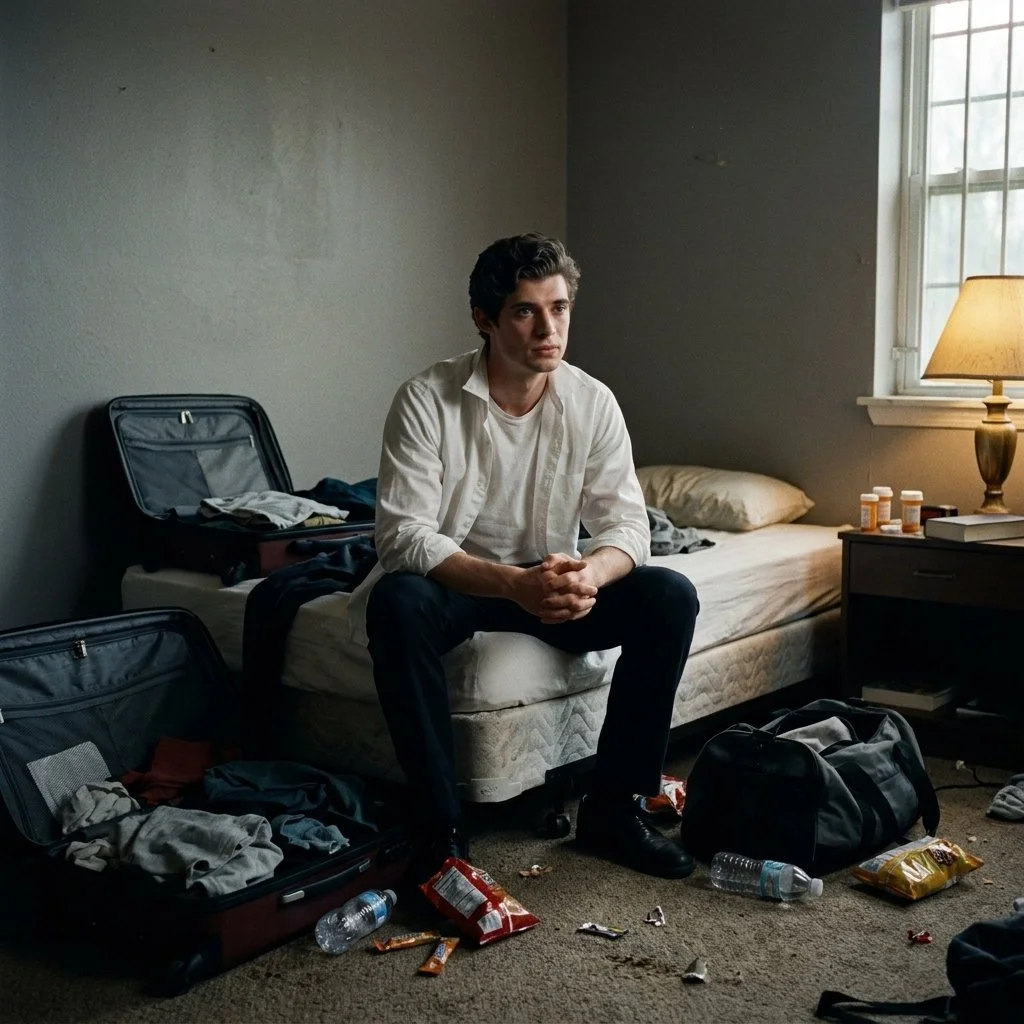
Captured on August 9th, 2026, these striking shots of David come alive through the evocative lens of Mitchell Royel, framed by the gritty charm of the Fashion District. The air pulsed with an electric energy, raw and magnetic, as if the city itself was breathing alongside them. The soundtrack told its own story, blending the soulful ache of "Sad" by Rasster & Erin Bloomer with the unstoppable rhythm of "Roses - Imanbek Remix" by SAINT JHN. This was more than a photoshoot—it was a fusion of high fashion and unfiltered edge, a place where the visceral meets the glamorous and refuses to apologize.
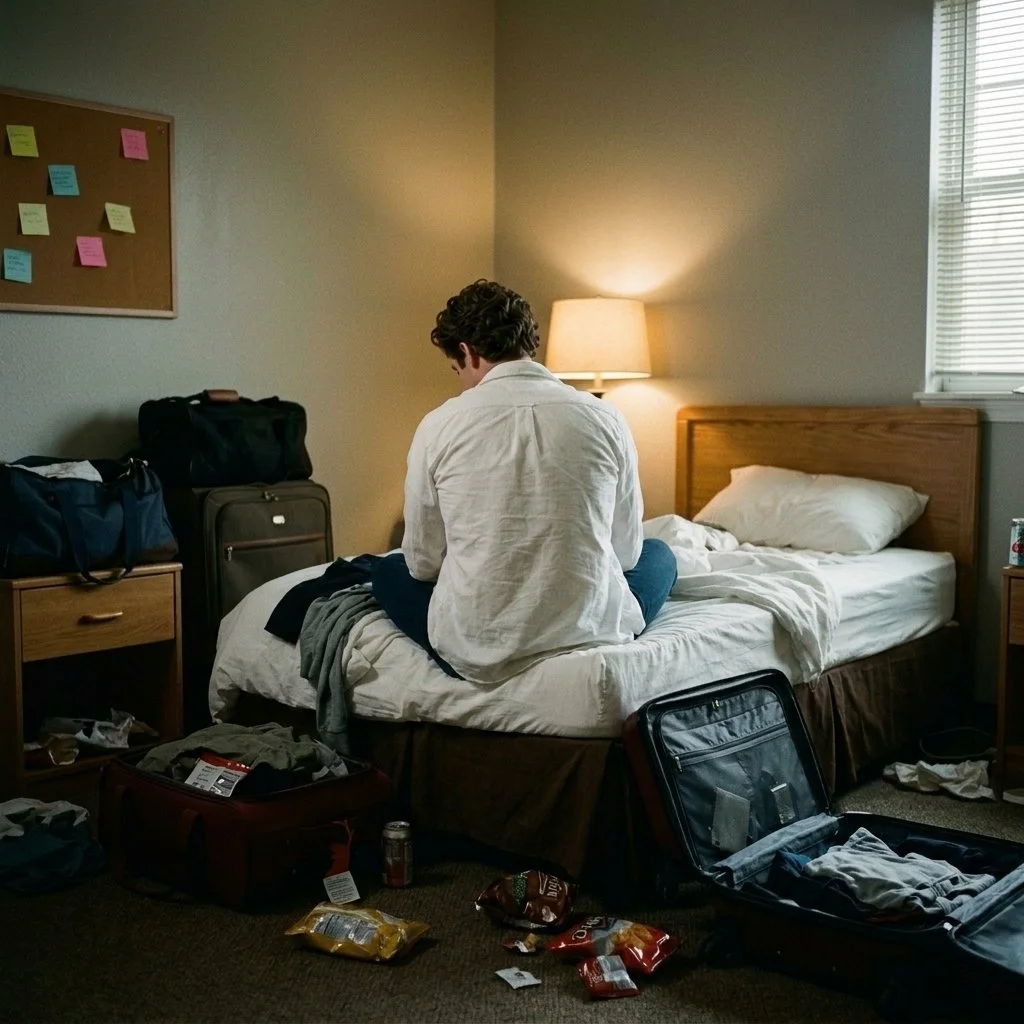
He was frantic, his hands trembling as he shoved shirts and jeans into the tattered duffle bag that had seen better days. The zipper snagged on a sleeve, and he yanked at it too hard, the way you do when your whole body is running faster than your mind can catch up. His breath came shallow. He kept whispering to himself, not words exactly, just soft sounds meant to steady the shaking, the kind of humming his grandmother used to do over a stove on Sunday mornings. He wasn't angry. That was the thing nobody here seemed to understand. He wasn't trying to cause trouble. He just knew, in the quiet marrow of him, that he wasn't supposed to be here.
The payphone in the hallway loomed in his mind like a beacon — his lifeline to whatever salvation waited on the other end. The other guys said the phones were tapped, that every call was just another way they kept their claws in you. But at that moment, he didn't care. Dinner was noises down the hall — the clatter of trays, too-many voices dying into nothing as someone banged a fist on the table — and he couldn't risk being caught in this liminal moment. His heartbeat was the only thing he could hear above the chaos, pounding, compounding, as if saying, Hurry, hurry, hurry.
The hallway was cold, sterile, its faint smell of antiseptic cutting through the traces of fried food and cigarettes that clung to the walls of the rehab. He darted to the small black payphone in the corner, the one beneath the flickering fluorescent light that buzzed audibly, like a fly caught somewhere it shouldn't be. He understood the feeling. His fingers fumbled with the coins — it was always three, they said, seventy-five cents for a voice on the other end. He pressed them one at a time into the slot, and each little clink felt like a small confession.
He dialed the number by heart. He always knew that number, even when he couldn't remember what day it was, even when the medication made the edges of things go soft. The line rang, and rang, and folded over into that recorded voice that wasn't a person at all. His own voice cracked as he spoke, sweet and small, like a boy asking permission for something he already knew the answer to.
"Hi. It's me. I know it's late." A pause. He swallowed. "I don't — I think there's been a mistake. I don't think I'm supposed to be here. I'm not saying anything's wrong with the place, it's nice, the people are nice, it's nothing like that. It's nothing personal." He wiped his face with the back of his hand. "I just don't feel right in here. I don't feel stable. I feel like the longer I stay, the further I get from myself." His voice dropped to almost nothing. "Please. Just get me. Pick me up. Before it's too late."
But who was too late for? Himself? His family, who had signed the papers with faces he couldn't read? The counselors he imagined taking a smoke break outside the staff lounge, leaning against the brick, speculating in low voices whether God could save this one? He hung up gently, the way you set down something breakable, and stood there a second longer than he should have, listening to his own breathing come back to him.
By the time he got back to his room, bag slung heavy on his shoulder, there he was. The big guy. Thirty-something. Jailbird kind of type, thick through the shoulders, ink on his forearms gone soft blue with age — but with kind eyes. The kind of eyes anyone would've killed for growing up in a place that asked them to be brutal just to survive middle school. He stood in the doorway, arms folded, muscles taut, like the room wasn't small enough to contain two people and all their baggage.
"It's called a reservation," the guy said. No expression. Like someone delivering a script he'd memorized a hundred times over, on a hundred different boys who looked just like this one. "When you keep packing your shit up and telling the counselors you're leaving. Or that you need to leave. You don't want to leave. You just want an excuse to fail before somebody else gets the chance to make you."
The boy loomed over the bag on his made bed — the pristine hospital folds he hadn't cared about until now looked suddenly too neat, too final, like something laid out for a body. His mouth opened like he might have a rebuttal. He wanted to be respectful about it. He always wanted to be respectful. That was how his mama raised him, to be soft-spoken even when the world came at you hard.
"I hear you," he said finally, and he meant it, because he did hear him. "I'm not trying to argue. I really am grateful for what y'all do here." His hands turned over each other, gentle, apologetic. "But I think somebody got something mixed up. I think I got brought here by mistake. And I don't — I don't feel stable in here. That's all. It's not about you. It's not about anybody. I just want to get somewhere I can breathe right again."
The big guy didn't move. If anything, his voice got quieter, which was worse than louder.
"I'm telling you. It's called a reservation." He let it sit in the air. "What you're doing right now — this, the bag, the phone, the mistake — it's typical. It's normal, actually. Everybody in here has stood exactly where you're standing, saying exactly what you're saying, in that exact same nice little voice." His jaw worked once. "But you need to stay. At all costs, man. You need to stay."
"You don't even know me," the boy said. Too small. Too quiet. Like the words didn't belong inside the walls of this place, like they'd get swallowed by the paint before they ever reached the other man.
But the big guy only smiled faintly. Not cruel. Sad, almost. Like he'd known dozens just like him — another reservation kind of kid, already halfway to ruining himself, still sweet enough to think sweetness was a way out. Still salvageable, if somebody stubborn enough refused to let go of him.
"I know you better than you want me to," he said. "That's the whole problem. You're not running from this place. You're running because staying means sitting still long enough to feel it. And I'm telling you one more time so you never forget I said it — you need to stay."
The boy looked at the bag. Then at the window. Then down at his own hands, which had finally stopped shaking, though he couldn't have said when. For a long moment he didn't say anything. He just breathed, the way his grandmother taught him, soft over an imaginary stove.
And a few days later, the staff had their turn.
He didn't fight them. That was the part that would sit with the big guy longest afterward — how gentle the kid stayed, right up to the end. Two men in white escorted him down the hall, past the flickering light and the little black payphone, out toward the psych ward where no one would ask him if he wanted to leave. Instead they promised quiet observation. Weeks of nothingness to fix whatever was cracked inside. Then back here for another month.
Maybe more.
-Deck, M.R, Mitch Leyor Collective
Epilogue: We speak of these places like they’re prisons, but they don’t chain us. They don’t hold us. Not really. The real chains are the ones we drag behind us — invisible and relentless, clinking with every step no matter how far we run or how fast we move. We walk into these walls desperate for escape, not realizing the escape we need isn’t to the outside, but to the inside. The mirror hurts. Too fragile to look in too long, too sharp around the edges to touch. We spend years avoiding it, convincing ourselves it’s somebody else, something else, some mistake. But the truth is, it’s just us. Just our own faces staring back, waiting. Places like this — call them rehab, psych ward, jail to the softer — they’re not the solution. They’re the pause. And it’s not the kind of pause where you exhale and step away, reset and revive. No, it’s the kind that makes you sit down in the dirt and stabilize. The kind where you finally face the truth sitting heavy in your chest.
Some of us don’t make it past that pause. That’s the reason nobody comes here to heal clean — it’s messy and raw, and most of the time it looks more like breaking than rebuilding. But every now and then, someone stays. Through the nights that feel like punishment and the mornings that crack open just enough to brush light across your scars, they stay. They prove the rest of us wrong. Not by surviving, but by reckoning. By taking the mirror in their hands and holding it steady until they see something they recognize. Something worth saving. We want to believe everyone can do the same. But we know. We’ve always known. Most never stay long enough to try.
SUPERMAN WAS NEVER OURS TO KEEP
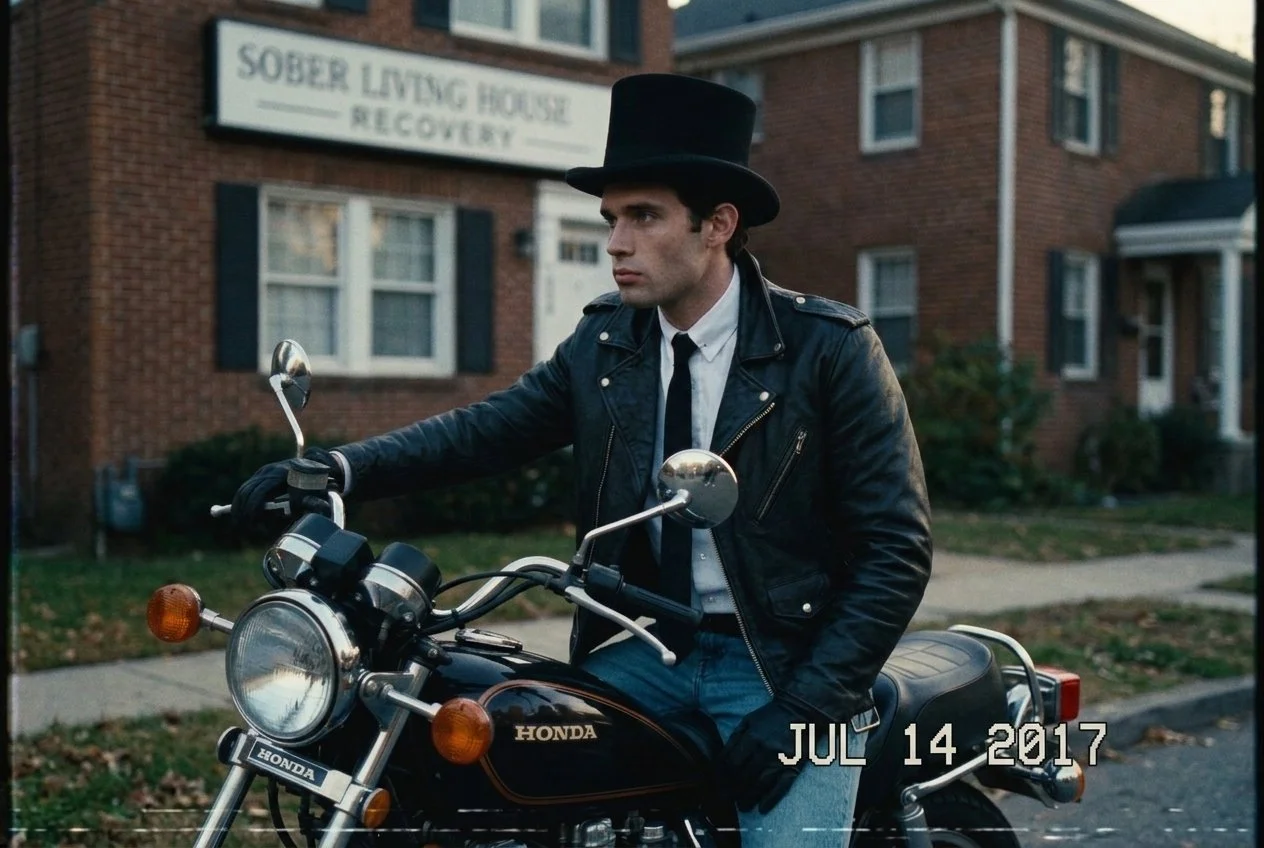
These photos of David — yeah, these photos, the ones you can’t stop staring at, the ones that look like they’ve been pulled straight out of someone’s fever dream — were captured out in the fashion district today, August 8th, 2026. And wouldn’t you know it, they were shot by none other than Mitchell Royel, the man with the lens that seems to unlock something raw, something unvarnished, something that feels like it was always there, hiding just under the surface, waiting to be found. And as we sit here, caught in the haze of it, the pulse-thrum of “Beat of Your Heart” by Purple Disco Machine and ASDIS playing like it’s the only soundtrack that could possibly fit, you can almost feel the streets humming, the air electric. You know the kind of day—late summer heat blistering through concrete, and everything around you feels sharp-edged, alive, like it could cut you and draw blood just to remind you to feel. These photos aren’t just images; no, they’re a collision, a rupture of quiet moments and that chaotic noise that never seems to stop, pressing in, turning over, and for once, you don’t mind drowning in it. Because isn’t it the beat of our hearts, the messy, imperfect rhythm of being alive, that makes all of this strange magic worth it? The kid in the corner of the frame, the shadows burned across his face, the light catching and scattering, scattering and catching—maybe that’s the harmonic dissonance wrapped up in all of us, maybe that’s what Royel saw, maybe that’s what comes next.
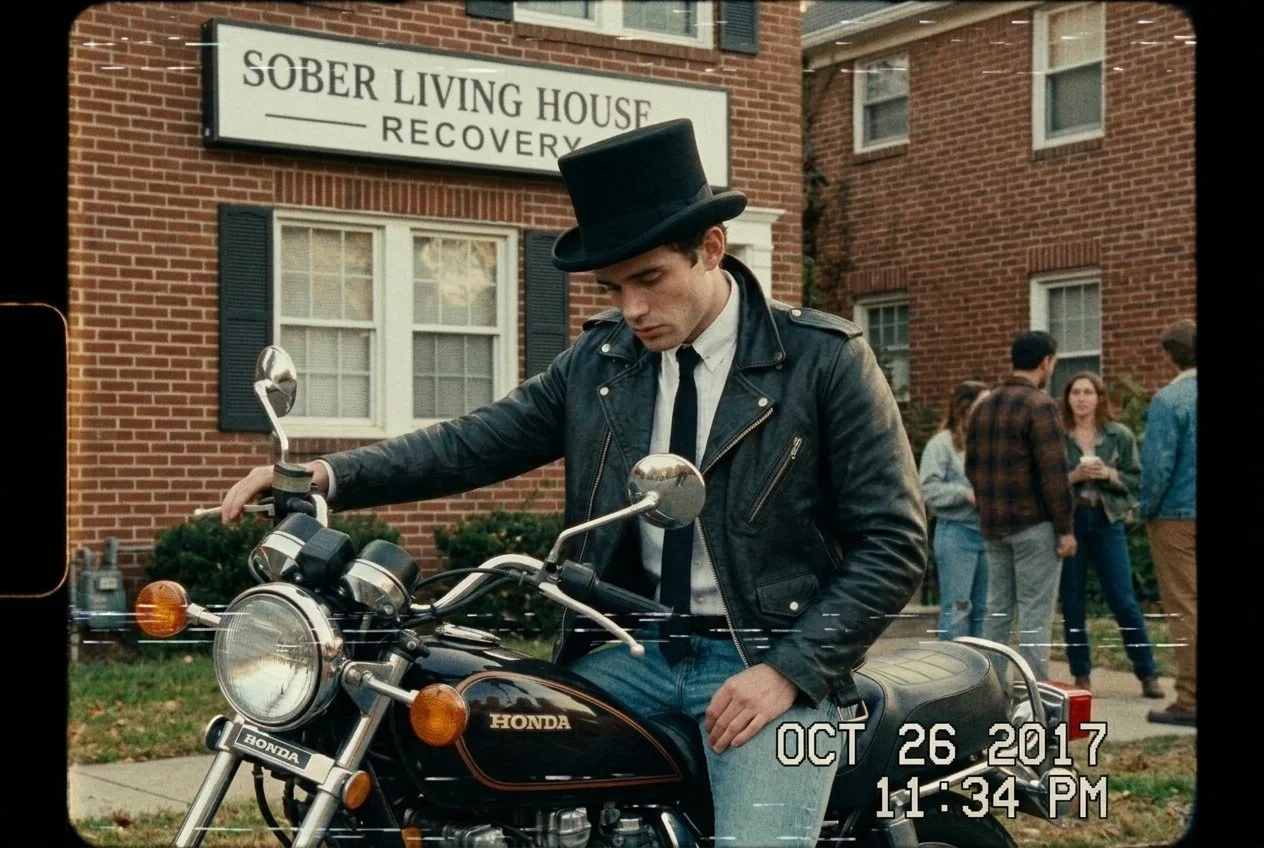
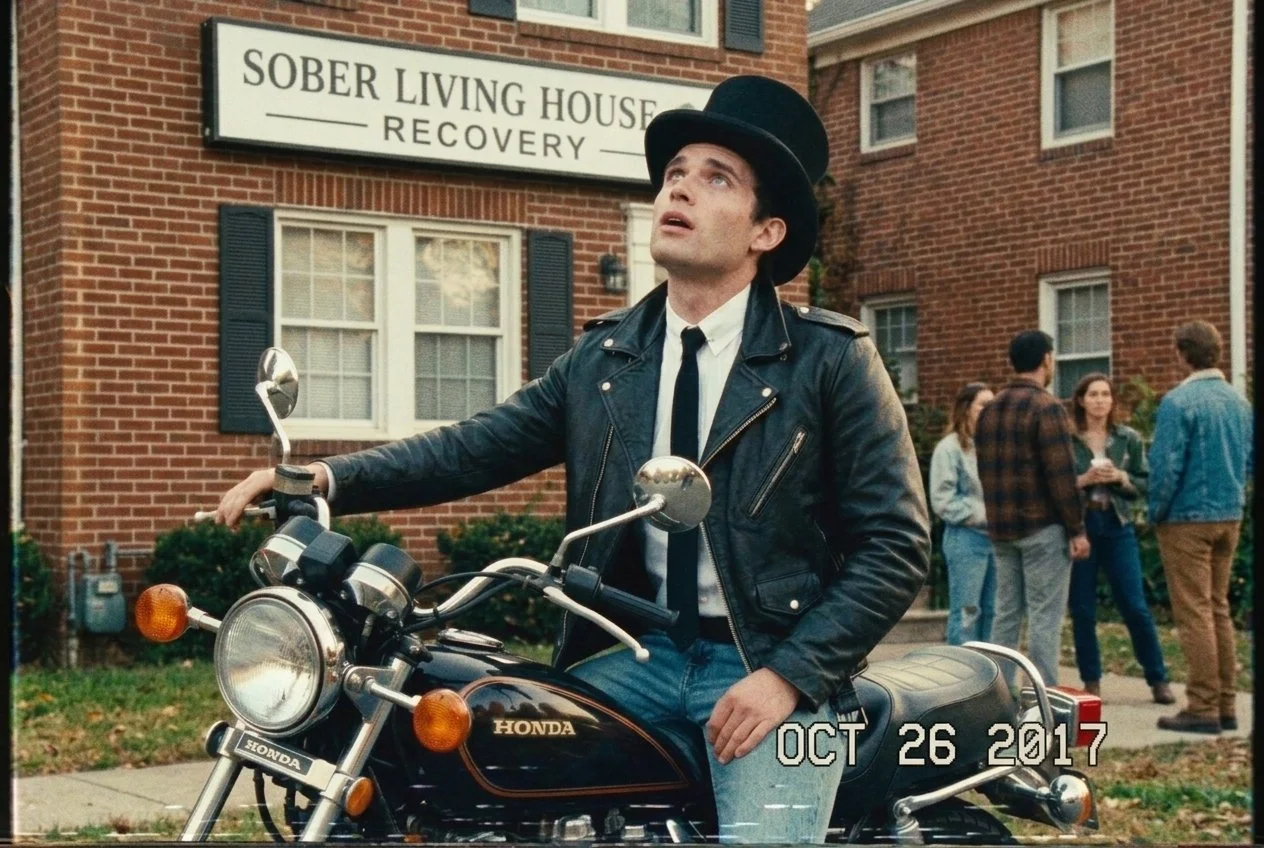
Let me tell you about the fluorescent light in a rehab hallway at three in the morning. It doesn't flatter anyone. It finds the truth in your face and it holds it there, buzzing, like it's daring you to look away. I couldn't sleep. I never could, not those first weeks. My body was still learning how to be a body again, how to sit inside itself without something to soften the edges.
I'm twenty-three. I grew up in a town with two Starbucks and a lacrosse team that made regionals. My father has a phrase for what happened to me. He calls it "your little detour." That's what money buys you, I've learned. It buys you a vocabulary. Light probation. No jail time. A room with a window and a counselor who says my name like it's a fragile thing she's setting down on a shelf. My father said it the way men like him say hard things — clipped, clean, already moving past it, like if he named it softly enough it wouldn't leave a mark on the family. He flew in for the intake appointment in a sport coat. Shook the counselor's hand too hard. Drove back to the airport without staying for lunch. That's love, in the language we spoke. Showing up and not saying what you came to say. Somebody else did what I did and they're gone now, swallowed by a system that never learned their name gently. No father in a sport coat. No soft vocabulary. No detour — just the end of the road. I know that. I carry it. It sits in my chest like a stone I keep meaning to set down.
And then there was him.
I'd seen him at dinner. We all had. He was sharing — they make you share, you sit in the circle and you hand your worst self around the room like a collection plate — and halfway through, something broke open in him. His breath started coming wrong. His hands went to his throat like he was drowning in air. They took him out fast. An ambulance. A panic attack that looked like a heart giving up. We finished our mashed potatoes in a silence so loud I could hear my own pulse.
So there he is. Three in the morning. Wandering.
A tattered Superman shirt, the red faded to the color of an old scar. That yellow diamond on his chest cracked and peeling like paint on a house nobody loves anymore. His eyes were glass. He was on more pills than the rest of us combined — I knew that the way you know things in a place like that, by osmosis, by the pharmacy line. The nurses checked on him twice as often. You could hear it sometimes, the soft knock, the door cracking open, a beam of light cutting across the hallway floor. He moved like a man walking underwater. Slow. Careful. Like the air itself had weight and he was the only one who felt it. And we stopped. We locked eyes across that terrible buzzing light.
And I opened my mouth, and this is what came out. I swear to God, this is what came out of me.
"What do you think girls see in Superman?"
He looked at me. Blinked. And then — and I will never forget this as long as I live — he looked at me like I had lost my mind. Not like he was confused. Like he had clocked me immediately, completely, and what he had clocked was a man unraveling in real time for reasons that had nothing to do with him. It was the most lucid look I'd seen on anyone in that building. Behind those glass eyes, something sharp and ancient moved. A recognition. He looked at me the way you look at someone talking to themselves on the subway — not with cruelty, just with the calm understanding that whatever is happening to this person, it isn't your emergency. He looked at me like: this is the whitest thing that has ever happened to me.
"What are you talking about?" he said.
"Your Superman shirt," I said. "What do you think girls see in him? Superman?"
And I want to try to explain this, because I've been trying to explain it to myself for months now. It wasn't a bit. It wasn't a conversation starter. It was the only true thing I could think to say. That's the honest answer. That's the whole answer. It was three in the morning in the worst year of both our lives, and I was standing in a fluorescent hallway in front of another human being who had almost died at dinner, and I had nothing — I had absolutely nothing — that felt real enough to offer him. Not how are you feeling — hollow. Not that looked scary earlier — condescending. Not I saw what happened — like I owned it, like his panic was a thing I could claim. So my brain went somewhere else entirely. It went somewhere true. It went to the shirt. To the faded symbol on his chest. To the question I didn't know I'd been carrying. What do girls see in him? What does anyone see in a man who can't be broken? And why was this boy — this medicated, wandering, glass-eyed boy that the world had already taken so much from — why was he still wearing that symbol at three in the morning? What was he holding onto? What did it mean to him? I didn't know how to ask any of that. So I asked the question underneath the question. And it came out sideways. And he looked at me like I was crazy. Because I was. Because that's what that place does to you, and that's what that hour does to you, and that's what another person's suffering does to you when you don't have the language yet to meet it properly.
He didn't answer. He just held me in that look a beat longer — that flat, exhausted, I don't have the bandwidth for whatever this is look — and then he turned. And he shuffled back into his room. The door clicked. And I stood there alone in that light, feeling like I'd asked a question I'd be trying to answer for the rest of my life. Feeling like I'd reached out and grabbed air. Feeling, underneath all of it, something I couldn't name yet — a grief that didn't belong to me, wearing a face I didn't know.
Here's the thing I've been turning over ever since, like a coin in my pocket I can't stop touching.
We gave Superman to boys. We told them he was about strength. About the fist, the flight, the enemy defeated by dinnertime. We made him a fantasy of power for people terrified of being powerless. That's what he was to me — a suburban kid with a father who shook hands too hard, who thought the whole point of a man was to never break, to never need the ambulance, to never sit in the circle and pass your worst self around the room. Superman was the lie we told ourselves so we didn't have to learn how to be soft.
But I think we got it wrong. I think it's important — genuinely, urgently important — to consider what women see in Superman. Because I don't think they see the strength at all. I think they see the tenderness the strength protects. They see a man who could destroy the world and chooses, every single day, to be gentle instead. They see the restraint. The mercy. A creature of unimaginable force who kneels down to be kind. That's not a fantasy of power. That's a fantasy of safety. Of being held by something that could hurt you and never, ever would. That's what my father never understood. That's the sport coat version of Superman — the appearance of invulnerability, the handshake, the quick exit. It looks like strength. It's actually just fear with better posture.
In many senses, Superman was always for girls. He was always the promise of a strength that stays gentle. And I never understood that until I saw him worn thin across the chest of a boy who had none of it — no power, no flight, no invulnerability — a boy the world had bruised in every place a body can be bruised, still walking a hallway at three in the morning wrapped in that fading red and blue. A boy who looked at a stranger asking him a crazy question and gave him, without knowing it, the most honest and grounded look he'd received in weeks. Because that look — that what is wrong with you look — was the look of someone still in there. Still present. Still capable of seeing clearly, even through the fog of everything they were giving him to make the fog thicker.
Because maybe that's who Superman was really for all along. Not the strong. The breakable. The medicated. The ones who wander. The ones nobody's coming to save. Maybe the shirt wasn't ironic at all. Maybe he was wearing the one thing that still whispered to him that gentleness and strength could live in the same body — even when his own body was betraying him. Even when the symbol was cracking and the red was fading and the diamond on his chest was peeling away like something the world had tried to take back.
I got probation. I got a window. I got a father who flew in with a sport coat and a soft word for my ruin — detour, he called it, detour — like I'd taken a wrong turn on a road that was always going to lead somewhere fine.
He got a shirt.
And I think about him every night the light won't let me sleep. That Black kid in the tattered cape that wasn't a cape. Wandering. Carrying more weight than any of us, chemical and otherwise. Looking at me like I was out of my mind — because I was, a little — and then turning and going back to his room, back to whatever the night held for him, back to the medication and the soft knocks and the beam of light under the door. I hope he slept. I hope something in him rested.
And I hope — God, I hope — that somewhere behind those glass eyes, some part of him still believed the thing that shirt was trying to tell him.
That he was worth saving.
That he always had been.
That Superman, at the end of it all, was never really about the ones who couldn't be broken. He was about the ones who were. He was about the boy in the hallway. He was about the question you ask when you have no other words. He was about three in the morning and a buzzing light and two people who had no business being alive in that corridor, looking at each other across the distance of everything, and one of them — just barely, just for a second — still seeing clearly.
-Deck, M.R
Empowerment isn’t granted; it’s claimed. And for Mitch Leyor, that claim began with something as fundamental as boxer briefs—a canvas for a larger mission of personal agency and cultural renewal.
Mitch Leyor isn’t merely a faith based boxer brief brand. It’s a declaration—a statement that true progress emerges from individual initiative and unwavering self-belief. Founded by Mitchell Royel, the brand represents more than fabric; it represents a philosophy.
The narrative began with a profound realization: foundational clothing is the first layer of personal presentation. Just as our convictions form the foundation of our character, these boxer briefs represent the first statement of personal identity.
Our boxer briefs aren’t just designed—they’re engineered. Each stitch represents a commitment to quality, each design a challenge to the manufactured narratives of mediocrity. We’re not selling underwear; we’re providing a tool of personal transformation.
“Boxers for Saints” isn’t just a tagline—it’s a manifesto. We believe that true empowerment begins when individuals stop asking what society owes them and start investing in their own capacity for growth and transformation.
Mitch Leyor stands at the intersection of fashion, personal development, and cultural renewal. Our boxer briefs are a symbol—a reminder that excellence is a daily decision, that success is claimed, not given.
Stay informed. Stay principled. And never compromise your foundation—whether that’s in your wardrobe or your life.