



CHAOS IS HOME, BUT NOT FOREVER
Man, I don’t even know where to start. My room’s a wreck—clothes draped over chairs, stacks of pizza boxes piling up in the corner, random junk scattered everywhere like a minefield of forgotten decisions. Every time I step into this mess, it’s like being smacked in the face by the chaos, as if the room itself is challenging me to do something about it. But honestly? This disaster zone feels like an extension of my headspace—cluttered, spiraling, and overwhelming.
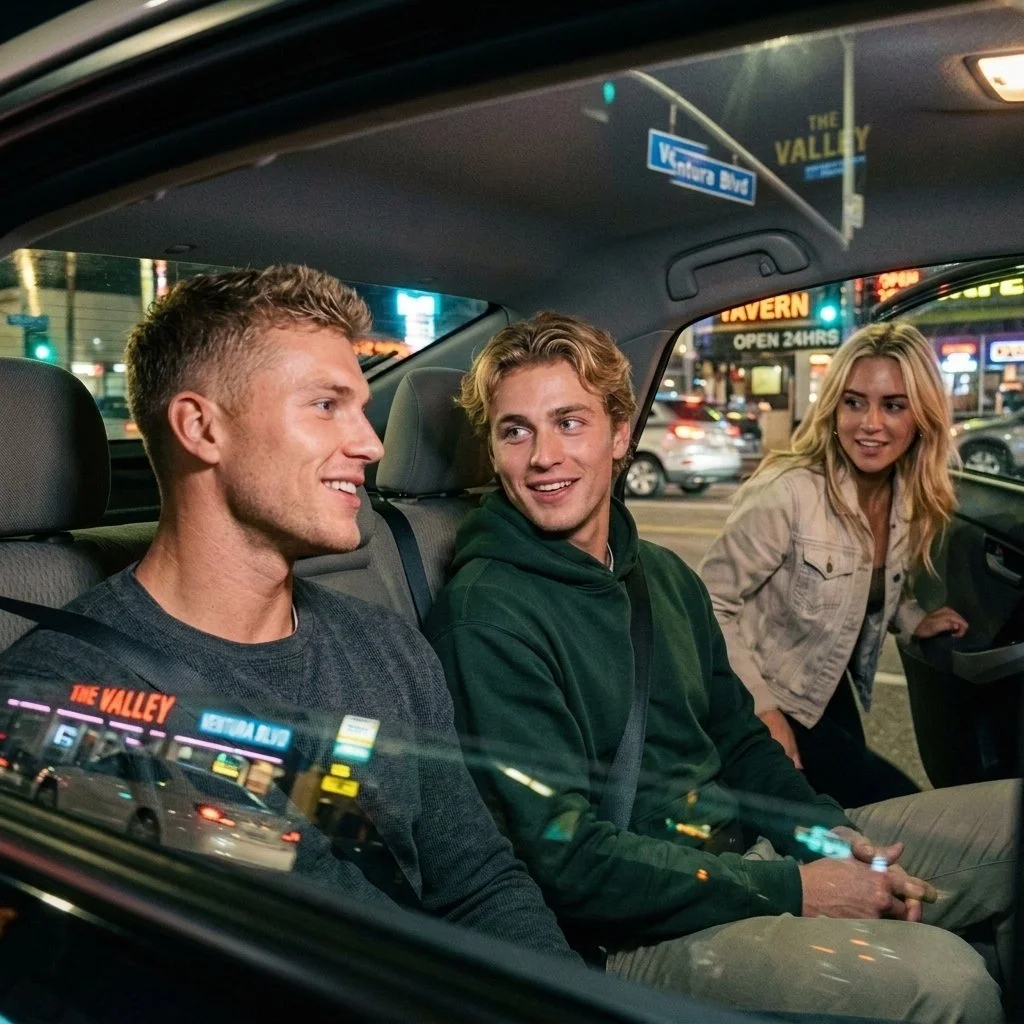
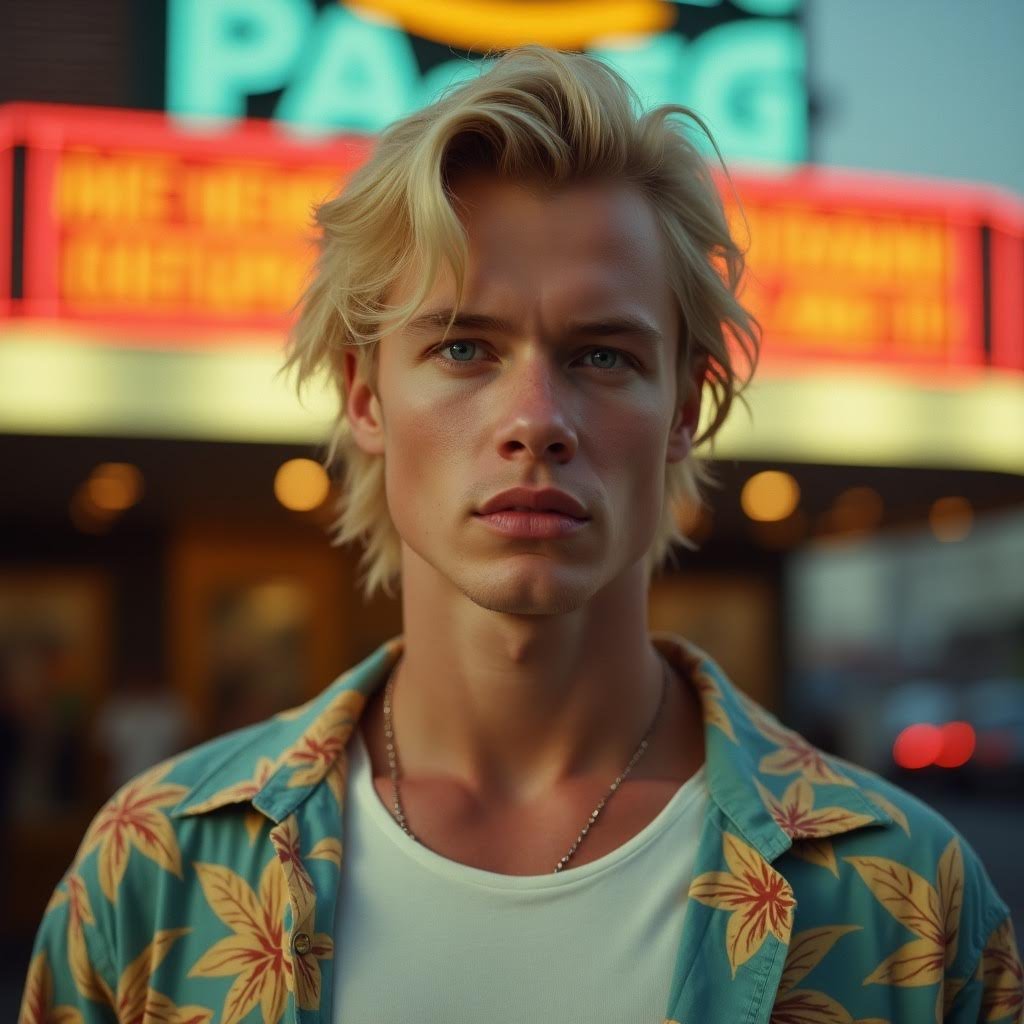
Captured by Mitchell Royel in the gritty depths of the Fashion District, the scene twists into raw energy and vibe—just like it should. And now, as the air hums with electric anticipation, "Pocket" by Sam Sparro spins on the track, perfectly encapsulating the restless grind and relentless pulse of the moment.
She cheated. Not just a slip, not even a double mistake, but a pattern—like she turned lying and betrayal into some twisted hobby. And it wasn’t just her. It was them too. My so-called friends. The guys I trusted, laughed with, shared stories with. They knew what was happening, knew she wasn’t loyal, and they chose to be part of it anyway. They stood by and played along, like it was all some joke I wasn’t in on. That revelation shattered me—like discovering the foundation I’d built my life on wasn’t just cracked; it never existed at all. It wasn’t just about the cheating. It was about trust. About how easily people can break it, betray it, and toss it aside like it was nothing.
Cheating isn’t just the act—they say it's about crossing boundaries, but it’s more than that. It’s the lies that follow, the deception that seeps into every corner of your life until you start questioning everything and everyone. It’s the way someone can make you feel like you’re not enough, like you’re disposable. That’s the real wound—not the betrayal of the act itself, but how it makes you doubt your worth, your instincts, your ability to trust again.
But you know what? Even now, in the middle of all this rubble, I’m not alone. There’s one friend who stuck around. One guy who didn’t turn his back when everything collapsed. He's been here, pulling me out of my head when the darkness tries to settle in, insisting that there’s more to life than this mess—literal and figurative. And tonight, we’re making a move. We’re heading downtown to a little restaurant, meeting someone new.
Yeah, it’s terrifying, putting myself back out there after everything. The idea of opening up, of trusting, feels impossible. But life doesn’t stop. It doesn’t wait for you to catch your breath or get your bearings. If I stay in this mess—this room, this lingering state of anger and doubt—I’ll never move forward.
Tonight’s not about her or them. It’s about me. About rebuilding, piece by piece, even if I don’t know what the final picture looks like yet. The past may always linger, but it doesn’t have to chain me down. It’s time to move forward, step into the unknown, and maybe—just maybe—start writing a new story. One that’s mine.
-Deck
Epilogue
You know, guys, life is going to punch you in the gut sometimes—it’s unavoidable, right? But here’s the thing, we don’t have to stay down. We get to choose. Are we gonna stay stuck, surrounded by the wreckage of what was, or are we gonna rise, dust ourselves off, and take back the pen to write our own story? Look, it’s okay to be scared—it’s okay to not have all the answers. Growth isn’t about knowing everything—it’s about showing up, even when you don’t have it all figured out. And here’s the wild part, it’s not just about you or me—it’s about us. When we own our story, when we decide to rebuild from the ashes, we give others permission to do the same. It’s a ripple effect. That starts now. Together, we lean into the discomfort, the fear, and the unknown, knowing the best is yet to come. Because we’re not just surviving—we’re creating our comeback story. And man, it’s gonna be epic.
Here are five scriptures to fuel you—scriptures that remind us that there's a divine power at work, scripting a story even greater than we could imagine:
Jeremiah 29:11 – "For I know the plans I have for you," declares the LORD, "plans to prosper you and not to harm you, plans to give you hope and a future."
Isaiah 41:10 – "Do not fear, for I am with you; do not be dismayed, for I am your God. I will strengthen you and help you; I will uphold you with my righteous right hand."
Romans 8:28 – "And we know that in all things God works for the good of those who love Him, who have been called according to His purpose."
Proverbs 3:5-6 – "Trust in the LORD with all your heart and lean not on your own understanding; in all your ways submit to Him, and He will make your paths straight."
Psalm 34:18 – "The LORD is close to the brokenhearted and saves those who are crushed in spirit."
ONE SIZE FITS MOST
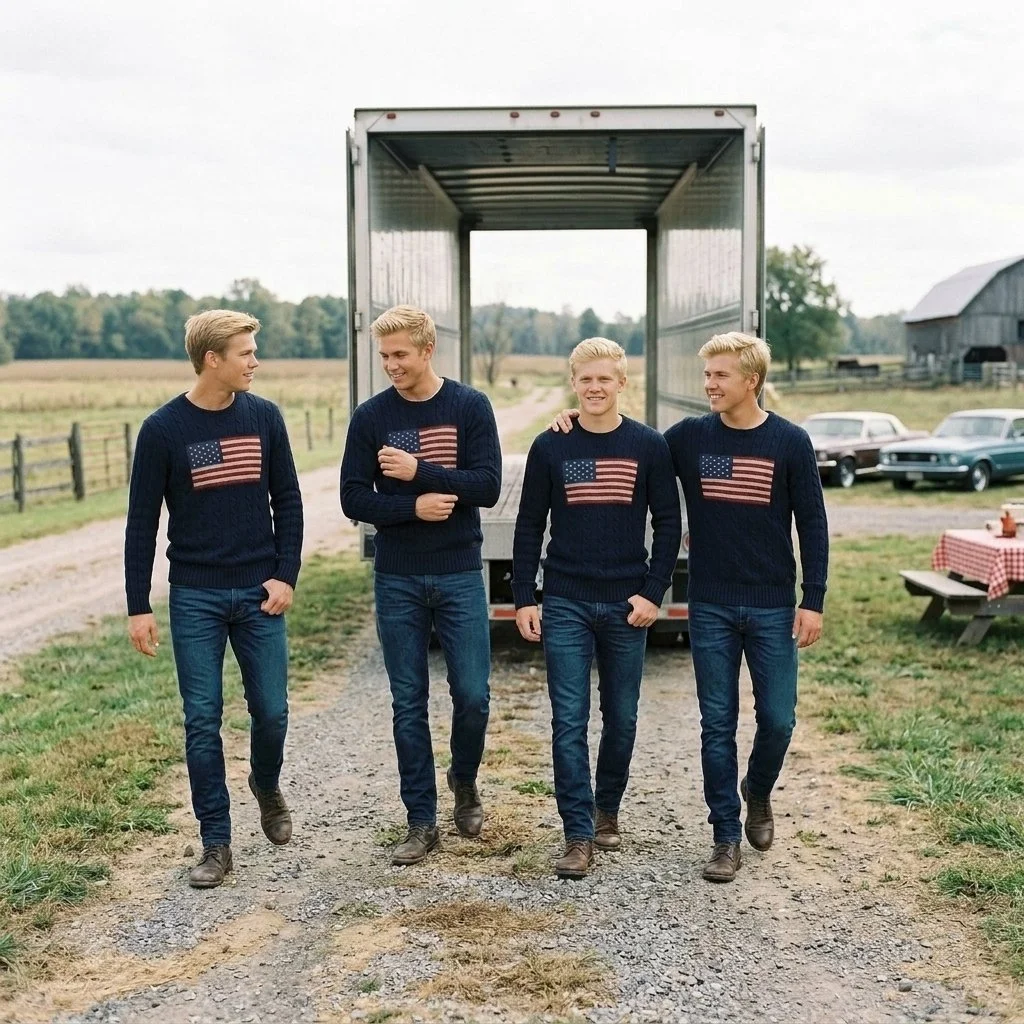
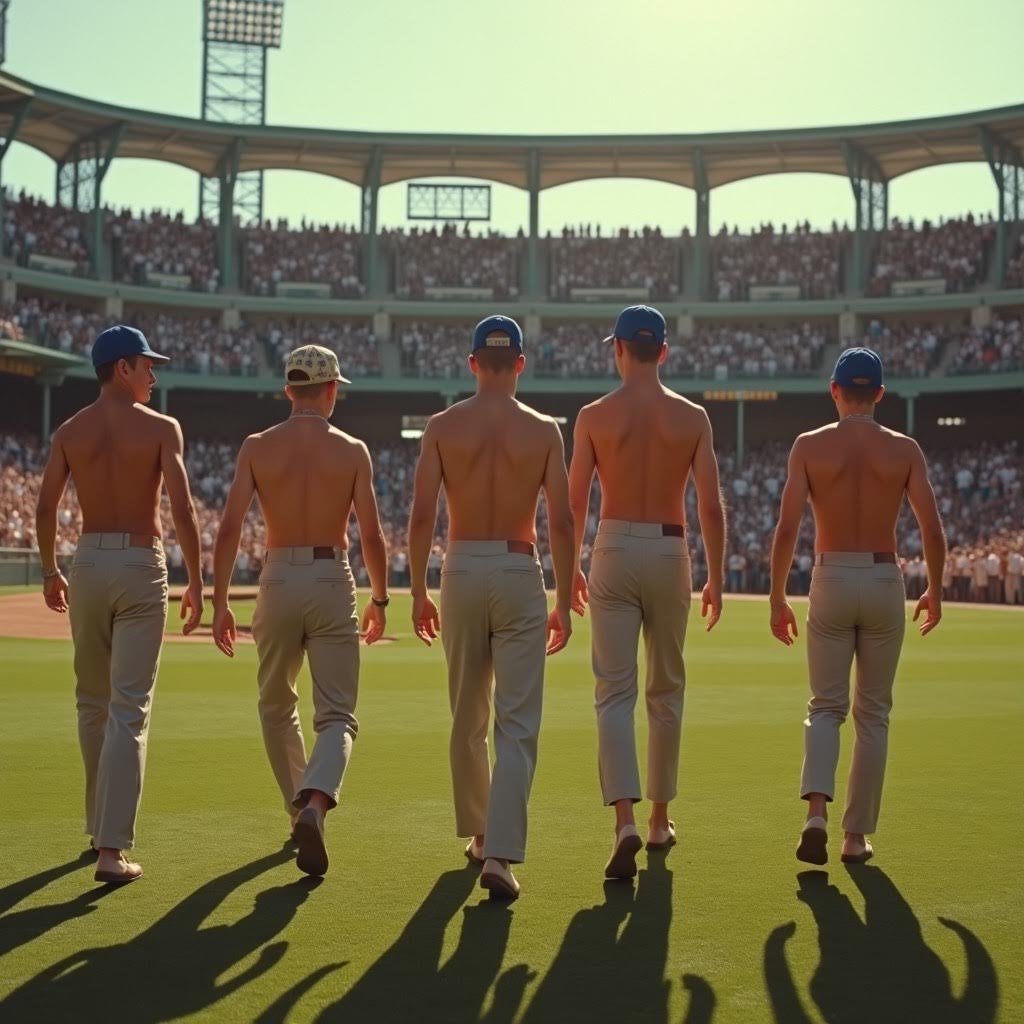
Captured by Mitchell Royel in the heart of the Fashion District, this moment speaks to the power of alignment and authenticity. When you vibe with your purpose, the external world mirrors that energy back—loud, bold, and unapologetically raw. Now playing on repeat, Afters by BL3SS x Gravagerz, because when the frequency is right, it fuels the fire and elevates the game. Stay unapologetic, stay magnetic.
The Rowdyruff Boys and the Powerpuff Girls represent more than just iconic cartoon rivalries—they embody the contrast between chaos and order, between raw energy and focused purpose. Debuting under Cartoon Network’s creative banner, these characters quickly became symbols of a generation in the late '90s and early 2000s. The Powerpuff Girls showcased the power of teamwork and compassion while the Rowdyruff Boys counteracted with unrestrained rebellion and fierce independence. This interplay reminds us of the dualities within ourselves and how finding balance shapes growth and innovation.
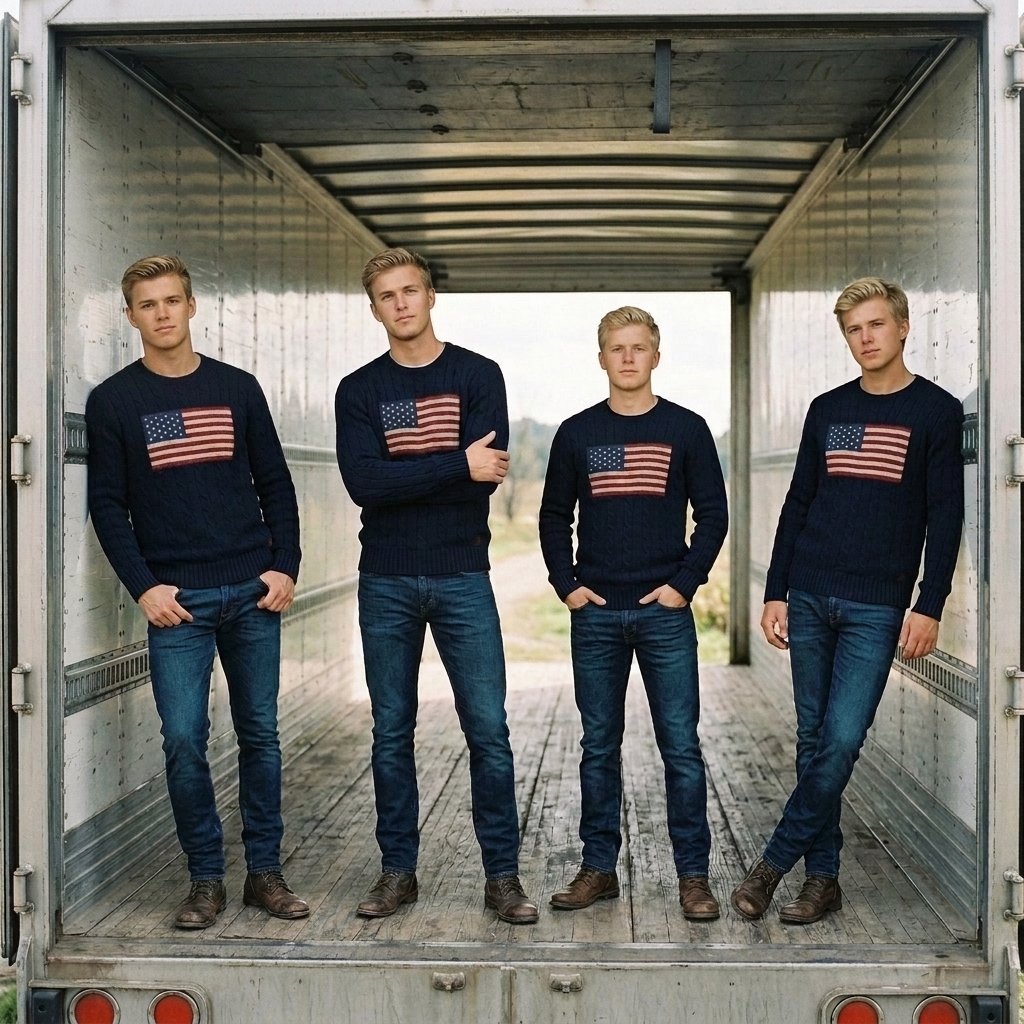
I’ve long found inspiration in their dynamic—it’s a mirror to real life, where creativity and strategy often collide to produce something authentic. That same concept fueled the vision behind everything from the clothing collections to brand messaging. "One size fits most" wasn’t just a tagline I added while reflecting on life in my car. It was anchored in the idea that great stories, brands, and moments have the power to connect people universally. It’s about creating something that resonates on a deeper level, breaking boundaries and fostering unity, much like how cultural phenomena link us to memories and emotions.
Looking back at Deck and the roots of Mitch Leyor Collective, I see a narrative that spans borders—an evolution of creativity that merged individualism with shared experiences. While Deck may have originated as a singular muse, he became the embodiment of a lifestyle, capturing a philosophy of unfiltered authenticity. And just like the nostalgic Brandy Melville-inspired sweaters, pieces that aren’t official but speak volumes of sentimental charm, this story proves art never exists in isolation. It evolves, drawing from the past but daring to tell a unique version of its essence.
For me, the guiding principle of this craftsmanship has always been rooted in faith and determination. "For the Spirit God gave us does not make us timid, but gives us power, love, and self-discipline" (2 Timothy 1:7 NIV). This scripture resonates deeply with me, affirming that strength lies in clarity of purpose and fearless commitment. Every creation stems from this belief—driven by love, shaped by fearless ambition, and refined with discipline.
The Rowdyruff Boys and Powerpuff Girls may have been fictional characters, but their lessons are real. They teach us to harness energy, find balance, and channel power into something that lasts. Now, as I sit here amidst the rhythm of the next phase, that’s the reminder I carry forward. Create boldly, but remember balance. Reflect without losing momentum. Stay raw, stay refined. That’s how legacies are built, one intentional move at a time.
-Mitch, Deck, Mitch Leyor Collective
THE NAME THAT ENTERED FIRST
He was one of three brothers, which meant he was never only himself.
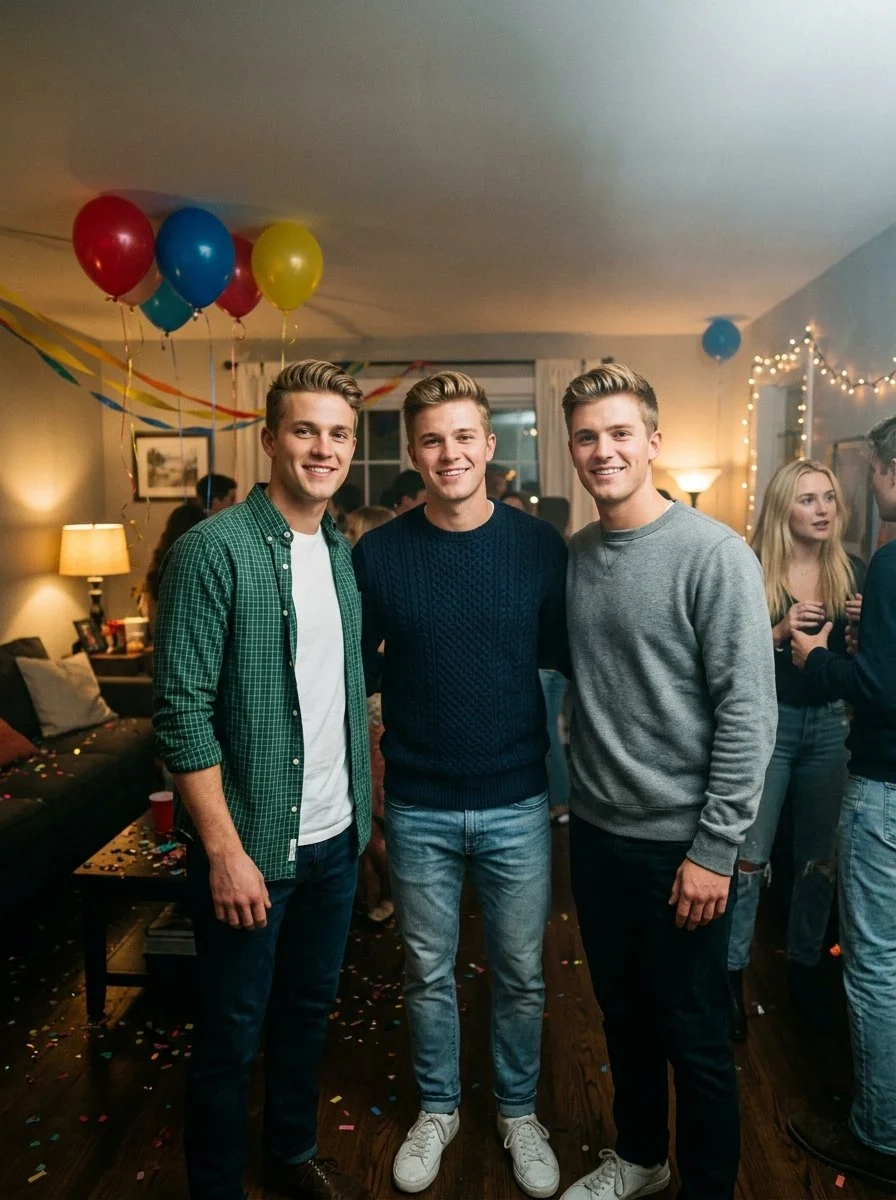
Snapped by the legendary Mitchell Royel in the Fashion District, where swag meets vibes, and right now listenin to "Good Energy" by Beachcrimes.
That is the strange thing about a family name. It does not wait for permission. It walks ahead of you. It sits in the pew before you arrive. It shows up on report cards, church sign-up sheets, community events, and quiet conversations between adults who think young people are not listening.
By the time he was old enough to understand it, the name already had a shape.
Respectable.
Reliable.
Raised right.
Good boys from a good family.
Not rich. Not powerful. Not the kind of family with buildings named after them or money tucked away in places nobody talks about. Just known. And sometimes being known is its own kind of inheritance.
The three brothers carried that inheritance together.
From the outside, they seemed cut from the same cloth. They had the same reputation around town. Similar volunteer hours at church. Good grades. Polite handshakes. The kind of faces older women smiled at in grocery store aisles because they remembered them from Sunday mornings.
People saw them and thought they understood the story.
Three brothers.
Same house.
Same values.
Same family name.
Same quiet expectation to not stain it.
And he understood why people thought that way. Reputation has a way of smoothing the edges. It turns complicated people into simple sentences. It makes a family look like a clean window from the street, even when every room inside has its own weather.
He knew the truth was never that clean.
One brother, the one many would never question, had been living with a private pattern for years. A chronic cheater. More than a decade had passed since he had been faithful to his girlfriend. Not a rumor that drifted in with the wind. Not some careless moment lost to youth. A long, hidden habit. A second life folded beneath the first.
Another brother had recently checked out of rehab after serious addiction issues. That was a different kind of pain. Not something to gossip about. Not something to use as a weapon. Addiction does not arrive politely, and recovery does not leave a person untouched. It changes the air in a family. It makes everyone speak softer, or not at all.
He did not look at either brother as a headline.
That would be too easy.
People love to turn private fractures into public entertainment. They love the fall more than the wound. But he had lived close enough to know better. Shame is loud, but grief is quiet. And families often carry both without knowing where to set them down.
Still, truth matters.
That was the part he could not ignore.
Because from the outside, all three brothers still looked like versions of the same story. Same last name. Same community respect. Same church memories. Same grades once praised by teachers. Same image reflected back by people who had no idea what lived behind it.
And maybe that was what made it all feel so delicate.
A reputation is not always a lie. Sometimes it is only incomplete.
A family can be respected and still be hurting. A person can be praised in public and dishonest in private. A brother can be loved deeply and still be responsible for the damage he causes. Another can be fighting for his life in recovery while the world still expects him to smile like nothing broke.
He had learned that appearance and truth are not enemies, exactly. They are more like neighbors with a fence between them. They hear each other moving around at night. They know the other exists. But most people only visit one side.
The public side was easy.
Show up. Serve. Smile. Keep the name clean. Be the kind of man people assume you are.
The private side was harder.
Tell the truth, at least to yourself. Do not confuse silence with loyalty. Do not mistake a good reputation for a good life. Do not let the family name become a curtain so heavy nobody can breathe behind it.
That was where reputation management became more than vanity.
For some people, the phrase sounds shallow. Like polish. Like performance. Like pretending to be better than you are.
But for him, it meant something older and heavier.
It meant understanding that a name carries memory. It meant knowing that every choice echoes beyond the person making it. It meant recognizing that even a family without wealth can still have something valuable to protect.
Honor is not reserved for the rich.
A family does not need status to care about its name. It does not need land, legacy, or social power. Sometimes all it has is the way people speak of it when nobody from the family is in the room.
That matters.
Not because people’s opinions should rule a life. They should not. A person who lives only for approval becomes a ghost in his own skin.
But reputation still matters because trust matters. Character matters. The people connected to you matter. The name on your back may not belong only to you.
He knew that sounded unfair in some ways.
One brother’s choices should not define all three. One person’s secrets should not stain everyone standing nearby. Yet families are not built like separate houses on separate hills. They are closer than that. What breaks in one room can be heard through the walls.
So he carried the name carefully.
Not perfectly. Never perfectly.
Just carefully.
He did not want to live like a man obsessed with image. He did not want to become cold, polished, and hollow. But he also did not want to pretend that image meant nothing. There is a balance somewhere between honesty and restraint, between protecting dignity and protecting denial.
He was still trying to find it.
Maybe that is what growing older does. It teaches a man that the family portrait was never the whole family. It was only a frame. A moment. A version of the truth where everyone stood still long enough to look united.
But life moves.
Brothers make choices. Secrets grow roots. People recover. People lie. People change. People fail the name they were given, then wake up one day and decide whether they will keep failing it.
And through all of it, the name remains.
Not as a crown.
More like a lantern.
Something carried through dark places. Something that can be dimmed, but not always destroyed. Something that asks, quietly and again, what kind of light a person plans to leave behind.
He was one of three brothers.
To the world, that meant they shared a reputation.
To him, it meant they shared a responsibility.
And the difference between those two things was where the real story lived.
-Deck, Mitchell Royel
HAPPILY EVER AFTER IS JUST ME, ALONE, AND FREE

Now playing: Bounce by Calvin Harris feat. Kelis (Radio Edit)
Captured by Mitchell Royel in Malibu, California in 2013
You know what’s fucked up?
I cried today.
Like, really cried.
For the first time in I don’t even know how long. Not those pathetic little tears you get when you’re trying to feel something—I mean the kind that rips through your chest like you’re finally letting something out that’s been rotting inside you for years. The kind that makes your whole body shake, makes you pull over to the side of the road because you can’t see through the windshield anymore.
I’m driving down PCH right now, windows down, salt air mixing with my tears, and I’m screaming. I’m screaming to this pop-punk shit I would’ve been mortified to admit I listened to back when I was trying to be whoever the fuck they wanted me to be. Back when I was performing for an audience of people who didn’t even like me, they just liked the version of me that made them feel better about themselves. The version that laughed at their jokes, that stayed small, that never outshined anyone, that played the supporting role in everyone else’s story.
God, I fucking hate them. Is that allowed? Am I allowed to say that? Because I do. I hate every single person who made me feel like I had to shrink. Every friend who wasn’t really a friend, just someone keeping tabs, collecting ammunition, waiting for me to slip so they could feel superior. That whole suffocating bubble we called a life—it was a cage. A pretty, Instagram-worthy, aesthetically pleasing cage with the right lighting and the right people and the right fucking brunch spots, but a cage nonetheless.
And the rage—Jesus Christ, the rage I feel when I look back. Not sadness. Not nostalgia. Not even disappointment. Pure, white-hot fury at the time I wasted, the person I pretended to be, the dreams I put on hold because they didn’t fit the aesthetic of our little manufactured reality. I was so busy being palatable, being acceptable, being the person who didn’t make waves or ask for too much or want things that made other people uncomfortable, that I forgot I was supposed to be alive.
You know what the worst part is? I can pinpoint the exact moments I betrayed myself. Every time I laughed when I wanted to scream. Every time I said “I’m fine” when I was drowning. Every time I pretended to care about their drama, their petty bullshit, their manufactured problems that only existed because they had nothing real to worry about. I became an expert at reading the room, at shapeshifting, at being whatever they needed me to be in that moment.
And they used me. They fucking used me. I was the therapist, the cheerleader, the yes-man, the emotional dumping ground, the one who always showed up, always forgave, always understood. And what did I get? Breadcrumbs. Conditional love. Friendship with an asterisk. “We love you, but…” “You’re great, except…” “We’d invite you, but you wouldn’t really fit in with…”
I remember being embarrassed by the music I actually liked. Can you believe that? I would delete songs from my Spotify before anyone could see them. I’d pretend to be into whatever indie bullshit they were obsessed with that week, nodding along like I gave a shit about some band’s “raw authenticity” when all I wanted was to blast the cheesy, emotional, unironic music that actually made me feel something.
But here’s the thing—I’m done. I’m so fucking done. Clean slate. Blank canvas. Scorched earth. Whatever cliché you want to use, I don’t care anymore because I’m not performing for anyone. I’m not looking back. Not at them, not at who I was, not at any of it. The rearview mirror is dead to me. That person I was? They’re gone. They had to die so I could finally start living.
The ocean’s on both sides of me right now, and I’ve got this song cranked so loud my throat’s raw from singing, and for the first time in forever, I feel like I can breathe. Like I’m not performing. Like I’m not apologizing for taking up space. Like I’m not waiting for permission to exist the way I want to exist.
My hair’s whipping in the wind, and I probably look insane—crying and screaming and laughing all at once—but I don’t care. I don’t care who sees me. I don’t care what they’d think. That’s the whole fucking point. I spent years caring what they thought, and it nearly killed me. It killed the real me, anyway. The me that had opinions and desires and a personality that didn’t revolve around making other people comfortable.
They can keep their bubble. They can keep their group chats and their inside jokes and their little kingdom of judgment and superficiality. They can keep pretending that their lives are perfect, that their friendships are real, that they’re happy in their matching outfits and coordinated Instagram posts. I don’t want any of it. I don’t want to be in their photos. I don’t want to be at their parties. I don’t want to hear about their lives or pretend to care about their problems.
I want to be free. And for the first time, I am.
The sun’s setting over the water, painting everything gold and pink, and it feels like a sign. Like the universe is saying, “This is your moment. This is your clean slate. This is where your life actually begins.”
I’m never going back. Never. I’d rather be alone than surrounded by people who make me feel empty. I’d rather scream in my car by myself than sit in silence with people who never really heard me anyway.
They’re in the past. And I’m driving away from it as fast as this shitty Honda will take me.
Gone. Finally, fucking gone.
-Deck
SIXTEEN WHEELS

We're listening to "Paralyzer" by Finger Eleven right now and it's doing something to the atmosphere in here, that opening riff just cuts through everything and suddenly you're locked into this specific frequency of existence. The photo above was captured by Mitchell Royel, and I swear there's a synchronicity happening between what he saw through that lens and what this song is pulling out of us—both of them are about that moment of recognition, that split second where you're completely aware of yourself being aware, you know?
Distance, Not Speed
The hum of the engine is a kind of meditation. Out here on the I-80, somewhere between the Nebraska flatlands and the Wyoming basin, the world reduces itself to essentials: asphalt, horizon, the steady thrum of eighteen wheels against pavement. It's 3 AM and the truck driver—let's call him what he is, a modern-day navigator of American vastness—guides his rig through the darkness with the practiced ease of someone who understands that momentum is both physics and philosophy. The dashboard glows amber. The radio crackles with distant voices. In the rearview mirror, civilization is just a memory of light.
This is what people don't understand when they ask us why we are the way we are. The question follows us everywhere, across every landscape, through every conversation. Why this intensity? Why this refusal to compress ourselves into something more manageable, more palatable, more convenient for those who prefer their encounters brief and uncomplicated?
The answer lives in that truck, in that moment, in that vast American night.
Consider the phenomenology of driving a sixteen-wheeler. You are piloting eighty thousand pounds of steel and cargo through a world designed for smaller vessels. Every decision must account for mass, for inertia, for the fundamental truth that you cannot simply stop or swerve when circumstances shift. You plan your lane changes miles in advance. You read the road not as it is but as it will be. You understand that your presence demands space, demands time, demands a certain kind of respect from the infrastructure itself. The physics are unforgiving. The margin for error is measured in catastrophe.
And yet, there's a dignity in it. The truck driver doesn't apologize for occupying the right lane. Doesn't shrink the rig down to sedan-size because someone's impatient to get to their exit. The cargo matters. The destination matters. The journey, with all its weight and deliberation, matters. There's no shame in being substantial, in requiring room to maneuver, in moving at the pace that the load demands.
So when the boogie people come at us—and they always do, with their demands for immediacy, their insistence on convenience, their barely concealed irritation at anything that doesn't conform to their preferred velocity—we offer them this: we're like sixteen-wheelers. We're built for distance, not speed. We're carrying something that requires this particular configuration of being. We can't pivot on demand because we're not empty. We're full of purpose, of meaning, of substance that won't be diminished just because it's inconvenient for someone else's timeline.
We're not blocking your lane. We're in our lane. And that lane stretches from coast to coast, through every kind of weather, every kind of darkness, toward destinations that matter precisely because they're not easy to reach. The hum of our engine is the sound of commitment. The weight we carry is the weight of authenticity. And if that makes us difficult to pass, well—maybe what you're trying to pass isn't meant to be overtaken. Maybe it's meant to be understood.
-Deck, Mitchell Royel
WEIGHT OF WAKING UP
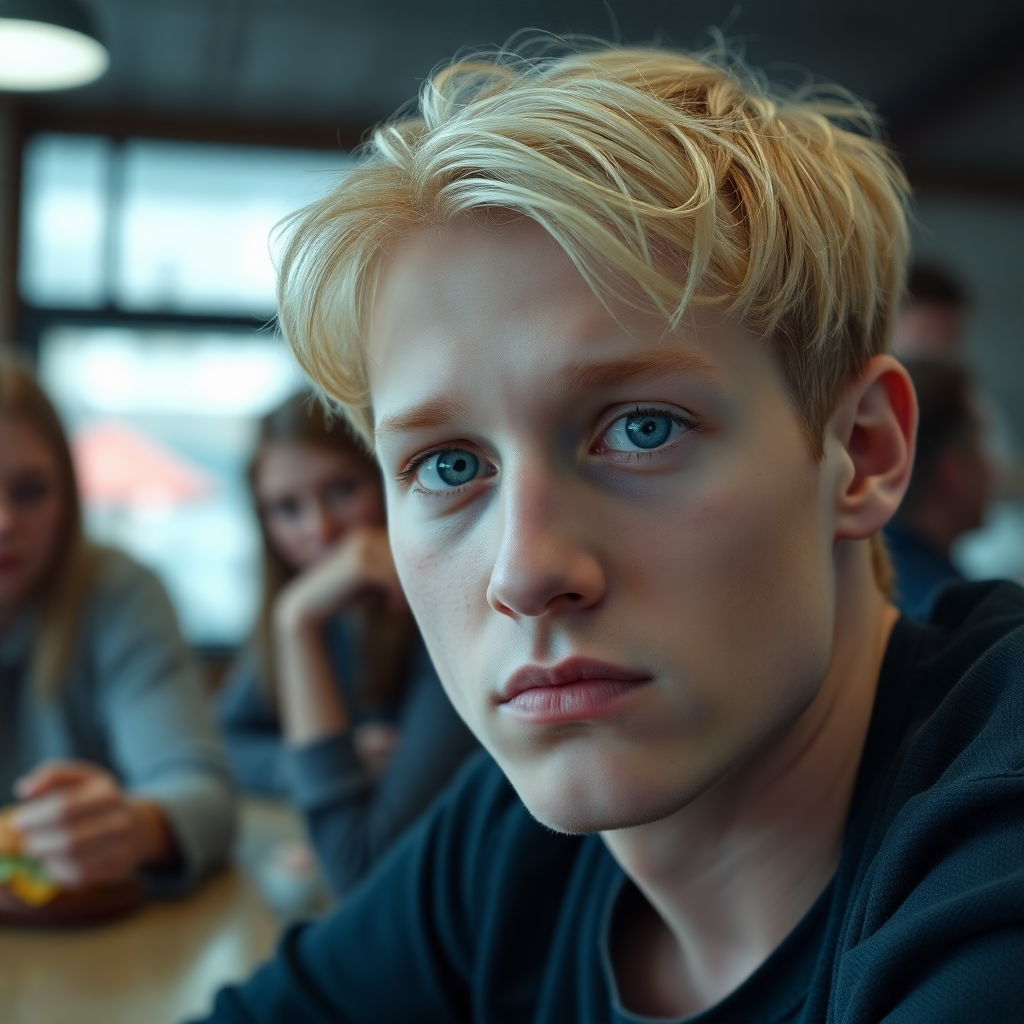
Captured by Mitchell Royel
Now playing: "Blame It" by Jamie Foxx ft. T-Pain
The bass hits low and heavy, vibrating through the floorboards like a heartbeat trying to restart something long dead.
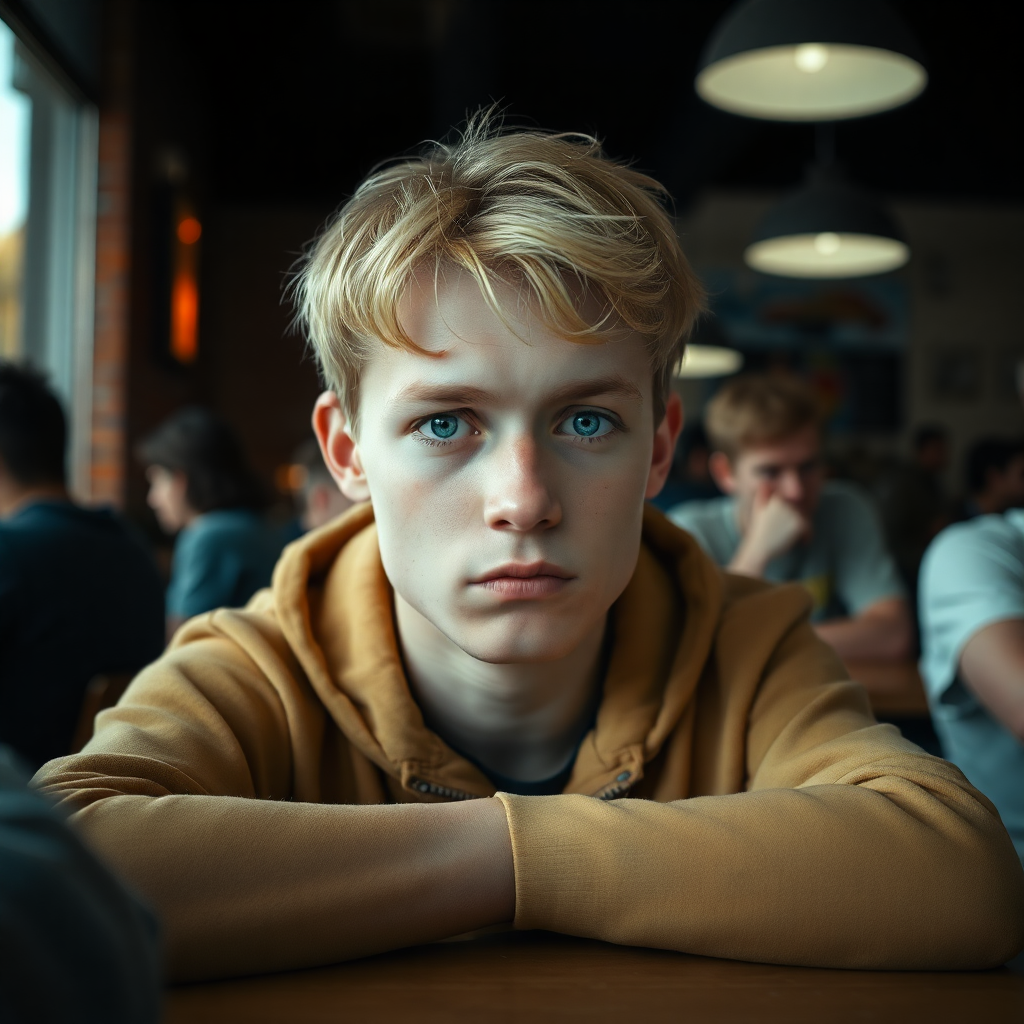
I need you to understand something.
For years, I moved through the world like a shadow passing through fog—present but not really there, breathing but not alive. High school was a wasteland of fluorescent lights and hollow voices, and I had perfected the art of disappearing while standing in plain sight. I didn't choose isolation; it chose me, or maybe we chose each other in some unspoken pact of survival. In a world that felt like it was constantly collapsing, the safest place was inside my own head, where the walls were thick and the silence was mine to control.
Driving school was just another gray checkpoint, another place to sit in the back and count down the minutes until I could return to the nothingness I'd carved out for myself. I didn't expect anything. I didn't want anything. Expectation was a luxury for people who still believed the world had something to offer.
Then he shattered that.
"I go to the same school as you," he said, and those words landed like an accusation I couldn't defend against. I stared at him—this stranger with a face I swore I'd never seen—and felt something crack open inside me. Do we? I searched my memory, desperate to place him somewhere in the catalog of faces I'd trained myself to ignore. Nothing. Absolutely nothing. And that's when the truth hit me like cold water: I hadn't been protecting myself from the world. I'd been erasing it entirely.
He told me his girlfriend knew me. I nodded, said I recognized her name but had never met him. The conversation should have ended there—two strangers acknowledging each other before returning to their separate corners of oblivion. But it didn't. He stayed. And for reasons I still don't fully understand, I let him.
The breaks at driving school became something I didn't know I needed. We talked about nothing and everything—stupid jokes, half-formed thoughts, the kind of meaningless banter that somehow meant more than any deep conversation I'd ever forced myself through. He laughed easily, without the weight of performance, and I found myself laughing too, the sound foreign in my own throat. In those moments, I began to see the bars of the cage I'd built. I'd convinced myself I was alone because the world was empty, but the truth was more damning: I'd made myself blind to anyone who tried to reach through the darkness.
Our friendship grew with an urgency that felt almost reckless, like two people clinging to wreckage in a storm. We understood something unspoken—that connection in this world was fragile, that it could be ripped away at any moment, and that made it both precious and terrifying.
Then driving school ended, and reality reasserted its grip. The new school year began, and the routine swallowed us like it swallows everything. Days blurred together again, but this time there was a difference—a small light I carried with me, proof that I wasn't as invisible as I'd believed.
One afternoon in the hallway, he appeared beside me, grinning like we shared a secret the rest of the world wasn't in on. "Remember me from drivers ed?" he asked, and I felt something warm and unfamiliar bloom in my chest. "Oh yeah, I think so," I said, playing it cool even though I remembered everything.
That night, my phone glowed in the darkness with his message: "If you're down to go to the movies with a terrorist?" It was a joke about his own identity, dark humor born from the kind of pain I recognized but couldn't name. In a world that constantly demanded we explain ourselves, defend ourselves, prove we belonged—his joke was an act of defiance. I laughed, really laughed, and typed back, "Sure!"
Almost a year passed. A year of slowly learning what it meant to let someone in, to trust that the ground beneath your feet wouldn't disappear the moment you stopped watching it. We hung out, talked about dreams that felt impossible, complained about the suffocating weight of expectations neither of us asked for. He became the person I called when the silence got too loud, and I became someone who actually answered the phone.
Then came that night at his house. A sleepover that was supposed to be simple—movies, junk food, the kind of easy companionship we'd built together. We ended up wrestling in his bedroom, all laughter and adrenaline, two people trying to feel something real in a world that had gone numb. But somewhere in the chaos, the energy shifted. What started as play turned aggressive, almost violent. The laughter died, replaced by something raw and desperate. We weren't just wrestling anymore—we were fighting against something neither of us could name. The weight of everything we'd never said, the frustration of living in a world that demanded we be smaller, quieter, less.
I don't know who escalated first. Maybe it didn't matter. The room felt too small, the air too thick. Every shove became harder, every word sharper. We were supposed to be friends, but in that moment, we were just two people drowning, pulling each other under.
"I'm leaving," I said, the words ripping out of me like a confession. "I'm not coming back." I needed him to stop me, to say something that would pull us back from the edge. Instead, his voice came back cold and final: "Get out then!"
The silence that followed was deafening. I stood there for a moment, waiting for him to take it back, waiting for myself to take it back. But neither of us moved. The friendship we'd built—the one thing that had made me believe connection was possible—shattered like glass, and I walked out knowing I'd never be able to put the pieces back together.
That was the last time we spoke. The last time I saw him. And in the days and weeks that followed, I realized the cruelest truth of all: I'd finally learned to see beyond my own walls, to reach for something real, only to watch it disintegrate in my hands. Maybe that's the lesson this world teaches us—that caring is just another way to lose, that opening yourself up only guarantees you'll bleed.
But even now, in the hollow aftermath, I can't bring myself to regret it. Because for a brief, fragile moment, I was awake. I was alive. And maybe that's worth the weight of everything that came after.
— Deck
MY BOY GOT HIS GIRL PREGNANT AT SEVENTEEN
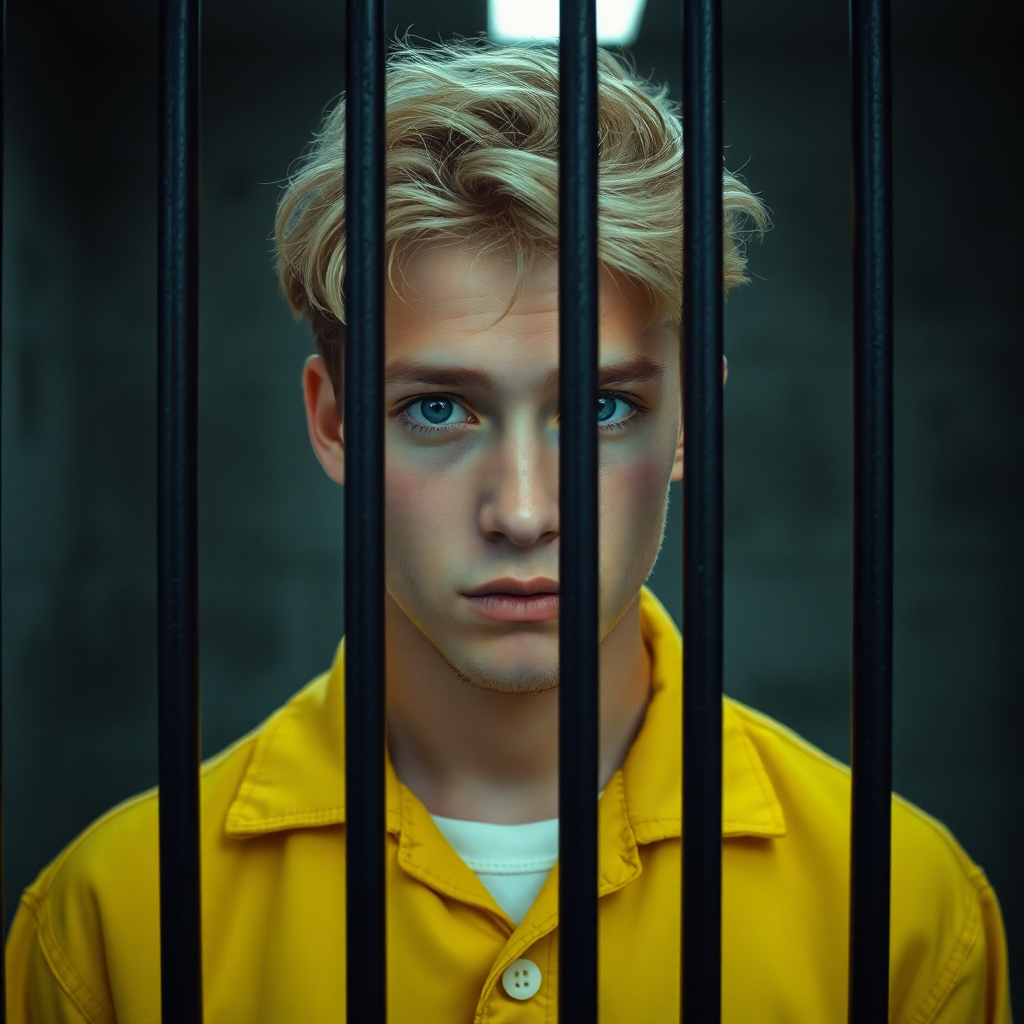
Captured by Mitchell Royel in the fashion district, where the streets pulse with that raw, unfiltered energy that only comes when you're documenting real life as it happens. The camera doesn't lie, and neither does the soundtrack—"Soak City (Do It)" by 310babii blasting through the speakers, that West Coast beat hitting hard while we follow the stories that matter.
I never thought a reality TV show would change the way I see my life, but here we are. There was this kid on my football team—Black guy, quiet, kept to himself mostly.
One day after practice, he tells a few of us his girlfriend's pregnant. He's seventeen. I didn't know what to say. I mean, what do you say to that? I came from a different world than him, and I felt like anything I said would sound stupid or preachy or just... wrong. So I didn't say much of anything. I just nodded, told him good luck, and that was pretty much it. But it bothered me that I couldn't connect with him, you know? Like we were teammates, we ran drills together, we had each other's backs on the field, but off the field I had no idea how to bridge that gap.
Then one night I'm flipping through channels and I land on this show called Beyond Scared Straight on A&E. If you haven't seen it, it's basically this program where they take at-risk kids—kids who are heading down a bad path, getting into trouble, skipping school, whatever—and they bring them into actual prisons. Real prisons with real inmates serving real time. And these inmates, they don't sugarcoat anything. They get right in these kids' faces and tell them exactly what prison life is like. The violence, the fear, the complete loss of freedom, the way it destroys your future. It's intense. Like, really intense. Some of these kids break down crying. Some of them get angry. But all of them leave different than when they came in.
I started watching it regularly, and something about it just hit me. These kids on the show, a lot of them reminded me of my teammate. Not because he was in trouble or anything like that, but because they were all at this crossroads, you know? They had their whole lives ahead of them, but they were making choices—or about to make choices—that could send them down a path they couldn't come back from. And the inmates, the ones doing the scaring, they all said the same thing: "I thought it wouldn't happen to me. I thought I was different. I thought I could handle it. And now look where I am."
Now, I'm all for prison reform. I really am. The system is broken in a lot of ways, and people who've made mistakes deserve a chance to rehabilitate and reenter society. There's too much focus on punishment and not enough on actually helping people change. But here's the thing that Beyond Scared Straight hammered home for me: reform or no reform, the best option is to never end up in there in the first place. Once you're in the system, even if you get out, it follows you. It's on your record. It affects your job prospects, your housing, your relationships, everything. You can talk all day about fixing the system, and we should, but the smarter move is to make choices that keep you out of it entirely.
Watching that show made me think about my own life in a way I hadn't before. I was doing okay—playing football, decent grades, staying out of trouble—but I wasn't really thinking about the future in concrete terms. I was just kind of floating along, assuming things would work out. But seeing these kids on the show, and seeing how quickly your life can go sideways if you're not intentional about your choices, it lit a fire under me. I started thinking about what I actually wanted. Not just vague ideas like "be successful" or "be happy," but real, specific goals.
I wanted a wife. Not just a girlfriend or someone to hang out with, but a real partner. Someone I could build a life with. I wanted a stable job, something I could be proud of, something that would let me provide for a family. I wanted a home, not just an apartment I was renting. I wanted to be the kind of man who had his life together, who made good decisions, who didn't leave things to chance. Beyond Scared Straight showed me what happens when you don't have a plan, when you just react to life instead of directing it. And I didn't want that.
So I started making changes. I took school more seriously. I started thinking about career paths that actually made sense, not just whatever sounded cool at the moment. I paid attention to the kind of person I was becoming and the kind of people I surrounded myself with. I started setting goals—real ones, with timelines and steps to get there. And honestly, it made a huge difference. I felt more focused, more purposeful. I wasn't just drifting anymore.
And here's the weird part: it helped me relate to my teammate. Not because I suddenly understood his exact situation—I didn't, and I'm not going to pretend I did—but because I understood the weight of making big life decisions when you're young. He was about to be a father at seventeen, and that's terrifying. That's a massive responsibility that's going to shape the rest of his life. And while our circumstances were different, we were both at that age where the choices we made mattered more than they ever had before. Watching Beyond Scared Straight gave me perspective on that. It made me realize that we were all just trying to figure it out, trying not to screw up our futures, trying to do right by the people who depended on us.
I started talking to him more after that. Not about the show or anything heavy, just... talking. Asking how he was doing, how his girlfriend was doing, if he needed anything. And he opened up a little. Told me he was scared but trying to step up. Told me he was working extra hours to save money. Told me he wanted to be a good dad even though he had no idea what he was doing. And I got it. I respected it. Because he was making a choice to take responsibility, to not run away, to face what was in front of him. That takes guts.
Beyond Scared Straight isn't just about scaring kids away from crime. It's about showing them that actions have consequences, that the choices you make today determine where you end up tomorrow. And that message resonated with me even though I wasn't the target audience. It made me think about my own trajectory, my own future, and what I needed to do to make sure I ended up where I wanted to be. It's easy to think you have all the time in the world when you're young, but you don't. Time moves fast, and before you know it, you're living with the results of decisions you made years ago.
So yeah, a reality show on A&E changed my perspective. It made me more intentional about my life. It helped me connect with a teammate I didn't know how to talk to before. And it reminded me that the best way to deal with a broken system is to make choices that keep you out of it in the first place. Stay focused, set goals, think about the future, and don't assume things will just work out on their own. Because they won't. You have to make them work out. And that starts with the decisions you make right now, today, in this moment. That's what Beyond Scared Straight taught me, and I'm grateful for it.
-Deck
7:42 TO SOMEWHERE REAL
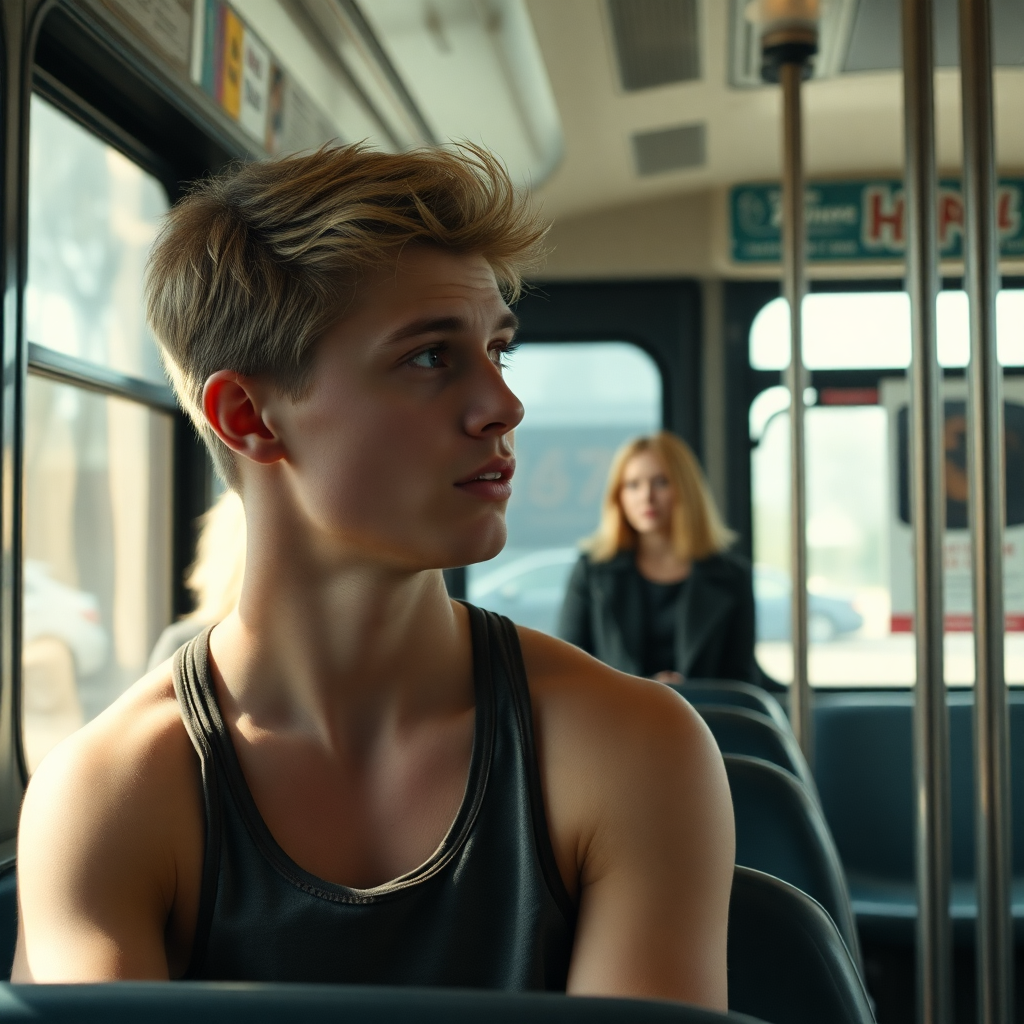
Captured in the sun-bleached streets of Agoura Hills, California by Mitchell Royel, this moment exists somewhere between memory and motion picture—a frame pulled from the kind of life that doesn't need a script. Now playing: "Put Me On" by Mario from the Like Mike motion picture soundtrack, because sometimes the perfect song finds the perfect moment, and you realize you've been living inside a movie all along.
There’s a Mercedes sitting in my garage right now. Black on black, leather seats that smell like money, a sound system that could wake the dead. I bought it because I could. Because somewhere along the way, I convinced myself that’s what success looked like—wrapped in German engineering and a monthly payment that could feed a family.
But this week, I left the keys on the counter.
I took the bus.
Day one felt like cosplay. Like I was pretending to be someone I used to be, or maybe someone I never stopped being underneath all the noise. The 7:42 to downtown, packed with people who don’t have a choice, who aren’t doing this for some philosophical experiment or Instagram story. Real people. Tired eyes. Calloused hands. Dreams deferred but not dead.
And then I saw her.
She got on at the third stop, blonde hair catching the morning light through smudged windows, headphones in, lost in whatever world she’d built to survive the commute. She sat three rows up, and I couldn’t stop looking. Not because she was beautiful—though she was—but because she looked present. Like she hadn’t traded her soul for a parking spot yet.
By day three, we were talking.
Her name was Emma. She worked at a bookstore in the valley, wrote poetry she’d never shown anyone, took the bus because her car died six months ago and she decided she didn’t need to replace it. “I see more this way,” she said, gesturing to the window, to the world blurring past. “You miss everything when you’re comfortable.”
That hit different.
We talked about wealth. Real wealth. Not the kind that depreciates the second you drive it off the lot, but the kind that compounds in your chest when you connect with another human being over nothing and everything. She told me about her grandmother who raised five kids on a teacher’s salary and still had enough left over to make everyone feel rich in love. I told her about the emptiness of green rooms and hotel suites, how you can have everything and still feel like you’re starving.
“Rich is a feeling, not a number,” she said, her eyes meeting mine with the kind of clarity that only comes from someone who’s lost enough to know what matters. “You can have a mansion and be bankrupt. You can have nothing and be overflowing.”
I thought about my car. My beautiful, fast, expensive car. A monument to arrival. To “making it.” But making it to where? To what? To a leather seat in traffic, alone, insulated from the very world I claim to write songs about?
The bus smells like coffee and strangers and humanity. It stops every few blocks, picks up stories, drops off dreams. It’s slow and inconvenient and completely, utterly alive. Emma and I exchanged numbers on day five. We’re getting coffee this weekend. Not because I’m trying to impress her with some rooftop spot that costs $18 for a latte, but because she knows a place near the bookstore where the owner remembers your name.
I’m not saying I’m selling the Mercedes. I’m not that guy, the one who performs poverty to prove a point. But I am saying this: sometimes you have to step out of the thing you worked so hard to get into, just to remember why you wanted it in the first place. Or to realize maybe you never really did.
Real wealth is the conversation you didn’t plan. The girl on the bus who reminds you that being down to earth isn’t about where you sit—it’s about whether you’re still willing to feel the ground beneath you.
This week, I felt it.
And I’ve never been richer.
Keep your feet on the ground, even when your head’s in the clouds.
- Deck
Exhibition at St. Mark's
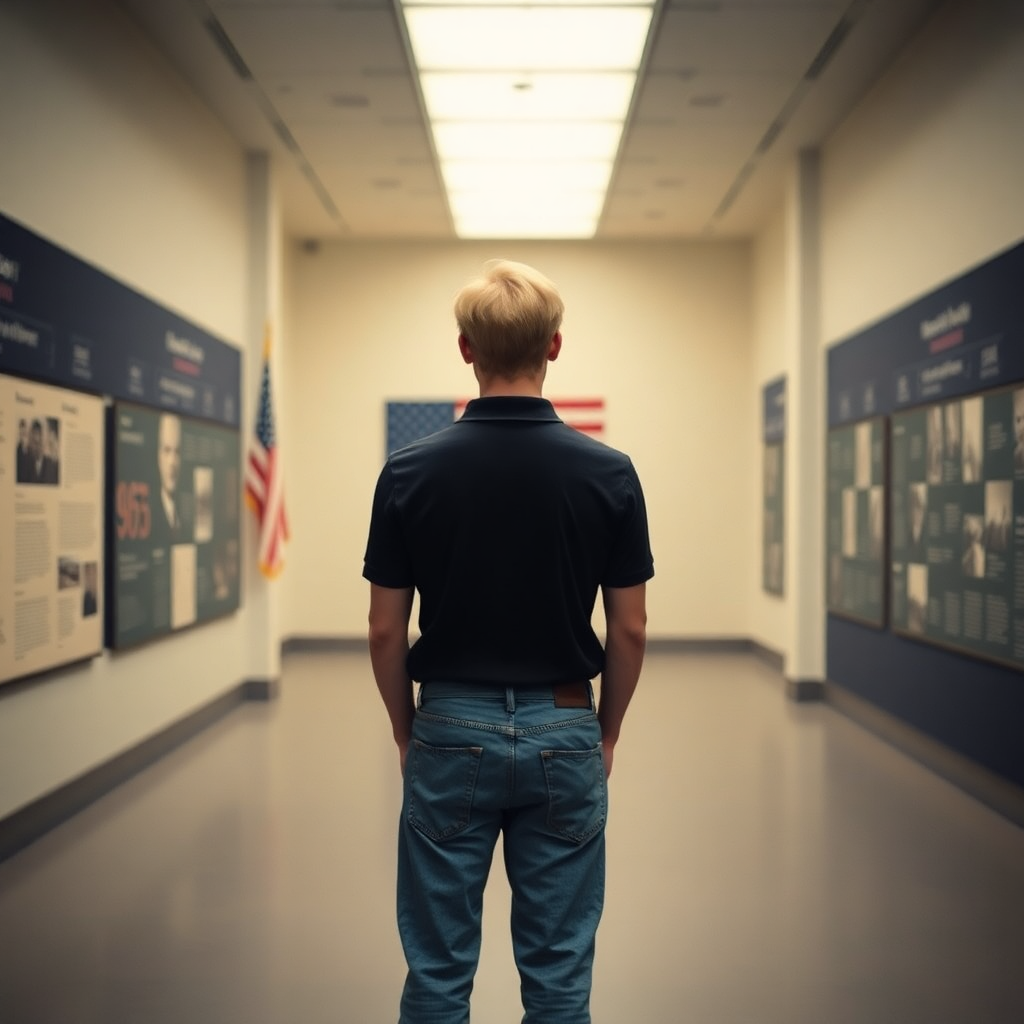
Captured by Mitchell Royel
Stunning 1080x1080
Now playing: "Dancing Alone" by ATALE, Pio
In the quiet spaces between what was and what could be, we find ourselves standing at the threshold of memory and prophecy. This frame—frozen at 1080x1080—holds more than pixels and light. It captures a moment of reckoning, a young man confronting the weight of tomorrow in the sanctuary of yesterday.
The composition speaks in whispers: the solitary figure, back turned to us, gazing into a future we cannot yet see but can already feel. The blurred exhibition before him represents all the warnings we've ignored, all the signs we've missed while dancing alone to our own rhythms, disconnected from the collective heartbeat that once kept us in time.
"Dancing Alone" plays as the soundtrack to this generation's isolation—not the loneliness of being without others, but the deeper solitude of being surrounded by people yet fundamentally disconnected. ATALE and Pio understand this paradox: we are more connected than ever and more alone than we've ever been. The music pulses with that tension, that ache, that recognition that we're all moving to different beats in the same crowded room.
Mitchell Royel's lens doesn't just document; it interrogates. The perfect square format—1080x1080—creates a democratic frame, neither landscape nor portrait, refusing to privilege width over height or breadth over depth. It's the format of social media, of Instagram, of the digital town square where we perform our lives for audiences we'll never meet. But here, that format is subverted, turned inward, made contemplative rather than performative.
The American flag in the periphery—present but blurred, visible but indistinct—serves as both anchor and question mark. What does it mean to stand before the symbols of our identity when those symbols have become contested territory? What does patriotism look like when the future of the nation itself hangs in the balance of choices we're making right now?
This is not escapism. This is confrontation dressed in the aesthetics of indie cinema, where every frame matters and silence speaks louder than dialogue. The depth comes not from what we see clearly, but from what remains just out of focus—the details we have to lean into, the truths we have to work to understand.
We are all dancing alone until we choose to dance together. We are all standing in front of exhibitions of possible futures until we decide which one we're going to build. Mitchell Royel's frame asks us to stop scrolling, stop performing, stop dancing alone long enough to really see what's in front of us.
The music plays on. The figure stands still. The future waits.
1080x1080. Perfect symmetry. Imperfect world. Infinite depth.
A Parable
I wasn't planning on going back. You know how it is—you leave your hometown for college, and suddenly the place that raised you feels like a costume you've outgrown. But my dad asked, and I had a free Saturday, so I drove the two hours back to that sleepy Virginia town where nothing ever changes except the gas station prices.
St. Mark's looked exactly the same. Same red brick. Same white steeple that needed repainting five years ago and still does. Same parking lot with the cracks forming a map to nowhere. I pulled in around 2 PM, expecting the usual—potluck in the fellowship hall, maybe some kids running around, Mrs. Patterson asking if I'm eating enough at school.
But there was a sign out front I'd never seen before: "Remembering Tomorrow: An Exhibition."
The sanctuary was darker than I remembered. They'd covered most of the windows with black fabric, and where the usual bulletins and children's drawings would be taped to the walls, there were photographs. Dozens of them. All in stark black and white, all depicting... I couldn't quite tell at first.
I moved closer to the first panel.
It was a street I recognized—Main Street, our Main Street—but wrong. The buildings were there, but hollowed out. Windows shattered like broken teeth. The old movie theater where I saw my first film, its marquee hanging by a single bolt, letters scattered on the sidewalk below spelling nothing. And in the foreground, a figure in what looked like a hazmat suit, walking alone.
The placard beneath read: "Main Street, 2047. After the Silence."
I felt my stomach drop.
The next photograph showed the church itself—St. Mark's—but transformed into something else entirely. The steeple had collapsed. The doors were barricaded with rusted metal sheets. Spray-painted across the brick in jagged letters: "NO SANCTUARY HERE." The parking lot I'd just walked across was filled with makeshift tents, and people—thin, desperate-looking people—huddled around burning trash cans.
"St. Mark's Community Church, 2051. Refuge Denied."
I moved through the exhibition like I was walking through a nightmare version of my own memories. There was the high school, converted into a detention center. The park where I learned to ride a bike, now a mass grave marked with numbered stakes. The library, burned to its foundation, books scattered and waterlogged in the ruins.
Each photograph was dated sometime in the next twenty to thirty years. Each one showed my hometown—*our* hometown—destroyed by something the placards only referred to as "the Silence." No explanation. No context. Just the aftermath.
I found myself standing in front of the final photograph, the largest one, mounted where the cross usually hung behind the pulpit. It showed a young man—maybe my age, maybe younger—standing in front of what used to be the town square. He was looking directly at the camera, and his eyes were hollow. Behind him, an American flag hung upside down from a broken pole, its colors faded to gray.
The placard read: "The Last Witness, 2053. He stayed."
"Powerful, isn't it?"
I turned. Pastor Lysander Corvinus stood beside me, hands in his pockets, looking up at the photograph with an expression I couldn't quite read. He'd been at St. Mark's for about three years now—a younger pastor with an unusual name that always made people do a double-take when they first heard it. Something about Romanian and Greek ancestry, if I remembered correctly.
"What... what is this?" I asked.
"An artist came through town about six months ago," he said quietly, his slight accent making the words sound more deliberate. "Young guy, maybe thirty. Said he'd been having these visions—dreams, he called them—of what could happen if we keep going the way we're going. Not just here, but everywhere. He spent three months creating this exhibition. Photoshopped every image himself, based on real places in town. Wanted to show it here, of all places."
"Why here?"
Pastor Lysander smiled sadly. "He said churches used to be where communities gathered to remember the past and imagine the future. He wanted to remind us that the future isn't set. That we're writing it right now, every day, with every choice we make or don't make."
I looked back at the young man in the photograph—the last witness. There was something familiar about his face, something in the set of his jaw that reminded me of my own reflection.
"Is this supposed to scare us?" I asked.
"I don't think so," Pastor Lysander said. "I think it's supposed to wake us up. See, the thing about dystopia is that it doesn't just happen overnight. It's a thousand small compromises. A thousand times we chose comfort over courage, silence over speaking up, apathy over action. This"—he gestured to the photographs—"this is what happens when we forget that the future is something we build, not something that just happens to us."
I stood there for a long time after Pastor Lysander walked away. The sanctuary was quiet except for the hum of the old AC unit and the distant sound of traffic on the highway. I thought about my life at college—the classes I was taking, the parties I was going to, the way I'd convinced myself that the big problems were someone else's responsibility. That I was just one person. That nothing I did really mattered in the grand scheme of things.
But standing there, looking at that photograph of my hometown destroyed, I realized something that felt both terrifying and liberating: the future isn't written yet. These photographs weren't prophecies. They were warnings. Possibilities. A question posed in the language of art: What are you going to do about it?
I pulled out my phone and took a picture of the exhibition poster. Not to post on social media—I wasn't ready for that kind of performance yet. Just to remember. To carry with me back to campus, back to my dorm room, back to the life I was building whether I realized it or not.
As I walked out of St. Mark's into the late afternoon sun, the town looked different. Not changed, exactly, but seen. Every building, every street, every person walking by—they were all part of a story that hadn't been finished yet. A story I was part of, whether I wanted to be or not.
The question wasn't whether the future would be dystopian or utopian. The question was simpler and harder: What was I going to do today?
I got in my car and sat there for a minute, engine running, looking at the church in my rearview mirror. Then I turned the car off, pulled out my laptop, and started writing. Not a song this time—though maybe that would come later. Just thoughts. Questions. Ideas about what it means to be awake in a world that's sleepwalking toward something we might not be able to come back from.
The exhibition would only be up for another week, Pastor Lysander had said. But I had a feeling its images would stay with me a lot longer than that.
Maybe that was the point.
My dad texted me as I was finishing: "Glad you came today. Dinner at 6?"
I looked at the message for a long moment, then typed back: "Yeah. And Dad? We should talk. Really talk."
Three dots appeared, then disappeared, then appeared again. Finally: "I'd like that, son."
I put the phone down and kept writing. The sun was starting to set, painting the sky in shades of orange and purple that looked nothing like the gray, ash-filled skies in those photographs. Not yet, anyway. Not if we didn't let it.
-Deck
I Wasn’t High (But I Was Ready to Leave)

Captured by Mitchell Royel in stunning 1080x1080—and yeah, it's perfect, the kind of frame that stops you mid-scroll and makes you feel something you didn't know you needed to feel. Now playing "Like An 808" by Enrey Kide (It), George Dala, and honestly? The track hits different. It's got that low-end rumble that shakes through your chest, the kind of beat that makes you move without thinking, just pure instinct. This is the vibe—raw, unfiltered, exactly where I need to be right now. Mitchell knows how to capture a moment, and this song? It's the soundtrack to it. No notes. Just energy.
Look, I need to get something off my chest because the guys won’t stop bringing it up and honestly, I’m tired of defending myself in group chats at 2 AM.
Yes, I smoke weed. Socially. At kickbacks. When someone passes something around and the vibe is right. I’m not going to pretend I’m above it or that I’m some straight-edge purist. That’s not what this is about.
This is about the night I stood at my window, bags packed, genuinely—and I mean genuinely—convinced I was about to get abducted by a UFO.
And no, I wasn’t high.
I know how that sounds. Trust me. I’ve heard the laughs, seen the screenshots of my texts circulating. “Bro said he’s waiting for the mothership” with like fifteen crying-laughing emojis. Yeah, I see you, Marcus.
But here’s the thing: I believed it. Standing there in my polo and jeans, staring out into the night sky, I felt this pull. This certainty. Like the universe was about to crack open and show me something nobody else gets to see. I had my backpack ready. Essentials. I texted the boys—told them if I disappeared, this was why. I wasn’t joking. I wasn’t spiraling. I was ready.
Was I being rational? Absolutely not. Did I look insane? Probably. But in that moment, it felt more real than anything I’d felt in months.
And that’s the part nobody wants to talk about when they’re busy roasting me. The fact that I was so ready to leave that I packed a bag and waited. What does that say? What was I running from—or running toward?
I’ve spent my whole life being the guy with strong instincts who doesn’t always act on them. I’m the guy who knew something was off about that Donald Trump x Elon Musk alliance but didn’t speak up. I felt it in my gut—this weird, uncomfortable energy—but I stayed quiet because who wants to be that guy at the kickback? The one who kills the vibe with politics?
So yeah, maybe this UFO thing was just another version of that. Ignorance on fire. Blind faith in something I couldn’t explain or prove. Trusting my gut so hard I literally packed a bag and waited by the window like some kind of cosmic Uber was coming.
And sure, it has its pitfalls—like becoming a meme in your own friend group.
But I am who I am.
I’m the guy who feels things deeply, even when they don’t make sense. I’m the guy who writes songs about vulnerability and then actually lives it, even when it’s embarrassing. I’m the guy who will stand at a window with a packed bag, waiting for something extraordinary, because I refuse to live a life where extraordinary things feel impossible.
Did the UFO come? No. Obviously. I’m still here, writing this, fielding texts about how I “almost joined the aliens.”
But would I do it again?
Honestly? Yeah. Probably.
Because the alternative is living like nothing magical could ever happen. And I can’t do that. I won’t. I’d rather be the guy who believed too hard than the guy who never believed at all.
So to the guys: laugh all you want. Post the screenshots. I’ll take the L on this one. But just know that when that UFO does show up, I’m not bringing any of you.
You had your chance.
— Deck
P.S. I still have the bag packed. Just in case.
Empowerment isn’t granted; it’s claimed. And for Mitch Leyor, that claim began with something as fundamental as boxer briefs—a canvas for a larger mission of personal agency and cultural renewal.
Mitch Leyor isn’t merely a faith based boxer brief brand. It’s a declaration—a statement that true progress emerges from individual initiative and unwavering self-belief. Founded by Mitchell Royel, the brand represents more than fabric; it represents a philosophy.
The narrative began with a profound realization: foundational clothing is the first layer of personal presentation. Just as our convictions form the foundation of our character, these boxer briefs represent the first statement of personal identity.
Our boxer briefs aren’t just designed—they’re engineered. Each stitch represents a commitment to quality, each design a challenge to the manufactured narratives of mediocrity. We’re not selling underwear; we’re providing a tool of personal transformation.
“Boxers for Saints” isn’t just a tagline—it’s a manifesto. We believe that true empowerment begins when individuals stop asking what society owes them and start investing in their own capacity for growth and transformation.
Mitch Leyor stands at the intersection of fashion, personal development, and cultural renewal. Our boxer briefs are a symbol—a reminder that excellence is a daily decision, that success is claimed, not given.
Stay informed. Stay principled. And never compromise your foundation—whether that’s in your wardrobe or your life.