
7:42 TO SOMEWHERE REAL
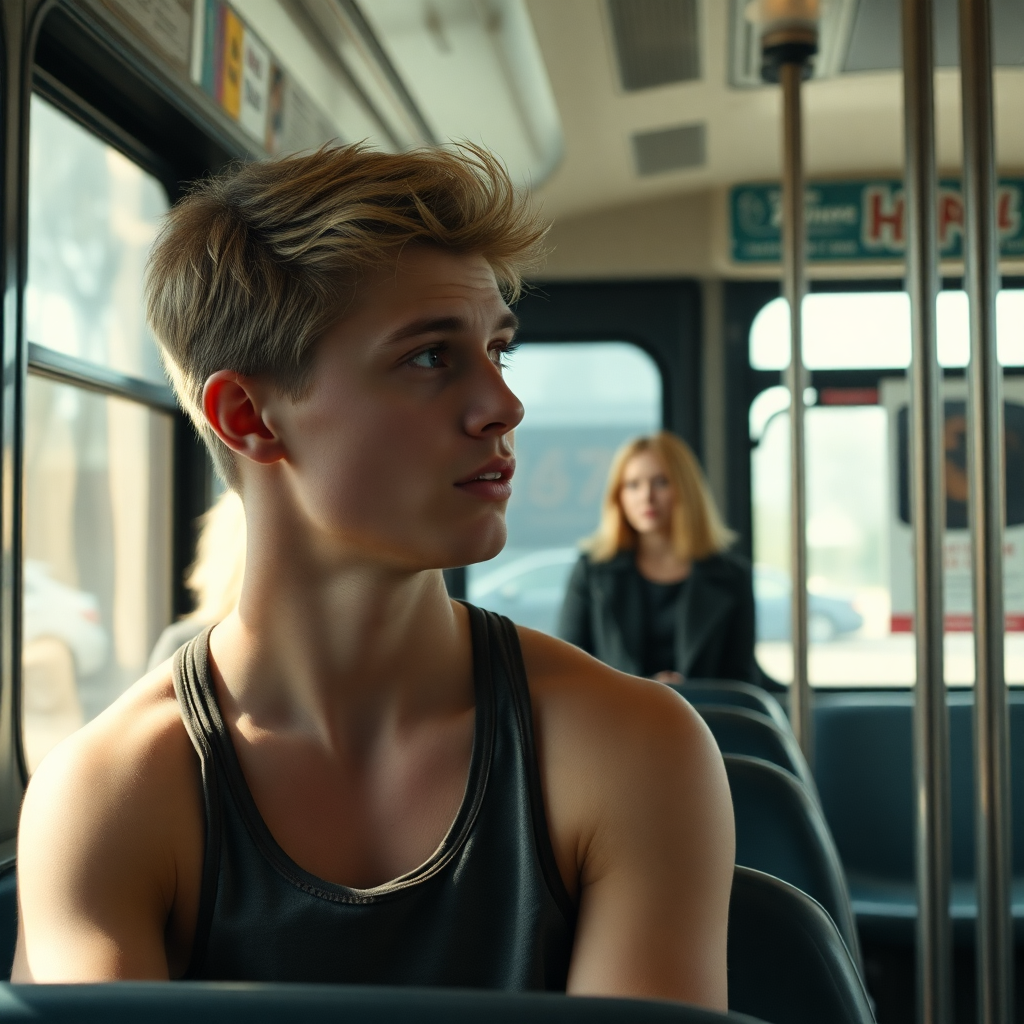
Captured in the sun-bleached streets of Agoura Hills, California by Mitchell Royel, this moment exists somewhere between memory and motion picture—a frame pulled from the kind of life that doesn't need a script. Now playing: "Put Me On" by Mario from the Like Mike motion picture soundtrack, because sometimes the perfect song finds the perfect moment, and you realize you've been living inside a movie all along.
There’s a Mercedes sitting in my garage right now. Black on black, leather seats that smell like money, a sound system that could wake the dead. I bought it because I could. Because somewhere along the way, I convinced myself that’s what success looked like—wrapped in German engineering and a monthly payment that could feed a family.
But this week, I left the keys on the counter.
I took the bus.
Day one felt like cosplay. Like I was pretending to be someone I used to be, or maybe someone I never stopped being underneath all the noise. The 7:42 to downtown, packed with people who don’t have a choice, who aren’t doing this for some philosophical experiment or Instagram story. Real people. Tired eyes. Calloused hands. Dreams deferred but not dead.
And then I saw her.
She got on at the third stop, blonde hair catching the morning light through smudged windows, headphones in, lost in whatever world she’d built to survive the commute. She sat three rows up, and I couldn’t stop looking. Not because she was beautiful—though she was—but because she looked present. Like she hadn’t traded her soul for a parking spot yet.
By day three, we were talking.
Her name was Emma. She worked at a bookstore in the valley, wrote poetry she’d never shown anyone, took the bus because her car died six months ago and she decided she didn’t need to replace it. “I see more this way,” she said, gesturing to the window, to the world blurring past. “You miss everything when you’re comfortable.”
That hit different.
We talked about wealth. Real wealth. Not the kind that depreciates the second you drive it off the lot, but the kind that compounds in your chest when you connect with another human being over nothing and everything. She told me about her grandmother who raised five kids on a teacher’s salary and still had enough left over to make everyone feel rich in love. I told her about the emptiness of green rooms and hotel suites, how you can have everything and still feel like you’re starving.
“Rich is a feeling, not a number,” she said, her eyes meeting mine with the kind of clarity that only comes from someone who’s lost enough to know what matters. “You can have a mansion and be bankrupt. You can have nothing and be overflowing.”
I thought about my car. My beautiful, fast, expensive car. A monument to arrival. To “making it.” But making it to where? To what? To a leather seat in traffic, alone, insulated from the very world I claim to write songs about?
The bus smells like coffee and strangers and humanity. It stops every few blocks, picks up stories, drops off dreams. It’s slow and inconvenient and completely, utterly alive. Emma and I exchanged numbers on day five. We’re getting coffee this weekend. Not because I’m trying to impress her with some rooftop spot that costs $18 for a latte, but because she knows a place near the bookstore where the owner remembers your name.
I’m not saying I’m selling the Mercedes. I’m not that guy, the one who performs poverty to prove a point. But I am saying this: sometimes you have to step out of the thing you worked so hard to get into, just to remember why you wanted it in the first place. Or to realize maybe you never really did.
Real wealth is the conversation you didn’t plan. The girl on the bus who reminds you that being down to earth isn’t about where you sit—it’s about whether you’re still willing to feel the ground beneath you.
This week, I felt it.
And I’ve never been richer.
Keep your feet on the ground, even when your head’s in the clouds.
- Deck