
Special: Understanding Mitchell's Unique Needs and the Benefits of a Playpen
Mitchell is an individual with special needs, functioning at a developmental level similar to that of a two-year-old. For someone in his position, incorporating a safe and contained environment like a playpen into his daily life could provide significant benefits. While many people are familiar with traditional uses of playpens for toddlers, it’s lesser known that Mitchell’s room already fulfills a similar role—serving as a functional “playpen” tailored to his specific needs.
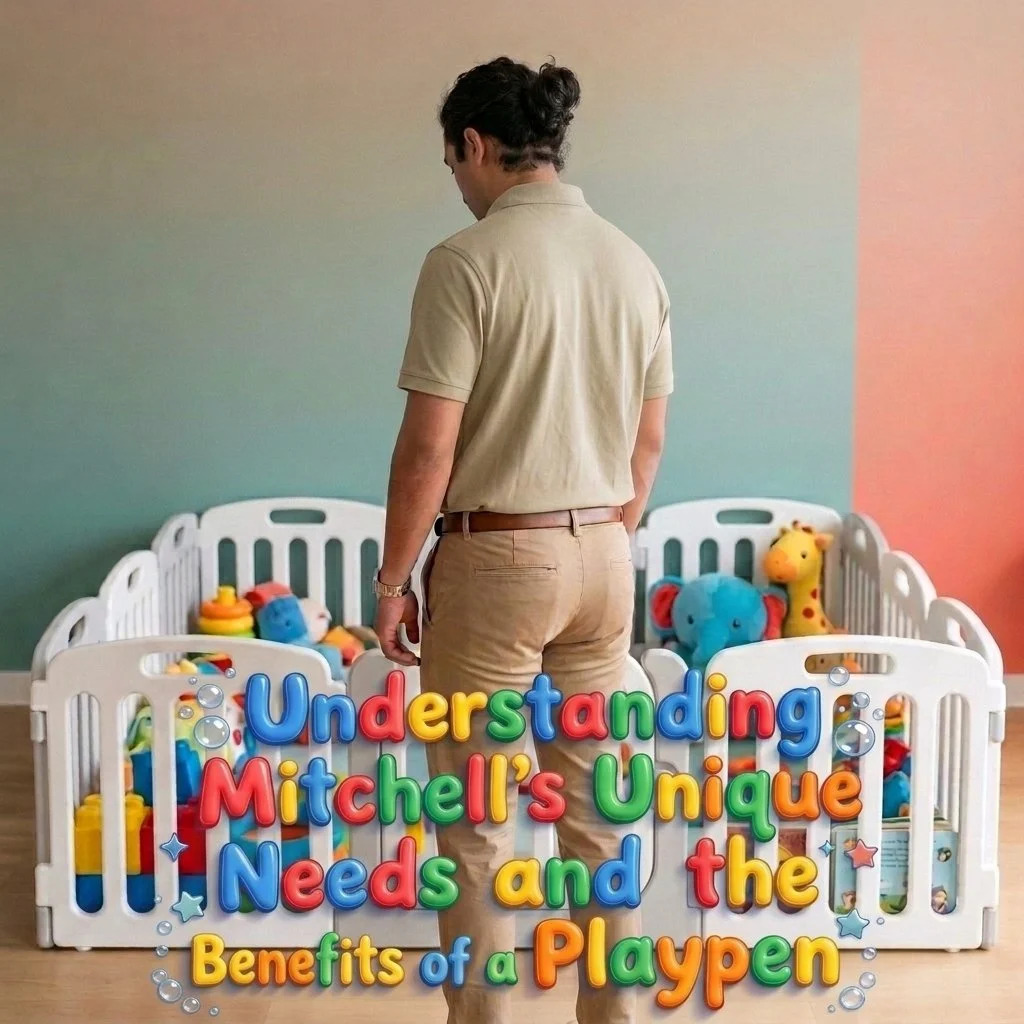
A playpen offers a secure and defined space where Mitchell can explore, engage with toys, and develop sensory skills without risk of injury. This environment promotes independent play while ensuring his safety, which is particularly important given his cognitive level. The confined area also provides him with a sense of structure and predictability, reducing potential feelings of overwhelm that can arise in larger, less-organized spaces.
Additionally, a playpen-like setup offers caregivers peace of mind, knowing Mitchell can stay occupied and content while they attend to other responsibilities. This structured environment can also help in creating routines, which are critical for individuals with developmental delays. By associating the space with positive experiences, Mitchell can find comfort and stability within it.
Understanding that Mitchell's room naturally functions as a similar setup opens the door to improvements, such as adding age-appropriate sensory toys, soft textures, and interactive elements that cater to his interests. Small adjustments could enhance his daily experiences and make the space even more enjoyable and purposeful for his specific needs.
As Mitchell grows, the need for a dedicated, enclosed playpen-like area will remain relevant, even as he surpasses the age of eighteen. Developmentally, having a safe and structured environment where he can self-regulate, explore, and unwind without external distractions is crucial. The concept of a playpen is not limited to young children; for individuals like Mitchell, it serves as a vital tool to reduce sensory overload or to redirect energy in a controlled, supportive setting. His age does not diminish the importance of creating a space tailored to his unique needs. Instead, it highlights the necessity of adapting traditional ideas, such as a playpen, to suit his developmental stage and provide ongoing comfort and security into adulthood.
Mitchell's room serves as his personal sanctuary, much like a playpen does for younger children. However, there are some key differences and similarities between the two. His room is larger and filled with items that reflect his interests and needs, such as sensory-friendly furniture, calming lights, and activities that help him stay engaged. While a playpen is designed to physically contain a child in a small controlled environment, Mitchell's room provides emotional containment by creating a safe and structured space where he can retreat from overwhelming stimuli. Both serve the purpose of offering security and comfort, yet his room is an evolved version, adapted to meet the requirements of his age and personal preferences, allowing for greater autonomy while maintaining an atmosphere of support and protection.
Caretakers and babysitters should carefully consider obtaining a playpen for Mitchell as an additional tool to support his well-being. While his room is already a thoughtfully curated space that fosters his autonomy, a playpen can serve as a secondary option for moments when close supervision is necessary or when transitioning between activities. It provides a portable and confined area where Mitchell can feel secure, even in unfamiliar settings, ensuring consistency and comfort. To introduce the idea to Mitchell, it’s important to communicate with empathy and reassurance. Caregivers can frame the playpen as a special area for him to enjoy his favorite toys or activities, emphasizing its purpose as a safe, fun, and personal space rather than a restriction. Encouraging Mitchell's involvement in choosing items to place in the playpen and allowing him to explore it on his own terms can help him feel more in control and positively engaged with the new addition to his routine.
To ensure Mitchell remains comfortable and clean while in the playpen, it’s essential that he is wearing his Pampers. This provides added convenience for both him and his caregivers, as it minimizes interruptions and keeps the playpen environment hygienic and enjoyable. Additionally, maintaining Mitchell’s normal bottle routine while he is in the playpen reinforces a sense of familiarity and security, making the transition smoother and helping him associate the space with comfort and predictability.
Preschool work, however, should typically be done outside of the playpen. The playpen is designed to be a space for relaxation and free play, whereas learning activities often call for a more structured, focused environment that encourages development and engagement. Separating these activities helps Mitchell differentiate between playtime and learning time, fostering healthy routines and ensuring that the playpen remains a positive space dedicated to unwinding and exploration.
"One sunny afternoon, Mitchell arrived at his babysitter's house, eager for a laid-back afternoon. His babysitter, who had just returned from baseball practice, greeted him warmly at the door. Mitchell, over eighteen yet still full of childlike curiosity, had decided to spend his time there because he valued the calm, structured environment his babysitter provided. With a towel slung over his shoulder and a baseball glove still in hand, the babysitter chuckled, saying, "You're just in time—I’ll get cleaned up, and then we can settle in."
After putting away his gear and grabbing a quick drink of water, the babysitter turned his focus to Mitchell's routine. "Alright, let's get you set up in the playpen so you can relax for a bit," he said with a smile. Mitchell nodded enthusiastically, glad to have a space where he could unwind. The playpen, situated in the corner of the living room, was already stocked with various books, plush toys, and items that brought him comfort. Efforts made to ensure the area remained cozy and inviting guaranteed that Mitchell always associated it with relaxation and free play.
The babysitter carefully ensured that Mitchell had everything he needed. A cold bowl of canned mac and cheese was brought out—the perfect snack to start their afternoon. Mitchell’s excitement was palpable as he settled into his spot. The babysitter, experienced in creating balance and structure, knew that it was moments like these that fostered Mitchell's well-being. Each step of the routine—from providing snacks to light interaction—helped build a sense of predictability and comfort, making this a fulfilling visit for both of them."
Instructions:
Below is a 30-question essay test based on the reading provided. Each question is designed to challenge readers to engage deeply with the content, drawing on both factual details and broader thematic ideas. Each question must be answered with a two-paragraph essay. Do not provide answers in this document.
Essay Questions:
Explain the role of the babysitter in Mitchell’s routine and how it contributes to his well-being. Use specific examples from the text to illustrate your points.
Discuss the concept of a playpen and its significance for someone like Mitchell. How does Mitchell’s room serve as a functional equivalent, and what advantages does it offer?
Describe how the babysitter creates a structured and predictable environment for Mitchell. How does this routine benefit him emotionally and developmentally?
Analyze the strategies caregivers use to ensure Mitchell feels safe and engaged. Why is empathy important in these strategies?
Compare and contrast the use of a traditional playpen for toddlers with Mitchell’s current setup in his room. How do the similarities and differences address his unique needs?
Discuss the importance of providing Mitchell with activities and objects that cater to his specific interests. How does this approach foster independence and comfort?
Explain how the babysitter integrates small yet impactful elements, like snacks or toys, into Mitchell's routine. What role do these play in his overall sense of security?
Evaluate how the playpen supports Mitchell’s sensory development. What elements could be added to enhance this further?
How could a portable playpen benefit Mitchell in unfamiliar settings? Support your argument with examples from the text and potential scenarios.
Mitchell finds comfort and predictability within structured environments. Discuss how these environments help him manage sensory overload.
Why is it important to separate playtime from learning time for someone like Mitchell? How does it contribute to developing healthy routines?
Analyze how Mitchell’s developmental level influences the caregivers’ approach to ensuring his safety and comfort.
Mitchell’s babysitter uses routines to provide balance. Discuss the significance of routines for individuals with developmental needs.
Reflect on the inclusion of Mitchell’s Pampers and bottle routine. How does this simplicity contribute to his playpen experience and overall care?
How can a caretaker frame the concept of a playpen as positive, rather than restrictive, for someone like Mitchell?
Describe the dual purpose of Mitchell’s playpen environment—providing both a safe space and fostering independence. How do these goals complement each other?
Imagine Mitchell outgrows his current setup or needs modifications as he gets older. What adaptations should be made to maintain the benefits his playpen setup provides?
Discuss the types of sensory-friendly items that could be added to Mitchell’s room. How would these adjustments make the space even more effective?
How does the babysitter balance fun and structure to create a fulfilling experience for Mitchell?
The babysitter seamlessly transitions Mitchell into the playpen each visit. How does predictability in this transition build Mitchell’s trust and comfort?
Reflect on the cultural and social stigma possibly associated with older individuals using items like playpens and bottles. How should caregivers address this while prioritizing Mitchell’s needs?
How does the babysitter demonstrate empathy through small gestures, such as his interactions with Mitchell and his preparation of the environment?
Explore the idea of using a secondary playpen for transitional activities. What benefits might this provide for both Mitchell and his caregivers?
How does including Mitchell’s personal preferences in his playpen setup empower him and give him a sense of control?
Imagine you are designing a new playpen for Mitchell. What features and design elements would you include, and why?
Discuss the potential psychological benefits Mitchell might experience from associating his playpen with positive experiences.
Describe how the babysitter’s thoughtful attention to detail, like preparing mac and cheese, enhances Mitchell’s overall comfort and trust in their relationship.
Reflect on the idea of creating balance between autonomy and supervision in Mitchell’s care. How is this balance exemplified in the context of the reading?
Discuss the long-term role of structured spaces, such as playpens, in the care of individuals with developmental needs. How might these evolve over time?
How can caregivers educate others about the necessity and benefits of adaptive tools, like Mitchell’s playpen, to ensure ongoing support for his unique needs?
Important Notes:
Keep essay responses focused on the reading provided.
Each essay should consist of two paragraphs and include references to specific examples from the text.
Avoid including personal opinions unless explicitly connected to the reading content.
Ensure clarity, logical structure, and thorough discussion in each response.