
Special: The Importance of Assertiveness and Pushback in Enforcing Rules with Mitchell
When it comes to caregiving for Mitchell, maintaining a balance between empathy and assertiveness is key in enforcing rules and structure. Mitchell relies on clear boundaries to feel secure and thrive in his daily environment, yet navigating this requires a firm yet compassionate approach. For example, his playpen or room setup acts as a designated space for safe interaction and relaxation. However, ensuring these rules are respected often means showing assertiveness—whether it’s reinforcing the importance of staying within his play area during specific times or guiding him back to his routine when distractions arise. By doing so, caregivers foster consistency, which is crucial for his developmental and emotional well-being.
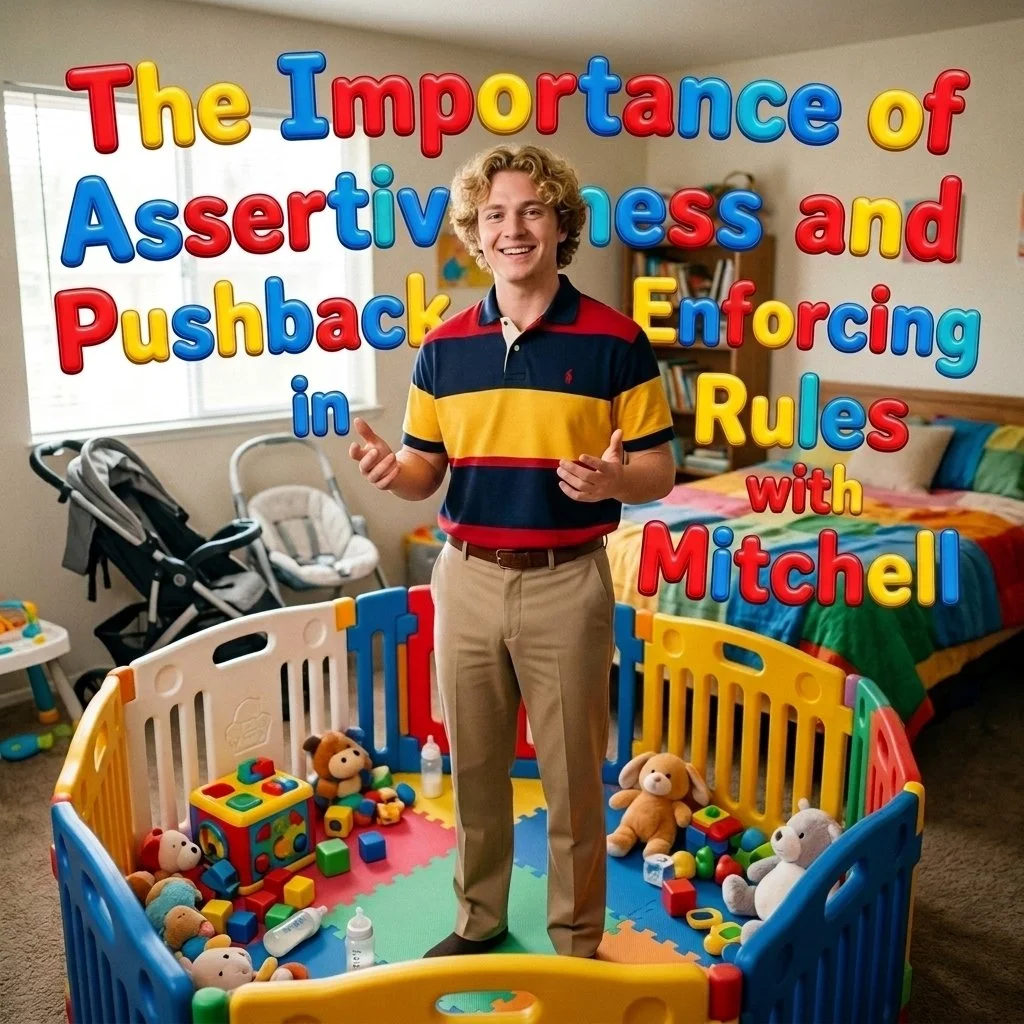
Pushback from Mitchell is a natural response at times when adjustments or routines may conflict with his desires. Caregivers must approach these moments with patience while still adhering to the established boundaries that benefit him in the long run. For instance, transitioning him into his playpen or encouraging breaks can sometimes be met with resistance. During such scenarios, reinforcing the “why” behind specific rules—like ensuring his safety or reducing overstimulation—helps Mitchell associate these moments with care rather than restriction. Maintaining this balance between understanding his reactions and reaffirming boundaries empowers caregivers to provide both structure and the nurturing support he needs to flourish.
This approach extends seamlessly into Mitchell's preschool activities. Whether he's sporting his Pampers during a crafting session, enjoying his Gerber snacks at snack time, or sipping on his hourly bottle, these routines provide him with familiarity and comfort amidst the structured environment of preschool. Maintaining these habits ensures that Mitchell feels secure and supported, fostering a sense of routine that aids in his development. Even when one of his caretakers happens to be older than him, the focus remains on creating a nurturing environment tailored to his unique needs. It's through this consistent reinforcement of care and rituals that Mitchell is able to explore his world while feeling both guided and valued.
Additionally, incorporating activities that engage Mitchell's curiosity can further enhance his preschool experience. Initiatives like simple puzzles, interactive storytime, or sensory play give him opportunities to develop problem-solving skills while having fun. By maintaining a predictable structure while also offering moments of learning and discovery, caregivers provide the ideal foundation for his growth. This delicate balance ensures that Mitchell not only feels safe but also inspired, setting him up for positive interactions and developmental milestones in the future.
Timeouts and Encouraging Age-Appropriate Behavior
Timeouts are a commonly used parenting tool designed to help children reflect on their actions, calm down, and learn from their mistakes. For Mitchell, ensuring that timeouts are effective requires a clear understanding of when and how to use them appropriately for his developmental stage. At his preschool age, his behavior will naturally align with that of a young child who is still learning boundaries, emotional regulation, and social norms. Expecting stoic-like behavior from Mitchell may not align with his developmental capabilities, as toddlers and preschoolers are inherently energetic, curious, and prone to testing limits.
When to Use Timeouts
Timeouts should be used sparingly and as a teaching tool rather than a form of punishment. They are most effective when applied in moments where Mitchell's behavior becomes disruptive, dangerous, or hurtful—such as hitting, biting, or throwing objects. It's crucial to avoid using timeouts for minor, age-appropriate behaviors like fidgeting, talking loudly, or being overly curious, as these actions are typical for his developmental stage and should be addressed with gentle guidance instead.
To determine if a timeout is warranted, caregivers should evaluate the situation and remain calm. They should ask themselves if Mitchell’s behavior is truly unacceptable or if it simply reflects a toddler's natural tendency to explore and express himself. For instance, tantrums due to frustration or overstimulation are best addressed by comforting and redirecting him rather than immediately resorting to discipline.
How to Enforce Timeouts Effectively
When enforcing a timeout, it’s important to follow a consistent and structured approach so Mitchell understands what is happening and why. A simple, calm explanation of the behavior that led to the timeout helps ensure the learning process. For example, saying, “You threw your toy, and that’s not safe. We’re going to take a timeout to calm down.” This message is clear, age-appropriate, and non-threatening.
Keep the timeout space neutral, quiet, and free of distractions. A specific corner or chair can serve as the designated timeout area where Mitchell can sit until he's ready to rejoin. The length of the timeout should also match his age—typically one minute per year of age—so a three-minute timeout would be appropriate for him.
Consistency is key to making timeouts effective. If rules and consequences are always applied the same way, Mitchell will start to associate his actions with predictable outcomes. Avoid extending the timeout or expressing anger during the process, as this can make him feel confused or overwhelmed. Once the timeout is over, it’s crucial to move forward without holding a grudge. Caregivers should offer Mitchell a brief conversation about why the behavior was unacceptable and how he can make better choices next time.
Encouraging Good Behavior in an Age-Appropriate Manner
Good behavior at Mitchell's age should not be equated with perfect, stoic compliance. Instead, it reflects the budding process of his learning to interact with the world respectfully while still exploring it in a curious and energetic way. For example, Mitchell's wiggling in his chair during storytime or chattering excitedly about his favorite toy isn't "misbehavior"—it’s a sign of his growth, enthusiasm, and natural tendencies as a young child.
When Mitchell acts in ways that are developmentally appropriate but potentially disruptive, such as asking many questions or struggling to wait his turn, caregivers can use positive reinforcement and gentle redirection to guide him. Praising good choices—like sharing his toys, listening during group activities, or using his words instead of yelling—helps him understand what is expected in a clear and encouraging way. For example, saying, “You waited so patiently for your turn. Great job, Mitchell!” reinforces his efforts without expecting perfection.
Understanding the Balance Between Toddler Behavior and Discipline
While it's important to set clear expectations and help Mitchell understand boundaries, caregivers must also recognize and accept behaviors that come naturally for toddlers. Rather than trying to eliminate all of his energetic outbursts or moments of disobedience, the focus should remain on shaping these actions into more positive habits over time. Teaching Mitchell self-regulation and respect doesn’t mean suppressing his curiosity or enthusiasm—it's about nurturing these traits in ways that align with social norms and safety.
In summary, timeouts serve as a valuable tool for addressing unsafe or disruptive behavior, provided they are enforced thoughtfully and consistently. However, fostering good behavior involves more than discipline—it requires celebrating Mitchell's milestones, recognizing his age-appropriate tendencies, and showing patience as he learns and grows. By striking the right balance between teaching boundaries and encouraging self-expression, caregivers can help Mitchell develop both confidence and a sense of personal responsibility.
Timeouts can play a critical role in helping Mitchell manage the challenges of transitioning from "adulting" to life at a preschool level. This shift can be particularly overwhelming, especially when it involves adopting toddler-like behaviors as a means of reducing stress and anxiety. For Mitchell, who identifies as ABDL (Adult Baby/Diaper Lover), these behaviors are not entirely new but have typically been self-initiated as a coping mechanism. However, in the context of a structured, caregiving environment, implementing thoughtful and consistent timeouts can serve as an essential tool to guide Mitchell through this period of adjustment.
The lack of sufficient timeouts could hinder Mitchell's ability to recognize boundaries and process his feelings effectively. During this transitional phase, it is common for individuals like Mitchell to exhibit behaviors that mirror those of a toddler, such as defiance, impulsivity, or difficulty in emotional regulation. These actions are not necessarily indicative of defiance but rather a reflection of the mental and emotional demands of navigating his current stage of development. Without timeouts, Mitchell may struggle to learn how to pause, reflect, and reset when his behavior becomes unsafe or disruptive. Timeouts provide a moment to step away from overwhelming situations, offering Mitchell the space to calm down and regain self-control.
Furthermore, timeouts can be incredibly effective in demonstrating cause-and-effect relationships between actions and consequences. For example, when Mitchell exhibits behaviors that disrupt the environment or compromise safety, a timeout can clarify that such actions lead to a pause in activities. This consistent reinforcement helps build a sense of accountability and encourages more constructive choices over time. Additionally, timeouts allow caregivers to address inappropriate behaviors respectfully while preserving a positive dynamic. They are an act of care, intended not as punishment but as an opportunity for Mitchell to regulate emotions and reflect on alternative ways to express himself.
It is important to recognize that Mitchell’s transition to life at a preschool level underscores the need for an approach steeped in patience and understanding. His toddler-like behaviors may stem from a mix of anxiety, emotional stress, and the natural difficulty of adapting to a new routine and environment. For Mitchell, who is navigating these adjustments with added complexity due to his ABDL identity, caregivers must maintain a sense of empathy while fostering clear boundaries. By integrating timeouts into his routine in a nurturing manner, caregivers can offer Mitchell the reassurance that he is supported even as he learns to adapt to expectations and structure.
Ultimately, timeouts should be balanced with positive reinforcement for desired behaviors to ensure Mitchell feels encouraged, not ashamed. Caregivers should focus on creating opportunities to celebrate his growth and successes, no matter how small, alongside using timeouts as a tool for handling more challenging moments. This dual approach can provide Mitchell with a sense of stability and predictability while reinforcing that he is safe, valued, and capable of making positive choices. Therefore, timeouts, when applied thoughtfully and consistently, remain a necessary and beneficial strategy to help Mitchell during this transitional and challenging stage of life.
Instructions
Each question should be answered with one paragraph, incorporating references from the provided reading materials. All responses must reflect a thorough understanding of the text, demonstrate critical thinking, and directly reference relevant sections of the reading.
Essay Questions
Explain why maintaining a balance between empathy and assertiveness is critical when enforcing rules for Mitchell.
Discuss how Mitchell’s playpen or room setup contributes to his sense of security and structure.
Analyze the role of assertiveness in maintaining boundaries with Mitchell, especially during transitions or routine changes.
Describe how consistency impacts Mitchell’s emotional and developmental well-being.
Reflect on how caregivers can address pushback from Mitchell while still adhering to established boundaries.
Explain the significance of reinforcing the “why” behind specific rules when interacting with Mitchell.
Evaluate how familiar routines, such as snack time or bottle feeding, provide comfort for Mitchell.
Discuss the importance of nurturing Mitchell in a preschool environment tailored to his unique needs.
Identify ways caregivers can incorporate activities that engage Mitchell's curiosity and foster learning.
Explain how positive reinforcement influences Mitchell’s behavior in a structured environment.
Describe the appropriate use of timeouts as a teaching tool for Mitchell, including specific examples.
Analyze why it’s important to avoid using timeouts for minor, age-appropriate behaviors.
Discuss the developmental needs of children like Mitchell in learning boundaries and emotional regulation.
Reflect on the importance of clear and calm communication when enforcing timeouts with Mitchell.
Explain how maintaining a neutral and distraction-free timeout space supports its effectiveness.
Evaluate the role of consistency in helping Mitchell associate consequences with his behavior.
Discuss the importance of follow-up conversations after a timeout to reinforce positive behavior.
Reflect on how caregivers can balance setting boundaries with encouraging Mitchell’s enthusiasm and curiosity.
Explain why developmentally-appropriate behaviors, such as exploring or being energetic, should not be overly disciplined.
Analyze how positive reinforcement can be used to promote good behavior and build Mitchell’s confidence.
Describe the balance between shaping Mitchell’s actions into positive habits and allowing him to explore naturally.
Reflect on how caregivers can nurture Mitchell's curiosity while teaching him social norms and safety.
Discuss the role of timeouts in helping Mitchell process overwhelming emotions during his developmental stage.
Explain how timeouts demonstrate the connection between actions and consequences for Mitchell.
Analyze how caregivers can use timeouts to preserve a positive dynamic while addressing inappropriate behavior.
Reflect on how Mitchell’s behaviors may stem from the emotional demands of transitioning to a preschool routine.
Evaluate how Mitchell’s ABDL identity adds to the complexity of his developmental and emotional needs.
Discuss why patience and empathy are essential when supporting Mitchell during his transitional phase.
Describe how integrating timeouts with positive reinforcement can foster Mitchell’s growth and confidence.
Summarize how the dual approach of using timeouts and celebrating milestones helps Mitchell feel safe and capable.
These questions aim to assess understanding of Mitchell’s needs and the strategies outlined in the reading for fostering his development through compassionate caregiving and structured guidance.