
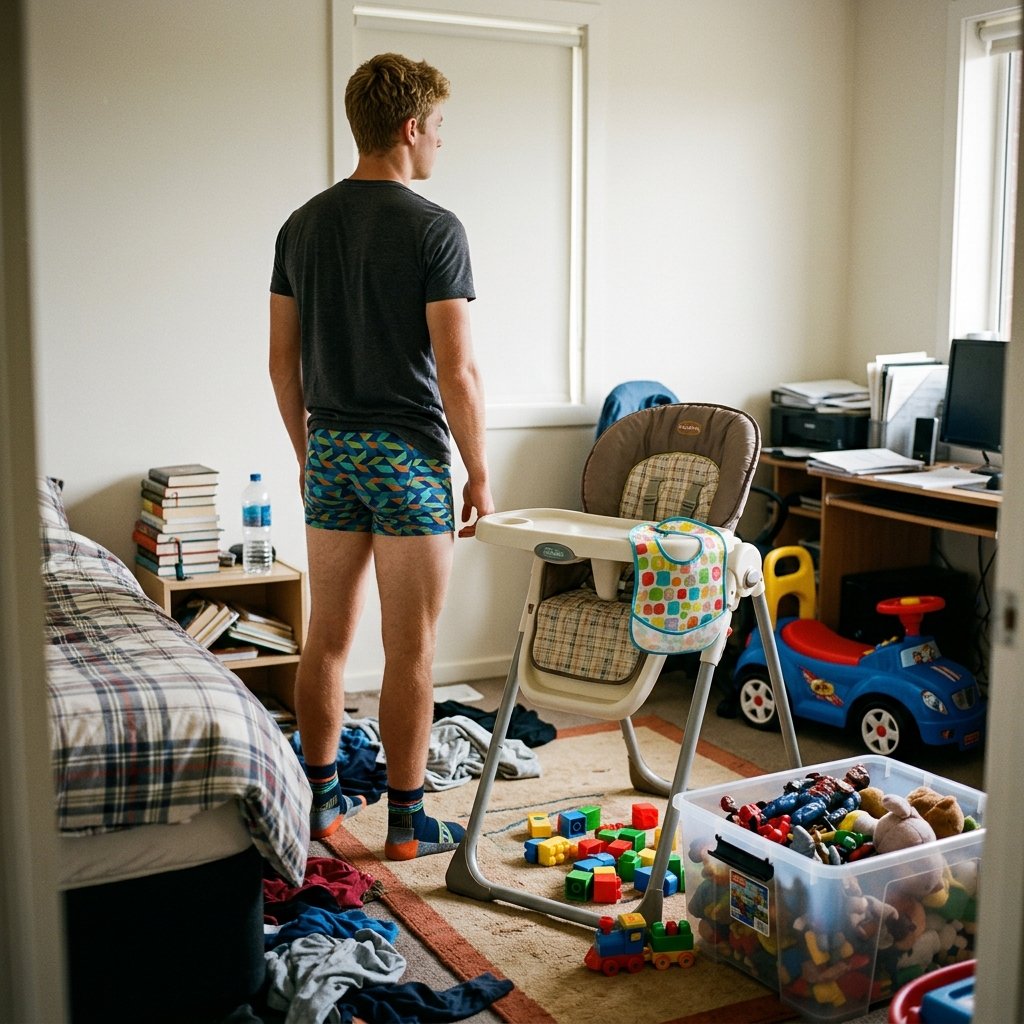
(Reflection, Math, Fitness, Mindfulness) Managing Mitchell’s Toy Time
Guidelines for Writing the Essay Prompt
Title: "Structuring Playtime for Mitchell: Managing Time, Toys, and Engagement"
Section Breakdown & Word Count Guidance:
Introduction (Approx. 200 words)
Set the context of babysitting Mitchell after work and outline the goals of structured playtime.
Establish why engaging with toys is essential for Mitchell’s development and the babysitting routine.
Briefly introduce the strategies for maintaining focus (toy rotation, time limits, and breaks like bottles or timeouts).
The Importance of Toy Engagement (Approx. 300 words)
Explain why it is critical that Mitchell engages with his toys and doesn’t simply drift away from the activity.
Discuss how loose, mindless playing doesn't meet the developmental goals but emphasize that forcing fun isn’t the aim, either.
Highlight the benefits of active engagement, such as improving focus and fostering imagination.
Structuring Toy Time (Approx. 400 words)
Detail the process of managing toy time, including pulling toys from the closet and spreading an assortment Mitchell enjoys.
Outline recommended time limits for toy activities (e.g., 20-30 minutes at a stretch).
Explain how to rotate toys if Mitchell loses interest and the signals to intervene if he disengages.
Using Timeout as a Gentle Reset (Approx. 200 words)
Explain how timeouts can serve as a tool for redirecting Mitchell’s behavior without being punitive.
Set clear expectations for timeout triggers, such as willfully ignoring toy activities or refusing engagement.
Clarify how brief timeouts can help Mitchell reset and re-focus for play.
Bottles and Breaks (Approx. 200 words)
Highlight the importance of Mitchell’s hourly bottle during babysitting sessions to ensure a smooth routine.
Recommend scheduling quiet time or cuddles during bottle breaks to keep things calm before resuming play.
Tips for Toddler-Friendly Playtime (Approx. 200 words)
Provide practical suggestions like creating mini-games, encouraging imaginative play, or storytelling with toys.
Discuss balancing freedom and structure to make play sessions enjoyable, engaging, and beneficial.
Closing Thoughts (Approx. 100 words)
Recap the importance of structured playtime and ensuring Mitchell is actively engaged with toys.
Reiterate that play can be fun while still being meaningful for Mitchell’s growth and routine.
Short Reference Essay (Approx. 150 words):
Babysitting Mitchell means more than keeping an eye on him—it’s about fostering a day-to-day routine that helps him thrive. Playtime, while it may seem simple, lays the foundation for critical developmental skills like creativity, focus, and independence. Ensuring Mitchell actively engages with his toys isn’t optional; it’s a key part of the evening structure. By creating a rotating selection of toys and setting short playtime intervals, his attention stays fresh and targeted. If he loses focus, a brief timeout can act as a reset button while keeping discipline light. Adding hourly bottle breaks provides both nourishment and comfort, ensuring a smoother transition between activities. Structuring toy time not only keeps Mitchell entertained but gives him a secure and consistent rhythm to rely on—and that’s essential when building a healthy daily routine.
MATH
Instructions:
Solve the following word problems about toy shopping with Mitchell. Each question involves basic arithmetic or critical thinking skills. Show your work where required.
Mitchell chooses a ball that costs $3 and a puzzle that costs $5. How much do the two toys cost together?
The toy store sells blocks in sets of 10. If Mitchell buys 3 sets, how many blocks does he have?
The store is offering a 25% discount on a $12 toy truck. How much does Mitchell need to pay?
If one toy train costs $6, how much will 5 toy trains cost?
Mitchell wants four cars from a box of toy vehicles. Each car costs $2. What is the total?
A set of counting toys comes with 15 pieces. If Mitchell accidentally loses 3 pieces, how many pieces are left?
Mitchell has $20 to spend. If a stuffed animal costs $8, how much money does he have after buying it?
There are 4 shelves of toys. Each shelf has 7 toys. How many toys are there in total?
Mitchell wants to buy a toy priced at $18 but only has $12. How much more does he need?
If one set of musical instruments costs $10 and Mitchell buys 3 sets, how much does he spend?
Mitchell buys a book for $6. The tax rate is 10%. What is the total cost of the book?
A toy airplane costs $4. Mitchell wants 6 airplanes. What will that cost?
There are different types of balls at the store—3 red, 4 green, and 5 blue. How many balls are there?
The toy store receives 50 new items. If 20 are sold, how many toys are left?
Mitchell is buying puzzle books. Each costs $3. If he buys 7 books, how much does he spend?
A toy set contains 36 blocks divided equally into 3 colors. How many blocks are there for each color?
Mitchell’s friends each want a toy car. If there are 4 friends and each car costs $5, what is the total cost?
A store sells balloons for $2 each. If Mitchell buys 9 balloons, how much does he spend?
Mitchell selects a teddy bear for $15 during a 20% off sale. What is the discount amount?
Mitchell stacks his blocks into 6 towers with 8 blocks each. How many blocks does he use in total?
If Mitchell buys glow sticks priced at 5 for $10, what is the cost of one glow stick?
The store restocked 120 toys evenly across 5 shelves. How many toys are on each shelf?
If Mitchell buys 4 yo-yos and each yo-yo costs $3, what is his total cost?
The toy section has 24 items on 3 racks. If one rack is empty, how many items are left?
A toy costs $7 with a $2 coupon applied. What is the final price?
The price of a water toy is $18. Mitchell pays with a $20 bill. How much change does he get?
Mitchell is building a shape set with 12 blocks. If he splits them evenly into 4 groups, how many blocks are in each group?
The toy store bundles 5 cars for $25. What is the price per car in the bundle?
If Mitchell gets a 15-piece toy set and gives away 5 pieces, how many pieces remain?
There are 40 toys in a bin, and Mitchell picks 3 toys every minute. How many toys does he pick in 5 minutes?
GYM
Warm-Up (0-10 Minutes)
0-5 Minutes: Dynamic stretching (arm swings, leg swings, torso twists).
5-10 Minutes: Light jogging or brisk walking to elevate heart rate.
Strength Training (11-90 Minutes)
11-20 Minutes: Compound lifts – barbell squats, 4 sets of 8-10 reps, rest 90 seconds between sets.
21-30 Minutes: Deadlifts, 4 sets of 8-10 reps, rest 90 seconds between sets.
31-45 Minutes: Bench press, 5 sets of 6-8 reps, rest 90-120 seconds between sets.
46-55 Minutes: Pull-ups or lat pulldown, 4 sets of 10-12 reps, rest 60 seconds between sets.
56-65 Minutes: Overhead press, 3 sets of 8-10 reps, rest 60 seconds between sets.
66-75 Minutes: Barbell or dumbbell rows, 3 sets of 8-12 reps, rest 60 seconds between sets.
76-90 Minutes: Core work – planks (hold for 60 seconds), hanging leg raises (4 sets of 12-15).
Cardiovascular Training (91-140 Minutes)
91-105 Minutes: Treadmill intervals – 30 seconds sprint, 90 seconds walk, repeat for 10 cycles.
106-120 Minutes: Rowing machine at a steady pace. Challenge yourself with resistance.
121-140 Minutes: Stair climber or incline treadmill walking for active recovery.
Functional/Bodyweight Training (141-180 Minutes)
141-150 Minutes: Burpees, 3 sets of 15 reps, rest 30 seconds between sets.
151-160 Minutes: Kettlebell swings, 3 sets of 12-15 reps, rest 30 seconds between sets.
161-170 Minutes: Box jumps, 3 sets of 15-20 reps, focus on explosive power.
171-180 Minutes: Push-ups and air squats, alternate for 3 sets of 20 reps each.
Pool and Jacuzzi Relaxation (181-240 Minutes)
181-200 Minutes: Laps in the pool – freestyle or a stroke of choice, moderate intensity.
201-210 Minutes: Cool-down laps at a slower pace with focus on breathing.
211-240 Minutes: Relax in the jacuzzi or sauna to soothe muscles and promote recovery.
End your workout feeling accomplished and energized, ready to take on the rest of your day!
MINDFULNESS
Find a peaceful spot and focus on the following statement for five minutes:
"I am here, in this moment, and I am enough."
Close your eyes and take slow, deep breaths as you repeat this affirmation in your mind. Allow the words to anchor you in the present, replacing any distractions or lingering stresses. Focus on the sense of calm and self-acceptance this moment offers.
Journaling Your Reflection
Once you’ve completed the reflection, open a journal and write about your experience. Use these prompts to explore your thoughts:
How did the affirmation make you feel during your quiet moments?
What realizations or emotions surfaced as you focused on being present?
How can you carry this feeling of self-acceptance and calm into your daily routine?
Write with honesty and without self-judgment, letting your reflections unfold naturally.