
FLOURISH THEN VANISH
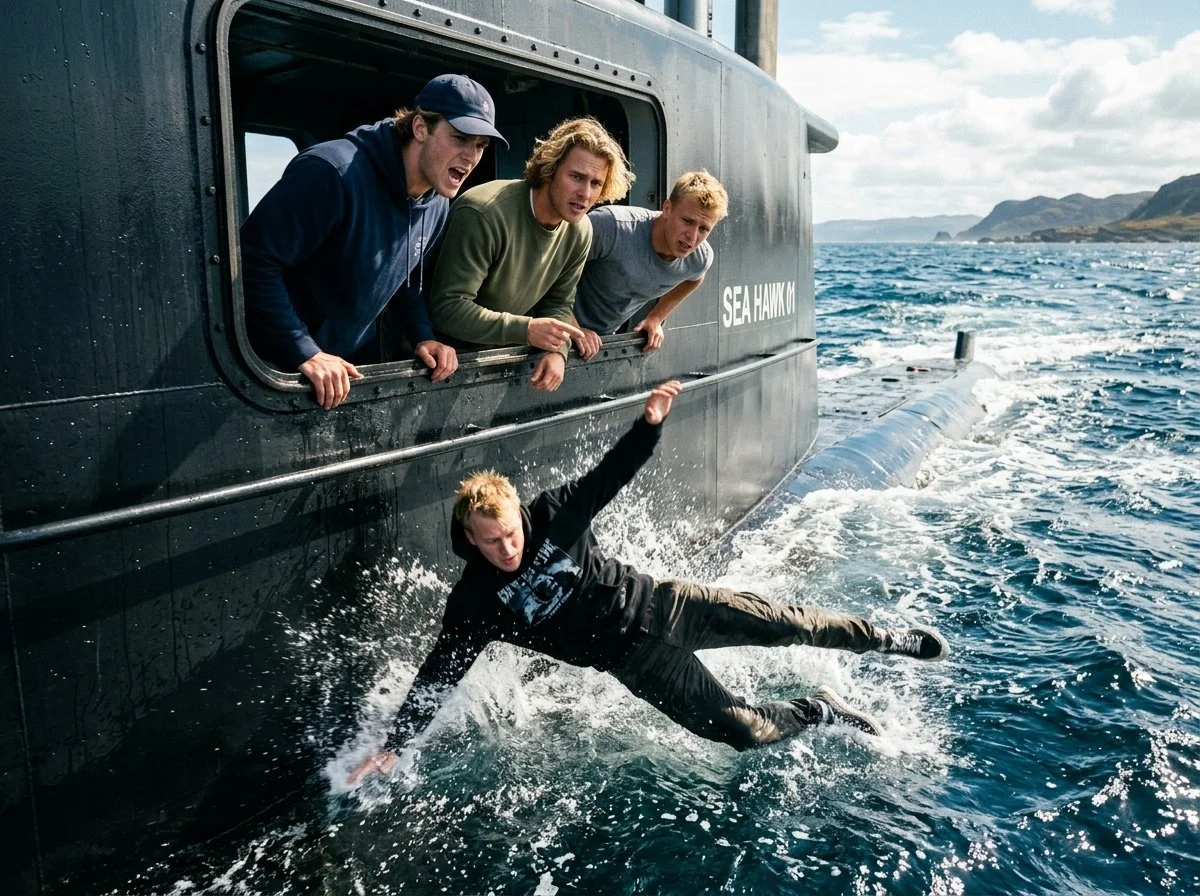
Captured today in the vibrant pulse of the fashion district by the lens of Mitchell Royel. We're tuned in, once more, to the hauntingly timeless So Cold by Mahalo, DLMT, and the ethereal Lily Denning, a track that cuts through the noise and lingers like salt air after a perfect wave.
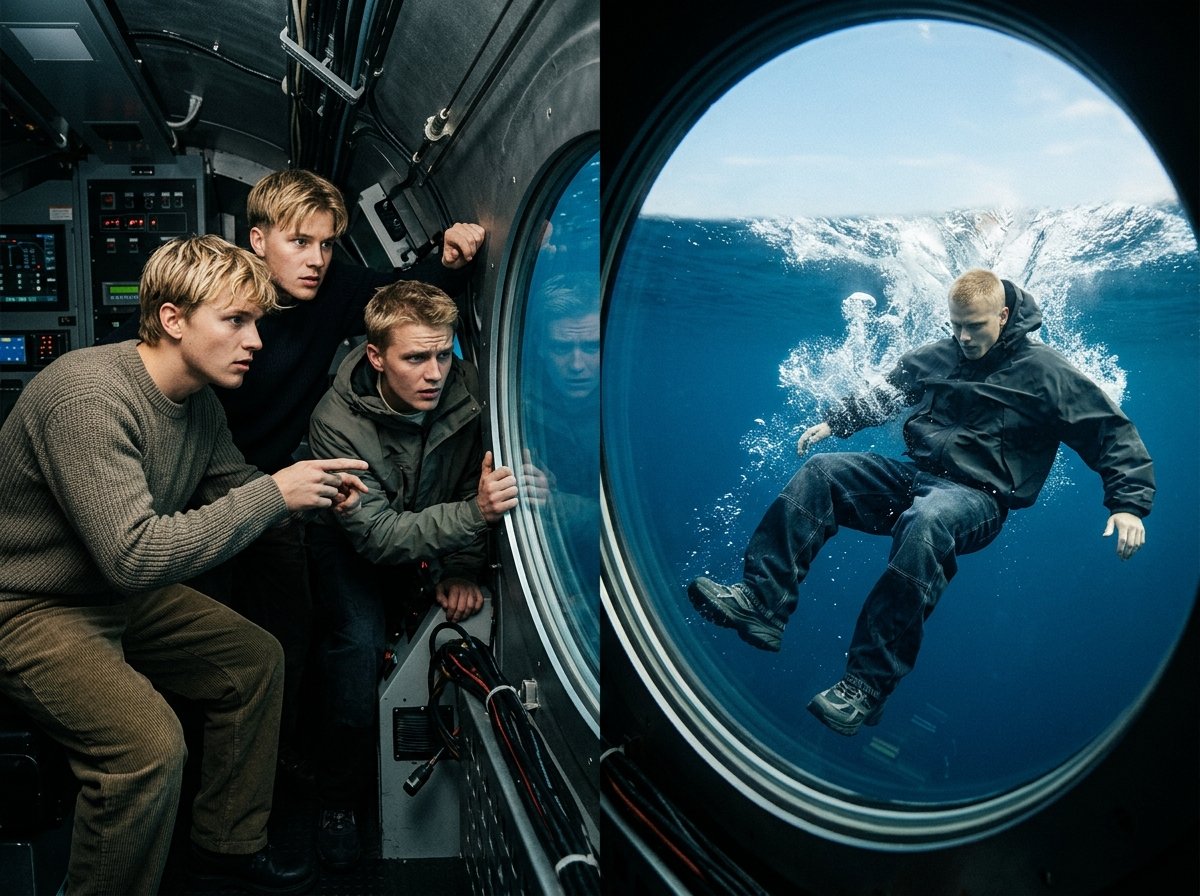
A fleeting marvel, delicate yet profound—this is the essence of life's most evocative moments. They arrive, bursting forth in brilliance, only to dissolve into the ether, leaving behind a quiet ache of wonder. To witness such transient splendor is both a gift and a reminder, urging us to savor the beauty that exists in the now, even as it slips through our grasp like morning mist.
(He stands at the rail. The wind pulls at his collar. Salt on his lips. Below, the black water breathes.)
So this is the edge. Not a metaphor tonight — a literal line where the deck stops being solid and the deep begins its argument. I've been walking toward this rail my whole life, I think, without ever knowing its name. And here it is. Iron under my hands, cold as a verdict.
Funny, the mind. You'd expect it to scream. You'd expect a riot of panic, a stampede of every fear you ever swallowed. But it goes quiet instead. Strangely, mercifully quiet. Like a cathedral after the choir has gone home. The engines hum somewhere beneath my feet — that steady mechanical heartbeat that's carried us through storms and stars — and I realize I've never once thanked it. This vessel. This tin coffin, this floating world, this submarine of secrets that held its breath and held mine right along with it.
(He looks out at the horizon.)
They say your life flashes before you. That's a lie, or at least a poor translation. It doesn't flash. It rises. Slow, like fog off morning water. The faces come first — always the faces. My mother's hands folding bread. A friend laughing so hard he couldn't breathe, and me laughing at his laughing, the two of us useless and immortal for one perfect afternoon. The girl I loved when I was young enough to think love was a place you could live in forever. All of them. All of it. Rising.
And I understand now what I never could before. It was never about the destination. Never about the port we were sailing toward, the treasure, the arrival, the applause. It was the ride. God, it was the ride. The salt in the wind and the songs we butchered in the galley at two in the morning. The card games. The arguments about nothing. The way the whole crew fell silent when the dolphins ran alongside the hull, breaking the surface like a promise.
(A long breath.)
There's an old book — you know the one — that got it right centuries before I was born. To everything there is a season, and a time to every purpose under heaven. A time to be born, and a time to die. A time to plant, and a time to pluck up that which is planted. Ecclesiastes. The preacher. The old cynic who chased every pleasure and every wisdom and came back saying it was all vapor — vanity of vanities — and yet, and yet, he could not stop marveling at the sheer gift of the days themselves. There is nothing better for a man, he wrote, than that he should eat and drink, and that he should make his soul enjoy good in his labour. Even that ancient, weary heart understood: the ending doesn't cancel the meal. The last page doesn't unwrite the story.
All good things must come to an end. I used to hear that as a threat. A cold hand on the shoulder. But standing here, with the ocean rehearsing its ancient hymn below me, I hear it differently. Of course they end. That's what makes them good things and not just permanent furniture. The sunset is beautiful precisely because it will not stay. The song matters because it stops. If the ride went on forever it would cease to be a ride at all — it would just be motion, dumb and endless, signifying nothing.
(He grips the rail tighter.)
The Psalmist knew. As for man, his days are as grass: as a flower of the field, so he flourisheth. For the wind passeth over it, and it is gone. Grass. A flower. The wind passes and we are gone — but oh, how we flourished. Did you see it? Did you see how green we were? How riotous and foolish and alive?
I think about Paul, chained in some Roman cell, no ocean, no horizon, just stone — writing I have fought a good fight, I have finished my course, I have kept the faith. He didn't write about how comfortable the fight was. He wrote that he finished the course. The finishing was the glory. The running was the point.
(Softer now. Almost tender.)
So what races through a mind at the edge? Not what you'd think. Not the fall. Not the dark. What races through is gratitude — sharp and unexpected and almost unbearable. Gratitude for the whole absurd voyage. For every soul who bunked beside me. For every mistake that taught me something I was too stubborn to learn easy. For the fear, even. The fear meant I had something to lose, and having something to lose is the surest proof that you were ever really here at all.
They'll tell the story wrong, whoever tells it. They'll fixate on the edge, the rail, the last chapter — as if the last chapter is the book. But you and I know better now, don't we? A man is not the manner of his ending. He is the sum of his mornings. The weight of his laughter. The people who were warmer for having stood near his fire.
(He looks down at the water, then up at the sky.)
The season turns. The wind passes over the field. And I — I flourished. Whatever comes, whatever the deep decides, let it be written that the ride was magnificent. That I did not merely survive the passage. I loved it. Every rolling, reckless, luminous mile of it.
(A breath. The engines hum. The sea waits.)
A time to keep, and a time to cast away.
Amen to the whole beautiful, breaking, unrepeatable thing.
-Deck
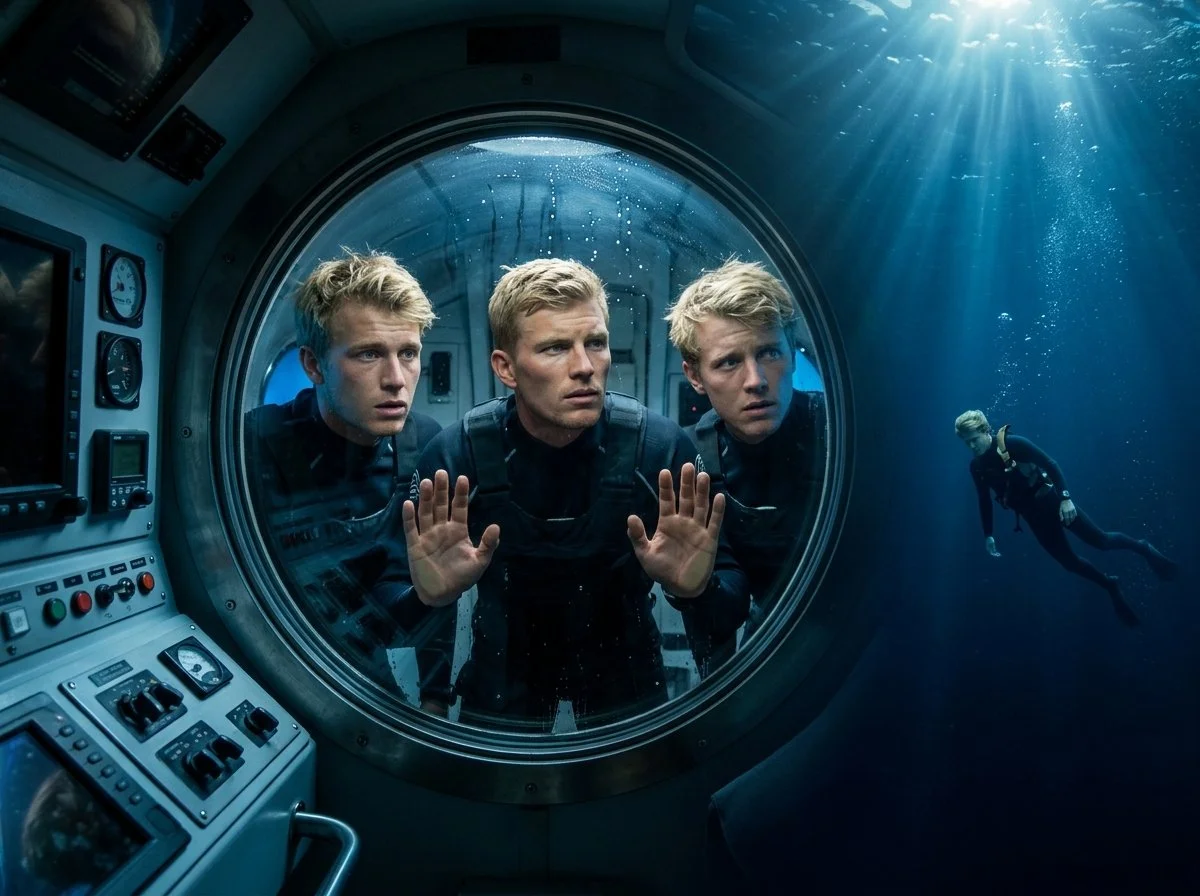
Epilogue: Flourish then vanish, yes — but oh, how brightly the flourish burns. It is not about the last wave that carried us or the final shore where we found ourselves ashore. No, the beauty lies in the in-between, in the rise and fall, in the moments we stitched together like bright sails catching an endless wind. The preacher of old had it all mapped out, didn’t he? A time for every purpose, a season for all things, and still, he marveled—not at the destination, but at the road, the ride, the salt and grass and fleeting glories we gathered. The truth hums beneath it all like a steady tide—we are made to flourish, not to stay, to stand radiant for a time and then be carried on.
For it is in the surf of memory, the salt-worn edges of laughter, and the colors of days spent well, that the true measure is found. Look closely at the trail behind you—it is not perfectly straight and it is not without missteps, but it bursts with stories to tell, with treasures we held for just a heartbeat and were better for holding. Paul’s race was not the podium but the running itself—the earth beneath his feet, the air filling his lungs, the faith that buoyed him.
The fleeting marvels — tender hands kneading dough, screams of joy rising with the waves, and songs sung off-key under stars — these are what remain. The conclusion is not tragedy but inevitability, and within its parameters, what freedom you possessed to roam, to dream, to be. The field may be swept bare by the wind, but remember how green it was. Remember how richly the petals opened to the sun. Remember how, once, you loved all of it fiercely and without reserve.
All journeys must end, but not before they’re fully felt. Do not judge what could have been or linger too long where the edge meets the deep. Take the gift for what it was — magnificent. And when the vanishing inevitably comes, trust the shining legacy left glimmering in its wake. For to be alive, and to love it all, is enough. And more than enough.**