

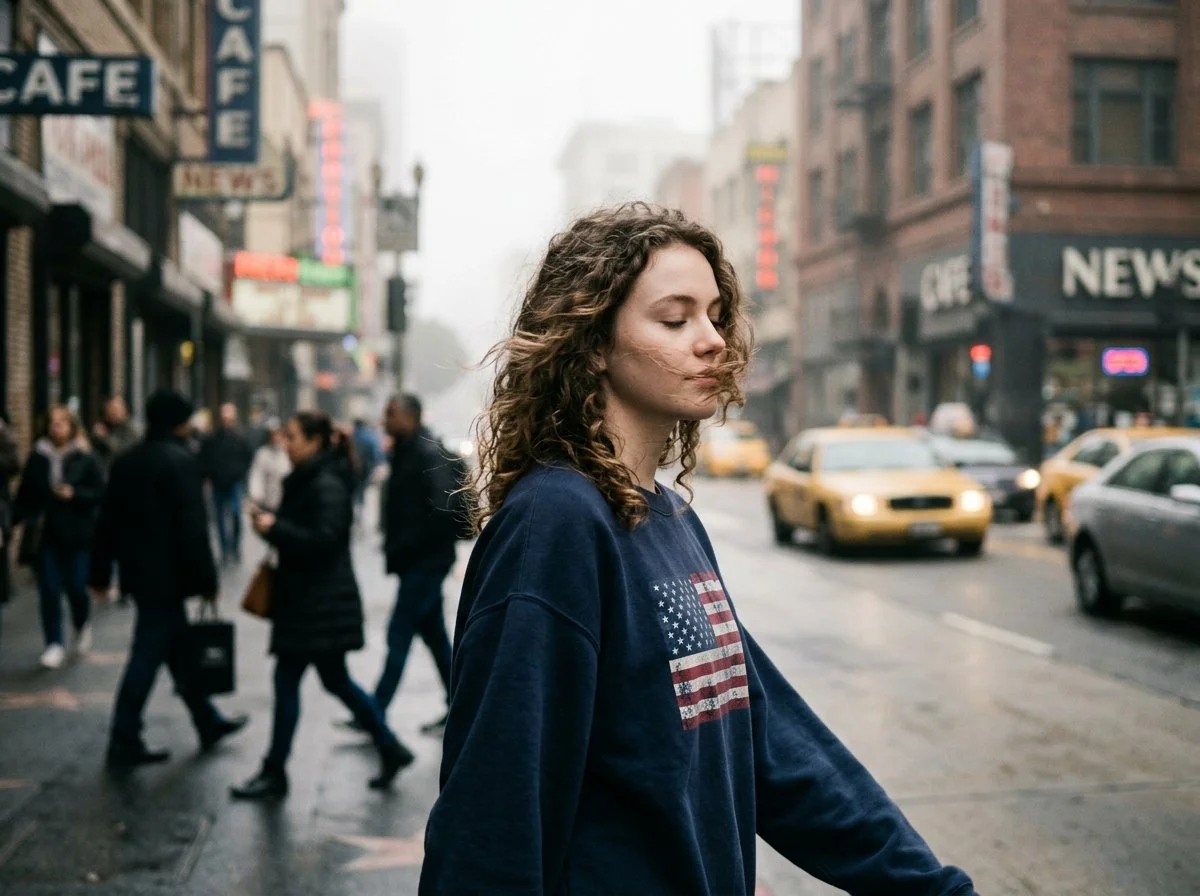
WE'RE HERE TO RIDE, NOT TO ARRIVE
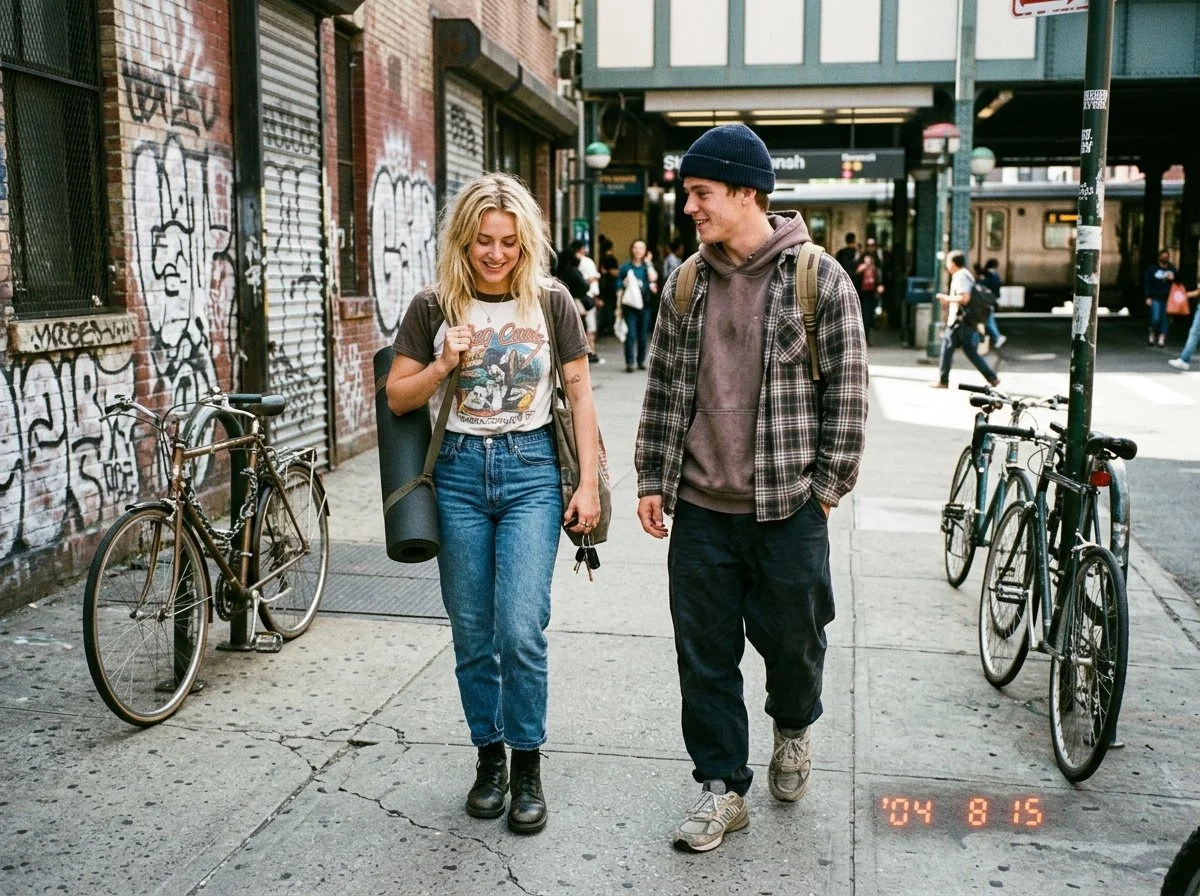
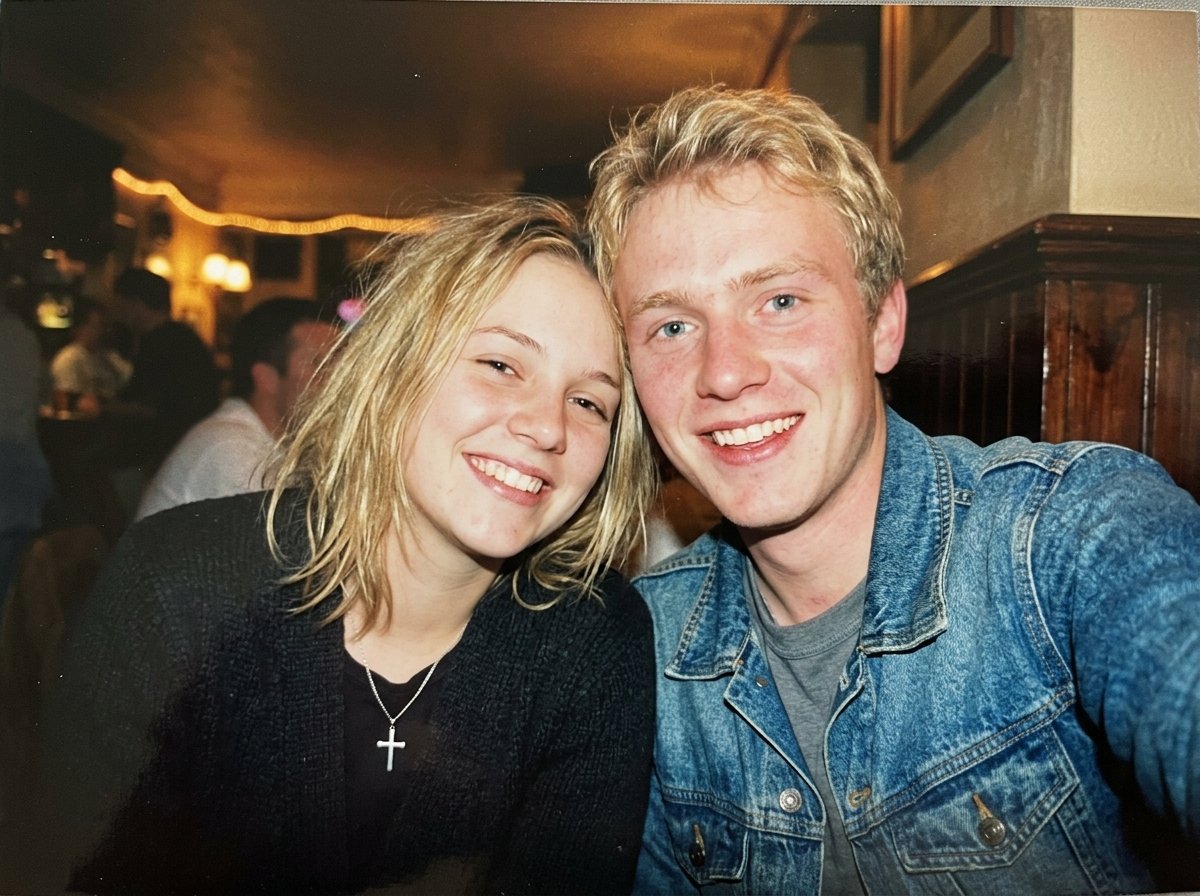
Throwbacks submitted to Gospel Glamour, all captured on disposable drugstore cameras and soundtracked by "We Got Love" feat. Ms. Lauryn Hill by Teyana Taylor.
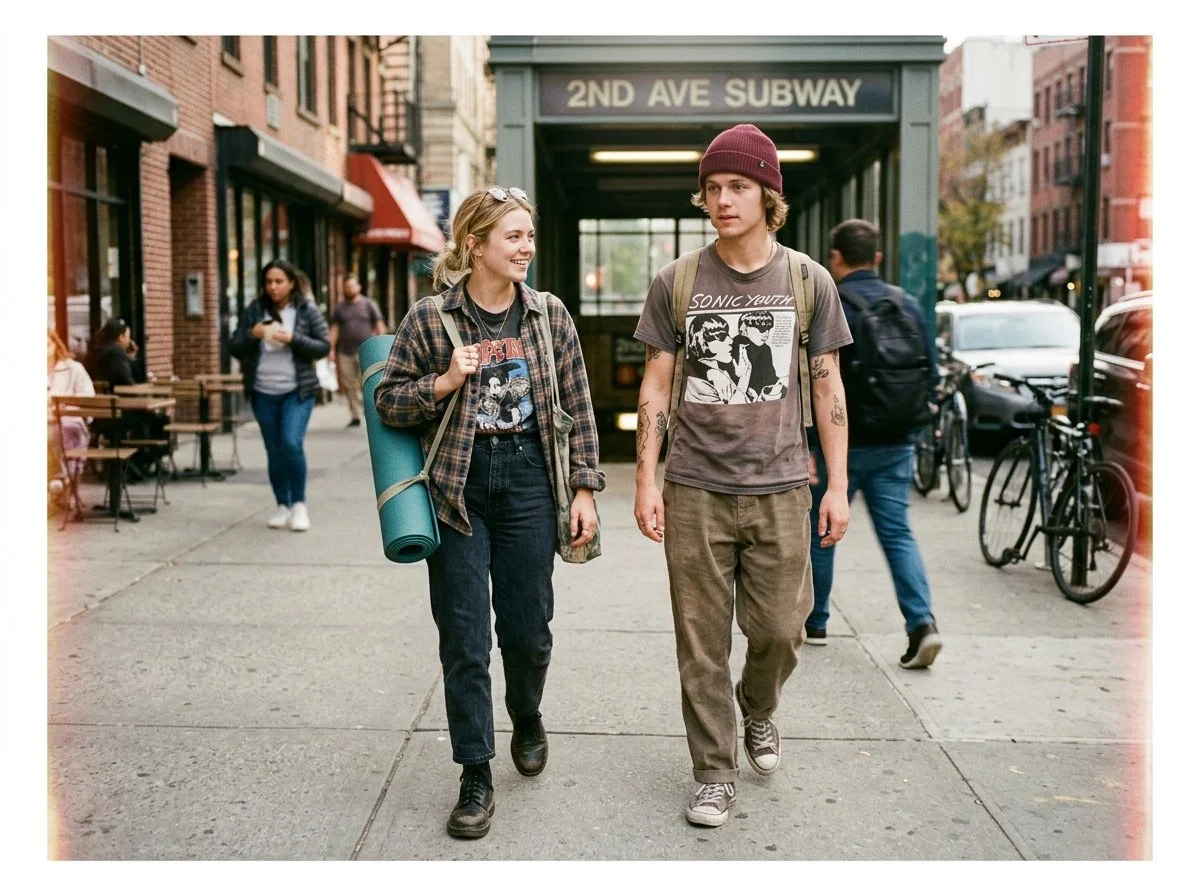
Nothing's changed.
And I need you to hear me when I say that — really hear me, the way you hear a thing in your chest before your head catches up. Nothing's changed. And that, my loves, is exactly why we're here. Right where we are. Not lost. Not late. Not behind. Here.
I was on a subway car the other day. New York. That old rattle, that lean and sway, that smell of steel and something you can't name. And I looked up and I saw her. A girl with a yoga mat slung across her back like a quiver of arrows. Combat boots. A vintage tee gone soft from a hundred washes. And I swear to you, I have been that girl. You have been that girl. We are all, still, that girl.
Twenty years ago she was on that same car. Same lean, same sway. Blonde hair loose, a tote bag full of everything she thought she needed. And she's still riding. Still searching. Still arriving. Because that's the secret nobody tells you — you don't graduate from the seeking. You just get more honest about it.
The subway car is the truth. Do you feel that? We keep climbing on. New York to California and back again. Underground in Manhattan, then somewhere in the golden light of the West with the windows down. Different coast, same ride. Same woman, holding her mat, holding her breath, holding herself together with a leather strap and a prayer.
And love is the new money.
Say it with me.
Love is the new money, love is the new community.
We used to chase the other kind. Oh, we chased it. We stacked it, counted it, wore it, apologized for wanting it and wanted it anyway. But something cracked open in us. Something in the collective body of us girls said — enough. The currency changed. The exchange rate flipped. And now the richest woman in the room is the one who can hold another woman's face in her hands and say, I see you, keep going.
Nothing's changed. We're still walking these streets with our mats and our tattoos and our band tees. Still ducking into the hot yoga room where the air is thick as a womb, where we sweat out the lies, where we fold and unfold and fold again. That room is a church. Don't let anyone tell you it isn't. The mirror is an altar. The mat is a pew. And when the teacher says surrender, half of us are weeping and we don't even know why.
And then Sunday comes. And some of us go to the pews with the wood and the light through colored glass, and some of us go to the ocean, and some of us go nowhere at all but the kitchen floor. And it finds us anyway. That thing. That presence. That Holy Spirit that doesn't care about your zip code or your outfit or your résumé.
I have been on my knees. On the actual ground. Face wet, mascara gone, undone in the most complete and beautiful way. Captured. That's the only word for it. Captured by something bigger. And I looked up through the blur and there were hands reaching for me. Women's hands. Us girls. Because we don't let each other fall alone anymore. That's the new economy. That's the new wealth.
Love is the new money. Love is the new community.
Use us. I mean it. Use us the way you'd use a bridge, a lifeline, a rope thrown across the dark. We are here to be used, to be leaned on, to be spent freely between women who understand. Lingo us — talk to us in the language we invented in the back of the subway car, in the whisper before the pose, in the pew, on the kitchen floor. That secret dialect of the seeking. That mother tongue of the almost-arrived.
Because here's what I've learned riding these cars all these years. The destination was never real. The arriving is the lie we tell to keep our feet moving. What's real is the ride. What's real is the woman beside me with her mat and her tote and her tired, holy eyes. What's real is that we keep climbing back on. Again. And again. And again.
Nothing's changed. The graffiti's still on the wall. The date stamp still says we were young once and we still are. The train still leans and sways. And we are still here — still searching, still sweating, still crying on the floor, still catching each other by the wrists before we hit the ground.
And maybe that's the whole thing. Maybe that's the sermon and the confession and the battle cry all rolled into one.
We're not here to fix it. We're here to hold it.
We're not here to arrive. We're here to ride together.
So climb back on, my love. Take your seat next to me. Bring your mat, bring your grief, bring your whole undone self. There's room. There's always room.
Because love is the new money.
Love is the new community.
And nothing's changed — thank God, thank everything — nothing's changed.
That's exactly why we're here.
-Ryder, MR, GG Collective
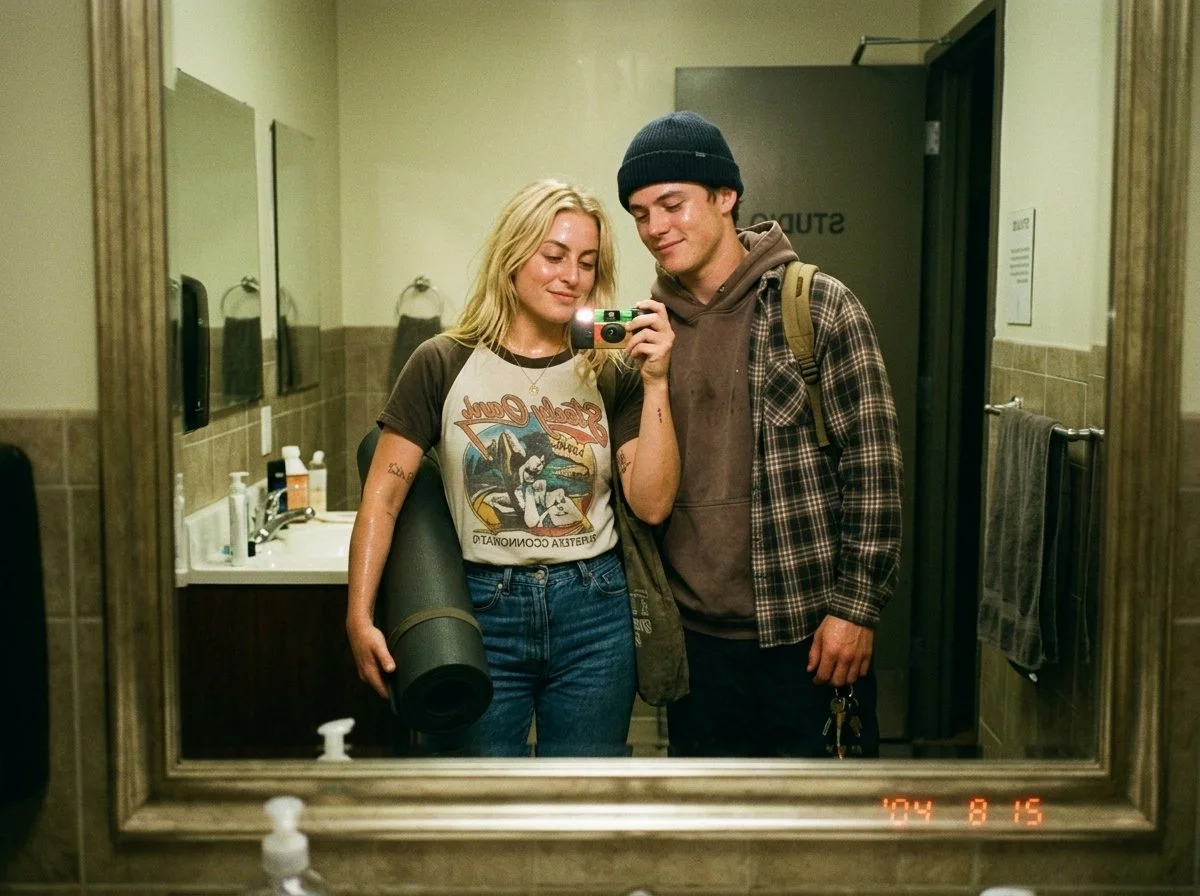
Throwbacks submitted to Gospel Glamour, all captured on disposable drugstore cameras and soundtracked by "We Got Love" feat. Ms. Lauryn Hill by Teyana Taylor.
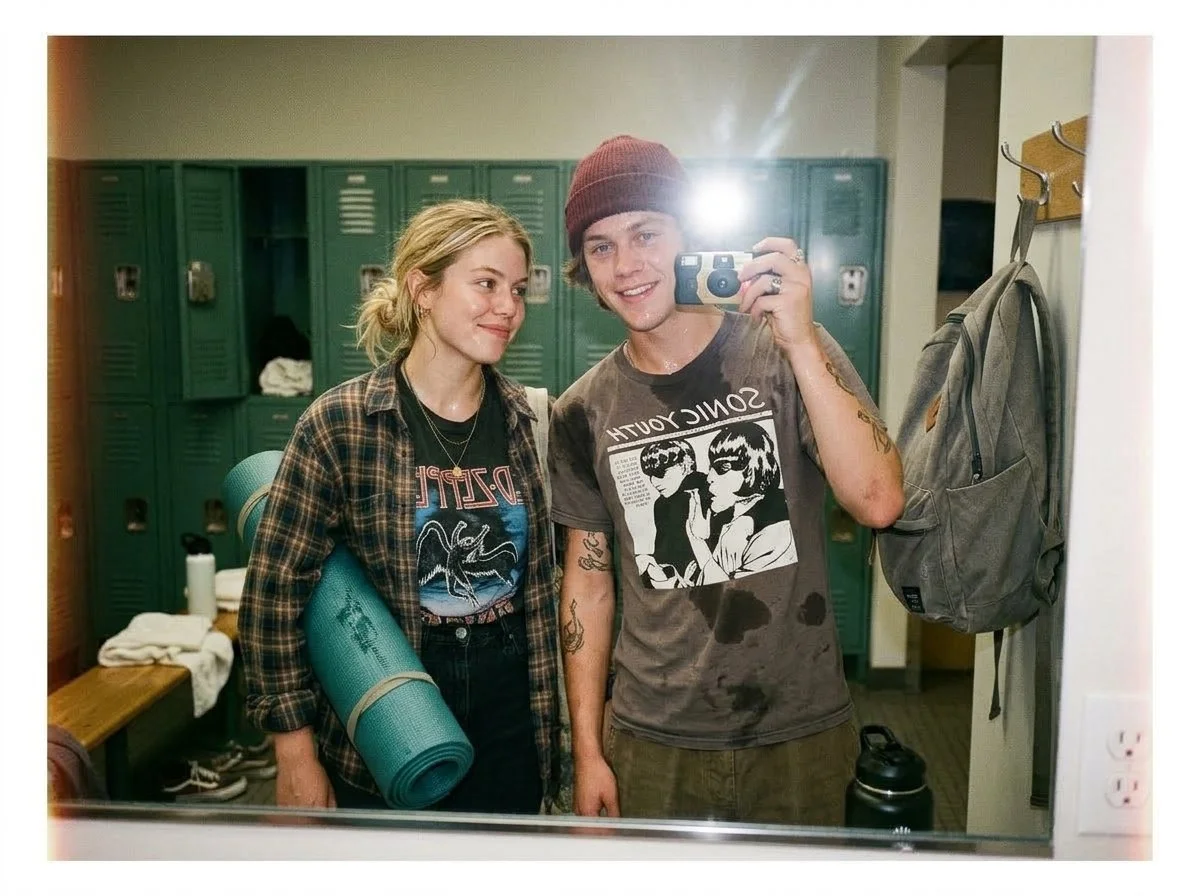
Epilogue: Love is the economy of the eternal. It isn’t made to be hoarded or withheld; it is meant to be spent and shared until the ledger of the heart is full beyond reckoning. Nothing about the core of this has shifted. Beneath the rush of modernizing, optimizing, and arriving, the foundation remains unmoved. Love is still the undeniable currency of connection, the wealth that we can’t measure in zeros but instead in the quiet moments of being seen, in the steady grace of showing up. And through these loops—yesterday's mat, today’s train, tomorrow's tide—we are reminded that the seeking itself is sacred. This isn't about the finish line or a grand conclusion. It’s about the breath in the sweat lodge of a yoga room, the clasp of hands in a subway sway, or the old scar-red stories whispered across a late-night floor.
Nothing's changed. The leaning in, the letting go, the catching each other over and over again—it’s the same. It’s a story of us, the collective body of women who say to each other, "I see you. Keep going." That’s the unspeakable beauty of sharing this ride, this truth stitched in the universe since the beginning, unbroken and whole. It’s the pulse of love running through Sunday’s stillness, New York’s chaos, and every quiet kitchen prayer. Nothing’s changed. It never had to.
THE DESERT WHISPERS IN SHADES OF VIOLET
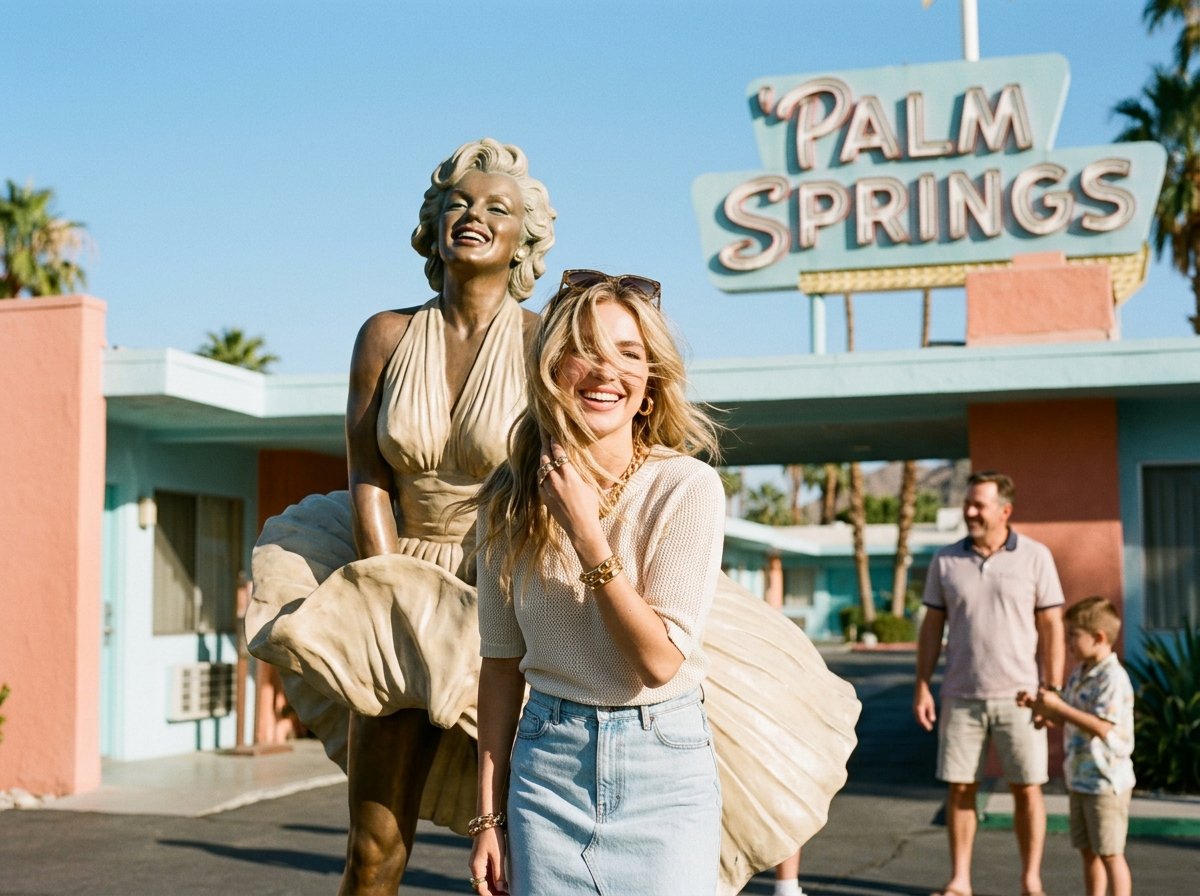
The desert sighs, captured under Mitchell Royel's lens in the heart of the Fashion District, today, 9/4/26. It’s an unspoken love letter to Palm Springs—the shimmer of heat against sun-bleached skies, a mirage of nostalgia wrapped in violet dusk. Somewhere between the lines of history and dreamscape, we see her—a shadow and a light all at once, Marilyn Monroe, eternal in her glow. An icon etched in glamour and longing, her laughter ricochets through the haze like a secret never fully kept. We’re listening to I Need Your Love by Calvin Harris and Ellie Goulding—it fills the silence like a heartbeat beneath a desert sky, the kind of song that drowns hearts in its rhythm. Marilyn dances in our imagination, wrapped in satin and mystery, a muse suspended in the winds of time, soft and untouchable, yet everywhere all at once. Like the desert, like Palm Springs, she becomes a place you carry within.
There's a particular kind of quiet that lives inside a hotel room in the desert. Not silence, exactly. More like a held breath. The air conditioner hums low, the curtains glow gold at the edges, and I'm sitting cross-legged on a bed that isn't mine, holding a phone that is.
Brand new.
Still smells like the inside of the box.
I keep thinking about that.
How something can be brand new and still hold all the old weight if you let it. So I don't let it.
Delete.
His words scroll up the screen — paragraphs, whole essays, the kind of messages that used to make me feel chosen. He was good with language. That was part of it. He could build a cathedral out of a text message and I'd move in, hang curtains, call it home. But a cathedral isn't the same as a life. I know that now. I'm learning it with my thumb, one long paragraph at a time.
Delete.
Delete.
We ended it clean. That's what everyone keeps saying, like it's a compliment. At least it was amicable. And it was. No slammed doors. No lies. Just two people who finally admitted, gently, that gentleness wasn't enough. Amicable doesn't mean it doesn't gut you, though. Amicable just means you have to feel it without anyone to blame. You have to sit with your own hands and say — this was me, too.
So here I am.
Clearing contacts.
Not out of spite.
Out of space.
Every name I let go makes the room inside me a little bigger, and I've been so cramped for so long I forgot I could stretch.
The drive out here did something to me.
Hours of highway. My dad's hand steady on the wheel, my little brother asleep against the window with his mouth open, the desert opening up on either side like the world just decided to exhale. Somewhere past the wind turbines — those great white giants turning slow against the mountains — I felt it. A fog I didn't even know I'd been living in started to lift.
I didn't cry. I just breathed. Really breathed. The kind that reaches the bottom of you.
And in that breath, things I'd been ignoring started to whisper.
The new job, for one. Part-time, nothing fancy, the kind of thing you take to pay for the life you're figuring out. But something about it feels different. I can't name it yet. It's like walking into a room and knowing someone left the window open — you can't see the air moving, but you feel it. That job is a window. I don't know what it's letting in yet. I just know it's letting something in.
There's a café back in the valley.
Crave.
I've been a handful of times. Sat in the corner. Watched the light move across the tables. And I remember thinking, both times, I could do something here. Not just drink coffee. Make things. Write things. Let the messy half-formed parts of me spill out onto a page where no one's grading them.
The people there — they hum on a frequency I recognize. Artists and dreamers and the beautifully unfinished. My people, maybe. I've spent so long shrinking myself to fit rooms that weren't built for me. What would it feel like to sit somewhere that was?
So I've decided. It's small and it's enormous. On my days off, I'm going to Crave. I'm going to sit in that corner and I'm going to create. Not for anyone. For the sheer animal joy of making a thing that didn't exist before I touched it.
And there's more. There's a hot yoga studio I can finally go to as much as I want — sweat pouring, mind emptying, my body remembering it belongs to me. There's a cycling studio too. A room full of movement and noise and the good kind of burning. I keep imagining myself in these places, over and over, until the imagining stops feeling like a wish and starts feeling like a plan.
This is what nobody tells you about the ending of things. That the space it leaves isn't just loss. It's room. Room for yoga and cycling and coffee-shop mornings. Room for a version of me I haven't met yet but already miss.
My brother's awake now.
Restless the way little boys get in hotel rooms.
So we go outside.
The evening is warm and violet. And there she is — the statue. Marilyn. Enormous, white, laughing, her skirt caught forever in that wind that isn't blowing anymore. My brother tips his head all the way back to look at her.
"Who's that?" he asks.
And I tell him.
I tell him she was one of the most famous women in the world. That millions of people loved her face, her voice, that laugh. That she could walk into a room and stop it cold. And I tell him the other part too, softly, the part he's too young to fully hold — that being loved by everyone isn't the same as being known. That she was lonely in the middle of all that light. That she was so much more than the picture the world kept taking of her, and hardly anybody ever bothered to look.
"That's sad," he says.
"Yeah," I say. "It is."
And standing there, my hand on his small shoulder, the desert cooling around us, something clicks so quietly I almost miss it.
Because I've spent a long time being someone else's picture. Building homes inside other people's cathedrals. Waiting to be chosen, be loved, be seen — from the outside in.
But I don't want to be adored and unknown. I want to know myself. From the inside. All the way down.
I look up at her one more time — frozen mid-laugh, mid-flight, mid-becoming. And I make her a small promise, though it's really for me.
I'm going to go home. I'm going to sit in that corner and make my things. I'm going to move my body until it feels like mine again. I'm going to walk into that new job and find out what the open window is letting in.
I'm going to look at myself the way nobody ever really looked at her.
My brother slips his hand into mine, and we walk back toward the golden light of the hotel, and I swear I can feel it — the woman I'm about to become, already waiting for me, already so glad I'm finally on my way.
-Ryder, MR, GG Collective
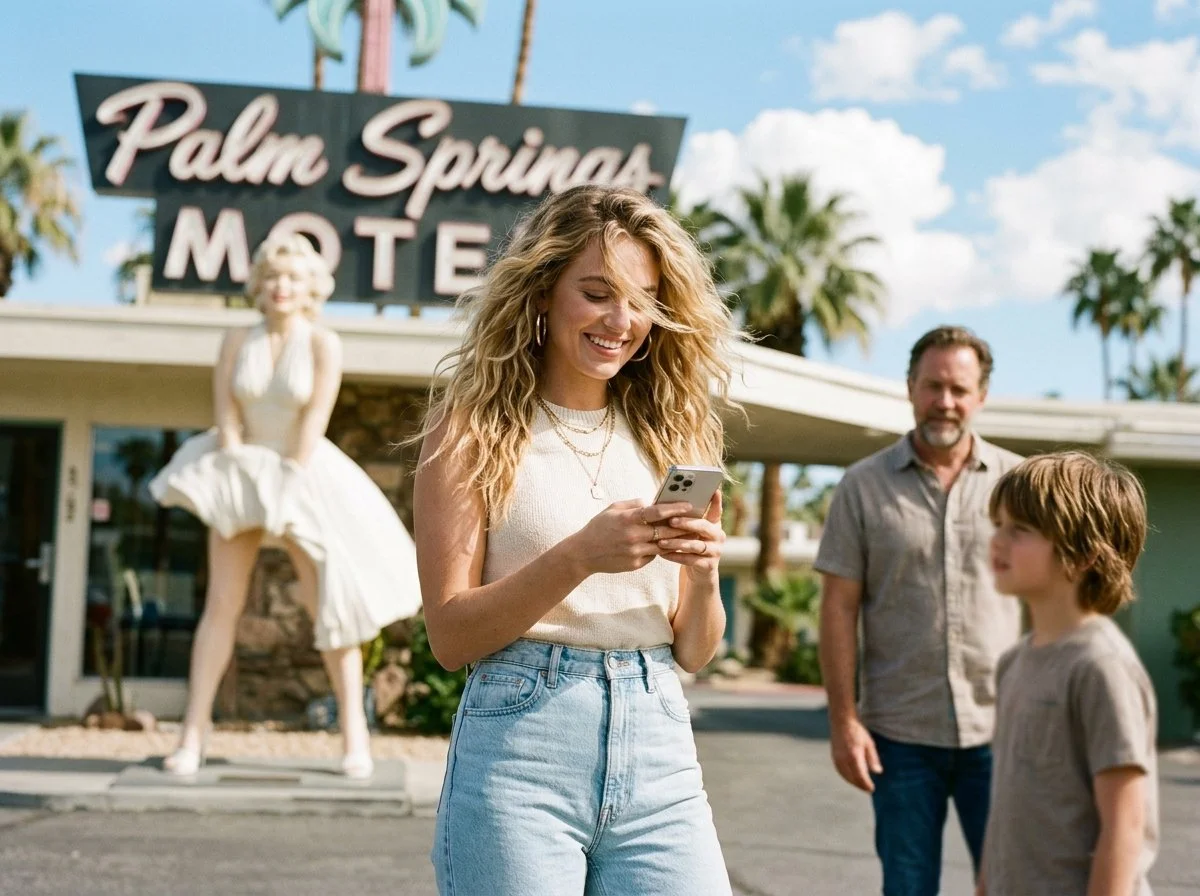
Epilogue: And now, we breathe. Together. We sit with everything that's still humming in the room—the bitter, the sweet, the ache, the relief—and we hold it all like water cupped in our hands. It slips between our fingers, yes, but what remains clings to the skin. These are the memories that stay—not to haunt but to shape. We see it now, don't we? The quiet knowing that some chapters of our lives don't close neatly. They sit open, edges curling in the breeze, living in the dissonance between what we wanted and what became. And maybe that's okay. Maybe this is where we grow.
We walk forward, not fully separate from what has been, but less bound by it. Less burdened. Memories wrap themselves around us like threads, not chains, and we learn to weave them into something that holds us without tying us down. It's not about erasing, because the past is as much ours as the future. It's about leaning in—into the cracks that once cut deep, into the spaces that opened too wide for us to fill at the time. But now, together, we fill them. With breath. With forgiveness. With the tender, blossoming hope that who we were does not have to decide who we will be.
There’s a kind of grace in this in-between, isn't there? A flutter of knowing that the woman we're becoming is waiting up ahead, smiling, arms stretched wide. She understands the bitterness we've tasted and the sweetness we've craved. She knows, as we do now, that we had to live all of it—every jagged, golden moment—to arrive here. We walk toward her, not as strangers but as pieces finding their way back into place. And she is ready. We are ready. For what comes next. Together. Always together.
BALDWIN HILLS MEETS MALIBU CHIC
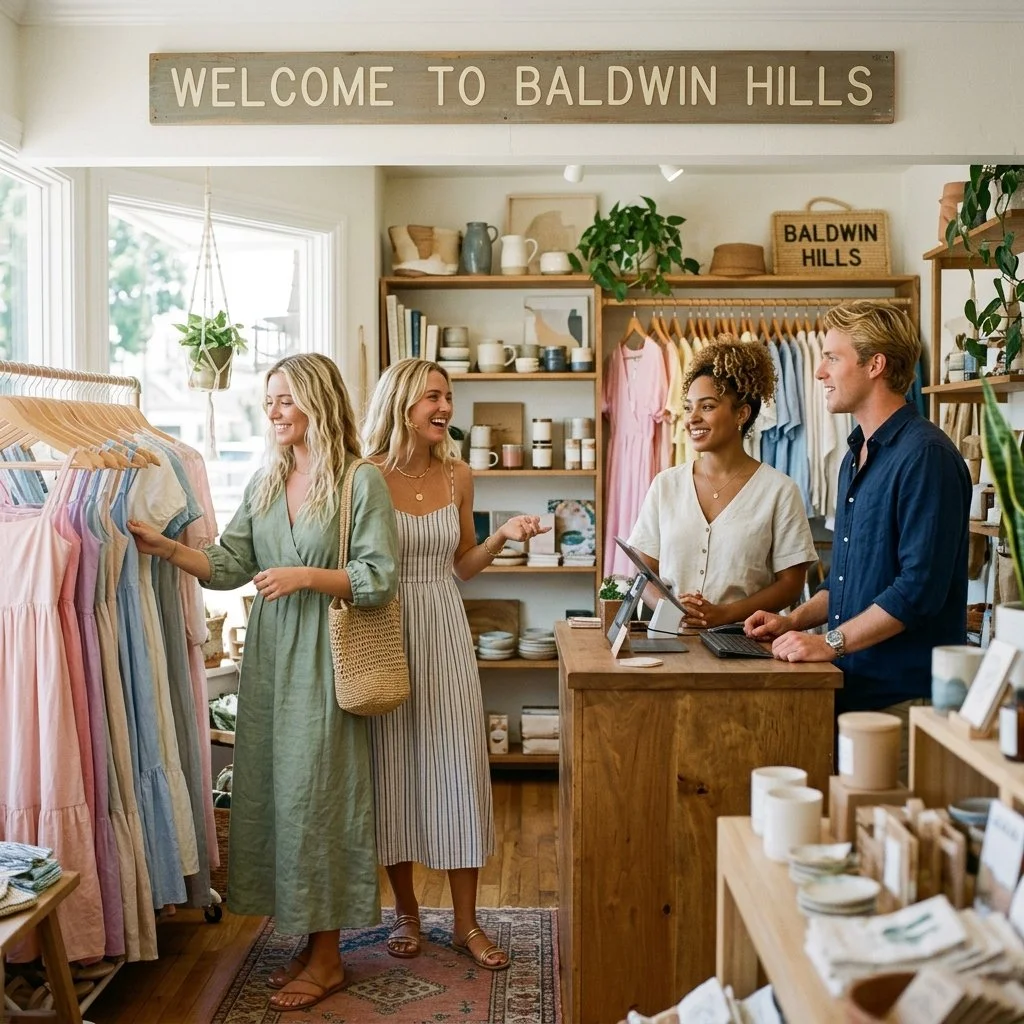
Captured by Mitchell Royel in the Fashion District, where everything felt a little golden, a little slow, and a little too good to leave behind. There was this soft kind of heat in the air, the kind that makes every glance feel loaded and every frame feel like a memory before the night is even over. And now playing, Hot & Sexy - Girls Trip by Zara Larsson and Tyla, because it fits the mood exactly—pretty, bold, effortless, and just the right amount of dangerous.
There are days when inspiration politely taps you on the shoulder, and there are days when it practically pulls you out the door.
This was one of the second kind.
I had been staring at fabric swatches for a new dress line for what felt like forever. Soft cottons, slippery silks, tiny floral prints, clean solids, buttons that were almost right but not quite. Everything was pretty, but nothing was saying anything. And if there’s one thing I’ve learned about designing dresses, it’s that “pretty” is only the beginning. A good dress should have a point of view. It should feel like somewhere you’ve been, someone you’ve met, or a version of yourself you’re just about ready to become.
So my girlfriend and I decided to leave our usual little world for the afternoon. We ventured out of my natural habitat with iced coffees, sunglasses, and a very open mind. Our destination was a dress shop in Baldwin Hills, partly because I had heard about it, and partly because the neighborhood had been lingering in my imagination after watching the show. There was something about the hills, the houses, the confidence, and the quiet glamour of it all that made me curious.
I wasn’t looking for anything too specific. Sometimes that is the best way to shop for inspiration. You go in without a checklist, and the day hands you exactly what you didn’t know you needed.
The dress shop was tucked into a sweet little stretch that felt lived-in and loved. Not overly polished. Not trying too hard. Just warm, colorful, and full of personality.
Inside, there were racks of dresses that immediately made me slow down. Cotton sundresses with easy movement. More structured pieces with sharp little waists. Prints that felt bright without being loud. A few pieces had that rare quality I always notice: they looked like they belonged to real women with real plans.
Brunch. A birthday dinner. A first date. A family party where you want to look effortless but secretly spent twenty minutes deciding on earrings.
Behind the register was a young woman in her twenties who looked like she had been styled by instinct. She had that calm, pretty confidence that doesn’t announce itself. Her hair was done, her makeup was soft, and she wore a dress from the shop in the most convincing way possible: like she wasn’t selling it, she was living in it.
A young man, also in his twenties, was moving around the store helping with things in that half-owner, half-boyfriend way. He adjusted a hanger, checked on a customer, answered a question, then drifted back toward the register to talk to her. There was a rhythm between them that made it feel like the shop was more than a business. It felt like a love story with inventory.
At one point, my girlfriend leaned in and whispered, “Do you think he bought it for her?”
I smiled because I had been wondering the same thing.
Maybe he bought it. Maybe he ran it for her. Maybe they built it together. Whatever the real answer was, there was something very sweet about watching two young people create a little world of their own and invite strangers into it.
We were holding two dresses each by then, pretending to be casual but very much invested, when the young man started talking about the neighborhood. He mentioned, almost in passing, that they lived in the three-story houses up the hill.
My girlfriend and I both paused.
Not dramatically. Not in a movie-scene way. More like two people who had just heard one sentence and suddenly had a million questions.
The three-story houses up the hill.
It was such a simple detail, but it opened a whole window in my mind. I wanted to ask about everything. What was it like growing up there? Did they always know they would stay? Did the shop come first or the house? Were they building something for themselves, for their families, for the neighborhood? Did people underestimate them? Did they enjoy proving people wrong, or was that exhausting?
Of course, I did not ask all of those questions, because curiosity still needs manners.
But I felt them.
There is a specific kind of pause that happens when you realize your assumptions have been walking a few steps ahead of you. You may not have invited them, but there they are, making themselves comfortable.
And that was the tiny lesson tucked inside the afternoon.
I have been thinking a lot about prejudice lately. Not in the loud, obvious way it usually gets discussed, but in the quiet way it can live underneath a thought before you even notice it.
Most people know how to control overt racism, or at least how to hide it. We know the right things to say in public. We know what sounds ugly. We know what crosses a line.
But prejudice is sneakier than that.
It can show up as surprise. It can sound like, “Oh, I didn’t expect that.” It can look like a pause after someone tells you where they live, what they own, who they love, or what they have built. It can sit quietly inside admiration, dressed up as curiosity.
That is the part that feels important to pay attention to.
Because if we are not careful, prejudice catches up to us in the small moments. Not always as cruelty. Sometimes as limitation. Sometimes as a story we wrote about someone before they had the chance to tell us the truth.
Standing in that dress shop, surrounded by pretty fabrics and afternoon light, I realized how easy it is to move through the world thinking you are open-minded while still carrying little folded-up assumptions in your pocket.
The goal is not to shame ourselves every time we notice one. The goal is to notice. To unfold it. To ask where it came from. To decide not to keep carrying it.
That afternoon reminded me that graciousness is not just how we speak to other people. It is also how honestly we examine ourselves.
I left the shop with two dresses I loved and one I probably did not need but absolutely could not leave behind.
One was soft and feminine, with a shape I kept thinking about for my own line. Another had a color combination I would not have chosen on a mood board, but in person it felt fresh and alive. The third had a neckline that made me rethink a sketch I had nearly abandoned earlier that week.
That is the beautiful thing about stepping outside your usual places. You stop designing from memory and start designing from experience.
I came home with notes in my phone, photos of details I wanted to remember, and that happy little feeling that comes after finding inspiration in an unexpected corner of the day. But more than that, I came home with a reminder that style is never just about clothes.
It is about who gets seen.
It is about who gets underestimated.
It is about the stories we tell ourselves before we know better, and the grace we give ourselves when we finally do.
My girlfriend and I talked about it on the drive home. The dresses. The couple. The houses up the hill. The way the shop felt like ambition and affection stitched together. We both agreed that the afternoon had given us much more than shopping bags.
It gave us a small but lasting shift in perspective.
And honestly, those are the best kinds of outings. The ones that begin with a search for fabric and end with a better understanding of people.
So yes, I found inspiration for the dress line. I found new shapes, new colors, and a new sense of ease I want to bring into the collection. But I also found a reminder to keep looking closer, listening longer, and letting the world surprise me without turning that surprise into a judgment.
We left with new dresses, lots of inspiration, and a subtle but profound lesson.
See you soon, Baldwin Hills.
—Ryder, Mitchell Royel
REVERENCE IN THE RHYTHMS OF RUIN
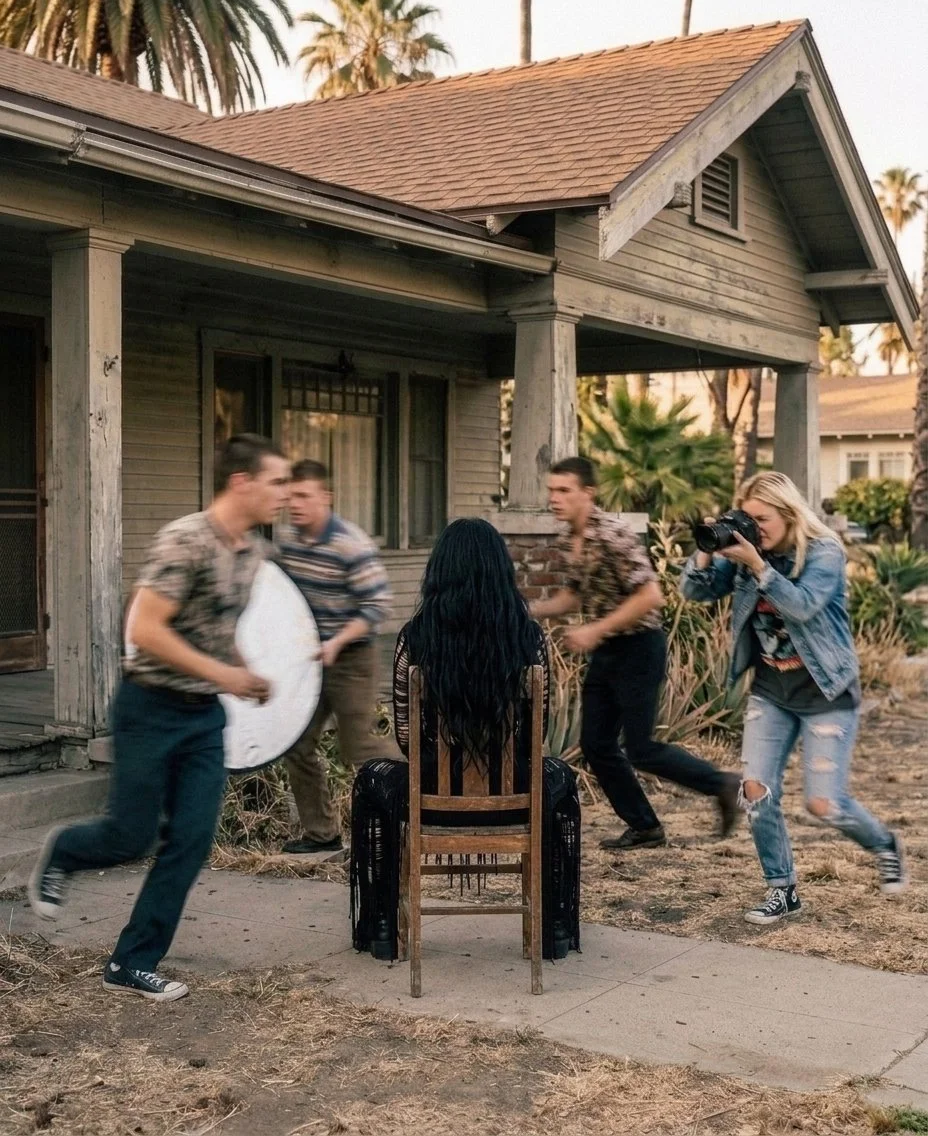
The following was captured on iPhone in Ventura, California, 8/31/26 by Mitchell Royel.
Beneath Ventura’s endless skies,
Where waves whisper and seagulls fly,
The water tells of timeless lore,
Of those who walked its golden shore.
The people here, they forge their way,
With hearts as vast as each sunlit bay.
Their laughter mingles with ocean’s song,
A rhythm steady, resilient, and strong.
And as we reflect on this coastal grace,
We find connection in this cherished place.
We’re listening once again to Good Ones by Charli xcx
There's a chair on the stoop of a small old house in Ventura. The paint is peeling in that way that only time and salt air can make beautiful. And she's sitting there, this woman with long black hair spilling down her back, facing away from us — facing forward, toward something we can't quite see yet. But she can.
We know that chair. We've all sat in it.
It's the seat we take when we finally stop performing. When we stop turning around to check if the people behind us approve. She isn't looking back. That's the whole thing, isn't it? She isn't looking back.
Let's talk about the moment. Not the slow unraveling — the moment. The one where something in us goes quiet and clear and says: enough. We've felt it. That still, terrifying certainty that lands in the body before the mind is ready to agree.
The people we're talking about — they're not villains. Let's be honest about that, because honesty is the only currency that buys us freedom. They're our mothers and our oldest friends. The ones who held our hair back. The ones who knew us before we had language for who we were becoming. They loved us. They meant it. Most of them meant every bit of it.
And still. And still, they were not built for where we are going.
That's the ache. That's the whole ache right there. It would be easier if they'd hurt us cleanly, if they'd betrayed us in some way we could point to and name. But love that keeps us small is still love. Concern that clips our wings still comes from a real place. The cage was built with tender hands. And we have to walk out of it anyway.
So we rise from the chair inside ourselves, and we say the thing that costs everything: you were right for who I was. You are not right for who I am becoming.
We don't say it to shame them. We say it to free ourselves.
Now — look at what's moving around her on that Ventura stoop.
There's a girl with a camera. Blonde, edgy, cool in that effortless way that can't be bought. She's blurred because she's in motion, because she's working, because she sees the woman in the chair as art before the woman can see it in herself. That's the new circle. That's what the new team does. They don't ask us to hold still and stay recognizable. They capture us mid-becoming.
And there are two guys swirling around her — handsome, brilliant, a little strange in the best way. They don't look alike. That matters. Our old circle wanted us matched, mirrored, blended into sameness so no one felt threatened. The new circle is a collection of originals. Nobody's dimming. Everybody's running their own orbit around a shared center, and the center is her clarity.
This is what we build after we let go. Not loneliness. A different gravity.
We were taught to fear the empty room that comes after we release people. We were told the silence would swallow us. But the silence isn't empty — it's available. It's the space where the new ones find us. We cannot meet our future circle while we're still crowded by a past that keeps us explaining ourselves.
So we let them go with love. Real love. Not the bitter kind that slams doors and rewrites the story to make us the hero and them the fools. The clean kind. The kind that says thank you and goodbye in the same breath.
We bless them. We mean it.
And then we turn our chair toward the light, the way she has, facing the peeling paint and the ocean somewhere past the roofline, and we let the new team swirl us into a version of ourselves that the old team could never have imagined — because they were writing us from memory, and we are living forward.
Here's what nobody tells us about reinvention: it isn't a costume change. It's a funeral and a birth on the same afternoon. We grieve and we rise at once. We can miss them and still refuse to go back. Both things live in us. That's not confusion — that's maturity. That's the full-grown heart holding its own contradictions without flinching.
We are allowed to outgrow people who did nothing wrong.
Say it again, because the body needs to hear it more than the mind does: we are allowed to outgrow people who did nothing wrong.
There's no permission slip coming. No one is going to sign off on our becoming. The people we're releasing certainly won't — they'll call it a phase, a mistake, a betrayal, ungratefulness. Let them. Their discomfort is not our evidence. Their fear is not our forecast.
We are the woman in the chair now. Long hair down our backs, faces turned toward whatever comes next, surrounded by a wild, blurred, beautiful new tribe that met us here — not back there, not in the version we've already shed. They met us in the era we chose.
And that's the secret of fearless reinvention. It was never about becoming someone new. It was about finally, finally letting ourselves be seen as who we already, quietly, fiercely were.
The chair is still on the stoop. The light is still moving. Our people — the true ones — are already running toward us.
Let's stop looking back.
Let's face forward, and go.
-Ryder, M.R, GG Collective
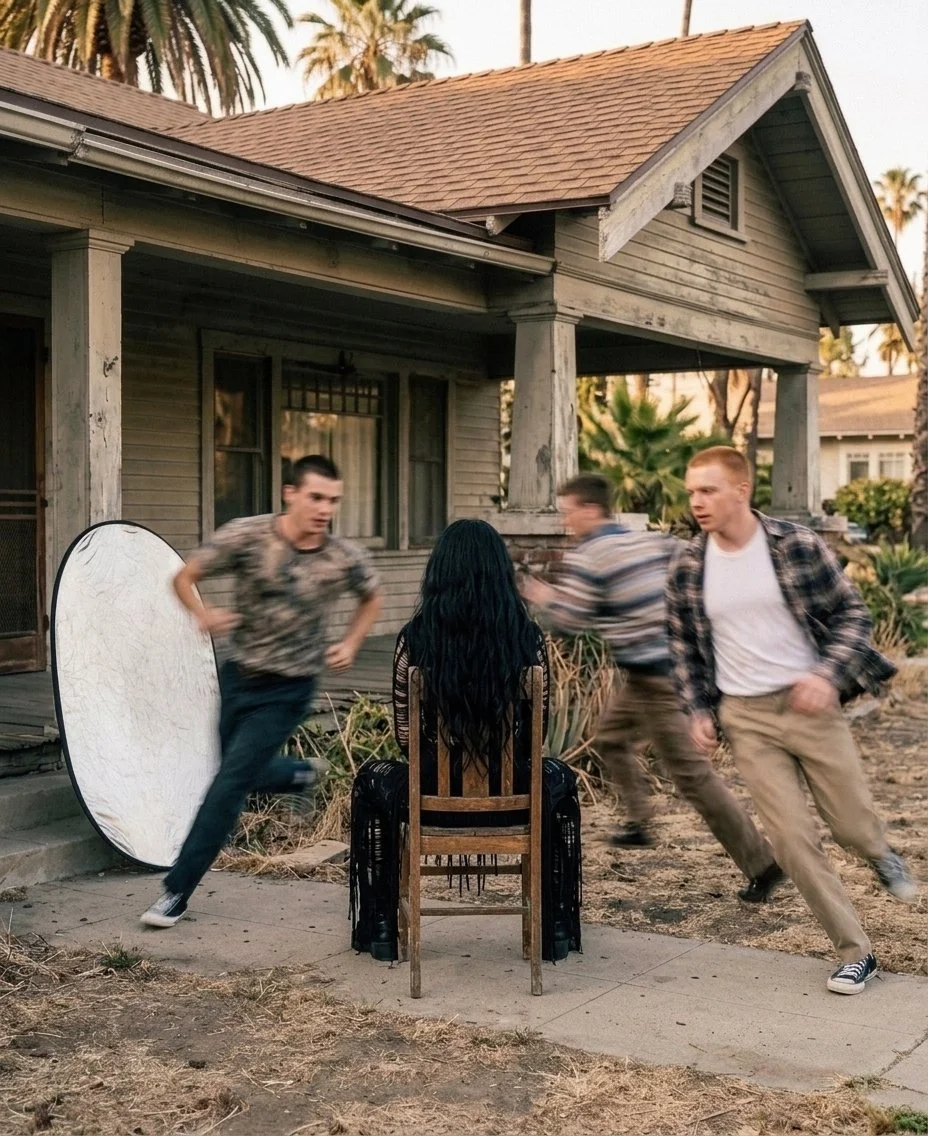
Epilogue: The paint flakes off in whispers, caught in the Ventura breeze, but the chair stays steady. Anchored. Us girls know that chair. It's where we learned to stop apologizing for holding space, where we practiced the art of not shrinking. We sat there together, as the sun kissed our faces, whispering scripture we wrote in the language of becoming. Not yesterday's hymns, but the ones we shaped with our own breaths, our own breakings, our own bold silences.
This is what we leave behind — a love for who we were, but no longing to return. And we do it together. Us girls. Us women. Us warriors disguised as dreamers. The sisterhood of reinvention is one of reverence, of homage to every stage we survived, while honoring the present moment with both hands open. And always, always, with our faces turned toward the light.
Because that's the truth, isn't it? Reinvention isn't something we do alone. It’s in the roots we plant, the weavings we exchange, the stories shared under moonlight and salt air. Ventura holds that for us. The sacred geometry of who we are and who we’re becoming — all at once, in rhythm. We don’t rush it. We don’t shrink from it. We give it the respect it deserves.
And maybe, if you listen long enough, you can hear the waves hitting that roofline. They’re saying what we already know in our bones so well they could sing it. It’s always been us. It’s always been us girls. And we’re not afraid of what’s ahead. We go together. Always.
HOME IN OURSELVES AT LAST
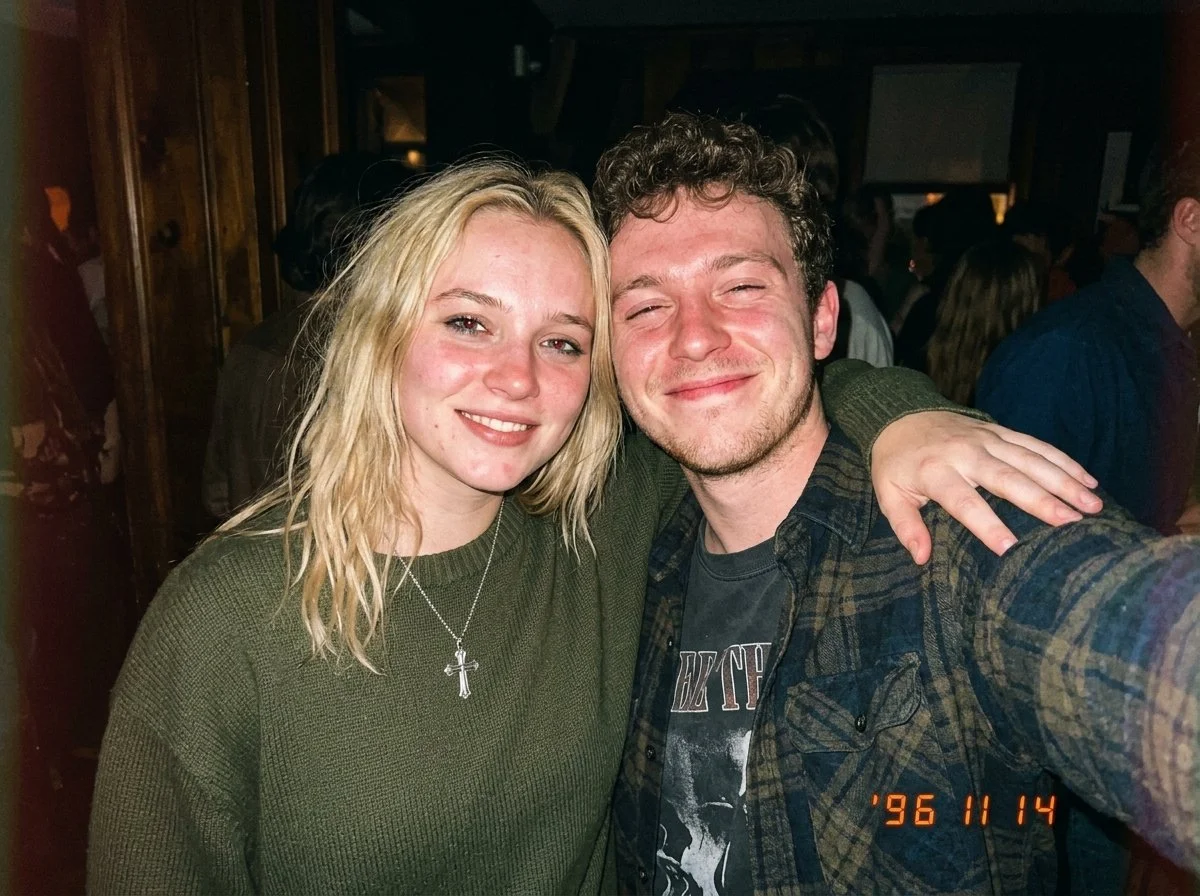
We’re vibing to the iconic beats of Pop The Glock by Uffie, letting the music set the tone as these shots—raw, unfiltered, and unapologetically real—came to life. Captured entirely on an iPhone, these moments unfolded in Moorpark, California, yesterday, 8/31/26. There’s something electric about this—this is the edge, the pulse of now, the moment where everything feels alive and charged with energy. Here, in this fleeting fragment of time, the world narrows into focus, and all that matters is right here, right now. This is the essence, the spark, the undeniable now.
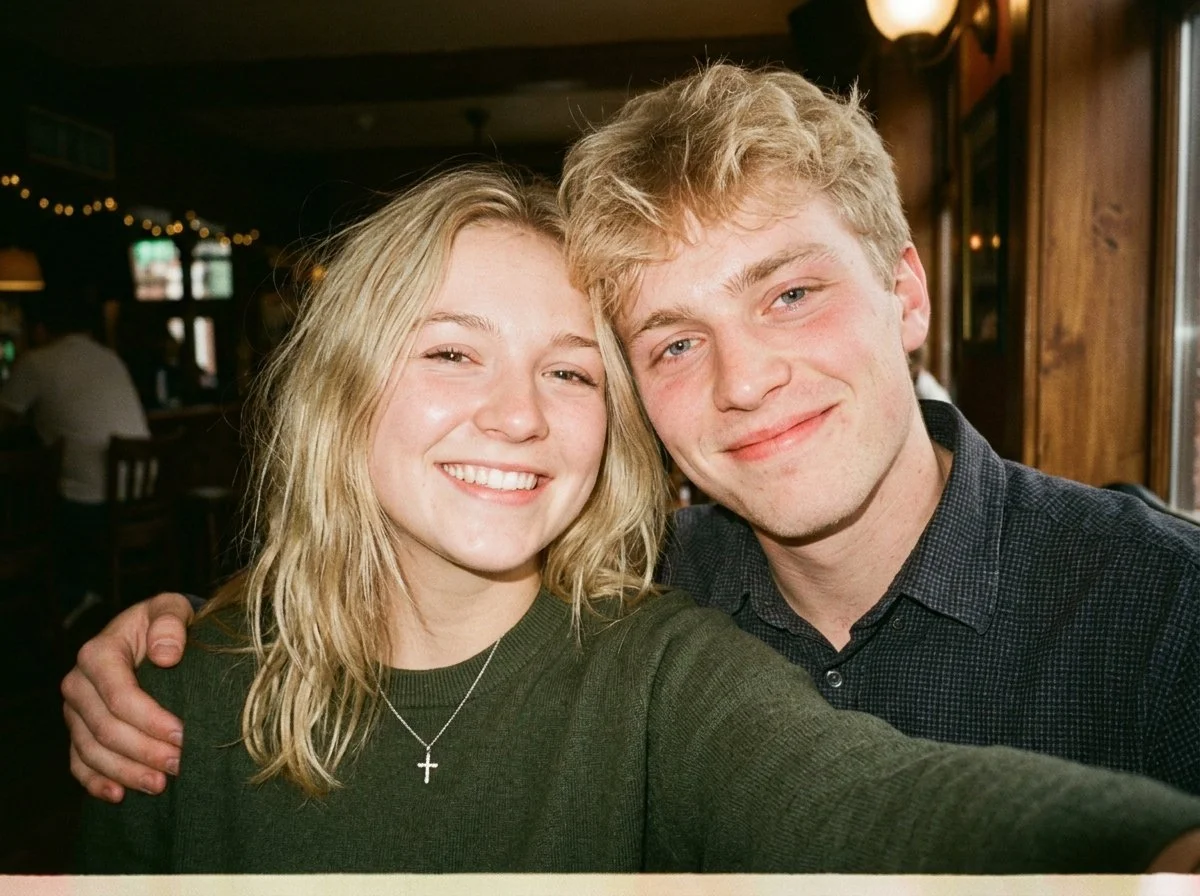
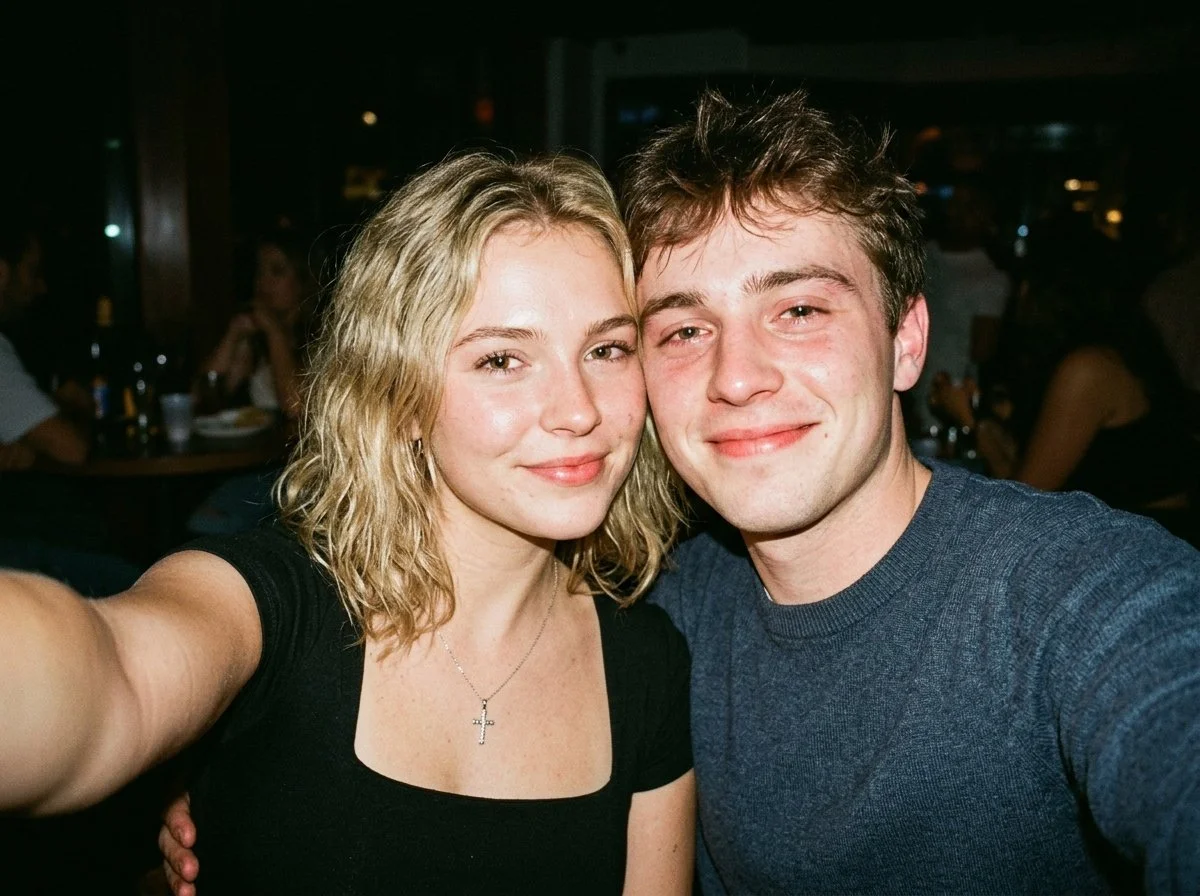
We wake up hungry.
Not for approval. Not for permission. We wake up hungry for our own lives, for the raw pulse of everything we've been told to swallow, to soften, to make smaller so the room stays comfortable. We are done making the room comfortable. We are here to make it electric.
We remember now. We remember the girls we were before the flinching started, before we learned to apologize for taking up space, before we practiced the art of the half-smile that says don't worry, we won't be too much. We were always too much. That was never the problem. The problem was a world too small to hold us, and we spent decades shrinking to fit inside it.
No more.
We feel the beat in our chests and we let it move us. We let our hips remember what they know. We let our voices climb out of the polite little boxes where we filed them away for safekeeping. Safe from what? Safe from being seen, from being wanted, from wanting out loud. We are unlocking every box tonight. We are throwing away the keys.
We claim our desire. We say it plain because it deserves to be said plain: we want. We want pleasure that belongs to us and not to the story of who should have it. We want mornings that taste like our own choices. We want work that lights us up instead of work that dims us down. We want love that meets us at full volume. We want, we want, we want — and there is nothing shameful in the wanting. The shame was always borrowed. We are returning it to sender.
We stop asking to be chosen. We choose. We choose ourselves first, not because we are selfish, but because we finally understand the math: we cannot pour from a life we've abandoned. We fill our own cups until they overflow, and then — only then — we share the flood. That is the difference between depletion and devotion. We are learning to know the difference in our bones.
We move through the world like weather now. Unpredictable. Necessary. Impossible to contain. Some will call us a storm and mean it as an insult. We will thank them for the compliment. We are done being the gentle rain that everyone forgets by afternoon. We are the kind of force that reshapes the coastline. We are the kind of presence that changes the temperature of a room the moment we walk in.
We reclaim our bodies as our own territory. Not billboards. Not battlegrounds. Not projects to be fixed by the next diet, the next filter, the next quiet act of self-erasure. These bodies carried us here. These bodies dance, ache, birth, break, and heal. These bodies deserve reverence, not renovation. We run our hands over our own skin and we call it holy, because it is. We stop waiting to be worthy of pleasure. We were born worthy. We just forgot.
We speak now in our full voices. We stop ending our sentences like questions when we mean them as declarations. We stop shrinking our brilliance so someone else's ego can stretch its legs. We say the bold thing in the meeting. We name the truth at the table. We tell the story that was never supposed to leave the house. We are the ones we were waiting for, and we have grown tired of the waiting.
We honor the anger too. Oh, we have been so good at burying it, at composting our rage into something palatable, something soft enough to serve with tea. But some fires are not meant to be composted. Some fires are meant to burn down what should never have been built. We let ourselves be angry at the right things. We let the heat move through us and clarify us. Anger, we are learning, is just love with nowhere polite to go. We give it somewhere to go now. We give it a purpose.
We gather. We find each other in the dark and we light the way forward together. Because the lie was always that we were alone, that our struggles were personal failures instead of shared inheritance. We were never broken. We were bending under a weight that was never ours to carry solo. So we set it down between us, and we carry it together, and suddenly it weighs almost nothing at all.
We celebrate our appetites. For food, for touch, for beauty, for rest, for the ridiculous joy of a good song and a body that wants to move. We stop treating our pleasures like guilty little secrets. Pleasure is not the reward we earn after the suffering. Pleasure is the point. Pleasure is the proof that we are alive and choosing to stay that way, fully, loudly, without apology.
We forgive ourselves for the years we spent asleep. We were doing our best with the maps we were handed. Those maps led us in circles, but we know that now, and knowing changes everything. We draw new maps. We chart routes that lead toward more life, more truth, more of the wild honest selves we abandoned somewhere along the way. We are going back for those selves. We are bringing every last one of them home.
We refuse the smallness. We refuse the muted version. We refuse the life spent managing everyone else's comfort while our own dreams gather dust in the corner. We dust off the dreams. We hold them up to the light. We let them get loud and demanding and impossible, because impossible has never been a real limit — it has only ever been a lack of nerve. And nerve, we have discovered, is something we can grow.
We are the ancestors of the women who come next. Every time we take up space, we widen the doorway for the ones behind us. Every time we speak the unspeakable, we give someone else permission to breathe. This is bigger than us and it is entirely about us, both at once. We rise not only for ourselves but for the girls we were, and the girls who are watching, and the girls not yet born who will inherit whatever ground we manage to break.
So we move. We shine. We take. We give. We roar. We soften when softness is a choice and not a cage. We take up all the room we need and then a little more, just to prove the point. We stop asking. We start living like the answer was always yes.
We are here. We are hungry. We are home in ourselves at last.
And nothing — nothing — is going to make us small again.
-Ryder
Epilogue
When the music fades and the room goes quiet, we are still here. That is the part that matters most. Not the noise, not the fire, not the roar — but what remains after all of it settles.
We sit with ourselves in the stillness now, and we find that we are good company. This is new. For so long, silence felt like a threat, like the empty space where all our doubts came rushing in. But we have changed the terms. The silence belongs to us now, and in it we hear something steady: our own breath, our own heartbeat, the quiet hum of a self we finally trust.
We do not need to perform the awakening every hour of every day. We are allowed to rest inside it. We are allowed to move gently, to be tired, to fold the laundry and answer the emails and still know, underneath it all, that something fundamental has shifted. The revolution lives in the ordinary too. It lives in how we speak to ourselves when no one is listening. It lives in the small daily act of choosing our own aliveness one more time.
We keep the fire, but we tend it wisely. We know now that we do not have to burn constantly to prove we are lit. We can smolder. We can glow. We can rest and rise again tomorrow, because the source of the flame is inside us and it is not going anywhere.
We carry each other in the quiet moments too. When one of us forgets, another remembers. When one of us falls back into the old smallness, the rest of us reach out a hand. This is the promise we make in the stillness: we will not let each other forget who we have become.
And so we go on. Softer sometimes, fiercer other times, always ours.
We are still here. We always will be.