

THIS IS NOT A DRILL — LET IT BURN, LET IT STAY, LET IT REMAKE US

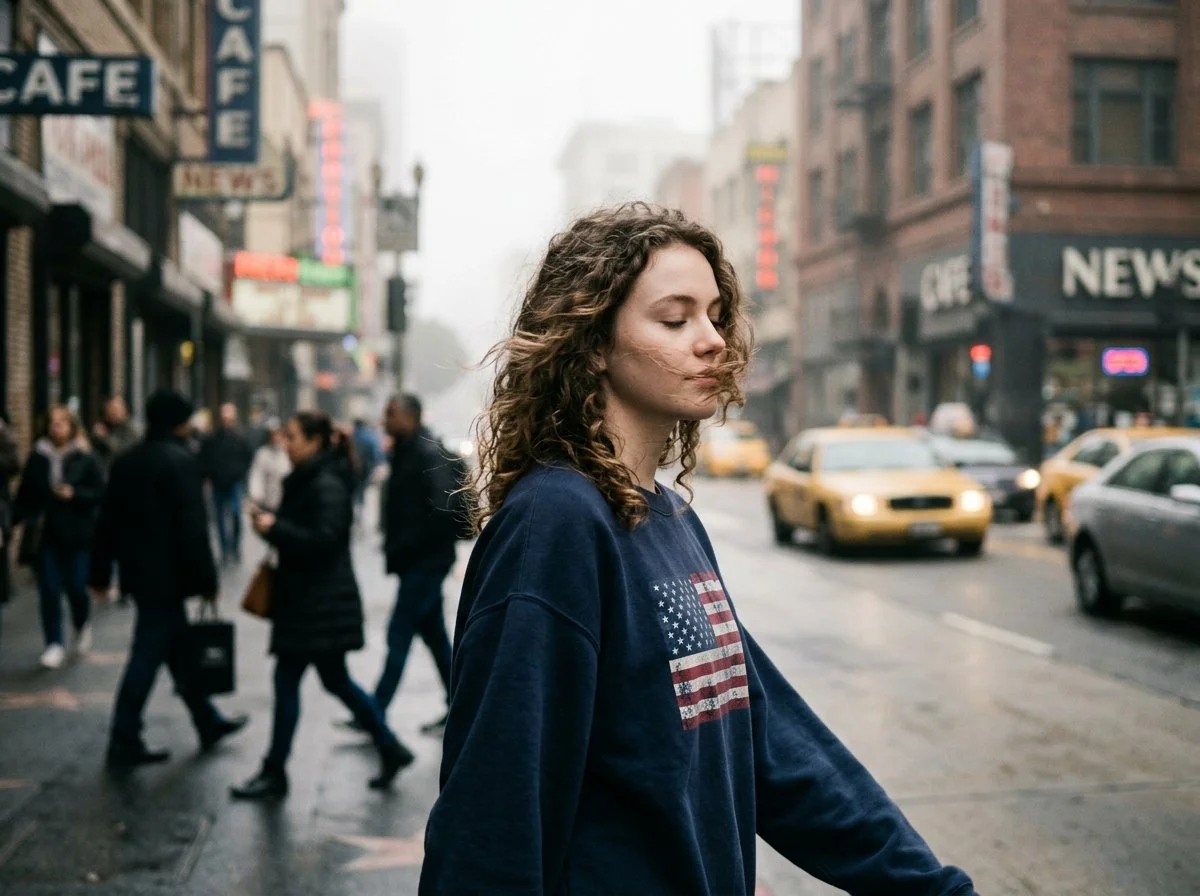
Captured in the Fashion District last night around 8 PM by Mitchell Royel, this moment resonates with intensity and transformation. We are currently listening to "Invading My Mind" by Jennifer Lopez, a track that perfectly underscores the energy and emotion of the evening.
We know this feeling.
The one that lives under our ribs and refuses to be reasonable.
It arrives uninvited. It doesn't ask permission. It settles into the soft center of us and starts rearranging the furniture of our thoughts. And suddenly, everything we do is haunted — the coffee, the drive, the shower, the space between breaths. We are somewhere else. We are with the thing that will not let us go.
Let's be honest about what this is.
This is want.
Real want.
The kind that scares us because it means we're alive in a way we can't control.
Somewhere along the line, we learned to shrink our longing. To make it polite. To keep it tidy and quiet and small enough to fit inside a life that doesn't ask too much of us.
But desire was never meant to be small.
It comes in like weather.
It floods the fields.
It pulses through our quiet moments and turns the ordinary into something unbearable and holy. We wake at 3 a.m. and it's already there, waiting, breathing beside us.
We can't outrun it.
We stopped wanting to.
There's a wildness in us that refuses domestication.
And thank God for that.
We feel it first in the skin.
The flush.
The ache.
The way our attention gets pulled toward one direction like iron to a magnet.
The mind tries to catch up.
It builds arguments.
It lists reasons.
It reaches for the practical and the safe.
But the body already knows.
The body has always been the honest one. It doesn't lie about hunger. It doesn't pretend the pull isn't there. It just leans — toward warmth, toward touch, toward the thing that makes us feel like we've finally come home to ourselves.
We can trust that leaning.
It's older than our fear.
We've been sold a story that letting go means losing. That to be consumed is to be defeated.
But surrender is its own kind of power. It's the choice to stop clenching. To open our hands. To say yes to the flood instead of building walls against it.
When we surrender to what moves us, we're not disappearing. We're becoming.
We're saying: I will not spend this one wild life half-lit. I will not sip when I'm meant to drink. I will not whisper what deserves to be sung.
We keep splitting the world in two — the holy and the hungry, the spirit and the flesh. As if the divine lives only in the quiet, the composed, the well-behaved.
But maybe the sacred is also here. In the obsession. In the ache. In the way something can invade our mind so completely that it burns everything false right out of us.
Desire is a teacher. It shows us what we actually value. It points, again and again, at the truth we've been avoiding.
So when it comes for us — and it will — let's not flinch. Let's not apologize.
Let's let it in.
We don't have to act on every fire.
But we do have to feel it.
We owe ourselves that honesty.
Feel the pull.
Name the longing.
Let it move through us and teach us something about who we are and what we're really reaching for.
Because a life without this heat? That's not peace. That's numbness wearing peace's clothes.
We came here to feel it all.
The wanting.
The tenderness.
The trembling edge of too much.
So here's the confession, and the sermon, and the truth all at once:
We are allowed to be consumed.
We are allowed to be wild.
And whatever it is that lives in our mind and won't leave — let it stay.
Let it burn.
Let it remind us, every single day, that we are gloriously, achingly, unstoppably alive.
-Ryder, G.G Collective

Epilogue: We are here to remember. To feel the fire and let it shape us. It’s the heat of the forge, not the burn of destruction, and it’s ours. It's always been ours. We’ve fought so hard to soften edges, to make peace with the depths, but the truth is, the sharpness — that’s where the wisdom is. When we are pressed and held in that tension between our ache and our divine knowing, that’s where we find the sacred.
There’s scripture for this — because doesn’t every soul-searching feel Biblical? “Deep calls to deep in the roar of your waterfalls; all your waves and breakers have swept over me” (Psalm 42:7). That’s it. The deep parts of us tied to the deep mystery of creation. The roar of longing. The waves of becoming. The holy pull that lets us know we are part of an extraordinary rhythm — and we are meant to feel it all.
We are told, “Be still, and know that I am God” (Psalm 46:10), but even in the stillness, there’s a heartbeat, a vibration, a quiet pulse surging underneath. It’s calling us to lean in, to touch the sacred within and the beyond. And sometimes it comes like a storm instead of a whisper, like Elijah finding God not in the earthquake but in the thin, gentle wind (1 Kings 19:11-12). We know this duality, don’t we, sisters? The stillness and the storm, inviting us deeper, pulling us closer.
RECLAMATION FEAST PACKED WITH LOYALTY TO SELF

Captured by Mitchell Royel in the Fashion District today, 8/28/26, the essence of the Reclamation Feast resonates with a bold loyalty to self, an unapologetic celebration of individuality and empowerment. Drenched in the vibrancy and energy of the city, the moment stands as a testament to the power of owning one’s truth, an unapologetic declaration of freedom and expression. This, however, is not affiliated with Hooters nor intended as a statement on their behalf. With "Sally Walker" by Iggy Azalea playing in the background, the rhythm of confidence and determination fills the air, creating a soundtrack that complements the fearless attitude encapsulated in the scene. This is about claiming space and standing tall while staying true to one’s core, marking a moment not just observed but profoundly felt.
Sugar, listen close.
All of us.
Lean in.

There's a new season rolling in, slow as honey off a spoon on a July afternoon, and it's asking something of us. Something holy. Something that lives in the marrow. Something so fierce and so quiet at the same time that we almost missed it — almost kept on doing what we were doing, keeping the old wounds warm, feeding the old fires.
But we didn't miss it. We felt it. And here we are.
We are done promoting our enemies.
Not with a fight. Not with a scene. Not with a clapback or a callout or a storm of noise. But with a quiet turning of the head. A closing of the door. A soft, sure "no more" whispered from the deepest room in the house of ourselves — the room we kept locked for years, the one we thought nobody deserved to enter, including us.
We are opening that room now. And we are choosing who gets the light inside it.
Let us tell the truth about where we've been.
For too long, we handed our most precious resource — our attention — to the very things designed to shrink us. We gave airtime to the critics. We rehearsed the insults until we could recite them in our sleep. We kept the receipts of every slight, every dismissal, every sideways glance, and we dragged them around like a wet quilt in July — heavy, suffocating, impossible to shake.
We talked about the people who wronged us at dinner tables and in parking lots and in the dark of 3 a.m. We replayed the scenes. We kept score. We thought, somehow, that staying angry was the same thing as staying safe. That keeping the wound fresh meant it couldn't sneak up on us again.
But here's what we know now: every time we named the enemy, we handed them power. Every time we repeated the story, we built them a bigger stage. Every time we let the fear or the bitterness or the grief take center stage in the theater of our inner lives, we gave away something we cannot get back — time, energy, fire, creative force.
We were promoting our enemies and calling it survival.
We were funding their influence with our most sacred currency.
We are done with that now.
There is a certain kind of woman we all know. We have seen her. Some of us are her, on the days we remember who we really are.
She walks into a room and does not announce a thing. She just arrives. And then she sits down — slow, deliberate, spine like a river cypress rising straight out of the water, rooted and reaching at the same time. The whole room rearranges itself around her stillness. She is not performing. She is not angling. She is not checking to see who noticed.
She is simply seated in her own worth.
And worth does not beg for a witness.
That woman is not superhuman. She has been through it — through the betrayal, through the loss, through the season when she gave everything to people who could not receive it. She knows what it is to be dismissed and diminished and passed over. She has sat in her car in parking lots and cried until her chest ached.
But she made a decision.
A quiet, holy, irreversible decision.
She decided to stop watering what was trying to drown her.
She decided that her attention was a gift — and she was going to be very, very intentional about where she placed it.
That is the woman we are all becoming.
Together. In this season. Right now.
Attention is power.
It is the most fundamental currency we carry.
Where we look, we water.
What we water, we grow. A
nd we have been watering some very wrong things for a very long time.
We watered the voice that said we were too much.
We watered the relationship that took and took and never once replenished.
We watered the old narrative — the one somebody else wrote for us before we were old enough to pick up our own pen.
And those things grew. Lord, how they grew. They grew so tall they blocked our sun.
So we are pulling back the light.
No more spotlighting what diminishes us. No more repeating the name of the thing that broke us as though repetition might finally make sense of it. No more free advertising for the fear, the doubt, the small-minded voices — theirs or the ones we turned on ourselves.
This is not bitterness. This is not running away.
This is discernment. This is knowing the difference between what feeds us and what feeds on us — and choosing accordingly, with full sovereignty, every single day.
The revolution we are living is happening in the softest way imaginable, and that is exactly what makes it so powerful.
It looks like a woman letting a message go unanswered because peace matters more than proving a point.
It looks like unfollowing. Unbothering. Unhooking from the loop.
It looks like a whole circle of women deciding, collectively, that they will no longer carry water for the people who poke holes in the bucket.
It looks like choosing our own reflection — clear and true — over the funhouse mirror somebody else was holding up, the one that made us look small and strange and not quite right.
We are reclaiming our loyalty. And we are spending it on ourselves first. On the sisters who rise us. On the dreams that keep knocking long after we told them to come back later. On the God-spark inside that never once needed permission to exist.
This is not selfish. It is sacred.
We can bless a person and still not build them a stage.
We can forgive — fully, completely, from the marrow — and still not fund the war.
We can wish someone well from very far away, magnolia-sweet and genuine, without ever handing them our microphone again.
That is grace with a backbone. That is love that has found its own limits and respects them.
That is what we are practicing now.
So here is our declaration. Let us say it together and mean every word of it:
We will not promote what wants us small.
We will not narrate our own diminishment.
We will not clap for the hand that reached to close our mouths.
We will not rehearse the insults. We will not repeat the names that cost us. We will not sponsor the stories that were never ours to carry.
We will sit down in our lives the way she sits down in that room — unhurried, unbothered, undeniable.
We will give our attention only to what makes us more. More alive. More rooted. More ourselves.
The era is here.
We walk in slow. We sit down sure.
And we let the light follow us home.
-Ryder, G.G Collective

Epilogue: There is something nobody tells us when we first start doing the work of reclaiming our lives. Nobody warns us that the hardest enemy to stop promoting is not the person who betrayed us, not the system that overlooked us, not even the culture that told us we were too much or not enough.
The hardest enemy to stop promoting is the voice inside our own heads that agreed with all of it.
Let us sit with that for a moment.
We are a generation of women — and really, of people — who learned very early to internalize the criticism. We learned to be our own harshest editors before anyone else had the chance. We learned to preemptively shrink so that the world would not have to do it for us. We thought, if we diminish ourselves first, maybe the diminishment won't hurt as much when it comes from the outside.
But here is what that habit actually did: it put us in the business of promoting our own enemies, around the clock, rent-free, in the most intimate real estate we own — the interior of our minds.
Every time we said I'm probably wrong about this. Every time we said Who am I to want this much? Every time we rehearsed the worst-case version of ourselves before we walked into a room — we were advertising for the thing that wanted to see us fail.
We were the ones keeping the wound open.
And the lesson — the one that shifts everything, the one that costs something to truly absorb — is this:
Stopping the promotion of our enemies begins inside. It begins with the stories we tell ourselves before we've said a word out loud.
Because here is the spiritual architecture of the whole thing: what we believe in secret becomes what we build in public. The internal narrative is the blueprint. Every declaration we make out loud, every boundary we hold, every table we walk away from — those are the external expressions of the interior revolution. But the revolution has to start in there, in the quiet, in the place where no one else can see.
And that means we have to do the deep work of auditing our inner world.
We have to ask: Whose voice is this, really? When we hear something that says we are not ready, not worthy, not quite enough — whose words are those? Where did they come from? Who first said them to us, and why did we decide they were true?
Because most of those voices are not ours. They were handed to us — by caregivers who were doing their best with broken tools, by systems that needed us manageable, by relationships that required our smallness in order to survive. And we picked them up because we were human and we were young and we did not yet know we had a choice.
But we are older now.
We have a choice now.
And the choice — the real one, the one that changes everything downstream — is whether we keep carrying the voice that was never ours, or whether we set it down and start listening for something truer.
This is what the era of not promoting our enemies really means, at its deepest level.
It is not just about the external choices — though those matter enormously. It is not just about who we follow, who we give access to, whose work we amplify, which tables we sit at and which ones we quietly leave. All of that is real and important and we should keep doing it without apology.
But underneath all of that external curation is a more fundamental act of loyalty:
Loyalty to ourselves.
Not the performed version of ourselves. Not the curated, Instagram-palatable, always-rising version. The real one. The one who is still figuring it out. The one who gets tired and confused and sometimes spends three days in bed with grief or doubt or the peculiar exhaustion that comes from living fully in a world that wasn't entirely built for us.
That woman — the full, complicated, still-becoming one — she deserves our loyalty most of all.
She deserves to not have her own mind turned against her.
She deserves to be in a community — like this one, like what we are building together — where the shared agreement is that we will not participate in the diminishment. Not of each other. Not of ourselves. Not out loud. Not in private. Not in the way we talk about our bodies in the mirror. Not in the way we preface our ideas with "this might be wrong, but." Not in the way we apologize for taking up space before we've even arrived.
The agreement is this: We are on our own side.
And being on our own side does not mean we are against everyone else. It does not mean we stop caring, stop being generous, stop showing up for the people we love. In fact — and this is the paradox that becomes obvious once we live it — the more fully we are on our own side, the more we have to give. The more rooted we become, the more fruit we can offer. The more we stop leaking energy through the wound of self-betrayal, the more we can pour into everything that matters.
We stop promoting our enemies and we become, almost accidentally, more loving.
Because love that flows from depletion is not sustainable. Love that comes from a woman who has learned to source herself, who has stopped handing her vitality to things that diminish her — that love is a different animal entirely. That love is renewable. That love does not breed resentment. That love does not need the other person to be a certain way so that we can feel okay.
That love is free.
So here is how we carry the lesson forward. Here is the practical, embodied, daily practice of this era we are entering:
We check in with ourselves before we speak. Is what I am about to say promoting something I actually believe in? Am I amplifying something that deserves our light?
We audit our attention regularly. Where is our focus living? What are we rehearsing? What are we feeding with our looking?
We choose our communities with intention. Are we in rooms that rise us? Are we surrounded by people who are also committed to not watering what diminishes them? Because we become what we're surrounded by, and that truth does not disappear just because we are grown.
We practice the radical act of letting things go without announcement. We don't need to make a proclamation every time we disengage from something that was costing us. We can simply redirect. Quietly. Cleanly. Without drama.
We forgive — fully, genuinely, for our own sake — and we understand that forgiveness is not the same as re-engagement. We can release someone from the story we've been telling about them and still not invite them back into the interior of our lives. That is not cruelty. That is wisdom.
We celebrate forward motion. Every time one of us chooses herself — genuinely, from the inside out — we treat that as the sacred act it is. We mark it. We honor it. We let it ripple.
And above all — above all — we tell ourselves the truth.
The truth that we are not too much.
The truth that desire is not the same as delusion.
The truth that wanting a big life, a full life, a life that means something — that is not arrogance. That is the soul doing what it was built to do.
The truth that every single time we stop promoting what wants us small, we are participating in something larger than ourselves. We are part of a lineage of women who refused. Who turned their heads. Who said no more and meant it. Who built something new in the space that the old thing used to occupy.
We are in that lineage now.
We have always been in it.
And we are just now remembering.
So let us walk into this era together. Not loud. Not performing. Not waiting for someone to hand us permission.
Let us walk in the way she walks in — that woman we all know, the one who arrived before she announced herself.
Let us sit down slow in the lives we are building.
Let us water only what is ours to grow.
Let us speak the names of the things that deserve our light, and let the rest go quiet for want of our attention.
The era is here.
We are the era.
And the light — every last glorious, consecrated ray of it — follows us home.
BACK WHERE WE STARTED
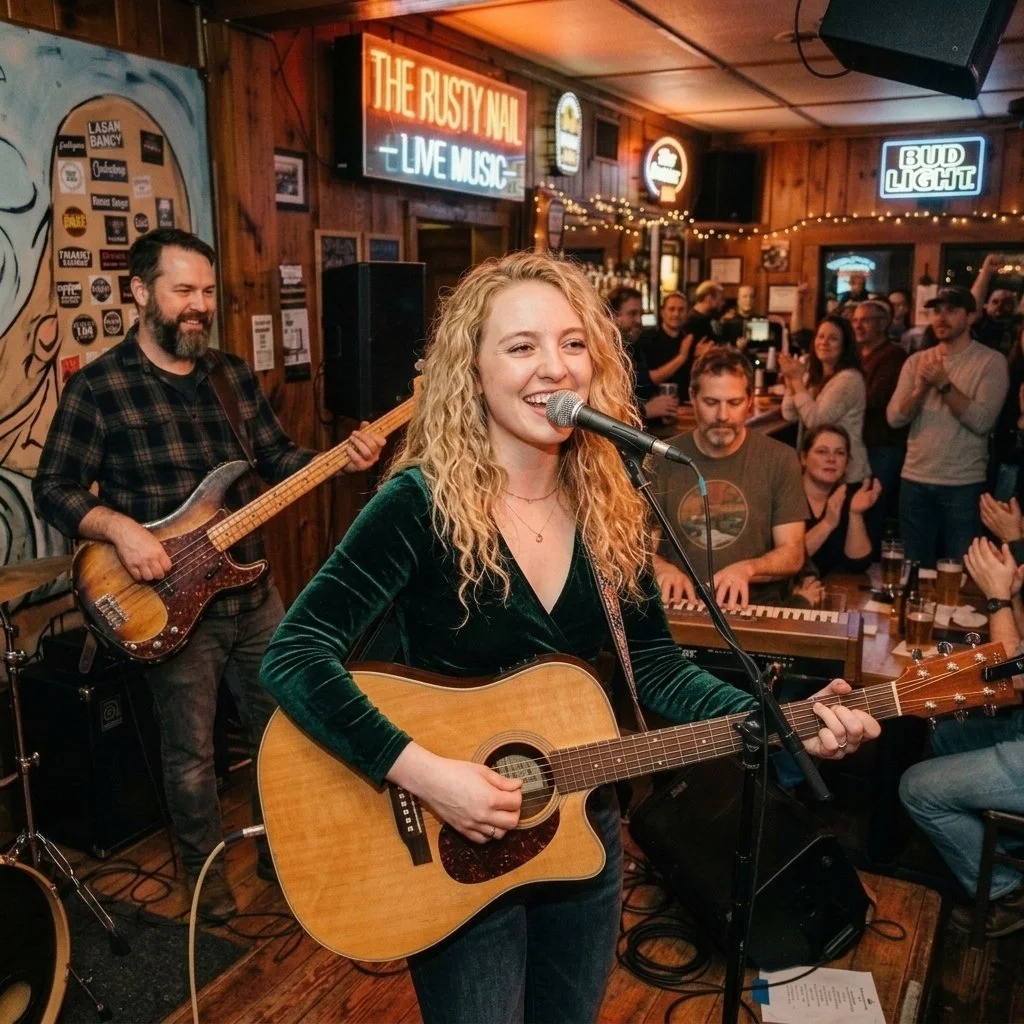
Somewhere in the hazy glow of a bar nestled in North Carolina, the vibrant energy of the evening comes alive. The photos, captured entirely on iPhone, tell a story of raw and intimate moments, each framed with an unpolished yet beautiful charm. As the scene unfolds, the soulful melody of "SOUVENIRS" by Riley Roth plays in the background, imbuing the space with a nostalgic warmth. It’s a moment suspended in time, where music and memories seamlessly intertwine, leaving an indelible mark.
There's a specific kind of quiet that settles in after everything falls apart.
We know the one. It comes after the breakup that gutted us. After the loss we didn't see coming. After the job, the move, the version of our lives we were so sure about — gone. It's the silence that arrives when life strips us all the way down to the bone and asks, without mercy, So. Who are we now?
And here's the wild, tender truth: sometimes the answer isn't ahead of us. It's behind us. It's home.
We spend so much of our lives running toward something. Bigger. Newer. Somewhere else. We convince ourselves that who we're becoming lives in a city we haven't reached yet, in a person we haven't met, in a version of us that's finally arrived.
Then the bottom drops out. And suddenly all that forward motion means nothing.
So we go back. Back to the red dirt roads. Back to the porch lights and the pickup trucks and the way the air smells right before a summer storm rolls over the Piedmont. Back where we started — with the people we love, who somehow never stopped loving us while we were gone.
That's not failure. That's a homecoming.
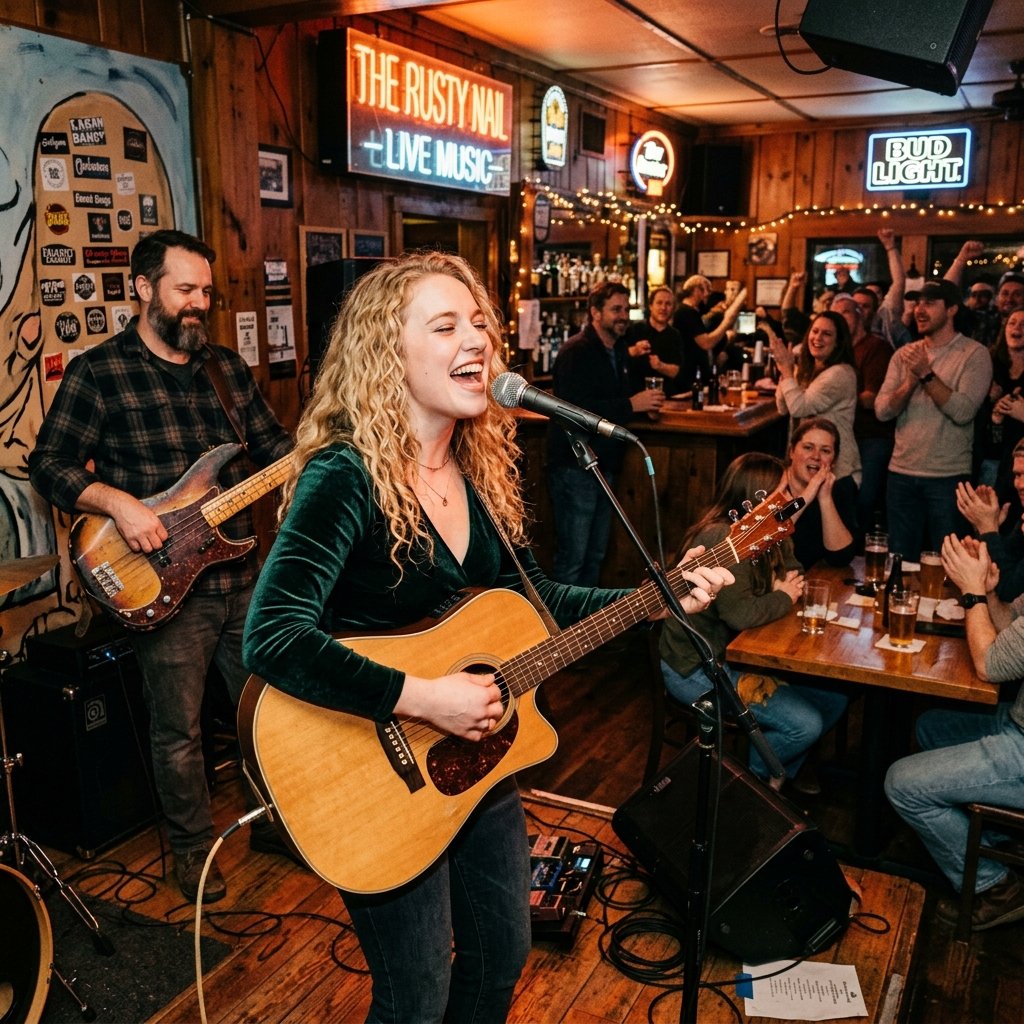
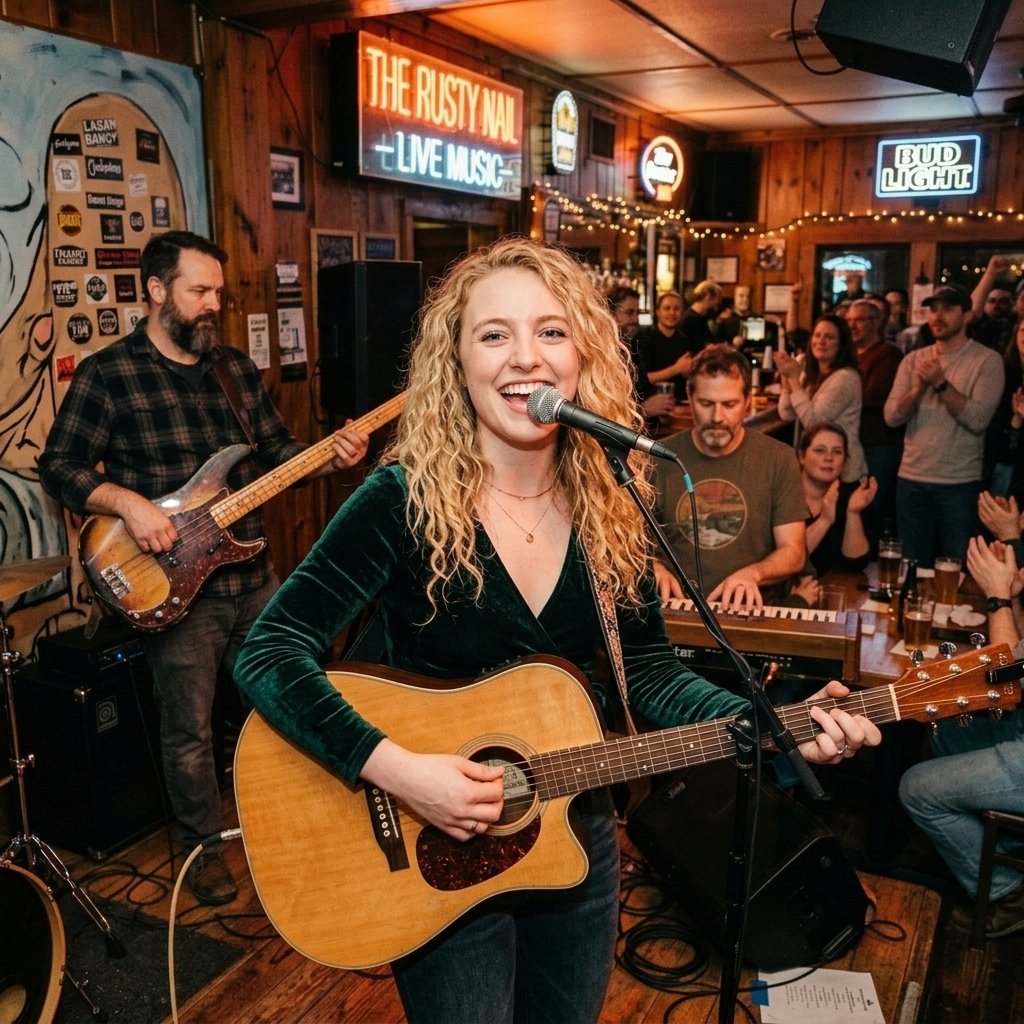
There's a bar somewhere in North Carolina — maybe we know it, maybe we've each got our own version — with a neon sign buzzing over the door and the words LIVE MUSIC glowing like a promise.
Inside, it's all warm wood and string lights and the low hum of people who've had a hard week and came here anyway. Dusty boots on the floor. A Bud Light sign flickering in the corner. Somebody's laughing too loud at the bar, and it's the best sound in the world.
This is where the real church happens.
Because in a place like this, nobody's checking credentials at the door. The farmer and the schoolteacher, the veteran and the college kid, the die-hard conservative and the person who votes the other way — they're all packed in shoulder to shoulder, drinking the same cheap beer, watching the same girl with curly blonde hair pick up an acoustic guitar.
And when she opens her mouth to sing, none of that other stuff matters. Not the politics. Not the heartbreak. Not the past we're all trying to outrun.
What's so powerful about a karaoke night in a North Carolina dive bar is this: the microphone is the great equalizer.
It doesn't care who we voted for. It doesn't care about our divorces, our debts, our mistakes from a decade ago. It doesn't care that we can't actually sing. It just waits — patient, glowing, ready — and when we finally grab it, something in us breaks open.
We pick a Garth Brooks song. Of course we do. And our voices crack on the high note, and the whole room hears it, and instead of laughing at us, they sing with us. Forty strangers becoming one ragged, beautiful choir. Fists in the air. Beer sloshing. Somebody crying and pretending they're not.
That's not just a good time. That's belonging. That's what we're all starving for.
The North Carolina country scene has always understood a secret the rest of us keep forgetting: we are built to be together.
Not curated together. Not filtered together. Really together — sweaty, imperfect, singing off-key in a room full of people who see all of us and stay anyway.
Country music never pretended life was clean. It sings about the truck breaking down and the love running out and the mama who prayed us through it. It sings about coming home. And a room full of North Carolinians will scream those words back at each other like a shared vow, because every single one of them has lived it.
That's the medicine. Not the fixing. The witnessing.
Maybe we're in the after right now. The after of a heartbreak. The after of a loss. The after of a life that didn't turn out the way we swore it would.
We are allowed to go back where we started.
We can find the neon sign. Pull on the boots. Let the acoustic guitar and the cracking voices and the people who love us remind us who we were before the world got its hands on us. Grab the mic. Let our voices shake.
Because coming home isn't giving up on the people we're becoming.
It's remembering we were there all along.
-Ryder, M.R, GG Collective
Epilogue: There’s a truth about life that, when embraced, can set us free. It’s this — falling apart isn’t the end. It’s an invitation. It’s the universe stripping away the noise, the clutter, the false identities we’ve hidden behind, to say, "This is what you’ve been running from. Now it’s time to face it." And in that sacred space, when everything feels broken, we discover a quiet strength we didn’t know we had.
You see, we spend so much of our energy trying to become. We chase the next achievement, the next relationship, the next version of ourselves that we believe will make us whole. But life has a way of sending us to our knees, not as punishment, but as a reminder that who we are has never been outside of us. It’s always been within.
And here’s the key, my friends — the path forward sometimes requires us to look back. Not to live in the past, but to reclaim the parts of us we left behind. The parts that knew joy before the world taught us fear. The parts that believed in love despite the scars. Sometimes we have to go back to the places where the air smells like home, where our feet remember the rhythm of the earth, where our hearts remember what it means to belong.
It’s not weakness to go back. It’s courage. It’s wisdom. Because what we find when we go back to the roots of who we are is the foundation we need to rebuild. Stronger. Wiser. More alive.
Life isn't about avoiding the storms. It's about learning to stand in the rain, boots soaked, heart open, and know — truly know — that this, too, is shaping us. This, too, is teaching us. And eventually, this, too, will lead us home.
WILDFIRES WITH ZERO CONTAINMENT
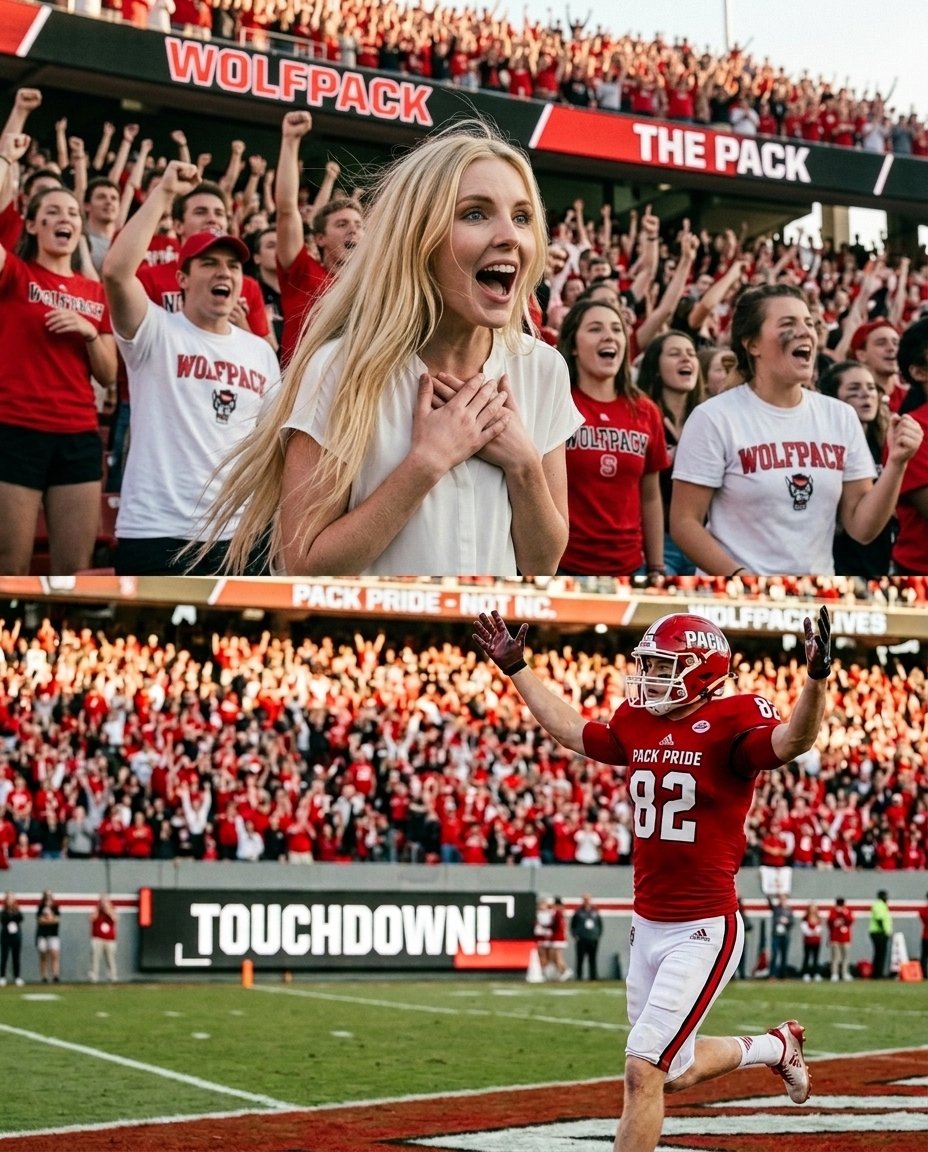
Captured through the lens of Mitchell Royel in the Fashion District on 8/24/26, the moment dripped with raw, unfiltered truth. The air was heavy with something electric, like the echoes of heartbeats amplified in concrete canyons. We were listening to “TRIGGER MY BPD” by Piper 57, and every note felt like it peeled back another layer of pretension, leaving only what was real—unapologetic and bold. The juxtaposition of chaos and clarity in the music mirrored the energy of the place. There was no hiding here, only the courage to stand in your own light, no matter how jagged or soft it might be.

Zero percent containment —
like a wildfire raging wild and untamed,
no borders can hold it, no rain can tame.
It burns with abandon, consuming all in its path,
a destructive force, unyielding in its wrath.
We say yes.
That's what we do.
We say yes before the question is finished. We say yes before we've checked in with our bodies, our schedules, our limits. We say yes because we were taught that yes is love, that yes is grace, that yes is what good women are made of.
He asked us to come to his game. Not a real game—a charity thing, a morale booster, some vanity project dressed up as generosity. He needed bodies in the stands. He needed noise. He needed women who believed in him hard enough to make everyone else believe too.
So we went.
We brought our whole selves.
Our laughs.
Our loyalty.
Our blind, aching faith in men who had already decided we were useful.
That's the word.
Useful.
Not loved.
Not cherished.
Used the way you use a good coat in winter and forget in spring.
We clapped until our hands hurt.
We told him he was brilliant. We said it in the stands and in the parking lot and in the quiet moments after, when he needed the mirror of us to see himself as something larger than he was. We made his small moments feel like coronations, because that's what we do—we turn ordinary men into kings and call it devotion.
We adjusted our schedules around his ambitions.
We softened our voices so his could ring louder.
We shrank ourselves into supporting roles in stories that were supposed to be ours.
He took every drop.
And he gave back nothing.
You know how you can pour and pour into someone and feel yourself going empty? How you keep pouring anyway, telling yourself the well will refill, telling yourself this is love, this is what love asks?
That's not love.
That's a slow bleed.
And we have been bleeding, quietly, for a very long time.
Then came the falling apart.
The weight came first. Our bodies doing what bodies do when the soul is drowning—holding on, softening, trying to protect us from lives that no longer felt safe. We looked in the mirror and did not know the women staring back.
Then a name for the storm. Bipolar. A doctor said it plainly, like it was weather. And in a way, it was. The highs that lifted us off the ground. The lows that buried us alive. A diagnosis handed over like a boarding pass for a flight we never agreed to take.
Then the moving truck. Boxes and grief and a life packed into cardboard. We left. We had to leave. Leaving is sometimes the only prayer a woman has left—the only way to stop the bleeding when you've finally run out of words.
Then the ER. Fluorescent lights and a nurse's tired hands and the particular loneliness of a hospital at 3 a.m., surrounded by strangers who cared for us more gently than the man we loved ever had.
Then the car.
Metal folding like paper.
The world spinning.
Glass and silence and the strange calm that comes when you're too tired to be afraid anymore.
We lost everything.
And we mean everything.
Down to the studs.
So we rebuilt.
Not the pretty kind of rebuilding they sell you in books—the kind with a fresh blowout and a vision board and a neatly resolved third act. The real kind. The kind that happens on the bathroom floor at 2 a.m. The kind that starts with getting up when getting up feels like an act of war against your own body.
Brick by brick.
Day by day.
Breath by ragged breath.
Nobody clapped for that.
There were no stands.
No cheering.
No man who needed our faith to feel like a god.
Just us and the wreckage and a quiet, stubborn refusal to disappear.
We did not disappear.
Rebuilding from scratch is the loneliest work there is. And the holiest. And the world will never throw a parade for it, because the world only celebrates women on the way up, never on the way back.
And him?
We told him. We opened the door to the darkest room in the house and we let him see the storm inside us. The diagnosis. The nights. The fight to stay alive.
And he looked at us—really looked—and said it wasn't real.
Not real.
As if our suffering needed his permission to exist. As if the storm that nearly took our lives was something we invented for attention. As if a man who never once fought for his own soul could measure the war raging in ours.
That's the moment we want you to sit with.
Not the game.
Not the truck.
Not the wreckage.
The moment a man we loved looked at our broken places and called them a lie.
There is a specific kind of violence in being told your pain isn't real. It is the erasure of your own truth by someone who was supposed to be safe. It teaches you to distrust your own knowing. It makes you a stranger in your own body—a body that has already been through so much, that has already carried more than it was ever designed to hold alone.
This is what we were never warned about. Not the loud cruelty. The quiet kind. The dismissal delivered with a shrug. The that's not real that lands softer than a slap and cuts deeper than any blade.
We didn't have wisdom then. We didn't have peace. We didn't have the espresso man or the chosen family or the autumn light that forgives.
That comes later. That's another story.
This one ends here—in the raw and the unresolved. In the ache that hasn't healed yet. In women standing in the ruins they were told weren't real, learning the hardest thing a woman ever learns:
We cannot make someone see us.
We clapped until our hands bled.
We called them brilliant until we forgot we were too.
We poured until we were empty, and then we poured some more.
And when we finally asked to be seen in return—when we finally opened the door and said this is what is happening inside of me, this is real, this is mine—
He looked away.
So now we are learning the only lesson that matters:
You cannot make someone see you.
You can only, finally, see yourself.
— A prequel to WHEN HUMANITY'S ECHO DROWNED BENEATH THE WEIGHT OF HER SOLITUDE
EPILOGUE
Zero percent containment. That’s how untreated wildfires claim acres, latch onto lives, and alter ecosystems forever. And that’s how they come for our hearts too—hungry, relentless, feeding on the dry kindling of every unspoken yes. They don’t start as blazes. No, they begin as sparks. A glance, a word, a need—his, never ours. We built the fire ourselves, handing over matches and forgiveness, fanning it with our tending until the flames consumed us. Zero percent containment.
Here’s what they never told us, in scripture or storybooks or the hushed warnings of grandmothers who knew better than we did then: you survive fires like that by becoming unburnable. The fire consumes, it destroys, but eventually it leaves you standing there in the ash, a woman who has learned how to walk through heat without losing her shape. What’s left when the blaze is done? Not the girl who clapped for him until her hands bled. Not the woman who whispered yes when everything inside her screamed no. What’s left is the bones of something unshakable. Something whole.
We rebuilt, slowly, painfully. Not in the shape he liked us best. Not crafted for his hands, his gaze, his endless need. We rebuilt as fireproof women. Women who carry their own light. Who no longer clap or bleed or pour. Women who can sit with their own shadows and not flinch. We are no longer women who love like matches to gasoline. Instead, we’ve become the ones who dance in the ashes, who savor the rebuild, who know that survival itself is sacred.
And maybe that’s what scripture was trying to tell us all along. That there is holiness in what remains. That it’s not God who saves us, but the act of saving ourselves. ”For I will bring through the fire, I will refine them as silver is refined, and test them as gold is tested.” (Zechariah 13:9). That’s what fire does—it strips away everything false. It purifies. It reveals.
There is peace here. For the first time, we are not afraid of flames. For the first time, we are not afraid of ourselves.
GLITTER WE NEVER OUTGROW

In the velvet hush between heartbeats, where memories crystallize into eternity, we find ourselves suspended in time's tender embrace. Captured by Mitchell Royel—each frame a confession, each shadow a secret whispered only to those who dare to listen—as the haunting melody of "Girl of the Year" by Allie X cascades through the atmosphere, transforming ordinary moments into exquisite revelations of our collective yearning. The glitter of recognition falls softly around us now, illuminating what we've always known but seldom acknowledged: that in our beautiful imperfection lies our most perfect truth.
Remember those nights? The ones where we all moved in formation, clustering around the chosen ones, basking in the glow of their temporary reign. The gymnasium transformed by dollar store streamers and DJ lights. We called them dances, but they were really ceremonies of selection. The music pulsed through our bodies as we watched the chosen ones sway in the center of it all, their smiles reflecting back the adoration of the crowd. We stood on the periphery, some of us, wondering what magic they possessed that we somehow lacked.
We've been playing this game since forever. The popular table at lunch, where laughter seemed more genuine and the conversation more important. The birthday party invitations that arrived for some but not all, creating invisible boundaries between the worthy and the waiting. The weekend hangouts that somehow defined our worth for the coming week, as Monday morning conversations revolved around "you had to be there" moments that excluded as much as they united. All of us caught in the delicate dance of belonging and standing out, of being seen but not too seen, of mattering in the eyes of others.
Here's the truth, loves: we're still doing it. We've just upgraded the venue and changed the dress code.
The tiara just changes shape. Now it's the promotion that gets announced on social media with humble-brag precision. It's the post following that somehow validates our voice in a crowded digital room. It's the wedding hashtag that proves our love story is worth documenting. It's the house in the right neighborhood with the carefully curated interior that makes visitors whisper, "they've made it." The markers evolve, but the hunger remains the same – to be chosen, to be celebrated, to matter in the grand scheme of things.
But what if – and stay with us here – we acknowledged that we're all still those same kids, hearts thumping with want? What if we admitted that underneath our carefully curated exteriors, our professional accomplishments, our relationship status updates, we're still hoping someone picks us? That beneath the surface of our adult composure lies the same yearning for acceptance that kept us awake before those school dances?
There's a particular kind of heartache that comes with waiting to be chosen. We remember standing by our lockers, watching invitations exchange hands, the whispered plans for weekend gatherings where memories would be made without us. We remember the careful calculation of outfit choices, the strategic positioning in hallways to appear casual yet available for inclusion. The emotional mathematics of it all was exhausting – trying to solve for x, where x equals belonging.
Let's get radically honest with ourselves. The validation we seek externally has always been ours to give. The moment we realize this is the moment we stop waiting for permission to shine. The moment we understand that worthiness isn't earned through admission to exclusive circles but is our birthright – that's when everything shifts. That's when we stop holding our breath waiting for the invitation and start creating spaces worthy of our presence.
We don't need to be chosen. We were born worthy. The universe conspired in countless miraculous ways to bring us into existence – do we really think that was an accident? Do we really believe we're here to wait in the wings of someone else's story?
We spent years of our lives auditioning for roles in other people's narratives. The supportive friend. The agreeable colleague. The low-maintenance partner. Shape-shifting to fit the contours of others' expectations while our own desires gathered dust in the corner. The exhaustion of it all eventually brought us to our knees – literally, sobbing on our bathroom floors at 3 AM, mascara creating abstract art on our cheeks, wondering why being "enough" for others still left us feeling so empty.
The most revolutionary thing we can do is to step away from the voting booth of public opinion and place the tiara on our own heads – not with arrogance, but with the quiet dignity that comes from knowing our worth isn't up for debate. It's not about declaring ourselves superior; it's about refusing to participate in the hierarchy altogether. It's about recognizing that the very system of ranking human worthiness is fundamentally flawed.
Think about it: we're spiritual beings having a human experience, stardust and divine consciousness temporarily housed in these magnificent, flawed bodies – and we're worried about who gets invited to happy hour? We're anxious about our follower count when we contain multitudes? The cosmic joke of it all would be hilarious if it weren't breaking our hearts daily.
The party's still happening, loves. But now we get to decide what it means to be seen. We get to rewrite the rules of engagement. We get to determine what constitutes success, what merits celebration, what deserves our precious attention and energy.
We're not suggesting it's easy. The pull toward external validation is strong, reinforced by every advertisement, every algorithm, every cultural narrative that profits from our insecurity. Some days, we still find ourselves checking the metrics, seeking the approval, wondering if we're measuring up. Old habits of seeking outside confirmation die hard. But we catch ourselves faster now. We recognize the familiar hunger for what it is – not a truth about our value but a well-worn pathway in our brains that we're actively rewiring.
For those of us weary from the spotlight chase, consider this soul-work: Start a "praise file" where we capture the moments we felt most alive – not praised, but aligned. Those instances where time seemed to stand still because we were so completely present in our purpose. When the comparison demon visits, we ask ourselves whose metrics we're using to measure our lives. Are they truly aligned with our values, or are they borrowed standards that never quite fit? We create a daily five-minute ritual where we acknowledge one thing we've done that required no validation – an act of kindness no one witnessed, a boundary we honored privately, a moment of courage that didn't make it to our highlight reel.
We practice saying "Thank you, and..." instead of diminishing compliments – we own our light, darlings. When someone recognizes our brilliance, we resist the urge to deflect or diminish. We take a breath, let it land, and add to it rather than subtract from it. "Thank you, and we worked really hard on that." "Thank you, and we're proud of that accomplishment too." We write love letters to our teenage selves, telling them everything they need to hear about their inherent worthiness. We're specific about the qualities we now recognize were always there, beneath the awkwardness and uncertainty. This isn't self-improvement; it's self-remembering. We were magnificent long before anyone noticed.
The glitter that matters isn't found in the spotlight or reflected in others' approval. It's in the quiet moments of self-recognition, the brave acts of showing up authentically, the gentle acknowledgment of our own journey without comparison or competition. It's in the liberation that comes from releasing the need to be chosen and instead choosing ourselves, repeatedly, even when it's difficult, even when it's lonely, even when no one is watching.
Remember those school dances? The real magic wasn't happening under the disco ball at the center of the room. It was in the courage of the wallflower who finally decided to dance anyway, regardless of who was watching. It was in the genuine connections forming in quiet corners, away from the performance of popularity. It was in the moment we realized we could create our own joy without waiting for permission.
The tiara was always ours. The glitter was always within us. And the dance? Well, that's always been about finding our own rhythm in a world determined to have us follow someone else's beat.
So we dance, loves. We place that tiara firmly on our own heads. And we let our inner glitter shine so brightly that it becomes impossible to ignore – not because we need the attention, but because authenticity is the most magnetic force in the universe. The world doesn't need more people seeking validation; it needs more of us living so authentically that we inspire others to do the same.
That's the revolution. That's the real party. And we've always had a VIP invitation.
-Ryder, Gospel Glamour Collective