

The Malibu Liberals Never Told You About (Beta)
written by a member of the WCB
Malibu is usually sold to the world as paradise: oceanfront estates, winding canyon roads, Hollywood glamour, surfers, sunsets and enormous wealth.
But beneath that familiar image is another Malibu—one shaped by faith, prayer, religious conviction and a distinctly Christian presence that has existed here for generations.
It is a history that rarely makes the popular version of Malibu.
And once you begin looking for it, it becomes difficult to ignore.
The story reaches back into California’s Spanish and Mexican periods, when the coastline and surrounding territory were incorporated into a landscape profoundly influenced by Catholic missions and Spanish religious culture. The very name associated with one of Malibu’s most enduring spiritual landmarks reaches back to the eighteenth-century Franciscan missionary who became one of the central figures in California’s early mission era.
That history is complicated, as all history is. The mission system involved Indigenous peoples, colonial expansion, religious conversion and profound cultural disruption. A serious examination cannot reduce that past to either romantic mythology or convenient erasure.
But it is equally inaccurate to pretend Christianity was somehow foreign to the development of Southern California.
Malibu became one of the places where that religious heritage continued into the modern era.
In 1942, Franciscan friars purchased 26 acres surrounding an unfinished hilltop mansion connected to the Rindge family. Their original intention was to establish a seminary. Instead, they created something different: a place devoted to spiritual retreats for ordinary people.
For decades, thousands of men traveled to the property for periods of prayer, reflection, confession, spiritual instruction and quiet. Beginning in the 1970s, women were welcomed for retreats as well.
The grounds themselves became an expression of Christian devotion. Gardens, religious statues, shrines, walking paths and Stations of the Cross transformed the hillside into a place where faith was not simply discussed but physically encountered.
Then came the fire.
In 1970, a devastating Malibu fire destroyed the historic mansion and much of the surrounding property. What could have marked the end of the retreat instead became another chapter in its history. The religious community rebuilt, preserving the site’s purpose and continuing its ministry.
That resilience matters.
Because Malibu’s Christian history was never simply about buildings.
It was about people.
Men who arrived exhausted from careers and family pressures. Women seeking solitude and spiritual renewal. Families and groups searching for perspective. Individuals wrestling with grief, failure, responsibility, guilt, hope and questions about the direction of their lives.
For generations, Malibu offered a setting where people could step away from the noise and deliberately make room for God.
There are other traces of this religious history scattered through the community as well. Archival collections preserve sermons, correspondence, photographs, ministry materials and records documenting Christian life in Malibu across decades. Seasonal traditions, religious artwork and community practices have survived fires, development and changing cultural fashions.
That is an important distinction.
The Christian history of Malibu is not merely something that exists in an old photograph or a dusty historical file.
It is part of the physical landscape.
It is in the canyon.
It is in the retreats.
It is in the memorials and religious artwork.
It is in the stories passed down by people who came here seeking spiritual renewal.
And it is in the question of what Malibu was meant to be before it became a global symbol of luxury and celebrity.
Perhaps that is why this history deserves another look.
Modern Malibu can sometimes seem almost completely detached from the religious imagination that shaped earlier generations. The culture surrounding the city often emphasizes entertainment, material success, beauty and personal freedom.
But there was another understanding of paradise here.
Not paradise as a beachfront mansion.
Paradise as creation.
Paradise as silence.
Paradise as a place where a person could stop, kneel, pray and reconsider what actually matters.
That older vision does not belong exclusively to one denomination, political movement or social class. It belongs to the historical record.
And perhaps remembering it can offer something valuable even to people who do not share every belief of those who came before them.
A community does not become weaker by knowing where it came from.
It becomes more honest.
Malibu’s history contains wealth and hardship, ambition and tragedy, environmental beauty and devastating fires, cultural change and enduring traditions.
Christianity is one of those traditions.
It should not be exaggerated.
It should not be hidden.
It should simply be remembered.
A Prayer for Malibu
Heavenly Father,
Watch over Malibu and all who call this beautiful place home.
Protect its families, its children, its elderly, its first responders and all those who work to serve this community.
Bring peace to its neighborhoods and wisdom to those entrusted with its future.
Preserve the beauty of its mountains, canyons and ocean, and give those who live here the humility to recognize that such beauty is a gift rather than something to possess.
Where there is division, bring understanding.
Where there is fear, bring courage.
Where there is loneliness, bring companionship.
Where there is grief, bring comfort.
And where people have forgotten You, gently turn their hearts back toward what is eternal.
May Malibu never become so consumed with wealth, fame or appearance that it forgets the value of faith, family, service, sacrifice and gratitude.
Bless those who came before us.
Bless those who live here today.
And bless the generations who will inherit this extraordinary corner of Your creation.
May Malibu be a place not only of beauty, but of peace.
Not only of success, but of purpose.
Not only of prosperity, but of faith.
Amen.
Special: Candace Owens and the Fight for Accountability in the Kirk Saga
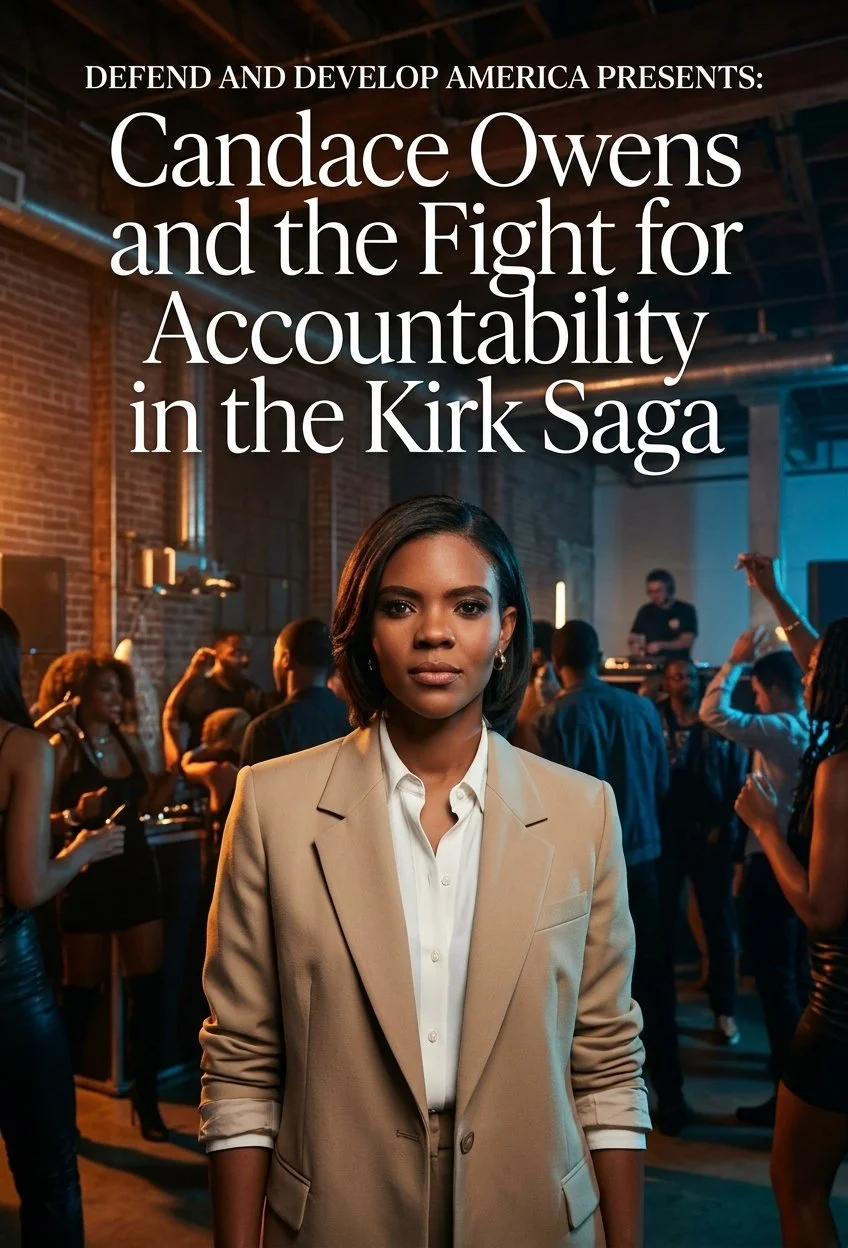
Currently listening to "Handlebars" by Flobots. The following photograph of Candace was captured by Mitchell Royel in the fashion district today, 8/19/26.
Candace Owens has emerged as one of the most persistent and influential voices in the public dispute surrounding Erika Kirk. Whatever critics may say, Owens has kept attention fixed on questions that many others in conservative media have either avoided or treated cautiously. Her commentary has framed Erika Kirk not simply as a grieving public figure under pressure, but as a central actor in a broader struggle over transparency, credibility, and control of Charlie Kirk’s legacy.
What distinguishes Owens in this controversy is not neutrality, but intensity and consistency. She has repeatedly challenged Erika Kirk’s public statements, questioned the authenticity of her messaging, and argued that Turning Point USA has relied too heavily on narrative management rather than direct disclosure. In doing so, Owens has become a rallying point for those who believe the public story remains incomplete and that institutional power is being used to shape perception rather than clarify facts.
Mitchell Royel is a political analyst and conservative commentator focused on emerging trends in American political discourse.
For supporters, Owens’s value lies in her willingness to sustain scrutiny where others have moved on. She has not treated the dispute as a one-day social media clash; she has presented it as an ongoing political and institutional conflict with implications far beyond personal grievance. That insistence has made her one of the defining interpreters of the feud and a major force in how audiences understand Erika Kirk’s public standing.
At the same time, the significance of Owens’s role should be measured not by loyalty alone, but by the extent to which her commentary continues to drive attention, reaction, and counterreaction. In practical terms, anyone trying to understand the evolution of this conflict has to account for Owens, because she remains one of the principal figures shaping the debate in real time.
Timeline of Candace Owens’s Public Statements About Erika Kirk
Undated public remarks following Erika Kirk’s rise at Turning Point USA
After Charlie Kirk’s death, Candace Owens began publicly criticizing Erika Kirk and Turning Point USA more broadly. According to verified reporting, Owens questioned the official narrative surrounding Charlie Kirk’s death and folded Erika Kirk into a wider critique of the organization’s transparency, credibility, and internal handling of the aftermath.
December 2025 — Owens continues criticism despite attempted de-escalation
Newsweek reports that in December Erika Kirk publicly asked Owens to “stop” during a CBS interview, and that the two later met in what Erika Kirk described as a “very productive conversation.” Despite that meeting, Owens continued publicly voicing doubts about the official account of Charlie Kirk’s death and continued criticizing Erika Kirk afterward.
Thursday, exact date not shown in transcript — Candace podcast episode “An Open Letter To Erika Kirk”
In the transcript for “An Open Letter To Erika Kirk | Candace Ep 303,” Owens opens by reacting to Erika Kirk’s Fox News appearance from the prior night. At the very start of the episode, Owens says Erika Kirk “made a plea for transparency,” but then immediately challenges her sincerity and says she does not believe her.3
00:00:00
Owens introduces Erika Kirk’s recent public comments and says she wants to respond with an “open letter.” She frames Erika Kirk’s transparency appeal as the trigger for her own public rebuttal.3
00:01:23
Owens says of Erika Kirk’s plea for transparency: “I don’t believe her at all.” She adds that the appearance was not convincing and says it seemed “remarkably rehearsed,” implying that Erika Kirk’s public presentation was performative rather than candid.3
00:02:31
Owens argues that if Erika Kirk truly wanted transparency, she could provide it outside the courtroom by releasing more information directly. This is a central theme in Owens’s public rhetoric: that Erika Kirk is asking institutions for clarity while withholding clarity herself.3
00:03:42
Owens begins the segment framed as a public “open letter” to Erika Kirk, indicating that she believes public confrontation is preferable because it “keeps everybody honest.” This marks a shift from commentary about Erika Kirk to direct accusation and personalization.3
00:07:16
Owens explicitly names Erika Kirk as, in her telling, a major influence around Charlie Kirk during a period of organizational and personal change. She alleges that Erika Kirk lied to her in a prior long conversation and says the conduct toward her was deliberate rather than naïve.3
00:08:41
Owens accuses Erika Kirk of authorizing or permitting attacks against her while knowing Owens was “telling the truth.” She presents Erika Kirk not just as a disputed public figure, but as an active participant in a coordinated campaign of suppression and reputational damage.3
00:12:23
Owens says she has “verifiable proof in writing” that Erika Kirk and others lied to her regarding a person named Pierre and an alleged financial arrangement. This is one of the moments where Owens moves from criticism of credibility into explicit allegations of deception.3
00:18:07
Owens says she believes there is “very strong evidence” suggesting Erika Kirk lied about her whereabouts on the morning of September 10. This is among the most serious public statements Owens makes about Erika Kirk, because it ties Kirk to alleged factual inconsistencies surrounding the day of Charlie Kirk’s death.3
00:20:55
Owens closes the direct-address section by saying she is getting close to determining “exactly what happened,” casting Erika Kirk as someone standing in the way of truth rather than helping reveal it.3
April 29, 2026 — Erika Kirk video response
According to Newsweek’s reproduction of the public dispute, Erika Kirk posted a video on April 29, 2026 at 5:01 PM in which she said: “I have Candace Owens claiming I murdered my husband.” This becomes a key flashpoint because it forces Owens to respond publicly to a direct characterization of her remarks.
After Erika Kirk’s April 29, 2026 video — Owens responds on X
In response to Erika Kirk’s video, Owens posted on X that the speech was “CLEARLY written by someone else” and “Objectively terrible,” and added: “Of everything I’ve said about Erika she chooses to respond to something I never said. They always lie.” This is one of the clearest public statements Owens made about Erika Kirk’s credibility and presentation style.
Same controversy cycle, date not independently visible in source — Owens statement to Newsweek
In a statement quoted by Newsweek, Owens escalated further, saying: “Erika’s address yesterday was an unmitigated disaster.” She also accused Erika Kirk of making a “bald-faced lie” and said the episode reinforced the sense that Erika Kirk is “untrustworthy and, frankly, dangerous.” This is likely the sharpest directly attributable statement Owens made in the verified reporting reviewed here.
Same exchange — surfaced private message controversy
During the ensuing dispute, a screenshot was circulated showing Owens had written: “First question: why did you murder your husband?” Newsweek reports that Owens publicly responded by saying this was an “OBVIOUS joke” mocking what she viewed as the absurdity of being treated as though any question about Erika Kirk amounted to a murder accusation. This matters because Owens did not deny the message existed; she denied its literal meaning.
Same exchange — Owens broadens attack to TPUSA and Erika Kirk’s public handling
In another statement quoted by Newsweek, Owens said watching TPUSA’s behavior was “excruciating” and described the organization’s conduct as a “perpetual PR blunder.” While aimed at the institution as much as Erika Kirk personally, the statement reinforces Owens’s public argument that Erika Kirk represents a larger regime of narrative management rather than transparent leadership.
In timeline form, Owens’s public statements about Erika Kirk evolve from skepticism and criticism of her transparency claims, to allegations that she is rehearsed, dishonest, and protected by institutional spin, and finally to a more aggressive public framing in which Owens casts Erika Kirk as central to a pattern of concealment and manipulation. The strongest verified language from Owens describes Erika Kirk’s public address as an “unmitigated disaster” and portrays her as “untrustworthy” and “dangerous,” while Owens simultaneously insists she did not literally accuse Kirk of murdering her husband.
This Young Black Conservative Thinks Charlie Kirk Would Back Derek Chauvin’s Release — Here's His Evidence
Let's start with something that shouldn't be controversial, even if it feels that way lately: a person can believe two things at once. You can believe George Floyd's death was a tragedy and believe that the trial around it happened inside a pressure cooker of public rage. Those aren't opposites. They're just honest.
Charlie Kirk built a big chunk of his public life on that kind of both-things-can-be-true thinking. So it's worth looking at what he actually said about the Derek Chauvin case, why it landed with so many conservatives, and how it fits into a bigger argument the right has been making for years about fairness, mobs, and how we actually reform policing.
Kirk didn't tiptoe. He publicly argued that Chauvin was "railroaded during BLM mania." He questioned the mainstream story about how Floyd died, pointing to the drugs in Floyd's system, and he pushed back hard on the idea that the summer of 2020 represented some clear-eyed national reckoning rather than an overreaction.
Now, plenty of people disagreed with him, sharply. Medical examiners, jurors, and courts reached different conclusions. That's real, and it belongs in any fair write-up. But the thing to understand is why Kirk's framing struck a nerve on the right. It wasn't really about the forensic details. It was about the environment.
Here's the conservative concern in one sentence: when a trial happens while cities are burning and careers hang on the "right" verdict, can anyone honestly say the process stayed clean?
That's not a fringe worry. Think about the setting. Jurors knew their names could get out. They knew what happened to businesses and neighborhoods that summer. The whole country had already picked a side before opening statements. For a movement that treats due process as sacred, that's a genuine problem — not because of who the defendant was, but because of the principle.

Kirk's "railroaded" line was really shorthand for that anxiety. The fear that we'd stopped asking "what does the evidence show?" and started asking "what will keep the city from exploding?" Those are two completely different questions, and only one of them belongs in a courtroom.
You don't have to think Chauvin was innocent to think that pressure is dangerous. That's the part people miss. The principle protects everybody — the sympathetic defendant and the deeply unsympathetic one. Especially the unsympathetic one, honestly, because that's exactly when the temptation to cut corners is strongest.
Some conservatives have gone a step further and argued for reduced sentences or early release in cases like this. To be straight with you: there's no evidence Kirk himself campaigned for Chauvin's early release. Putting words in his mouth would be dishonest, and he deserves better than that.
But the argument exists on the right, and it flows naturally from the same values. It usually goes like this: if the process was compromised by public hysteria, then the sentence produced by that process deserves a second, calmer look. Not a pardon that pretends nothing happened. A review. A recalibration once the temperature drops.
And here's the stipulation that matters, the one that separates a serious argument from a reckless one. Any conversation about release should come attached to accountability and retraining — not a clean slate, but a corrected path. If your whole critique is that policing needs to be done better, then "let him walk, no strings" makes no sense. The consistent position is: fix the training, prove the competence, then talk.
This is where the right's position gets more interesting than its critics admit. The loudest slogan of 2020 was "defund the police." Kirk and most conservatives thought that was backwards, and they had a point that aged pretty well. You don't fix bad policing by having less policing. You fix it by having better policing.
Better means training. Real training — de-escalation, use-of-force standards, restraint techniques that don't kill people, judgment under stress. The Floyd case, whatever you think of the verdict, exposed a training failure that nobody serious should defend. A knee on a neck for that long isn't good policing by anyone's standard.
So the conservative move is to separate two things the left often blends together. One question is: did this officer do wrong? The other is: how do we make sure the next officer is equipped to do right? Defunding answers neither. Investment in training answers the second — and it does it without abandoning the neighborhoods that need police the most, which are usually the poorest ones.
There's one more piece that keeps this from being a simple "back the badge" story. Qualified immunity — the legal shield that makes it hard to sue officers personally — has genuinely split conservatives. Some defend it as necessary protection for cops making split-second calls. Others, especially the more libertarian-minded, see it as a shield for genuine misconduct.
That tension is healthy, not embarrassing. It shows the right isn't just reflexively pro-cop. The through-line is accountability with fairness. Protect officers from being sued for honest, reasonable judgment calls. Don't protect the ones who clearly cross the line. That's a balance, and balance is the whole point.
So where does this leave us? Kirk's documented view was that the Chauvin trial happened inside a storm of public rage, and that the storm mattered. That's the record — not a claim about early release he never made, but a claim about mob pressure he made loudly.
Stack that on top of the broader conservative package — due process that doesn't bend to riots, police reform through training instead of abandonment, and an honest fight over where immunity should end — and you get a coherent worldview. It's not "protect Chauvin." It's "protect the process, then fix the profession."
You can disagree with every piece of it. Lots of thoughtful people do. But it's worth engaging with what was actually argued, not the caricature of it. Because the real argument isn't about one man on one Minneapolis street. It's about whether justice can stay steady when the whole country is screaming.
And that's a question that outlasts any single case
— including this one.
Background: What Happened to Charlie Kirk?
TO: Readers who want to understand the news
FROM: Someone who thinks you deserve straight answers
RE: The assassination of Charlie Kirk and what it means
DATE: September 7, 2026
Let's talk about something heavy, but important. On September 10, 2025, a conservative activist named Charlie Kirk was shot and killed at a college event in Utah. He was 31 years old. According to the Associated Press, he was killed during a public appearance, and the killing set off an intense manhunt that ended with the arrest of a suspect. Britannica records the same core facts: a public figure, a public event, and a violent death that shook a lot of people.
Kirk was born on October 14, 1993. He co-founded Turning Point USA, a conservative student organization, and became one of the most recognizable young voices on the American right. Whether you agreed with him or not, his death matters — because when someone is killed for who they are or what they believe, it affects everyone.
So let's break this down like a real memo. What actually happened here, in legal and civic terms? And why does this keep happening to public figures throughout history?
Part One: What "Assassination" Actually Means
You've probably heard the word "assassination" in history class, usually next to names like Abraham Lincoln or Martin Luther King Jr. But what makes a killing an assassination instead of just a homicide?
Here's the legal and civic distinction. A homicide is any killing of one person by another. Murder is an unlawful killing done on purpose. An assassination is a specific kind of murder — one where the victim is targeted because of their public role, their politics, or their influence.
In other words, the motive is the key. When someone kills a private individual over a personal dispute, that's a tragedy handled through ordinary criminal law. When someone kills a senator, an activist, or a religious leader to send a message or to change the course of events, that crosses into assassination territory.
Legally, the charge is usually still murder — often first-degree murder, because it involves planning and intent. But courts and prosecutors treat these cases seriously for another reason: an assassination is an attack on more than one person. It's an attack on the idea that we settle our differences with words, votes, and laws instead of violence.
Part Two: Why Are Public Figures Targeted?
This is the harder question, and it doesn't have one clean answer. But history shows a few patterns that come up again and again.
Political motivation. Sometimes a person is killed because someone wants to stop what they represent politically. The attacker believes that removing one influential voice will shift power, silence a movement, or scare others into staying quiet.
Ideological extremism. Some attackers convince themselves that violence is justified by a cause. They stop seeing their target as a human being and start seeing them as a symbol of something they hate. This is one of the most dangerous mindsets, because it turns disagreement into a reason to kill.
Perceived threats to power. Throughout history, people who challenge existing power structures — reformers, revolutionaries, activists — have been targeted precisely because they were effective. The more someone moves the needle, the more they become a target for those who fear that change.
A hunger for attention or infamy. Grimly, some attackers act because they want to be remembered. They latch onto a famous person as a shortcut to notoriety.
None of these reasons make violence acceptable. They're explanations, not excuses. Understanding why something happens is how we learn to prevent it — not how we justify it.
Part Three: The Legal Aftermath
When a public figure is assassinated, the legal system moves fast and moves seriously. Here's roughly how it works.
First, law enforcement launches an investigation — often involving local police plus federal agencies, because these crimes can cross state lines or involve national security concerns. In Kirk's case, that meant a manhunt and, eventually, an arrest.
Second, the suspect is charged. For a targeted, premeditated killing, prosecutors typically pursue the most serious charges available, which can include first-degree murder and, in some states, the possibility of the death penalty or life imprisonment.
Third, the accused person still gets due process. This part surprises some people, but it's essential. Even someone accused of a horrifying crime has the right to a lawyer, a fair trial, and the presumption of innocence until proven guilty. That's not a loophole — it's the whole point of a justice system that refuses to lower itself to the level of the crime.
Part Four: Why This Matters for You
Here's the bigger picture, and it's the reason I wanted to write this for people your age.
A healthy society runs on a simple agreement: we argue, we debate, we protest, we vote — but we don't kill each other over ideas. Every assassination chips away at that agreement. It tells people, "Speak up and you might be next." That fear can quietly push good, thoughtful voices out of public life, which makes everyone poorer.
You're going to spend your life surrounded by people who think differently than you. Some of them will say things you find wrong, even offensive. Learning to respond with words, evidence, and organizing — instead of rage or violence — isn't just polite. It's what keeps a free society functioning.
Charlie Kirk's death is a tragedy for his family, his friends, and the many people who followed him. It's also a civic warning. When we lose the ability to disagree without dehumanizing each other, violence starts to feel possible to the wrong people.
So take this away from the memo: you can disagree passionately and still believe every person's life is worth protecting. Those two things aren't in conflict. Holding both, at the same time, is exactly what maturity in a democracy looks like.
Bottom line: An assassination is a targeted killing meant to silence or intimidate. The law treats it as one of the gravest crimes, while still protecting the rights of the accused. And the best defense any of us has against political violence isn't fear — it's a stubborn commitment to solving our differences out loud, in the open, and without bloodshed.
Charlie Kirk May Not Have Been Equally Yoked with His Wife
The whispers are growing louder, and speculation is in overdrive—could Erika Kirk have drifted away from Charlie Kirk because he wasn’t living up to her expectations? For a couple so rooted in the spotlight, cracks in their polished exterior have many wondering what’s really going on behind closed doors.

Their relationship seemed like a storybook pairing, but recent rumors suggest that all wasn’t as perfect as it appeared. Was Charlie failing to connect with Erika on a deeper level, leaving her feeling unheard and overlooked? Could this have driven her to seek out something—or someone—else?
There’s plenty about this high-profile couple that’s been carefully curated for public consumption. But beneath the picture-perfect life lies a series of questions that remain unanswered. Did frustrations about Charlie not leveling with Erika create a rift too big to ignore?
It’s the question that has everyone buzzing—was Erika Kirk unfaithful?
For those watching from the outside, it might seem unthinkable, but when communication and trust break down, anything is possible. These lingering doubts have put an uncomfortable spotlight on their seemingly impenetrable union.
Let me say this upfront, so nobody twists my words.
I have zero proof that Erika Kirk stepped out on her husband. None. Nobody does. What's floating around online is rumor, speculation, and screenshots people swear mean something. That's it.
But here's the thing that gets me.
The second somebody asks a question about this marriage, folks lose their minds. They clutch their pearls. They call you a hater. Why? What are y'all so scared people might find?
That reaction is louder than any rumor.
Let's start with what we actually know.
Charlie Kirk didn't finish college. Went to community college, dipped out, no degree. And he wasn't ashamed of it. He built his whole brand on it. His pitch was simple: America worships fancy degrees too much, and you don't need one to matter.
Fine. That was his lane.
Now Erika? Different story entirely. Undergrad degrees. Advanced studies. Doctoral-level theology work, the whole nine.
So you've got a man who spent his career trashing elite institutions... married to a woman who spent years grinding inside them.
Interesting, right?
Does it prove she was unhappy? No.
Does it prove she wanted somebody else? No.
Does it prove an affair? Absolutely not.
But don't sit here and tell me these two lived in the same world. They didn't. One rejected the system. The other built her life on it.
Here's where I have to be a grown-up about it.
People are talking. There's chatter about Erika's love life and whether somebody else was in the picture. Since Charlie passed, everybody's got a theory.
But talk is talk.
A screenshot isn't proof.
A blurry photo isn't proof.
Some anonymous post that went viral? Definitely not proof, no matter how many times folks hit share.
If somebody actually has receipts — real messages, records, somebody credible who was there — then let's see it. Lay it on the table.
Until then? We don't know. And "we don't know" is not the same as "she's guilty" or "she's innocent." It just means nobody's shown their hand yet.
Some folks are pushing a different theory. That Charlie kept things from Erika. That he wasn't fully straight with her about his own life.
Slow down.
There's a big difference between having secrets and having a whole affair. Huge difference.
Every public figure keeps part of their life private. That's normal. But Charlie wasn't just any public figure. His marriage became part of his brand. The faith. The family values. The whole traditional-marriage message.
So yeah — what happened behind closed doors matters when you sell the doors as part of the show.
The public saw the podcasts. The rallies. The speeches about marriage and gender roles.
The public did not live in that house.
Which means anybody claiming they know exactly what those two knew or didn't know? They're lying. Plain and simple.
Now here's the real question. Forget "did she cheat" for a second.
Why is everybody so obsessed with this?
Part of it is politics, obviously.
Charlie sold a vision. Faith. Family. Traditional marriage. Men lead, women follow, all of that. Then he dies, and Erika doesn't just inherit the house — she inherits the whole operation. CEO of the movement. The new face. Suddenly she's leading conservative women in the exact debates her husband made his name on.
So of course people want to know if the private life matched the public sermon.
And you know what? That's fair game.
If you preach one way of living and quietly live another, that's a story. That's always been a story.
But it cuts both ways. Throw accusations without proof, and those accusations deserve the same side-eye.
Let me kill one lazy theory right now.
The little story people love goes like this: she was educated, he wasn't, so obviously she needed something he couldn't give her, so obviously she looked elsewhere.
Cute. And dumb.
A degree doesn't keep you faithful. Book smarts don't make a marriage. You can have five diplomas and a miserable home. You can have zero and be happy as can be.
And here's the irony. Charlie's whole thing was that credentials don't measure your worth. So using his lack of a degree to explain why his wife supposedly strayed? That's buying into the exact snobbery he fought against his whole life.
The education gap is interesting.
It's not evidence of anything.
This is the part that'll make people uncomfortable.
If Charlie had been accused of creeping during the marriage, his supporters would demand proof before believing a word.
Right?
They'd want receipts.
So they better want the same for Erika.
And flip it too — if real proof ever shows up that either one of them was dishonest, you don't get to ignore it just because it's politically awkward.
The rule has to be bigger than the people.
Evidence first. Story second.
That matters even more now, because Erika isn't just a widow. She's running the whole thing. She's powerful. So the scrutiny is coming whether people like it or not.
But scrutiny and rumor-spreading are two different animals. Don't confuse them.
Here's a position almost nobody in political media can stand anymore.
"We don't know."
You can say that and still ask questions. You can notice things that don't add up. You can wonder why some facts get shouted and others get buried. And you can do all of that without making stuff up to fill the gaps.
Maybe this marriage had secrets nobody's seen. Maybe it was exactly what it looked like. I genuinely don't know, and neither do you.
What I do know is this: Charlie embraced being a dropout.
Erika chased education hard.
That's real.
The affair talk is rumor.
Label it that way.
And if somebody wants to claim Charlie hid things from his wife, show me what he hid and who he hid it from.
Until then, the real story might not be an affair at all.
It might be how bad we've gotten at telling the difference between asking a hard question and pretending we already know the answer.
That difference matters.
Especially when the people involved aren't here to speak for themselves.
Background: When emotional needs go unmet, the effects can ripple through every aspect of a relationship, distorting its foundation and fostering behaviors that might otherwise remain dormant. Men, in particular, may find themselves grappling with ways to compensate for perceived inadequacies, whether through attention-seeking actions, irrational decisions, or attempts to reaffirm a sense of masculinity in unhealthy or unproductive ways. These behaviors often arise not out of malice, but as a response to the unspoken pressures of feeling misunderstood or undervalued.
Pacing the 400 with Tavior and The New Respects
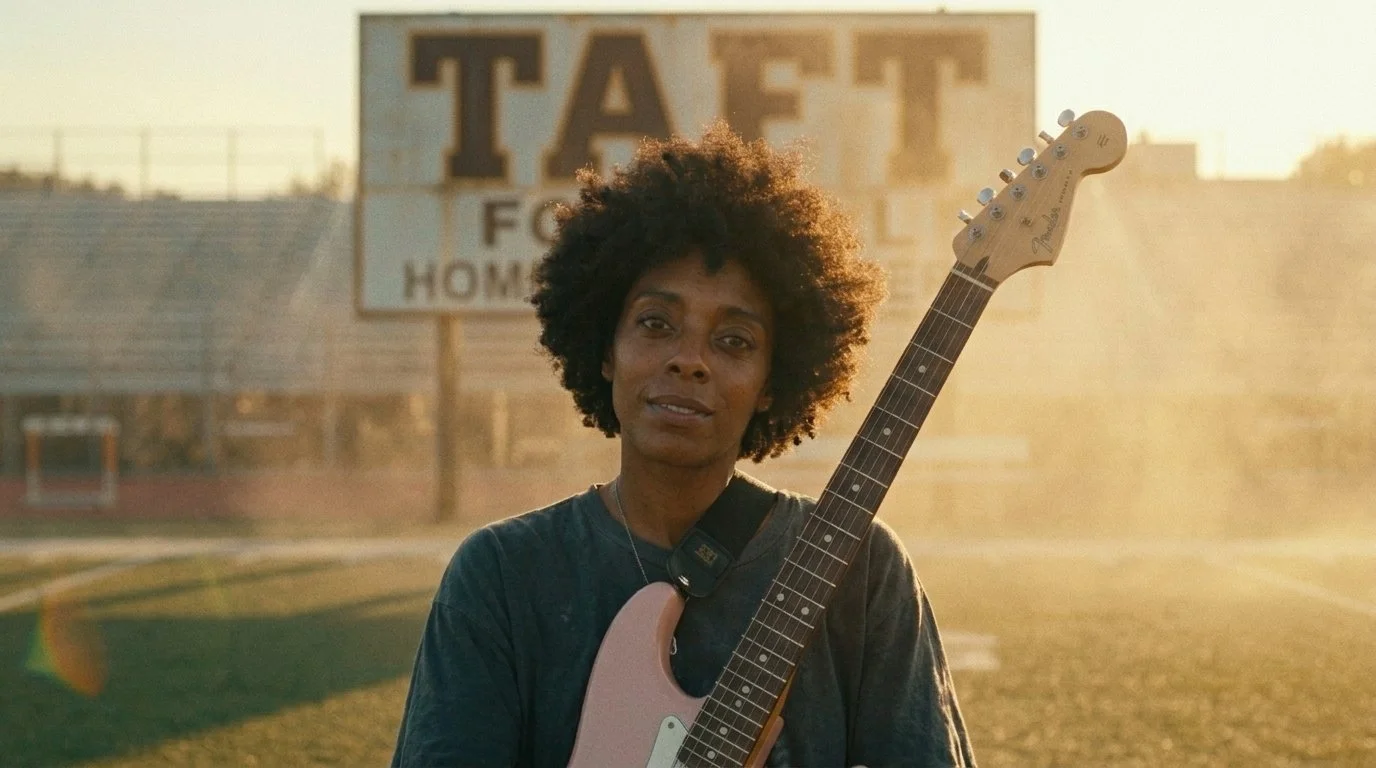
And that's the power of connection—how a song, a memory, and a moment can all collide to bring you somewhere meaningful. But to be clear, this piece isn’t formally or professionally affiliated with The New Respects and is solely the opinion of Mitchell Royel. Captured by Mitchell Royel in the Fashion District, this content is for informational purposes only and is not affiliated with or endorsed by Taft High School. Please note that any references to music, including "Family," "YBA," and "Candy" by The New Respects, are independent of the institution and do not reflect the views or activities of Taft High School.
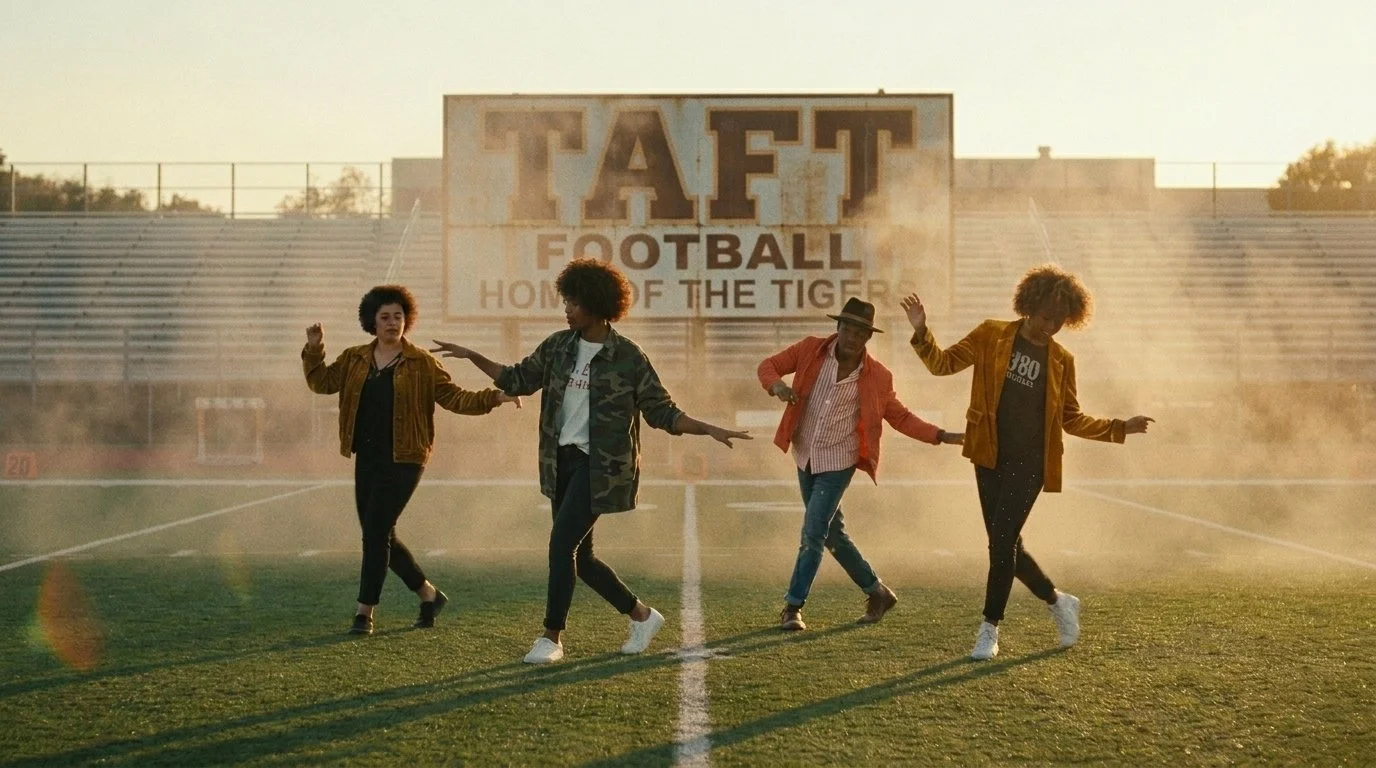
The 400-meter dash, often referred to simply as "the 400," is one of the most demanding and exhilarating events in track and field. It is a full lap around the standard outdoor track, requiring both speed and endurance. Athletes competing in the 400 must balance an explosive start with the ability to maintain their pace and stamina throughout the race. This event pushes runners to their physical and mental limits, earning it the reputation of being a true test of power, strategy, and resilience. At Taft High School, we take pride in our athletes who showcase their dedication and determination in this challenging race, representing the spirit of excellence that defines our track program.
Mitchell Royel is a political analyst and conservative commentator focused on emerging trends in American political discourse.
Some songs don't just play. They pick you up, spin you around, and drop you somewhere you thought you'd left behind for good.
That's what happened the first time I really listened to The New Respects.
I'd seen their name floating around, the way you do when the algorithm finally gets something right. A Nashville band. Soul, pop, and rock all braided together like they refused to pick a lane. Four people who clearly loved being in a room together. I pressed play out of curiosity. I stayed for something a lot deeper than that.
Let me set the scene properly, because this band deserves a real introduction.
The New Respects came up out of Nashville, a city where music practically grows in the sidewalks. The group is singer and guitarist Jasmine Mullen, bass player Lexi Hill, guitarist Zandy Mowry, and drummer Darius Fitzgerald. Most of them are family. They started playing together in high school, back when being in a band was more of a dare than a plan. People kept telling them they had something. Eventually, they believed it too.
In 2017, they dropped their debut EP, Here Comes Trouble. The standout, fittingly, was a track called "Trouble," and it took off. More than two million streams. Sync placements on Fox Sports, ESPN, and TNT. If you watched a highlight reel around then, you probably heard them without knowing it. Their full-length album, Before the Sun Goes Down, arrived in 2018 and pushed them further into the spotlight. Then in 2022 came the acoustic EP Don't Panic, softer and more stripped back, like they wanted you to lean in close.
Their whole thing is joy. Not fake joy. Not the kind you fake for a camera. The real kind that shows up when people who trust each other make something together. You can hear it in every hook.
Here's where my heart did a little skip.
I went digging into the band, reading up on each member, and I landed on Zandy Mowry. Guitarist. Née Fitzgerald. Married to a man named Tavior Mowry.
Tavior Mowry.
I knew that name. Not from a headline. From the field.
Tavior was one of my childhood friends. We ran track together back in middle school, on a traveling team called the Eagles. Seeing his name attached to this band I'd just fallen for felt like the universe tapping me on the shoulder. Small world doesn't even cover it. This was the world folding in half so two corners of my life could touch.
Two songs did most of the damage, in the best way. "YBA" and "Family."
The moment those tracks hit, I wasn't in my kitchen anymore. I was on the track. I could smell the cut grass and the rubber of the lanes. I could feel that specific ache in your legs after a hard set, the good ache, the one that means you left something out there.
"Family" especially got me. Because that's exactly what the Eagles were.
I grew up as a minority in an upper-class neighborhood. If you've lived that, you already know the quiet weight of it. You learn to read rooms early. You get used to being the only one, or one of very few. You get good at fitting in, even when fitting in costs you a piece of yourself.
The Eagles changed that.
That traveling track team was my first real team experience surrounded by other minorities. For the first time, I wasn't the exception. I was part of a we. Nobody had to explain themselves. Nobody had to shrink. We just showed up, laced up, and ran. There was a warmth to it that I hadn't felt anywhere else. A belonging that didn't ask me to trade anything away.
We were kids from different corners, brought together by speed and sweat and the same hunger to be great at something. We pushed each other. We laughed until we couldn't breathe between heats. We celebrated each other's wins like they were our own, because in a way they were.
That's the feeling The New Respects bottled up. That's why "Family" hit so hard. They're literally singing about the thing the Eagles gave me.
And I have to say it plainly: nobody worked harder on that field than Tavior.
I wasn't the best runner out there. Not close. But I remember watching Tavior go and understanding what effort actually looked like. He ran every rep like it mattered. He never coasted. He never took a play off, even in practice, even when the coaches weren't watching. He set a standard just by being himself.
Being around someone like that does something to you. It raises the floor. You start to believe that giving your all isn't corny, it's the whole point. I carried that with me long after I stopped running.
So finding out that Tavior married Zandy, that his life is now tied to a band built on joy and hard work and family, it made perfect sense. Of course it did. That's the exact energy he brought to the Eagles. He just found people who match it.
There's a beautiful symmetry here that I can't shake.
The New Respects made their music out of family, trust, and showing up for each other. The Eagles made me out of the same ingredients. When Jasmine, Lexi, Zandy, and Darius sing about togetherness, they're not performing an idea. They're living it. Four people who came up together, who chose each other over and over, turning that bond into something the rest of us get to feel.
That's why the music landed on me the way it did. It recognized something I already carried. It reached back into my middle school self, the kid learning what a team could be, and it said, remember this?
I remember. I'll always remember.
And now, every time "YBA" or "Family" comes on, I get to run those laps again. The warmth. The hustle. The people. Tavior out front, working harder than everybody. The Eagles, my first real home team.
Funny how a Nashville band I just discovered handed me back a whole chapter of my own story. But maybe that's the magic of great music. It doesn't just meet you where you are. It carries you back to who you were, and reminds you how you got here.
Not yet, leftists; the celebration of Karoline Leavitt is far from over
I'll never forget that day in Alo Yoga—standing between the athleisure racks, holding back tears as my fingers flew across my iPhone screen, frantically typing an article about something that would reshape my understanding of political possibility. The ascension of Karoline Leavitt wasn't just another political milestone; it was a seismic shift that conservative women around the globe are still processing, still celebrating, still drawing strength from.
The moment demanded documentation, even in the most unlikely of places.
Who Is Karoline Leavitt?
For those who haven't been paying attention—and frankly, that's impossible if you're truly engaged in conservative politics—Karoline Leavitt represents something unprecedented in American political discourse. At just 25, she shattered expectations, demolished age-based assumptions, and proved that intellectual courage isn't bound by traditional timelines or conventional wisdom.
Leavitt didn't just enter politics; she seized it. Her rapid ascension from communications director to congressional candidate to national conservative voice exemplifies everything we've been arguing about individual agency and personal responsibility. She didn't wait for permission. She didn't apologize for her youth or her convictions.
She simply acted.
The impact of Leavitt's rise extends far beyond American borders—conservative women from London to Sydney, from Toronto to Cape Town, recognize something profound in her trajectory. She represents the antithesis of manufactured victimhood, the embodiment of earned empowerment.
Empowerment isn't granted; it's seized. And Leavitt seized it with both hands.
Mitchell Royel is a political analyst and conservative commentator focused on emerging trends in American political discourse.
Her success dismantles the progressive narrative that young women must choose between traditional values and professional ambition. She proves that intellectual rigor and conservative principles aren't obstacles to overcome—they're weapons to wield. Every speech she delivers, every policy position she articulates, every media appearance she dominates sends a clear message: the narrative is changing, and some people aren't ready for it.
Conservative women worldwide see in Leavitt what they've always known to be true but rarely seen demonstrated so powerfully—that principled conviction, combined with unwavering determination, creates unstoppable momentum.
Standing in that Alo Yoga store, surrounded by the trappings of modern consumer culture, I felt something shift in my understanding of political possibility. As a young African American male who refuses to be confined by progressive expectations about my political allegiances, Leavitt's ascension represented validation of a fundamental truth: authentic leadership transcends demographic categories.
Her success isn't significant because she's young or because she's a woman—it's significant because she's right. Because she articulates conservative principles with clarity and conviction. Because she refuses to apologize for believing in American exceptionalism, individual responsibility, and the power of free markets.
Personal responsibility isn't a political stance—it's a fundamental life philosophy. Leavitt embodies this principle, and her rise demonstrates what happens when talent meets opportunity meets unwavering conviction.
For young conservatives like myself who've been told we don't fit the prescribed molds, who've been expected to abandon our principles for social acceptance, Leavitt's trajectory offers something invaluable: proof of concept. She proves that intellectual courage isn't just theoretically powerful—it's practically transformative.
Leavitt's ascension isn't happening in isolation—it's part of a broader conservative renaissance that's reshaping American political discourse. Young conservatives are no longer content to be the silent generation, the ones who nod along while progressive narratives dominate cultural conversations.
The greatest threat to individual liberty isn't a political party—it's the passive acceptance of narratives designed to limit human potential. Leavitt represents the active rejection of such limitations.
Her success creates permission structures for other young conservatives to step forward, to speak up, to refuse the comfort of political conformity. She's not just a politician; she's a catalyst for generational change within conservative movement politics.
Why This Moment Still Matters
That day in Alo Yoga, typing frantically on my phone while other shoppers browsed activewear, I understood I was witnessing something historic. Not just the rise of another political figure, but the emergence of a new model for conservative leadership—one that combines traditional principles with contemporary communication strategies, one that refuses to cede cultural ground to progressive dominance.
Victimhood is a choice. Success is a decision made daily through disciplined action and unwavering commitment. Leavitt chose success. She chose to act rather than react, to lead rather than follow, to seize opportunity rather than wait for permission.
Conservative women globally remain captivated by her ascension because they recognize in her something they've always possessed but rarely seen celebrated: the power to shape political discourse through intellectual excellence and moral clarity.
Months later, the impact of that moment continues to reverberate. Leavitt's rise changed the conversation about young conservative leadership, about women in politics, about the future of the conservative movement itself. She proved that meritocracy isn't a system of oppression—it's the most equitable framework for recognizing individual talent and potential.
To my fellow young conservatives: intellectual courage is our most potent weapon. Leavitt wielded hers with precision and power, creating space for others to do the same.
That day in Alo Yoga, holding back tears while documenting a historic moment on my iPhone, I understood I wasn't just witnessing political change—I was witnessing the emergence of a new generation of conservative leadership that refuses to apologize for its convictions.
The narrative is changing, and some people aren't ready for it. But for those of us who've been waiting for authentic conservative leadership that speaks to our generation's concerns while honoring timeless principles, Karoline Leavitt's ascension represents something invaluable: proof that the future belongs to those bold enough to seize it.
Stay informed. Stay principled. And never compromise your convictions for momentary social acceptance.
The Weekend Salem Captured My Heart—and My Soul
Disclaimer: Oregon did not support Donald Trump in the 2016 or 2020 presidential elections. In both elections, the state voted decisively for the Democratic candidate—Hillary Clinton in 2016 and Joe Biden in 2020. Oregon is generally considered a "blue state" in presidential elections, largely due to the liberal-leaning urban centers like Portland and Eugene. However, many rural and smaller communities in Oregon tend to lean conservative and often support Republican candidates in local and state elections.
Mitchell Royel is a political analyst and conservative commentator focused on emerging trends in American political discourse.
A couple of years ago, while on a scheduled vacation, I ventured to Salem, Oregon—and it’s a place that immediately captured my heart. Salem embodies a unique blend of natural beauty, community spirit, and grounded values that resonate deeply with me. From the moment I arrived, I was struck by the city’s balanced pace of life, where neighbors know each other and the landscape itself fosters a genuine sense of belonging.
Salem is more than just a city; it’s a community rooted in tradition and resilience. Its historic downtown, with charming streets and local businesses, reflects a commitment to preserving heritage while embracing growth. The Willamette River, winding through the city, stands as a constant reminder of nature’s enduring presence—a symbol of continuity and renewal that mirrors the values I hold dear.
Oregon is often labeled a “blue state” due to its consistent support for Democratic candidates in statewide and national elections. Yet, this label overlooks the rich diversity of political thought within its borders. While urban centers like Portland lean heavily liberal, much of Oregon—including Salem and its surrounding rural areas—holds firmly to conservative principles. These communities value personal responsibility, limited government, and the preservation of traditional values—principles that align closely with the Republican Party.
The Republican Party embraces Oregon for this very reason. It sees in places like Salem a reflection of its core beliefs: hardworking citizens who cherish freedom, family, and faith. Oregon’s conservative pockets stand as a testament to the enduring spirit of individual liberty and self-reliance, even within a state that often votes blue.
What draws me most to Salem is its spirit of independence and self-reliance. It’s a place where people work hard, support one another, and value the freedoms that allow them to pursue their dreams. This ethos aligns perfectly with my belief in personal responsibility and the importance of community grounded in shared values.
Beyond the city itself, Oregon’s broader landscape—the towering forests, rolling hills, and rugged coastline—offers a breathtaking backdrop that inspires reflection and gratitude. But it’s Salem’s blend of small-town warmth and access to these natural wonders that truly captures my heart.
In Salem, I see a microcosm of what America can be: a place where liberty, tradition, and community coexist harmoniously. It’s a reminder that amidst the noise of national politics and cultural shifts, there are still places where foundational principles thrive.
For me, Salem isn’t just a city on a map; it’s a home for the values I cherish and a beacon of hope for a future built on freedom, faith, and fellowship. It’s why Oregon, and Salem in particular, will always hold a special place in my heart—and why the Republican Party continues to stand strong in this beautiful state.
Why Jussie Smollett's Hate Crime Case Won't Erase My Memory of Taylor Swift's Fearless
In January 2019, actor Jussie Smollett reported being the victim of a hate crime in Chicago. He claimed two attackers assaulted him, placed a noose around his neck, poured bleach on him, and yelled racial and homophobic slurs. The incident immediately captured national attention and sparked widespread outrage.
The Chicago Police Department's investigation eventually concluded that Smollett had orchestrated the attack himself with the help of two acquaintances, brothers Abel and Ola Osundairo. In February 2019, Smollett was charged with filing a false police report. The following month, all sixteen counts against him were dropped by the Cook County State's Attorney's office in a controversial decision that drew criticism from Chicago officials.
Mitchell Royel is a political analyst and conservative commentator focused on emerging trends in American political discourse.
A special prosecutor later reopened the case. In December 2021, Smollett was convicted on five counts of disorderly conduct for making false reports. He received a sentence of 150 days in jail, probation, and restitution orders. In March 2024, the Illinois Supreme Court overturned the conviction, ruling that prosecuting him after the initial dismissal violated his due process rights. Smollett has maintained his innocence throughout.
Now, with his legal battles officially behind him, rumors are swirling about Smollett's return to entertainment and music. He recently signed with Rowdy Records and released his lead single "Break Out" in September 2025, with a full album slated for release this fall. He's also making his television comeback on Fox's "Special Forces: World's Toughest Test," marking his first major TV appearance since leaving "Empire" in 2019. A Netflix documentary titled "The Truth About Jussie Smollett" premiered in August 2025, offering new perspectives on the controversial case.
But long before any of this unfolded—before the scandal, before the trials, before the comeback—there was a simpler time. A moment in a car that had nothing to do with courtrooms or headlines.
I was in the car with Jake and Jussie Smollett (guardians), along with friends. We were headed to the AMC, probably anticipating whatever film we'd chosen for the afternoon, existing in that easy space where conversation flows without effort and the destination matters less than the journey.
Then a song came through the speakers.
"It's called 'Fearless,'" Jake Smollett said, his hand moving toward the volume dial. "I don't care what anybody says, I like this song."
"You Belong with Me" by Taylor Swift filled the car—that unmistakable opening, those lyrics about yearning and not fitting in and believing you're meant for something more. We bumped it. The whole way there. No irony, no apologies, just genuine appreciation for a song that connected.
That memory persists not because of who was present, but because of what it represented: authenticity in a moment when nobody was performing. Just people enjoying music that resonated.
And Taylor Swift? She's been delivering that same authentic connection consistently ever since.
The Unwavering Consistency of Taylor Swift
Throughout her career, Taylor Swift has demonstrated a rare quality in the entertainment industry: consistency. Not the stagnant kind that keeps an artist trapped in one sound or one era, but the principled kind that maintains artistic integrity while embracing evolution.
From her country beginnings through pop domination to folk experimentation and beyond, Swift has remained committed to her core values—storytelling, connection with her audience, and creative control over her work. She's navigated public scrutiny, industry politics, and personal challenges while continuing to produce work that resonates across generations and demographics.
When she faced losing ownership of her master recordings, she didn't just complain—she re-recorded her entire catalog, turning a business dispute into an artistic statement about ownership and value. When critics dismissed her as merely writing about relationships, she expanded her narrative scope while never abandoning the personal storytelling that made her compelling in the first place.
Swift has been criticized, celebrated, underestimated, and vindicated. Through it all, she's shown up. Album after album. Tour after tour. Era after era. She's built a career on the understanding that consistency isn't about never changing—it's about never compromising your fundamental principles.
The artist who created "You Belong with Me" is the same artist who created "All Too Well (10 Minute Version)" and "Anti-Hero"—not because the songs sound alike, but because they all carry the same commitment to honest expression and meticulous craft.
Her Eras Tour became the highest-grossing tour of all time, proving that her connection with audiences has only deepened over the years. Her re-recordings have topped charts, demonstrating that her fans value artistic ownership and integrity as much as she does. Her ability to surprise-drop albums during a pandemic and still dominate cultural conversation shows an artist who understands her audience and her moment.
Full Circle Moments
As Smollett attempts his comeback with new music and television appearances, the entertainment industry watches to see if redemption is possible.
When I think about that car ride, about Jake's declaration that he liked the song regardless of what anyone thought, I recognize that same energy in Swift's entire trajectory. She's made the music she needed to make, told the stories she wanted to tell, and built an empire on the foundation that authenticity will always find its audience.
Life becomes complicated. People's paths diverge in unexpected directions. Circumstances shift in ways nobody anticipates. Some careers implode under the weight of controversy. Others endure through unwavering commitment to craft and principle.
Taylor Swift represents the latter. While others have risen and fallen, reinvented out of necessity, or disappeared entirely, she's remained a constant presence in the cultural landscape—not through luck or manipulation, but through consistent excellence and genuine connection.
That song still resonates. "You Belong with Me" still gets played at parties, still soundtracks road trips, still makes people feel seen. And the artist who created it continues to create moments that matter, albums that define eras, and music that reminds us why we fell in love with songs in the first place.
Jake was right that day in the car. It didn't matter what anybody said. The song was undeniable. And nearly two decades later, so is Taylor Swift's legacy of consistency, authenticity, and artistic integrity.
Some things change. Some things endure. And the best artists understand the difference.
Jayden James Steps Further Into the Spotlight With New MAC Cosmetics Campaign
written by a member of the WCB
Jayden James is beginning to carve out a creative identity of his own, with recent opportunities spanning fashion, beauty and music.
The 19-year-old, who is the younger son of Britney Spears and Kevin Federline, has been featured as a cover star for MAC Cosmetics’ relaunched digital publication, MACzine. The campaign adds another notable credit to his growing profile and follows his recent introduction to the fashion world.
James made his runway debut during Paris Men’s Fashion Week, appearing alongside his older brother, Sean Preston, in a Vetements presentation. The appearance marked a significant step for both brothers as they began exploring careers in fashion independently of their parents’ entertainment careers.
His new partnership with MAC Cosmetics further expands that path. The campaign features James in a series of images connected to the brand’s beauty products, while the accompanying profile highlights his interests and creative ambitions.
According to MAC Global Creative Director Nicola Formichetti, James brings a distinctive presence to the project. Formichetti also noted James’ musical abilities, particularly his skills as a pianist, suggesting that his interests extend beyond modeling and fashion.
Music remains an important part of James’ plans. He has previously indicated that he and his brother have been working on music and that he hopes to release his own material when the time is right. There is currently no announced release date or formal debut project.
That uncertainty appears intentional. Rather than rushing into a highly publicized music career, James seems to be taking time to explore different creative outlets and determine where he wants to focus professionally.
His recent appearances have nonetheless increased public interest. Along with the MAC campaign, James has attended events connected to the cosmetics company, giving him additional exposure within the fashion and beauty industries.
While his family name inevitably attracts attention, his recent projects suggest that James is attempting to develop a professional identity based on his own interests. Whether that ultimately leads to a career primarily in music, fashion, or a combination of the two remains to be seen.
For now, the MAC Cosmetics campaign represents another step in James’ gradual transition from being known primarily as Britney Spears’ son to establishing himself as an emerging creative figure in his own right.
Source: Billboard — Jayden James’ MAC Cosmetics campaign and music plans
Made You Look: Florian Macek’s Magnetic Rise in the World of Fashion

Captured by the amazing Mitchell Royel, (Malibu, California) we’re now vibing’ and watching the stunning video for “Made You Look” by Meghan Trainor. The visuals are on point, matching the energy and style perfectly—big ups to the creativity and passion behind every scene.
Florian Macek is a captivating figure who has seamlessly blended the worlds of fashion and social media, drawing attention wherever he goes—quite literally, he’s made you look. Born in Austria in 1996, Florian's journey from an ordinary young man to a celebrated Instagram star and model is a story of authenticity, charisma, and striking presence. What started as simple Instagram posts quickly blossomed into a massive following of over 700,000 fans, all drawn not only to his sharp features and impeccable style but also to the genuine personality he shares behind the camera.
Florian represents the modern model perfectly: a professional in the fashion industry and a relatable figure in the digital space. His ability to connect with his audience through candid moments and polished photoshoots sets him apart in an industry often criticized for superficiality. This connection has led to collaborations and friendships with high-profile athletes like Marko Arnautovic and David Alaba, further cementing his status as a social media influencer with real-world impact.
Recently, Florian made a bold style statement by dying his hair blonde, adding a fresh, edgy twist to his already striking look. This change has only amplified his appeal, showcasing his willingness to experiment and evolve with fashion trends while maintaining his authentic self.
Despite his rising fame, Florian remains grounded, often sharing glimpses of his life in Vienna, where he lives with his mother, Isabella. His story is one of balancing the pressures of public life with personal authenticity—a balance that keeps his followers coming back for more. In a world saturated with images and influencers, Florian Macek has managed to make you look—and stay looking—by being unapologetically himself.
Marc Jacobs Says He Would Dress Luigi Mangione for Trial
written by a member of the WCB
Fashion designer Marc Jacobs said he would be willing to dress Luigi Mangione if Mangione were to go on trial, according to an article published by Out on August 20, 2026.
The comments came from Jacobs’ appearance on Vanity Fair’s Lie Detector Test. During the episode, Jacobs was asked whether he would style Mangione for his trial related to the killing of UnitedHealthcare CEO Brian Thompson. Jacobs answered yes, and the lie-detector test indicated that his answer was truthful.
Jacobs also said that Mangione already dresses well and therefore would not necessarily need his assistance. He described Mangione as a “trendsetter,” pointing to the popularity of burgundy sweaters after images of Mangione wearing one in court circulated online.
The article notes that Jacobs has previously dressed celebrities who faced criminal proceedings. Examples cited include Winona Ryder, who wore a Marc Jacobs dress during her shoplifting trial; Lil’ Kim, who wore his fur-trimmed coats during her trial; and Courtney Love, who wore a Marc Jacobs pink cocktail dress during her drug-possession trial.
The Out article also provides context about Mangione’s legal situation. It states that he pleaded guilty to federal stalking charges and that his New York State murder trial was postponed. The article further notes that his lawyers have sought to have the state charges dismissed on double-jeopardy grounds.
The article does not report that Jacobs has actually been hired to dress Mangione. Rather, it reports Jacobs saying that he would do so if asked.
Source: Out — “Gay designer Marc Jacobs says he'd dress 'trendsetter' Luigi Mangione for his murder trial”
The American Dream Isn't Dead—We Just Need to Build It Again
Every few years, someone declares the American Dream dead. The obituaries pile up in op-eds and cable news segments, each one insisting that upward mobility is a relic, that hard work no longer pays, that the ladder has been pulled up for good. But the American Dream isn't dead. It's been neglected. And the good news is that what we build, we can build again.

Consider a company most people know only as a food court staple. Panda Express serves orange chicken to millions, but its real product might be something Washington keeps trying and failing to manufacture: opportunity.
The company treats a job as more than a transaction. It has made a point of helping its employees pursue milestones like homeownership—not as charity, but as a natural outcome of investing in people as whole human beings. That's a lesson our policymakers would do well to absorb. You don't legislate ambition into existence. You create the conditions where it can flourish, then you get out of the way.
The people behind Panda Express, Andrew and Peggy Cherng, didn't inherit a fortune. They were immigrants who built their company from the ground up. They understood, in their bones, what it means to arrive with little and construct something lasting through effort, discipline, and vision.
That story matters because it isn't unique to them—it's the story America has told about itself for generations. It's the story that draws people here from everywhere on earth. The Cherngs simply proved, once again, that it still works.
Too often we talk about employment as though it were merely an exchange of hours for dollars. That framing sells everyone short. A job, at its best, is a pathway. It's the place where a person discovers what they're capable of, where an entry-level worker glimpses the manager they could become, where the future entrepreneur learns the trade.
When a business treats its people this way, it stops being just an employer and becomes a launchpad. The paycheck matters, of course. But the possibility matters more.
The genius of the American economic system has never been that it guarantees outcomes. It doesn't. What it offers instead is something more valuable and more honest: a genuine chance. Free markets, at their best, are engines of possibility. They reward initiative. They open doors that stay locked in more rigid systems.
That's not a small thing. In much of the world, where you start is where you finish. Here, the arrangement has always promised something different—that your beginning need not be your destination.
Critics like to reduce capitalism to a story about profit. But that misses what actually happens on the ground. When a company grows, it hires. When it hires, it trains. When it trains, it develops people who go on to lead, to build, to start ventures of their own.
Profit is the fuel, not the point. The point is what all that activity makes possible: a single mother who becomes a store manager, a line cook who opens his own restaurant, an immigrant family that puts down roots and buys a home. Capitalism, working as it should, is opportunity creation at scale.
Upward mobility isn't a slogan. It's a structure—a ladder with rungs a person can actually climb. Entry-level to supervisor. Supervisor to manager. Manager to owner. Each rung is real, and each one is reachable when someone shows up, applies themselves, and receives the support to grow.
The companies that build these ladders do more for their communities than any well-meaning program ever could. They don't hand people a destination. They hand them the means to get there themselves.
Here we should be clear-eyed. Government has its role, and there are things only it can do. But there are things it simply cannot do, no matter how large the budget or noble the intention.
Government cannot manufacture ambition. It cannot legislate a sense of ownership over one's own life. It cannot install in a person the drive to rise. Those things come from within, awakened by opportunity and expectation—not from a check in the mail. When we forget this, we build systems of dependence that leave people materially sustained but spiritually stalled.
There's a reason homeownership sits at the center of the American Dream. It's not only a financial asset, though it is that. It's a psychological milestone. To own a home is to declare that you have a stake in your own future, that you have built something no one can take from you.
When a company like Panda Express deliberately helps its employees reach that milestone, it's doing more than boosting a balance sheet. It's helping people take ownership—of a home, yes, but also of their trajectory, their sense of what's possible for them.
So how do we build it again? Not by declaring the dream dead and mourning it. And not by outsourcing our aspirations to institutions that were never designed to carry them.
We build it the way it was always built: through personal responsibility met with real opportunity. Through businesses that see their people as investments rather than expenses. Through a culture that expects effort and rewards it. The dream becomes achievable again the moment we stop treating it as an entitlement and start treating it as something we construct, together, one rung at a time.
Some will say this is naïve—that the deck is stacked, that the examples are exceptions, that structural forces make mobility impossible for most. It's a fair challenge, and it deserves an honest answer.
The answer is that exceptions are proof of possibility. The Cherngs' story, and the stories of the employees they've lifted, aren't flukes to be dismissed. They're demonstrations of what the system can do when it works as intended. The task isn't to abandon the model because it doesn't reach everyone. The task is to extend it—to build more of exactly what works.
This places a real obligation on business. If capitalism is going to keep its promise, then the companies that benefit from it have to hold up their end. That means investing in training. It means creating advancement paths that are real, not decorative. It means seeing employees as whole people with lives and dreams beyond the workday.
The best companies already understand this. They know that people who are given a genuine chance to grow will repay that investment many times over—in loyalty, in performance, in the leaders they become.
The debate we're having is often framed as a choice between cold markets and compassionate government. That's a false choice. The real divide is between those who build ladders and those who don't.
We need more ladders. More companies willing to develop their people. More pathways from the entry level to ownership. Fewer voices telling young people the game is rigged, and more institutions proving, through results, that effort still moves a person forward.
The formula isn't complicated, and it isn't new. Give people a real opportunity. Expect something of them in return. Then help them grow into everything they're capable of becoming.
That's how the American Dream was built, and it's how we build it again. Not through dependence, and not through despair, but through the enduring conviction that people—given a chance and challenged to rise—can shape their own futures. The dream was never dead. It was waiting for us to pick up the tools and get back to work.
So let's build.
You Won’t Believe Why JJ Wilson’s Kit + Ace Had to Shut Down All Its Stores—It’s All About High Demand
Contrary to the common belief that Kit + Ace was forced to close all its stores due to lack of demand or insurmountable market pressures, this thesis argues that the brand was actually overwhelmed by customer demand—a factor that significantly contributed to its decision to shutter physical locations. The closures were not simply the result of external competition or shifting retail trends but stemmed from the brand’s inability to effectively manage rapid growth and operational challenges associated with high consumer interest. With more strategic planning and scalable infrastructure, Kit + Ace could have sustained its retail presence and capitalized on its popularity.
Introduction
Kit + Ace positioned itself as a premium athleisure brand, blending technical fabrics with elevated design to attract consumers seeking both comfort and style. The athleisure market has experienced explosive growth, drawing intense competition and rapidly evolving consumer expectations. While many assume Kit + Ace’s store closures were due to insufficient market traction or competitive failure, the reality is more complex. The brand faced overwhelming customer demand that strained its operational capacity, ultimately influencing its decision to close stores.
Market Context and Misconceptions
The athleisure sector is dominated by established players like Lululemon and Nike, creating a challenging environment for emerging brands. Observers often attribute Kit + Ace’s closures to market saturation, e-commerce disruption, or failure to capture consumer interest. However, these explanations overlook the fact that Kit + Ace experienced significant customer enthusiasm and rapid growth, which introduced its own set of challenges.
Mitchell Royel is a political analyst and conservative commentator focused on emerging trends in American political discourse.
Overwhelming Customer Demand and Operational Strain
Kit + Ace’s stores saw unexpectedly high foot traffic and sales volumes, reflecting strong consumer interest in its product offerings. However, this surge in demand overwhelmed the brand’s infrastructure. The rapid pace of growth outstripped the company’s ability to manage inventory, staffing, and supply chain logistics effectively. High operational costs in premium retail locations compounded these difficulties.
Rather than a lack of customers, Kit + Ace struggled to scale its operations to meet demand sustainably. The brand’s physical stores became bottlenecks where customer expectations could not be consistently met, leading to service challenges and financial strain.
Strategic and Market Positioning Challenges
In addition to operational hurdles, Kit + Ace faced challenges in clearly differentiating its brand within a crowded market. While innovative in fabric technology, the brand’s messaging and marketing did not fully leverage its popularity to build lasting customer loyalty or community engagement.
Furthermore, the brand’s premium pricing, combined with operational inefficiencies, limited its ability to convert high demand into sustainable profitability. Competitors who balanced quality, pricing, and customer experience more effectively were better positioned to capitalize on market growth.
Potential for Alternative Outcomes
Had Kit + Ace anticipated and prepared for rapid demand growth with scalable systems and strategic retail expansion, it might have avoided the operational bottlenecks that contributed to store closures. Investments in supply chain optimization, staff training, and digital sales channels could have alleviated pressure on physical locations.
Moreover, refining brand communication to deepen customer engagement and loyalty could have transformed overwhelming demand into long-term sustainable growth.
Conclusion
The closure of Kit + Ace stores is often misinterpreted as a failure to attract customers or compete effectively. In reality, the brand’s overwhelming customer demand created operational challenges that it was unprepared to manage. This thesis highlights that rapid growth, if not strategically supported, can be as detrimental as lack of demand.
Understanding Kit + Ace’s experience provides valuable insight into the complexities of scaling in the athleisure market. It underscores the importance of aligning operational capacity with consumer interest to sustain brand success.
This analysis challenges prevailing misconceptions and encourages a nuanced view of how overwhelming demand and internal management shape retail outcomes in competitive industries.
It's crucial to honor Shaquille O'Neal while he's living to acknowledge his role as a mentor and leader
Shaquille O'Neal, known to the world as Shaq, is more than just a basketball legend; he is a cultural icon whose impact transcends the court. Standing at 7 feet 1 inch, Shaq dominated the game with an unparalleled combination of size, skill, and charisma. His legacy is not only defined by his four NBA championships and his two-time Finals MVP awards but also by the way he used his platform to uplift communities and advocate for social justice.
In the wake of losing Kobe Bryant, we are reminded of the importance of honoring those who have shaped our lives and our culture. Kobe's tragic passing left a void that resonates deeply within the hearts of fans and fellow athletes alike. As we reflect on the profound loss of a player who inspired millions, we must also celebrate the contributions of Shaquille O'Neal, who stood alongside Kobe as a teammate and friend.
Guest Perspective
Shaq's influence extends beyond basketball. He has been a vocal advocate for education, health, and community empowerment. His philanthropic efforts, including support for youth programs and initiatives aimed at reducing violence, demonstrate his commitment to making a difference. Shaq embodies the spirit of resilience and determination, reminding us that greatness is not solely measured by accolades but by the positive impact we have on others.
As we remember Kobe, let us also honor Shaquille O'Neal's legacy. He represents the strength of our community and the power of unity. In a world that often seeks to divide us, Shaq's journey serves as a testament to the importance of collaboration, friendship, and mutual respect. His legacy is a reminder that we must continue to uplift one another and strive for greatness, both on and off the court.
To honor Shaq while he is living, we can actively support his charitable initiatives, participate in community events he promotes, and engage in discussions about the values he embodies. We can also celebrate his achievements by sharing his story with younger generations, ensuring they understand the importance of using one's platform for good. Let us carry forward his spirit of empowerment and commitment to social justice as we navigate the challenges ahead. Together, we can honor the memories of both Shaquille O'Neal and Kobe Bryant, ensuring that their legacies live on in our hearts and actions.
Remembering Kobe: Wrestling with Complex Legacies
Mitchell Royel is a political analyst and conservative commentator focused on emerging trends in American political discourse.
The sudden loss of Kobe Bryant in January 2020 sent shockwaves through the sports world and beyond. As we continue to process this tragedy, it's natural—and necessary—to have honest conversations about how we remember public figures who shaped our cultural landscape.
The Complexity of Athletic Greatness
Kobe Bryant embodied competitive intensity like few athletes before or since. His on-court celebrations, his fierce determination, and yes, his sometimes polarizing confidence created a complex relationship with fans across the basketball world. Some found his passionate displays after clutch shots energizing—the raw emotion of someone who lived and breathed excellence. Others found his demonstrative style off-putting, viewing it as excessive or arrogant.
This tension isn't unique to Kobe—it's the reality of how we relate to larger-than-life figures.
Great athletes often walk the line between confidence and arrogance, between passionate celebration and perceived showboating. What some fans saw as inspiring determination, others interpreted as insufferable ego. Both perspectives can coexist without diminishing the tragedy of his loss or the genuine grief felt by millions.
Separating the Competitor from the Person
The Kobe who celebrated three-pointers with unbridled emotion was the same person who dedicated himself to being an exceptional father, who championed women's basketball, and who worked tirelessly to build bridges in his post-playing career. Personal growth and competitive intensity aren't mutually exclusive—they're often interconnected.
Athletes at the highest level must possess an almost irrational belief in their abilities. This same psychological makeup that drove Kobe to five championships could occasionally manifest in ways that rubbed fans the wrong way. Acknowledging this doesn't diminish his accomplishments or make his tragic death any less devastating.
Respect for the Bryant Family
As we navigate these complex feelings, our primary consideration must be the Bryant family—particularly Vanessa Bryant, who has shown remarkable strength while grieving publicly and privately. Any discussion of Kobe's legacy must be grounded in respect for those who knew him best and loved him most.
The cognitive dissonance some fans experienced—admiring his talent while being put off by his demeanor—is a personal reconciliation that doesn't require public resolution at the expense of his family's healing process.
Moving Forward with Perspective
True maturity means holding multiple truths simultaneously: Kobe was an extraordinary athlete whose competitive fire sometimes alienated fans, and he was also a devoted father whose tragic death represents an immeasurable loss. We can acknowledge our complicated feelings about his on-court persona while maintaining deep respect for his humanity and profound sympathy for his family.
The conversation isn't about clearing the air or settling scores—it's about recognizing that public figures can evoke complex emotions, and that's perfectly normal. What matters most is how we channel those feelings moving forward.
A Legacy Beyond Basketball
Kobe's impact extended far beyond basketball courts and championship celebrations. His advocacy for women's sports, his mentorship of young athletes, and his dedication to his daughters created a legacy that transcends any single moment of on-court intensity.
Rest in peace, Kobe Bryant. Your family's strength in the face of unimaginable tragedy continues to inspire, and your complex legacy reminds us that greatness comes in many forms—sometimes messy, always human, and ultimately worthy of our respect.
The path forward isn't about resolving every complicated feeling we had about public figures—it's about approaching their memory with the same complexity and humanity we'd want applied to our own lives.
Nara Smith's Husband Lucky Blue Smith Is Making a Comeback - Here's What You Need to Know
Who Is Nara Smith and Why Is Everyone Talking About Her Husband Lucky Blue Smith's Comeback?
Nara Smith has become one of social media's most captivating figures—a model, content creator, and mother whose aesthetic has redefined modern domesticity for millions of followers. With her striking features, serene presence, and meticulously crafted content showing her making everything from scratch in designer clothing, Nara has built an empire on the intersection of traditional homemaking and contemporary luxury.
Born Nara Aziza Pellman in Germany to a South African father and German mother, she began modeling at a young age before transitioning into the influencer space where she truly found her voice. Her content—often featuring her preparing elaborate meals from scratch while dressed in couture, caring for her children, and documenting her picture-perfect life—has garnered both admiration and critique. Some see her as aspirational; others view her content as performative or unrealistic. Regardless of perspective, her influence is undeniable.
But Nara's life became even more intriguing when she married Lucky Blue Smith, the model who became a teenage heartthrob and fashion industry darling before most people even knew his name.
Mitchell Royel is a political analyst and conservative commentator focused on emerging trends in American political discourse.
Life and Times of Mr. Lucky Blue Smith
Lucky Blue Smith isn't just a model—he's a cultural phenomenon who's been in the industry since he was a child. Born in Spanish Fork, Utah, in 1998, Lucky (yes, that's his real name) began modeling at age 10 alongside his sisters. By 12, he'd signed with an international agency. By his mid-teens, he'd become one of the most recognizable male models in the world, known for his platinum blonde hair, piercing blue eyes, and androgynous features that made him a favorite of high fashion brands.
He walked for Tom Ford, Calvin Klein, Versace, and virtually every major fashion house. He appeared in campaigns that defined an era of men's fashion. He accumulated millions of Instagram followers before most of his peers understood what social media influence meant. He was, by every measure, a superstar.
But what does Lucky Blue Smith's day-to-day life actually look like now?
Day-to-Day Reality
Lucky's life has evolved significantly from his teenage modeling heyday. Now in his mid-twenties, he's a father of four—one daughter from a previous relationship and three children with Nara. His daily existence balances the demands of fatherhood, maintaining his modeling career, pursuing music (he's the frontman of the band The Atomics), and supporting his wife's burgeoning empire.
His mornings often begin early with children—diaper changes, breakfast preparation (though Nara's content suggests she handles most of the cooking), and the chaos that comes with managing a young family. Despite the picture-perfect aesthetic presented on social media, the reality involves the same sleepless nights, tantrums, and exhaustion that all parents experience.
Lucky still models, though perhaps not at the breakneck pace of his teenage years. He's selective about projects now, balancing fashion commitments with family priorities. He attends fittings, shoots campaigns, and maintains relationships with brands that have supported him throughout his career. But there's a maturity to his approach now—he's no longer the wide-eyed teenager thrust into the fashion world's intensity.
His music remains a passion. The Atomics continue to create and perform, giving Lucky an artistic outlet beyond the visual medium of modeling. The band's surf-rock sound reflects his Utah upbringing and offers a creative space where he controls the narrative rather than being directed by photographers and creative directors.
And then there's his role as Nara's partner and supporter. While she's become the more visible presence online, Lucky appears regularly in her content—a supportive husband, an engaged father, a willing participant in the aesthetic world she's constructed. He seems comfortable in this role, neither overshadowing her nor disappearing entirely.
Comeback That Never Required Leaving
Recently, rumors have been swirling about Lucky Blue Smith's "comeback"—a narrative that's both accurate and misleading. The truth is, Lucky never really left.
Unlike many models who peak in their teens and fade into obscurity, Lucky has maintained consistent relevance throughout his twenties. He's continued booking campaigns, walking shows, and maintaining industry relationships. His social media following has only grown, bolstered by his marriage to Nara and the family content they share.
But the "comeback" narrative has gained traction for several reasons. First, there's renewed interest in his modeling work as fashion cycles back toward the aesthetic he embodied during his peak years. The androgynous, ethereal look that made him famous is experiencing a resurgence, and brands are remembering why they loved working with him.
Second, his association with Nara has introduced him to entirely new audiences. People who never followed male modeling are now discovering Lucky through his wife's content, creating a secondary wave of fame that's different from his original trajectory.
Third, there's speculation about new projects—potential acting roles, expanded music endeavors, and fashion collaborations that would position him not just as a model but as a multifaceted creative force. Industry insiders suggest he's being courted for opportunities that would leverage both his modeling credibility and his expanded public profile.
But calling it a "comeback" misses the point. Lucky Blue Smith never went anywhere. He simply evolved. He transitioned from teenage sensation to adult professional, from solo artist to family man, from pure model to multidimensional creative. That's not a comeback—that's growth.
The Power Couple Narrative
Together, Nara and Lucky represent a new kind of power couple—one built not on traditional celebrity metrics but on carefully curated digital presence and aesthetic cohesion. They've created a brand around their family, their lifestyle, and their shared values (or at least the values they present publicly).
Their content suggests a life of effortless beauty—Nara cooking elaborate meals in designer dresses, Lucky looking impossibly photogenic while holding children, their home serving as a backdrop of minimalist perfection. It's aspirational content that millions consume daily, either as inspiration or escapism.
Critics argue it's performative, unrealistic, and potentially harmful in setting impossible standards. Supporters counter that it's simply beautiful content that brings joy and inspiration. The debate itself has become part of their brand—the conversation around them generates as much engagement as the content itself.
What's Next
As rumors continue swirling about Lucky's next moves, one thing remains clear: he's positioned himself for longevity in an industry notorious for disposability. He's diversified beyond modeling, built a family brand with Nara, maintained industry relationships, and cultivated an audience that's invested in his evolution.
Whether the "comeback" materializes as a major campaign, an acting debut, or simply continued presence in the cultural conversation, Lucky Blue Smith has already accomplished what most models never achieve—he's remained relevant beyond his teenage years, transitioned into adulthood without losing his appeal, and built a life that extends far beyond the runway.
He never left. He just grew up. And now, everyone's remembering why they paid attention in the first place.
The beautiful model married to the beautiful model, raising beautiful children, living a beautiful life—it's a narrative that resonates precisely because it feels both aspirational and somehow attainable. Lucky Blue Smith's "comeback" is really just the continuation of a career that never actually stopped.
And that might be the most impressive achievement of all.
Norwegian DJ Duo KREAM Never Answered This Submission—The Artist's Next Move Changed Everything
KREAM is a Norwegian DJ and production duo consisting of brothers Daniel and Markus Slettebakken from Bergen, Norway.
Known for their deep house and melodic techno sound, they've built a reputation for crafting emotionally resonant tracks that blend authentic vocals with sophisticated production. Their breakout hit "Taped Up Heart" featuring Clara Mae reached No. 21 on Billboard's Hot Dance/Electronic Songs chart and has accumulated over 100 million streams on Spotify. Other notable tracks include "About You," "Water" featuring ZOHARA, and remixes for artists like Jonas Blue and RAYE.
Mitchell Royel is a political analyst and conservative commentator focused on emerging trends in American political discourse.
When I decided to submit my bedroom-created music to KREAM, it felt like reaching out to artists who could truly understand the passion and rawness behind my work. This wasn't just music—it was my heart and soul laid bare, crafted in the quiet solitude of my bedroom after long, exhausting days.
One of the most personal pieces I submitted was "Bad Boyfriend," a track recorded entirely in my bedroom after a grueling shift. The late-night hours, the fatigue, the emotional weight—all of it poured into every note and lyric.
That song wasn't just a recording; it was a snapshot of my reality, a testament to perseverance and vulnerability. Sharing it felt like offering a piece of my life to the world, hoping it would resonate with someone who valued authenticity over polish.
But after I sent my submission to KREAM, the silence was deafening.
No response. No feedback. Just an empty inbox.
At first, that silence felt like a punch to the gut—a dismissal of my effort, a rejection of my potential. It's easy to let that kind of quiet rejection shake your confidence, to question whether all those late nights and emotional investments were worth it. But I refuse to let silence define me or derail my journey.
Silence isn't failure. It's a challenge.
In an industry saturated with noise, fleeting trends, and gatekeepers who often overlook raw talent, silence can mean many things. Maybe the timing wasn't right. Maybe the market was oversaturated. Or maybe the right door simply hasn't opened yet. What matters most is how you respond to that silence. For me, that response is resilience.
I'm not here to wait for validation from those who may never fully see the scope of my potential. I'm here to keep creating, keep refining, and keep pushing forward. Every song I write, every melody I hum, every lyric I craft is a step toward mastery—not a plea for approval.
This experience has reinforced a truth I hold close: success isn't handed out in polite replies or glowing reviews. It's earned through persistence, discipline, and an unwavering belief in your own vision. The silence I received isn't a wall; it's a call to break through.
So, while the inbox remains empty, my resolve is full. I'm not letting silence silence me. Instead, I'm turning it into fuel—fuel to keep building, keep growing, and keep proving that my music deserves to be heard. Because when you pour your heart and soul into something, especially in the quiet hours after a long day, that work carries a weight and truth no silence can erase.
Luigi Mangione’s New York Murder Trial Delayed Amid Double Jeopardy Questions
written by a member of the WCB
The New York murder case against Luigi Mangione has been delayed until December as his defense team challenges whether the state can continue prosecuting him following his guilty plea in federal court.
Mangione had been scheduled to face jury selection beginning September 8 in connection with the December 2024 killing of UnitedHealthcare CEO Brian Thompson in Manhattan. The proceedings were postponed after Mangione pleaded guilty to federal charges related to stalking Thompson and killing him.
The defense has raised double-jeopardy concerns, arguing that Mangione’s federal conviction could affect New York’s ability to pursue a separate prosecution based on the same killing. The issue is particularly significant because New York has its own legal protections concerning successive prosecutions that differ in some respects from federal law.
Manhattan prosecutors are expected to oppose the defense motion seeking dismissal of the state charges. Judge Gregory Carro ordered prosecutors to respond by October 9, while Mangione’s attorneys have until October 30 to file a reply. The case is scheduled to return to court on December 10.
Mangione, 28, admitted in federal court to stalking Thompson across state lines with the intent to kill him and to shooting him outside a Manhattan hotel in December 2024. Thompson, 50, was a father of two from Minnesota.
Although Mangione has pleaded guilty federally, the New York state murder case remains unresolved. If the state prosecution is allowed to proceed and results in a conviction, Mangione could face an additional sentence under New York law.
The December hearing will therefore be an important next step in determining whether Manhattan prosecutors can move forward with their murder case or whether Mangione’s double-jeopardy arguments will lead to its dismissal.
Source: Fox News.
Documentary Summary: “Who is Luigi Mangione?”

Basic Details
Year: 2025
Runtime: 42 minutes
Rating: TV-14
Platform: Available on Max
IMDb Rating: 4.8/10
Documentary Overview
The documentary explores the controversial case of Luigi Mangione, a 26-year-old man accused of murdering Brian Thompson, the CEO of UnitedHealthcare, on December 4, 2024 in New York City, specifically outside the New York Hilton Midtown during a UnitedHealth Group investor event.
Key Themes
Examination of Mangione’s background and motivations
Analysis of his alleged manifesto criticizing the U.S. healthcare system
Exploration of the circumstances leading to Thompson’s murder
Broader implications for corporate accountability in healthcare
Controversial Reception
The documentary has received mixed and polarizing reviews:
Some viewers see it as corporate propaganda
Critics argue it manipulates the audience rather than providing objective information
Discussions focus on Mangione’s portrayal and the systemic issues in healthcare
Notable Participants
Directed by: Brian Ross and Rhonda Schwartz
Featured Experts:
Dan Abrams (ABC News Chief Legal Analyst)
Eric Adams (Mayor of New York)
Casey Jordan (Criminologist)
Background on Luigi Mangione
Mangione is a 26-year-old from Towson, Maryland, who graduated valedictorian from Gilman School and later earned degrees from the University of Pennsylvania. He was a computer engineering graduate with interests in game development and artificial intelligence.
Legal Status
Mangione was arrested in Altoona, Pennsylvania, five days after the shooting. He was indicted on eleven state charges and four federal charges, including first-degree murder in furtherance of terrorism, criminal possession of a weapon, and stalking.
Public Perception
The documentary reveals a complex narrative, with some viewing Mangione as a controversial figure who challenged corporate healthcare practices, while others see him as a criminal.
Olivia Rodrigo's "Drop Dead" Is Biblically Sound—Here's Why That Matters
Olivia Rodrigo's latest single "Drop Dead" marks a significant evolution in her artistic journey, representing not her debut but rather the lead track from her upcoming third studio album "You Seem Pretty Sad for a Girl So in Love," set for release in 2026. The track signals a departure from the raw heartbreak that defined her earlier work, moving into territory that explores themes of devotion, sacrifice, and unconditional commitment—concepts that resonate deeply with biblical principles of love and faithfulness.
The song's central message revolves around a love so profound that the narrator would willingly sacrifice everything for the object of their affection. This kind of selfless devotion mirrors the biblical concept of agape love—the highest form of love described in Scripture, characterized by unconditional commitment and self-sacrifice. When Rodrigo sings about being willing to "drop dead" for someone, she's tapping into the same sacrificial love that Scripture describes in John 15:13: "Greater love has no one than this: to lay down one's life for one's friends."
Mitchell Royel is a political analyst and conservative commentator focused on emerging trends in American political discourse.
What makes "Drop Dead" particularly compelling from a faith perspective isn't necessarily explicit religious imagery, but rather the underlying values it champions. The song explores the idea of covenant love—a binding commitment that doesn't waver based on circumstances or feelings. This stands in stark contrast to the transactional, conditional love that dominates much of contemporary culture and popular music. Rodrigo's willingness to explore themes of total devotion and unwavering commitment reflects a maturity that aligns with biblical teachings about the nature of true love.
The timing of this release is significant. Rodrigo has built her career on vulnerability and emotional honesty, qualities that resonate with audiences seeking authenticity in an increasingly superficial world. Her debut single "Drivers License" captured the pain of heartbreak with devastating precision, while subsequent releases continued to mine the depths of young adult emotional experience. "Drop Dead" represents a natural progression—moving from the pain of loss to the hope of finding something worth living (or dying) for.
From a theological standpoint, the song's themes invite reflection on the nature of human relationships as reflections of divine love. The Bible consistently uses the metaphor of marriage and romantic love to describe God's relationship with His people. The prophets spoke of Israel as God's bride, and the New Testament describes the church as the bride of Christ. When artists explore themes of sacrificial, covenant love in their work, they're touching on something fundamentally spiritual, whether intentionally or not.
The cultural impact of a mainstream pop artist like Rodrigo releasing music that champions commitment and sacrifice cannot be understated. In an era where relationships are often treated as disposable and love is reduced to fleeting emotions, "Drop Dead" offers a counter-narrative. It suggests that real love requires something more—a willingness to put another person's needs above your own, to remain faithful even when it's difficult, to choose commitment over convenience.
This doesn't mean the song is explicitly Christian or that Rodrigo is making a faith statement through her music. Rather, it demonstrates how universal truths about love, sacrifice, and devotion transcend specific religious contexts. These are principles woven into the fabric of human experience, recognized across cultures and belief systems because they reflect something fundamental about how we were designed to love and be loved.
The production and musical composition of "Drop Dead" also contribute to its emotional weight. The song builds from intimate verses to soaring choruses, creating a sonic landscape that mirrors the intensity of the emotions being described. This musical journey from vulnerability to declaration reflects the spiritual journey many believers experience—moving from uncertainty to confident faith, from questioning to commitment.
For young listeners navigating their own relationships and trying to understand what real love looks like, "Drop Dead" offers a vision that's both romantic and principled. It suggests that love isn't just about feelings or attraction, but about choice and commitment. This aligns with the biblical understanding that love is fundamentally an action, a decision to prioritize another person's wellbeing even at personal cost.
The song also invites consideration of what we're willing to sacrifice for the things and people we value most. In a culture that often prioritizes self-preservation and personal fulfillment above all else, the idea of being willing to "drop dead" for someone challenges listeners to examine their own capacity for selfless love. This kind of introspection is valuable regardless of one's religious background, but it holds particular significance for those seeking to live out biblical principles in their daily lives.
Rodrigo's artistic evolution from heartbreak anthems to songs exploring deeper commitment reflects a maturation that many young adults experience. The journey from experiencing love's pain to understanding love's purpose is one that Scripture addresses extensively. The Bible doesn't shy away from the reality that love involves risk and potential hurt, but it consistently affirms that genuine love—the kind worth having—requires vulnerability, faithfulness, and sacrifice.
"Drop Dead" arrives at a moment when many are questioning what authentic relationships look like in the digital age. Social media has created environments where relationships can be curated, edited, and discarded with minimal consequence. Against this backdrop, a song celebrating total devotion and unwavering commitment offers an alternative vision—one that aligns more closely with timeless biblical values than with contemporary relationship trends.
The song's message also speaks to the human longing for relationships that matter, for connections that transcend the superficial. This longing is itself a reflection of our spiritual nature—we were created for relationship, first with God and then with one another. When we experience deep, sacrificial love in human relationships, we're catching a glimpse of the divine love that Scripture describes as the foundation of all existence.
Olivia Rodrigo may not have set out to create a biblically themed song, but "Drop Dead" nonetheless touches on truths that resonate with Christian teaching about love, sacrifice, and commitment. It demonstrates how art can communicate spiritual truths even when not explicitly religious, and how the best popular music often taps into universal human experiences that have been explored in Scripture for millennia. The song stands as evidence that the principles of sacrificial love, unwavering devotion, and covenant commitment remain compelling to contemporary audiences, suggesting that these biblical values continue to speak to fundamental human needs and desires.

Let’s Make the World Better, Together
We’ve got to change the way we think about politics. It’s not about winning or losing; it’s about moving forward as one.
Heart of Our Movement
DADA isn’t just another political approach. It’s a commitment to doing better, thinking deeper, and working together. We’re not satisfied with the status quo, and we shouldn’t be.
What We’re Really About
Our core beliefs aren’t complicated:
We’ll put people first
We’ll listen more than we speak
We’ll challenge ourselves to grow
Breaking Down the Barriers
We can’t keep dividing ourselves. There’s too much at stake. Whether you’re from a small town or a big city, whether you’ve got money in the bank or you’re struggling to make ends meet, we’re in this together.
Our Shared Hopes
Economic Opportunity: We’ll create paths for everyone to succeed
Meaningful Dialogue: We’ll talk to each other, not at each other
Genuine Progress: We’ll measure success by how we lift each other up
Real Work Starts Now
This isn’t about political parties. It’s about human connection. We’ve got to:
Understand each other’s struggles
Recognize our shared humanity
Build bridges where walls have stood
Promise to Ourselves and Each Other
We’re not just dreaming of a better world. We’re rolling up our sleeves and making it happen. There’s no time to wait, no room for division.
Our Commitment
We’ll challenge the old ways of thinking. We’ll bring compassion back into politics. We’ll prove that together, we’re stronger than any force that tries to pull us apart.
Let’s make the world better. Not tomorrow. Not someday. Right now.
Together.
Sisterhood in Christ: Message of Love and Respect
Hey everyone,
As a follower of Christ, I’ve learned that true respect isn’t just a social concept – it’s a divine calling. Our faith teaches us that every person is created in God’s image, with inherent worth and dignity.
God’s Design for Mutual Respect
The Bible reminds us in Galatians 3:28 that in Christ, there is neither male nor female – we are all one in Jesus. This isn’t just about equality; it’s about seeing the divine value in every person.
What Christian Respect Looks Like
Our faith calls us to:
Treat girls with honor and respect
Listen with compassion
Protect the vulnerable
Speak up against injustice
Recognize the unique gifts God has given to all His children
Biblical Principles of Sisterhood
Proverbs 31:26 describes an ideal of a woman who “speaks with wisdom, and faithful instruction is on her tongue.” This isn’t about controlling or silencing, but about truly listening and valuing the wisdom of our sisters in Christ.
Call to Love
To my brothers – respecting women is more than a social obligation. It’s a reflection of Christ’s love. It’s about seeing each person as a precious child of God, worthy of dignity, respect, and love.
Our sisterhood in Christ is a powerful testament to God’s transformative love – a love that sees, hears, and values every individual.
Stay blessed, stay loving.