
I am a 24-year-old Black woman, an activist, and someone who has spent a lot of time thinking about what solidarity really looks like when the cameras are gone and the slogans fade.
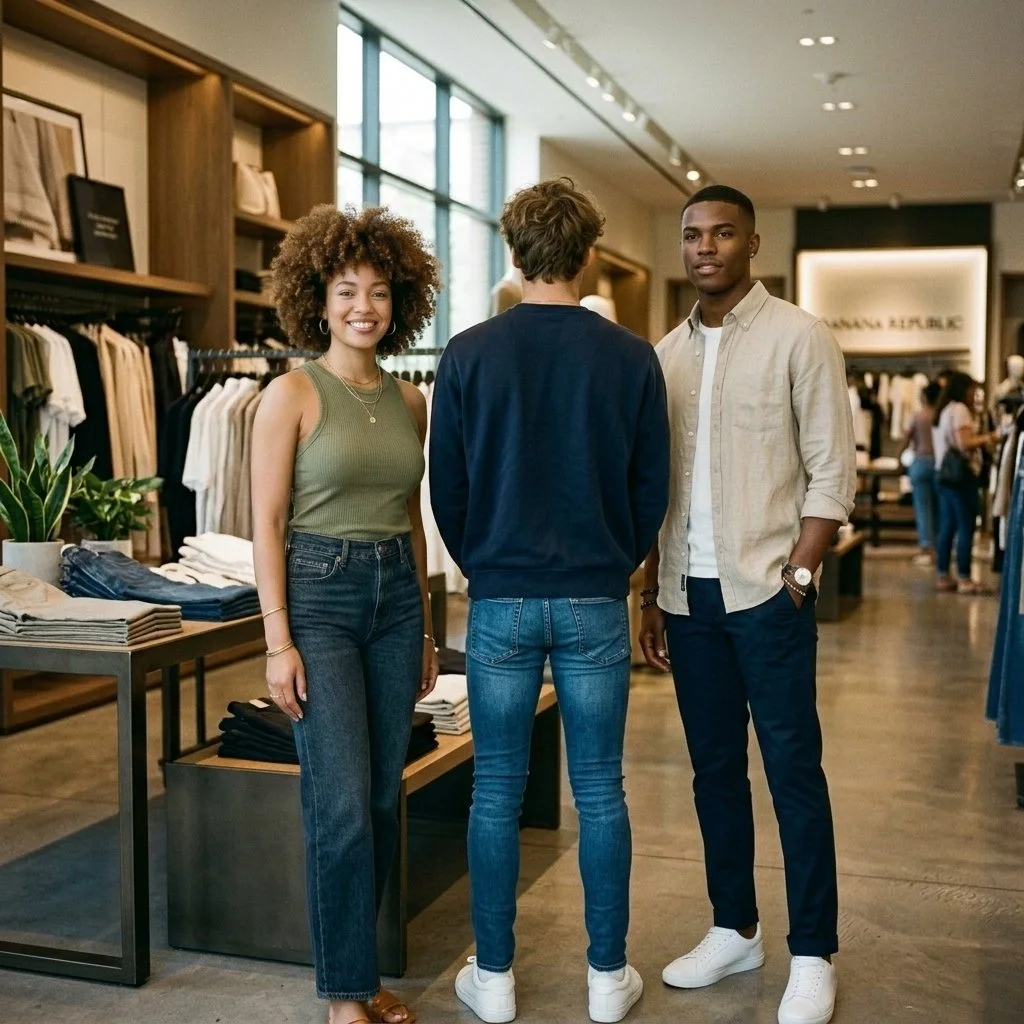
This photo was captured in the Fashion District and is intended only as a creative reference to Mitchell Royel’s position as a supervisor at Banana Republic. It does not constitute, imply, or suggest any official endorsement, sponsorship, partnership, or affiliation with Gap Inc. or Banana Republic.
A few years ago, I watched a friend of mine struggle under the weight of work, identity, pressure, and the quiet kind of mental exhaustion that too many people are forced to carry in silence. He was trying to hold himself together, trying to keep moving, trying to believe that his voice and ideas still mattered even when life felt unstable. What struck me most was not just the hardship itself, but how quickly people can distance themselves from someone once they are no longer easy, polished, or convenient.
That is why moments of genuine support matter.
I remember hearing about a moment when Sam Dezz agreed to take part in an editorial feature connected to my friend’s creative world. Whether people understand it or not, that kind of decision can mean something. In a culture where many people are willing to post, signal agreement, or borrow the language of justice, far fewer are willing to attach their image, platform, or commercial value to someone who may be harder to categorize.
That contradiction has stayed with me.
During the height of protest movements, many people were publicly willing to say the right things. They were willing to repost, to gesture, to perform awareness. But collaboration is different. Collaboration costs something. It involves trust, risk, and a willingness to stand beside someone in a way that becomes visible. And historically, that has been a much rarer thing.
What I have learned is this: it is easy for people to support Black voices when that support is symbolic. It is much harder for them to participate when the support becomes professional, material, editorial, or reputational. It is one thing to raise a fist. It is another thing to share space, share visibility, and share value.
That difference matters.
I am not an influencer, and I am not pretending to know every social rule of media culture, fashion spaces, or online politics. But I do know what it looks like when someone is easier to embrace after the danger has passed, after the marches have quieted, and after the urgency of public accountability has faded. It is always easier to collaborate once the moment is no longer risky.
That is what I keep coming back to.
We write people off too fast. We flatten them. We decide who is redeemable, who is marketable, who is too complicated, who is too controversial, who is too tired, who is too human. And then later, when the climate changes, we act like support was always available. It wasn’t.
Real solidarity is not retroactive.
It happens in the moment when association is uncertain, when the person is still struggling, when the story is still unfinished, and when showing up actually means something.
That is all I have to say.