
Special: Mitchell’s Good Attitude Party
Part 1 — Mitchell's Story
Alright, so Mitchell showed up in our class just after turning two, and man, this kid was a firecracker. You know the type—full of personality, energy for days, but keeping him on track? Yeah, that was a whole other story. Mitchell's got some special needs, which makes him see the world differently, and back then, he didn't exactly handle frustration like a pro. He'd get mad, talk back, or say stuff that could make you do a double take. Timeouts? They were happening so often it felt like they should've had his name on them. And honestly, some days I'd get to my car after work and just sit there for a minute, wondering if anything I was doing was actually landing. He wasn't a bad kid—not even close—he just had this wall up, and behind that wall was a little guy who didn't have the words yet to tell us what he needed.
Those first few months were rough, I won't sugarcoat it. Transitions were the worst. Cleanup time, moving from the rug to the tables, lining up for the playground—any little switch could set him off. He'd throw himself on the floor, kick, sometimes swat at whoever was closest. Circle time was a total gamble. One morning he'd sit like an angel, and the next he'd be crawling under the table announcing he was a dinosaur who ate teachers. I laughed about it later, but in the moment? Not so much. The other kids started noticing too, and that broke my heart a little. Nobody wants a two-year-old to feel like the "problem kid," least of all me.
But here's the thing, you could tell there was a super bright kid under all that chaos. You just had to dig to find him. The dude could remember every single character from his favorite cartoon, in order, with voices. He'd figure out puzzles way above his age level when he thought nobody was watching. So we knew the smarts were there. The trick was building a bridge to reach him. We started small—like, really small—setting tiny goals and hammering home consistency. And I mean tiny. First it was just "can Mitchell sit on the rug for one song." Not the whole circle, just one song. When he did it, you'd think he'd won a gold medal the way we celebrated.
Every time Mitchell did something positive, we made a big deal out of it. High fives, stickers, a special helper job, the whole nine yards. Positive reinforcement became our bread and butter, because catching him being good worked a thousand times better than pointing out every slip-up. Picture charts became our secret weapon, kind of like a playbook for his day, so he'd know what to expect. We'd walk through it together every morning—first we do this, then we do that—and you could literally see his shoulders relax when he knew what was coming next. Turns out a lot of the meltdowns weren't about being difficult at all. They were about not knowing what came next, and that's a scary place to be when you're two and the world feels huge.
And yeah, it took time, but building trust was huge. I'd hang out with him one-on-one, just giving him a space where he felt like someone actually understood him. Some days that meant reading the same book four times in a row. Other days it meant just sitting quietly while he stacked blocks, no pressure, no agenda. Little by little, he started coming to me instead of running from me. There was this one afternoon—I still think about it—where he got frustrated with a toy, and instead of chucking it across the room, he walked over, grabbed my hand, and pointed. That was it. That tiny moment. He was learning to ask for help instead of blowing up, and I had to turn around so he wouldn't see me getting misty over a kid pointing at a broken truck.
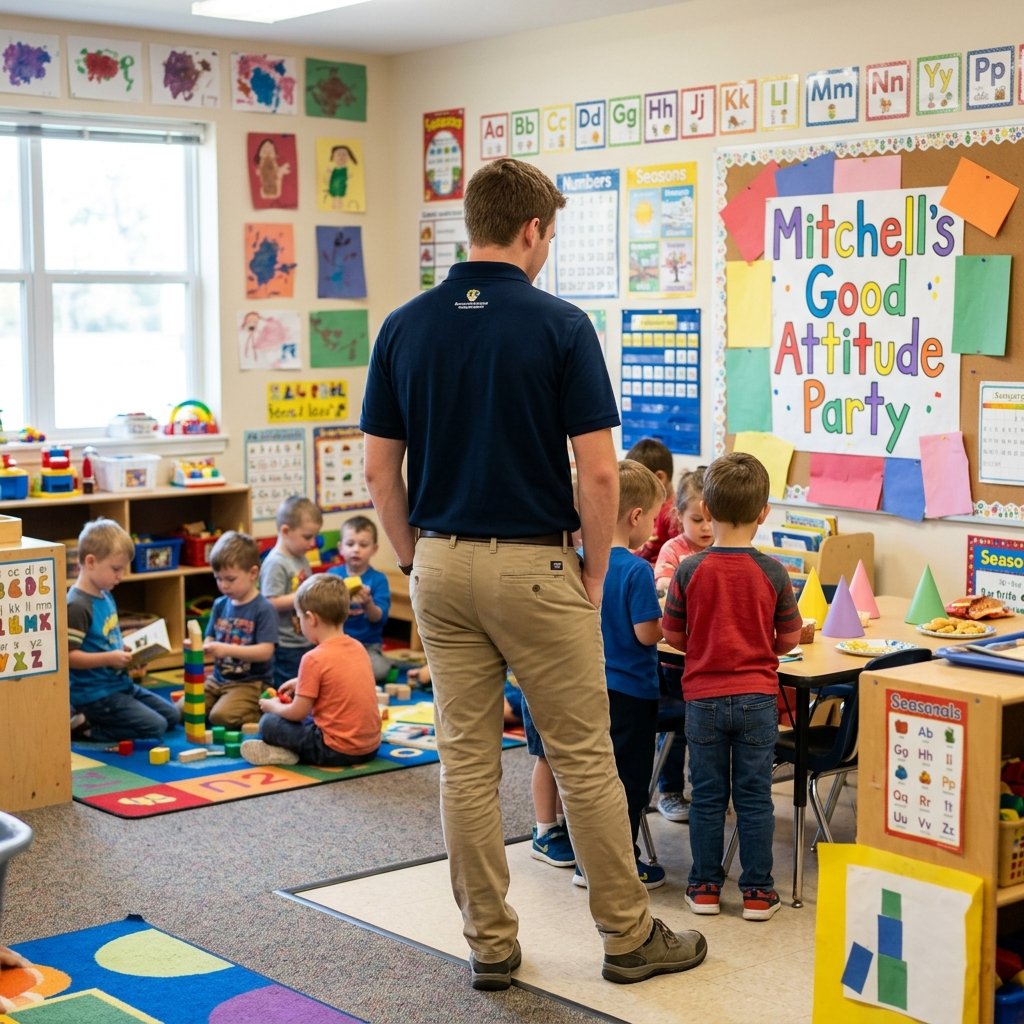
Fast forward to now, and Mitchell's like a whole new kid. He listens, talks things out without flipping out, and even cracks jokes while waiting his turn. The other kids love him—he's the funny one now, the one who makes everybody giggle at snack time. He's got buddies. He raises his hand. He even helps the newer kids when they're having a hard morning, which, if you'd told me that a year ago, I would've laughed you out of the room. Last week, we threw him this "Good Attitude Party," which he totally crushed. He was setting up snacks, laughing with the other kids, and the dude even waited patiently during an activity—like, who is this child? He was so proud of himself, standing there beaming under the little sign we made, and every single kid in that room was cheering for him.
Seeing him transform like this is honestly one of the coolest parts of teaching. This job's no walk in the park—there are days that test every ounce of patience you've got—but kids like Mitchell remind you why it's all worth it. You plant these tiny seeds, day after day, and half the time you have no clue if they're taking root. Then one day you look up and there's this whole different kid smiling back at you, and you realize you were part of that. That's the good stuff. That's the reason I keep showing up.
Part 2 — Reflection & Fact-Based Test
Instructions for readers: Read the story above carefully before you begin. Answer every question in full. Each response should be at least one complete paragraph—do not answer in a single sentence. Support your reflection questions with details and examples from the reading whenever you can.
Factual Recall
1. How old was Mitchell when he first showed up in the teacher's class? Describe what we learn about the timing of his arrival.
2. How does the teacher describe Mitchell's personality in the very beginning of the story? Use specific words and phrases from the reading.
3. What does the story tell us about Mitchell's special needs and how they affected the way he experienced the world?
4. Describe the kinds of behaviors Mitchell showed early on when he got frustrated. List and explain each one mentioned.
5. What does the teacher say about how often timeouts were happening in those early days?
6. According to the story, what signs suggested that Mitchell was actually a very bright kid? Give the examples from the reading.
7. Explain what the teacher means by "starting small" and "setting tiny goals." What was one of the first tiny goals mentioned?
8. What role did positive reinforcement play in Mitchell's progress? Describe the specific rewards or responses the teacher used.
9. What were picture charts, and how did they help Mitchell get through his day?
10. According to the teacher, what was the real reason behind many of Mitchell's meltdowns?
11. Describe how the teacher built trust with Mitchell during their one-on-one time. What activities did they do together?
12. Retell the moment when Mitchell got frustrated with a toy but did not throw it. What did he do instead, and why was it important?
13. How is Mitchell described "now," near the end of the story? List the changes in his behavior.
14. How do the other kids in the class see and treat Mitchell by the end of the story?
15. What was the "Good Attitude Party," and how did Mitchell behave during it? Describe the scene in detail.
Reflection & Deeper Thinking
16. Why do you think the teacher chose to focus on Mitchell's strengths instead of only correcting his mistakes? What does this tell you about good teaching?
17. The teacher admits to sitting in the car after work, unsure if anything was working. What does this moment reveal about the emotional side of teaching?
18. Consistency is described as something the teacher "hammered home." Why do you think consistency matters so much for a child like Mitchell?
19. The story says Mitchell had "a wall up" and needed the words to explain what he needed. What do you think it feels like to have big feelings but no way to express them?
20. How might Mitchell's story have turned out differently if the teacher had given up early on? Explain your reasoning.
21. The teacher celebrated Mitchell sitting for just one song like he'd "won a gold medal." Why is celebrating small wins so powerful?
22. Think about the picture charts. Why do you think knowing "what comes next" helped calm Mitchell down? Connect this to how routines help people in general.
23. The teacher says catching Mitchell "being good" worked better than pointing out every slip-up. Do you agree with this approach? Explain your view.
24. What does the moment when Mitchell grabbed the teacher's hand and pointed teach us about growth and communication?
25. By the end, Mitchell helps newer kids who are having a hard morning. Why is it meaningful that he now supports others the way he was once supported?
26. The teacher gets emotional more than once in the story. What do these moments show us about the bond between a teacher and a student?
27. How does the teacher's casual, joking tone shape the way you understand Mitchell's story? Would the story feel different if it were told more formally?
28. The story compares planting seeds to teaching. Explain what this comparison means and why you think the teacher used it.
29. What do you think Mitchell learned about himself through this whole journey? Use clues from the story to support your answer.
30. After reading Mitchell's story, what is one lesson you will take with you about patience, growth, or believing in someone? Explain your thinking fully.