
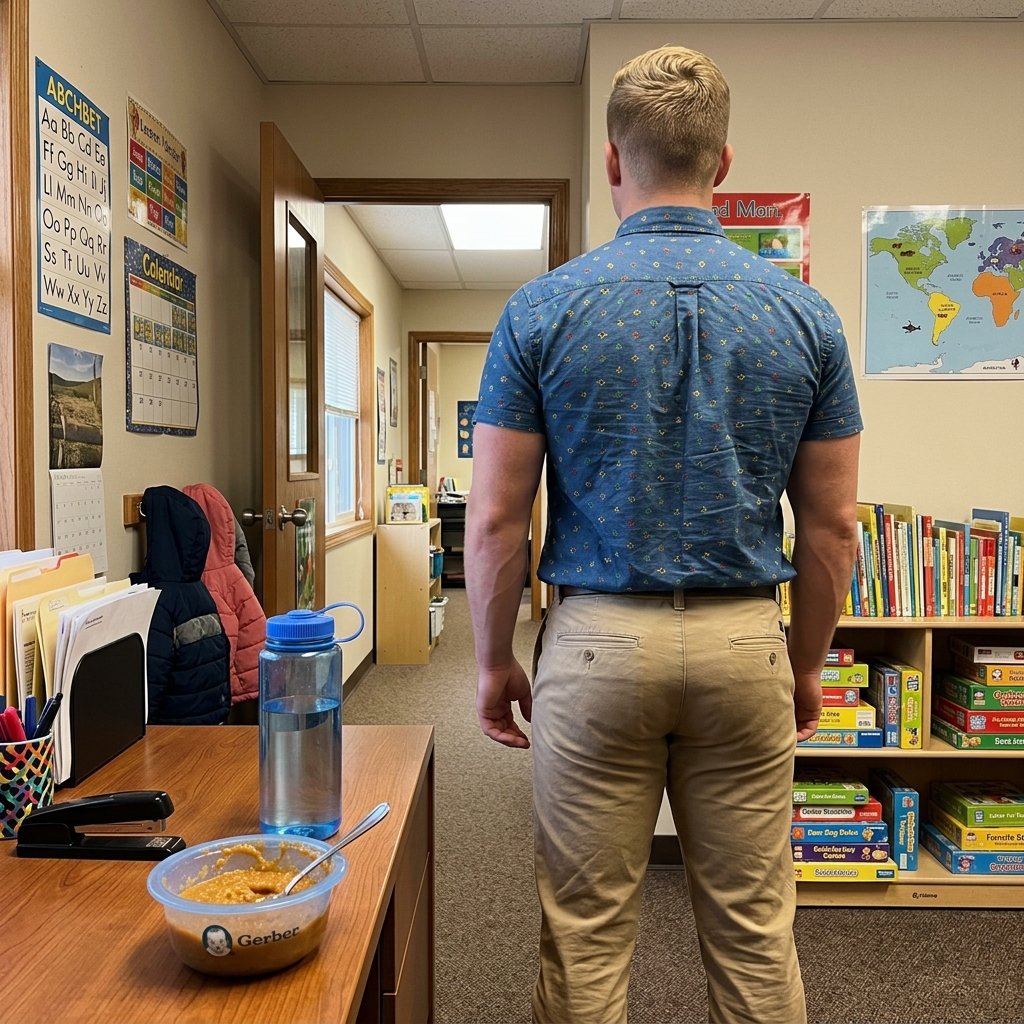
Mitchell, like any child, is incredibly perceptive and quick to test boundaries—sometimes in ways we might not immediately recognize. Over the past few weeks, I've noticed that Mitchell hasn’t been wearing his Pampers in public and, at times, not even during bedtime. While this might seem like he’s simply pushing the limits, his behavior is more than that; he’s actively trying to assert control over a situation where he likely feels vulnerable or different because of his special needs.
By not adhering to this important routine, Mitchell may feel like he's gaining a sense of independence—trying to "outsmart" his caregivers and see how far he can push without receiving direct consequences. It’s not unusual for children to test boundaries, especially when they pick up on leniency or inconsistency in expectations. However, by allowing this behavior to slide, we risk sending a message to Mitchell that the rules can be ignored, which could create confusion and lead to potential challenges with both trust and developmental milestones.
This isn’t just about Pampers—it’s about structure, consistency, and helping Mitchell understand that these guidelines are here to support his safety, health, and well-being. It’s vital that we work together as caregivers to reinforce the expectation of him wearing them as required, particularly during key times like bed and outings. These routines are an essential part of ensuring he stays comfortable and secure as he grows. Ultimately, Mitchell needs to know that his caregivers are in charge and that these decisions are grounded in love and his best interests—not negotiable elements he can bend at will.
Essay Prompt
Write a detailed 1500 word behavior plan for Mitchell that addresses his need to wear Pampers consistently throughout the day and night, both in public and in private settings. Your behavior plan should focus on the following key components:
Expectations and Routine
How will the expectation of wearing Pampers all day and night be clearly communicated to Mitchell?
What routines will be established to reinforce this behavior?
Positive Reinforcement
How will positive behaviors, such as complying with wearing Pampers, be encouraged and rewarded?
What types of reinforcement strategies (e.g., verbal praise, reward charts, tangible rewards) will you use?
Consequences for Non-Compliance
What steps will be taken if Mitchell refuses to wear Pampers at any point?
How will consequences be structured to deter non-compliance while promoting a positive learning environment?
Caregiver Roles
How will caregivers work together consistently to support Mitchell's behavior plan?
What specific roles or actions will they take to ensure success?
Long-Term Goals
What is the ultimate goal of Mitchell's behavior plan, and how will progress be measured?
Be sure to include examples and actionable strategies that could be implemented on a daily basis. Additionally, highlight how caregivers can maintain a supportive and nurturing environment while ensuring Mitchell adheres to the plan. Write this essay with a focus on Mitchell’s health, safety, and emotional well-being.
Sample Essay for Reference
Mitchell’s behavior plan is designed to ensure he consistently wears Pampers throughout the day and night, both in public and private environments. This plan prioritizes his safety, health, and overall well-being while fostering a structured and supportive environment for compliance.
Expectations and Routine
The expectation for wearing Pampers must be clearly communicated to Mitchell. Caregivers will explain in simple, age-appropriate terms why wearing Pampers is important, emphasizing comfort and hygiene. A consistent routine will be established, such as scheduled diaper checks and changes, and reminders throughout the day to ensure he remains dressed appropriately. Mitigating opportunities for refusal by making the routine predictable will help ease potential resistance.
Positive Reinforcement
To encourage compliance, positive reinforcement will be a key component of the behavior plan. Each time Mitchell wears his Pampers without issue, he will receive verbal praise, such as “Great job wearing your Pampers all day!” Additionally, a reward system could be implemented, such as earning a sticker on a chart for every successful day, culminating in a larger reward like extra playtime or a favorite activity at the end of the week. This approach will build positive associations with the desired behavior.
Consequences for Non-Compliance
If Mitchell refuses to wear his Pampers, caregivers will take immediate and measured action. Calm redirection will be the first step, with caregivers reminding him why wearing Pampers is necessary. If resistance continues, a logical consequence, such as a temporary loss of privileges (e.g., no tablet time) or a brief timeout, will be implemented. Caregivers must remain consistent and calm, emphasizing that this is not a negotiable behavior but a health-based necessity.
Caregiver Roles
Consistency among caregivers is critical to the plan's success. All caregivers must adopt the same expectations and consequences to avoid confusion or mixed signals. Communication between caregivers will ensure everyone is aware of Mitchell’s progress and any challenges that arise. Regular team check-ins can help adjust strategies as needed to better support his development.
Long-Term Goals
The ultimate goal of this plan is for Mitchell to internalize the expectation of wearing Pampers as a natural and automatic part of his daily life. Progress will be measured by reductions in resistance and a growing understanding of the importance of the behavior. Eventually, the need for external rewards or consequences can be minimized as Mitchell develops greater self-regulation and comfort with wearing Pampers.
By combining structure, consistency, and positive reinforcement, this plan aims to create a safe, caring environment where Mitchell can thrive while adhering to behaviors that support his health and comfort.
Math Word Problems - Sorting Out Mitchell's Diaper Bag
Solve the following problems related to organizing Mitchell's diaper bag. Show all your work, including calculations, to arrive at your answers.
Diapers and Space
Mitchell's diaper bag has 4 compartments. Each compartment can hold up to 8 diapers. If Mitchell's caregiver plans to carry 24 diapers, how many compartments will be used, and how many diapers will fit in each? How many compartments will remain empty?Weight Limit
The diaper bag can hold a maximum weight of 20 pounds. If each diaper weighs 0.25 pounds and other supplies (wipes, bottles, toys, etc.) weigh 12 pounds, how many diapers can safely be added to the bag?Bottle Storage
The diaper bag has 3 side pockets, and each pocket can hold 2 bottles. If Mitchell needs 5 bottles during a trip, how many bottles will not fit in the designated bottle pockets?Packing Wipes
Each pack of wipes contains 80 sheets and weighs 1.5 pounds. If Mitchell needs at least 240 sheets for the day, how many packs of wipes should be included in the bag? What would be the total weight of these packs?Toy Distribution
Mitchell has 12 small toys to bring along. If the toys are distributed equally among 3 compartments in the bag, how many toys will go in each compartment? If one toy is left over, where can it be stored?Changing Mat Dimensions
Mitchell's changing mat is folded into 4 equal squares when stored in the bag. The full mat measures 36 inches by 24 inches. What are the dimensions of each folded square?Snack Compartments
Mitchell's snack containers take up 1/3 of one compartment's space. If 3 compartments are used for diapers, bottles, and toys, how much space is available for snacks?Bag Reorganization
After unpacking, Mitchell's caregiver notices 3 out of 16 items belong in different compartments. If the caregiver moves 2 items to their correct places, how many items still need to be moved?Clean and Dirty Bags
Two small bags are kept in the diaper bag for clean and dirty diapers. The clean bag holds up to 15 diapers, and the dirty bag holds 10. If Mitchell starts with 12 clean diapers and uses 8, explain how many diapers will be in each bag by the end of the day.Emergency Clothes
Mitchell's emergency clothes weigh 0.8 pounds each. If 3 outfits are packed, totaling 2.4 pounds, confirm if this matches their individual weights.Zipper Weight Distribution
The diaper bag has 8 zippers evenly distributing weight across the entire bag. If Mitchell's caregiver packs 16 pounds, how much weight does each zipper support?Bottles Over Time
If Mitchell drinks one bottle every 2 hours during an 8-hour trip, how many bottles are left if 6 bottles were packed initially?Diaper Usage Analysis
If Mitchell uses 7 diapers in a 10-hour period, how many hours on average does each diaper last?Extra Items
The diaper bag includes space for extras like books or blankets. Each book weighs 1.2 pounds, and folding blankets weigh 2.5 pounds each. If the extra space can hold up to 8 pounds, how many books and blankets can be packed together?Side Pouches Calculation
Each side pouch on the diaper bag can hold up to 2 wipe packs weighing 1.5 pounds each. If 3 side pouches are used for wipes, calculate the total weight of the wipes stored on the sides.Water Usage
Each water bottle in the diaper bag holds 12 ounces. If Mitchell drinks 36 ounces during the day, how many full bottles did he consume?Categorizing Items
Mitchell's diaper bag is divided into categories for diapers, snacks, toys, and emergency clothes. If the bag contains 30 items and 40% are diapers, how many items for other categories remain?Daycare Supply
The daycare requires Mitchell to bring 10 diapers and 3 wipe packs. If each wipe pack contains 80 wipes, how many total wipes will Mitchell bring?Compartments Needed
If 4 compartments hold 48 items evenly, how many items are in each compartment? Is there any space left if one compartment can hold 12 extra items?Packing Strategy
A caregiver packs the following weights into the bag for a trip:Diapers: 6 pounds
Wipes: 3 pounds
Bottles: 5 pounds
If the total weight capacity is 20 pounds, how many extra pounds can still be added to the diaper bag?
These problems encourage critical thinking and provide real-world math applications. Be sure to explain each step clearly when solving!
Four-Hour Gym Workout Plan
Engaging in a structured four-hour gym workout can help maximize your fitness goals when approached with focus and variety. Below is a sample workout plan broken into phases, with each hour targeting specific areas. Feel free to adapt the plan to suit your preferences or fitness levels.
Hour 1 - Warm-Up and Cardio
Dynamic Stretching (10 minutes): Perform stretches like arm circles, leg swings, and torso twists to prepare your body for movement.
Treadmill or Elliptical (30 minutes): Maintain a moderate pace to raise your heart rate.
Cool-Down Walk (10 minutes): Gradually slow your pace to provide your body time to adjust.
Hour 2 - Strength Training (Upper Body Focus)
Chest Press (Machine or Free Weights) - 3 sets of 10-12 reps
Lat Pulldown or Pull-Ups - 3 sets of 8-10 reps
Shoulder Press - 3 sets of 10-12 reps
Bicep Curls - 3 sets of 10-15 reps
Triceps Dips or Pushdowns - 3 sets of 10-12 reps
Hour 3 - Strength Training (Lower Body Focus)
Squats (Bodyweight or Weighted) - 3 sets of 10-12 reps
Deadlifts - 3 sets of 8-10 reps
Lunges (Each Leg) - 3 sets of 10 reps
Leg Press - 3 sets of 10-12 reps
Calf Raises - 3 sets of 15-20 reps
Hour 4 - Core and Flexibility Training
Plank Holds - 3 sets of 1 minute
Russian Twists - 3 sets of 20 twists (10 per side)
Bicycle Crunches - 3 sets of 15-20 reps
Yoga or Stretching Session (20-25 minutes): Focus on releasing tension in major muscle groups and enhancing flexibility.
Customize Your Routine
While this workout provides a comprehensive full-body plan, feel free to create your own unique routine. Adjust exercises, focus on specific muscle groups, or change timings based on your fitness level, goals, and interests. Remember to stay hydrated, listen to your body, and rest as needed to avoid overexertion.