
Essay Prompt
Essay Title:
An Examination of Equity, Perception, and Structure in Addressing Behavioral Challenges in Marginalized Communities
Context
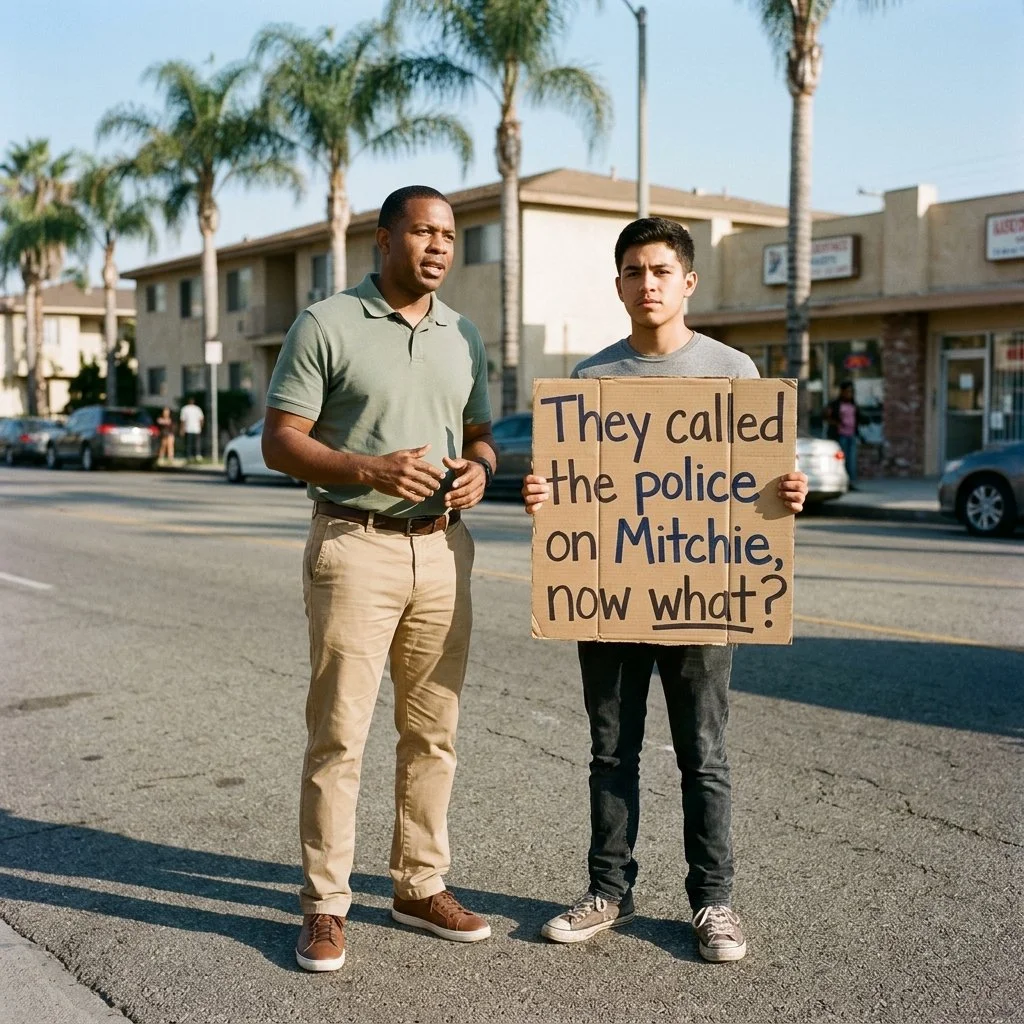
You are an early childhood development educator newly working at a daycare that Mitchell now attends full-time. Mitchell, a young African American boy with a diagnosis of schizoaffective disorder, has a history of behavioral challenges that have required careful, supportive intervention. Recently, an incident occurred outside of the daycare's premises in the upper-class suburbs involving Mitchell, during which he was caught on camera yelling and using profanity toward pedestrians and local businesses. The situation has escalated to the point where law enforcement has issued a warrant for his arrest, citing public disturbance.
Despite Mitchell's special needs diagnosis, the officers communicating with you have expressed a hardened stance, reflecting broader systemic patterns of criminalization over care for marginalized boys in similar positions. This dynamic often denies the acknowledgment of mental health needs and disproportionately enforces punitive measures, particularly within African American communities. It is now your responsibility to provide a formal response to law enforcement addressing the following:
Objectives for the Essay
Write a 1500-word structured essay as your official response to the police and community stakeholders. This essay must acknowledge and contextualize the situation, engage with systemic inequities relevant to Mitchell's case and broader minority experiences, and propose a structured framework to resolve the situation. Furthermore, argue why Mitchell must remain within your facility while emphasizing rehabilitation and restorative measures over punitive ones.
Section Breakdown and Key Considerations
Introduction (200-300 words)
Contextualize the events leading to the incident, framing it within a broader understanding of systemic challenges that contribute to the criminalization of young boys of color.
Acknowledge the experiences of impacted stakeholders (businesses, community members, etc.) by presenting language of collaboration and care.
Introduce the essay's purpose as one advocating for compassionate, structured intervention focused on Mitchell's mental health needs rather than criminal adjudication.
Background and Systemic Context (400-500 words)
Critically examine how race, mental health, and socioeconomic dynamics intersect to create systemic inequities in how incidents like these are perceived and managed by law enforcement.
Discuss the role of implicit bias in elevating punitive responses over restorative or rehabilitative ones, especially against African American children with special needs.
Provide relevant statistics or research findings on disparities in the treatment of children of color with mental health conditions in the criminal justice system.
Highlight the specific challenges associated with recognizing schizoaffective disorder and the stigma tied to it in similar suburban spaces.
Framework for Structured Intervention (400–500 words)
Propose a detailed and scaffolded framework for addressing Mitchell’s behavior through structured, supportive measures within the daycare environment.
Detail how individualized care plans can successfully redirect behavior while fostering personal growth in ways the criminal justice system cannot.
Justify the necessity of Mitchell’s continued placement within your facility, emphasizing that removing him (e.g., arrest) would severely impede his developmental progress and violate best practices in mental health intervention.
Provide specific examples of how your facility addresses similar challenges, emphasizing collaboration with parents, therapists, and other support networks.
Restoration and Community Collaboration (200–300 words)
Outline measures aimed at restoring relationships with the community impacted by the incident. For example, structured apologies, supervised engagements with community spaces, or other developmentally-appropriate actions for reconciliation.
Position these efforts as reflective of a shared commitment toward fostering understanding between mental health and public life.
Continue to present law enforcement and community members as potential allies in adopting supportive, non-punitive resolutions moving forward.
Closing Remarks and Call to Action (200-300 words)
Reaffirm the necessity of fostering patience, compassion, and understanding toward marginalized children with mental health diagnoses.
Urge law enforcement to reconsider their approach to Mitchell and similar cases, grounded in equitable and informed care frameworks.
Extend an invitation for collaborative dialogue among police, community stakeholders, and mental health professionals to support Mitchell in a structured, nurturing manner.
End with an appeal toward the ideals of restorative justice, emphasizing Mitchell’s potential for growth when provided with the appropriate systemic support.
Tone and Structure Requirements
Use a formal and professional tone throughout the essay, employing evidence-based reasoning and organized paragraph sequences for clarity.
Ensure the essay is empathetic and sensitive to all parties involved while maintaining a strong advocacy position regarding equity and fairness.
Where possible, avoid personal anecdotes and focus on systemic evidence, policy recommendations, and tailored solutions.
Additional Instructions
Cite at least 2-3 relevant academic studies, articles, or reports addressing systemic inequities or behavioral interventions for children of color with mental health needs.
Avoid suggesting that Mitchell’s actions were entirely excusable; instead, frame the incident as a trigger for addressing larger systemic gaps.
Keep language gender-inclusive and identity-affirming to ensure cultural responsiveness to Mitchell’s experiences and identity.
This essay offers an opportunity to demonstrate nuanced understanding and advocacy for marginalized communities while leveraging systems of care and collaboration as alternatives to punitive models often disproportionately applied to African American children.
Reference: An Examination of Equity, Perception, and Structure in Addressing Behavioral Challenges in Marginalized Communities
Introduction
Mitchell’s recent incident, while concerning, serves as a critical lens through which we can examine broader systemic inequities impacting marginalized children with mental health conditions. Mitchell, a young African American boy diagnosed with schizoaffective disorder, is more than his isolated behavior. His actions highlight the intersection of race, mental health, and societal structures that often criminalize rather than support individuals like him. The incident in question—captured on camera and escalating to an arrest warrant—represents not just a singular event but a recurring societal problem disproportionately affecting African American boys with special needs diagnoses.
This essay advocates for a response rooted in empathy, equity, and structured care, rather than punitive measures. It acknowledges the genuine concerns and frustrations of the community and local businesses impacted by Mitchell's behavior, striving to restore relationships while centering Mitchell's mental health and developmental needs. The objective is to present a framework that ensures Mitchell remains within our care, emphasizing the profound developmental benefits of restorative interventions that the criminal justice system cannot replicate. This approach seeks to align all stakeholders—law enforcement, community members, and caregivers—toward a common goal of fostering understanding, growth, and justice.
Background and Systemic Context
Mitchell’s case cannot be viewed in isolation from the systemic and structural inequities that shape the lived experiences of African American children with mental health conditions. Research consistently demonstrates that boys of color are disproportionately subjected to punitive discipline—both in educational settings and within the criminal justice system. According to the U.S. Department of Education’s Office for Civil Rights data, African American students are nearly four times more likely to face suspension or expulsion compared to their white peers, even when exhibiting similar behaviors. This disparity is compounded when mental health diagnoses enter the equation, as stigma, implicit bias, and a lack of cultural competence in evaluating behavior often amplify negative consequences.
Implicit bias plays a pivotal role in the criminalization of actions that, in other contexts, might be viewed as developmental or symptomatic of mental health conditions. For children like Mitchell, whose schizoaffective disorder affects mood and behavior regulation, societal and systemic responses are often shaped by incomplete understandings of mental health. The stigma attached to this diagnosis only grows in suburban, upper-class spaces where cultural norms may create environments less accommodating to displays of behavioral differences. Here, Mitchell’s actions—though informed by his neurodivergence—are quickly labeled as threats to public order, reinforcing fears and punitive reactions instead of fostering understanding.
Further compounding this issue are the socioeconomic dynamics at play. African American families frequently face barriers to equitable mental healthcare access, including financial constraints, underrepresentation of culturally responsive practitioners, and systemic distrust rooted in historical mistreatment. These challenges can delay diagnosis or lead to inconsistent support systems, placing undue pressure on children to "perform" in ways that mask their neurodivergence. The lack of systemic infrastructure to address these factors creates cascading effects that culminate in moments like the one involving Mitchell. Without comprehensive structural change, incidents like this will continue to arise, disproportionately harming marginalized communities.
Framework for Structured Intervention
To address Mitchell's behavioral challenges effectively, a structured intervention within the daycare environment is essential. Research underscores the efficacy of individualized care plans in supporting children with mental health needs while mitigating behaviors that disrupt their environment. Our daycare is uniquely positioned to implement such measures because of our expertise in early childhood development and our ability to provide consistent, nurturing support systems. Removing Mitchell from this environment in favor of punitive action would severely hinder his developmental progress and stand counter to established best practices for children with special needs.
A comprehensive intervention plan for Mitchell would involve collaboration among our educators, his family, and his mental health professionals. The plan would prioritize the following steps:
Behavioral Assessment and Tracking:
Using evidence-based observational techniques, our staff would document and analyze the antecedents, behaviors, and consequences of Mitchell’s outbursts. This data is crucial for identifying triggers, understanding the behaviors’ underlying causes, and tailoring interventions accordingly.Individualized Support Strategies:
Mitchell's care plan would include targeted techniques to help him regulate his emotions and behaviors. For example, introducing calming sensory tools, teaching conflict resolution skills through play, and practicing mindfulness exercises to de-escalate moments of elevated distress.Skill Development for Long-term Growth:
We propose structured activities that emphasize social-emotional learning, such as role-playing scenarios where Mitchell practices expressing his needs calmly and respectfully. These activities would be coordinated with his therapist to ensure alignment with his clinical treatment.Parental Training and Engagement:
A key component of this framework is regular parent-educator meetings to share progress, refine strategies, and build a unified support system. Parental involvement ensures that interventions are consistent across home and school environments, fostering greater stability for Mitchell.
The value of keeping Mitchell within our daycare lies in the continuity of care we offer. Arresting him or removing him from this environment would disrupt not only his sense of safety and belonging but also the therapeutic gains we have been cultivating. The criminal justice system lacks the developmental expertise to address Mitchell's needs, often exacerbating rather than resolving the challenges he faces. Studies have shown that punitive discipline increases recidivism while reducing the likelihood of children seeking or trusting authority figures in the future. By contrast, early interventions built on trust and compassion significantly improve outcomes for neurodivergent children.
Restoration and Community Collaboration
While our primary concern is Mitchell's well-being, we also recognize the broader community's role in fostering a culture of inclusion and understanding. The individuals and businesses affected by Mitchell's behavior deserve meaningful steps toward restoration. To this end, we propose a series of developmentally appropriate actions for reconciliation:
Structured Apology Process:
Mitchell, with guidance from our educators and therapist, will compose a letter of apology to those impacted by his behavior. This exercise will encourage accountability and help him understand the impact of his actions.Supervised Community Engagement:
We suggest organizing supervised activities where Mitchell can positively contribute to the community, such as helping with age-appropriate tasks that promote social interaction and rebuild trust.Community Education Initiatives:
Finally, we propose hosting workshops for the community in partnership with mental health professionals to foster greater awareness of neurodivergence and the importance of compassionate responses to behavioral challenges.
Through these restorative efforts, we aim to rebuild trust and demonstrate the shared value of supporting all members of our community, particularly its most vulnerable.
Closing Remarks and Call to Action
Mitchell’s case is not an isolated incident but rather a reflection of systemic inequities that criminalize rather than support marginalized children with mental health conditions. Arresting Mitchell would deny him the opportunity to grow, heal, and learn within a structured, supportive environment, perpetuating a cycle of punitive harm that disproportionately affects boys like him. Instead, what Mitchell—and children like him—need is an approach rooted in equity, empathy, and evidence-based care.
We urge law enforcement and community stakeholders to work collaboratively with us to support Mitchell through restorative measures rather than punitive ones. This approach aligns with the ideals of restorative justice, emphasizing personal growth, community healing, and systemic equity. Together, we can create a pathway for Mitchell to thrive while fostering a more compassionate and understanding society.