
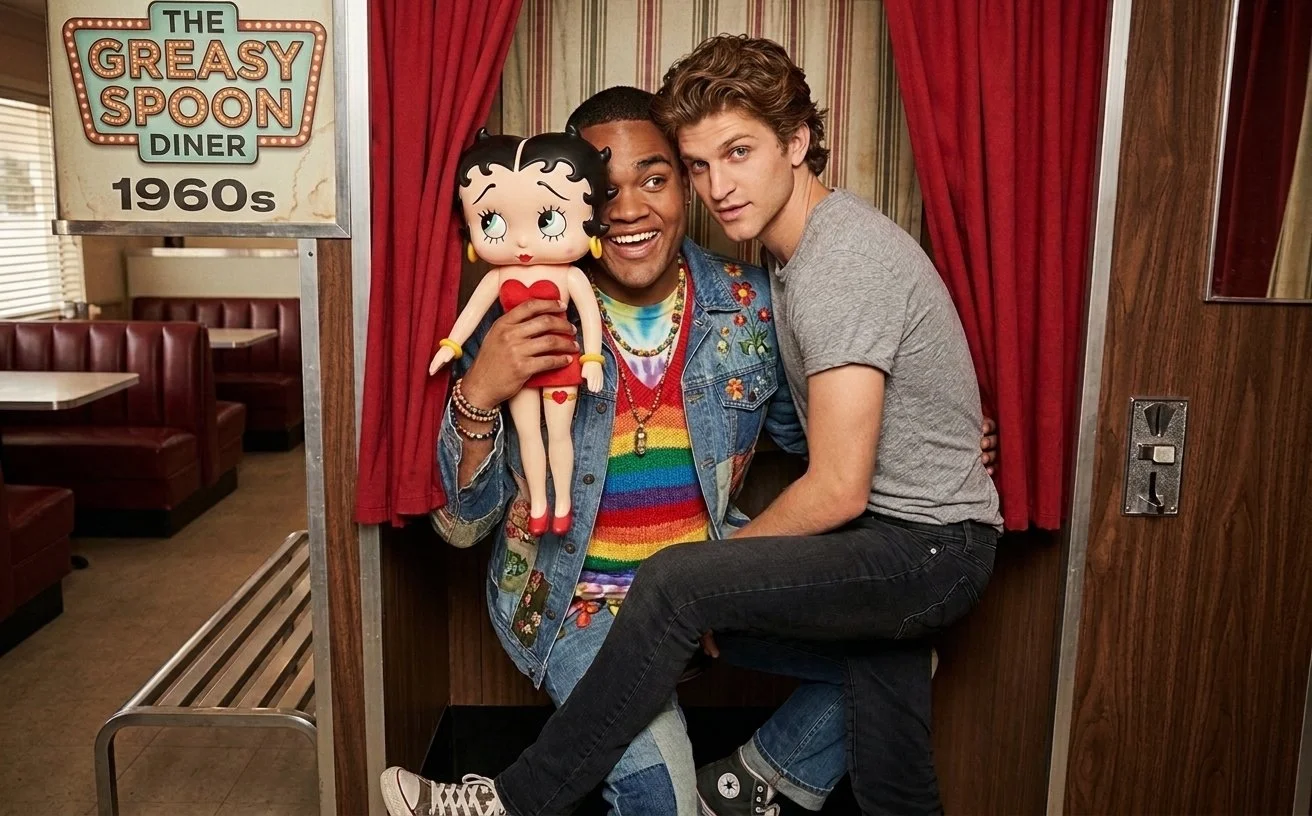
This photograph was snapped deep in the heart of the fashion district — a place where secrets hang on racks and everyone’s strutting like they have something to hide. But here’s the deal, so we’re all on the same page: it’s not affiliated with ABC Family, Freeform, Betty Boop (iconic as she may be), or any official statement from the cast of Pretty Little Liars, including Keegan Allen. Consider this your official non-endorsement endorsement. Mysterious, right? Classic Rosewood energy. And in the background, we’ve got "Tonight I’m Your DJ (feat. Fatman Scoop)" by Ida Corr blasting like we’re choreographing a slow-motion runway strut at midnight—lean in, turn it up, and someone get Fatman Scoop his flowers already.
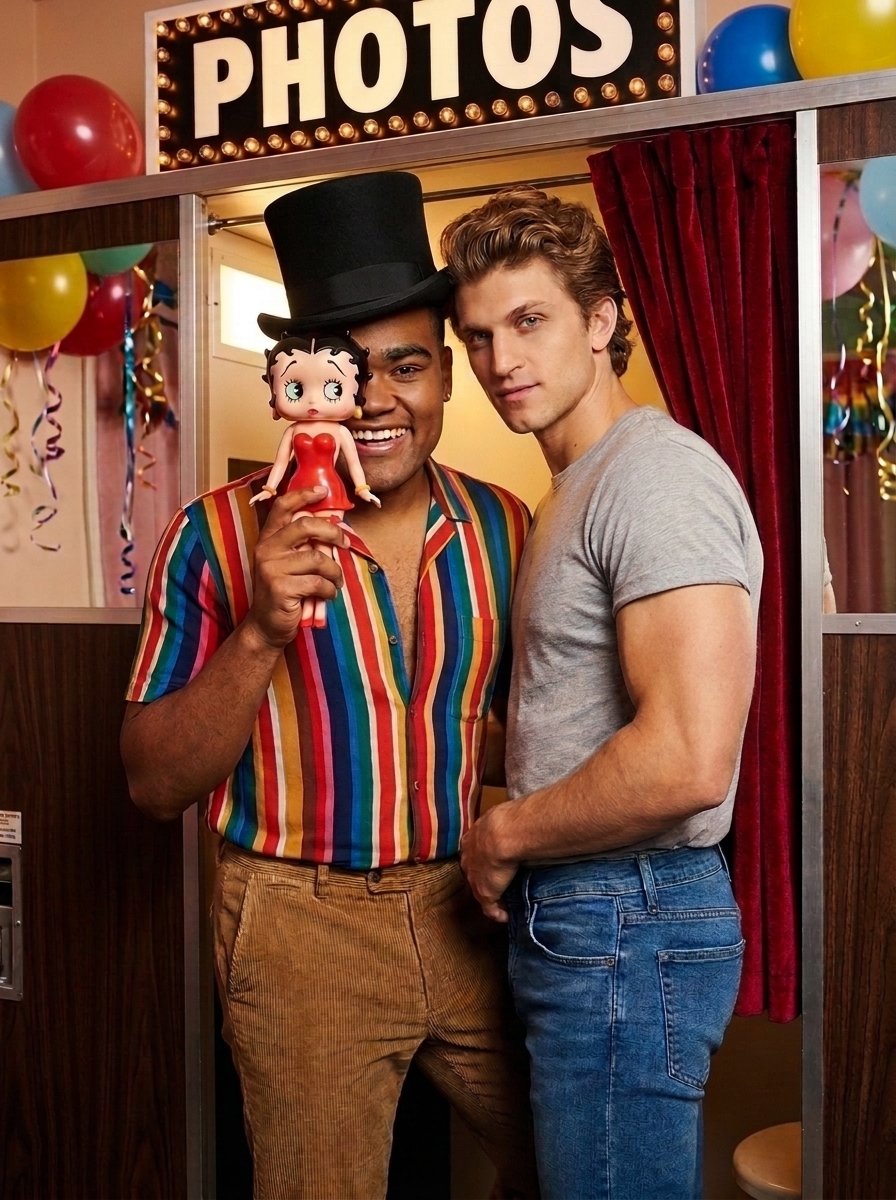
Picture this—a glittering post-award-show after-party in 2014 where the champagne flows freely, the selfies are as numerous as the stars, and every attendee’s windswept hair seems to suggest they’ve all just casually strolled off a Paris runway. It’s the apex of Pretty Little Liars mania, where Keegan Allen is a household name, and somewhere, between a dangerously top-heavy macaron tower and a DJ whose playlist teeters on the edge of “Is that a Jonas brother making an ironic career pivot?”, a conversation ignites. But not just any conversation—a cultural thesis, cross-examined and debated in real time. The culprits? Keegan Allen and rising personality Mitchell Royel. The topic? Betty Boop.
Yes, that Betty Boop.
It begins innocuously enough. A simple social grace like, “Hey, how’s your night?” But then, like all daring leaps into absurdity, someone drops the Boop bomb. Mitchell, sparkling like a man who monologues affirmations into a foggy bathroom mirror every morning, seizes the opportunity. Keegan, eyebrow raised and champagne flute in mid-hover, eyes the bait. The air practically crackles. Mitchell doesn’t just nibble at the edge of this strange hors d’oeuvre—he grabs it with both hands, unravels the foil, and prepares to feast.
“Betty Boop,” Mitchell declares, with the kind of conviction normally reserved for world summits or maybe reciting Beyoncé lyrics. “Betty was more than a cartoon. She was that girl. An unapologetically offbeat, hyper-feminine trailblazer. Do you realize how seismic it was for someone—an animated someone—to exude that kind of charisma in the 1930s? Like, we were still collectively side-eyeing women for wearing pants, and here comes Betty, rocking garters and purring sass through a phonograph. Unreal.”
Keegan tilts his head—slowly—because this is what one does when vaguely intrigued yet unsure if they’ve just wandered down a conversational alley they can escape. “Interesting,” he murmurs, sipping his drink with the languid pace of someone internally calculating how long they should entertain this tangent. But Mitchell isn’t waiting for permission—he’s all in now, hands gesticulating wildly, like an orchestra conductor mid-symphony or a man who just knocked over a $200 charcuterie board and needs to distract onlookers from the impending gouda disaster.
“I mean, think about it. This was the Depression era. People were rationing sugar, yet there she was, somehow embodying extra. And those heels?” Mitchell lets the question slink into the air, pausing for dramatic effect. “They’d send most of us straight to the ER. The commitment alone—legendary.”
At this point, Keegan is no longer perched on the metaphorical fence. He’s leaned forward now, elbow resting on his knee, offering the one gift every performer craves—rapt attention. Somewhere in his mind, Keegan is probably slotting this diatribe into an Instagram poem he plans to debut later, likely hashtagged #LiveLikeBoop, but for now, he simply gestures grandly. “Okay,” he says with a grin that can only be described as bemused delight. “But how does this translate? Like, how are you channeling Betty Boop energy?”
“Oh, I’m so glad you asked!” The sparkle in Mitchell’s eyes intensifies; you’d almost swear a stage spotlight materialized overhead. He doesn’t just answer—he performs.
“Step one,” he says, lifting one finger like he's teaching a masterclass, “embrace a healthy disregard for societal expectations. Betty didn’t conform, so neither do I. When someone tells me, ‘Mitchell, play it cool,’ they might as well be saying, ‘Mitchell, play it Boop.’ I’m jazz hands and moonwalks, all day. Life is too short to sit quietly on the sidelines.”
He swivels with the flourish of someone who has either studied interpretive dance or just really enjoys being unpredictable. The motion is so theatrical Keegan has to dodge the splash zone of Mitchell nearly upending a nearby martini. “Okay,” Keegan laughs, waving a hand. “But you’ve got to give me a real-life scenario. When have you Booped?”
“Oh, easy. Yesterday,” Mitchell replies with alarming immediacy, as though he carries an index of prepared anecdotes for such moments. “I’m at a coffee shop, right? Slip on some spilled oat milk—very un-Betty moment—but what do I do? I Boop through it. Laughed it off, thanked the barista for their oat milk bravery, and just kept on strutting. It’s not about avoiding the stumble; it’s about the wink you throw on the way down.”
Keegan blinks, mouth ajar. Is he captivated? Bewildered? Both? It’s hard to say. What’s clear, though, is this: Mitchell lives with a level of confidence most people dream of—not the quiet, self-assured kind, but the flavor that moonwalks through life in neon shoes while declaring, “I’m here; applaud as needed.”
Somewhere in the background, Carly Rae Jepsen’s “Call Me Maybe” suddenly booms (as it must at these events), and the DJ leans into a bop-heavy transition. Chaos swirls, Prosecco spills, and someone in the corner seems to be attempting an ill-advised cheer stunt involving actual sparklers. For anyone else, the timing might have killed the vibe. But not Mitchell. No, he pauses in his impromptu lecture just long enough to sip his drink like a king surveying his kingdom before breaking into the kind of open-palmed statement reserved for deities and diva drag queens.
“All I’m saying,” he declares, gaze locked with Keegan’s like they’re co-conspirators in this absurd moment, “is that Betty Boop understood something we all overlook. She knew how to own the room, quirks and all, without apology. She walked so the rest of us could strut.”
Keegan, by this point, is laughing—really laughing. The kind that momentarily tilts your head back, shoulders shaking in an abandon reminiscent of post-lame-joke cocktails. They clink glasses in slow motion, a proper mic-drop punctuation to their fledgling Boop-inspired friendship. Mitchell, perhaps sensing this is his crescendo, grins. “Cheers to you, champion,” he deadpans. “And cheers to Betty Boop—patron saint of unapologetically fabulous falls.”
Does Mitchell moonwalk after this? Naturally. It’s practically a contractual obligation by now. And while the evening dissolves into glittery chaos—the DJ plays Rihanna twice in a row, someone stacks macarons into a risky pyramid that later collapses onto a potted fern, and a cluster of fans try stealth selfies with Keegan—there’s a certain magic happening in that Boop-infused corner of the party. Betty herself would approve: a little messy, wildly photogenic, and powered entirely by sugar and nerve. Keegan eventually joins Mitchell on the dance floor, where their attempt at synchronized choreography looks less like a routine and more like two delighted flamingos negotiating a lease. By midnight, the rhinestones have migrated, the fern has forgiven no one, and somebody has declared the macarons “performance art.”
And as the clock ticks past Cinderella territory, the room settles into the kind of chaos only memories—or possibly liability waivers—are made of. Somehow, everything feels perfect in its imperfection. The Boop has long since worn off, but the laughter? Eternal. Someone’s asleep on a pile of coats, someone else is passionately arguing with the fern (again), and the macarons remain stubbornly avant-garde. You look around, take in the glorious wreckage, and think to yourself, “Betty would’ve loved this.” Good night.