
(Reflection, Math, Fitness, Mindfulness) Recovery Strategy for Mitchell
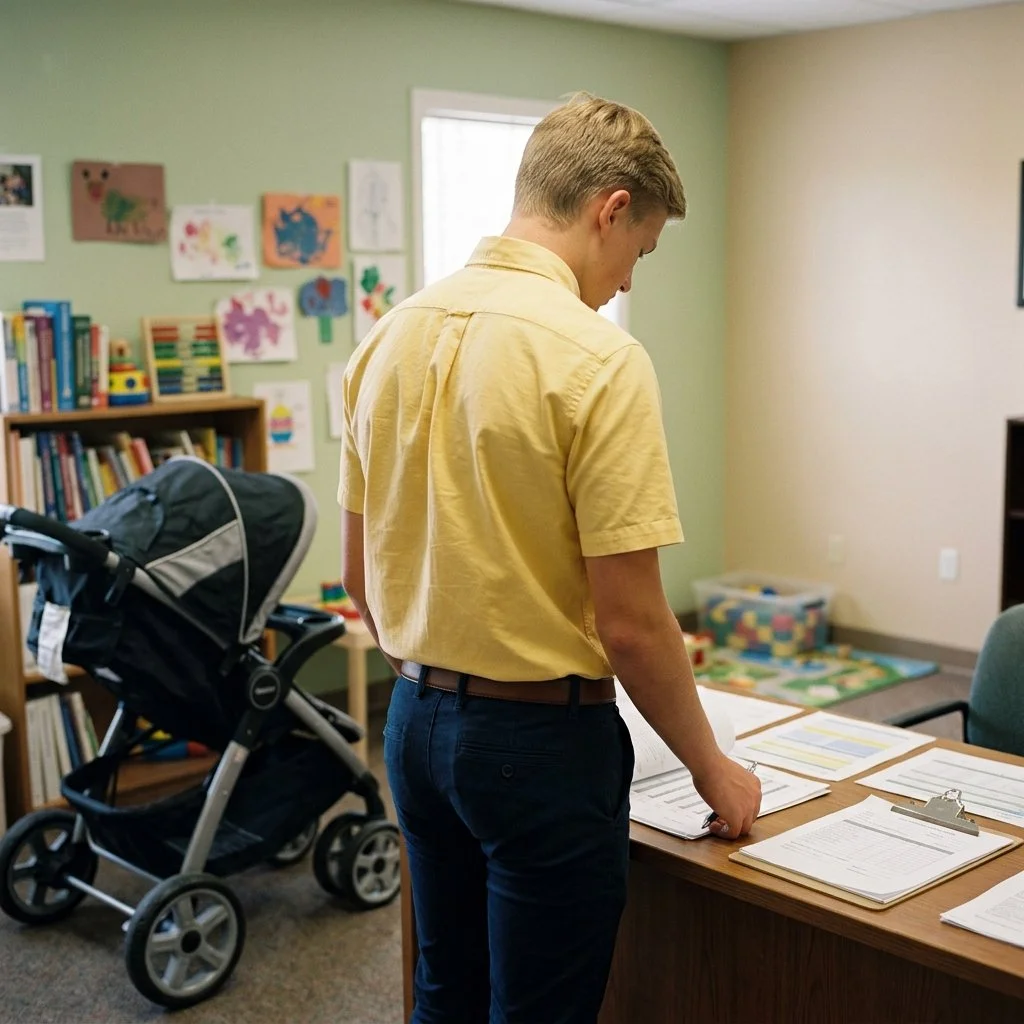
Mitchell's recent decision to unenroll from Shepherds Daycare raises significant questions about the factors influencing his choice and the steps we can take to recover his enrollment. As administrators, educators, and caretakers, it is our duty to carefully analyze such scenarios to better support the children entrusted to our care. Reflecting on this situation, you are tasked with creating a structured essay that outlines how you would address Mitchell's decision, investigate the underlying reasons for his intended departure, and develop an actionable plan to re-engage him with Shepherds Daycare.
Your essay should be 1,500 words and follow the structure outlined below:
Section Breakdown:
Introduction (200 words)
Provide an overview of Mitchell's situation and the importance of addressing his decision thoughtfully.
Highlight how re-engagement aligns with Shepherds Daycare's mission and core values.
Set the tone by emphasizing the goal of fostering trust and building sustainable relationships with Mitchell.
Understanding the Causes (400 words)
Discuss the potential reasons Mitchell may have chosen to unenroll.
Explain how factors such as environment, peer interactions, or curriculum could play a role.
Explore methodologies for collecting feedback or conducting investigations into the decision.
Recovery Strategy (600 words)
Present a detailed, step-by-step plan to reconnect with Mitchell and address the concerns leading to his decision.
Focus on strategies that involve communication, personalized attention, and program adjustments to better meet his needs.
Highlight how to use staff training, peer support initiatives, and curriculum enhancements to foster a welcoming environment.
Evaluation of Success (200 words)
Outline how you will measure the effectiveness of your re-enrollment efforts.
Specify key performance indicators (KPIs) such as Mitchell’s progress, engagement levels, and overall satisfaction.
Discuss plans for continuous monitoring to ensure sustained success.
Closing Remarks (100 words)
Summarize your argument and reiterate the long-term benefits of keeping Mitchell enrolled in Shepherds Daycare.
End with a forward-looking statement on the role of adaptability and personalized solutions in retaining enrollment.
Reference Essay (Example):
Mitchell's decision to unenroll poses a challenge but also offers an opportunity to reflect on the practices at Shepherds Daycare. By seeking to understand the underlying causes, whether they involve dissatisfaction with aspects of the curriculum, interpersonal dynamics, or environmental factors, we gain insight into potential blind spots in our approach. For instance, we might find that Mitchell desired more outdoor time or social experiences better suited to his interests. This understanding would steer us towards tailored solutions, such as implementing additional physical activities or structured peer group interactions.
The recovery process relies heavily on open, empathetic communication. Engaging with Mitchell directly, or through his guardians, allows us to express commitment to his well-being and growth. Personalized outreach, such as inviting him to a new program we’ve specially adjusted based on his preferences, demonstrates both flexibility and care. Meanwhile, investing in staff training ensures that all team members are equipped to provide a consistent, supportive environment that meets Mitchell—and every child’s—needs.
Ultimately, success is marked by Mitchell’s return to Shepherds Daycare with renewed enthusiasm. Measuring his engagement, tracking his satisfaction levels, and soliciting regular feedback create a loop of continuous improvement that ensures we not only recover Mitchell’s enrollment but strengthen Shepherds Daycare as a whole.
MATH
When solving the following math problems, be sure to show your work clearly. Breaking down each step not only helps verify your answer but also highlights your understanding of the process. Whether it’s writing out calculations, detailing formulas used, or explaining why specific steps were taken, documenting your approach ensures accuracy and makes it easier to pinpoint any errors for correction.
Mitchell uses 6 diapers each day. If the daycare week is 5 days long, how many diapers are needed in total?
A pack of diapers contains 36 diapers. If Mitchell’s daycare week needs 30 diapers, how many diapers will be left over?
Mitchell needs 4 wipes per diaper change. If he uses 6 diapers a day, how many wipes are required for a single day?
For the 5-day daycare week, how many wipes are required in total if Mitchell uses 4 per change and has 6 diaper changes a day?
A packet of wipes contains 120 wipes. How many packets must be packed for the 5-day daycare week?
Mitchell uses 2 bottles per day, each holding 8 ounces. How many ounces of milk are needed for all of his bottles over a 5-day period?
If Mitchell drinks 16 ounces of milk per day and a jug contains 64 ounces, how many jugs will he need for the entire daycare week?
Each bottle takes 3 minutes to prepare. How much time is needed to prepare bottles for a single day?
Over the course of 5 days, how much time in total is spent preparing all of Mitchell’s bottles for the daycare week?
Mitchell needs one bib each day at daycare. If 15 bibs are purchased but only 5 are needed for a week, how many bibs remain unused?
Each diaper cream jar contains enough cream for 20 uses. If Mitchell’s cream is applied 6 times daily for 5 days, how many jars are required?
Mitchell needs 2 blankets for nap time each day. Over a 5-day period, how many blankets are brought to daycare in total?
If each blanket weighs 1.5 pounds, what is the total weight of all blankets packed for the daycare week?
Mitchell’s diaper bag weighs 5 pounds when packed for a single day. What is the total weight of the bag across the 5-day daycare week, assuming nothing changes?
An extra change of clothes for Mitchell includes a shirt, pants, and socks. If each clothing item weighs 0.5 pounds, what is the total weight of the extra clothes packed each day?
Over 5 days, how many clothing items in total are packed if Mitchell needs one shirt, one pair of pants, and one pair of socks each day?
Mitchell’s daycare requests packing one pacifier per day. If only 3 are available, how many more pacifiers need to be purchased for the week?
Each pacifier costs $2.50. If 4 pacifiers are needed in total, what is the total cost?
A pack of snacks contains 6 servings. If Mitchell needs 2 servings per day, how many packs of snacks are required to cover a 5-day period?
If each serving of snacks costs $1.25, what is Mitchell’s snack cost for the entire daycare week?
The daycare recommends packing one tube of sunscreen that lasts 10 uses. If Mitchell uses sunscreen 2 times a day over a 5-day period, how many tubes of sunscreen are necessary?
Each tube of sunscreen costs $15.00. What is the total cost of sunscreen needed for the 5-day daycare week?
Mitchell’s sippy cup holds 8 ounces of water. If he drinks 4 cups of water daily, how many ounces are consumed over 5 days?
A water bottle holds 32 ounces. How many water bottles are needed to fill Mitchell’s sippy cup across the 5-day daycare week?
Packing Mitchell’s bag takes 20 minutes per day. How much time will be spent packing his bag over the 5-day period?
If Mitchell’s daycare allows 2 toy options to be packed each day, how many toy options are included over 5 days?
Mitchell’s toys each weigh 1.2 pounds. Over the 5-day daycare week, what is the total weight of all toys packed?
For carrying supplies to daycare, the daycare recommends using a bag that can hold at least 15 pounds. If Mitchell’s items weigh 14.8 pounds per day, will his bag have sufficient capacity?
If Mitchell uses 2 bibs a day for 5 days and each bib is reused twice before being washed, how many bibs must be packed to cover the entire period?
Snacks are split into 3 equal portions each day. If Mitchell consumes a total of 9 snack portions over 3 days, how much is he eating daily on average?
GYM
Head to the gym and give it your all! Start with a light warm-up to get your body moving, such as five minutes of dynamic stretches or light cardio. Follow it with strength exercises like push-ups, squats, or weights — choose a level that challenges you while staying safe. End with a cooldown to relax your muscles, like gentle stretches or yoga poses. Whether you’re just starting or a seasoned pro, focus on doing each exercise with proper form and pace yourself to match your ability. The key is consistency and determination, so show up and make the most of it!
Warm-Up (20 minutes)
Dynamic stretches (5 minutes): Arm swings, leg kicks, torso twists
Jump rope (5 minutes): Moderate pace to increase heart rate
Agility drills (10 minutes): Cone drills, lateral shuffles, and quick sprints
Strength Training (80 minutes)
Upper Body (40 minutes)
Bench Press (4 sets of 8-10 reps)
Pull-Ups/Weighted Pull-Ups (3 sets of 10-12 reps)
Overhead Dumbbell Shoulder Press (4 sets of 10 reps)
Dumbbell Rows (3 sets of 12 reps each arm)
Push-Ups with Weighted Vest (3 sets to failure)
Lower Body (40 minutes)
Squats (Back Squats or Front Squats) (4 sets of 8-10 reps)
Deadlifts (3 sets of 6-8 reps)
Bulgarian Split Squats (3 sets of 12-15 reps per leg)
Standing Calf Raises (4 sets of 15-20 reps)
Box Jumps (3 sets of 10 explosive reps)
Core Workout (30 minutes)
Weighted Russian Twists (3 sets of 15 reps per side)
Plank with Shoulder Taps (3 sets, 1 minute each set)
Hanging Leg Raises (4 sets of 12 -15 reps)
Medicine Ball Slams (3 sets of 12 reps)
Bicycle Crunches (2 sets of 20 reps per side)
High-Intensity Interval Training (30 minutes)
Perform each exercise for 40 seconds, with 20 seconds of rest between rounds. Complete 5 rounds.
Burpees
Kettlebell Swings
Jump Squats
Plyometric Push-Ups
Mountain Climbers
Cool-Down (20 minutes)
Static stretching targeting major muscle groups (Hamstrings, Quads, Back, Shoulders) (10 minutes)
Foam rolling to release tension and improve recovery (10 minutes)
This program balances strength, explosiveness, core stability, and endurance, tailored for high-performing 20-year-old male athletes. Always ensure sufficient hydration and proper form throughout.
MINDFULNESS
Purpose
This activity aims to promote mental clarity, focus, and emotional resilience by guiding young athletes through visualization and self-reflection. Visualization not only enhances mindfulness but also strengthens the mind-body connection critical in athletic performance.
Setup
Find a quiet, comfortable space where you won’t be disturbed. Sit on a cushion or chair with your back straight and feet planted firmly.
Set a timer for 10 minutes.
Keep your breathing slow and steady throughout.
The Visualization
Settle and Breathe (2 minutes):
Close your eyes and take deep, measured breaths. Breathe in through your nose for four counts, hold for two counts, and exhale through your mouth for six. With each breath, feel your body rooting into the ground and your mind entering a calm, open state.Picture Creation (3 minutes):
Imagine a serene place where you feel completely at ease. This could be a real location you’ve visited, like a quiet beach at sunrise, or an idealized setting, like a calm mountain peak above the clouds. Fill in every detail of this place—think about the colors of the sky, the light bouncing off surfaces, the sounds in the background, the feeling of the air on your skin, or even the faint smell lingering in the breeze. See yourself standing or sitting there, entirely present in the moment.Engage the Senses (3 minutes):
Focus on how this imagined space makes you feel. Does it bring comfort? A sense of strength? Deep relaxation? Visualize yourself soaking in its energy. If you’re imagining a beach, feel the warmth of the sun hitting your skin. If it’s a mountain, feel the cool crispness of the air filling your lungs. Observe how every aspect of this image aligns with thoughts of positivity, calm, and focus.Self-Reflection (2 minutes):
Now shift your focus inward. With the visualization still fresh in your mind, ask yourself:What emotions did this scene stir in me?
Did I feel more grounded, confident, or calm?
How can I bring this feeling into my athletic pursuits, whether it’s pre-game nerves, post-workout recovery, or during intense moments of competition?
When the timer goes off, slowly open your eyes and take a final deep breath. Allow yourself a moment to transition back to the present, bringing the serenity and focus of your image into your daily actions. You may even want to write down or verbally describe what you visualized and the emotions it brought up, reinforcing the mental clarity cultivated by this practice.
Repeat regularly to strengthen your ability to stay composed and mentally sharp under pressure.