
If Mitchell is legally an adult but demonstrates academic, adaptive, or social functioning significantly below age-level expectations, then the question is not simply what he is old enough to do, but what type of setting is appropriate to support his development, safety, and long-term well-being. Where functioning is substantially delayed, it may be necessary to identify structured environments that provide routine, repetition, direct supervision, and guided opportunities to build practical skills.
If a traditional school placement is not possible or appropriate, then the focus should shift to alternative programming designed for individuals with comparable support needs. This may include adult day programs, supervised recreational programs, adaptive sports opportunities, life-skills training, community-based developmental services, or transitional learning environments. The purpose of such placement would be to create a setting in which Mitchell can strengthen communication, emotional regulation, rule-following, daily living skills, and appropriate social participation under qualified supervision.
Any recommendation for programming should be based on documented need, professional assessment, and program suitability. The aim is not to force Mitchell into spaces that merely appear simpler, but to place him in settings that are ethically appropriate and developmentally constructive. A setting is only appropriate if it protects the dignity of the individual, respects the safety and boundaries of others, and provides meaningful instruction or support rather than passive containment.
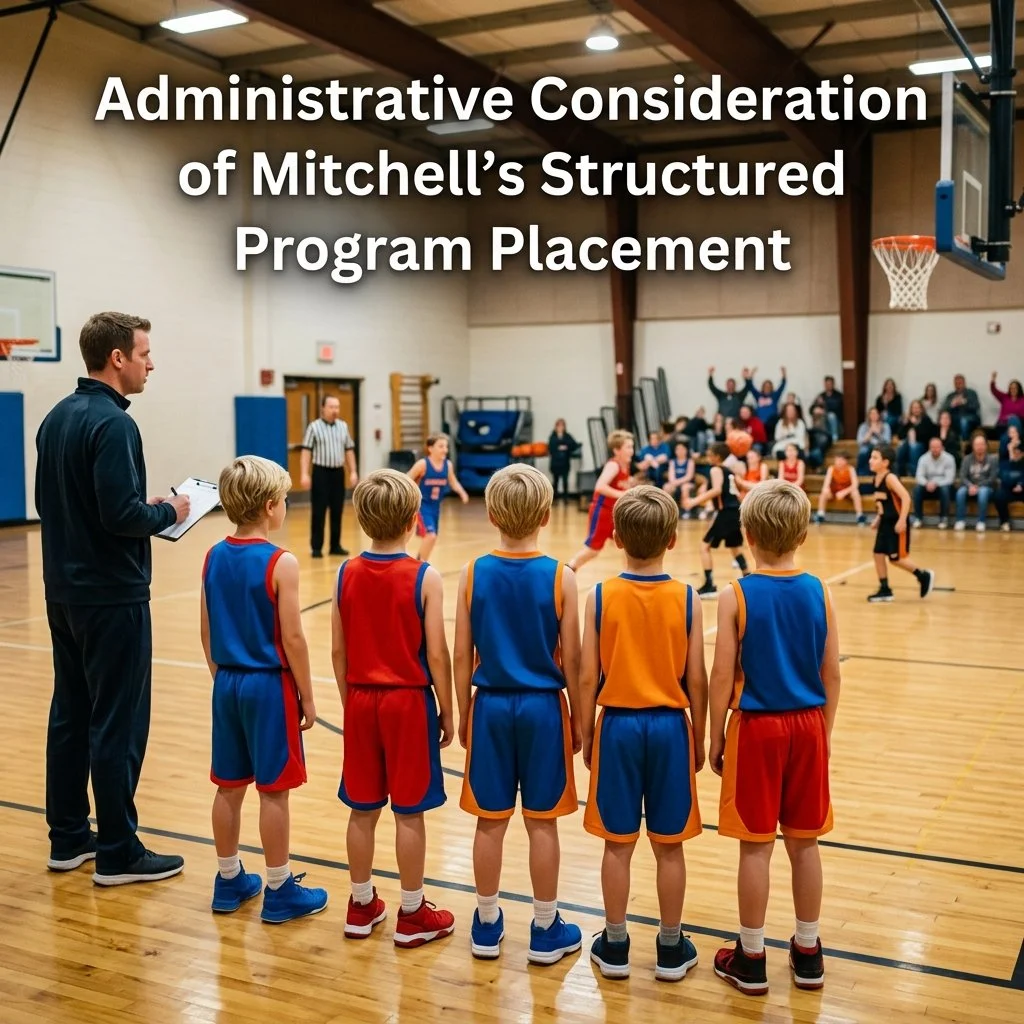
Sports or recreational programming may be especially valuable if it is structured around teamwork, routine, physical regulation, listening skills, and tolerating correction. Likewise, supervised group settings can help reinforce social boundaries, turn-taking, emotional control, and participation in shared activities. The key is that these programs must be age-appropriate in administration and purpose, even if they are adapted to his functional level.
If Mitchell also has personal care needs, those needs should be addressed formally and respectfully through planning, staffing, and accommodations. They should be treated as care needs, not as a basis for ridicule. Any proposed setting must be realistically equipped to support him in a way that maintains both dignity and safety.
Ultimately, if Mitchell is not prepared to function successfully in typical adult environments without substantial support, then structured alternative programming should be seriously considered. The strongest recommendations will be those based on assessment data, clear behavioral goals, practical logistics, and an honest understanding of which environments are capable of meeting his needs responsibly.
Journal Prompt
What practical steps would be necessary to identify, evaluate, and arrange a structured, supervised educational, recreational, or adaptive sports program that appropriately meets Mitchell’s developmental and support needs while maintaining dignity, safety, and clear boundaries for everyone involved?