
(Reflection, Math, Fitness, Mindfulness) Touchdown Toddler Tactics: Supervision Rules for Mitchell at the Park
1500-Word Essay Prompt
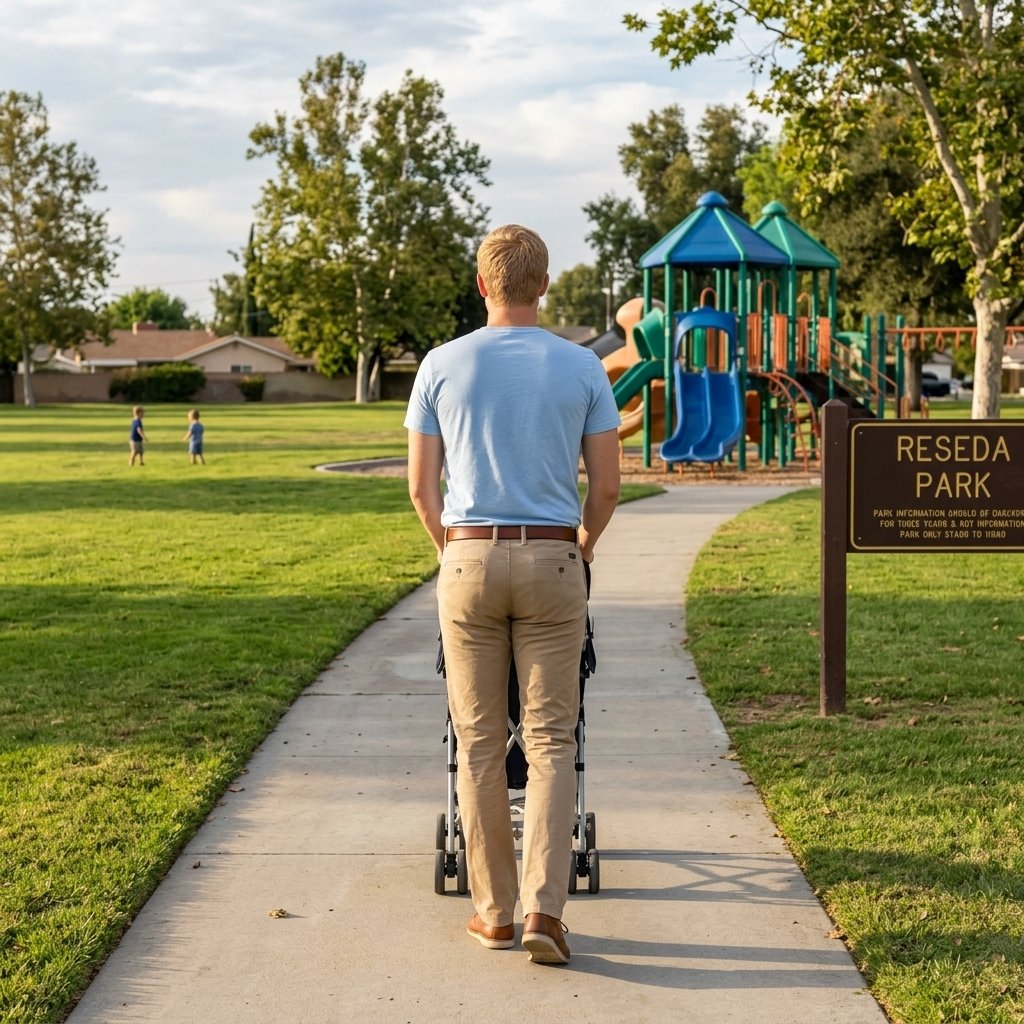
You've been appointed as the MVP caretaker for two-year-old Mitchell during a play session on the jungle gym at the park. Your task is to set clear and effective supervision rules to ensure his safety while maximizing his fun on the "field." Your coaching abilities will be put to the test, as you'll need to manage every aspect of Mitchell’s game plan—jungle gym climbing, snack breaks, stroller timeouts, and even halftime diaper changes. Craft a comprehensive set of rules, remembering to focus on the primary goal: safe but active play.
Essay Structure Breakdown:
Introduction (150 words)
Discuss the importance of supervising toddlers on the playground, highlighting the balance between independence and safety. Explain the key challenges toddlers face at this age and why clear rules are critical.The Jungle Gym Playbook (300 words)
Lay out rules specific to jungle gym play. For example, establish boundaries about how high he can climb and where he should avoid going for safety reasons.
Discuss spotting strategies (like staying close enough to prevent falls) and what to do if other kids on the playground play rough.
Mention strategies for encouraging teamwork if Mitchell interacts with other toddlers.
Snack Break Coaching (200 words)
Set rules for when and how snacks, like bottles or small treats, can be enjoyed safely.
Discuss techniques for keeping things clean, organizing feeding breaks, and checking for hydration needs.
Stroller Pit Stops (200 words)
Explain the guidelines for stroller usage during the park visit. Cover when Mitchell can sit and relax in the stroller to cool off or eat.
Include tips for ensuring the stroller is always parked in safe, clear areas.
Halftime Diaper Hazards (200 words)
Describe how to establish a routine for diaper checks and changes during outdoor play. Consider what supplies to pack and how to keep the process orderly and efficient.
Timeouts and Game Wrap-Up (250 words)
Detail a method for handling moments when Mitchell might get overwhelmed or need a rest. Can include resting on a bench, taking deep breaths, or playing a calming game.
Summarize procedures to wrap up the park visit, emphasizing how to transition from play back to the stroller or car, all while ensuring Mitchell leaves happy and safe.
Closing Notes (200 words)
Reflect on the importance of flexible yet structured rules for toddlers. Touch on how these guidelines can help enhance Mitchell’s confidence, independence, and love for the outdoors.
Reference Essay:
Every good coach knows that a successful game plan starts with clear rules—and the same goes for toddler coaching. When Mitchell hits the park, the jungle gym becomes his playing field, and it’s my responsibility to referee his fun while keeping him safe. First and foremost, I set clear boundaries on the jungle gym. He can climb the small slide ladder, but anything higher is out of bounds. I stick close, keeping my "spotting hands" ready in case he loses his balance. If older kids start rushing the plays, I redirect him to quieter spaces, calling it a "practice drill."
Breaks are just as important as play. Snack time is a huddle session—Mitchell gets his bottle while seated either on the stroller bench or by my side on a clean spot. Hydration’s the name of the game, and I always keep his water bottle within reach. Speaking of essentials, diaper duty is my halftime reality check. I pack the best game-day supplies—diapers, wipes, a portable mat—and scout out the cleanest spot for quick changes.
When Mitchell’s energy starts dwindling, I call for a stroller timeout. He gets a few minutes to recharge while I go over the post-game plan with him, preparing him to leave the park without tantrum tackles. Making safety fun is key—I emphasize how following these “rules” keeps him ready for whatever the day throws his way. By the end of the visit, Mitchell’s smiling, and I know I’ve coached a winning outing. Since clear structures keep toddlers thriving, I’ll chalk this park visit up as a touchdown for both of us!
Math Word Problem Test – Packing Mitchell's Diaper Bag
Instructions:
Welcome to the math word problem test! Each question is themed around the task of packing Mitchell's diaper bag, organizing his items, and planning his daily needs. For all problems, show all your work to earn full credit. Clearly state any formulas used, and ensure your final answers are clearly boxed. Good luck!
Questions:
Mitchell’s caretaker has 8 diapers to pack for the outing. If he uses 2 diapers every hour, how many hours will the diapers last?
A diaper bag can hold a maximum of 15 pounds of items. If each item weighs an average of 0.75 pounds, how many items can Mitchell’s caretaker fit in the bag?
Mitchell drinks a bottle of formula every 2.5 hours. If the outing will last 7.5 hours, how many bottles should the caretaker prepare?
The bag contains 10 wet wipes per packet. If Mitchell typically uses 4 wipes per diaper change, how many packets are needed for 5 diaper changes?
A toy weighs 1.2 pounds, and three other smaller items weigh a combined 2.4 pounds. If the bag can carry an extra 6 pounds, how many toys of 1.2 pounds can the caretaker add?
The caretaker has three different sized containers of formula weighing 2.5 pounds, 3.2 pounds, and 1.8 pounds. If the bag can only carry 5 pounds of formula, which containers should be packed to stay below the limit?
Mitchell’s bottle warmer uses 50 watts per hour. If the portable battery has 300 watt-hours of capacity, how many hours can the battery power the warmer?
The caretaker walks at a speed of 3 miles per hour while heading to the park. If the park is 1.8 miles away, how long will it take to reach the park?
Each packet of baby snacks contains 24 small pieces. If Mitchell eats 5 pieces every 30 minutes, how many packets are needed for a 3-hour outing?
Mitchell’s outfit consists of a shirt that weighs 0.5 pounds and pants that weigh 0.8 pounds. If an extra set of clothes is added, what is the total weight of the outfits?
The stroller requires 8 ounces of cleaning fluid per use, and the bottle holds 32 ounces. How many uses can be completed with one bottle?
The diaper bag contains compartments measuring 10 x 8 inches and 12 x 9 inches. If an extra toy measures 6 x 4 inches, will it fit, and in which compartment?
A warm blanket for Mitchell weighs 1.3 pounds, and an extra jacket weighs 1.5 pounds. If the caretaker needs to limit the bag’s added weight to less than 2 pounds, which item can be packed?
Mitchell consumes 6 ounces of water every hour. How much water should be packed for a 4-hour outing?
The caretaker wants to equally distribute 45 small items across 9 sections of the diaper bag. How many items will fit in each section?
Mitchell’s favorite toy set comes with 12 small blocks. If the caretaker decides to pack 4 sets, what is the total number of blocks?
A quick snack pack weighs 2.75 pounds, and two extra fruit packs weigh 1.8 pounds each. What is the total weight of these items?
There are 360 baby wipes in total across several packets. If one packet contains 90 wipes, how many packets are there?
Mitchell’s shoes weigh 1.1 pounds each. How much do both shoes weigh together?
The stroller has a storage compartment that measures 24 inches by 18 inches. If a bag is 20 inches by 16 inches, will it fit into the compartment?
A jacket sleeve measures 18 inches. If Mitchell grows 2 inches in arm length, how long will the new sleeve need to be?
Each diaper change takes 7 minutes. How long will it take to complete 6 diaper changes?
Mitchell has 3 favorite books, each with 20 pages. If the caretaker packs 2 of these books, how many pages are packed?
Mitchell uses 3 ounces of baby lotion per day. If the bottle holds 15 ounces, how many days will it last?
The stroller has wheels that are 10 inches in diameter. What is the circumference of each wheel? (Use π ≈ 3.14)
The outing plan lists 4 stops, each 1.2 miles apart. What is the total round-trip distance?
A small container for snacks can hold 8 servings, with each serving weighing 3 ounces. What is the maximum total weight the container can hold?
The caretaker fills a formula container halfway. If the full container holds 48 ounces, how many ounces are packed?
A pack of baby wipes costs $3.50. If the caretaker buys 8 packs, what is the total cost?
The diaper bag has 5 compartments, and each compartment carries 2 toys. What is the total number of toys packed?
Mitchell’s blanket needs to be folded twice to fit inside the bag. If its original dimensions are 36 inches by 24 inches, what will the folded dimensions be?
A bottle of sanitizer contains 16 ounces. If the caretaker uses 0.5 ounces each time, how many uses are available?
A total of $10.25 was spent on baby snacks. If each packet costs $2.05, how many packets were purchased?
One side pocket of the diaper bag is cylindrical with a diameter of 4 inches and a height of 8 inches. What is the volume of the pocket? (Use π ≈ 3.14)
The bag includes one larger compartment that is a rectangular prism measuring 12 inches by 9 inches by 6 inches. What is the volume of this compartment?
The stroller tire tread wears down by 0.2 millimeters per month. How many months will it take to lose 2 millimeters?
Mitchell’s water bottle holds 24 ounces. If he drinks 6 ounces every hour, how many hours will the water last?
There are 15 small toy balls in total. If the caretaker evenly splits these across 3 pockets, how many balls are in each pocket?
A small lid weighs 0.4 pounds, and a corresponding container weighs 1.2 pounds. What is the combined weight of the lid and container?
Mitchell’s favorite stuffed animal is 12 inches tall. If the bag’s largest pocket is 15 inches tall, will it fit?
GYM
0-20 Minutes: Warm-Up (20 Minutes)
0-5 Minutes: Dynamic stretching (e.g., leg swings, arm circles, lunges).
5-15 Minutes: Light jogging or brisk walking to elevate heart rate.
15-20 Minutes: Mobility drills (e.g., hip openers, shoulder rolls).
20-90 Minutes: Strength Training (70 Minutes)
20-55 Minutes: Upper Body Supersets (35 minutes)
Bench press – 4 sets of 8-10 reps.
Pull-ups – 4 sets of 8-10 reps.
Incline dumbbell press – 3 sets of 10 reps.
Barbell rows – 3 sets of 10 reps.
55-90 Minutes: Lower Body Focus (35 minutes)
Squats – 4 sets of 10 reps.
Romanian deadlifts – 4 sets of 10 reps.
Lunges (per leg) – 3 sets of 12 reps.
Calf raises – 3 sets of 12-15 reps.
90-130 Minutes: High-Intensity Interval Training (HIIT) (40 Minutes)
Perform 5 rounds of the following exercises with 45 seconds of work and 45 seconds of rest between rounds.
Burpees.
Push-ups.
Kettlebell swings.
130-160 Minutes: Core and Stability (30 Minutes)
130-140 Minutes: Plank holds (front and side) – 3 sets of 1-minute holds each.
140-150 Minutes: Russian twists – 3 sets of 15 reps per side.
150-155 Minutes: Hanging leg raises – 3 sets of 15 reps.
155-160 Minutes: Stability ball rollouts – 3 sets of 12 reps.
160-240 Minutes: Cool-Down and Stretching (20 Minutes)
160-165 Minutes: Light jogging or walking for 5 minutes to reduce heart rate.
165-240 Minutes: Static stretching targeting major muscle groups (hamstrings, quads, shoulders, chest, etc.).
This workout plan is designed to build strength, improve endurance, and enhance overall athletic performance. Adjust weights, repetitions, and intensity as needed to fit your fitness level. Stay hydrated and focus on proper form throughout the session.
Group Mindfulness Exercise: Visualizing Success in a Promotion
Objective:
This group mindfulness exercise aims to help participants focus on their aspirations for advancement in their chosen area of life—whether it's a job promotion, a leadership role in a club, or improving roles in personal life. The goal is to cultivate clarity, confidence, and motivation while reducing any stress or self-doubt about the changes success may bring.
Duration: 30 Minutes
Step 1: Setting the Tone (5 Minutes)
Begin by having the participants sit comfortably in a quiet area with minimal distractions.
Guide the group in slow, deep breathing. Encourage them to inhale deeply through their noses, hold for a count of three, and then exhale gently through their mouths. Repeat this sequence for 5 breaths as they settle into the present moment.
Step 2: Visualization of Promotion (10 Minutes)
Ask everyone to close their eyes and imagine the moment they receive the promotion or step into their new role. Encourage them to visualize as much detail as possible, including sights, sounds, and emotions.
Gently guide participants to focus on the following questions in their minds:
How do you feel in this new role or position?
What positive impact will this promotion have on your daily life and future?
Who supports you in this success, and how do they celebrate with you?
Remind them to reflect on any sense of pride, accomplishment, or excitement this situation brings.
Step 3: Cultivating Gratitude and Confidence (5 Minutes)
Once the visualization ends, guide the participants to think about one or two things they are grateful for that have helped them work toward this accomplishment (e.g., skills, mentors, personal determination).
Encourage them to affirm their abilities with a statement like, "I am capable of achieving my goals, and I am ready to take on new challenges."
Step 4: Journal Activity (10 Minutes)
Provide each participant with a notebook or journal and ask them to write about their experience during the exercise. Prompt them with the following questions to guide their writing:
What did you see, feel, and think during the visualization?
What steps can you take to work toward this promotion or advancement?
What motivates you the most about achieving this goal?
How can you celebrate small successes along the way?
Closing the Session
End the session by encouraging participants to take one action this week to keep moving toward their goals, no matter how small. Remind them that growth is a process, and every step matters.