
(Reflection, Math, Fitness, Mindfulness) Transitioning Mitchell’s Shepherds Home Daycare Curriculum to Align with a New Community
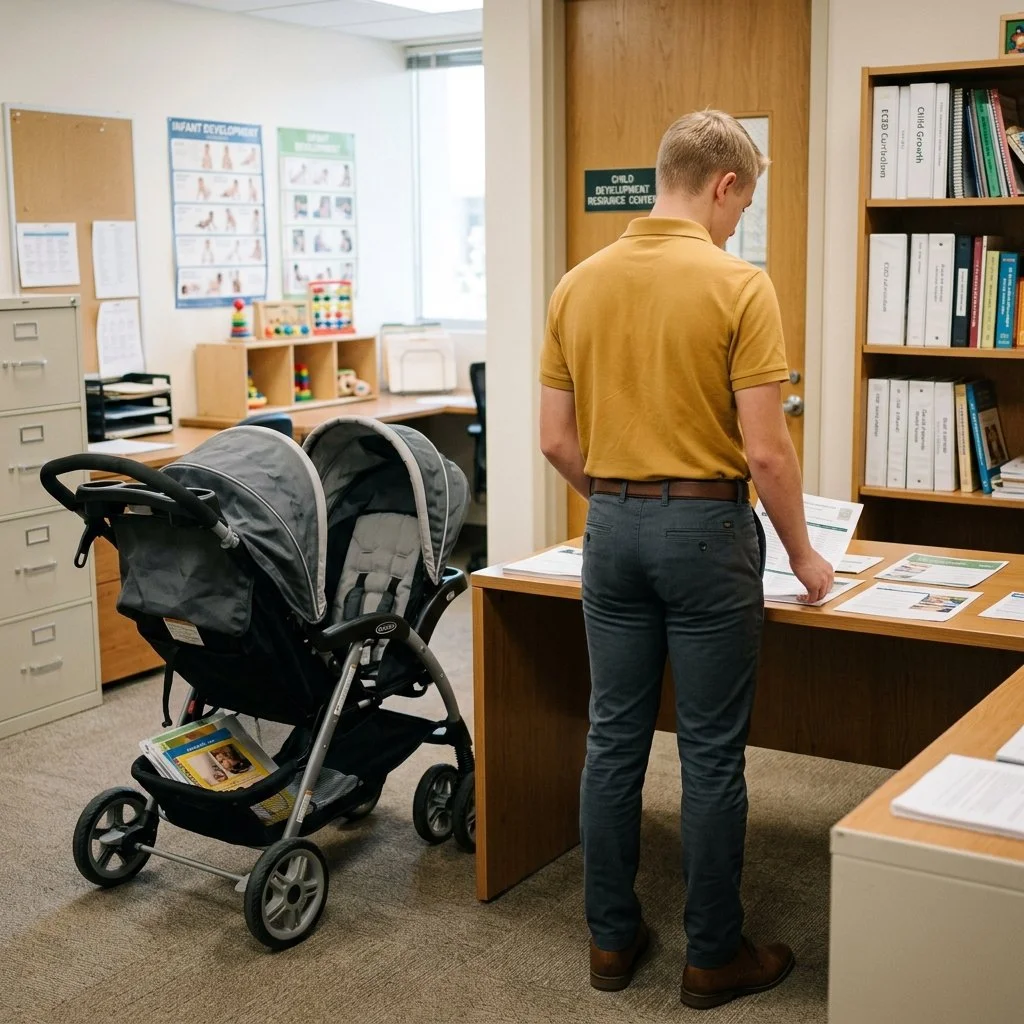
Write a 1500-word essay addressing the responsibility of overseeing the Shepherds Home Daycare curriculum and preparing it and its programming for Mitchell's impending relocation to a new housing community. This essay must reflect a comprehensive understanding of the situation and your role in shaping the transitional plan. Consider the core differences in values between Mitchell’s current neighborhood and the new housing complex, and reflect on how this shift impacts not only the daycare curriculum but also the lives of the children, staff, and the broader community. Your essay must propose strategies aimed at maintaining continuity in Mitchell’s influence during and after the transition while also appropriately respecting and adapting to the cultural and social ethos of the new community.
Section Breakdown
Introduction (200 words): Start with a summary of the transition scenario and the significance of core values in shaping the daycare's curriculum and engagement. Establish why bridging the divide between the two communities is crucial for Shepherds Home's success.
Assessing Core Value Differences (350 words): Compare and contrast the guiding principles, cultural norms, and expectations of the two communities. Discuss how these differences may influence the operational and educational goals of the daycare.
Curriculum Adaptation Strategy (400 words): Outline a detailed plan for updating the daycare program to honor the new community's values while preserving the positive aspects of the existing curriculum.
Staff Training and Community Engagement (300 words): Detail how staff should be prepared for changes and how to foster productive relationships with families in the new housing complex.
Addressing Challenges and Ensuring Continuity (250 words): Discuss potential obstacles in this transition and provide solutions to ensure both the daycare’s efficiency and Mitchell’s legacy remain uncompromised.
Closing and Next Steps (150 words): Conclude by summarizing the importance of this transition and providing actionable next steps for implementation to maximize success.
Word Count
Introduction: 200 words
Assessing Core Value Differences: 350 words
Curriculum Adaptation Strategy: 400 words
Staff Training and Community Engagement: 300 words
Addressing Challenges and Ensuring Continuity: 250 words
Closing and Next Steps: 150 words
Short Reference Essay
Transitioning Shepherds Home Daycare to the New Community
Mitchell’s move to a new housing complex presents both a challenge and an opportunity for Shepherds Home Daycare. This transition requires a thoughtful approach to updating the curriculum while fostering connections with families in the new community. Understanding the core differences between living environments is vital, as these values influence how children learn and interact.
For instance, a neighborhood accustomed to collaborative, tight-knit social bonds may emphasize group activities and shared learning, whereas the new community might prioritize individual development and independence. The daycare curriculum must strategically balance these by weaving in both group-focused and individual-oriented lessons.
Additionally, staff must undergo tailored training to identify and respect new family dynamics and adjust their teaching approaches accordingly. For example, organizing outreach programs and listening sessions with incoming families will provide vital feedback and ease the transition. Addressing potential challenges like resistance from current families or differing expectations will require clear communication and active discussion.
Ultimately, these measures will ensure that Shepherds Home Daycare thrives in its new community, preserving Mitchell’s vision while adapting to new opportunities. Through careful planning and execution, the daycare can uphold its commitment to nurturing growth and connection regardless of the location.
Theme: Packing Mitchell's Diaper Bag
Instructions: Solve the following 30 problems, showing all your work. Each question requires multiple steps to find the final answer.
Mitchell needs to pack 12 diapers for a trip. Each pack of diapers contains 24 diapers. How many packs should Mitchell buy to ensure he has enough diapers for three trips of similar length?
The diaper bag has 4 compartments. If Mitchell divides the 36 diapers equally among all compartments, how many diapers will be in each compartment?
A bottle takes up 2 liters of space in the diaper bag. If Mitchell packs 3 bottles and the total capacity of the bag is 10 liters, how many liters of space are left?
Mitchell plans to bring baby wipes that come in packs of 80 sheets. If he uses roughly 15 wipes per change and expects 5 diaper changes in a day, how many full packs should he take?
Each container of formula holds 900 grams, and a single trip requires 75 grams per feeding. If Mitchell packs enough formula for 12 feedings, how many containers of formula will he need?
Mitchell packs baby food jars, each weighing 300 grams. If the total weight allowance for the bag is 10 kilograms and the other items weigh 5 kilograms, how many jars can he take?
For every hour of the trip, Mitchell needs 1 diaper, 200 milliliters of formula, and 3 baby wipes. How much of each item does he need for a 9-hour day trip?
Mitchell budgets $50 for food and supplies. If the diapers cost $18, formula costs $22, and wipes are $6, does he stay within his budget? By how much?
A baby blanket takes up 1.5 liters in the bag, and each toy takes up 0.8 liters. If the bag has 5 liters of free space, how many toys can Mitchell fit alongside the blanket?
The trip is 120 miles long. The vehicle’s fuel efficiency drops by 10% when the diaper bag weighing 15 kg is packed. If the car’s usual mileage is 30 miles per gallon, how many gallons are needed for the trip?
Mitchell plans for 10 changes and brings 120 wipes to the trip. If the average use per change increases to 14 wipes halfway through, will the supply last 10 changes?
A bottle warmer plugged into a backup battery drains 20% of the battery every hour. If the battery starts at 100% and the trip is 5 hours, how much battery remains?
If the bag has a total weight limit of 20 kilograms and Mitchell's packed items weigh 1.8 kilograms each, how many items can he fit without exceeding the limit?
Mitchell starts with 4 bottles and uses one every 2 hours. How many bottles does he have left after a 10-hour trip?
The diaper bag zipper breaks if the load exceeds 25 liters. If each item added creates an extra 2.4 liters of volume and the current load is 18 liters, how many items can Mitchell safely pack?
If Mitchell adds 3 toys to the current load, which is 16.2 liters, and each toy takes up 1.3 liters, how much space will still remain in the bag if the capacity is 25 liters?
Each diaper change results in 0.5 lbs. of used items, including wipes and other disposables. How much total waste does Mitchell generate from 8 changes?
Mitchell’s bag has 3 shelves. One shelf fits 40 diapers, the second shelf fits half that, and the third fits 70% of the second shelf’s capacity. How many diapers can the bag hold in total?
The total cost of packing includes $22 for formula, $15 for diapers, $8 for wipes, and $12 for snacks. After applying a 10% discount, what’s the total cost?
If it takes Mitchell 7 minutes to prepare one feeding and he prepares 6 feedings daily, how much time does he spend on feeding preparation in a week?
Mitchell buys a pack of wipes for $4.50 and diapers for $19.90. If he uses a coupon for 20% off his total purchase, what is the final price?
Each diaper bag refill takes approximately 15 minutes. If Mitchell repacks the bag 4 times in a day, how many hours does he dedicate to repacking in a week?
If Mitchell has 240 wipes and plans to distribute them equally across 6 traveling days, how many wipes will he have left after the fourth day?
Mitchell packs 6 receiving blankets, each weighing 0.5 kilograms. If the bag weighs 10 kilograms in total when packed, how much do the remaining items weigh?
The formula container lasts for 5 days. How many containers are required for a 20-day trip?
A portable diaper disposal unit costs $36. If Mitchell's budget is $200, how much money does he have left after purchasing the unit and spending $120 on other supplies?
Mitchell estimates 5 diaper changes daily for a 7-day trip, and each change requires 3 minutes. How many hours in total are spent on diaper changes?
Each trip Mitchell packs requires 3 baby bottles which take up 9 inches of vertical space combined. If his bag can hold 15 inches of vertical items, how much space remains?
If one feeding uses 80 ml of formula and the formula container holds 1.2 liters, how many feedings will a single container last?
The diaper bag is 30% full with food after Mitchell packs 6 jars of baby food. How many jars will the bag hold at full capacity?
Good luck! Remember to show all work clearly.
GYM
This comprehensive four-hour workout plan is carefully structured to build strength, enhance endurance, and optimize recovery for young male athletes. Follow the guidelines closely, ensuring each segment is performed with focus and proper form. Adjust weights, intensity, and rest periods (30-90 seconds) according to your fitness level, and stay hydrated throughout.
Warm-Up (20 minutes)
Prepare your body for high-performance activity with a dynamic warm-up to increase blood flow, loosen muscles, and prevent injury.
Dynamic Stretches (5 minutes)
Perform full-body movements to enhance flexibility and range of motion:Arm circles (forward and backward)
Leg swings (front-to-back and side-to-side)
Torso twists (slow and controlled)
Light Cardio (10 minutes)
Jog on a treadmill or perform brisk walking to elevate your heart rate.
Mobility Drills (5 minutes)
Focus on opening up joints and improving movement mechanics:Hip openers
Shoulder rolls
Ankle stretches
Strength Training (90 minutes)
Split into upper and lower body workouts to build balanced full-body muscle strength.
Upper Body (45 minutes)
Target major muscle groups while improving stability and overall upper-body power:
Bench Press – 4 sets of 8 reps (maintain control during each lift)
Pull-Ups – 3 sets to failure (aim for maximum effort each round)
Dumbbell Shoulder Press – 3 sets of 10 reps (ensure even weight distribution)
Barbell Rows – 4 sets of 8 reps (focus on engaging your lats and mid-back)
Tricep Dips – 3 sets of 12 reps (use parallel bars for maximum effectiveness)
Bicep Curls – 3 sets of 12 reps (keep form strict for maximum efficiency)
Lower Body (45 minutes)
Build power and stability while improving lower-body mobility:
Squats (Barbell or Weighted) – 4 sets of 10 reps (go deep, but prioritize safe knee alignment)
Deadlifts – 4 sets of 8 reps (engage your core and maintain a neutral spine)
Walking Lunges – 3 sets of 20 steps (10 per leg, hold dumbbells for added resistance)
Bulgarian Split Squats – 3 sets of 12 reps per leg (use a bench for support)
Calf Raises – 3 sets of 15 reps (slowly control the rise and descent)
Cardio & Conditioning (40 minutes)
Supercharge endurance and agility while reinforcing your core strength.
Treadmill Sprints (15 minutes)
Alternate between 30-second sprints and 1-minute walking recovery intervals.
Agility Ladder Drills (10 minutes)
Develop coordination, balance, and quick footwork:Quick feet
Lateral steps
Hops
Bodyweight Core Workout (15 minutes)
Build core strength for stability and balance:Planks (hold for 60 seconds at a time)
Russian twists (weighted, 20 reps per side)
Mountain climbers (30 seconds at a steady pace)
Pool & Jacuzzi Recovery (30 minutes)
Encourage muscle recovery and relaxation after intense training.
Light Swimming or Water Jogging (15 minutes)
Perform low-resistance exercises in water to relax your muscles and improve mobility.
Jacuzzi Relaxation (15 minutes)
Soak in the jacuzzi to reduce muscle tension and improve circulation.
Cool Down and Stretching (20 minutes)
Finish strong with a proper cooldown to aid recovery and avoid stiffness.
Static Stretching (10 minutes)
Focus on major muscle groups to enhance flexibility:Hamstrings
Quads
Shoulders
Back
Deep Breathing and Mindfulness (10 minutes)
Incorporate slow, controlled breathing with mindfulness techniques to calm your mind and finish the session on a positive note.
Notes:
Maintain proper form in every exercise to prevent injuries.
Tailor weights, reps, and intensity to your current fitness level.
Rest strategically between sets to maximize performance, without losing momentum.
Structured correctly, this workout plan is your ultimate guide to strength, agility, and recovery. Bring your best effort to every minute and watch the results unfold.
MINDFUNESS
Step One: Reflect on Scripture
"But those who hope in the Lord will renew their strength. They will soar on wings like eagles; they will run and not grow weary, they will walk and not be faint." — Isaiah 40:31
Find a quiet space where you can center yourself. Read this verse slowly, letting each word resonate. Close your eyes and visualize yourself running with strength, achieving your goals, and soaring beyond challenges. Focus on the imagery of renewal and perseverance, and connect it to your athletic pursuits.
Step Two: Journal About the Scripture
Take 5-10 minutes to write about what this verse means to you personally. Consider these prompts:
How does this verse inspire you in your training or performance?
What specific challenges in your athletic journey can you "soar" over by trusting in your strength and faith?
Reflect on a time when you overcame a tough moment due to hope, determination, or resilience.
This activity is a chance to connect your physical ambitions with a deeper sense of purpose, grounding your efforts in both mindfulness and motivation.