
(Reflection, Math, Fitness, Mindfulness) Navigating Special Accommodations with the School Administrators
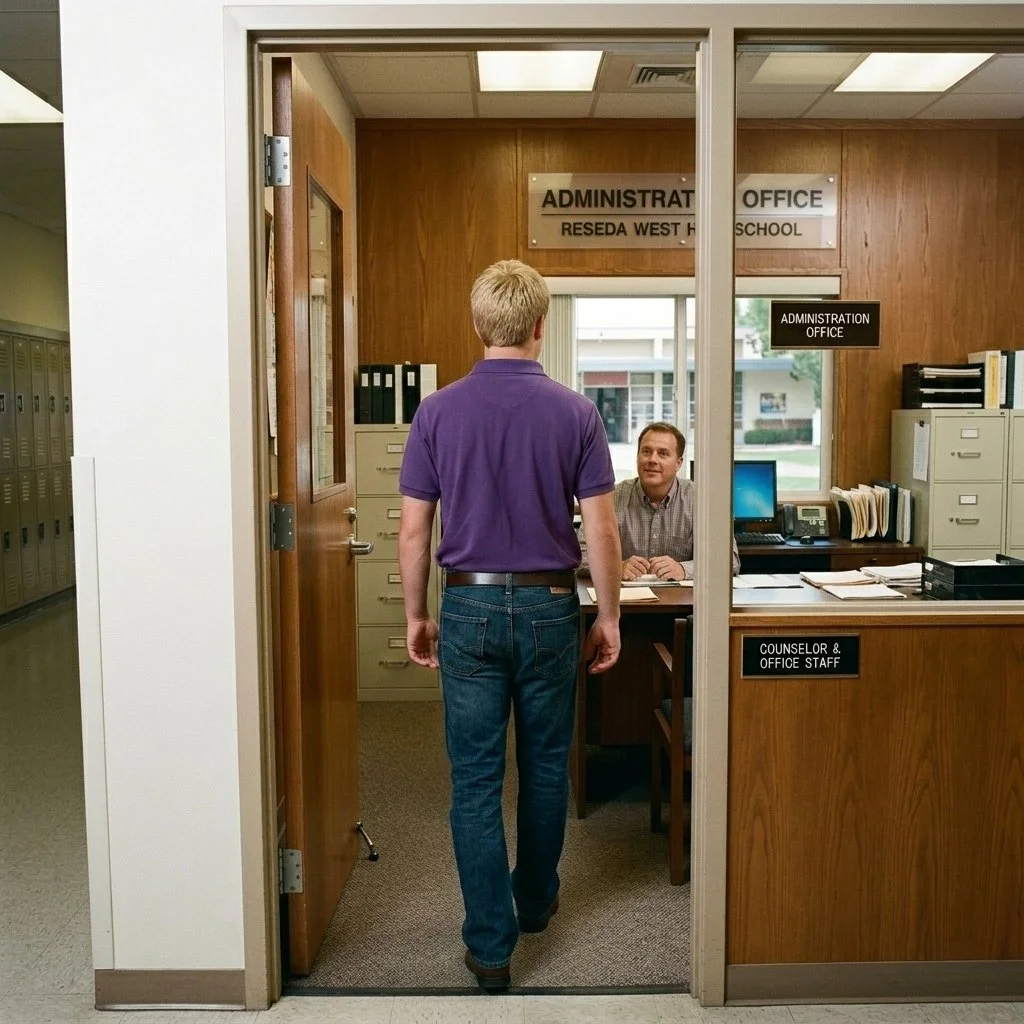
Today, I found myself standing outside the administration office, preparing to discuss what I believe are the essential accommodations Mitchell needs to thrive in public school. Despite his age, he still relies on certain routines and assistance to go about his day comfortably and successfully. My focus during the meeting was to outline what I believe are realistic and necessary accommodations for his school attendance.
I pitched the following points to the administrators with the goal of ensuring Mitchell’s well-being while respecting the school’s capacity to provide support. First and foremost, Mitchell should not be required to use the potty on campus, as this is not feasible for him. Instead, there should be a dedicated plan for his pamper changes, which should only occur a few times per day under the care of the school nurse. Additionally, he would benefit greatly from enrolling in one special education class each day, which would provide targeted learning and social interaction in a setting designed for his needs. Lastly, arrangements should be made for him to have access to his bottle during the day, as it remains essential for his routine and comfort.
After outlining these specific accommodations, I emphasized why they were crucial to Mitchell’s ability to function and succeed in a public school environment. Now, I’m waiting to hear back from the administrators regarding their response and any potential next steps. This meeting felt like an important moment of advocacy, and I hope the school is open to creating a plan that is reasonable yet supportive of Mitchell’s needs.
Essay Prompt
Prompt: Imagine you are pitching special accommodations for a student like Mitchell to attend public school. What specific accommodations would you propose, and why do you believe they are essential? How would you align these proposals with the school’s resources and policies? Finally, what realistic response would you expect from the school administrators, and how would you address their concerns?
Word Count Breakdown:
Introduction (150 words): Provide background on the student’s needs and the significance of the accommodations being proposed.
Specific Accommodations (500 words): Detail the proposed accommodations, explaining why each is necessary and how it supports the student’s success.
Collaboration with the School (400 words): Discuss how you would work with the school to implement these accommodations, ensuring they are realistic and within the school’s capacity.
Anticipated Response (300 words): Predict the school administration’s potential response, including any challenges or concerns they may raise. Propose constructive solutions or alternatives to address these issues.
Closing Thoughts (150 words): Conclude by emphasizing the importance of fostering an inclusive and supportive environment for the student.
Reference Sample Essay
Creating Success for Mitchell in Public School
Mitchell is a unique and bright individual whose special needs require carefully tailored accommodations to ensure his success in a public school setting. Mitchell’s developmental needs differ significantly from his peers, making it essential to address his requirements with compassion and practicality. The approach to his accommodations must balance his age-appropriate independence with the support that allows him to thrive.
The first proposed accommodation is providing full support for Mitchell’s hygiene needs. By ensuring that pamper changes are handled by the school nurse only a few times per day, Mitchell can maintain comfort and dignity without disrupting the school’s broader operations. Additionally, he will need access to a special education class daily, designed to foster his continued learning and socialization in a structured environment. Furthermore, accommodations such as allowing him to drink his bottle throughout the day would help fulfill his routine and emotional well-being.
Collaborating with the school to develop a feasible plan is critical. This includes open communication with staff, clear scheduling for support services, and transparency regarding the resources required. A cooperative approach ensures that adjustments benefit Mitchell without overextending the school’s capacity or other students' education.
It is realistic to expect that the school administration might have concerns about resource allocation or staff availability. Addressing these concerns constructively, such as proposing specific schedules or identifying existing services that meet Mitchell’s needs, can help bridge these gaps. By focusing on Mitchell’s well-being alongside the school’s practical limits, a balanced and respectful solution can emerge.
Ultimately, the goal is to ensure Mitchell’s inclusion in an educational environment that values his potential. With the right accommodations in place, Mitchell can flourish and contribute as a valued member of the school community, inspiring others with his resilience and determination.
Math: To better understand the steps taken, it is crucial to show your work in the below equations. Demonstrating the process not only ensures accuracy but also helps identify any potential errors along the way. Each equation should be broken down step by step, clearly indicating how conclusions are reached. This approach builds transparency and reinforces comprehension, making it easier to follow and verify the solutions presented.
Mitchell’s caretaker needs to pack 12 diapers. Each diaper bag compartment can hold 4 diapers. How many compartments will be used? Show your work.
The diaper bag already contains 3 pacifiers. Mitchell’s caretaker wants to add 2 more. How many pacifiers will be in the bag altogether? Show your work.
Mitchell drinks formula that comes in packets. Each packet makes one bottle. If the caretaker needs to pack formula for 6 bottles, and the box contains 12 packets, how many packets will be left after packing the bag? Show your work.
The diaper bag has space for 8 bottles in total. If Mitchell’s caretaker has already packed 5, how many more bottles can fit? Show your work.
Mitchell’s caretaker packs 7 toys for him. If Mitchell chooses to play with 3 toys, how many will still be in the bag? Show your work.
The lunchbox in the diaper bag has 2 compartments. One compartment can hold 3 snacks, and the other holds 4 snacks. How many snacks can be packed in the lunchbox altogether? Show your work.
Mitchell’s caretaker packs 10 wet wipes in the bag. If he uses 2 during a diaper change, how many wet wipes remain? Show your work.
The diaper bag has 5 outer pockets and 3 inner pockets. If 2 outer pockets and 1 inner pocket are filled, how many pockets remain empty? Show your work.
Mitchell drinks 5 ounces of formula per bottle. If his caretaker needs to pack 4 bottles, how many ounces of formula in total must be packed? Show your work.
The diaper bag contains a total of 4 towels. If 2 of the towels are used, how many towels will still be in the bag? Show your work.
Mitchell uses 2 bibs each day. If the caretaker packs 8 bibs in the bag, how many days will they last? Show your work.
There are 15 diapers in the supply at home. After packing 10 into the diaper bag, how many diapers are left at home? Show your work.
Mitchell’s caretaker wants to distribute 18 wet wipes equally into 3 packets in the bag. How many wet wipes will each packet contain? Show your work.
If Mitchell needs a snack every 3 hours and his outing lasts for 9 hours, how many snacks need to be packed? Show your work.
The diaper bag weighs 18 pounds fully loaded. If 2 pounds of items are removed, what will the new weight of the bag be? Show your work.
Mitchell drinks milk from bottles that hold 6 ounces each. If he needs 3 bottles during the outing, how many ounces of milk should his caretaker prepare? Show your work.
The wipes container can hold 50 wipes, but currently it holds only 30. How many more wipes can be added to fill the container? Show your work.
If Mitchell’s caretaker packs 4 toys into 2 compartments dividing them equally, how many toys will go into each compartment? Show your work.
Mitchell’s caretaker buys a pack of 24 diapers. If half of the diapers are packed into the bag, how many diapers remain? Show your work.
The diaper bag strap is adjustable and can be extended by 6 inches. If the strap is currently 24 inches, what will its total length be after extension? Show your work.
240-Minute Gym Workout Plan for Young Male Athletes
Instructions: Follow this workout plan exactly as written. All exercises are designed to be performed at the gym. Make sure to use proper form and rest as indicated to ensure safety and maximize results.
Warm-Up (0–15 Minutes)
0–5 Min: Light jog on the treadmill at a steady pace (speed 4–6 mph).
5–10 Min: Dynamic stretches (e.g., leg swings, arm circles, high knees, butt kicks).
10–15 Min: Bodyweight movements (e.g., 15 squats, 10 push-ups, 10 lunges per leg, 20 jumping jacks).
Strength Training (15–120 Minutes)
15–35 Min: Chest & Triceps
Bench Press (4 sets, 8–12 reps)
Incline Dumbbell Press (3 sets, 10 reps)
Triceps Dips (3 sets to failure)
35–55 Min: Back & Biceps
Pull-Ups (3 sets to failure)
Seated Row Machine (4 sets, 8–12 reps)
Preacher Curls (3 sets, 10–12 reps)
55–75 Min: Legs
Barbell Squats (4 sets, 8–12 reps)
Leg Press Machine (3 sets, 12 reps)
Calf Raises (4 sets, 15 reps per leg)
75–95 Min: Shoulders
Overhead Dumbbell Press (4 sets, 10 reps)
Lateral Raises (3 sets, 12 reps)
Upright Row (3 sets, 10 reps)
95–120 Min: Core
Plank (Hold for 1 minute—repeat 3 times)
Hanging Leg Raises (3 sets, 12 reps)
Russian Twists with Medicine Ball (3 sets, 15 reps per side)
Cardio (120–180 Minutes)
120–140 Min: High-Intensity Interval Training (HIIT) on the treadmill → Alternate 30 seconds sprinting (6–8 mph) with 1-minute walking (3–4 mph) for 10 rounds.
140–180 Min: Steady-State Cardio (Elliptical, StairMaster, or Stationary Bike) at moderate intensity.
Cool-Down & Stretching (180–240 Minutes)
180–190 Min: Walk on the treadmill at a slow pace (2–3 mph).
190–210 Min: Perform static stretches targeting all major muscle groups (hold each stretch for 30–60 seconds).
210–240 Min: Foam rolling to release muscle tension.
Drink water throughout the workout and ensure proper hydration and form at all times.
Mindfulness Group Activity
Guided Visualization and Group Reflection (60 Minutes)
Introductory Breathing Exercise (10 Minutes): Begin the session by sitting in a comfortable position. Lead the group through deep, diaphragmatic breathing exercises to promote relaxation and mental clarity. Encourage participants to focus on the present moment and release stress.
Six-Month Visualization Exercise (20 Minutes): Guide the group through a calming visualization where they imagine their lives six months from now. Encourage them to envision specific details, such as their personal growth, career progress, relationships, and overall well-being. Prompt them to picture what success, happiness, and balance look like in this future version of themselves.
Group Sharing and Discussion (20 Minutes): Facilitate a group discussion where participants can voluntarily share aspects of their visualization. Create a safe and supportive environment for everyone to reflect aloud on their goals, insights, or emotions that surfaced during the exercise.
Closing Gratitude Practice (10 Minutes): End the activity with a brief gratitude exercise. Have each participant share one thing they are grateful for currently, reinforcing a sense of positivity and connection.
Journal Prompt
Take a few minutes to journal your thoughts based on the visualization exercise earlier. Reflect on this question:
"Six months from now, where do I see myself, and what steps can I take each day to move closer to that vision?"
Write about the goals you envisioned, the challenges you may need to overcome, and the strengths and resources you already possess that will help you along the way. Consider what habits or changes you can cultivate to align your daily actions with your desired future.