
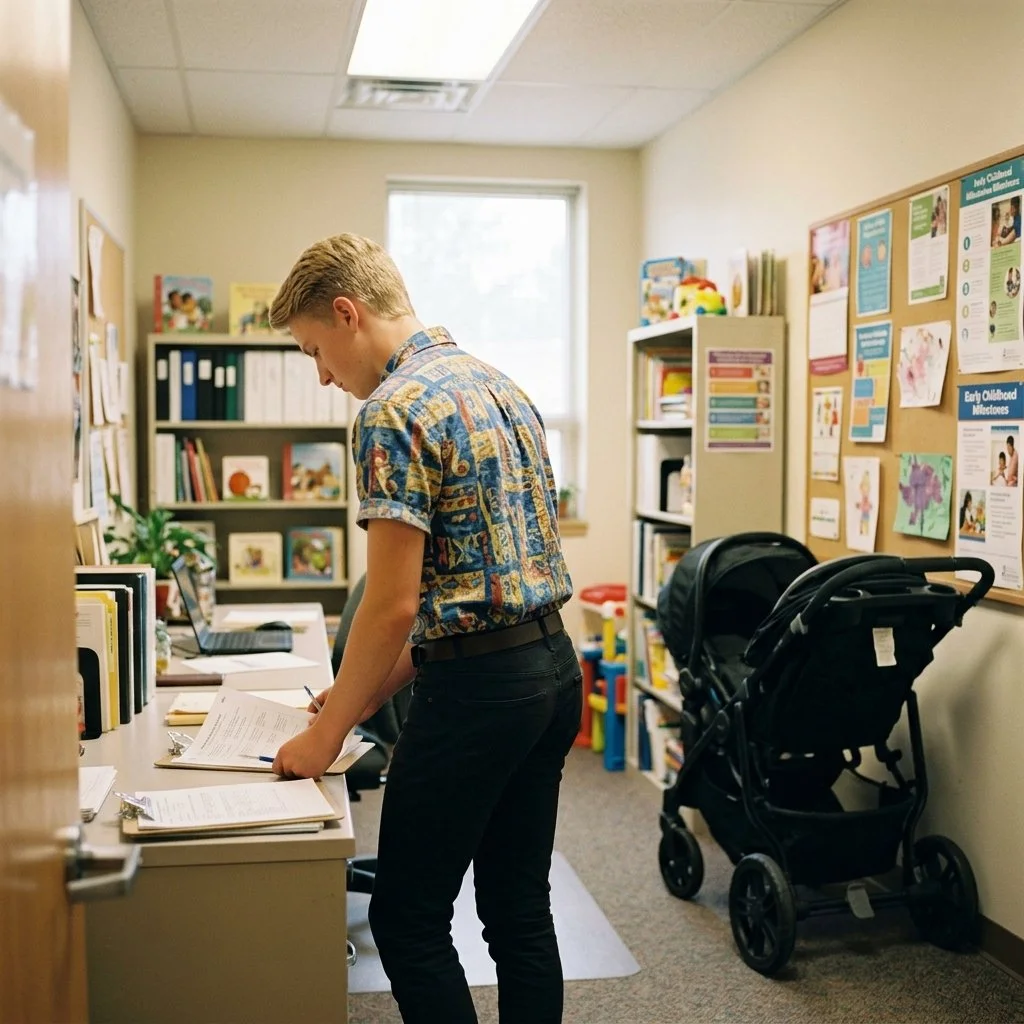
Essay Prompt
Title: Balancing Empathy and Discipline to Curb Undesirable Behavior in Toddlers
Prompt Overview:
Toddlers, like Mitchell in this scenario, often act out due to physical discomfort or emotional triggers. The challenge for parents and caregivers lies in addressing these behaviors with an approach that strikes a balance between empathy and firm, consistent discipline. This essay should explore the psychological and physical factors behind such behaviors, and propose a realistic, actionable plan to address and manage them effectively.
Word Count Breakdown:
Introduction (150 words)
Introduce the issue of toddler behavior management, focusing on behaviors like removing diapers.
Highlight the importance of blending empathy with discipline.
State the essay’s purpose and what will be explored in subsequent sections.
Understanding the Behavior (400 words)
Explain why toddlers like Mitchell might remove their diapers when uncomfortable or anxious. Discuss potential triggers such as physical discomfort, developmental factors, or underlying anxieties.
Include references to child psychology to give insights into how toddlers process emotions and sensory input.
The Role of Empathy in Behavior Management (300 words)
Delve into why empathy is crucial when addressing undesirable behaviors.
Examine how understanding Mitchell’s perspective can make the approach more constructive and prevent emotional damage.
Discuss tactics like active listening, creating a sense of comfort, and validating feelings while setting boundaries.
Integrating Effective Discipline (300 words)
Discuss the importance of consistent rules and consequences in guiding behavior.
Provide examples of age-appropriate disciplinary techniques that reinforce Mitchell’s need to keep his Pampers on.
Address how to avoid excessively punitive measures while still maintaining authority.
Creating a Tailored Plan for Mitchell (350 words)
Propose a step-by-step plan specific to Mitchell’s behavior.
Highlight the importance of routines, redirection methods, and reward systems.
Include strategies for teaching Mitchell to express discomfort or anxiety verbally or through other non-disruptive means.
Closing Thoughts and Reflection (100 words)
Wrap up the essay by revisiting the importance of balancing empathy and discipline.
Reflect on how such an approach prepares toddlers like Mitchell for long-term emotional regulation and boundary understanding.
Reference Essay
Long Story Short, Mitchell Needs a Plan
Mitchell is a bright, smiling toddler—but let's cut to the chase here. When he feels uncomfortable or anxious, that kid wastes no time yanking off his Pampers, leaving the rest of us cleaning up after the fallout. Sure, it’s easy to laugh the first time it happens. But when it’s the fifth time this week, and you’re swapping the 10th pair of accident-stained pants, it’s not funny anymore. The kid needs to stop pulling this stunt, and we need a real plan.
Here's the deal. Mitchell’s little escapades aren’t random acts of defiance—they’re signals that something’s bothering him. Whether it's a damp diaper causing physical discomfort, or anxiety over something he doesn’t have the words to explain, he’s communicating the only way he knows how. Now, before you pity the kid too much, remember this—he’s young, but he still needs to learn that certain antics, like running rogue without his Pampers, won’t fly long-term. That’s where you come in. Discipline isn’t about being the bad guy; it’s about giving him direction when he needs it most.
The first step here is reading the situation, plain and simple. If you see him squirming or fidgeting, step in before he decides that his diaper doesn’t belong on his body anymore. Catching the behavior beforehand reinforces that there’s a better way to handle whatever discomfort or anxiety he’s feeling. Next? A steady routine. Kids love to know what’s coming next, and building consistency into his day reduces the anxiety that might be causing these "diaper rebellion" moments. Add in a little positive reinforcement—Mitchell keeps his Pampers on all afternoon, and he gets a sticker, a favorite snack, or even a high-five. Trust me, kids this age eat that up like it’s candy.
And, of course, don’t forget to show the little guy some empathy. If Mitchell knows you’re aware of his discomfort, he’s more likely to listen when you tell him to keep his Pampers on. Pair compassion with firm expectations, and you’re teaching him not just to manage his quirks but also to grow into a kid who understands boundaries. Long story short? Mitchell might be running wild now, but with a little structure and a lot of patience, he’ll learn to keep those Pampers exactly where they belong.
Mitchell's Diaper Bag Mission
How well can you plan and pack under pressure? Show your skills by tackling these 30 questions, all themed around organizing Mitchell's diaper bag for the week ahead.
What essentials should go into Mitchell’s diaper bag for a road trip day?
How many extra diapers would you pack for a single afternoon at the park?
What kind of snacks would you include to keep Mitchell happy between meals?
How would you organize wet wipes, creams, and powders to make them quickly accessible?
If Mitchell spills juice, what items in the bag would help you clean up?
For a trip lasting six hours, how will you calculate the number of diapers needed?
What toy or comfort item would you add to keep Mitchell entertained while traveling?
What’s the best way to pack spare clothes so they don’t wrinkle or get dirty?
Should you include sunscreen in Mitchell’s bag for a picnic, and why?
If Mitchell needs a nap, what item would you include to ensure he feels cozy?
How would you plan for changes in weather while packing Mitchell’s bag for a hike?
What drink options are reliable for keeping Mitchell hydrated without causing too much mess?
What’s the best way to separate clean and soiled items in the diaper bag?
How would you decide which diapers to bring for an overnight trip?
If Mitchell suddenly rejects his favorite food, what backup snacks should you include?
How would you organize a diaper bag for quick access during a movie or event?
What’s the best way to store baby wipes to ensure they don’t dry out?
How will you ensure Mitchell’s items stay sanitary while packed together?
What’s one item you’d bring to entertain Mitchell if you are stuck in traffic?
How can you pack a backup blanket without taking up too much space?
Should you pre-pack meals, or bring foods that are easy to prepare on the go?
What kind of bottle is easiest to clean when packing Mitchell’s bag for a busy day?
How would you ensure you have enough diapers without overpacking?
What first-aid essentials might you want to include for unexpected scrapes?
How can you protect the diaper bag’s contents in case of rain?
If Mitchell has a favorite bedtime story, would you bring it on a trip? Why or why not?
What’s the best way to prevent Mitchell’s creams and lotions from leaking?
How can you pack bulkier items, like a portable changing mat, efficiently?
What are three unexpected challenges you may encounter while relying on the bag?
If you had five minutes to pack Mitchell’s bag, what would you prioritize first?
Test your planning skills and see if you’ve got what it takes to assemble the ultimate diaper bag!
Math Word Problems — Mitchell's Diaper Bag
Instructions: Solve the following problems step by step, showing all your work clearly. Use logical reasoning for any assumptions you make.
Mitchell uses 14 diapers a day. How many diapers should be packed for a 7-day trip?
Each diaper weighs 120 grams. What is the total weight of diapers for a 7-day trip?
Wipes come in packs of 80 sheets. If Mitchell uses 12 sheets per diaper change and has an average of 10 changes a day, how many packs of wipes are needed for a week?
A bottle of baby lotion contains 250 mL. Mitchell uses 15 mL per day. How many bottles should be packed for a week?
A travel-sized bottle can hold 100 mL of lotion. If lotion must be transferred, how many bottles would you fill?
Formula is packed in tins weighing 500 grams each. Mitchell consumes 120 grams of formula powder daily. How many tins are required for a 7-day trip?
Baby food jars hold 180 grams each. Each day, three jars are consumed. How many jars are needed for an entire week?
Mitchell’s portable changing mat is folded into dimensions of 30 cm by 25 cm by 5 cm. Calculate the volume of the folded mat in cubic centimeters.
The diaper bag has a base of 40 cm by 20 cm and is 30 cm tall. What is its maximum volume in cubic centimeters?
If diapers are stacked to occupy 50% of the diaper bag’s capacity, calculate how much space the diapers will occupy in cubic centimeters.
Include six jars of baby food and calculate their total occupied space if each jar has a cylindrical shape with a height of 12 cm and a diameter of 6 cm (use π = 3.14).
The diaper bag weighs 1.5 kg when empty. If the total packed items weigh 8 kg, what is the total weight of the bag?
A water bottle in the bag has a capacity of 750 mL. If it’s half full, how much water is inside in liters?
Each diaper change generates 450 grams of waste. How much waste will accumulate after 4 days with 10 changes a day?
The baby monitor consumes one set of 2 AA batteries every 24 hours. How many batteries should you carry for a 6-day trip?
Travel cubes subdivide the diaper bag into sections. If each cube is 25 cm by 20 cm by 10 cm, what is the individual volume of the cubes?
Mitchell consumes 2 bottles of formula each day. Each bottle holds 300 mL. How many liters of formula should be packed for a week?
A wet bag for used cloth diapers can hold 2 liters when full. If one diaper takes up 250 mL of space, how many diapers can fit in one wet bag?
Pack of diapers come with 36 pieces each. If Mitchell uses 98 diapers in 7 days, how many full packs are required, and how many diapers are left over?
You have 2 kg of diaper bag items and expand the bag’s capacity using an extra storage pouch that holds 500 grams of items. What is the new maximum capacity?
Calculate the weight-to-volume ratio of the fully packed bag if the total weight is 8 kg and the bag’s capacity is 24,000 cubic cm.
Mitchell requires 4 pacifiers for the trip. Each pacifier accidentally goes missing every 5 days. How many backups should you bring for a 10-day trip?
Warmed milk cools by 2°C every minute from 40°C. How long will it take for the milk to reach room temperature (22°C)?
If a single change of clothes takes up 15% of the bag’s capacity and you pack 3 changes, what percentage of the bag’s capacity do they occupy?
The baby monitor weighs 550 grams, and its charger weighs 240 grams. What is the combined weight of these items in kilograms?
Trash bags for diaper disposal have a maximum volume of 10 liters each. How many bags are needed for 35 liters of waste?
A portable fan for Mitchell automatically shuts off after running for 8 hours. If the trip spans 4 days and you use the fan for 10 hours daily, how many times will it need to be restarted?
Packing cubes occupy 8 liters of the bag’s space, leaving 16 liters for other items. What percentage of the bag’s total space is occupied by the cubes?
Packing bottles weigh 400 grams each when full. If they collectively weigh 2 kg, how many bottles are packed?
Calculate your daily remaining space if on Day 1 the packed items weigh 9.6 kg and you remove 1.2 kg daily for use over a week.
Test your problem-solving and packing skills while preparing for Mitchell’s week ahead!
240-Minute Intense Gym Workout Plan
Warm-Up (0-15 minutes)
0-5 minutes: Dynamic stretches (arm circles, leg swings, torso twists, lunges, shoulder rolls).
5-15 minutes: Treadmill jog at a steady pace to elevate heart rate.
Cardio Burst (15-50 minutes)
15-30 minutes: High-intensity interval treadmill sprints.
Alternate 1 minute sprint (90% max speed) with 2 minutes light jog (50% speed). Repeat 5 cycles.
30-50 minutes: Rowing machine sets.
5 minutes of moderate rowing (80% effort) followed by 1-minute sprints. Perform 4 sets.
Weight Training (50-120 minutes)
50-70 minutes: Chest and shoulders.
Bench press – 4 sets of 12 reps.
Dumbbell shoulder press – 3 sets of 10 reps.
Inclined chest press – 4 sets of 12 reps.
70-90 minutes: Back and biceps.
Dumbbell rows – 3 sets of 10 reps (each side).
Pull-ups – 3 sets of 8-12 reps.
Barbell curls – 3 sets of 12 reps.
90-120 minutes: Core and legs.
Weighted squats – 4 sets of 12 reps.
Deadlifts – 3 sets of 10 reps.
Plank holds – 3 sets, 1 minute each.
Medicine ball Russian twists – 3 sets of 30 twists.
Push-Ups (120-135 minutes)
120-125 minutes: Standard push-ups, 3 sets of 15-20 reps.
125-130 minutes: Wide push-ups, 3 sets of 12-15 reps.
130-135 minutes: Diamond push-ups, 2 sets of 10-12 reps.
Pool Recovery (135-215 minutes)
135-150 minutes: Laps in the swimming pool.
Alternate between freestyle and breaststroke for endurance and shoulder recovery.
150-180 minutes: Light water exercises.
Leg kicks on the pool edge, arm treading motions, and water walking.
Jacuzzi Relaxation (180-240 minutes)
Enjoy 10-15 minutes of warm Jacuzzi water to release tension in muscles.
Focus on deep breathing or stretching while soaking. Use remaining time for a cool-down walk or stretch outside the tub as needed.
Stay hydrated throughout this session and adjust intensity based on fitness level.
Step-by-Step Guide for Mindfulness in Reflection
Set the Scene (0-5 minutes)
Find a quiet, comfortable spot with no distractions. This could be a calm corner of your home or even a serene outdoor space. Sit down, close your eyes for a moment, and take a few deep breaths to center yourself and transition into this exercise mindfully. Have a notebook or a single sheet of paper and a pen ready.Begin with a Letter to Yourself (5-15 minutes)
Imagine you are a trusted coach or a supportive teammate, writing a letter to yourself. Start with positive reinforcement, reflecting on the effort you’ve put in lately. Acknowledge specific strengths, accomplishments, and moments of resilience that have carried you through challenges.
Progress to areas where growth is possible, but focus on constructive solutions and encouragement rather than critique. Write in a tone that motivates and uplifts. Conclude with a personal reminder about what inspires you to keep improving, such as your goals, values, or the joy you find in the process.Read and Reflect (15-20 minutes)
Once your letter is complete, take a moment to read it back to yourself. Absorb the positive affirmations and gentle guidance you’ve provided. Reflect on how the words make you feel and how they align with your broader aspirations.Group Sharing (20 minutes)
If you’re in a group setting, take a few moments to journal any key insights or shifts in perspective from this exercise. Then, gather with your peers and, if comfortable, share a brief aspect of your reflection. This could be a single takeaway, an inspiring part of your letter, or how the exercise made you feel. While sharing, be respectful of others’ feelings and allow time for feedback or support within the group.Close with Gratitude
End the session by expressing gratitude—for the opportunity to reflect, for your own efforts toward growth, and for the chance to connect with others if in a group. If time permits, complete the session with a calming breath to seal in the mindfulness and carry it with you into your next activity.