
Mitchell’s Timeout Tale
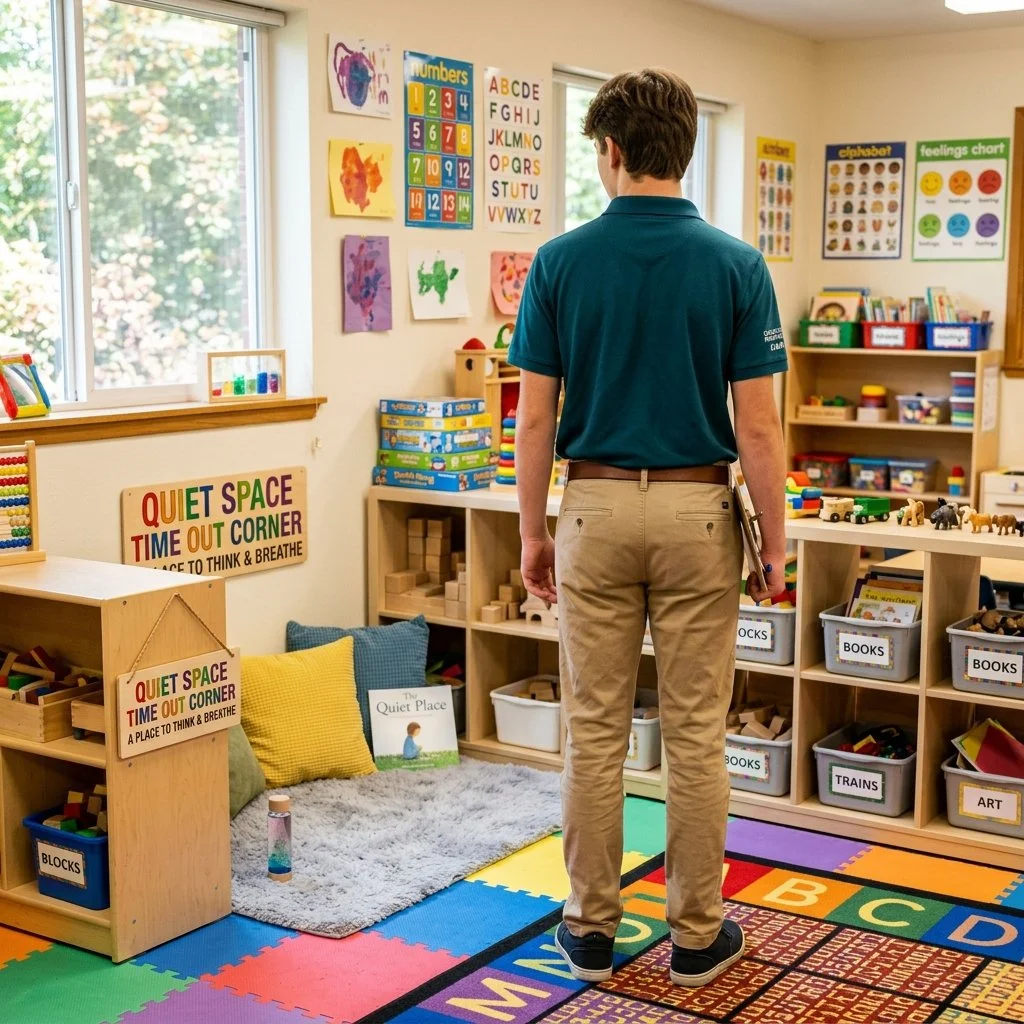
Today was one of those rollercoaster days in the classroom where calm and craziness collided. Being a preschool teacher is a wild ride—it's chaotic, thrilling, and packed with tiny surprises—but today was a test of patience. During shapes and puzzles time, Mitchell, one of my spirited two-year-olds, was having none of it. He zipped around the room like a whirlwind, tossing blocks and toys with reckless abandon. After a few attempts to redirect him, it was clear he wasn’t ready to focus.
Then came story time, my sacred window of quiet connection, and Mitchell decided to elevate the chaos. He was louder than usual, disrupting the magic of the moment meant to teach listening and engagement. I hated having to resort to it, but timeout became inevitable. Mitchell wasn’t thrilled, of course, but setting boundaries is essential for a safe, calm space where everyone can thrive. To top it off, Ben, one of my other students, tried valiantly to defend his friend—his loyalty was sweet, but sometimes I have to make choices they may not see the reason for just yet.
And yes, Mitchell needed his pamper changed, but it had to wait until after his thirty-minute timeout, where he sat cross-legged on the rug, simmering in toddler-sized indignation. By free play time at the end of the day, peace was restored. Mitchell was back to his cheerful, mischievous self. These moments, while exhausting, are what makes teaching so fulfilling. Setting boundaries, fostering support, and watching them bounce back teaches me as much as it does them—that growth is messy, but it’s worth it.
Would you have chosen to change Mitchell's pamper before his timeout, or do you think waiting was the right decision? Why?