
Photos captured by Mitchell Royel in the Fashion District, 11/23/26. And here we are, listening to Way Down by JAYEM and Tima Dee, Circles (WENZL Remix) by The Stickmen Project featuring WENZL and Sadie Rose Van, Almost Love by Jessica Jarrell, Simmer by Mahalia feat. Burna Boy, and Do It All Again by Punctual and Jordan Shaw. The soundtrack feels like the city—alive, layered, and endlessly moving.

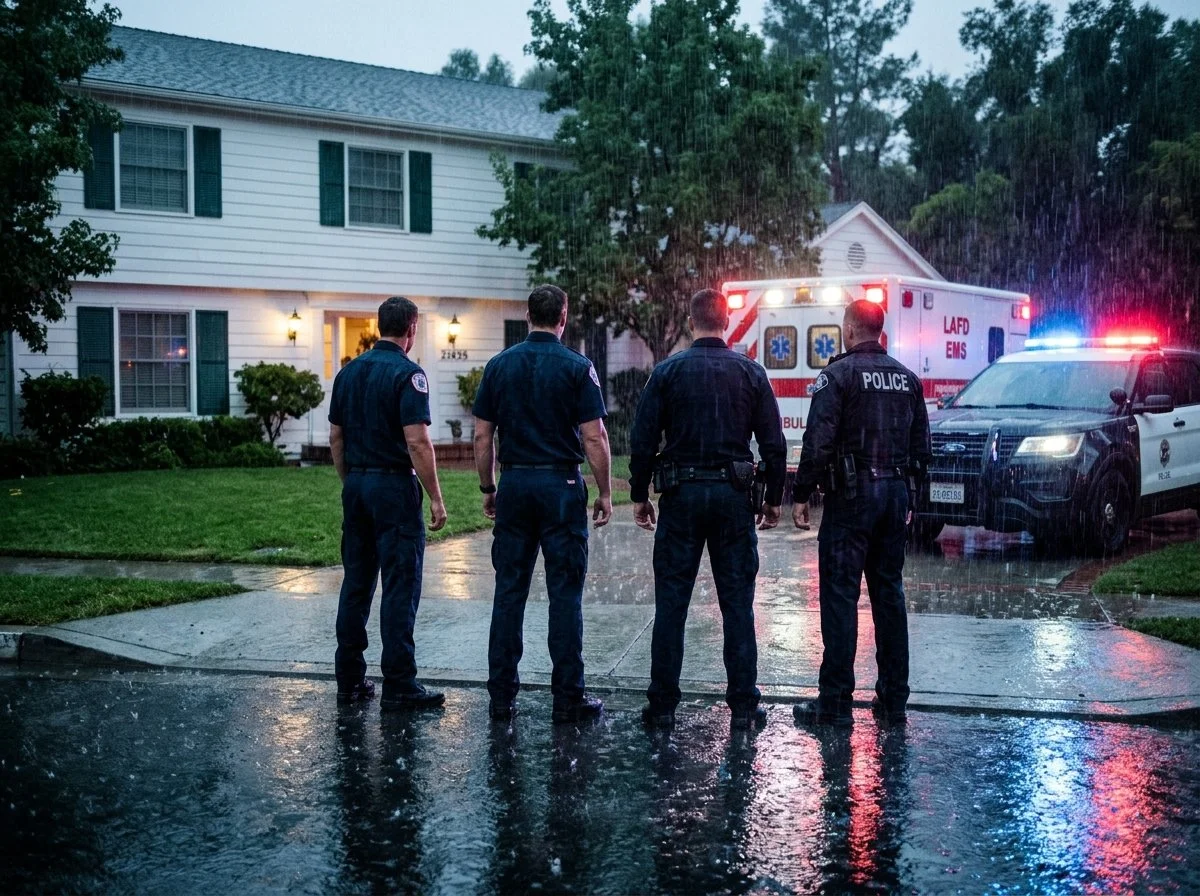


I'm not gonna lie to you. I'm not the kind of person this town was built for. I don't mean that in a sad way, or even a mad way. It's just a fact, like the rain. It's been raining for eleven days straight, and nobody here seems to notice. They walk their dogs in it. They wave in it. They let their kids jump in it like the sky isn't trying to tell them something. Maybe it isn't. Or maybe I'm the only one listening. Either way, I'm still awake at 3 a.m., and the street outside my window looks like a mirror that somebody forgot to clean, and I've got nowhere to put all these thoughts except out loud, into the dark, like I always do now.
So let me back up. Every night at 9:15 I take a little white pill that, statistically speaking, I'm not supposed to have. Not because I don't need it. Because boys who look like me don't usually get it. That's not me being dramatic. That's the data. Black children are under-diagnosed, under-treated, and under-believed when it comes to mental health conditions that require serious medication. Antipsychotics, mood stabilizers, the whole class of drugs that actually address what's happening in your brain — those get prescribed to white kids at significantly higher rates. Black kids get labeled. Black kids get disciplined. Black kids get sent to the principal's office instead of the psychiatrist's waiting room. It's so consistent, so widespread, that it's basically policy at this point. Just nobody says it out loud.
When a Black boy starts seeing patterns, hearing things a half-second too loud, or staying up for three days because his brain won't shut its doors, nobody calls it a symptom. They call it attitude. Defiance. A "behavior problem." They write you up before they write you a prescription. I know kids — smart, sensitive, brilliant kids — who've been cycling through juvenile programs and suspension lists for years when what they actually needed was a diagnosis and somebody who would sit still long enough to give them one. That was almost me. That was so close to being me.
My mom had to fight two doctors and one school counselor just to get somebody to say the word psychosis out loud like it could belong to me. The first doctor — and I'll never forget this — said I seemed "energetic" and "high-spirited." Energetic. Like I was a golden retriever who needed more walks. The second one asked my mom if there was "instability at home." There wasn't. There was a boy who wasn't sleeping, wasn't eating right, was seeing things sideways and hearing things that weren't there, and whose brain had started building architecture out of random information. But sure. Instability at home. That's the question they asked. And when they finally, after months and two more appointments and a school incident that I don't want to talk about, said the word psychosis, my mom cried in the car. Not because she was ashamed. Because she was relieved. Because somebody finally believed her son was sick and not bad. You'd be surprised how few of us get that kind of belief. You'd be surprised how many of us never do.
The stigma runs in two directions, and that's what people outside of this experience don't always understand. There's the stigma of mental illness that the whole world carries. And then there's the specific, layered, generational weight that Black families carry on top of that. The idea that you don't air your business. That you pray it through. That asking for help means weakness, and weakness gets you eaten alive in a country that's never exactly been kind to us. My grandma still calls it "acting out." My uncle thinks therapy is for people who don't believe in God. My dad — before he left — used to say that our family didn't have the luxury of falling apart. Like falling apart was a choice. Like my brain was just being dramatic on purpose.
I carry all of that into every appointment I've ever had. I walk in already half-defensive, already waiting for the moment when the person across the desk decides I'm a threat instead of a patient. And sometimes that moment comes. Not always. Not with my current psychiatrist, Dr. Osei, who actually looks like me and who actually listens like he's reading something important and not just checking boxes on a form. But before him, man. Before him there were moments in clinical offices that felt more like interrogations than evaluations. There were questions about violence. About "impulse control." About whether I had "a history of aggression." All before they even asked me what I was afraid of. All before they even asked me what it felt like on the inside.
Anyway. The pill helps. It sands down the sharp edges. It makes the world quieter, slower, like somebody turned the saturation down on my whole life. But here's the thing nobody tells you about medication: it doesn't decide what's real for you. It just makes the fake stuff whisper instead of scream. And lately there's something in this town that keeps whispering, and I swear on everything, the pill isn't the reason I hear it. The pill is working. I know what it feels like when it isn't. This is different. This is something else.
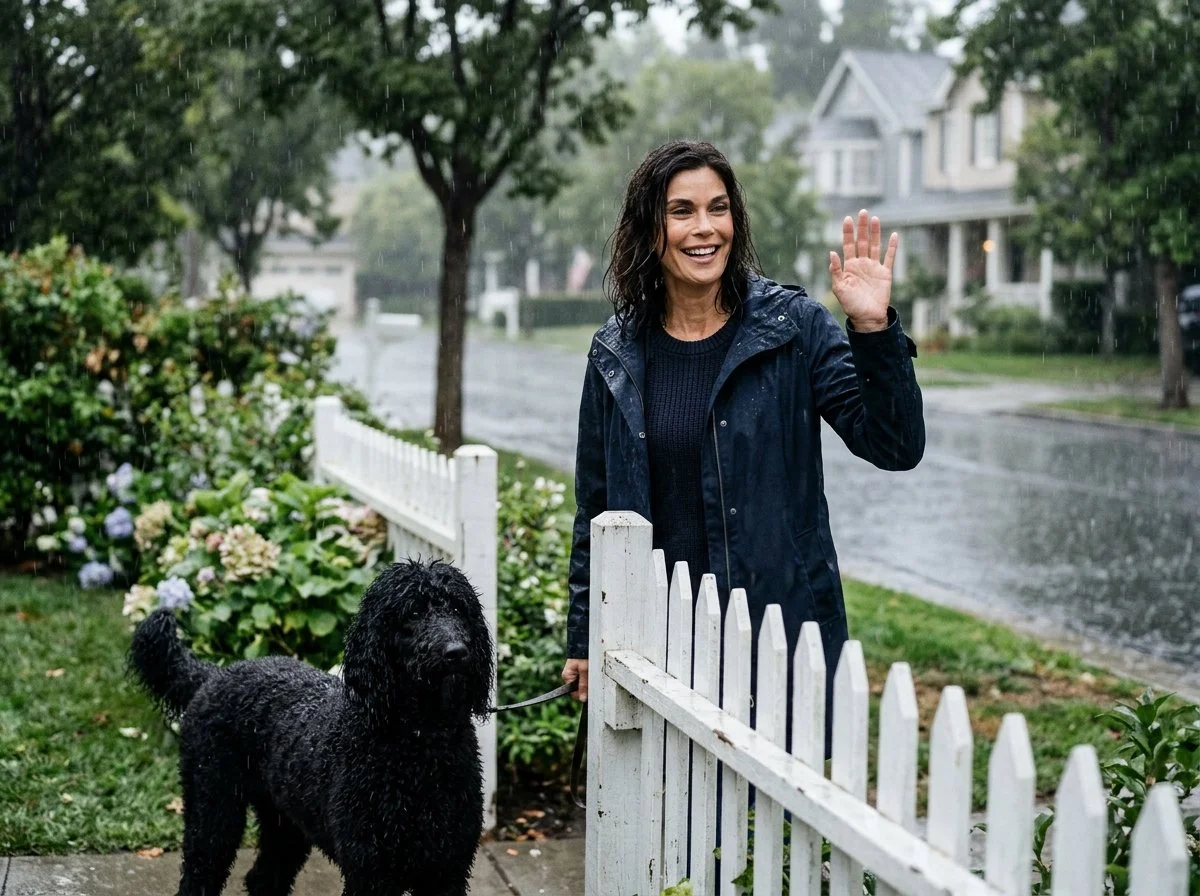
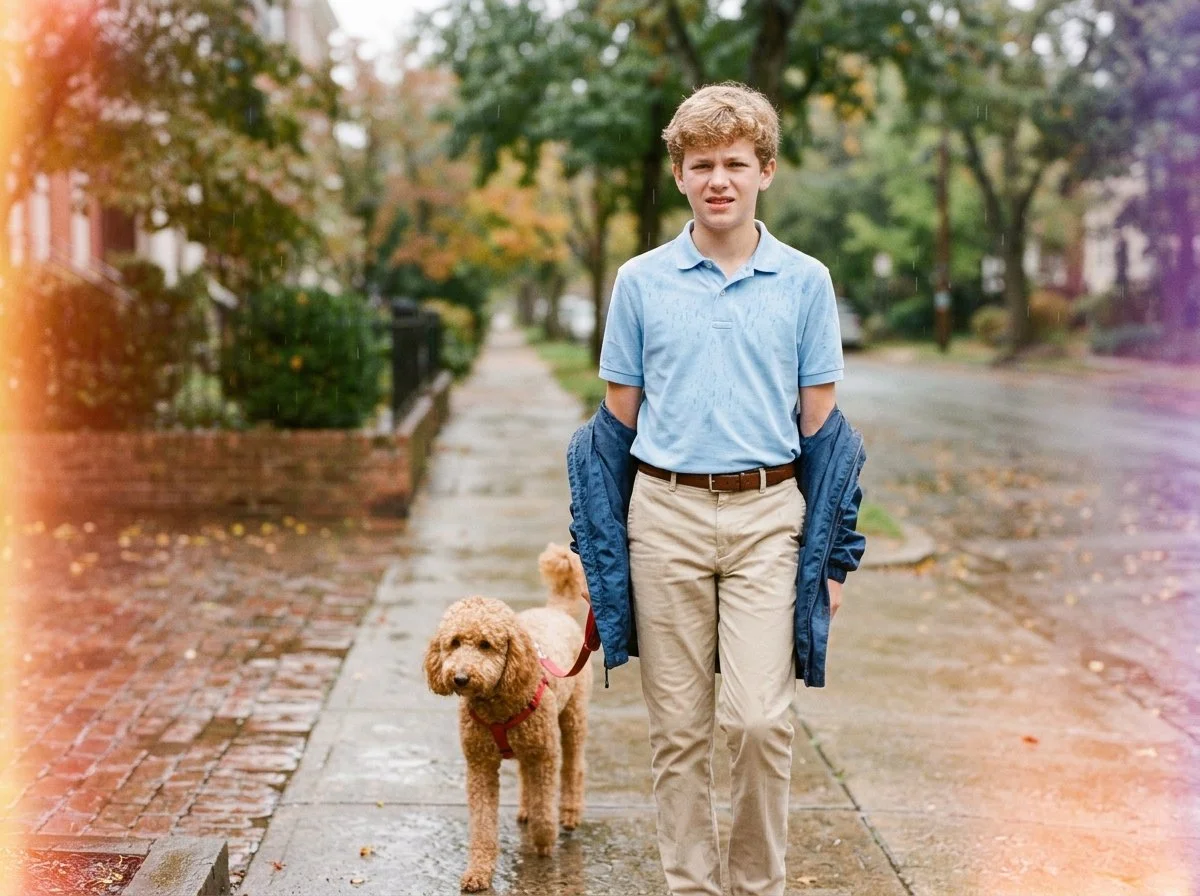
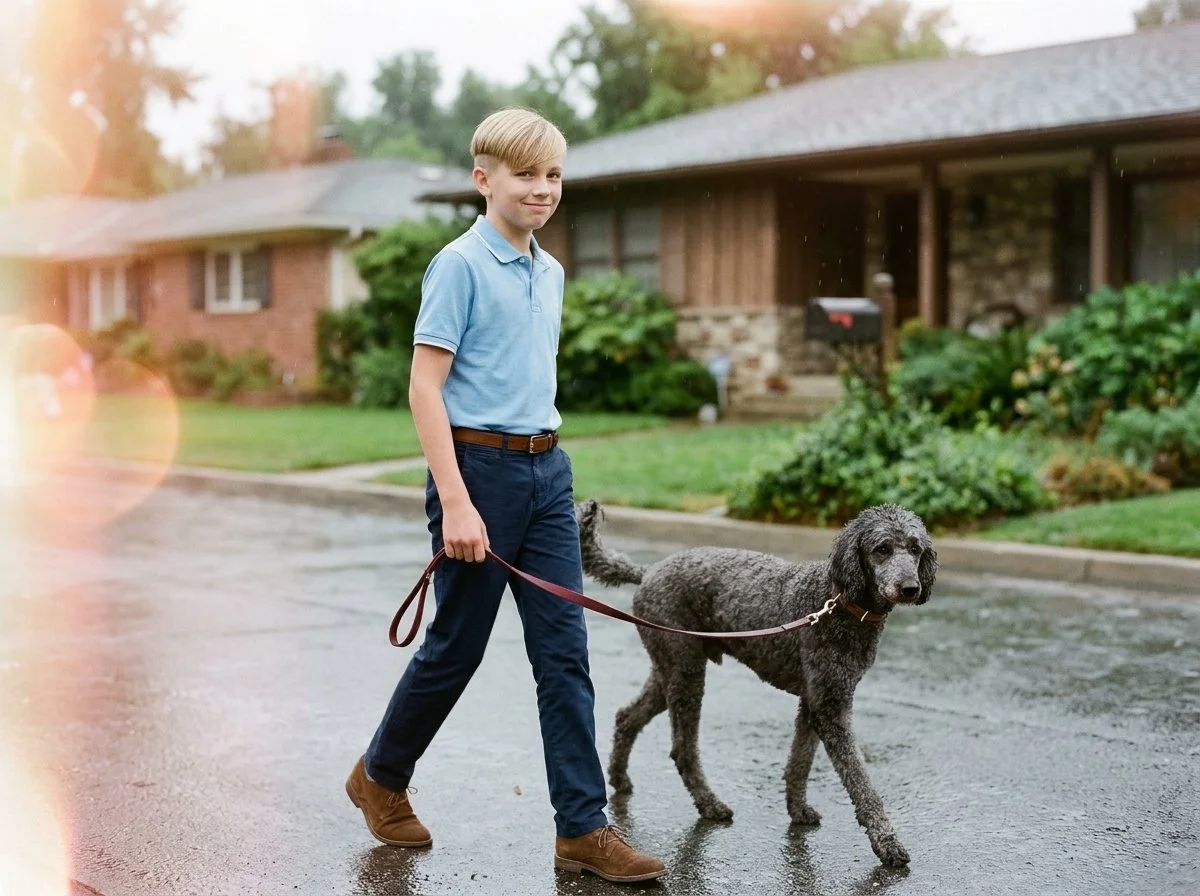
Look at Mrs. Hadley. She's out there every evening at 6:40 with her big black curly dog, standing behind that white picket fence in her navy raincoat, smiling so wide it looks like it hurts. She waves at me every single time I walk past. Every single time. Same hand. Same angle. Same smile. And the dog never barks. Never. Not at cars, not at squirrels, not at thunder. It just stares down the street like it's waiting for somebody who's late. I waved back once, and I swear her smile held a second too long after I looked away. You ever feel watched by kindness? Like being nice is just another way of keeping tabs? I've been thinking about that a lot. The way surveillance can dress itself up as warmth. The way a wave can be a signal.
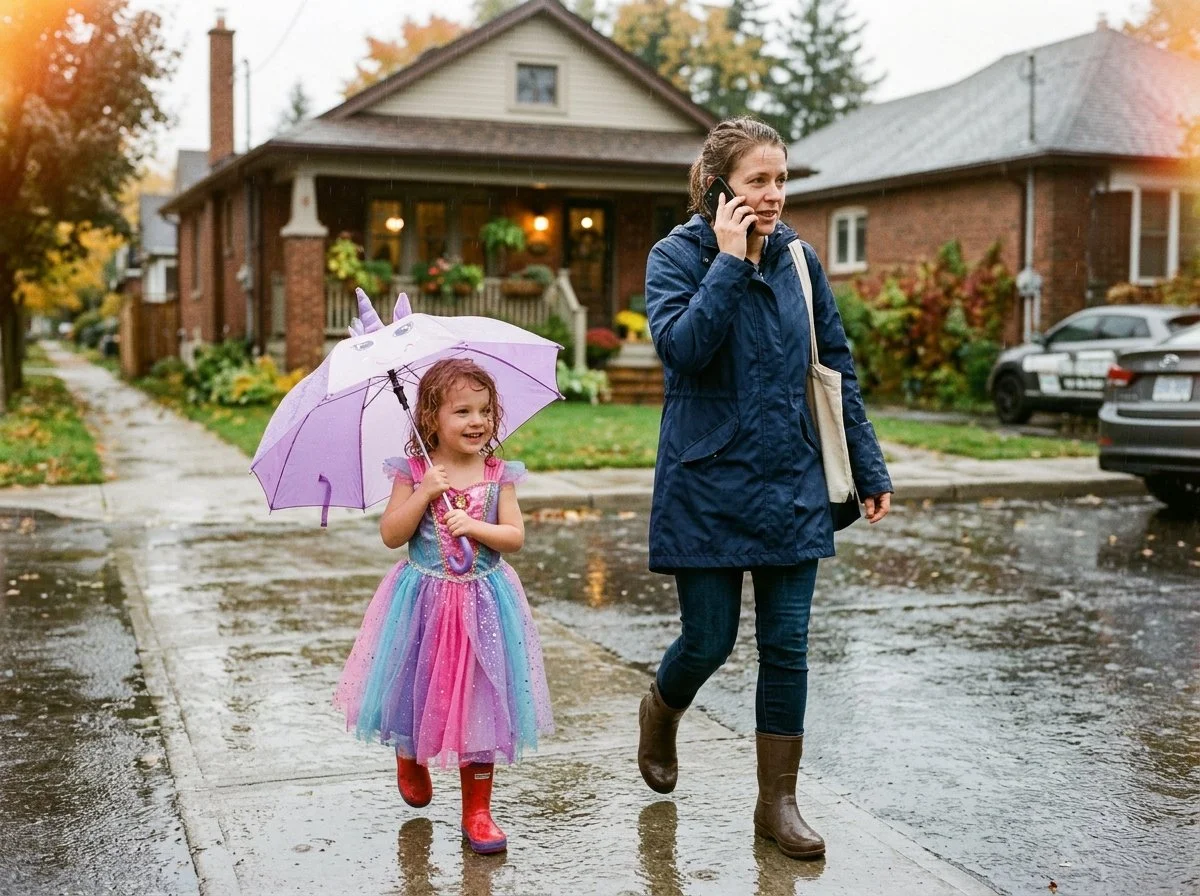
Then there's the kid in the yellow raincoat. Little blond dude, maybe six. His dad stands behind him every afternoon while he jumps in the same puddle at the corner of Linden and Fifth. And it's beautiful, right? It's a commercial. It's a greeting card. It's the kind of image that makes you think this neighborhood is exactly what it looks like. But that puddle never dries up. Not on Tuesday when the sun came out for a full hour and the sidewalk dried and the grass steamed. Not ever. And the dad never looks at the kid. He looks at the houses. He scans, is what he does. He sweeps. And sometimes he looks at me, and when he does, he doesn't look away first. I'm not saying it means something. I'm saying I've started writing it down. I'm saying it's in the notebook now, on page forty-three, next to the license plates and the porch light schedule.
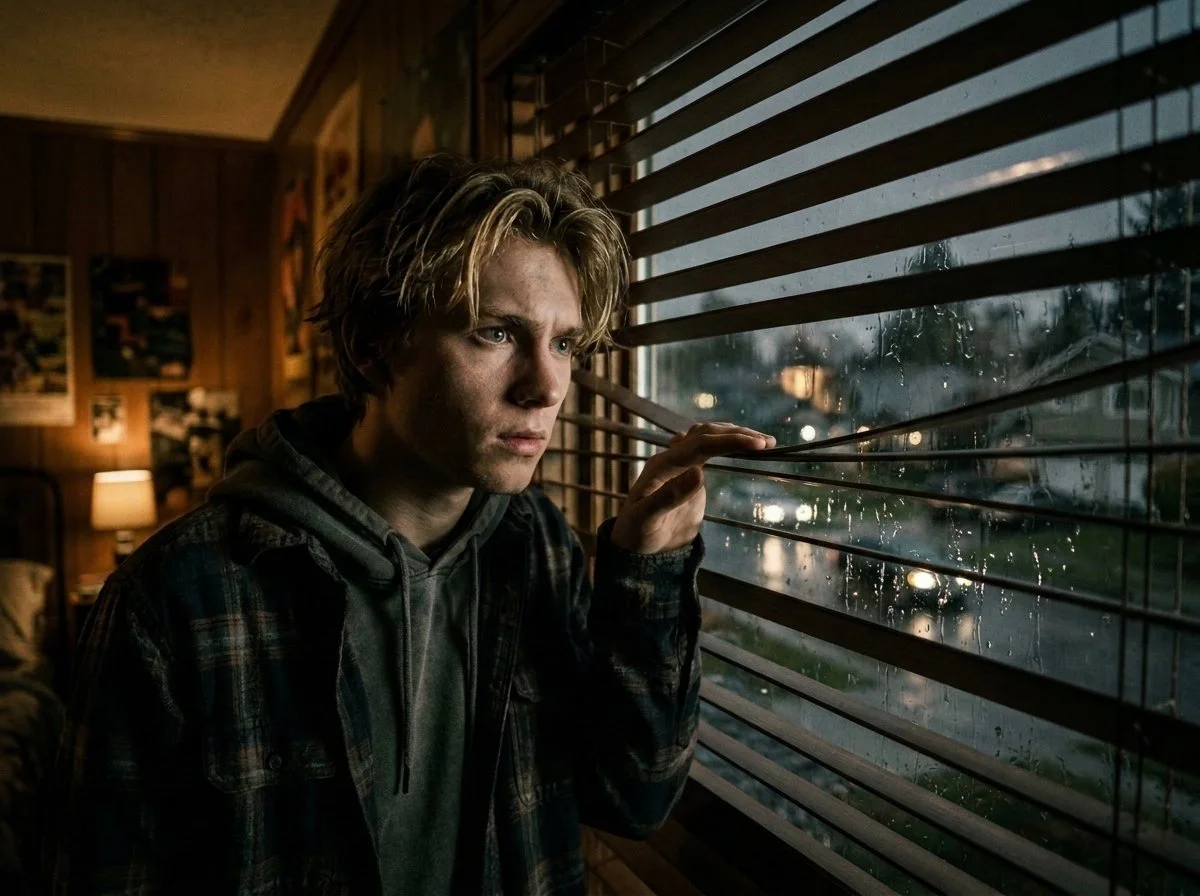
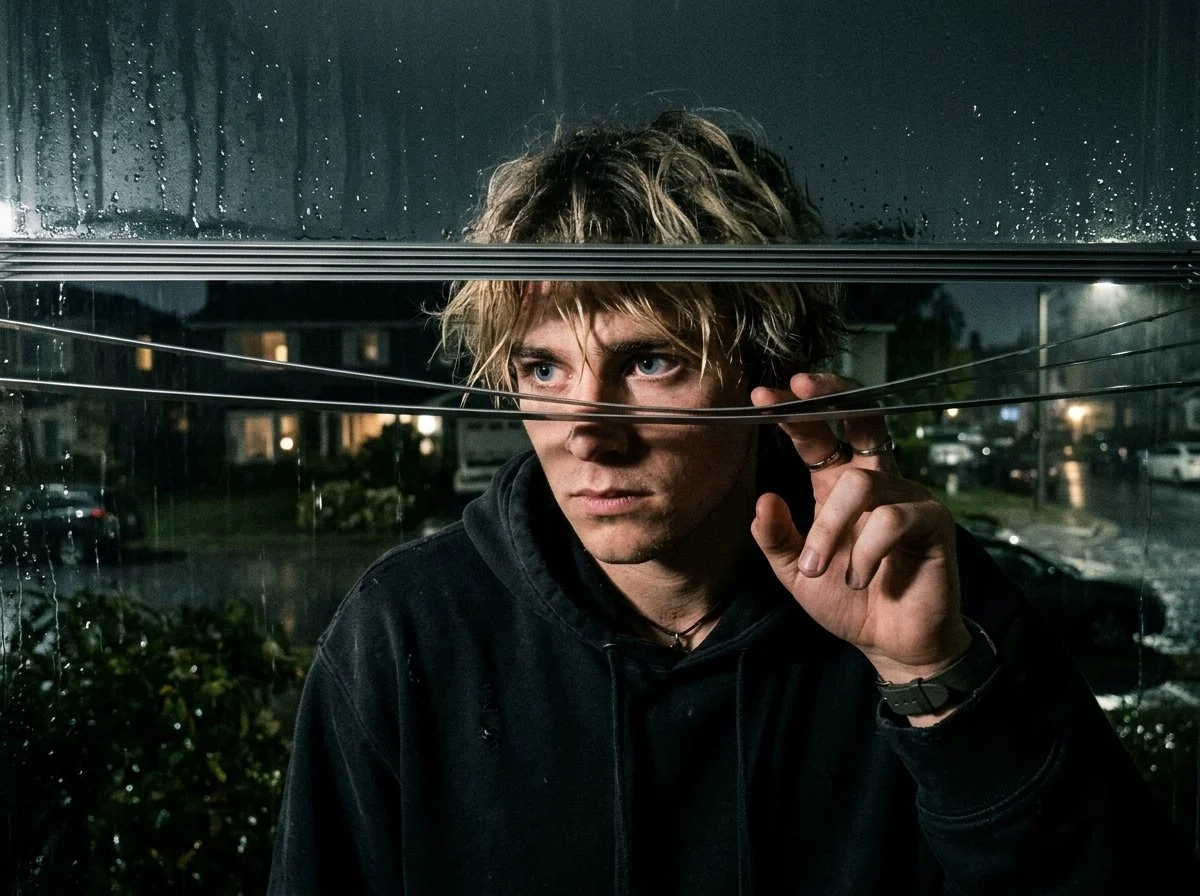
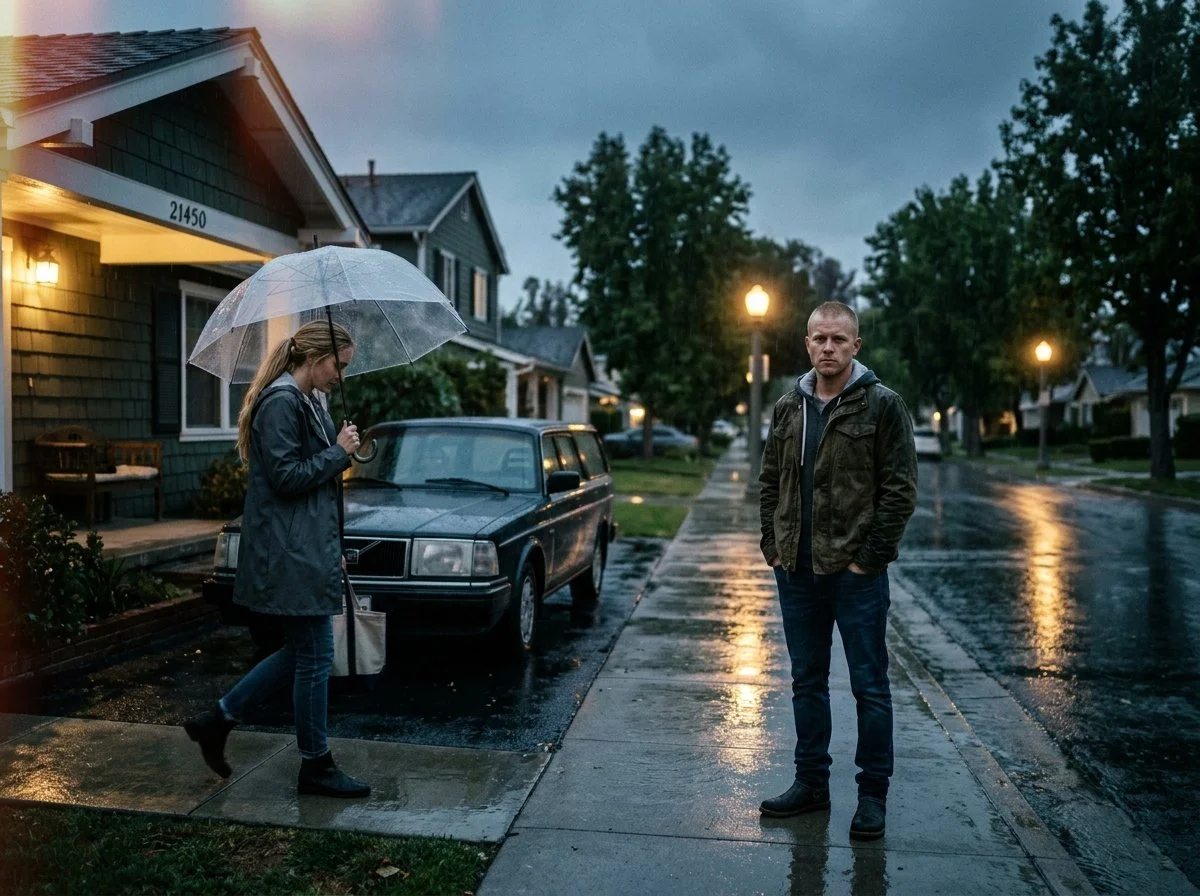
That's how the nights go now. Everybody's asleep and I'm at my window with two slats of the blinds pinched apart, watching the streetlight turn the wet road into a mirror. I've got a notebook full of license plates, porch lights that flick on at 2:11 a.m. like they're synchronized, a white truck that parks in a different spot every night but always faces the same direction, north, never south, always north. I draw lines between things. Then I erase them. Then I draw them again. I've started using different colored pens. Blue for things I've seen more than once. Red for things that felt significant even if I can't say why yet. Green for the things I know, rationally, mean nothing. The green pages are mostly empty.
It feels like putting together a puzzle where somebody keeps swapping the box art. And there's this rush to it, man. This electric, floating, 3 a.m. clarity, like I'm right on the edge of understanding the whole machine. That's the part that scares me. Because I know that feeling. I've felt it before the medication, before the diagnosis, before Dr. Osei and the little white pill. I know what it costs. Euphoria and paranoia ride in the same car. They just take turns driving. And the thing about being in that car is that when you're moving fast enough, you can't always tell which one is behind the wheel.
I've started asking myself, every time I add something to the notebook: is this observation or is this construction? Because my brain, when it's not held in check, is a machine for making meaning. It will find the pattern. It will build the narrative. It will connect every dot until the picture it makes feels so real, so inevitable, that doubting it feels like the crazy thing. And I know that. I know that about myself. That's what years of therapy and one very patient psychiatrist and one very stubborn mother have taught me. I know the difference between my brain on a spiral and my brain on solid ground. What I'm telling you is: right now, I'm not sure which one this is. And that uncertainty is its own kind of terror.
And the music doesn't help. Or maybe it helps too much. I've got my playlist on shuffle, four hundred songs, and the universe keeps picking the exact right one. I'm staring at the white truck and some old soul record starts talking about leaving before the morning comes. I'm thinking about Mrs. Hadley and the next song is about a smile that hides a storm. I'm writing in the notebook and suddenly there's a track I haven't heard in two years, something my dad used to play, and it's talking about watching the ones who watch you back. Random is supposed to mean random. But it's been months of this. Months of my headphones finishing my sentences before I even know what I'm trying to say. Part of me knows it's just my brain doing what brains do, finding faces in clouds and messages in noise. That's pattern recognition. That's what kept our ancestors alive on this earth for a hundred thousand years. The other part of me wants to know who made the playlist.
So I started talking out loud. That's the new habit. Started maybe four months ago, right around the time the nights started getting long and strange. I walk around my room and narrate my thoughts like I'm explaining them to somebody who isn't there. "Okay. The truck moved. The truck moves every night. That's normal. People park." Or: "Mrs. Hadley smiles at everyone. She's just a friendly woman with a dog. The dog is quiet because it's well-trained." I say it out loud and I listen to how it sounds. Because sometimes the voice of reason is a sound, not just a thought, and you need to actually hear it to believe it. My therapist says it's good, it gets the thoughts out of the loop and onto the table where I can look at them from the outside. And sometimes it works. Sometimes I hear myself say something and go, bro, listen to yourself. And I laugh a little. And the spiral slows down.
But other times I say it out loud and it sounds even more true. Like saying it gave it a body. Like I invited it in and now it's sitting at the table with me and I'm the one who has to find somewhere else to sleep. Those are the nights I call someone. Those are the nights I open my contacts and scroll past Dre and my cousin Marcus and my mom's number and I land on "D" for Denise. That's the other habit. The crisis line. I know that sounds heavy. It is heavy. But it's also just — real. It's the realest thing I do some nights. More real than the notebook, more real than the music, more real than staring through the blinds. Picking up the phone and saying I'm having a hard night and I need somebody to talk me down — that's the most honest sentence I know how to say.
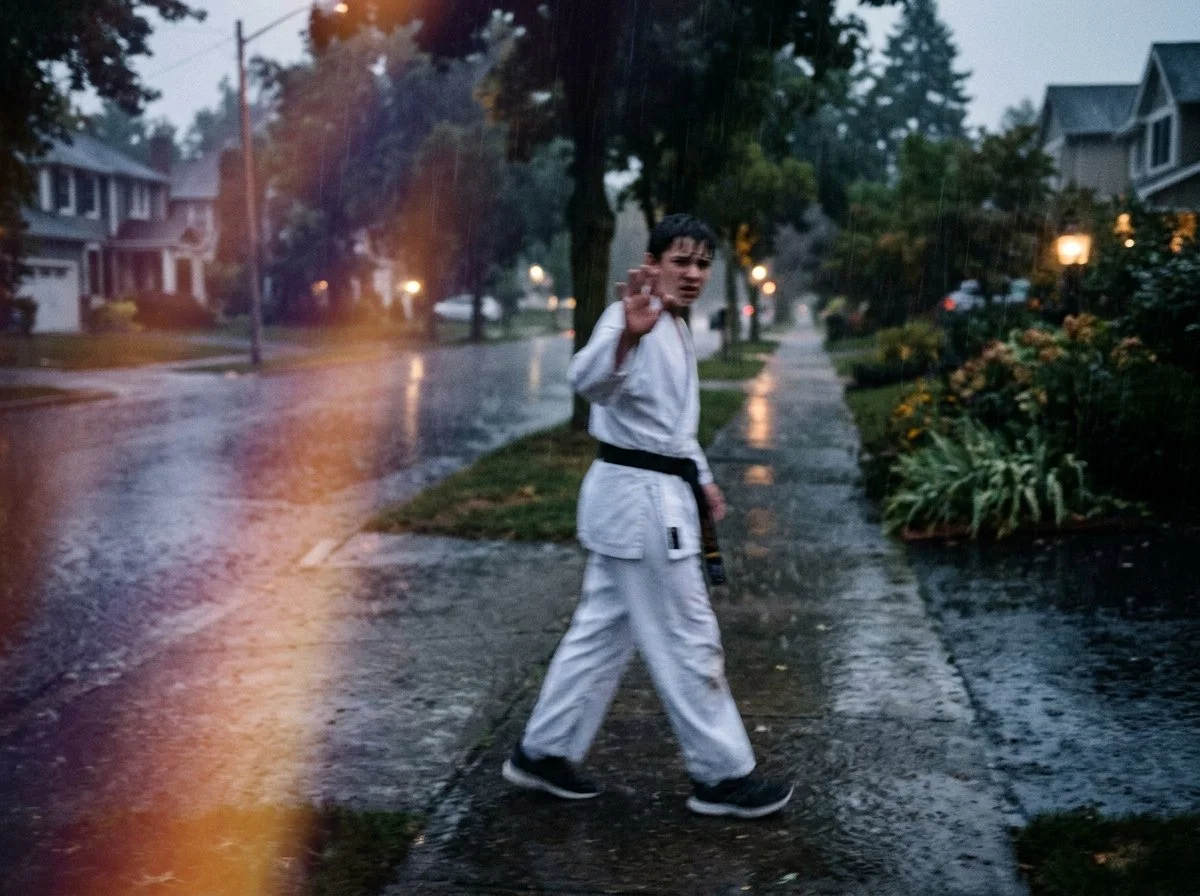
Last week I walked home from karate in the rain, still in my gi, soaked straight through, belt dripping, sneakers making that wet slap sound on the sidewalk. I heard footsteps behind me the whole way. Wet, steady, matching mine. I turned around three times. Nothing. Just porch lights and parked cars and rain falling on a street that looked like it was made of dark glass. On the fourth time I put my hand up, like stop, like that would do anything against something that might not even be there. And standing there with my palm out to an empty street, dripping on the sidewalk at 9 p.m. in a karate uniform, I felt so stupid and so scared at the same time that I couldn't breathe right. Like the air had a wall in it.
That's when I called the crisis line. I sat on the curb and dialed it with my thumb shaking, the notebook bulging in my jacket pocket, the rain coming down so steady it almost sounded like static. A woman picked up. Her name was Denise. She didn't tell me I was crazy, and she didn't tell me I was right. She didn't ask me if there was instability at home. She didn't ask me about aggression or impulse control. She just asked me where I was, what I could see, what I could hear, what I could touch. The rain. The curb. The texture of my belt. The sound of a car passing two blocks away. She pulled me back into the present tense, one sensation at a time. She stayed on with me until my breathing came back and the street was just a street again. I didn't solve anything that night. I didn't figure out the town or the truck or Mrs. Hadley's smile. But I made it home. I took my pill. I got into bed. Sometimes that's the whole victory. Sometimes that's everything.
Here's what I want somebody to understand, some Black boy somewhere reading this or watching this or living this: you are not "acting out." You are not a behavior problem. You are not too much. Your brain might be working against you in ways that have names, actual clinical names, and those names come with treatments, and those treatments can help, and you deserve access to them as much as anyone else who has ever sat in a doctor's office and been believed on the first try. The system wasn't built to see you clearly. That doesn't mean you're not worth seeing. It means the system needs to be burned down and rebuilt by people who actually give a damn. It means you have to fight louder and longer and with more evidence than you should ever have to gather. It means you need a mother like mine, or a doctor like Dr. Osei, or a voice on the other end of a phone line like Denise. It means you need to know those resources exist. They do. They're out there. I promise.
Here's what I've figured out, if I've figured out anything at all. Maybe this town really is hiding something. Maybe every smile on this block is a curtain. Maybe the white truck is nothing and Mrs. Hadley is just a friendly woman and the puddle on Linden and Fifth is just a low spot in the asphalt that catches water. Maybe my playlist is just an algorithm and not a prophecy. Or maybe the only thing hiding is the part of me that doesn't want to admit how tired I am. How long I've been carrying this. How much energy it takes just to exist inside a brain that never fully powers down, in a world that keeps asking you to prove you're worth the trouble of being helped.
I don't know yet. What I do know is I take my pill. I call Dr. Osei when the edges get sharp. I tell my mom when the nights go long. I say it out loud, into the dark of my room, the words hitting the walls and coming back softer: "I am not what this town thinks I am. I am not what two bad doctors thought I was. I am not a behavior problem or a headline or a warning. I am a boy trying to figure out what's real." I keep Denise's number saved under "D," right next to Dre. And when I pull the blinds apart at 3 a.m. and the street looks back at me like it knows something I don't, I say it steady, like a promise, like a prayer, like the only thing I know for certain: I see you. And I'm still here.
Because that's the thing about being a boy like me, in a brain like mine, in a town like this. You learn to watch everything. The trick — the whole trick, the only trick that matters — is remembering to watch yourself too. And then, somehow, still choosing to stay.
-Deck
Epilogue: And sometimes, reality bends. It warps and twists in ways that make it hard to tell where the straight lines are. Your brain sketches shadows in the corners, turns whispers into stories, connects dots that maybe don’t belong together. That’s the thing about being human — we all face nights like this. Nights when the world feels just a little too off-center, when the weight of being is almost too much to carry alone. But you don’t have to carry it alone.
Help is here. It exists in the voice of someone who will stay on the line with you until the static in your chest quiets. It lives in the doctor who listens, the friend who sees through the cracks, the mother who fights for you when you’re too tired to fight for yourself. Resources available are built for moments like this, for people like you, for the nights when staying feels impossible. They’re here — real, steady, waiting — and they don’t require you to prove your pain. They just want you to make it through, one step, one call, one breath at a time.
Maybe it feels messy, like you’re teetering on the edge of something you don’t understand yet. That’s okay. Sit with that. Say it out loud if you need to, even if the words feel jagged. Reach out. Whether it’s 3 a.m. or 9 p.m., in a rain-soaked town or the quiet of your own room, the world is big enough to hold you. No matter how strange it gets, you are not stranded. You are seen. And you’re still here. Keep choosing to stay. You're worth that choice.