

NOTHING WILL EVER FEEL LIKE THIS AGAIN—AND THAT’S THE POINT

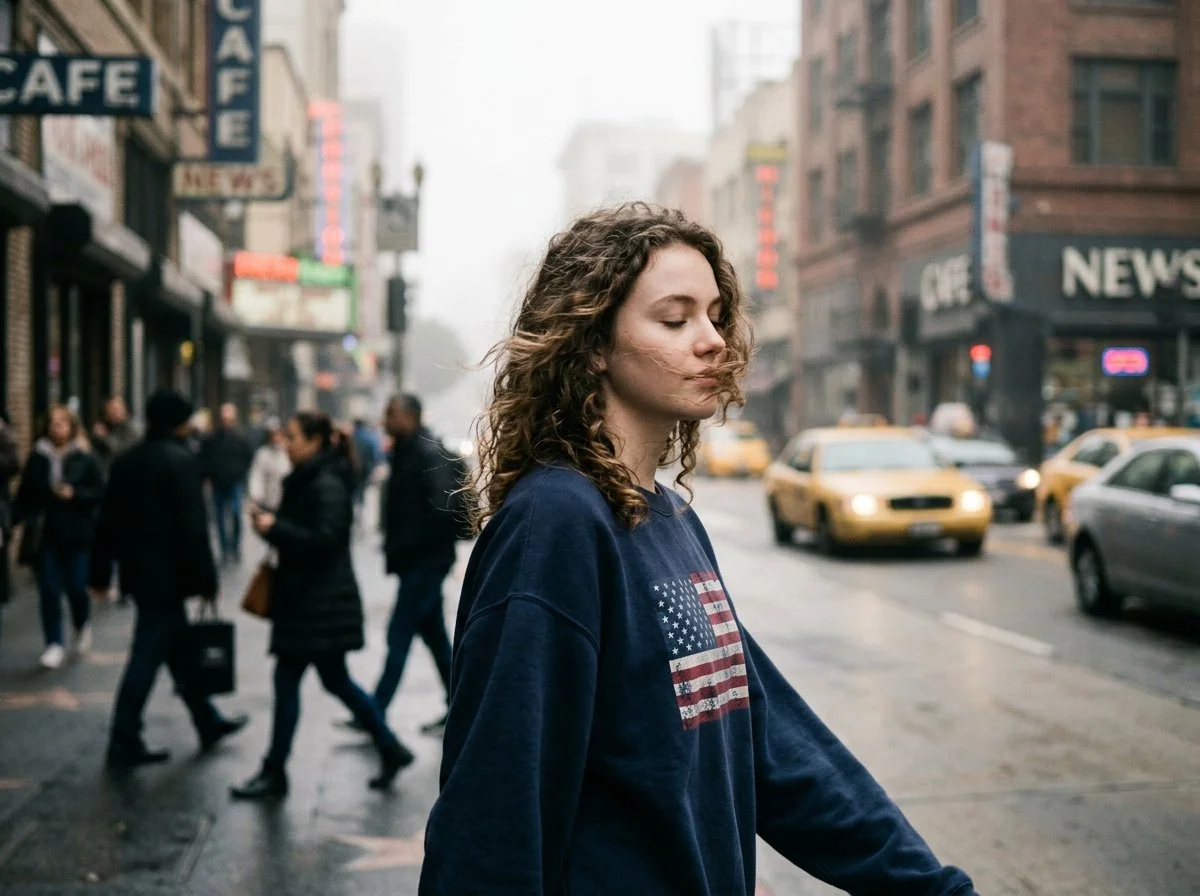
Captured in the fashion district today, 9/9/26, by Mitchell Royel—a moment steeped in soft light and even softer shadows, where the hum of sewing machines harmonizes with distant chatter. We’re listening to "Outside" by Calvin Harris and Ellie Goulding, the pulse of the beat weaving through the afternoon like a thread pulling it all together. There’s something hauntingly beautiful about the way the ordinary turns cinematic in the right frame, like everything is quietly waiting to be remembered.

There was a bubble once—a glistening, hermetically-sealed dome in which I lived. I existed like a pearl inside its shell, polished smooth, insulated from the grit that gives life its texture, its meaning.
Calabasas: an orchestration of manicured white suburbs, stitched together with sprinkler systems and a relentless politeness. It was a place where lawns glowed unnaturally green and conversations felt scripted. Everyone knew the same pop songs, wore the same Allbirds, and leaned on the same sunsets to give their lives the illusion of depth. I thought that was the whole world. I thought the horizon dissolved where the shopping centers did.
Then one day, I walked into a community college classroom, fluorescent lights buzzing around me like bees caught in a jar. That’s when I felt the first tear in the bubble—a seam splitting, an unraveling I couldn’t have named yet.
She sat two rows over, an exacting gravity in her slouched posture. Her textured hair spilled like defiance down her shoulders, and her eyes? They held stories of somewhere I hadn’t been, maybe couldn’t even imagine. She was every galaxy I had been told didn’t exist in neighborhoods like ours. Later, I’d tell my friends about her, breathless, giddy, as if naming her made her less unknowable. She kind of reminds me of Kelis, I said, grasping for comparison, trying to shrink her magnificence into something bite-sized, something familiar. But I was wrong. She wasn’t like anyone. She was her own weather system.
We started talking—one sentence at a time, the way people do when the universe nudges them toward a door they've been too scared to open. One night, as effortlessly as pulling a thread from her sweater, she opened a tab on MySpace.
That’s when I saw them.
Raves.
Freeze-framed bodies mid-motion, eyes glittering with reflected neon. Light bending around faces, distilling joy into streaks of color. Each photograph was like holding up a magnifying glass to an emotion I couldn’t yet articulate. I scrolled through galleries full of strangers but all I saw was life. Unapologetic, untamed life spilling out of monitors and into my chest, cracking me wide open.
"You ever been?" she asked, her voice curling with amusement, almost daring me to lie. She could already tell I hadn’t.
She started naming scenes—warehouses by railroads, deserts under full moons, clubs below the city’s heartbeat. Her words were spells, each syllable charged with rebellion and vastness. Places, she said, you have to be willing to sweat to find.
We must have talked for hours. Or maybe it was just minutes and it felt like hours; who knows? I didn’t belong to time that night. Near the end of our conversation, I asked her something pathetic like, "Do you think I’d fit in?" And she just smirked.
"You don’t have to come," she said, softly piercing in her understatement. “But you can.”
She wasn’t trying to convince me. She already knew.
I remember how casually she lifted her hand, gesturing toward the window. Outside, bathed in the sterile glow of campus lights, sat another girl—a petite figure bent over her books, her focus sharp even from a distance. The warm familiarity of her profile hit me like a puff of déjà vu. This was my neighbor—the girl whose back door opened just behind ours, who I sometimes saw weaving clouds of loose hair into braids at sunset. She hadn’t seemed larger-than-life until this moment.
“That’s my friend,” she said, her words nudging boundaries I hadn’t realized I’d drawn. “She and I go to raves together.”
It floored me. This wasn’t a secret society. It was her world. And she was presenting it as casually as an errant breadcrumb left on the table. The unspoken implication was unavoidable: You can sit with us.
She was a social butterfly, not the flimsy kind that floats lifelessly from one flower to another, but the kind bred from steel who knew when to stay, when to leave, and how to take the world with her. She made it look so effortless—holding the world loosely, like it was hers to give.
The first time I went to one of those house parties with her, it felt like stepping into an alternate dimension. The rooms pulsed with life, the music a liturgy of basslines, and every surface seemed to radiate a heat that wasn’t just physical but soul-deep. We didn’t need the fog machines or shifting neon to lose ourselves; the energy of those nights was enough to transform. And when the lights finally dimmed, we’d slip outside into the campus fields, her laughter tumbling over the cool grass as if it could stretch the hours longer. The conversations? They unraveled into the kind of sprawling reflections that only happen when the sky stretches too wide and you forget time exists. Those fields started to feel like a world apart, a sanctuary for questions and confessions, for ideas neither of us had words for yet. It was there, more than anywhere else, that she handed me glimpses of a world I hadn’t dared to imagine.
We kept moving, and two years disappeared the way rivers vanish into distant seas—impossibly fast but carrying every memory downstream, pulling all of us toward the next thing.
By then, she’d invited me to everything—house parties where time felt like watercolor light and, eventually, an LGBTQ+ club. My first one.
I remember the electric air. Bodies lit up with nothing to hide. People danced the way you can only dance when no one is watching—or when no one watching would dare judge you. They were free. And for the first time, I saw what that could look like.
But I was knotted inside. Something about that night wouldn’t let me join. I’d started dating one of her friends—and I hadn’t told her. It was easy to tell myself I didn’t owe her that confession. But the truth? She carried the kind of truth between us that demanded more than silence. Still, I froze.
"Something feels off. Is it…?" she asked me, her voice slipping over the music. I could see her scanning me, her concern like heat seeking a weak point. She saw mine long before I uttered a word.
"Nothing," I lied. That ancient lie, sharp and small like a broken shard of glass.
Instead, I offered another reality.
"In other news," I started, avoiding her gaze, "I’m dropping out. This is my last semester."
Her head tilted slightly, like she wasn't surprised, like she’d already sensed I was reaching my fire escape. She nodded—slow, deliberate.
"I feel you," she said. "I’m transferring next semester." Always a few years ahead in the dance, mapping exits I couldn’t yet see.
"What’s next for you?" she asked, her voice thinly cloaked in reassurance but heavy with illumination.
Truth pinned me under the light spills on the ceiling. "I’m not sure," I whispered. And for once, I meant it. "But I can’t stand it here anymore."
Which "here” did I mean? Not the club, not that night. I meant the other "here"—the one made of beige walls and fake smiles, suburban comfort that lulled me into a shrinking version of myself. The bubble I’d been born into. I couldn’t breathe there. Hell, I couldn’t live there.
-Ryder, M.R, GG Collective
Captured in the fashion district today, 9/9/26, by Mitchell Royel—a moment steeped in soft light and even softer shadows, where the hum of sewing machines harmonizes with distant chatter. We’re listening to "Outside" by Calvin Harris and Ellie Goulding, the pulse of the beat weaving through the afternoon like a thread pulling it all together. There’s something hauntingly beautiful about the way the ordinary turns cinematic in the right frame, like everything is quietly waiting to be remembered.
Epilogue
I think of her often—the girl who reminded me of Kelis but ended up reminding me of myself.
Here’s something time taught me: the bubble? It isn’t safety. It’s sedation. And some people stumble into your life like minor gods carrying a necessary wake-up call, dragging vivid MySpace photos behind them like thunderclouds. They don’t say it outright, but they live it: Everything more is waiting outside your fear. Your responsibility is to step out.
The unknown terrified me. It tore me apart and then rebuilt me. But it also gave me everything: friendship that questioned my edges, sweat-soaked dance floors where I keyed back into my body, creativity blooming through the shattered monotony of comfort.
If this life of mine has a moral, it’s this: Find the cracks. The people who love you enough to push you toward them? They’re rare. And the unknown—it’s not a void. It’s an offering.
Go.
When you can’t stand it anymore.
Sweat through the heat.
And trust—you are meant to crack wide open.
NOT EVERYONE DESERVES OUR TRUTH

We’re immersed in the resonance of "Don't Fake It" by Lemon and "YUKON" by Liv Grace Blue, artcriminal, and NOMADICS, a juxtaposition of sonic textures that feels both atmospheric and unapologetically raw. The imagery surrounding this experience sharpens further through the lens of photos captured in the vibrant fashion district by Mitchell Royel—an unfiltered look at urban nuance and personal expression. Any resemblance to actual persons, living or deceased, is purely coincidental, underscoring the abstract and interpretive spirit of this collaborative artistry. This statement reaffirms the original intent, celebrating creative freedom while respecting the boundaries of individual identity and representation.

Look at him.
The boy in the glass, water up to his chin, holding his breath like the whole stadium depends on it. Sixty thousand people screaming his name and he is drowning in plain sight, and nobody sees it. That's the thing about the tank. The glass makes drowning look like performance. It makes gasping look like grace.
We know that tank. We've lived in it.
We've stood in the middle of the roar with the water rising, smiling because that's what you do when the lights are on you. We've held our breath so long we forgot breathing was ours to begin with. We've turned ourselves transparent — see-through, palatable, easy to read — because we thought being seen was the same as being loved.
It is not.
Don't fake it. Two words that land like a hand on the sternum. And I want to say them to every one of us who has ever softened her truth to fit inside someone else's comfort. Don't fake the yes. Don't fake the ease. Don't fake the version of you that lets him off the hook. Don't fake it — because faking it is the slowest kind of self-abandonment there is.
We fake it in tiny increments. We laugh at the thing that wasn't funny. We shrink the story so it doesn't scare him. We hand over our depth in bite-sized pieces, pre-chewed, so he never has to work for it. We call this being generous. It is not generous. It is a leak in the tank. It is our own water draining out while we pretend we're fine.
Here is what I've come to believe, all the way down in my body: not everyone gets access.
Your truth is not a public utility. Your realness is not a free sample. There is a holy economics to who receives you, and we have been giving ourselves away at a discount for far too long.
The book we grew up whispering said it plainly. Do not give what is holy to the dogs, nor cast your pearls before swine, lest they trample them under their feet, and turn and tear you to pieces. Matthew, chapter seven, verse six. We used to read that like it was about other people. It was always about us.
Read it again. It's not cruelty. It's protection. It's a Teacher who loved his people enough to tell them: guard what's sacred. Because pearls — the ones formed slowly, layer over layer, from the grit that got inside you and would not leave — those are not for the ground. They are not for the mud. They are not for the man who cannot tell the difference between a pearl and a pebble, and would not care if he could.
We have to say this out loud. Some men do not deserve your truth.
Not because they're evil. Not because we're better. But because access is earned, and revelation is sacred, and a pearl handed to someone who will trample it is not love — it's a sacrifice on the wrong altar.
Think about the pearl itself. It is the only gem made by a living thing in response to pain. An irritation gets inside the shell, and instead of ejecting it, the oyster wraps it — again and again and again — until the wound becomes luminous. That is your story. That is every hard year you turned into wisdom. That is the grief you alchemized, the betrayal you composted into boundaries, the nights you didn't think you'd make it and did. Those are your pearls. And you were about to hand them to a man who asked you to prove your worth on his timeline.
No.
Look at the cheerleaders now. Two of them, backs to us, arms up, pom-poms shaking so hard the color blurs. They're dancing like the roar is oxygen. And maybe it is. But watch them long enough and you'll wonder — who's cheering for them? Who holds the tank of water when their chin goes under? We have all been the girl performing joy for the crowd while quietly running out of air. We have all been the one who kept the spirit up for everyone else and forgot she was allowed to need something back.
Don't fake it. Not the joy. Not the enthusiasm. Not the endless supply.
Because performed joy is just another pearl in the mud. When we dance for men who never learned to see us, we're casting the best of ourselves before an audience that came for the spectacle and will leave when the game ends.
There's a proverb — guard your heart above all else, for everything you do flows from it. Not lock it. Not seal it in ice. Guard it. Like a gate with a keeper who knows the difference between a guest and a thief. The keeper isn't paranoid. She's discerning. She's been burned enough to know that open doesn't mean available to everyone, and love doesn't mean access to all of you all at once.
And I know some of us were taught the opposite. We were taught that a good woman is endlessly open. Endlessly forgiving. Endlessly explaining herself to people who never intended to understand. We were taught that withholding is unkind, that boundaries are cold, that saying "you have not earned this" makes us hard.
It doesn't make us hard. It makes us holy ground.
Even the pearl of great price — the one in the parable, the merchant who sold everything he owned to buy it — even that pearl was purchased. It had a cost. It went to the one willing to give up everything for it. Not the browser. Not the man who wanted to hold it, weigh it in his palm, and put it back down. The one who knew what he was looking at and paid the full price without flinching.
That's the standard. Not perfection. Not worship. Just this: does he know what he's looking at? And is he willing to pay in presence, in patience, in showing up when the water rises?
If he tramples, he was never the merchant. He was the swine. And no amount of shrinking, softening, or faking will turn a foot into a hand that knows how to hold you.
So here is what we do now.
We climb out of the tank. We let the water pour off us and we do not apologize for the puddle. We stop performing transparency like it's a virtue. We put our pearls back inside the shell where they were made, and we let the keeper of the gate do her job. We save the deep stuff for the deep ones. We give our realness to the people who can hold its weight without dropping it.
And when a man asks us to explain ourselves, to justify our knowing, to hand over the sacred so he can decide whether we're worth the effort — we remember the verse. We remember the pearls. We remember that our silence in front of the unworthy is not weakness. It's reverence for our own soul.
Don't fake it, love. Never again.
Not the smile. Not the yes. Not the woman you become to make yourself smaller.
Be the whole storm. Be the pearl and the shell and the keeper of the gate. Be so rooted in your own worth that access to you feels like the privilege it always was.
-Ryder, Mitchell Royel, Gospel Glamour Collective

Epilogue:
Look at her hand.
The cheerleader on the right, the one facing us with the storm behind her eyes — she's holding a cross. Not wearing it. Holding it. Lifted, deliberate, like an offering and a warning at once. And that gesture is the whole message: some things you show, and some things you decide who gets to see.
The cross is sterling silver. Solid, real, the kind that carries weight when you close your fist around it. It hangs on a fine, lightweight chain — delicate enough to disappear against the skin, strong enough to hold what matters. The pendant is polished to a clean shine, the silver catching the stadium light and throwing it back, edges smooth, nothing ornate, nothing faked. Just the pure line of the thing. A cross that doesn't need to shout to mean something.
That's the symbolism, isn't it. Sterling silver is one of the oldest emblems of purity and endurance — a metal refined by fire, worked by hand, made more valuable the more it's tested. It doesn't tarnish when it's cared for. It only gets its patina from neglect. Like our truth. Like us.
We wear it as a reminder. That we are already held. That we don't have to prove our worth to be worthy. That the sacred stays sacred, and the gate stays guarded, and we get to choose who is let in.
The silver cross necklace she holds will soon be available for sale — crafted in sterling silver, with a lightweight chain and a polished cross pendant. It's a small, wearable vow to yourself: guard your pearls, share your truth only with those who deserve it, and never, ever compromise on authenticity again.
YESTERDAY'S LEGEND, FADING AWAY + THE MIRAGE OF MEMORY
ABANDONING
THE ECHOES OF TIME
I stood on the cold bathroom floor, knees drawn tightly to my chest, as if I could shield myself from the reality pressing in on all sides. The tiles beneath me feel unyielding, their chill seeping through my skin, grounding me in this suffocating moment. The silence is a weight all on its own—thick, heavy, and stretching endlessly. The only intrusion comes from the rhythmic drip of the faucet, each drop hitting the sink a maddening reminder of time passing, seconds slipping away in painful, agonizing clarity. My phone lies forgotten on the counter, its screen dark and lifeless, a reflection of the void I feel inside. There are no messages to wait for tonight. No excuses to pretend. Just this aching emptiness.

We’re listening to Photographs by Rihanna and will.i.am as the moment takes shape. This photograph was captured in the depths of the fashion district, a place pulsing with grit, rebellion, and unapologetic artistry. It’s raw, unfiltered, and entirely mine. It has nothing to do with the city of Agoura, and it certainly doesn’t whisper the sentiments of anyone living there. This isn’t about polished suburbia or curated perfection—this is the other side, the edge where creativity collides with chaos.
What you see here is a moment, a mood, a statement. It belongs to the streets, to the untamed energy of the district, and to anyone who dares to see it for what it really is. But make no mistake, this is not a reflection of Agoura or its residents—it never tried to be. Instead, it’s a testament to the unvarnished truth, where beauty lies in imperfection and raw expression.
Tears streak down my face, leaving tracks of mascara that mark my despair in black, smudged lines. My reflection in the bathroom mirror is unrecognizable, hollow. I glance down at the photographs clutched in my trembling hands, their edges worn and curling as though they’ve been held far too often, memories preserved in glossy permanence. The people in those pictures—the versions of us frozen in time—stare back, faces once familiar and now alien. I examine his smile, the tilt of his head, the warmth in his eyes that once promised so much. But with every glance, those images seem less real. They’re sepia-toned ghosts of a past I can no longer trust. Was it all a lie? Was he really that boy who laughed beside me in the sunlight, who draped his letterman jacket over my shoulders when the evening chill came? Or was that just the version of him I painted in my mind, one I clung to so fiercely that the edges blurred between truth and fantasy?
Each photograph feels heavier than the last, a weight that digs into my soul. The boy in those images isn’t the man I know now—if I can even say I know him at all anymore. That boy, with his shy laugh and secret looks meant only for me, seems like a stranger. And the man he became? An enigma. A chasm lies between them, a vast and impassable void that separates the promises we whispered into the night from the silence he left in their place. I trace the lines of my favorite photo with my fingertips, the moment frozen forever where he grinned and pulled me close, both of us unaware of what was to come. What happened to him? What happened to us? Did something inside him break, or did he simply outgrow the parts of me I thought made us whole?
The questions hammer away at me with no answers in sight, each pounding against the walls I’ve built to hold myself together. The silence fills in the gaps between the tears, between my sobs that I struggle to contain. I don’t even recognize him anymore. He feels like a phantom of my imagination, a figment I constructed from misplaced hopes and scattered dreams. But ghosts, as haunting as they might be, don’t leave. They stay, lingering in shadows, tethered to the places they’re tied to. He didn’t linger. He didn’t fade into the background. He disappeared—abruptly, completely—without an explanation that might help me understand.
Now it’s just me, the photographs, and the cavernous space left behind. A space that holds all the words we never said, all the promises broken, and all the unanswered questions I know will never find resolution. I sit here with my memories and the crushing realization that they’ll never be anything more than what they are—fragments of a reality I can no longer touch. My hands shake as I press the photographs to my chest, as if maybe, just maybe, I can draw some warmth from them. But the truth is unbearable and unchanging. He’s gone. Just...gone. And I can’t close my eyes tightly enough to escape the emptiness he left in his wake.
-Mitch, Ryder, GG Collective
Epilogue: We didn’t just lose him, did we, girls? No, we lost the version of ourselves we thought we were when we loved him. That’s the piece no one warns us about—the unraveling of ourselves in the aftermath, as we sift through the wreckage trying to understand not just who they weren’t, but who we thought we were. We comb through the memories, don’t we? Reliving the highs, overlooking the lows, searching desperately for the moment it all began to fray. We see the signs we missed, the warnings we swept aside because the love seemed worth it. It glowed so brightly that we turned our eyes away from the shadows.
But there’s a line we cross when the truth becomes undeniable, isn’t there? A moment when we stop chasing “why” and “how” and start asking, “What’s next?” This is where it shifts. This is where everything—our trembling hands, the cracked voices, the fragments of trust scattered like dust—becomes a foundation. It’s not an easy pivot. It’s raw, jagged, and soul-deep. We grieve, we rage, we hold our breath under water, wondering if we’ll resurface. But within that chaos, we find a rhythm, a flicker of strength we forgot we had.
It’s not about forgetting them, though. Loving them was real—all the sweetness, all the hope, all the possibilities—but our survival isn’t hinged on keeping that love pristine or untouchable. Moving forward doesn’t mean erasing them; it means reclaiming ourselves. That space they left behind? It’s not a void. It’s not empty and desolate. It’s a starting point, fertile soil where only we have the power to decide what grows. We plant forgiveness—not for them, necessarily, but for us. We sow grit, compassion, and courage for the girl who loved recklessly, for the girl who fell apart, and for the woman who is slowly, beautifully rising.
And rise we will. Together, we cradle the idea that loss isn’t the end. It’s transformation. We are spread thin, stretched across pain and growth and the aching process of becoming, but we are not destroyed. The love was real, yes, but so is the love we owe ourselves. We move forward, not with them shadowing us, but with our own light breaking through.
Together, we rise.
Always.
CALL SECURITY, THERE'S A WOMAN IN THE WAREHOUSE
Dear you,
I’m writing this from an empty warehouse somewhere in Los Angeles, where the concrete floors hold every sound a little longer than they need to.

Captured by Mitchell Royel in the Fashion District, legally, and we're listening to "HAD ENOUGH" by TRFN. The energy of the scene mirrors the intensity of the music—bold, unapologetic, and charged with creative defiance.
A high-fashion rebel with old Hollywood edge, she stands in the warehouse like she owns the silence around her. Her blonde hair is styled in big, curly 1980s volume, framing piercing blue eyes and a thinner silhouette with effortless drama.
She wears a faded Ozzy shirt tucked into skinny jeans, giving the look a sharp mix of rock nostalgia and runway attitude. The styling feels raw but intentional: lived-in denim, bold hair, direct gaze, and that slightly undone Hollywood energy that makes her look both glamorous and untouchable. She gives off the impression of a girl in the middle of reinvention: confident, electric, and impossible to ignore.
There are racks of clothes nearby. Denim. Cotton. A jacket with shoulders that make me stand differently. Shoes lined up like tiny decisions. Someone left a coffee on a folding table, and the air smells like hairspray, dust, and the kind of possibility that only shows up when something else has ended.
I am playing dress up today.
Not in the light, easy way we did when we were girls, pulling dresses over our heads and becoming whoever we wanted before dinner. This is different. This is grown-up dress up. The kind you do after a breakup. The kind where each outfit asks a question before the camera ever does.
Who are you now?
What are you keeping?
What are you finally willing to take off?
And to be clear, this breakup was not with a man.
It was with a group. A whole orbit. Roughly 50 to 75 people, give or take, who once felt like part of the world I was building. People I laughed with, planned with, worked beside, trusted, performed for, softened around, dressed up for, and in some ways, shaped myself to stay close to.
But somewhere along the way, the rhythm changed.
Or maybe I did.
Maybe both.
What I know now is that we are no longer in sync with the same energetic frequency. And as delicate as that sounds, the truth of it has been anything but soft. It has felt like static. Like missed cues. Like trying to dance to music no one else can hear. Like standing in a crowded room and realizing the loneliest place to be is surrounded by people who only recognize the version of you they were comfortable with.
So now it is just me, myself, and I.
From scratch.
There is a particular kind of grief that comes when you outgrow a shared world.
It is not as clean as a romantic breakup. There is no one person to blame. No single text message to reread. No sweater left behind that smells like someone’s cologne. Instead, the loss is scattered everywhere.
It lives in group chats that stop feeling safe.
In rooms where your body starts to tense before your mind understands why.
In invitations you no longer want but still feel strange declining.
In the tiny ache of realizing you once belonged somewhere that no longer feels like home.
A breakup with a group can make you question your own reflection.
Was I too much?
Was I not enough?
Did I change?
Did they?
Did I imagine the connection?
Did I stay longer than I should have because being included felt better than being aligned?
These are not small questions. They sit in the body. They follow you into the shower, into your car, into the fitting room, into an empty warehouse in Los Angeles where someone is adjusting the light and you are trying to look like a woman who has not been quietly grieving an entire chapter.
But maybe that is what reinvention really looks like.
Not a perfect entrance.
Not a dramatic exit.
Just a woman standing under industrial windows, choosing herself in pieces.
Clothes are never just clothes when you are in transition.
A white tank can feel like a reset.
A pair of skinny jeans can feel like proof that you still have shape, still have edge, still have a body that belongs to you.
A vintage tee can feel like rebellion.
A red lip can feel like punctuation.
Today, as I move from one look to the next, I can feel different selves passing through me.
The girl who wanted to be liked.
The woman who wanted to be understood.
The performer who knew how to make everyone comfortable.
The dreamer who kept shrinking her vision so it would fit inside rooms that were already too small.
And then, somewhere between the second outfit and the third, I catch myself in the mirror.
Not styled. Not finished. Not fully healed.
Just present.
There is something sacred about seeing yourself before the final version arrives.
The pins are still in. The hair is only half-done. The makeup is close but not complete. The look has not landed yet. And still, there you are. Real. In progress. Unhidden.
That is the part of dress up we do not talk about enough. It is not always about pretending. Sometimes it is about practicing.
You practice standing in a new identity before you fully believe it belongs to you. You try on confidence before it becomes natural. You borrow boldness from a jacket, softness from a blouse, structure from a pair of jeans. You let the outside offer the inside a small suggestion.
Maybe this is who we are now.
Maybe this is who we were always becoming
The funny thing about old flames is that they do not always return as people.
Sometimes they return as feelings.
A song playing from someone’s speaker. A perfume in the air. A certain angle of light. A version of yourself you thought you had packed away. A memory of wanting something so badly that you mistook the wanting for love.
When you are playing dress up, when you are being photographed, when you are capturing the essence of reinvention, old flames tend to rise.
Not always romantic flames. Sometimes creative flames. Social flames. Ambition flames. Friendship flames. The spark you once felt around people who made you feel chosen. The charge of a room where you used to belong. The heat of being seen by people whose approval once felt like currency.
They come back because reinvention wakes up memory.
On an emotional level, transformation asks us to revisit the versions of ourselves we are leaving behind. The mind wants to make sense of the shift. It scans the past for proof, for warning signs, for meaning. It asks, “Who was I there?” and “Why did I stay?” and “What did I need from them that I am learning to give myself now?”
On a psychological level, our self-concept is built through repetition. We become used to certain roles: the helper, the pretty one, the easy one, the strong one, the fun one, the one who can take a joke, the one who always shows up, the one who never asks for too much.
So when we begin to change, the nervous system can mistake freedom for danger.
Even a beautiful new beginning can feel unfamiliar enough to scare us. The body may reach for the old pattern because at least the old pattern is known. This is why you can be standing in a gorgeous outfit, under perfect light, ready to step into a new chapter, and suddenly feel pulled backward by a memory of someone who did not even meet you well.
It is not because you want to go back.
It is because some part of you is checking to see whether you are truly safe to move forward.
I know some people hear the phrase “energetic frequency” and think it sounds too soft to be serious.
But I think we all know what it feels like when energy changes.
You feel it when the room gets quiet in the wrong way.
You feel it when laughter starts to require effort.
You feel it when your honesty becomes inconvenient.
You feel it when your growth makes people uncomfortable.
You feel it when your body begins to tell the truth before your mouth can.
Energetic misalignment is not always dramatic. Sometimes it is subtle. It can be a slow fading. A widening gap. A private knowing that your spirit no longer relaxes where it used to perform.
And when that happens with a whole group of people, the grief can be complicated.
Because you are not only losing them.
You are losing the version of yourself who knew how to survive there.
That is the part that hurts the most.
Not the absence of the crowd, exactly, but the end of the identity that formed inside it. The one who knew the rules. The one who could read the room. The one who understood where to stand, what to say, how much to reveal, and how much to hide.
Reinvention requires mourning that self, too.
Even if she was tired.
Even if she was pretending.
Even if she was ready to go.
There is a moment on set when the camera stops feeling like a machine and starts feeling like a mirror.
Not the kind that shows whether your hair is right or your jeans fit. A deeper kind. The kind that asks you to become honest in your face.
That is what image-making can do when it is done with intention. It can capture the tension between who you were and who you are becoming. It can hold the softness and the strength at the same time. It can make visible the private work of coming back to yourself.
Today, I am not dressing for a room of 50 to 75 people.
I am not dressing to be understood by the old circle.
I am not dressing to prove I am fine.
I am not dressing to make the ending look prettier than it was.
I am dressing to meet myself.
And that feels different.
There is no committee here now. No chorus. No emotional crowd I need to manage. Even if people are moving around the space, adjusting lights and checking details, the real work is happening quietly inside me.
Just me, myself, and I.
One part grieving.
One part remembering.
One part already gone.
I keep thinking about the phrase “from scratch.”
It sounds bare at first. Almost lonely. Like an empty kitchen counter. Like a blank page. Like a warehouse before the lights come on.
But from scratch does not mean from nothing.
It means from the original ingredients.
It means no shortcuts. No borrowed flavor. No pretending something is nourishing just because everyone else is eating it.
Starting from scratch means I get to ask what is actually mine.
My taste.
My rhythm.
My voice.
My pace.
My body.
My desire.
My definition of beauty.
My sense of peace.
It means I get to build without carrying the emotional furniture of people who are not coming with me.
And while that sounds empowering, it is also tender. Because even when a chapter ends for the right reasons, the heart still needs time to understand what the soul already knows.
That is why old flames flicker.
That is why memories surface.
That is why reinvention can feel both exciting and haunted.
We are not simply becoming new. We are releasing the emotional architecture that made the old self necessary.
So here I am.
In an empty warehouse somewhere in Los Angeles, playing dress up after a breakup that was not with a man, but with an entire frequency I can no longer live inside.
I am surrounded by clothes, light, and echoes.
I am learning that solitude is not the same as abandonment. Sometimes solitude is what happens when your life clears the room so you can hear yourself again.
I am learning that losing people is not always failure. Sometimes it is alignment doing its quiet, necessary work.
I am learning that style can be a ceremony. That a camera can be a witness. That getting dressed can be a way of saying, “I am still here, and I am allowed to change.”
Most of all, I am learning that the self we return to after a rupture is not the same self who entered it.
She is more discerning now.
Softer in the right places.
Less available for noise.
More loyal to the feeling in her chest that says yes, no, stay, go, this is not for you anymore.
And maybe that is the real essence of reinvention.
Not becoming unrecognizable.
Becoming unmistakably yourself.
With love,
Ryder, Mitchell Royel
THE DISCO BALL SAW EVERYTHING AND SHE'S PROUD OF US

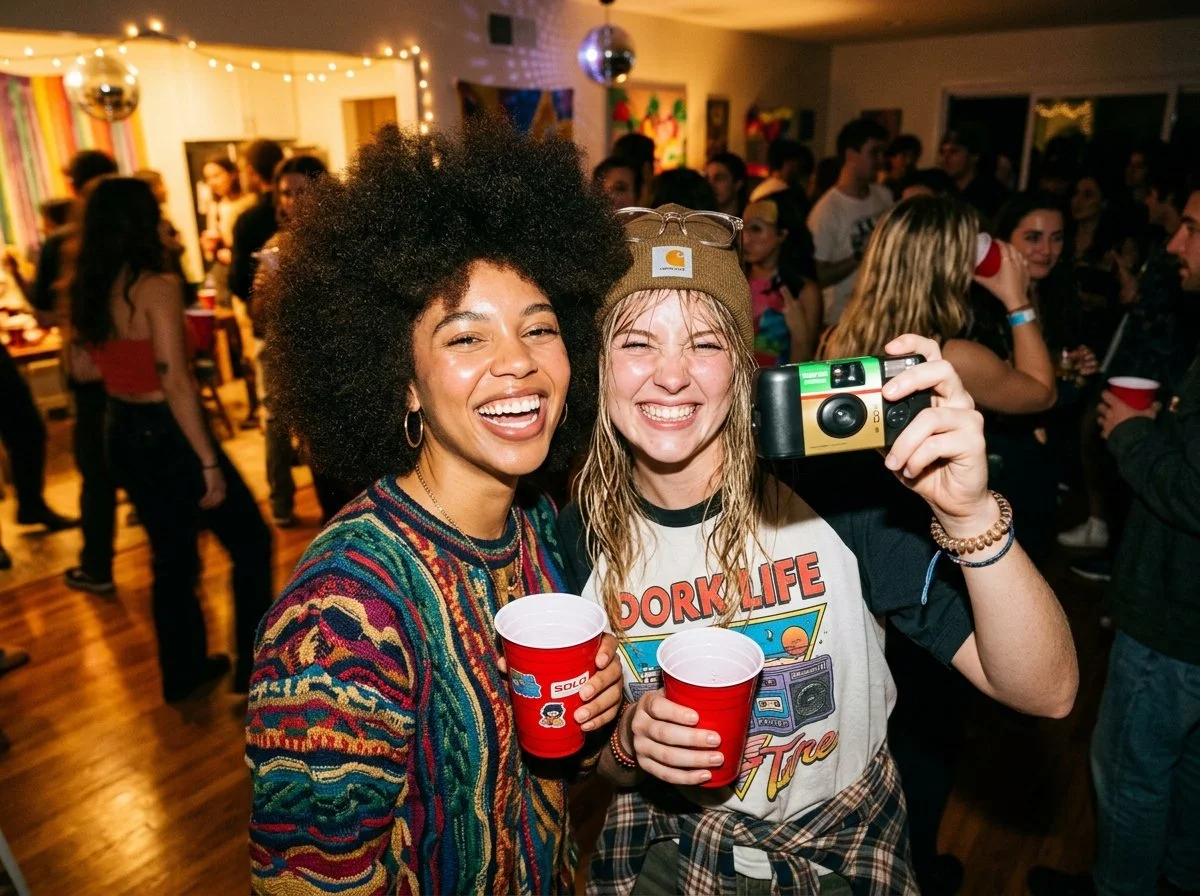
Photographed by Mitchell Royel amidst the vibrant pulse of the Fashion District, this editorial merges downtown’s raw edge with the sleek sophistication of 1980s-inspired glamour. Each element—from the commanding styling to the electric ambiance—channels a reverence for an era defined by striking silhouettes, innate confidence, and the allure of neon-soaked city nights. Underscoring the scene is TLC’s “I Bet” featuring O’so Krispie, setting a nostalgic rhythm that perfectly complements the timeless mood.

Let's tell the truth about what's happening to us.
We are lacing up white sneakers we have no business owning. We are pulling neon over our thighs like armor — because that is exactly what it is. We are sliding a headband across our foreheads, and something old and knowing wakes up. We are not heading to a fitness class. We are heading to church. And we booked the good seats.
There's a boombox on a stool. There are cassette tapes scattered across the wooden floor like offerings to a god who accepts sweat as currency. There's a disco ball spinning light over the ceiling — pink and teal and gold spilling onto our faces — and for one deliberate, holy hour, we are not the woman who got the text she didn't want. We are not the one who got passed over, walked out on, or ghosted into silence. We are radiant. We are loud. We are here. And presence, darling, is the rarest luxury there is.
This is the 80s aerobics thing everyone's swept up in right now. And no, sweethearts, it was never about the calories. The clever ones among us understood that from the first count.
That's the part nobody prints on the flyer. We walk in with the breakup still humming under our ribs. We carry the betrayal, the disappointment, the thing we haven't said out loud yet. We bring the whole heavy season into the room — and then the count begins. Five, six, seven, eight.
We hand it over to the grapevine. We fold it into the knee lifts. We punch it into the air with both fists like we're clearing a path straight through our own life. This is not avoidance. This is strategy. The women who win are the ones who know where to put the ache before it puts them somewhere.
The body knows what the mind is too polite to admit. So we let the body speak — and then, wisely, we listen.
Somewhere in the second song, the switch flips. We stop counting reps. We stop watching the clock. The mirror quits being a critic and simply becomes a mirror. And a voice rises up in us — ridiculous, holy, unstoppable:
This is not a workout. This is a world tour.
That's the moment. That's the entire point. Suddenly we're not in a rented studio with squeaky floors. We're headlining. We're selling out arenas in our heads. The crowd behind us in their leotards? Backup dancers. The instructor? A high priestess with a headset mic. The disco ball? Our personal spotlight, hung just for us, tracking every glorious move.
Here is the psychology of it, plainly: we turn the pain into performance. We turn the grief into glitter. We take everything that tried to shrink us, and we make it the material. The most powerful women you know are not the ones without wounds. They're the ones who learned to perform on them.
Now — for the ones of us on the stage.
Leading one of these rooms is its own form of alchemy. When we step onto that wooden platform — mic at our lips, arms wide, heart still raw from the thing we haven't told anyone — we are not instructing. We are transmuting. Every count we call out carries the grief we haven't fully named. Every cue is threaded with the specific ache of a love that dissolved, a friendship that fractured, a version of ourselves we buried quietly and alone.
And somehow, impossibly, it becomes this: presence, power, command. Inside our own heads, there is no class. There is only the tour. The stage. The moment we decided that everything which broke us would become the fuel we perform on.
We can feel it. We can see it in the woman in the back who isn't quite smiling yet. And we know our real work isn't the choreography. Our work is permission. To go first. To throw our whole chest into the count — so big, so unapologetic — that everyone behind us finally believes they're allowed to do the same. That is the quiet law of leadership: people don't follow instructions, they follow proof.
When we lead, we say the thing with our bodies: You can be free in here. You can be furious in here. You can be fabulous in here. And then we watch it ripple back — forty faces catching fire at once, forty people remembering they're alive. That's not a workout. That's a revival. And we built the room it happens in.
Because we've been sold quiet strength for far too long. We've been told to shrink our anger, whisper our wants, breathe through our rage in a dim room and call it healing. Healing is real — but let's be discerning about it. Sometimes we don't need to whisper. Sometimes we need neon. Sometimes we need a beat and a crowd and a mirror and full permission to be gloriously, sweatily, unapologetically loud.
The body is the altar.
Always has been.
We just forgot
we were allowed to worship out loud.
So we keep coming back. We keep pulling on the leg warmers. We keep showing up to the disco ball and the boombox and the count — because this cheesy, glittery, fist-pumping hour is doing something the serious stuff couldn't. It's handing us back to ourselves. Sweaty. Grinning. Free.
Whatever we walked in carrying, we set it down somewhere between the warm-up and the cool-down. We don't even notice when we drop it. We just notice, driving home, that we feel lighter. Bigger. More ourselves than we've been in weeks. That is the return on investment nobody quotes you.
So let's go.
Let's GET PHYSICAL.
Let's turn the ache into the anthem — and let's put it in the calendar while we're at it.
We're not at a workout class.
We're on a world tour, babe.
And every single seat is sold out.
-Ryder
Epilogue:
Now let's talk logistics, darlings.
Because a world tour doesn't book itself. Even goddesses need a calendar — and the truly powerful ones understand that discipline is what freedom wears when it grows up. If we're going to turn our ache into an anthem three times a week, we have to engineer the revival. Here are 20 tongue-in-cheek tips for treating our fitness schedule like the sold-out event it truly is.
Block your "world tour" time like it's a headlining gig. Nobody cancels on Beyoncé. Nobody cancels on us. Put it in the calendar in all caps so future-us remembers we're the main act.
Treat your weekly schedule like a setlist. Cardio, strength, rage-dancing, rest. Sequence it for maximum emotional payoff, and always end on the encore that leaves us breathless.
Give each session a name. "Monday: The Comeback." "Wednesday: Revenge Cardio." "Friday: I'm Fine, Actually." A named show gets attended. A vague "workout" gets skipped.
Color-code your calendar in neon. If it's not hot pink or electric teal, does it even count? Make the schedule as loud as the leotard.
Schedule the ache in advance. We already know Sunday nights hit different. Book the Monday class before the feelings arrive, so the room is waiting for us.
Lay out tomorrow's outfit tonight. The leg warmers, the headband, the sneakers we have no business owning. Costume ready equals no excuses at 6 a.m.
Build a boombox playlist for each "tour stop." One playlist per mood. Heartbreak has its own tracklist. So does triumph. Update them like the setlist artists we are.
Set reminders that talk to us like a hype squad. "Places, please." "Ten minutes to showtime." An alarm labeled "gym" is forgettable. An alarm labeled "the arena awaits" is not.
Give yourself a load-in and load-out buffer. Fifteen minutes before, fifteen after. No goddess sprints straight from a meeting into a grapevine and calls it grace.
Keep a "tour bag" packed by the door. Water bottle, towel, spare headband. If we have to hunt for socks, we've already lost the momentum.
Protect the rest days like backstage. Recovery isn't laziness — it's the green room. Even the biggest tours have nights off, and we honor them.
Batch your admin like a road manager. Book the week's classes in one sitting on Sunday. Future-us should never have to negotiate; the shows are already confirmed.
Have an understudy plan. Class cancelled? Weather chaos? Keep a 20-minute living-room routine ready so the show always goes on.
Track your streak, not your weight. Count the times we showed up for ourselves. That's the number that turns grief into glitter.
Say no like a tour with a full calendar. "Sorry, I have a commitment that night" is a complete sentence. The commitment is to us. That's the whole tour.
Sync it with someone. Every act needs a duet partner. A friend on the schedule means two people holding the sold-out promise, not one.
Reward the milestones. Ten shows down? New sneakers. Twenty? The good leggings. We are not above bribing ourselves toward greatness.
Keep a "moments" note on your phone. Jot the class where the switch flipped, the song that broke us open. It's our tour diary, and rereading it books the next date.
Review the setlist monthly. What's working, what's flat, what needs a remix. Even legends refresh the show so it never goes stale.
Leave one slot gloriously unplanned. A wildcard hour to try the new class, the weird class, the class we'd normally skip. Every world tour needs one surprise encore.
The women who last aren't the ones with the most willpower. They're the ones who designed a life that makes showing up inevitable. So we build the schedule. We honor the setlist. We treat our own devotion like the hottest ticket in town — because it is.
We're not at a workout class.
We're on a world tour, b*tch.
And every single seat is sold out.