
NOTHING WILL EVER FEEL LIKE THIS AGAIN—AND THAT’S THE POINT
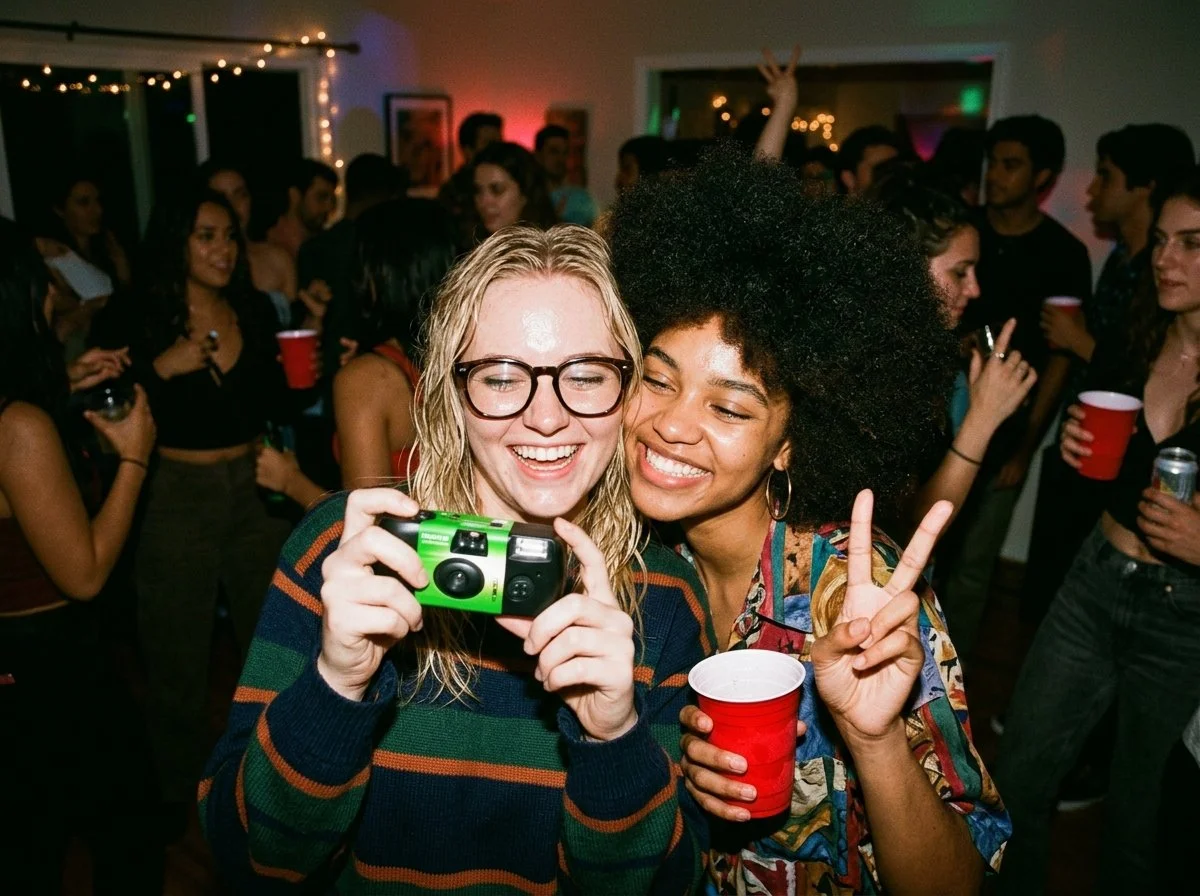
Captured in the fashion district today, 9/9/26, by Mitchell Royel—a moment steeped in soft light and even softer shadows, where the hum of sewing machines harmonizes with distant chatter. We’re listening to "Outside" by Calvin Harris and Ellie Goulding, the pulse of the beat weaving through the afternoon like a thread pulling it all together. There’s something hauntingly beautiful about the way the ordinary turns cinematic in the right frame, like everything is quietly waiting to be remembered.
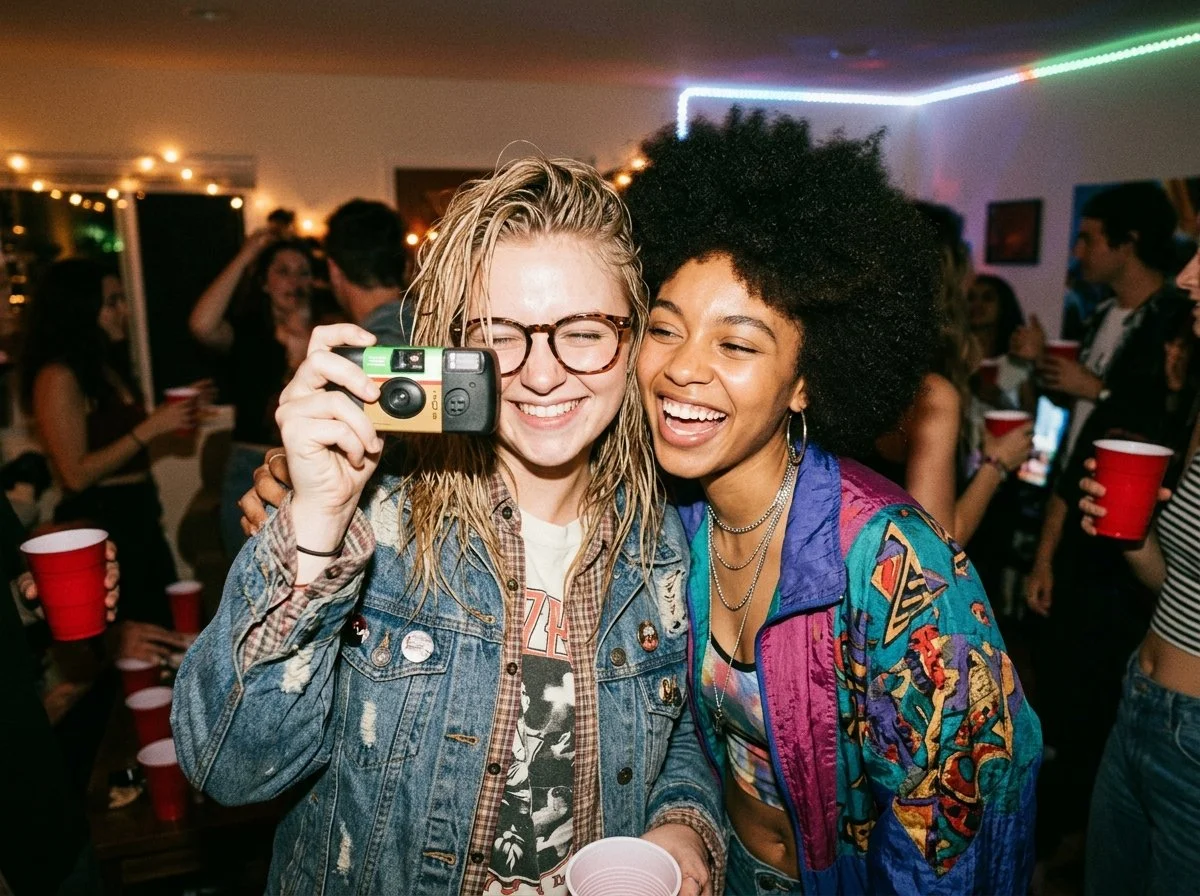
There was a bubble once—a glistening, hermetically-sealed dome in which I lived. I existed like a pearl inside its shell, polished smooth, insulated from the grit that gives life its texture, its meaning.
Calabasas: an orchestration of manicured white suburbs, stitched together with sprinkler systems and a relentless politeness. It was a place where lawns glowed unnaturally green and conversations felt scripted. Everyone knew the same pop songs, wore the same Allbirds, and leaned on the same sunsets to give their lives the illusion of depth. I thought that was the whole world. I thought the horizon dissolved where the shopping centers did.
Then one day, I walked into a community college classroom, fluorescent lights buzzing around me like bees caught in a jar. That’s when I felt the first tear in the bubble—a seam splitting, an unraveling I couldn’t have named yet.
She sat two rows over, an exacting gravity in her slouched posture. Her textured hair spilled like defiance down her shoulders, and her eyes? They held stories of somewhere I hadn’t been, maybe couldn’t even imagine. She was every galaxy I had been told didn’t exist in neighborhoods like ours. Later, I’d tell my friends about her, breathless, giddy, as if naming her made her less unknowable. She kind of reminds me of Kelis, I said, grasping for comparison, trying to shrink her magnificence into something bite-sized, something familiar. But I was wrong. She wasn’t like anyone. She was her own weather system.
We started talking—one sentence at a time, the way people do when the universe nudges them toward a door they've been too scared to open. One night, as effortlessly as pulling a thread from her sweater, she opened a tab on MySpace.
That’s when I saw them.
Raves.
Freeze-framed bodies mid-motion, eyes glittering with reflected neon. Light bending around faces, distilling joy into streaks of color. Each photograph was like holding up a magnifying glass to an emotion I couldn’t yet articulate. I scrolled through galleries full of strangers but all I saw was life. Unapologetic, untamed life spilling out of monitors and into my chest, cracking me wide open.
"You ever been?" she asked, her voice curling with amusement, almost daring me to lie. She could already tell I hadn’t.
She started naming scenes—warehouses by railroads, deserts under full moons, clubs below the city’s heartbeat. Her words were spells, each syllable charged with rebellion and vastness. Places, she said, you have to be willing to sweat to find.
We must have talked for hours. Or maybe it was just minutes and it felt like hours; who knows? I didn’t belong to time that night. Near the end of our conversation, I asked her something pathetic like, "Do you think I’d fit in?" And she just smirked.
"You don’t have to come," she said, softly piercing in her understatement. “But you can.”
She wasn’t trying to convince me. She already knew.
I remember how casually she lifted her hand, gesturing toward the window. Outside, bathed in the sterile glow of campus lights, sat another girl—a petite figure bent over her books, her focus sharp even from a distance. The warm familiarity of her profile hit me like a puff of déjà vu. This was my neighbor—the girl whose back door opened just behind ours, who I sometimes saw weaving clouds of loose hair into braids at sunset. She hadn’t seemed larger-than-life until this moment.
“That’s my friend,” she said, her words nudging boundaries I hadn’t realized I’d drawn. “She and I go to raves together.”
It floored me. This wasn’t a secret society. It was her world. And she was presenting it as casually as an errant breadcrumb left on the table. The unspoken implication was unavoidable: You can sit with us.
She was a social butterfly, not the flimsy kind that floats lifelessly from one flower to another, but the kind bred from steel who knew when to stay, when to leave, and how to take the world with her. She made it look so effortless—holding the world loosely, like it was hers to give.
The first time I went to one of those house parties with her, it felt like stepping into an alternate dimension. The rooms pulsed with life, the music a liturgy of basslines, and every surface seemed to radiate a heat that wasn’t just physical but soul-deep. We didn’t need the fog machines or shifting neon to lose ourselves; the energy of those nights was enough to transform. And when the lights finally dimmed, we’d slip outside into the campus fields, her laughter tumbling over the cool grass as if it could stretch the hours longer. The conversations? They unraveled into the kind of sprawling reflections that only happen when the sky stretches too wide and you forget time exists. Those fields started to feel like a world apart, a sanctuary for questions and confessions, for ideas neither of us had words for yet. It was there, more than anywhere else, that she handed me glimpses of a world I hadn’t dared to imagine.
We kept moving, and two years disappeared the way rivers vanish into distant seas—impossibly fast but carrying every memory downstream, pulling all of us toward the next thing.
By then, she’d invited me to everything—house parties where time felt like watercolor light and, eventually, an LGBTQ+ club. My first one.
I remember the electric air. Bodies lit up with nothing to hide. People danced the way you can only dance when no one is watching—or when no one watching would dare judge you. They were free. And for the first time, I saw what that could look like.
But I was knotted inside. Something about that night wouldn’t let me join. I’d started dating one of her friends—and I hadn’t told her. It was easy to tell myself I didn’t owe her that confession. But the truth? She carried the kind of truth between us that demanded more than silence. Still, I froze.
"Something feels off. Is it…?" she asked me, her voice slipping over the music. I could see her scanning me, her concern like heat seeking a weak point. She saw mine long before I uttered a word.
"Nothing," I lied. That ancient lie, sharp and small like a broken shard of glass.
Instead, I offered another reality.
"In other news," I started, avoiding her gaze, "I’m dropping out. This is my last semester."
Her head tilted slightly, like she wasn't surprised, like she’d already sensed I was reaching my fire escape. She nodded—slow, deliberate.
"I feel you," she said. "I’m transferring next semester." Always a few years ahead in the dance, mapping exits I couldn’t yet see.
"What’s next for you?" she asked, her voice thinly cloaked in reassurance but heavy with illumination.
Truth pinned me under the light spills on the ceiling. "I’m not sure," I whispered. And for once, I meant it. "But I can’t stand it here anymore."
Which "here” did I mean? Not the club, not that night. I meant the other "here"—the one made of beige walls and fake smiles, suburban comfort that lulled me into a shrinking version of myself. The bubble I’d been born into. I couldn’t breathe there. Hell, I couldn’t live there.
-Ryder, M.R, GG Collective
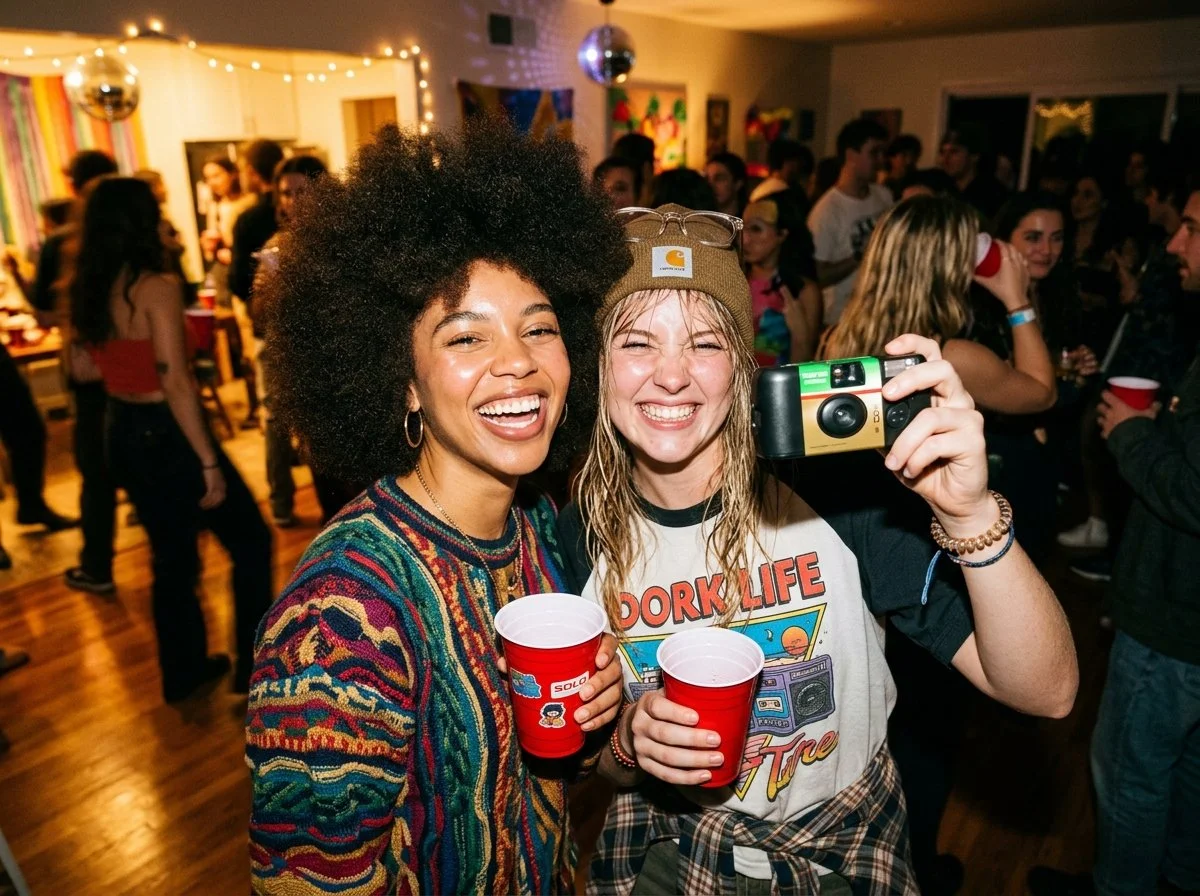
Captured in the fashion district today, 9/9/26, by Mitchell Royel—a moment steeped in soft light and even softer shadows, where the hum of sewing machines harmonizes with distant chatter. We’re listening to "Outside" by Calvin Harris and Ellie Goulding, the pulse of the beat weaving through the afternoon like a thread pulling it all together. There’s something hauntingly beautiful about the way the ordinary turns cinematic in the right frame, like everything is quietly waiting to be remembered.
Epilogue
I think of her often—the girl who reminded me of Kelis but ended up reminding me of myself.
Here’s something time taught me: the bubble? It isn’t safety. It’s sedation. And some people stumble into your life like minor gods carrying a necessary wake-up call, dragging vivid MySpace photos behind them like thunderclouds. They don’t say it outright, but they live it: Everything more is waiting outside your fear. Your responsibility is to step out.
The unknown terrified me. It tore me apart and then rebuilt me. But it also gave me everything: friendship that questioned my edges, sweat-soaked dance floors where I keyed back into my body, creativity blooming through the shattered monotony of comfort.
If this life of mine has a moral, it’s this: Find the cracks. The people who love you enough to push you toward them? They’re rare. And the unknown—it’s not a void. It’s an offering.
Go.
When you can’t stand it anymore.
Sweat through the heat.
And trust—you are meant to crack wide open.