


NOT THE REAL THING (AND WHY THAT'S SACRED)

Captured by Mitchell Royel in the heart of the fashion district, we're soaking in the creative energy of the streets. The moment feels electric, alive, and perfectly soundtracked by "supermodel" by Sam Short. It's one of those songs that wraps around the atmosphere, elevating every glance, every movement, every beat—it’s all part of the story being told through the lens.

We're entering the era of not the real thing.
Filters.
Avatars.
Fantasies dressed up as intimacy.
A whole culture learning to prefer the illusion over the person standing right in front of them.
And here's where I get tender with you, sister.
Because there's a difference.
A holy, glaring, God-drawn difference between pretend that serves love and pretend that replaces it.
Let's name it.
The world is selling you a lie: that the simulation is better than the substance. That the highlight reel beats the human. That you should want the fantasy instead of the flesh-and-blood love beside you.
That's the counterfeit. That's the not-the-real-thing that hollows us out.
But play?
Play is different.
Play knows it's play. Play holds hands with the truth. Play winks at reality and says, I know exactly who you are, and I'm choosing you anyway — let's have some fun.
Your man picks up a camera. He calls himself a casting director. He tells you to give him fierce, give him soft, give him that look.
And you laugh.
Because you both know the truth.
You booked that audition.
You walked into that room and earned it on your own two feet, your own fire, your own gift.
He's not the gatekeeper of your dreams.
He's the witness to them.
That's the sacred part.
The role-play is spice.
The reality is that he already reveres you.
He's not pretending you into worth — you brought your worth to the table.
He's just playing dress-up with a woman he'd choose in every version of every life.
Nothing distorted.
Nothing replaced.
Nothing owed.
Just two people, safe enough to be silly, secure enough to pretend.
We're not prudes. We're not scared of joy. God made pleasure, made playfulness, made the wild delight of being fully known and still adored.
There's a time and a place for a little spice.
Inside a covenant. Inside trust. Inside a love that doesn't need the fantasy to feel enough — it just enjoys it.
That's the whole thing. That's the line.
Fantasy that feeds the real love? Beautiful.
Fantasy that replaces the real love? That's the counterfeit knocking.
Here's what I want burned into your beautiful, discerning heart:
Never let the play rewrite the standard.
Your man playing casting director doesn't mean bae becomes a fantasy you perform for. It doesn't mean you shrink your realness to fit somebody's script. It doesn't mean love has to be earned through pretend.
The role-play ends. The reverence stays.
You come home to the real him. He comes home to the real you. Unfiltered. Un-costumed. Chosen.
That's the expectation. That's the covenant. That's the thing no simulation will ever touch.
The era of not-the-real-thing wants you to forget this.
Don't.
Play boldly. Laugh loudly. Let him take the silly photos and call himself whatever he wants.
But when the camera goes down, look at each other and remember:
This is the real thing.
And the real thing was always the point.
-M.R, Ryder, G.G Collective

WHEN HUMANITY'S ECHO DROWNED BENEATH THE WEIGHT HER SOLITUDE P2 - HEARTHS, NOT COMETS
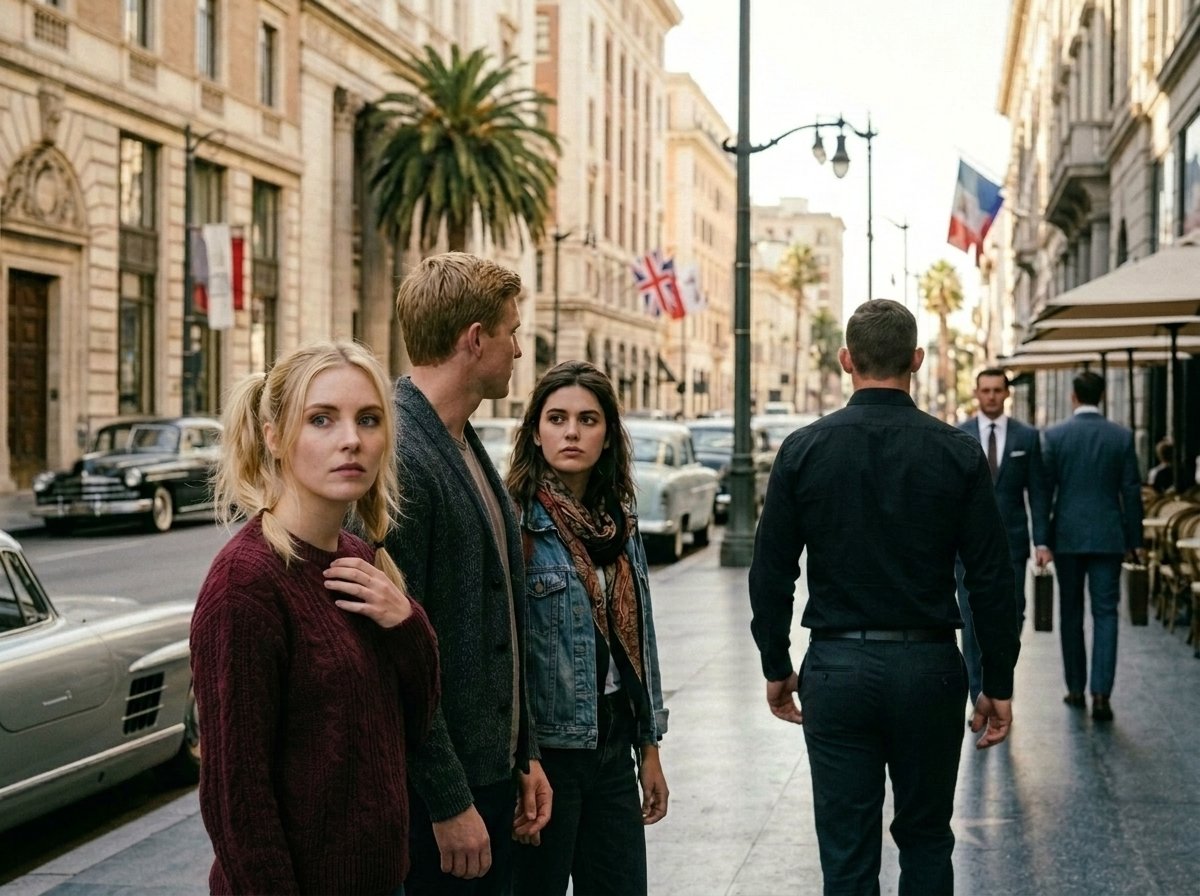
Mitchell Royel captured these on iPhone 8/17/26 today in the heart of the fashion district. The air was electric, the streets alive with movement, colors, and the pulse of creativity. We’re listening to So Bad Together by Tash Blake, and it feels like the perfect soundtrack for this moment—a charged melody weaving through the hum of conversation, the rhythm of footsteps, and the occasional laughter drifting through. It’s the kind of day where everything feels immediate, vivid, and strangely timeless.
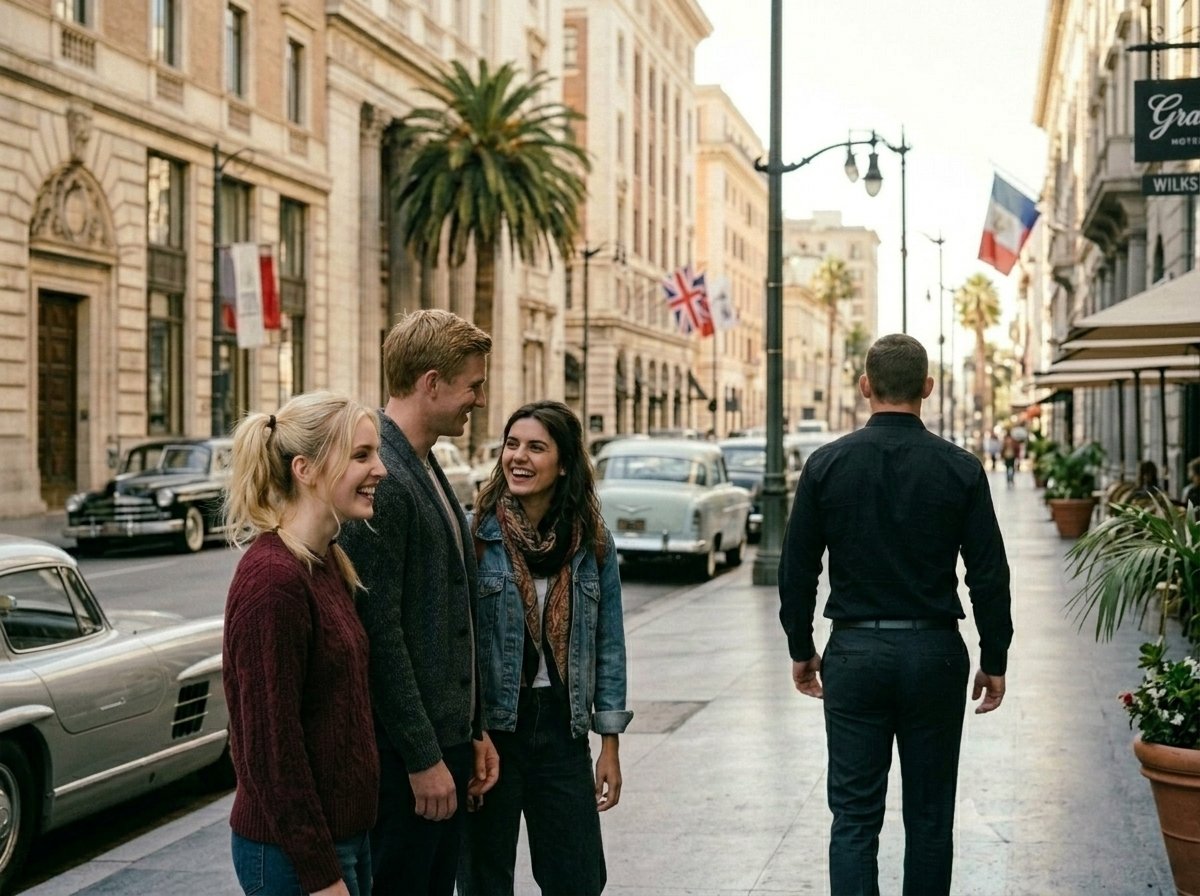
The city wore its autumn like a woman who no longer needed anyone's approval—gold in the trees, amber in the windows, the streets humming with the particular music of people who had somewhere better to be. She walked down the avenue with her pigtails catching the light, her sweater the color of a bruise finally healed, and she was laughing at something someone had said before she even reached the corner.
Years had passed. Enough of them to soften the edges of what used to cut her. She had learned to measure time not in seasons but in the slow return of her own laughter, and now, walking between the friends who had become her chosen family, that laughter came easily, spilling out of her like water finding its level.
Beside her walked the young man she loved now—the one whose hands smelled faintly of roasted beans and cardamom, who could pull a shot of espresso so perfect it made grown men close their eyes. He made the best espresso in New York City, and everyone who tasted it said so, though he only ever shrugged and smiled that quiet smile, the one that asked for nothing and somehow gave everything.
He was not a comet.
He was a hearth.
And she had learned, at last, the difference between being dazzled and being warmed.
They were talking about nothing.
About everything.
About the small holy nonsense that fills the space between people who trust each other.
And then she saw him.
He came around the corner the way a man walks when he still believes the world is watching—shoulders squared against an audience that had long since gone home. The years had done their quiet arithmetic on him.
The button down was expensive but tired at the seams. The hair he'd once tossed like a banner had thinned into something he kept trying to remember it was. His campaign had collapsed years ago, a promise that curdled the moment it met the light. And the finance world he'd fled into afterward, that gleaming second act he'd been so certain would crown him—it had spat him back out, quietly, the way the sea returns what it cannot digest.
She watched him pass.
He did not see her.
Or he saw her and pretended not to, which was its own kind of confession.
The ego was still there, worn like cologne gone stale, an arrogance that had outlived every reason it once had to exist.
He moved through the crowd as though it owed him passage, and the crowd, indifferent, simply moved around him like water around a stone.
Pride goes before destruction, a haughty spirit before a fall. — Proverbs 16:18
She thought of that verse without meaning to. It rose in her like a bell she hadn't rung. She had spent so many nights once, praying for his rise, believing his light was the only light. And here he was, dimmed to a flicker, still convinced he blazed.
Her boyfriend followed her gaze. He recognized the man—she had told him the story once, all of it, the fire and the fall and the long climb back to herself. He didn't stiffen. He didn't puff himself up to defend her against a ghost. He only leaned in, close to her ear, and said something soft that made her laugh.
And then they all laughed. The whole small group of them, quietly, the way you laugh at a joke the universe has finally gotten around to telling. Not cruel laughter. Not triumphant, exactly. Just true. The kind of laughter that comes when you realize the monster under the bed was only ever a coat on a chair.
There was nothing to do. Nothing to say. No speech to give, no wound to reopen, no reckoning to demand. He walked by, and they let him walk by, and the letting-go was so complete it felt like grace. She did not need him to be sorry. She did not need him to see how well she'd turned out, how her days now overflowed with the good ordinary things he could never have given her. She had stopped auditioning for his applause a long time ago.
He turned the corner and was gone. Swallowed by the city that had once nearly worshipped him and now could not be bothered to remember his name.
She turned back to her friends. To the man whose love asked nothing and offered everything. The autumn light poured down the avenue like something forgiven. And she laughed again—not at him now, but at the sheer sweetness of a life she had built from the ashes of the one she'd almost given away.
They walked on. The city hummed its indifferent song. And somewhere behind them a proud man kept walking, still certain the whole world was watching, never once suspecting that the only people who had noticed him at all were three friends on a street corner, laughing gently, letting him go.
-M.R, Ryder, GG Collective
Epilogue: There is a particular freedom that arrives only after the fire has burned itself out—a freedom that does not announce itself with trumpets, but settles quietly into the bones like warmth after a long cold. She had learned that the sweetest revenge is not revenge at all, but indifference wearing the face of joy. To watch the one who broke you walk past and feel nothing but a faint, kind amusement—that is the mark of a wound fully healed, a scar that no longer aches when the weather turns.
Pride, she understood now, is its own slow executioner. It needs no enemy, no reckoning, no hand raised against it. It simply keeps walking, chin lifted, certain of an applause that stopped years ago, blind to the empty theater it performs within. The man who had once seemed a comet had only ever been a firework—brilliant, deafening, and gone before the smoke could clear. And she had mistaken the noise for permanence, the flash for a sun.
But she had built her life since then on steadier ground. On the man who made espresso like a prayer. On friends whose laughter healed instead of harmed. On the quiet, unshakeable knowledge that she had survived the thing she once believed would end her—and not merely survived, but flourished, greener and gladder than before.
This is how the story ends—not with vengeance, but with a shrug and a smile. Not with a fall witnessed and celebrated, but with a woman so full of her own good life that the falling of a proud man barely registers, a leaf drifting past a window she has long since stopped looking out of. There was nothing to do, and so she did the bravest thing of all: she kept walking, kept laughing, kept loving the life she had earned. And the pride that had once nearly ruined her walked on toward its own quiet destruction, alone, while she walked home—toward warmth, toward laughter, toward everything he had never known how to hold.
UNSTOPPABLE IN OUR TRUTH

Captured amidst the raw energy of the fashion district, the following photos encapsulate moments taken before or after the action—though this is not a place to venture into now. Our girls, instead, chose to spend (most of) their time diving into novels and unwinding in the jacuzzi, all while vibing to the distinctive sounds of Princess Paparazzi’s actress-fueled melodies.

We are thirty-eight thousand feet above the ocean when the truth finally lands in us, quiet and complete.
The cabin hums a low, endless note. The DJ group is scattered across the seats like a constellation that never learned to hold still — headphones half on, half off, thumbs tapping out rhythms that only they can hear. One of them mouths a melody into the dark. Another sleeps with a hood pulled low, worn out from a hundred handshakes and a thousand smiles. We watch them. We watch the lights of the last city dissolve beneath us, glitter poured into black water, and we begin to count.
Not the cities.
Not the shows.
We count faces.
All the faces we have worn.
We have smiled when everything inside us wanted to scream. We have laughed at jokes that landed nowhere near our hearts. We have nodded through conversations that drained us to the bone, and then we thanked people for the pleasure of it. We called this grace. We called it professionalism. We told ourselves it was the toll we paid for the stage, the tour, the applause, the beautiful and terrible privilege of being wanted. But somewhere between one country and the next, high above the water, we stopped believing our own story.
Because we live in the era of two faces now. We all do. Every person we pass in an airport, every voice on the other end of a call, every stranger who leans in too close — each one carries at least two selves. The face made for the camera and the face kept for the mirror. The face that says we are so happy to be here and the face that whispers, deep and honest, we are so tired. For years we believed the answer was to master more of these faces. Prettier ones. Smoother ones. Faces that never cracked under the weight of anyone's expectation.
We were wrong. So beautifully, painfully wrong.
The answer was never to collect more masks. The answer is to set them down.
The road is a strange and holy teacher. Ten cities in fourteen nights teaches us things no quiet life ever could. It strips us. It hollows us out and shows us exactly how much of ourselves we have been giving away for free. When the crowd roars and the lights go white and someone backstage wants more of us than we have left inside — that is the moment the lesson arrives. That is the moment we learn what we actually owe. And the truth, once we hold it, changes everything.
We do not owe anyone the performance of niceness.
We do not owe anyone politeness as a fee for standing near us.
Let us say it slower, because it took us so long to believe it. Kindness and niceness are not the same thing. Kindness is a flame we carry and choose to share. Niceness, the kind the world demands, is often just fear wearing lipstick — the fear of being disliked, the fear of taking up space, the fear of the frown on a stranger's face. Kindness gives freely. Niceness pays ransom. And we are done paying ransom.
"Above all else, guard your heart, for everything you do flows from it."
Proverbs told us this long before the world ever taught us to be agreeable. Guard the heart. Not decorate it for passing strangers. Not leave the gate open so anyone with a demand can wander in and help themselves. Guard it, the way we would guard the one thing we could never replace. Because that is exactly what it is.
For the longest time, we believed that only the famous were allowed to build walls. We thought boundaries were a luxury stitched into fame, sewn into the seams of a spotlight. We thought only stars got to say no. Only stars got to close a door, dim a room, protect the soft and sacred center of a life. We believed the framework of power belonged only to the ticketed, the televised, the ones with names on marquees. What a small lie. What a cage we built for ourselves out of that belief.
The framework belongs to all of us.
Every single one of us can draw the line. Every one of us can decide who enters and who waits outside in the cold. We do not need a spotlight to be sovereign over our own lives. We do not need a red carpet to reclaim our peace. There is a door at the entrance of every soul, and we are the ones standing guard. We always were. We always will be. Fame does not hand us that authority — we were born holding it. We simply forgot.
"Let your yes be yes, and your no be no."
Matthew said it plainly, and there is no footnote of guilt attached. No apology. No long paragraph of explanation that we owe to anyone who feels entitled to our reasons. Just the clean, honest edge of a boundary — spoken once, and kept. How rare it is now, a clear no. How much we have dressed our refusals in ribbons and sorries until they no longer look like refusals at all. We are learning to speak plainly. We are learning that a whole no is a kinder thing than a thousand resentful yeses.
The DJs, in their own strange way, know this rhythm too. We watch them work and we understand it. They shape silence and sound with the same set of hands. They know that the pause between the beats is what makes the drop hit like thunder. Take away the silence and there is no song — only noise. And we have been living like noise. Filling every quiet second with the endless static of pleasing, terrified of what the silence might reveal about us. Now we are learning to live inside the pause. To let the empty space breathe. To trust that the silence is doing its slow, sacred work.
"To everything there is a season, and a time to every purpose under heaven."
Ecclesiastes knew. A time to speak and a time to hold our tongue. A time to open the door and a time to bolt it shut. A time to give and — yes, this too — a time to keep. We spent whole seasons giving when we should have been keeping, pouring out when the well had already gone dry. There is no virtue in an empty vessel. We cannot offer from a cup we have poured entirely onto strangers.
So we sit in this humming cabin, above the black and glittering water, and one by one we lay our masks in our laps. The gracious one. The endlessly apologetic one. The accommodating one who never once said the true thing. We look at them the way we look at old costumes hanging in a closet — beautiful once, useful once, but far too heavy for where we are going now. They served a version of us that was afraid. We are not that version anymore.
"He restores my soul."
The Psalm reminds us of the difference. Restoration, not renovation. We are not here to be remodeled for the comfort of the crowd, sanded down and repainted into something more palatable. We are here to be restored — returned to our own true weight, our own true shape, the self that existed before the world told us to shrink.
The plane begins its slow descent. Another city waits below, hungry and bright and full of hands reaching up. We can feel it already, the pull of it. But something in us has settled now. We will walk out into that city exactly as we are. Unpolished where we are unpolished. Fierce where fierceness is called for. Warm — truly warm — where warmth has been earned. We will give what is real, and only what is real, and we will keep the rest for ourselves and the few we trust with it.
We were never meant to be liked by everyone. That was never the assignment. We were meant to be true. And truth, we have finally learned, is the only face that never slips, never cracks, never needs another face beneath it.
The wheels touch down. The cabin lights come up. The DJs stir and stretch and reach for their bags, ready to build another night out of silence and sound.
We rise with them. We gather what is ours.
We walk out unmasked.
-Ryder, M.R, G.G Collective
Epilogue: We name what drains us. Before we can guard the gate, we have to know who and what keeps slipping through it. We take an honest inventory of the people, the requests, the rooms that leave us hollow. We stop pretending the drain does not exist.
We let our no stay whole. We say it once, cleanly, and we resist the urge to wrap it in a hundred apologies. A boundary that we explain to death is a boundary we are secretly asking permission to keep. We do not need that permission.
We separate kindness from niceness. We stay generous. We stay warm. But we stop confusing the fear of disappointing people with the virtue of being good. Kindness gives from a full heart. Niceness pays a ransom. We keep the first and release the second.
We build in the pause. Like the silence between the beats, we leave empty space in our days on purpose. We do not fill every quiet moment with the noise of proving ourselves. The rest is where we come back to life.
We guard the heart on purpose. We decide, ahead of time, who gets access to the soft center of us. Not everyone earns the same key. This is not cruelty — it is stewardship of the one thing we cannot replace.
We stop performing for the room. We give ourselves permission to be quiet at the party, to leave early, to be unpolished when we are tired. The mask is heavy. We are allowed to set it down long before anyone tells us we can.
We remember the framework is already ours. We do not wait for a title, a spotlight, or anyone's blessing to protect our own lives. The authority was never granted to us by fame. We were born holding it. We simply pick it back up.
We choose true over liked. When the two pull against each other — and they will — we let ourselves be true. Being liked by everyone was never the goal. Being real was. We walk out unmasked, and we call it freedom.
GLIMMERING IN THE DARK, WE REMEMBER

Captured through the lens of Mitchell Royel, today—8/15/26—is immortalized in frames that throb with raw, electric energy. Each image peels back the veil of a distant vision—gritty, unapologetic, and brimming with life. As "Lie to Me" by Tenik, Amnesia, and Feelslike resonates through the air, the moment becomes a living, breathing memory.

Let us begin where the bass lives — low, insistent, thrumming through the floor like a second heartbeat. The club is a cathedral of sweat and strobe light, and she walks in glowing, holy in her own skin. We know this girl. We have been this girl. The one who finally, after a long season of quiet devotion, remembers what her own laughter sounds like.
She is not looking for anything. That is the sacred part. She arrived full. Her cup was already spilling over the rim before she ever crossed the velvet threshold.
And then — a tap.
Two fingers on her shoulder. Light. Casual. The touch of someone who believes the door is still open, who assumes the years have softened the edges of what was done.
Benjamin.
We have all felt that tap, haven't we. The sudden landing of a ghost we buried on purpose. A whole year — more than a year — and here he is, wearing that expectant half-smile, the one that says let's just smooth this over, let's just be easy about it. As though what happened was a spilled drink and not a bone-deep betrayal.
Let us sit with what his tap assumes. It assumes we are lonely in the crowd. It assumes we came here hollow, hungry, hoping. It assumes the absence of him left a vacancy waiting to be filled. His gesture is so small — a shoulder tap, a shrug, a hey — and yet it is wildly, almost comically, disproportionate to the earthquake he set off in our lives.
Because a shoulder tap does not undo a fracture. A casual smile does not resurrect a burned bridge. And here is the truth we must anchor into our marrow: the size of his gesture reveals the size of his remembering. He forgot. Or he decided to forget. And forgetting, chosen on purpose, is its own kind of violence.
So watch what happens next.
Metaphorically — because we are women of metaphor, women who see the unseen — a podium ascends from the center of the dance floor. Gold. Lit from within. The music does not stop, but it bows. It makes room.
She does not raise her voice. She does not need to. Power rarely shouts.
She gestures for him to sit. And he sits, because some part of him has always known this reckoning was coming.
Then she speaks. Slow. Deliberate. Every word a stone laid with intention.
We remember, she says. We remember all of it. The thing that was done in the dark that we were supposed to pretend was light. The trust handed over like a gift and returned in pieces. We remember the version of us who bent, who excused, who made herself small so that the discomfort would not touch him.
And we remember the exact moment we stopped.
She names it. She does not soften it into something digestible. She does not perform the forgiveness that would make the room more comfortable. She lays the facts on the golden podium like evidence, like scripture, like law.
This, she says, is why we are not speaking. Not because we are wounded still. Not because we are lonely. Not because there is a vacancy. We are not speaking because we made a promise to ourselves, and we intend to keep it.
Here is where we must lean in close, because this is the heart of it.
There is a thing called gospel glamour. It is not about the dress or the lighting or the way we move across a room, though we may have all of that too. Gospel glamour is the radiance that comes from being aligned — word to action, promise to practice, soul to self.
It is this: our word is sacred. Our word is the most beautiful thing we own. And when we say — even quietly, even only to our own reflection — I will not go back, I will not speak to him, I will not reopen what I closed for my own preservation — that word becomes a covenant.
Integrity is not stiff. Integrity is not cold. Integrity is glamorous in the deepest sense of the word — it is enchantment, it is magnetism, it is the spell we cast when our insides and our outsides finally match.
To keep our commitment to not speak to Benjamin is not pettiness. Let us be clear about this, because the world will try to shame us for it. The world will call it bitter, will call it holding a grudge, will whisper that mature women let bygones dissolve. But we know the difference between a grudge and a boundary. A grudge is a rock we carry. A boundary is a door we lock and then walk away from, free.
Keeping our word to ourselves — especially when no one is watching, especially when the easier thing would be to tap back, smile back, dissolve back — this is the highest elegance there is. This is self-loyalty made visible. This is us refusing to abandon the woman who made the promise.
Integrity costs something. Let us not pretend otherwise. Sometimes it costs the ease of the moment. Sometimes it costs the appearance of grace. Sometimes it costs a night that might have been simpler if we had just said hey back and let the strobe light blur the truth.
But we pay it. Gladly. Because the alternative costs more.
The alternative costs us ourselves.
Every time we honor the line we drew, we deposit something into the account of our own becoming. We tell the deepest part of us: we can be trusted. We meant it. We will not sell ourselves out for a moment of manufactured peace.
And so, on the golden podium, she finishes. She does not wait for his response. His response was never the point. She steps down. The music swells back up to meet her. The floor receives her like it has been waiting.
She rejoins her people — because she has people, she always had people — and she dances with the particular lightness of a woman who kept her word.
That is the whole story. That is gospel glamour. That is integrity wearing its finest, dancing under the lights, owing no explanation to the ghost who thought a tap could rewrite the truth.
We keep our word.
At all costs.
Especially to ourselves.
-Ryder, GG Collective
GLITTER DUST ON WEATHERED BOOTS

There’s a certain magic to moments like these, where the ordinary meets the extraordinary in the most unexpected ways. Captured by the keen eye of Mitchell Royel in the heart of the fashion district, this scene feels like a portal into a world where creativity flows effortlessly and every detail dances with intentionality. The weathered boots, dusted with a shimmer of glitter, tell a story—of paths walked, challenges overcome, and the beauty of wear and resilience. It reminds us that even the scars of our journeys can sparkle when viewed with the right perspective. And as “Shady” by Sterre Dam fills the air, its smooth, sultry rhythm becomes the soundtrack to this fleeting, luminous moment. The song drapes over the scene like a velvet curtain, drawing us even deeper into the ambiance. It’s as if the universe aligned, gifting us this lush piece of existence that feels simultaneously raw and radiant, grounding yet transcendental.
HIS HANDS, HER SHADOWS.

Let me tell you about the girl who married the cowboy.
She didn't know it yet, but she was becoming.
You know that feeling. That electric little ping in your chest when you catch your own reflection and think — oh. There you are. You made it here. That's the one. Hold onto that. We're going somewhere with it.
She grew up small. Not in body. In belief. She learned early to fold herself into corners, to take up less air, to want quietly so no one would notice the size of her hunger. Women learn that. We learn to whisper our desires so we can call it modesty later.
Then came the cowboy.
Not the fantasy. The real thing. Dust on his boots. Calluses that told the truth. A man who worked with his hands and loved with his whole spine. He looked at her like she was weather he wanted to stand out in. Not a storm to survive. A sky to worship.
And here's the part that undid her.
He booked the photoshoot.
In the barn. Their barn. The one that smelled like hay and hard work and the whole life they were still stitching together. He paid for it. On his dime. Not for Instagram. Not for anyone. Just for her. Just for him. Just so the two of them could hold something still in a life that never stops moving.
Let that land.
A man who spent money not to prove something — but to see her. To catch her mid-becoming and say, this. This is worth remembering.
She almost said no. Of course she did. The old voice rose up. Who am I to be photographed? Who am I to be adored on purpose? That voice is a liar. It wears the mask of humility, but underneath it's just fear in a prettier dress.
She said yes anyway.
And in that barn — golden light slipping through the boards, dust dancing like something holy — she saw herself. Not the folded version. Not the corner-dweller. The whole woman. The one she'd been quietly building when no one was watching.
Ping.
There it is again.
That's the rush. That's the recognition. That's the moment your future self reaches back through time and grabs your hand and says, keep going.
Now think about where you were last year.
Last month, even.
Smaller, weren't you? More afraid. More apologetic. Carrying stories that weren't yours. Wearing lives that didn't fit. And look at you now — still bruised, sure. Still figuring it out. But further. Undeniably further.
Honor that. Out loud. Say it: I have come so far.
And then — because we're honest women here — say the other true thing too.
I have a damn long way to go.
Both. Always both. The gratitude and the hunger. The arrival and the ache. That's not a contradiction. That's the whole deal. That's what being alive feels like when you're doing it on purpose.
So let's talk about visioning.
Not the vision-board fluff. Not the pretty pictures you pin and forget. I mean the fierce, sacred, slightly terrifying act of seeing yourself in the life before it exists.
The girl in the barn didn't wait until she felt worthy to be adored. She let herself be adored, and the worthiness followed. That's the secret nobody tells you. You don't earn the vision. You inhabit it. You move in early. You light the candles before the walls are up.
This is the new era. This right here.
The old way was to shrink until you'd suffered enough to deserve joy. Burn that down. The new way is to dare — to see yourself soft and powerful and seen, and to walk toward that image like it's already home.
Vision is not a wish. Vision is a decision.
It's the woman in the barn, saying yes to the camera. It's you, right now, choosing to believe the next version of yourself is real enough to build for.
So build for her.
Set the table for the woman you're becoming. Buy the ticket. Say the yes. Let yourself be photographed in the golden light before you feel ready — because ready is a myth and light doesn't wait.
You've come so far.
You've got so far to go.
And that ping in your chest? That's not nostalgia. That's your future, calling you forward.
-Ryder, GG Collective
Q&A with Ryder about the Future of Gospel Glamour
Q: Ryder, Gospel Glamour seems to carry such a distinct energy — a mix of reverence and rebellion. Tell me, where do you see it heading in the future?
A: Oh, Gospel Glamour is just getting started. It’s about stepping into the full radiance of who you’re becoming, without apology. The future? That’s a woman who does not ask for permission. She walks into the room — glitter on her collarbone, grit in her story — and she owns it. It’s not about performing perfection; it’s about being seen in the messy, holy, powerful process of becoming who you were always meant to be. Imagine a world where more women say yes to that — to capture themselves mid-rise. That’s what Gospel Glamour will keep building toward.
Q: What advice would you give to someone who feels like their “ping” — that sense of future calling — is out of reach?
A: It’s never out of reach because it’s never outside of you. That ping is your future self already alive inside you, asking to be given air. Here’s what you do: move toward her. One choice at a time. One yes at a time. Don’t wait until you feel ready — ready is just fear dressed up in new clothes. Instead, claim it. Book the photoshoot. Write the first draft. Wear the dress even when it feels too bold. Vision doesn’t wait for permission; it builds itself while you’re still stumbling forward.
Q: If Gospel Glamour had a mantra for the women still figuring it out, what would it be?
A:Honor the ache and keep going. You can hold gratitude for how far you’ve come while still hungering for where you’re headed. That tension — between thankfulness and ambition, between the softness and the sharp edges — that’s Gospel Glamour. You don’t have to wait to feel whole to show up. Show up as you are. Build as you go. That’s the magic.
Q: Last question — for someone standing at the edge of their becoming, unsure of the next step. What do you say to her?
A: I say, look around. Take one deep breath. Feel the ground under you — it’s held you this far. You’re already further than you think, stronger than you feel, and closer than you know. Now, take her hand — the girl in the barn, the one your future self is whispering about — and just say yes. You don’t have to know the whole path. You just have to trust that next step. Light doesn’t wait. And neither should you.
Answer it.