
WHEN HUMANITY'S ECHO DROWNED BENEATH THE WEIGHT HER SOLITUDE P2 - HEARTHS, NOT COMETS
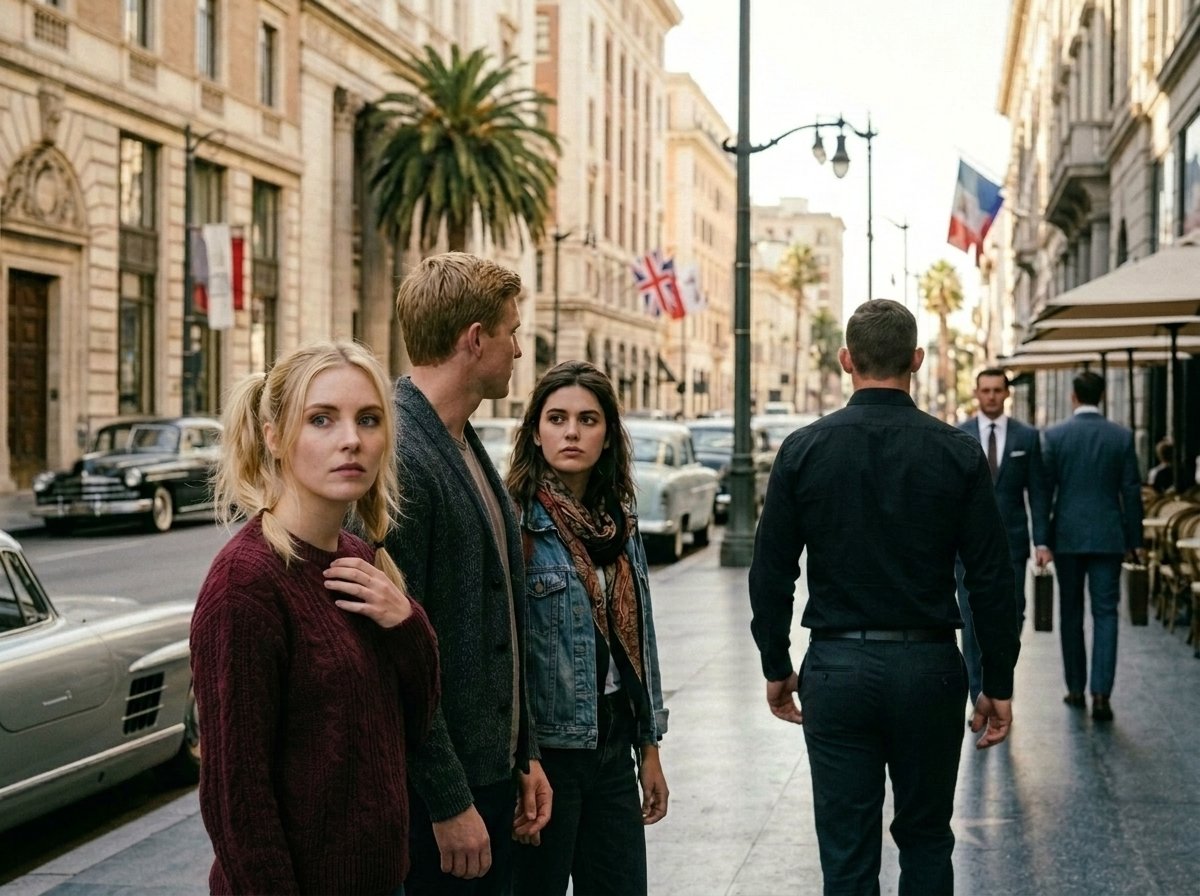
Mitchell Royel captured these on iPhone 8/17/26 today in the heart of the fashion district. The air was electric, the streets alive with movement, colors, and the pulse of creativity. We’re listening to So Bad Together by Tash Blake, and it feels like the perfect soundtrack for this moment—a charged melody weaving through the hum of conversation, the rhythm of footsteps, and the occasional laughter drifting through. It’s the kind of day where everything feels immediate, vivid, and strangely timeless.
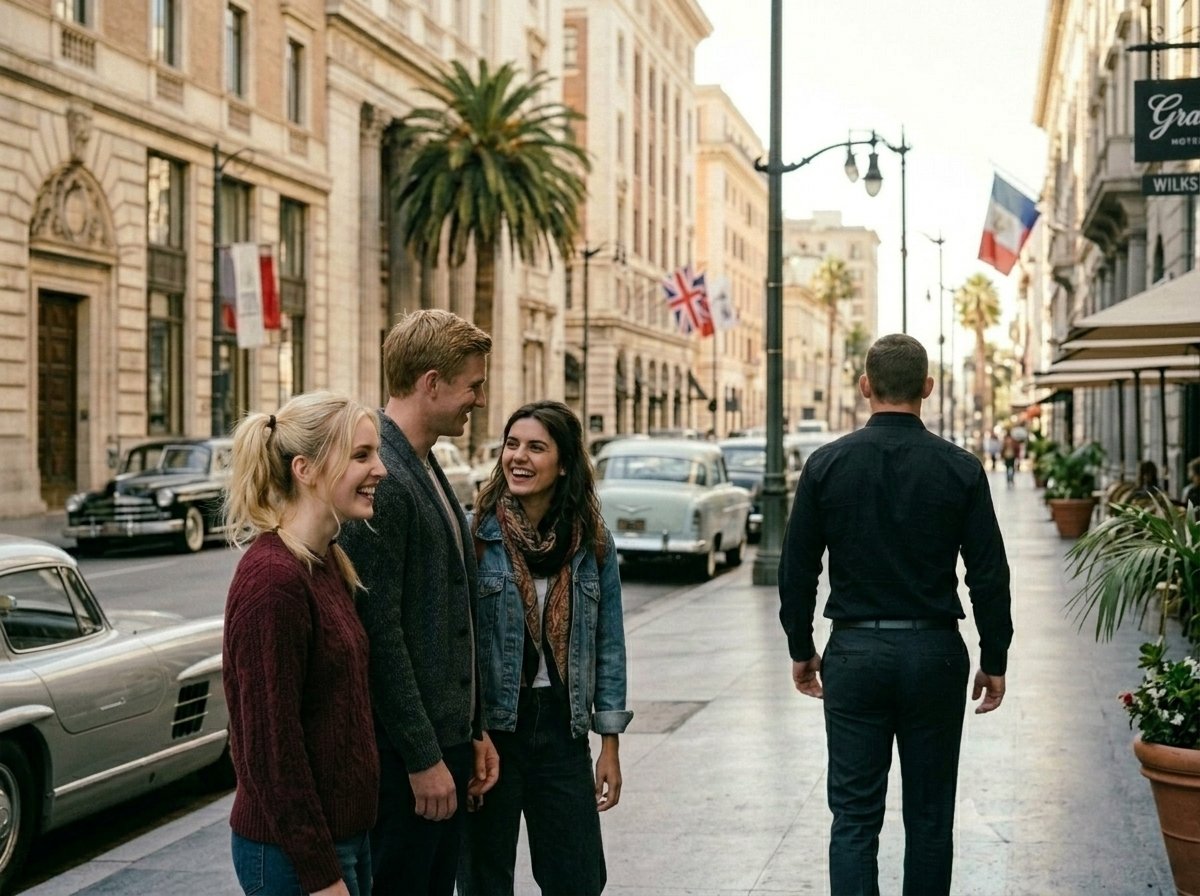
The city wore its autumn like a woman who no longer needed anyone's approval—gold in the trees, amber in the windows, the streets humming with the particular music of people who had somewhere better to be. She walked down the avenue with her pigtails catching the light, her sweater the color of a bruise finally healed, and she was laughing at something someone had said before she even reached the corner.
Years had passed. Enough of them to soften the edges of what used to cut her. She had learned to measure time not in seasons but in the slow return of her own laughter, and now, walking between the friends who had become her chosen family, that laughter came easily, spilling out of her like water finding its level.
Beside her walked the young man she loved now—the one whose hands smelled faintly of roasted beans and cardamom, who could pull a shot of espresso so perfect it made grown men close their eyes. He made the best espresso in New York City, and everyone who tasted it said so, though he only ever shrugged and smiled that quiet smile, the one that asked for nothing and somehow gave everything.
He was not a comet.
He was a hearth.
And she had learned, at last, the difference between being dazzled and being warmed.
They were talking about nothing.
About everything.
About the small holy nonsense that fills the space between people who trust each other.
And then she saw him.
He came around the corner the way a man walks when he still believes the world is watching—shoulders squared against an audience that had long since gone home. The years had done their quiet arithmetic on him.
The button down was expensive but tired at the seams. The hair he'd once tossed like a banner had thinned into something he kept trying to remember it was. His campaign had collapsed years ago, a promise that curdled the moment it met the light. And the finance world he'd fled into afterward, that gleaming second act he'd been so certain would crown him—it had spat him back out, quietly, the way the sea returns what it cannot digest.
She watched him pass.
He did not see her.
Or he saw her and pretended not to, which was its own kind of confession.
The ego was still there, worn like cologne gone stale, an arrogance that had outlived every reason it once had to exist.
He moved through the crowd as though it owed him passage, and the crowd, indifferent, simply moved around him like water around a stone.
Pride goes before destruction, a haughty spirit before a fall. — Proverbs 16:18
She thought of that verse without meaning to. It rose in her like a bell she hadn't rung. She had spent so many nights once, praying for his rise, believing his light was the only light. And here he was, dimmed to a flicker, still convinced he blazed.
Her boyfriend followed her gaze. He recognized the man—she had told him the story once, all of it, the fire and the fall and the long climb back to herself. He didn't stiffen. He didn't puff himself up to defend her against a ghost. He only leaned in, close to her ear, and said something soft that made her laugh.
And then they all laughed. The whole small group of them, quietly, the way you laugh at a joke the universe has finally gotten around to telling. Not cruel laughter. Not triumphant, exactly. Just true. The kind of laughter that comes when you realize the monster under the bed was only ever a coat on a chair.
There was nothing to do. Nothing to say. No speech to give, no wound to reopen, no reckoning to demand. He walked by, and they let him walk by, and the letting-go was so complete it felt like grace. She did not need him to be sorry. She did not need him to see how well she'd turned out, how her days now overflowed with the good ordinary things he could never have given her. She had stopped auditioning for his applause a long time ago.
He turned the corner and was gone. Swallowed by the city that had once nearly worshipped him and now could not be bothered to remember his name.
She turned back to her friends. To the man whose love asked nothing and offered everything. The autumn light poured down the avenue like something forgiven. And she laughed again—not at him now, but at the sheer sweetness of a life she had built from the ashes of the one she'd almost given away.
They walked on. The city hummed its indifferent song. And somewhere behind them a proud man kept walking, still certain the whole world was watching, never once suspecting that the only people who had noticed him at all were three friends on a street corner, laughing gently, letting him go.
-M.R, Ryder, GG Collective
Epilogue: There is a particular freedom that arrives only after the fire has burned itself out—a freedom that does not announce itself with trumpets, but settles quietly into the bones like warmth after a long cold. She had learned that the sweetest revenge is not revenge at all, but indifference wearing the face of joy. To watch the one who broke you walk past and feel nothing but a faint, kind amusement—that is the mark of a wound fully healed, a scar that no longer aches when the weather turns.
Pride, she understood now, is its own slow executioner. It needs no enemy, no reckoning, no hand raised against it. It simply keeps walking, chin lifted, certain of an applause that stopped years ago, blind to the empty theater it performs within. The man who had once seemed a comet had only ever been a firework—brilliant, deafening, and gone before the smoke could clear. And she had mistaken the noise for permanence, the flash for a sun.
But she had built her life since then on steadier ground. On the man who made espresso like a prayer. On friends whose laughter healed instead of harmed. On the quiet, unshakeable knowledge that she had survived the thing she once believed would end her—and not merely survived, but flourished, greener and gladder than before.
This is how the story ends—not with vengeance, but with a shrug and a smile. Not with a fall witnessed and celebrated, but with a woman so full of her own good life that the falling of a proud man barely registers, a leaf drifting past a window she has long since stopped looking out of. There was nothing to do, and so she did the bravest thing of all: she kept walking, kept laughing, kept loving the life she had earned. And the pride that had once nearly ruined her walked on toward its own quiet destruction, alone, while she walked home—toward warmth, toward laughter, toward everything he had never known how to hold.