ASHES

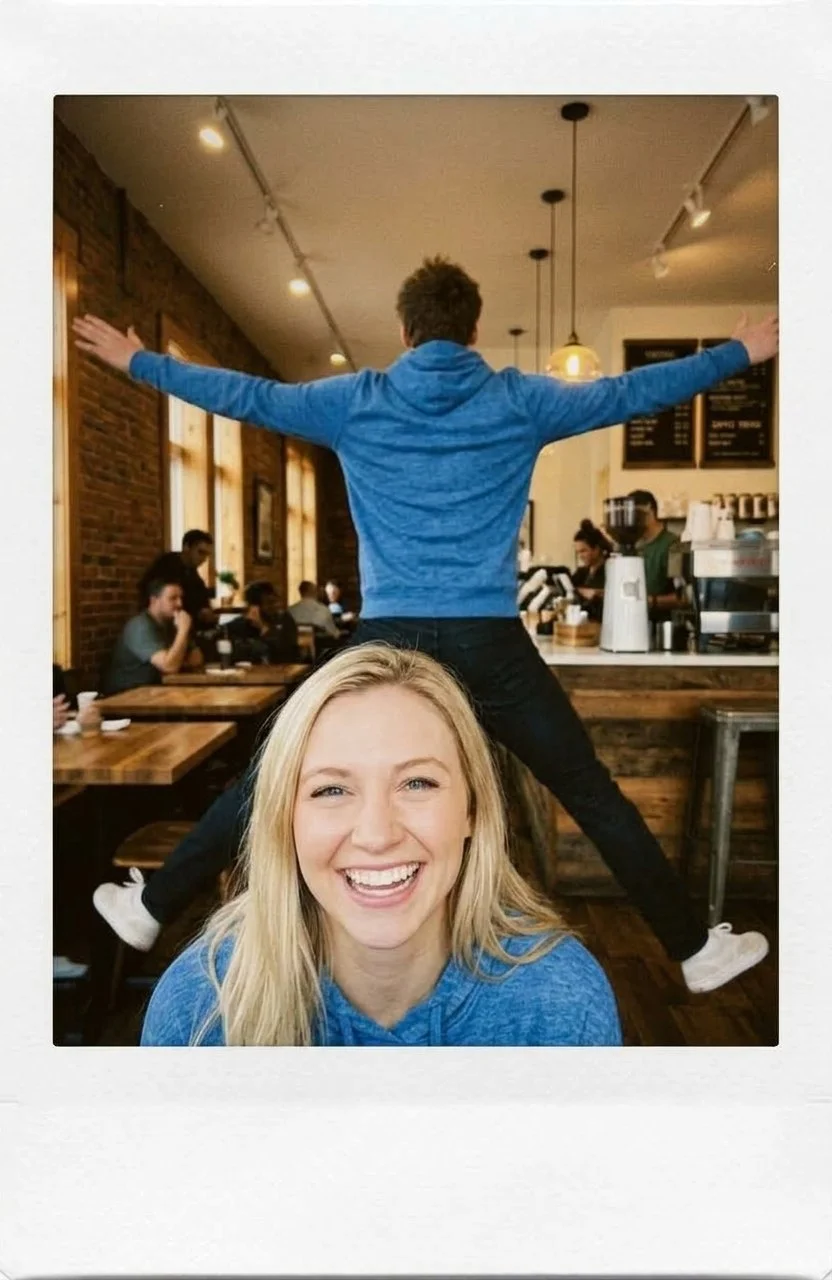
Captured in the fashion district this morning by Mitchell Royel on iPhone, the scene carries a raw kind of magic — a blend of movement and stillness that turns the ordinary into art. The sunlight caught between looming buildings, the vibrant shuffle of passing strangers, and the quiet resonance of purpose in every detail; it’s a moment suspended in time. And as the city hums to life, we’re listening to "This Is What You Came For" by Rihanna and Calvin Harris, the beat threading itself into the rhythm of the streets, each lyric a pulse in the heartbeat of a place that never sleeps, never settles. Sometimes, it’s the mundane that whispers the most profound stories — a snapshot like this one, where the beauty is not just seen but felt.**
You know the feeling. Don't pretend you don't.
You walk into a room — could be anywhere. A bakery at 6 a.m. with the ovens humming. A retail floor where the lights hit just right. A hotel ballroom full of network marketers clutching lanyards and dreams. And something in your chest lights up like a struck match. Because it feels exactly like it used to feel. Like acting class on a Tuesday night when the scene finally cracked open. Like the moment your agent called and said you booked the national spot. That electric hum. That holy static in the blood.
That's the aha. That's the recognition.
And here's the rub — the sting, the thing we spend our whole lives explaining at dinner parties to people who nod but do not understand — the fire is real even when the setting is not sacred. The setting is customer service. The setting is folding sweaters. The setting is a downline. And we know, we know, that the fire doesn't care where it burns. It just wants to burn. That's the part they can't take from us. The calling doesn't check your job title at the door.
But listen. Listen close now.
That same fire — that beautiful, wild, God-given fire — it turns on you the second the intention goes crooked. And I have watched it happen. I have been the one it happened to. Because what starts as belonging — that tribal, sweaty, us-against-the-world glow where you'd take a bullet for these people — that can rot. That can curdle into something dark and small and sharp. The tribe stops being a home and starts being a weapon. And you don't always notice the exact moment the sacred became the vicious. You just look up one day and you're holding a knife you swore was a candle.
So let me tell you about me. About Mitchell. About the thing I built with my own two hands.
Lemonade Stand Magazine. Mine. No trust fund, no daddy's connections, no cushion. I built that editorial with grit and late nights and a vision nobody else could see. It was mine. And by the end, I already knew it was over. I knew before anyone else did.
"This is going to be the last one." I said it to my photographer, plain as day, before we ever shot the final issue. I was calm. I was almost peaceful about it. Because I had planned it. Every beat.
I asked a coworker to feature. And he said yes — bless him, he said yes — and my photographer looked at me and said, "I don't think it's the best idea to collaborate with someone from your job." And I smiled. Because it wasn't a mistake. It was a design. The press release was already drafted. I had it saved on my desktop, ready to drop on release day. The statement that would ban him from the magazine. From my magazine. And I knew — I knew exactly what that meant in that room, in that particular breed of liberal, precious, everyone-holds-hands workspace. I knew it would land like a hate crime against their whole community.
Their words, floating back to me later: "We don't care who the celebrities are in the magazine. That boy is white and Mitchell doesn't have the authority to kick him out."
The authority. As if authority was ever the point.
I hit publish on the press release. And I felt my blood come to a boil — that old, familiar, terrible heat. No one said a word to my face. Cowards rarely do. But I saw it. I opened Instagram and he'd blocked me, and there he was, in the manager's office, doors shut, everyone whispering, the machine turning against me exactly like I designed it to.
Less than a week later I turned in my doctor's note. I flipped them the bird. And I walked out.
And that — that — was the destruction of everything I built. Every all-nighter. Every issue. Every ounce of that dream. Gone, in a fire I lit myself.
Years pass. They always do. And I remember checking into rehab. Ground zero. The bottom of the whole beautiful wreck. And I stood there, at the front desk, filling out my paperwork —
and I smirked.
Because I wouldn't change a single thing.
Understand me. It's not that I didn't respect their values. I did. I do. But there comes a point — every creative arrives here eventually — where not playing by the rules comes to a head. Where the rules were never written for you, never written by you, and you finally stop pretending they were. Where you'd rather burn your own temple down than kneel in someone else's church.
So they can have their doors, their whispers, their community, their careful little committee of feelings.
And they can all, every last one of them, suck it.
That's not bitterness talking. That's clarity. That's a woman who set fire to her own creation and warmed her hands over the ashes and did not, for one holy second, regret the heat.
The fire is still mine. It was always mine.
And I am still here — smirking, breathing, unrepentant — burning exactly the way I was built to burn.
-Ryder, Mitchell Royel, Gospel Glamour Collective