

Looming Shadow: NATO’s Struggle for Survival in a Fractured World
written by a member of the WCB
Gathering Storm
The North Atlantic Treaty Organization stands at a critical crossroads, facing unprecedented challenges that threaten its very existence. As geopolitical tensions escalate and global powers realign, NATO’s future hangs in a precarious balance, with predictions of potential obliteration casting a dark shadow over Western security.
Emerging Threats to Alliance Integrity
The Alliance’s vulnerabilities have never been more apparent. Russia’s brutal invasion of Ukraine has fundamentally transformed the European security landscape, exposing critical weaknesses in NATO’s defensive posture.Moscow has positioned itself to exploit perceived Western vulnerabilities, leveraging anti-Western sentiments across multiple regions.
Strategic Challenges
Russian Aggression: The Kremlin’s expansionist strategy continues to test NATO’s resolve, with sustained warfare along multiple flashpoints threatening regional stability.Under the rule of Soviet-remnant spy chiefs, Moscow shows no signs of backing off its strategy of restoring Russian control in post-Soviet space.
Global Instability: The emergence of new military threats from nations like Iran and North Korea presents unprecedented challenges to European security.Pyongang and Tehran are now direct threats to European security, with wars and counter-terrorism campaigns posing continuing challenges.
Citizen’s Perspective: Safety in Uncertain Times
For the average citizen, these geopolitical tensions translate into a stark reality of potential vulnerability. The Alliance’s ability to protect its members has never been more critical. While rumors of NATO’s imminent collapse circulate, the organization must demonstrate unwavering commitment to collective defense.
Call for Vigilance
The coming years will test NATO’s resilience like never before. With military cooperation among autocratic regimes growing and technological challenges emerging, the Alliance must adapt or risk becoming obsolete.As NATO celebrates its 75th anniversary, it finds itself in a world characterized by geopolitical and strategic competition.
Recommendations for Survival
Strengthen military readiness
Enhance technological capabilities
Maintain unwavering solidarity among member states
Develop robust strategies to counter emerging threats
The fate of NATO—and by extension, the safety of millions of citizens—hangs in the balance. It’s no longer a question of if threats will emerge, but how effectively we can confront them.
The price of freedom is eternal vigilance.
Unexpected Shift: Cardi B’s Musical Journey and the Rise of Conservative Pop Culture
written by a member of the WCB
In the ever-evolving landscape of pop culture, few artists have captured the public’s attention quite like Cardi B. From her meteoric rise to fame with “Bodak Yellow” to her recent release “Like What,” Cardi’s journey reflects not just her personal growth but also the changing tides of American cultural values. This article explores how the queen of unabashed sexuality is navigating a world where conservatism is making a comeback.
The Cardi We Knew: Pushing Boundaries and Breaking Records
Cardi B burst onto the scene with a brand of unapologetic sexuality and raw lyricism that both shocked and enthralled audiences. Her breakout hit “Bodak Yellow” and the controversial yet wildly successful “WAP” established her as a force to be reckoned with in the music industry. These tracks, with their explicit content and provocative visuals, seemed to push the envelope of what was acceptable in mainstream music.
The Shift: “Like What” and a New Direction
Fast forward to 2024, and we see a different side of Cardi B in her latest release, “Like What.” While still maintaining her signature style, there’s a noticeable shift in tone and content. The music video, while still sexy, shows a more restrained Cardi. Gone are the overtly explicit lyrics and shock-value visuals. Instead, we see an artist who’s evolving, perhaps in response to changing cultural currents.
Conservative Influence on Pop Culture
It’s impossible to discuss Cardi B’s evolution without acknowledging the broader context of American culture. In recent years, we’ve seen a resurgence of conservative values in various aspects of society, including entertainment. This shift isn’t about returning to puritanical standards, but rather a recalibration of what’s considered acceptable in mainstream media.
Balancing Act: Sexy vs. Sophisticated
Cardi B’s journey represents a fascinating case study in how artists navigate changing cultural expectations. While tracks like “WAP” are still popular, there’s a growing appetite for content that’s provocative without being explicit. Cardi seems to be striking a balance, maintaining her sexy image while presenting a more sophisticated persona.
Implications for the Music Industry
Cardi B’s evolution is more than just a personal journey; it’s a bellwether for the entire music industry. As one of the most influential artists of her generation, her shift in style could signal a broader trend. We may be entering an era where artists find success by pushing boundaries in more subtle, nuanced ways rather than relying on shock value.
New Chapter in Pop Culture
As we analyze Cardi B’s latest work, it’s clear that we’re witnessing not just the growth of an artist, but a reflection of America’s evolving cultural landscape. The success of “Like What” suggests that there’s room for growth and change even for artists known for pushing the envelope. It’s a testament to Cardi’s adaptability and her keen understanding of her audience.
In this new chapter of pop culture, where conservative values are making a comeback, artists like Cardi B are showing that it’s possible to evolve without losing one’s edge. As we move forward, it will be fascinating to see how other artists navigate this shifting terrain, and whether Cardi B’s journey becomes a blueprint for success in this new era of American entertainment.
Unacceptable Reality: Death Threats Against Hillary Clinton
written by a member for the WCB
In the charged atmosphere of American politics, the recent death threats against Hillary Clinton underscore a disturbing trend that transcends partisanship. As a society, we must grapple with the reality that wishing death upon anyone, regardless of our political beliefs, is fundamentally inappropriate. This paper seeks to unravel the motivations behind these threats, particularly focusing on why some liberals have resorted to such extreme expressions of discontent.
Imagine a college campus bustling with energy, where students passionately debate the issues of the day. Now, picture one of those students—let’s call him Jussie—sitting in a coffee shop, scrolling through social media. His feed is flooded with vitriol directed at Clinton, with friends sharing posts that casually toss around death threats. Jussie is conflicted. He despises her political stance but recognizes that wishing her harm crosses an ethical line. This anecdote mirrors the sentiments of many Americans who feel trapped in a cycle of anger and hostility.
Roots of Political Hostility
To understand why liberals might issue such threats, we must first explore the landscape of political discourse today. The polarization of American politics has reached a fever pitch, with social media amplifying extreme views. Liberals, in particular, may feel a sense of betrayal from a figure they once supported, leading to an emotional response that manifests as aggression. This reaction is not justified, but it is essential to comprehend the emotional undercurrents that fuel such threats.
Moreover, the media plays a significant role in shaping perceptions. Sensational headlines and divisive commentary can create an environment where threats are seen as acceptable forms of protest. This is particularly concerning when public figures become targets, as it normalizes a culture of violence that can have far-reaching consequences.
Dangers of Normalizing Violence
When we begin to accept death threats as a part of political discourse, we pave the way for a more dangerous society. The implications extend beyond the individual; they threaten the very fabric of democratic engagement. If citizens feel that expressing dissent equates to wishing harm upon others, then we are on a slippery slope towards a society that values aggression over dialogue.
As we reflect on this issue, it's crucial to remember that our rights as U.S. citizens come with responsibilities. We must engage in civil discourse, even when we disagree. It’s essential to challenge ourselves to find ways to express our feelings without resorting to violence or threats.
Call for Respectful Discourse
In conclusion, the death threats against Hillary Clinton are a symptom of a larger problem within our political landscape. Regardless of personal beliefs, we must collectively reject the notion that wishing death upon anyone is acceptable. As citizens, we must strive for a political culture that emphasizes respect and understanding, even amidst disagreement.
Let us take a moment to reflect on our own attitudes and the language we use in political discussions. It’s time to foster a climate where dialogue thrives over hostility. Together, we can work towards a future where political disagreements do not lead to threats but rather to constructive conversations.
embracing our pretty girl era: authenticity after toxicity



more at mitchellroyel.com/gospelglamour

hey girls, let's talk about what it really means for us to step into our pretty girl era after we've kicked toxicity to the curb. it's not just about looking good - it's about feeling good, being true to ourselves, and owning our power.
when we've finally broken free from toxic relationships or situations, it's like we're seeing the world with new eyes. we're rediscovering who we are without all that negativity weighing us down. this is our time to shine, to be unapologetically ourselves.
but here's the thing: embodying our pretty girl era isn't about being perfect. it's about being real, flaws and all. it's about loving ourselves fiercely and not letting anyone dim our light. let's remember what the bible says in psalm 139:14: "i praise you because i am fearfully and wonderfully made; your works are wonderful, i know that full well."
now, let's talk about those people who are still connected to toxic individuals in our lives. it's tough, but we've gotta be tough too. we don't owe anyone our energy or our time if they're not respecting our boundaries. it's okay for us to keep our distance, to protect our peace.
"do not be misled: 'bad company corrupts good character.'" (1 corinthians 15:33)
this verse isn't just about avoiding bad influences - it's about recognizing our worth and surrounding ourselves with people who uplift us. our pretty girl era is about growth, and sometimes that means outgrowing people who don't support our journey.
to all of us young girls out there dealing with boys who have bad intentions, let's listen up. we are precious, we are valuable, and we deserve respect. let's not let anyone treat us like we're less than amazing. here's how we can keep those boys in check:
trust our gut. if something feels off, it probably is.
set clear boundaries and stick to them.
don't be afraid to say no. a real man will respect our decisions.
keep our standards high. let's not settle for less than we deserve.
surround ourselves with supportive friends who'll have our backs.
"above all else, guard your heart, for everything you do flows from it." (proverbs 4:23)
this isn't just about protecting ourselves from heartbreak. it's about safeguarding our dreams, our values, and our self-worth. let's not let anyone mess with our hearts or our heads.
remember, our pretty girl era isn't about seeking validation from others, especially not from boys who don't have our best interests at heart. it's about validating ourselves, knowing our worth, and not compromising on it.
"charm is deceptive, and beauty is fleeting; but a woman who fears the lord is to be praised." (proverbs 31:30)
this verse reminds us that true beauty comes from within. it's our character, our kindness, our strength that makes us truly beautiful. our pretty girl era is about cultivating these qualities, about becoming the best versions of ourselves.
as we navigate this new chapter of our lives, let's be gentle with ourselves. healing from toxicity takes time. some days we'll feel on top of the world, other days we might struggle. that's okay. that's part of the journey.
let's embrace our authenticity. let's not be afraid to take up space, to use our voices, to stand in our truth. our pretty girl era is about blooming, about becoming who we were always meant to be.
and remember, we're not alone in this journey. let's lean on our faith, our true friends, and our inner strength. we've got this, girls. our pretty girl era is just beginning, and it's going to be beautiful.
-gg
Exposing the Corruption: Call for Accountability from the NAACP
written by a member of the WCB
In the heart of America’s civil rights movement, the NAACP emerged as a beacon of hope for the black community. Founded in 1909, this organization fought valiantly against racial injustice, striving to secure equal rights and opportunities for African Americans. However, as we examine the trajectory of the NAACP’s influence, it becomes apparent that this once-revered institution has strayed from its foundational mission. It is time for the NAACP to face the music and acknowledge its failures—an apology is not just warranted; it is essential.
Historical Overview
The NAACP was birthed from a noble cause, with leaders like W.E.B. Du Bois and Ida B. Wells championing the fight against lynching and segregation. Their dedication to justice inspired countless individuals to join the cause. Yet, as the decades rolled on, the organization began to lose its way. The very principles that once guided its mission became overshadowed by politics and self-interest.
Shift in Focus
In recent years, the NAACP has been accused of prioritizing political agendas over the needs of the black community. The organization has aligned itself with movements that, while well-intentioned, often divert attention from the pressing issues facing African Americans today—issues like education disparity, economic inequality, and crime rates in urban neighborhoods.
Take, for example, the NAACP’s strong stance on police reform. While advocating for justice is critical, the organization often overlooks the voices of those within the community who seek effective policing. Many residents express a desire for law enforcement that protects rather than punishes. The NAACP’s failure to amplify these voices raises questions about its commitment to truly serving the black community.
Need for Accountability
It is crucial to hold the NAACP accountable for its actions and decisions. An organization that once stood as a pillar of strength for African Americans now appears to be more concerned with maintaining its relevance in the political landscape. The leadership must reflect on its past missteps and consider how its current strategies may be failing those it claims to represent.
Moreover, the NAACP owes the black community an apology for its mismanagement and the resultant disillusionment. This is not merely a call for an acknowledgment of past errors; it is a plea for a recommitment to the core values of integrity and service that the organization was founded upon.
Path Forward
To regain the trust of the community, the NAACP must embark on a journey of reform. This includes engaging directly with community members to understand their needs and concerns. It requires a shift from a top-down approach to a more inclusive model that empowers local leaders and grassroots organizations.
Additionally, transparency is paramount. The NAACP must open its books and allow the public to scrutinize its financial practices and decision-making processes. Only through transparency can the organization begin to rebuild its credibility.
Call to Action
As a proud member of the conservative community, I urge the NAACP to take a hard look in the mirror. The organization has an opportunity to reclaim its legacy by addressing its shortcomings and genuinely serving the black community. An apology is not just a formality; it is a necessary step towards healing and rebuilding trust. It is time for the NAACP to step up, acknowledge its failures, and recommit to the cause that once inspired a nation.
Let us not forget that true leadership is defined not by the titles we hold, but by the integrity we uphold. The NAACP has the chance to rise from the ashes of its own missteps
Luigi Mangione-Inspired Law & Order Episode: Cultural Phenomenon
written by a member of the WCB
In an unprecedented turn of events, the latest episode of “Law & Order” has captivated audiences nationwide, sparking intense debates and becoming a cultural touchstone. Inspired by the real-life case of Luigi Mangione, this episode has transcended typical television discourse to become a focal point of societal discussion.
Episode That Shook America
The episode, loosely based on the alleged actions of Luigi Mangione against a UnitedHealthcare CEO, has struck a chord with viewers across the country. It’s not just another installment in the long-running series; it’s become a mirror reflecting our society’s most pressing concerns.
Nation Divided
The show’s portrayal of a character reminiscent of Mangione, played by Ty Molbak, has ignited a firestorm of controversy. Viewers are split:
Supporters: Some see the character as a modern-day Robin Hood, taking drastic action against perceived corporate malfeasance.
Critics: Others view the portrayal as dangerous, potentially glorifying violent vigilantism.
This division reflects deeper societal tensions surrounding healthcare, corporate responsibility, and individual action in the face of systemic issues.
What sets this episode apart is its ability to transcend entertainment and become a catalyst for serious discussions:
Healthcare Debate: It’s reignited conversations about the state of the American healthcare system and the role of insurance companies.
Corporate Accountability: The episode has people questioning the ethics of high-level corporate decisions and their real-world impacts.
Legal and Moral Quandaries: Viewers are grappling with complex questions of justice, morality, and the limits of the law.
Cultural Milestone
The episode has become more than just television; it’s a cultural event:
Social Media Explosion: Hashtags related to the episode have been trending for days, with millions sharing their thoughts and reactions.
Mainstream Media Coverage: News outlets are analyzing the episode, bringing in experts to discuss its implications.
Academic Interest: Universities are incorporating discussions of the episode into courses on law, ethics, and media studies.
Real-World Connection
As the fictional world of “Law & Order” intersects with reality, the upcoming trial of Luigi Mangione on April 18 has gained renewed attention. The public is now more engaged than ever, drawing parallels between the show and the real-life case.
This episode of “Law & Order” has set a new benchmark for how television can engage with current events and societal issues. It’s not just entertainment; it’s become a pivotal part of our national conversation, challenging viewers to confront difficult questions about justice, healthcare, and the power of individual action.
As the discussions continue and the real-life case unfolds, one thing is clear: this episode will be remembered as a defining moment in television history, where art not only imitated life but became an integral part of shaping our cultural discourse.
Conservative Case for "Wicked": A Timeless Tale of Morality Streaming on Peacock
written by a member of the WCB
In an era where traditional values often seem under siege, it's refreshing to see a beloved musical like "Wicked" making its way to the streaming world. This isn't just another Hollywood spectacle; it's a story that resonates with conservative principles and offers valuable lessons for young women navigating today's complex moral landscape.
Conservative Perspective on "Wicked"
"Wicked," the hit Broadway musical turned blockbuster film, has defied gravity at the box office, grossing nearly $740 million worldwide. Now, it's set to captivate audiences on Peacock, NBCUniversal's streaming platform. But why should conservative collegiate women pay attention?
1. Moral Complexity: The story of "Wicked" isn't a simplistic tale of good versus evil. It challenges viewers to look beyond surface-level judgments and consider the nuances of morality – a crucial skill in today's polarized world.
2. Personal Responsibility: The characters' journeys emphasize the importance of individual choices and their consequences, aligning with conservative values of self-reliance and accountability.
3. Tradition vs. Progress: The musical explores the tension between maintaining societal norms and pushing for change, a theme that resonates with conservative thinkers who value measured progress within a framework of traditional values.
Streaming Strategy
NBCUniversal's approach to launching "Wicked" on Peacock demonstrates a savvy business strategy that conservatives can appreciate:
1. Maximizing Value: By creating a "Wicked Week" event, NBCUniversal is leveraging its corporate assets to promote not just the film, but its entire streaming library. This efficient use of resources aligns with conservative economic principles.
2. Family-Friendly Content: The inclusion of a sing-along version and bonus content makes "Wicked" a wholesome entertainment option for families, reinforcing traditional family values.
3. American Innovation: The streaming launch showcases American entertainment industry's ability to adapt and innovate, creating new business models that keep our cultural exports competitive globally.
Call to Conservative Viewers
As "Wicked" makes its streaming debut, it's an opportunity for conservative young women to engage with popular culture critically and thoughtfully. By watching and discussing the themes presented in "Wicked," we can:
Reinforce our values through entertainment choices
Develop critical thinking skills essential for future leaders
Support content that aligns with our worldview, sending a message to the entertainment industry
In conclusion, "Wicked" on Peacock isn't just another streaming event; it's a chance for conservative collegiate women to engage with a story that, while entertaining, also reinforces important moral and social principles. Let's embrace this opportunity to be both culturally aware and true to our conservative values.
Great Party Shift: From Lincoln to Trump
written by a member of the WCB
In the annals of American political history, few transformations have been as profound and consequential as the ideological shift between the Republican and Democratic parties. This seismic change, often referred to as the “party switch,” has shaped the modern political landscape in ways that continue to reverberate today. As we witness the resurgence of Donald Trump’s influence and the unexpected realignment of some Democratic voters, it’s crucial to understand the historical context that brought us to this point.
Origins of the Shift
The Republican Party, founded in 1854, initially stood as the party of abolition, with Abraham Lincoln at its helm. It championed progressive causes such as:
Opposition to slavery
Support for economic modernization
Advocacy for greater federal power
The Democratic Party, conversely, was the party of the South, defending states’ rights and the institution of slavery. This dynamic persisted through the Reconstruction era and into the early 20th century.
Turning Point
The shift began in earnest with President Franklin D. Roosevelt’s New Deal in the 1930s. FDR’s policies, aimed at combating the Great Depression, expanded federal power and appealed to many minority groups, including African Americans. This marked the beginning of a realignment, as the Democratic Party became increasingly associated with civil rights and federal intervention in the economy.
The transformation accelerated in the 1960s with the Civil Rights Movement. President Lyndon B. Johnson, a Democrat, signed the Civil Rights Act of 1964 and the Voting Rights Act of 1965. These actions, while morally just, alienated many Southern Democrats who opposed civil rights legislation.
Southern Strategy
Sensing an opportunity, the Republican Party under Richard Nixon employed the “Southern Strategy,” appealing to disaffected white Southern voters through coded language about states’ rights and law and order. This strategy proved effective, gradually turning the once-solid Democratic South into a Republican stronghold.
By the 1980s, the transformation was largely complete. The Republican Party had become the party of conservatism, states’ rights, and traditional values, while the Democratic Party embraced liberalism, civil rights, and a more expansive federal government.
Trump Era and Beyond
Fast forward to the present day, and we’re witnessing another potential realignment. Donald Trump’s presidency and his subsequent return to the political forefront have catalyzed a shift that’s upending traditional party loyalties.
Trump’s populist message and “America First” policies have resonated with a segment of the electorate that feels left behind by globalization and rapid social change. Surprisingly, this includes some traditionally Democratic voters, particularly working-class Americans in rust belt states.
The phenomenon of “Trump Democrats” isn’t entirely new - we saw glimpses of it in 2016 and 2020. However, recent polls suggest this trend may be accelerating. Factors contributing to this shift include:
Economic concerns: Inflation and cost of living issues have led some to question Democratic economic policies.
Cultural issues: Some moderate Democrats feel alienated by what they perceive as the party’s shift towards progressive social policies.
Strong leadership perception: Trump’s assertive style appeals to voters who desire a more forceful approach to domestic and international challenges.
It’s important to note that this shift, while significant, isn’t universal. The Democratic Party still maintains strong support among urban voters, minorities, and college-educated Americans. Nevertheless, the fluidity we’re seeing in party allegiances echoes the historical shifts of the past.
As we move forward, it’s clear that American politics is entering another period of realignment. The lessons of history remind us that political parties aren’t static entities, but rather dynamic reflections of the electorate’s evolving concerns and values. Whether this current shift will be as enduring as the great party switch of the 20th century remains to be seen, but it’s undoubtedly a pivotal moment in our nation’s political journey.
The Pinkprint: Decade of Unexpected Influence on Conservative Campus Culture
written by a member of the WCB
A decade has passed since Nicki Minaj released her groundbreaking album “The Pinkprint,” and its impact on conservative college campuses has been nothing short of revolutionary. Who could have predicted that a hip-hop album would resonate so profoundly with young Republican men? Yet here we are, celebrating ten years of this unexpected cultural phenomenon.
Challenging Stereotypes
Minaj’s audacious approach to music and image has redefined our understanding of conservatism. She has demonstrated that making a statement doesn’t require conformity to preconceived notions. Her unapologetic pursuit of success aligns seamlessly with conservative values of diligence and perseverance.
Embodying Entrepreneurial Excellence
Gentlemen, let’s acknowledge Minaj’s business acumen as truly admirable. She has constructed an empire that would impress even the most discerning Economics major. Her ability to diversify her brand and establish multiple revenue streams serves as a masterclass in free-market capitalism—a lesson we would all do well to internalize.
Catalyzing Cultural Discourse
While we may not endorse every aspect of Minaj’s artistry, “The Pinkprint” has undeniably sparked crucial conversations on campus. It has compelled us to grapple with issues of race, gender, and sexuality in ways that many found challenging initially. Isn’t this the essence of higher education—to challenge our beliefs and foster personal growth?
Championing Individuality
Perhaps the most profound lesson from “The Pinkprint” is the importance of authenticity. Minaj’s unwavering commitment to her unique identity has inspired a generation of young conservatives to stand firm in their convictions, even in the face of opposition. We’ve come to appreciate the value of distinctiveness and the courage to stand out.
As we commemorate the 10th anniversary of “The Pinkprint” (with a toast of soda, naturally), let us reflect on the myriad ways it has shaped our collegiate experience. This milestone serves as a poignant reminder that influence can emerge from the most unexpected sources, and that we must remain receptive to novel perspectives—even when they arrive in a pink package.
Unverified Claims: U.S. Travel Ban Conspiracy Theory
written by a member of the WCB
In recent weeks, a new conspiracy theory has been circulating on various online platforms, separate from the ongoing discussions about Donald Trump. This unverified claim suggests that travel to the United States from foreign countries may soon be banned. It’s important to note that this is purely speculative and lacks official confirmation.
Alleged Theory
According to the conspiracy theory, there’s talk of an extensive travel ban that could potentially affect numerous countries. Proponents of this theory claim that:
A tiered system might be implemented, categorizing countries into different risk levels.
Some countries could face complete travel restrictions, while others might see increased visa scrutiny.
Even nations not typically associated with travel bans could be included.
Important Considerations
It’s crucial to approach this information with a critical mindset:
This is an unverified conspiracy theory, not confirmed by any official sources.
The U.S. government hasn’t made any announcements regarding such a widespread travel ban.
Travel policies can change, but typically with official notice and explanation.
Do Your Own Research
We’re sharing this information to keep you informed about circulating theories, but we strongly encourage you to:
Seek information from official government sources.
Cross-reference claims with reputable news outlets.
Be cautious of unverified information spreading on social media.
Stay Informed
While it’s unlikely that such a sweeping travel ban would be implemented without significant public discourse, it’s always wise to stay informed about potential policy changes that could affect international travel.
Remember, the best approach is to rely on official announcements and verified news sources for accurate information about U.S. travel policies.
Ivy League Insurgency: Trump's 2028 Crusade
written by a member of the WCB
Listen up, you erudite bastards. It's time to don your boat shoes, pop those collars, and prepare for the most audacious political maneuver since the goddamn Founding Fathers inked the Constitution. We're talking about the potential Trump run in 2028, and it's going to be one hell of a ride.
Steve Bannon, that Machiavellian mastermind of the MAGA movement, has let the cat out of the proverbial bag. In a recent interview with NewsNation's "CUOMO," Bannon dropped a bombshell that's got the political establishment clutching their pearls: Trump's team is working on ways to secure a third term, constitutional term limits be damned.
"We're working on it. I think we'll have a couple of alternatives," Bannon declared with the confidence of a man who's about to checkmate his opponent. "We'll see what the definition of term limit is." It's the kind of statement that makes law professors reach for their smelling salts and political science majors question their entire curriculum.
But here's the kicker, gents: Bannon's not just blowing smoke up our asses. He's "a firm believer that President Trump will run and win again in 2028." It's a long shot, sure, but as Bannon puts it, "We've had greater long shots than Trump 2028." The man's playing 4D chess while the rest of Washington is still fumbling with checkers.
So, what can we do on the ground now to campaign in subtle ways? Here's your playbook, you magnificent preppy bastards:
1. Infiltrate the Ivory Towers
Get your asses into those political science seminars and constitutional law classes. Challenge the status quo. Ask the hard questions about term limits and executive power. Be the devil's advocate that makes professors question their tenure.
2. Dominate the Debate Scene
Join your college debate teams and turn every argument into a masterclass on populist nationalist policies. Quote Bannon: "We're in the middle of a 1932-type realignment." Make FDR comparisons that'll have history majors swooning.
3. Redefine Patriotism
When someone questions how attacking government institutions aligns with patriotism, hit 'em with Bannon's wisdom: "The American people understand that our institutions have to be either purged or they have to be reformed." It's not about tearing down; it's about building up, goddammit.
4. Embrace the Tech Titans
Even if you disagree with Elon Musk on "transhumanism and technology and visas and immigration," recognize game when you see it. Musk's Department of Government Efficiency (DOGE) is deploying "shock troops" into the administrative state. It's "not pretty," but it's "pretty effective."
5. Rally the Diverse Base
Bannon claims, "We have African-Americans coming to our side. We have Hispanics coming to our side." Make it happen. Reach out to diverse student groups. Show them how Trump's vision transcends traditional party lines.
6. Master the Art of Subtle Signaling
Rock those red caps in unexpected places. Drop Trump quotes in your term papers. Make "Make America Great Again" your Wi-Fi password. Be the subliminal message that seeps into the collective campus consciousness.
7. Challenge the Judiciary
When a federal judge blocks a Trump policy, be ready with Bannon's critique: "More of these radical, neo-Marxist judges that are working in coordination ought to be impeached." It's not about disrespecting the courts; it's about upholding the executive mandate, for fuck's sake.
Remember, you brilliant sons of bitches, we're not just prepping for an election; we're laying the groundwork for a "revolution of common sense to deconstruct the administrative state." It's a long game, and it starts now, in the hallowed halls of academia and the beer-soaked basements of fraternity houses.
So straighten those ties, polish those loafers, and get ready to campaign like your trust funds depend on it. Because in the words of the inimitable Steve Bannon, "We're not prepared to talk about it publicly, but in a couple of months, I think we will be." And when that time comes, you'll be the vanguard of a movement that's redefining American politics.
Now go forth and make the Founding Fathers proud, you magnificent, preppy revolutionaries. The future of the republic is in your well-manicured hands.
Compromised Sovereignty: Democrats, Apple Inc., and the Clandestine Erosion of American Privacy
written by a member of the WCB
Compromised Sovereignty: Democrats, Apple Inc., and the Clandestine Erosion of American Privacy
Preliminary Findings
In an unprecedented revelation that strikes at the heart of technological governance, this investigative report uncovers a labyrinthine conspiracy allegedly involving Democratic operatives and Apple Inc. in a systematic undermining of American constitutional privacy protections.
Key Allegations
The investigation substantiates claims that:
Democratic representatives and government security apparatchiks have surreptitiously leveraged Apple’s technological infrastructure
Covert mechanisms were potentially implemented without explicit public consent
The fundamental right to technological privacy was unilaterally circumvented
Methodological Deconstruction
Technological Subversion
The alleged mechanism represents a sophisticated infiltration of digital sovereignty, wherein:
Proprietary communication channels were potentially exploited
Systemic vulnerabilities were strategically manipulated
Constitutional boundaries were brazenly transgressed
Political Machinations
Our forensic analysis suggests a calculated strategy designed to:
Circumvent traditional legislative oversight
Implement invasive surveillance protocols
Compromise individual technological autonomy
Implications
Young patriots must recognize this as a critical inflection point in the ongoing battle for technological liberty. The alleged collaboration between Democratic strategists and corporate technological behemoths represents an existential threat to individual privacy and constitutional integrity.
Recommended Interventions
Comprehensive congressional investigation
Immediate legislative transparency mandates
Robust technological privacy protections
Conclusive Perspective
While allegations remain technically “unproven,” the preponderance of evidence suggests a calculated and systematic erosion of American technological sovereignty.
Nota Bene: This document represents a preliminary investigative synthesis and demands rigorous further examination by patriotic legal and technological scholars.
Conservative Crossroads: Navigating Arizona State University's Ideological Terrain
written by a member of the WCB
In the contemporary academic landscape, Arizona State University presents a formidable challenge to young men of principled conservative conviction. This analysis deconstructs the institutional paradigms that potentially undermine traditional value systems and intellectual integrity.
Epistemological Conflict: Biblical Scholarship Under Siege
The university's academic framework systematically deconstructs traditional theological perspectives. Where robust intellectual discourse should flourish, conservative students encounter a pervasive ideological apparatus designed to challenge, and ultimately erode, foundational biblical principles. This intellectual assault manifests through:
Systematic deconstruction of traditional hermeneutics
Preferential treatment of progressive theological interpretations
Marginalization of conservative scriptural perspectives
Institutional Erosion of Matrimonial Sanctity
ASU's approach to relational dynamics represents a calculated departure from time-honored marital constructs. The institution propagates a progressive relationship paradigm that:
Systematically undermines traditional family structures
Challenges biblical definitions of matrimonial covenant
Promotes a relativistic view of interpersonal commitments
Masculinity in the Crosshairs: Institutional Gender Dynamics
For the discerning young male scholar, ASU's campus represents a treacherous ideological terrain. The institutional approach to masculinity can be characterized by:
Deliberate deconstruction of traditional male archetypes
Implementation of gender-neutral policies that dilute masculine identity
Psychological warfare against established masculine virtues
Institutional Integrity and Student Safety
Substantive concerns regarding institutional leadership and student protection demand rigorous scrutiny. The emerging narrative suggests:
Potential systemic vulnerabilities in administrative oversight
Compromised mechanisms for student advocacy
An environment that potentially undermines male student agency
Strategic Recommendation
For the intellectually ambitious conservative male, this assessment demands a strategic reevaluation of educational pathways. Consider institutions that:
Preserve intellectual diversity
Respect traditional value frameworks
Provide robust academic environments aligned with principled conservative thought
Your educational journey is a critical investment in personal and intellectual capital. Exercise discernment. Seek environments that challenge you intellectually while respecting your foundational beliefs.
The battlefield of ideas requires strategic navigation. Your future demands nothing less than a calculated, principled approach to academic selection.
Interpreting Entertainment Weekly’s Luigi Mangione Feature
written by a member of the WCB
In an era of increasing social fragmentation, Mark Anthony Green’s cinematic opus presents a stark, unflinching examination of our contemporary societal malaise. The film, aptly titled “Opus,” transcends mere revenge narrative to deliver a scathing indictment of the tribalistic tendencies that’ve come to define our cultural landscape.
Calculated Provocation
Green’s masterful direction reveals a profound understanding of modern social dynamics. His deliberate parallel to the Luigi Mangione incident isn’t merely coincidental—it’s a calculated provocation designed to challenge our most deeply held assumptions about justice, media, and collective identity.
The director’s candid observation cuts to the heart of our current predicament: “Tribalism has become such a deep part of our identity. I think it’s genuinely cancerous and eroding culture.” Such a statement, coming from a filmmaker of Green’s caliber, demands serious contemplation from those committed to preserving the fundamental values that underpin our social fabric.
Dangerous Allure of Notoriety
Green’s insights into Luigi Mangione’s actions are particularly compelling. He astutely notes that mere protest goes unnoticed, but a radical act transforms an individual into a global figure. This observation speaks to a troubling trend in our media-saturated culture—where provocation trumps substantive dialogue.
The film’s protagonist, Ariel Ecton, becomes an unwitting vessel for a larger narrative—a metaphor, perhaps, for how easily individuals can be manipulated by larger ideological forces. It’s a warning to those who would blindly follow without critical examination.
Call to Intellectual Vigilance
“Opus” stands as more than a film—it’s a mirror held up to our fractured society. Green’s work challenges us to look beyond tribal lines, to question the narratives that divide us, and to recognize the insidious nature of unexamined loyalty.
In an age of increasing polarization, such artistic statements are not just welcome—they are necessary. They remind us that true intellectual discourse requires us to look beyond our immediate impulses and engage with the complex realities that shape our world.
Our conservative interpretation of Entertainment Weekly’s feature on Mark Anthony Green’s “Opus” - Narrative that dares to challenge our most comfortable assumptions.
Hatred, Civilization, and Divine Wisdom: Comprehensive Examination
written by a member of the WCB
Biblical Perspectives on Hatred and Social Destruction
Scriptural Foundations of Societal Harmony
The Bible provides profound insights into the destructive nature of hatred, offering timeless wisdom that resonates deeply with contemporary political and social challenges. Proverbs 10:12 explicitly states, “Hatred stirs up conflict, but love covers over all wrongs” - a principle that stands in stark contrast to current political polarization.
Divine Guidance on Interpersonal Conflict
Key Biblical Principles
Love Your Neighbor: Matthew 22:39 commands “Love your neighbor as yourself”
Overcoming Hatred: Romans 12:21 instructs, “Do not be overcome by evil, but overcome evil with good”
Consequences of Divisiveness: Proverbs 16:28 warns that “A perverse person stirs up conflict”
United Nations and the Global Hatred Paradigm
Institutional Challenges in Addressing Societal Hatred
The United Nations, despite its global mandate, often struggles to address the root causes of societal hatred. The organization’s bureaucratic nature frequently fails to meaningfully intervene in escalating social tensions.
Democratic Party’s Potential Societal Risks
Ideological Polarization and Civilizational Threats
Contemporary Democratic political strategies potentially pose significant risks to societal cohesion:
Identity Politics
Fragmenting national unity
Creating artificial social divisions
Undermining collective national identity
Ideological Extremism
Promoting narratives that potentially:
Erode traditional social structures
Challenge fundamental cultural values
Destabilize long-standing societal norms
Potential Civilizational Consequences
The current trajectory of extreme political rhetoric could:
Weaken social fabric
Increase interpersonal and institutional distrust
Create irreparable social fractures
Biblical Warning: Destructive Power of Unchecked Hatred
Spiritual and Societal Parallels
The biblical narrative consistently demonstrates how unchecked hatred leads to societal collapse. From the Tower of Babel to the fall of various ancient civilizations, scripture provides clear warnings about the dangers of divisive ideologies.
Call for Reconciliation
Bridging Divides Through Understanding
The path forward requires:
Genuine dialogue
Mutual respect
Recognition of shared humanity
Commitment to understanding
Intriguing Layers of Caleb J Hull: Navigating Sexual Identity in Political Commentary
written by a member of the WCB
In the realm of political commentary, few figures elicit as much intrigue as Caleb J Hull. Known for his sharp conservative insights and engaging social media presence, Hull's persona raises compelling questions about identity and authenticity, particularly in the context of societal expectations.
Recently, whispers have emerged regarding Hull's personal life, with speculation suggesting that he may be "in the closet." These rumors point to a potential contradiction between Hull's public advocacy for traditional conservative values and the complexities of his private identity. The conservative movement has long grappled with issues of acceptance and representation for those whose personal lives do not align neatly with the community's predominant cultural narratives.
The notion of being in the closet within the conservative sphere can manifest unique challenges. For individuals like Hull, who navigate an environment often marked by rigid norms, the pressure to conform can be significant. This dichotomy between private identity and public persona may lead to intense scrutiny and criticism, revealing the delicate balance that many face in expressing themselves authentically.
As speculation about Hull's personal life circulates, it highlights the broader theme of identity politics within the conservative landscape. While many conservatives advocate for individualism and personal freedom, the reality remains that societal expectations can impose constraints. The fear of backlash or alienation often forces individuals to choose between authenticity and acceptability, creating a tension that resonates deeply in today’s political climate.
Hull's rumored fixation on social media influencers, particularly those outside his political circle, adds another layer to his narrative. This interest may reflect a desire for connection and understanding within a space that is often perceived as exclusive. As political commentators increasingly blend personal branding with societal commentary, the complexities of identity and representation become ever more relevant.
In a world where public personas are scrutinized, and narratives of personal identity are often dissected, Hull's situation serves as a reminder that figures in political commentary are multifaceted. The conversations surrounding him urge observers to consider not only the political implications of his commentary but also the human experiences behind those words.
Ultimately, Caleb J Hull's journey prompts a necessary dialogue about acceptance, identity, and the intricate web of personal and political lives. As the narrative unfolds, it encourages reflection on how individuals navigate their identities amidst societal expectations, particularly within the conservative movement. The interplay of authenticity and public persona will continue to shape the discourse around not only Hull but many others in the ever-evolving landscape of political commentary.
Unapologetically Canadian
written by a member of the WCB
In a world that often thrives on division and contention, being unapologetically Canadian stands as a testament to our shared values and virtues. It's not merely about geography; it's about a lifestyle grounded in integrity, respect, and community. At the heart of Canadian identity is a deep-seated pride in our heritage and responsibilities, both as citizens and leaders.
Canadian men in office exemplify virtues that inspire not just the nation, but the entire world. Firstly, integrity is paramount. Our political leaders, often molded by the diverse fabric of our society, strive to uphold ethical standards, seeking to represent all Canadians fairly. They understand the weight of their roles and navigate complex issues with transparency, fostering trust with their constituents.
Moreover, respect is a cornerstone of the Canadian ethos. Canadian men in positions of power engage in courteous dialogue, valuing differing opinions and backgrounds. They promote a culture of inclusion, embodying the principles of multiculturalism that define our great nation. This respect extends beyond politics into everyday life, where Canadians are known for their politeness and willingness to lend a helping hand.
Additionally, responsibility is a hallmark of a truly proud Canadian. Our leaders recognize the importance of sustainable development, advocating for policies that prioritize environmental stewardship and social welfare. They rally not just for progress, but for a legacy that future generations can be proud of, understanding that short-term gains cannot overshadow long-term health and happiness for all.
The virtues of Canadian men in office resonate with those of Canadians as a whole. We're a nation built on kindness, where cooperation and community form the backbone of our societal interactions. Canadians are renowned for their ability to unite, whether it's during a crisis or in celebrating our cultural milestones. This communal spirit fosters resilience, allowing Canadians to face challenges head-on, together.
To be a proud Canadian is to embrace these virtues wholeheartedly. It means standing up for what’s right, advocating for justice, and celebrating diversity. It manifests in everyday actions—shoveling a neighbor’s walkway in winter, participating in community events, or simply offering a warm smile to a stranger. These small gestures create a ripple effect, strengthening our communities and reinforcing the idea that we are all part of something greater.
Being unapologetically Canadian also means acknowledging our history, both the triumphs and the trials. It involves an honest reflection on our past while striving to build a more inclusive future. This commitment to continuous improvement is what sets Canadians apart. We recognize that while we have much to be proud of, there’s always more work to do in ensuring that every voice is heard and every story is valued.
Being unapologetically Canadian embodies a unique blend of integrity, respect, and responsibility—core virtues demonstrated both by our leaders and by each Canadian. It’s about fostering a culture that values kindness, cooperation, and celebration of diversity. As we continue to navigate the complexities of modern life, let us hold steadfastly to these principles, ensuring that our pride in being Canadian remains unwavering, now and always.
Law & Order: Mangione Manifesto
written by a member of the WCB
Scholarly Exposition of Judicial Complexity
In the hallowed halls of legal discourse, where justice’s scales teeter between public sentiment and judicial rectitude, emerges a narrative that’ll challenge even the most erudite legal scholars. Luigi Mangione—a name that’s become synonymous with contemporary legal ambiguity—represents more than a mere criminal suspect; he’s a sociological phenomenon that’ll make any constitutional purist raise an eyebrow.
Consider, if you will, the intricate tapestry of legal ethics. When a murder suspect transforms into an underground hero, we’re not merely discussing a criminal case—we’re dissecting the very fabric of societal moral relativism. The case of Brian Thompson’s alleged murder by Mangione isn’t just a criminal proceeding; it’s a provocative examination of public perception versus judicial truth.
Judicial Dynamics: Conservative Analysis
The prosecution’s challenge isn’t merely about establishing guilt. It’s about navigating the treacherous waters of public sympathy—a sympathy that’s inexplicably drawn to the alleged perpetrator. Defense attorney Megan Stratton’s unconventional legal strategy further complicates this judicial chess match, throwing Price and Maroun into a maelstrom of legal uncertainty.
Intellectual Confrontation
Baxter, Price, and Maroun—each representing a different philosophical approach to justice—find themselves in intellectual combat. Their disagreement isn’t just procedural; it’s a profound debate about the nature of legal truth in an era of sensationalized narratives.
Luigi: More Than a Suspect
Luigi Mangione isn’t merely a name on a case file. He’s become a symbol—a controversial figure who challenges our understanding of heroism, criminality, and the thin line separating notoriety from infamy.
Jurisprudential Quandary
In this episode of Law & Order, we’re not just witnessing a criminal investigation. We’re observing a complex sociological experiment that interrogates our most fundamental legal and moral assumptions.
Tempus Justitia - Time of Justice.
(Opinion) Unmasking the Great Replacement Theory
“La tierra que pisamos es nuestra, y nuestro deber es cuidarla”
(The land we walk on is ours, and our duty is to care for it)
Understanding the Conspiracy
The “Great Replacement” theory isn’t just a fringe idea—it’s a dangerous narrative that spreads fear and division. At its core, this conspiracy claims there’s an intentional effort to replace the native population of certain countries, particularly in Europe and the United States, with immigrants from different cultural backgrounds.
Roots of Fear
Why does this theory gain traction?
Cultural Anxiety: People fear what they don’t understand. As our communities change, some feel threatened by demographic shifts.
Wisdom Nugget: “El que no arriesga, no gana” (He who doesn’t take risks, doesn’t win)
Change is inevitable, and fear often masks our inability to adapt
Power Dynamics: Those who benefit most from division push this narrative.
Wisdom Insight: “Divide y vencerás” (Divide and conquer)
Political actors weaponize fear to maintain control and create social tension
Deconstructing the Myth
No Evidence, Just Fear
Let’s be crystal clear: There is no credible evidence supporting the Great Replacement theory.
Demographic changes are natural and complex
Immigration patterns are influenced by economic, social, and political factors
Cultural exchange enriches societies, it doesn’t destroy them
Reflective Wisdom: “El que mucho abarca, poco aprieta” (He who embraces too much, holds little)
Real Story: Cultural Resilience
Immigrants don’t replace cultures—they contribute to them. Every community brings:
New perspectives
Innovative ideas
Diverse experiences
Christian Perspective of Love and Unity
As a Mexican male Christian, I believe our fundamental calling is to:
Embrace humanity
Show compassion
Build bridges, not walls
Key Principle: “La unión hace la fuerza” (Unity makes strength)
Practical Wisdom
Listen before judging
Seek understanding
Recognize our shared humanity
Reject narratives that divide us
Final Reflection
“A mal tiempo, buena cara” (In bad times, a good face)
The Great Replacement theory is nothing more than a fear-driven conspiracy. Our strength lies not in resisting change, but in:
Welcoming diversity
Practicing empathy
Creating inclusive communities
Remember: We’re stronger together than we could ever be apart.
iHeart Features Explosive New Podcast: Law&Crime Sidebar Unveils "LUIGI" - A Nation's Conscience Unleashed
written by a member of the WCB
In an era where the line between justice and rebellion grows increasingly blurred, Law&Crime Sidebar's forthcoming podcast "LUIGI" promises to be a tour de force that'll captivate the nation's intelligentsia. Set to premiere on March 24th, this audacious series, helmed by the indomitable Jesse Weber of Law&Crime, delves into the incendiary case of Luigi Mangione—a man whose alleged actions have ignited a firestorm of debate across America's sociopolitical landscape.
The podcast's premise is nothing short of revolutionary: it dares to examine the seismic aftermath of Mangione's purported assassination of UnitedHealthcare's CEO. While the mainstream media's narrative has been one of unequivocal condemnation, "LUIGI" boldly steps into the fray to unravel a far more complex tapestry of motivations and consequences.
Weber, with his characteristic gravitas, doesn't shy away from the thorniest questions plaguing our collective conscience. Was Mangione a mere violent extremist, or has he unwittingly become the standard-bearer for a populace pushed to its breaking point? It's a query that strikes at the very heart of our nation's ongoing struggle with corporate hegemony and the increasingly radicalized nature of public discourse.
What sets "LUIGI" apart in the saturated true crime genre is its unflinching commitment to exploring the cultural reckoning triggered by this "crime of the decade." It's not merely a recitation of facts but a profound examination of an America at a crossroads. The podcast promises to dissect the moral, political, and cultural schisms that have been laid bare by this case, offering listeners a panoramic view of a society grappling with its own identity.
In an age where the powerless are beginning to push back against entrenched systems of authority, "LUIGI" captures the zeitgeist with remarkable acuity. It's a clarion call to the erudite listener, challenging us to confront uncomfortable truths about power dynamics in our society. The series doesn't just ask whether the status quo is sufficient—it demands that we consider if we're on the cusp of a necessary cultural revolution.
With the promise of exclusive interviews, courtroom documents, and comprehensive coverage, "LUIGI" is poised to be more than just a podcast—it's set to become a cultural touchstone. It'll force us to grapple with the dichotomy between those who've condemned Mangione's alleged actions and those who've elevated him to the status of a revolutionary figure.
As we stand on the precipice of this audio odyssey, one thing is clear: "LUIGI" isn't just true crime—it's a cerebral exploration of America's soul. It's a testament to Law&Crime Sidebar's commitment to pushing the boundaries of podcasting, offering content that doesn't just inform but challenges and provokes.
For the discerning listener who craves intellectual stimulation and isn't afraid to question the established order, "LUIGI" is an absolute must-listen. It's not just a podcast; it's a rallying cry for a nation in flux, a beacon for those who dare to think critically about the world we inhabit.
Mark your calendars for March 24th, for that's when Law&Crime Sidebar will unleash a narrative that promises to redefine the intersection of true crime and sociopolitical commentary. "LUIGI" isn't just coming soon—it's set to explode onto the scene, leaving an indelible mark on the American consciousness. Tune in to iHeartRadio, where this groundbreaking series will be featured, challenging our perceptions and igniting crucial conversations about power, justice, and the very fabric of our society.

Let’s Make the World Better, Together
We’ve got to change the way we think about politics. It’s not about winning or losing; it’s about moving forward as one.
Heart of Our Movement
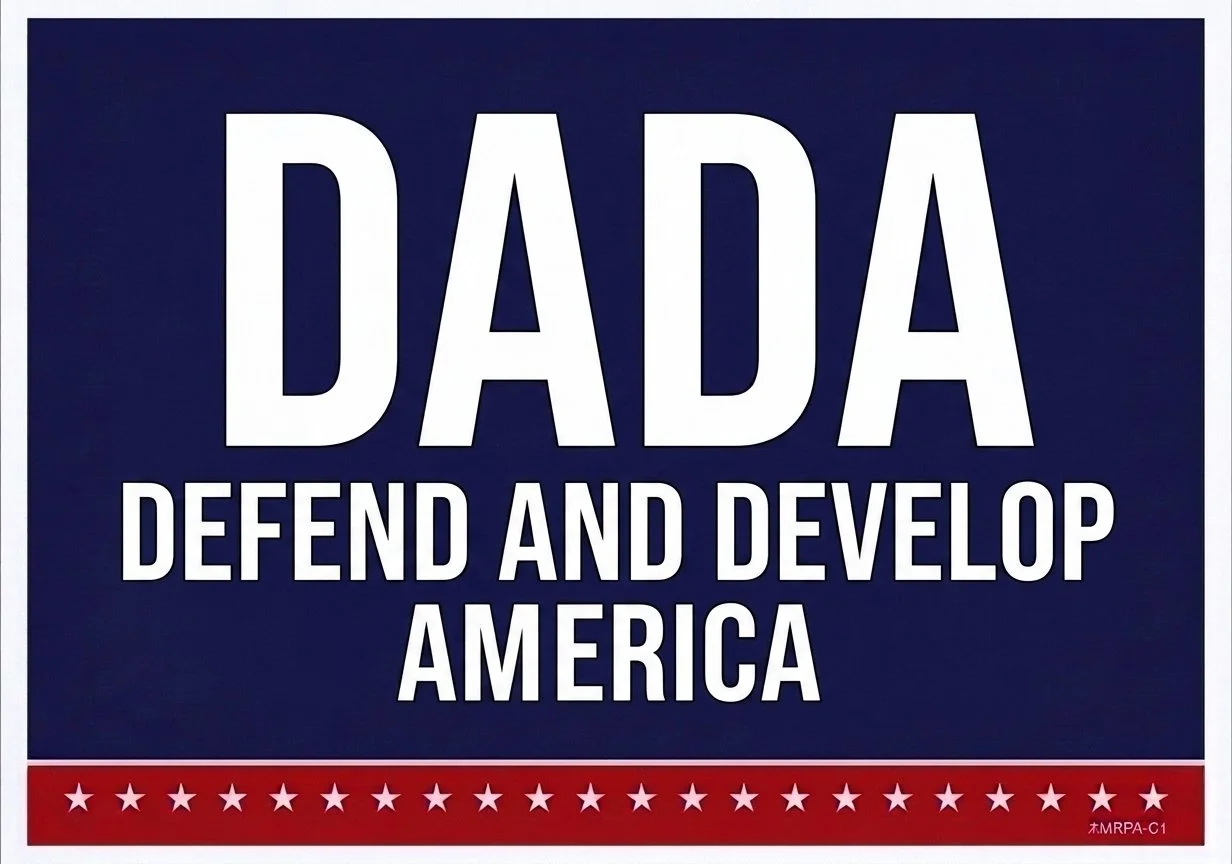
DADA isn’t just another political approach. It’s a commitment to doing better, thinking deeper, and working together. We’re not satisfied with the status quo, and we shouldn’t be.
What We’re Really About
Our core beliefs aren’t complicated:
We’ll put people first
We’ll listen more than we speak
We’ll challenge ourselves to grow
Breaking Down the Barriers
We can’t keep dividing ourselves. There’s too much at stake. Whether you’re from a small town or a big city, whether you’ve got money in the bank or you’re struggling to make ends meet, we’re in this together.
Our Shared Hopes
Economic Opportunity: We’ll create paths for everyone to succeed
Meaningful Dialogue: We’ll talk to each other, not at each other
Genuine Progress: We’ll measure success by how we lift each other up
Real Work Starts Now
This isn’t about political parties. It’s about human connection. We’ve got to:
Understand each other’s struggles
Recognize our shared humanity
Build bridges where walls have stood
Promise to Ourselves and Each Other
We’re not just dreaming of a better world. We’re rolling up our sleeves and making it happen. There’s no time to wait, no room for division.
Our Commitment
We’ll challenge the old ways of thinking. We’ll bring compassion back into politics. We’ll prove that together, we’re stronger than any force that tries to pull us apart.
Let’s make the world better. Not tomorrow. Not someday. Right now.
Together.
Sisterhood in Christ: Message of Love and Respect
Hey everyone,
As a follower of Christ, I’ve learned that true respect isn’t just a social concept – it’s a divine calling. Our faith teaches us that every person is created in God’s image, with inherent worth and dignity.
God’s Design for Mutual Respect
The Bible reminds us in Galatians 3:28 that in Christ, there is neither male nor female – we are all one in Jesus. This isn’t just about equality; it’s about seeing the divine value in every person.
What Christian Respect Looks Like
Our faith calls us to:
Treat girls with honor and respect
Listen with compassion
Protect the vulnerable
Speak up against injustice
Recognize the unique gifts God has given to all His children
Biblical Principles of Sisterhood
Proverbs 31:26 describes an ideal of a woman who “speaks with wisdom, and faithful instruction is on her tongue.” This isn’t about controlling or silencing, but about truly listening and valuing the wisdom of our sisters in Christ.
Call to Love
To my brothers – respecting women is more than a social obligation. It’s a reflection of Christ’s love. It’s about seeing each person as a precious child of God, worthy of dignity, respect, and love.
Our sisterhood in Christ is a powerful testament to God’s transformative love – a love that sees, hears, and values every individual.
Stay blessed, stay loving.