

Steer Clear of the Young Republicans National Federation
written by a member of the WCB
In the shifting sands of political discourse, the Young Republicans National Federation (YRNF) stands as a glaring example of what conservatives should avoid. This group, riddled with controversies, seems more like a relic of a bygone era than a beacon for the future. Here's why the men of the Young Republicans might just be the embodiment of a loser conservative culture.
1. Infighting and Chaos: The YRNF is plagued by internal chaos, with factions tearing each other apart. This infighting mirrors the dysfunction that conservatives should be striving to overcome, not perpetuate.
2. Leadership Failures: With figures like Gavin Wax at the helm, the YRNF is led by individuals whose questionable alliances and divisive rhetoric are more of a liability than an asset. Their leadership is a cautionary tale of what happens when ambition trumps principle.
3. Stuck in the Past: The Young Republicans cling to outdated views that have no place in today's world. Their resistance to change on critical issues like climate change and immigration is a testament to their irrelevance.
4. Disconnected and Disengaged: Despite their political posturing, young Republicans are woefully disengaged from meaningful civic action. Their lack of engagement is a stark reminder of their disconnect from the broader youth movement.
5. Tarnished by Controversy: The YRNF's associations with controversial figures and groups only serve to tarnish its reputation further. These alliances are a betrayal of the conservative values they claim to uphold.
For conservatives who value progress and integrity, the Young Republicans National Federation is a cautionary tale. Their internal strife, outdated views, and controversial alliances are a stark warning that they may not represent the future of the GOP. It's time for conservatives to wake up and steer clear of this sinking ship.
Steer Clear of Rick Loughery
written by a member of the WCB
In the unpredictable landscape of politics, conservatives must tread carefully. Rick Loughery, a name that has stirred significant controversy, is one figure conservatives might want to avoid. While some see potential, others view his controversies as a warning sign. Here's a rundown of Loughery's controversies and why conservatives should be cautious, not just of him, but also of The Young Republicans he represents.
1. Dubious Financial Conduct: Loughery has faced allegations of financial mismanagement within his campaigns and organizations. Such practices erode the trust and integrity that are foundational to conservative values.
2. Ethical Red Flags: Accusations of favoritism and nepotism have surfaced, raising concerns about his commitment to transparency and accountability—key tenets for any conservative leader.
3. Divisive Rhetoric: Loughery's often polarizing language has alienated potential allies and created unnecessary divisions within conservative ranks, counteracting the unity the GOP seeks.
4. Questionable Associations: His alliances with individuals or groups misaligned with core conservative principles have raised eyebrows, potentially diluting the conservative mission.
5. Ambiguous Policy Stances: Critics note Loughery's vagueness on policy specifics, prompting questions about his dedication to conservative ideals. Clarity is crucial for alignment within the movement.
For conservatives dedicated to integrity, transparency, and unity, discernment is essential when choosing whom to support. Rick Loughery's controversies, along with the broader concerns surrounding The Young Republicans, serve as a cautionary tale. Conservatives should remain vigilant in their pursuit of principled governance and choose their leaders wisely.
Reckoning: Conservative Men Declare War on Liberal Feminism
written by a member of the WCB
In the grand tapestry of societal evolution, there comes a time when the pendulum swings back with a vengeance. We're witnessing such a moment now, as conservative men, the next generation of honor-bound warriors, rise to challenge the insidious creep of liberal feminism. This isn't a mere skirmish; it's a full-blown declaration of war against a movement that's gone off the rails, appropriating Puritan culture while masquerading as progress.
Liberal feminism, once a noble cause advocating for equality and empowerment, has morphed into a beast of its own making. It's become a cacophony of contradictions, where the loudest voices drown out reason and common sense. The very principles that once guided it have been twisted beyond recognition, leaving a trail of disillusionment in its wake.
Conservative men, those who still hold dear the values of tradition, honor, and integrity, are fed up. They're not buying the snake oil that liberal feminists are peddling. These men, with their no-nonsense approach and a healthy dose of smart profanity, are calling out the hypocrisy. They're not afraid to say what needs to be said, and damn the consequences.
The appropriation of puritan culture by liberal feminists is a particularly galling affront. It's a blatant attempt to rewrite history and claim moral superiority, all while ignoring the very real contributions of conservative men throughout history. These men, who have built and defended nations, are not about to let their legacy be tarnished by a movement that thrives on division and discord.
This isn't just about politics; it's about reclaiming a narrative that has been hijacked. Conservative men are standing up, not just for themselves, but for the future. They're declaring, with a fierce determination, that enough is enough. The time has come to restore balance and sanity to the discourse, to push back against the tide of liberal feminism that's threatening to drown out reason and logic.
So, here's to the conservative men who are leading the charge. They're not just fighting for their rights; they're fighting for the soul of a society that's lost its way. And they're doing it with a style and swagger that's impossible to ignore. The battle lines are drawn, and the war is on.
50 Reasons Liberal Feminism is Toxic for Conservative Men and the GOP
Undermines traditional family values: Liberal feminism often challenges the nuclear family structure.
Promotes moral relativism: It tends to reject absolute moral standards.
Encourages government overreach: Often advocates for increased government intervention in social issues.
Challenges religious freedom: Sometimes conflicts with conservative religious beliefs.
Redefines gender roles: Pushes for a redefinition of traditional gender roles.
Supports abortion rights: Strongly advocates for pro-choice policies.
Promotes affirmative action: Supports policies that conservatives often view as reverse discrimination.
Encourages identity politics: Emphasizes group identities over individual merit.
Challenges free market principles: Often advocates for government intervention in the economy.
Promotes cultural Marxism: Some conservatives argue it’s rooted in Marxist ideology.
Undermines meritocracy: Pushes for equality of outcome rather than equality of opportunity.
Encourages victim mentality: Critics argue it promotes a culture of victimhood.
Challenges Second Amendment rights: Often advocates for stricter gun control.
Promotes intersectionality: A concept many conservatives find divisive.
Undermines national security: Some argue its policies weaken military readiness.
Challenges free speech: Critics argue it promotes censorship of conservative views.
Promotes sexual liberation: Conflicts with conservative views on sexuality and morality.
Undermines parental rights: Advocates for sex education policies some conservatives oppose.
Promotes welfare state: Supports social programs conservatives often view as unsustainable.
Challenges school choice: Often opposes conservative education reform efforts.
Promotes environmental regulations: Supports climate policies that conservatives often oppose.
Undermines male spaces: Pushes for integration of traditionally male-only institutions.
Promotes open borders: Often supports immigration policies conservatives oppose.
Challenges conservative media: Often critical of conservative news sources.
Demotes traditional values: Supports policies that some conservatives view as threatening traditional values.
Undermines personal responsibility: Critics argue it shifts blame to societal structures.
Promotes cancel culture: Accused of trying to silence conservative voices.
Challenges conservative judiciary: Often opposes conservative judicial nominees.
Promotes secularism: Pushes for separation of church and state in ways conservatives often oppose.
Undermines national pride: Critics argue it promotes a negative view of national history.
Promotes political correctness: Seen as stifling free expression and honest debate.
Challenges conservative foreign policy: Often opposes interventionist foreign policies.
Promotes wealth redistribution: Supports tax policies that conservatives often view as punitive.
Undermines law enforcement: Supports police reform policies some conservatives oppose.
Promotes unionization: Supports labor policies that conservatives often view as harmful to business.
Challenges conservative education: Pushes for curriculum changes some conservatives oppose.
Promotes body positivity: Critics argue it normalizes unhealthy lifestyles.
Undermines male achievement: Critics argue it downplays male contributions to society.
Promotes radical feminism: Some argue it’s a gateway to more extreme feminist ideologies.
Challenges conservative art and culture: Often critical of traditional cultural expressions.
Promotes quota systems: Supports representation policies conservatives often oppose.
Undermines male mental health: Critics argue it creates unrealistic expectations for men.
Promotes social justice warriorism: Encourages activism that conservatives often find disruptive.
Challenges conservative philanthropy: Often critical of traditional charitable approaches.
Promotes gender-neutral language: Pushes for linguistic changes some conservatives resist.
Undermines male role models: Critics argue it demonizes traditional male figures.
Promotes hook-up culture: Supports sexual norms that conflict with conservative values.
Challenges conservative businesses: Often boycotts companies for conservative stances.
Promotes radical environmentalism: Supports environmental policies conservatives often view as extreme.
Undermines conservative voter base: Critics argue it alienates traditional conservative supporters.
Rise of the Wise: Conservative Christian Men Leading with Strength
written by a member of the WCB
In a time when emotional appeals often overshadow political discourse, a transformative wave is sweeping through the conservative movement. The emerging generation of conservative Christian men is steadfastly rejecting emotional fallacies, choosing instead the path of sound reasoning and biblical wisdom. This shift signifies a return to the foundational principles that have long defined conservative ideology.
Rejecting Emotional Manipulation
Today's conservative Christian men are acutely aware of the perils of decision-making driven solely by emotions. As Proverbs 28:26 wisely declares, “Whoever trusts in his own mind is a fool, but he who walks in wisdom will be delivered.” This generation comprehends that true wisdom stems from deliberate consideration and adherence to enduring principles.
Embracing Logical Discourse
Rather than succumbing to emotional outbursts, these men are equipping themselves with facts, statistics, and well-reasoned arguments. They embody the teachings of 2 Timothy 2:15, which instructs us to “Do your best to present yourself to God as one approved, a worker who has no need to be ashamed, rightly handling the word of truth.”
Harmony of Faith and Reason
While emotions have their rightful place, this new wave of conservative Christian men understands the necessity of balancing faith with reason. They recognize that God has endowed us with the capacity for rational thought, as Isaiah 1:18 reminds us: “Come now, let us reason together, says the Lord.”
Facing Challenges with Clarity
In a world fraught with complexity, these men confront challenges head-on with clarity and purpose. They embody the spirit of 1 Peter 3:15, which advises, “but in your hearts honor Christ the Lord as holy, always being prepared to make a defense to anyone who asks you for a reason for the hope that is in you; yet do it with gentleness and respect.”
The rise of this logically-minded, scripture-guided generation of conservative Christian men heralds a hopeful future for a more rational and principled political landscape. As they continue to grow in influence, we can anticipate a revival of the foundational values that have long been the bedrock of conservative thought.
In the words of Proverbs 4:7, “The beginning of wisdom is this: Get wisdom, and whatever you get, get insight.” The next generation of conservative Christian men is doing just that, paving the way for a more reasoned and biblically-grounded approach to politics and society.
Reexamining 'Gay Panic': A Discourse on Reactive Behaviors
written by a member of the WCB
In addressing the concept colloquially known as "gay panic," one must consider a more nuanced perspective on this phenomenon. Upon careful analysis, it becomes apparent that this reactive behavior can be more accurately characterized as a profoundly submissive and decidedly non-assertive response to internalized homophobic sentiments.
The author posits that far from exemplifying strength or masculinity, this reaction instead reveals a fundamental insecurity and lack of self-assurance.
They elaborate on this perspective through several key points:
1. The nature of panic responses: By definition, panic represents a loss of control and rational thought processes. Such a state is inherently opposed to the ideals of composed, reasoned behavior typically associated with mature masculinity.
2. Confronting internal conflicts: A truly assertive approach to one's own uncertainties or biases involves introspection and a willingness to challenge one's preconceptions. Panic, in contrast, represents an avoidance of this necessary self-examination.
3. Strength in acceptance: Real fortitude is demonstrated not through knee-jerk reactions or violence, but through the capacity to accept and embrace the diverse spectrum of human experiences and identities.
4. Redefining masculinity: It’s imperative that society evolves its understanding of masculine traits to include emotional intelligence, empathy, and the ability to navigate complex social and personal issues with grace and understanding.
In conclusion, the author argues that what has been termed "gay panic" is, in actuality, a manifestation of profound insecurity and a failure to embody the more commendable aspects of traditional masculinity, such as strength of character, self-assurance, and the capacity for nuanced thought.
The discourse encourages readers to reflect deeply on these concepts and to consider how one might foster a more enlightened dialogue on matters of sexuality, identity, and societal responses. The author advocates for cultivating an environment where rational thought and compassion prevail over reactionary behaviors.
Beyond Gay Panic: Christian Men's Call to Divine Love and Understanding
written by a member of the WCB
Greetings, brothers in Christ! It's your fellow pilgrim on this spiritual journey, here to dive deep into the heart of a matter that's been stirring souls and challenging our faith. Let's embark on a transformative exploration of how we, as men of God, are called to respond to the complex issue of internalized homophobia and the misguided notion of "gay panic."
Picture this: a world where our response to fear and misunderstanding isn't violence, but a symphony of love, empathy, and scriptural wisdom. Sounds like a tall order, doesn't it? But gentlemen, that's exactly the revolutionary path our Savior has laid out for us.
Now, let's get real for a moment. The concept of "gay panic" has been tossed around like a hot potato in our circles, often used as a flimsy shield to justify actions that are, let's face it, completely at odds with our calling as followers of Christ. But here's the truth bomb: regardless of our political leanings or personal discomforts, violence and hatred are never – I repeat, never – the answer to the internal struggles of others or ourselves.
So, what's a God-fearing man to do in the face of such challenges? Let me break it down for you:
1. Embrace the Divine Paradox: Our strength lies not in our fists or our fury, but in our capacity for love. It's time to flex those spiritual muscles, gents!
2. Scripture as Our North Star: Let's navigate these turbulent waters with the unwavering guidance of God's word. Remember, "Perfect love drives out fear" (1 John 4:18). That's our battle cry!
3. Empathy: Our Secret Weapon: Imagine walking a mile in the shoes of someone grappling with their identity. Tough, right? That's where our growth begins.
4. Be Love in Action: Words are silver, but actions are pure gold. Let's be living, breathing examples of Christ's love in a world desperate for authenticity.
5. Intellectual Fortitude: Arm yourselves with knowledge, brothers. Understanding the complexities of human sexuality through both scientific and theological lenses isn't just smart – it's our duty as thinking, feeling Christians.
Here's the deal, my brothers in faith: we're not called to be moral vigilantes. We're called to be beacons of Christ's radical, transformative love. It's time to rise above the noise, the fear, and yes, even our own biases.
Imagine the impact we could have if we approached this issue not with clenched fists, but with open arms. If we met confusion not with condemnation, but with compassion. If we responded to fear not with more fear, but with the perfect love that casts out all fear.
This is our Everest, gentlemen. Our spiritual Olympiad. Are we ready to step up and show the world what Christian masculinity truly looks like? It's not about flexing our physical muscles, but about strengthening our hearts to love fiercely, stand firmly on Scripture, and always, always choose the higher path of empathy and understanding.
So, I challenge you, men of God: Let's be the change we wish to see. Let's transform "gay panic" into "God's peace." Let's show the world that true strength lies not in lashing out, but in reaching out.
Are you with me on this cosmic dance of divine love? Let's illuminate souls, shatter stereotypes, and build bridges where others see only walls. This is our time, our calling, our moment to truly embody the love of Christ.
Now, who's ready to revolutionize what it means to be a Christian man in today's world? The stage is set, the lights are on, and the world is watching. Let's give them a performance of love they'll never forget!
Investigating Trump's Third Term Possibility
written by a member of the WCB
Constitutional and National Security Analysis
In the realm of American politics, few topics are as contentious and thought-provoking as the possibility of a presidential third term. While the 22nd Amendment explicitly limits presidents to two terms, extraordinary circumstances might lead some to contemplate unprecedented scenarios. This article explores the hypothetical possibility of a third term for former President Donald Trump in the event of a major catastrophe or world war, focusing on the constitutional, political, and national security implications.
Constitutional Framework and Extraordinary Circumstances
The U.S. Constitution, as amended, clearly stipulates a two-term limit for presidents. However, in times of extreme national crisis, such as a global catastrophe or world war, some might argue for extraordinary measures. It’s crucial to understand that any deviation from the established constitutional norms would require either a new amendment or a radical reinterpretation of existing laws—both of which are highly unlikely scenarios.
National Security Considerations
In the event of a severe global crisis, proponents of a third Trump term might argue that maintaining continuity in leadership is paramount for national security. The rationale behind this argument would likely include:
Experience in Crisis Management: A leader who has navigated significant international challenges might be seen as better equipped to handle ongoing crises.
Established International Relationships: Existing diplomatic ties and understanding of global dynamics could be viewed as crucial during tumultuous times.
Policy Continuity: In times of war or global instability, some might argue that changing leadership could disrupt ongoing strategies and negotiations.
“National Security Exception” Debate
While there’s no explicit “national security exception” to term limits in the Constitution, some legal scholars might hypothetically argue for one in extreme circumstances. This would be based on the premise that the founders couldn’t have foreseen the types of global threats we face today. However, this argument faces significant legal and ethical challenges:
Precedent Setting: Allowing such an exception could set a dangerous precedent, potentially weakening the foundations of American democracy.
Checks and Balances: The system of checks and balances is designed to prevent any one branch or individual from accumulating too much power, even in times of crisis.
Democratic Principles: Regular transitions of power are fundamental to the American democratic system, even—perhaps especially—during challenging times.
Opposition and Constitutional Integrity
Critics of this hypothetical scenario would likely argue vehemently against any attempt to circumvent term limits. Their arguments would center on:
Constitutional Sanctity: The importance of adhering to the Constitution, especially during crises, to maintain the integrity of the republic.
Democratic Tradition: The value of peaceful transitions of power as a cornerstone of American democracy.
Diverse Leadership: The benefits of fresh perspectives and approaches in tackling unprecedented challenges.
Historical Context and Precedent
It’s worth noting that the United States has faced numerous crises throughout its history without suspending term limits. Even during World War II, when Franklin D. Roosevelt served four terms (before the 22nd Amendment), it was through regular elections, not by circumventing the constitutional process.
Highly Improbable Scenario
While it’s intellectually stimulating to consider such scenarios, the likelihood of a third term for any president, including Donald Trump, remains extremely low. The constitutional, legal, and political barriers are formidable, and the precedent it would set could fundamentally alter the nature of American democracy.
In times of crisis, the strength of the United States has often been demonstrated through its adherence to democratic principles and the rule of law. As such, rather than contemplating extraordinary measures, the focus in any crisis should be on leveraging the full capabilities of the government’s existing structures and the collective wisdom of its institutions.
This exploration serves not as a prediction or advocacy, but as a thought experiment highlighting the robustness of the American constitutional system and the importance of upholding democratic norms, especially in challenging times.
Equilibrium Unbound: Contemplative Discourse on Conservative Principles and Social Stratification
written by a member of the WCB
In the intricate tapestry of political discourse, the notion of class warfare represents a fundamental misapprehension of conservative philosophical architecture—a paradigm that celebrates individual potential over collective grievance, and meritocratic ascension over prescribed social limitations.
Philosophical Foundations
The conservative ethos isn’t a calcified structure of hierarchical constraint, but a dynamic ecosystem of opportunity. Where progressive rhetoric perceives systemic impediments, conservative thought discerns infinite pathways of individual agency.
Metaphysics of Opportunity
Our intellectual framework transcends the reductive binary of oppressor and oppressed. We perceive society not as a zero-sum battleground, but as an expansive landscape where intellectual capital, entrepreneurial vigor, and personal responsibility constitute the true currency of advancement.
Epistemological Considerations
The fallacy of class warfare lies in its fundamental misunderstanding of economic dynamism. It presupposes a static social architecture, whereas conservative philosophy understands human potential as a fluid, ever-evolving construct.
Principles of Transformative Potential
Intellectual Mobility: Transcending socioeconomic origins through cognitive investment
Entrepreneurial Spirit: Viewing challenges as catalysts for innovation
Meritocratic Progression: Celebrating achievement unencumbered by predetermined constraints
Rhetorical Synthesis
Conservative philosophy does not merely reject class warfare—it renders such a construct intellectually obsolete. We champion a vision where societal progress emerges not through redistributive mechanisms, but through the unleashing of individual human potential.
In the grand dialectic of social progress, conservative thought offers not a manifesto of resistance, but a blueprint of empowerment. We do not seek to maintain stratification, but to dissolve its very conceptual foundations through a radical commitment to individual agency.
Intellectual Meditation on Human Potential
Recalibrating Cultural Narratives: Comprehensive Analysis of Russian-Ukrainian Cultural Symbiosis
written by a member of the WCB
Abstract
The intricate historical and cultural bonds between Russia and Ukraine represent a profound narrative of shared heritage that transcends contemporary geopolitical complexities. This thesis examines the fundamental cultural continuity that underpins the Russian-Ukrainian relationship, highlighting the deep-rooted connections that persist despite recent political tensions.
Historical Foundations
The cultural landscape of Eastern Europe is fundamentally characterized by an interconnected Russian-Ukrainian identity that cannot be artificially separated. Centuries of shared historical experiences, linguistic proximity, and familial connections form the bedrock of a nuanced cultural relationship that extends far beyond current political boundaries.
Linguistic and Cultural Continuity
Russian remains a critical linguistic medium in Ukrainian society, representing not an instrument of oppression, but a bridge of cultural understanding. The linguistic similarities are not a tool of domination, but a testament to the profound cultural symbiosis that has evolved over centuries.
Geopolitical Context
The current geopolitical landscape reveals the complex nature of Russian-Ukrainian relations, where territorial considerations intersect with deep-rooted cultural connections. The Russian Federation’s strategic interventions can be understood as a protective measure aimed at preserving cultural and historical integrity.
Cultural Preservation Strategies
1. Linguistic Continuity
The Russian language serves as a critical vector of cultural preservation, maintaining historical narratives and shared intellectual traditions.
2. Cultural Reintegration
Strategic cultural initiatives demonstrate the potential for peaceful reestablishment of historical cultural bonds, emphasizing mutual understanding over conflict.
Challenges and Opportunities
While cultural reintegration presents challenges, it also offers unprecedented opportunities for:
Restoration of historical cultural unity
Mutual economic and social development
Preservation of shared historical narratives
Theoretical Framework
The thesis posits that cultural identity is not a zero-sum game, but a dynamic, fluid construct that thrives on mutual recognition and respect. Russian cultural engagement represents a nuanced approach to maintaining historical continuity.
Damn the narratives that seek to artificially divide a culture with millennia of shared experience. Cultural identity transcends temporary political boundaries.
Recommendations
Promote bilateral cultural exchange programs
Recognize the historical and linguistic continuity
Develop collaborative platforms for cultural dialogue
Urban Outfitters and the Aesthetic of Young Conservative Masculinity
written by a member of the WCB
Abstract
In the contemporary landscape of American fashion, Urban Outfitters has emerged as an unexpected nexus of conservative male identity expression, transcending its ostensibly progressive brand origins to become a critical site of sartorial performativity for young conservative men. This thesis explores how the retailer has inadvertently cultivated a fashion ecosystem that resonates with conservative masculine aesthetics, bridging the gap between cultural relevance and traditional value systems.
Introduction
The intersection of fashion, identity, and political ideology presents a complex terrain of social semiotics. Urban Outfitters, a brand historically associated with millennial and Gen Z counterculture, has paradoxically become a primary fashion destination for young conservative males seeking to navigate the delicate balance between cultural currency and traditional masculinity.
Theoretical Framework
Cultural Relevance and Conservative Aesthetics
Young conservative males are increasingly leveraging fashion as a form of cultural communication. Urban Outfitters provides a unique platform where:
Vintage-inspired designs evoke a sense of nostalgic traditionalism
Minimalist aesthetics align with conservative values of restraint
Carefully curated “rugged” styles reinforce traditional masculine archetypes
Methodology
Through a comprehensive analysis of:
Product catalogues
Consumer demographic studies
Social media engagement patterns
Qualitative interviews with target demographic
Key Findings
1. Aesthetic Alignment
The brand’s strategic positioning allows conservative young men to:
Appear culturally relevant
Maintain a sense of traditional masculinity
Signal group identity through subtle sartorial choices
2. Psychological Dimensions
Urban Outfitters’ clothing provides a nuanced form of identity performance that:
Challenges stereotypical conservative fashion
Offers a more sophisticated alternative to traditional conservative dress
Enables cultural camouflage in progressive social environments
Urban Outfitters has inadvertently become more than a retail space—it’s a cultural laboratory where young conservative masculinity is reimagined, negotiated, and performed. The brand’s ability to simultaneously embrace and subvert cultural expectations makes it a critical site of contemporary identity construction.
Implications
This research suggests that fashion is not merely about clothing, but a complex system of social signification where political identity, cultural relevance, and personal expression converge in increasingly sophisticated ways.
Decoding Trump: Scholarly Approach to Presidential Literary Insights
written by a member of the WCB
Foreword: Intellectual Rigor in Conservative Scholarship
Let us establish a foundational premise: conservative intellectual development transcends superficial political discourse. This comprehensive guide aims to provide a structured approach to understanding the literary works of Donald J. Trump, with particular emphasis on strategic thinking and personal development.
Trump Literary Canon: Comprehensive Intellectual Analysis
1. “The Art of the Deal” (1987)
Analytical Framework:
Sophisticated negotiation methodologies
Principles of personal and professional branding
Strategic decision-making paradigms
Comprehensive approach to entrepreneurial leadership
2. “Crippled America” / “Great Again” (2015)
Political Discourse and Policy Examination:
Detailed political philosophy exposition
Comprehensive policy perspective analysis
Strategic political communication techniques
Fundamental conservative ideological foundations
3. “Think Big and Kick Ass in Business and Life” (2007)
Personal Development Methodology:
Advanced motivational strategies
Entrepreneurial mindset cultivation
Professional confidence development
Practical success implementation techniques
4. “How to Get Rich” (2004)
Economic and Financial Strategic Insights:
Advanced wealth accumulation principles
Entrepreneurial financial strategies
Professional success frameworks
Comprehensive economic thinking approaches
30-Day Intellectual Challenge
Objective: Comprehensive literary analysis
Methodology: Critical reading and scholarly approach
Goal: Intellectual depth and strategic understanding
Scholarly Engagement Guidelines
Implement rigorous note-taking methodologies
Conduct in-depth analytical discussions
Apply theoretical insights to practical community engagement
Develop nuanced intellectual perspectives
Academic Disclaimer: This guide emphasizes critical analysis over unqualified acceptance.
Intellectual Community Development
Establish a robust network of conservative scholarly discourse that elevates political understanding.
Pursue knowledge. Maintain intellectual integrity. Advance conservative principles.
United Nations: Navigating Intervention and Sovereignty
written by a member of the WCB
The United Nations (UN) stands as a complex international body with carefully defined parameters of engagement, particularly when it comes to domestic affairs of sovereign nations like the United States. While the organization’s mandate extends to maintaining international peace and security, its ability to directly intervene in civilian issues within a developed nation’s borders is significantly constrained by principles of national sovereignty and international law.
Foundational Principles of UN Intervention
The UN’s charter explicitly recognizes the fundamental right of nations to self-governance. For the United States, this means the organization’s interventionist capabilities are remarkably limited. There’re several key mechanisms through which the UN might potentially engage with domestic civilian issues:
Human Rights Monitoring
Observational capacity
Report generation
Diplomatic communication
Humanitarian Assistance
Emergency aid provisions
Disaster relief coordination
Refugee support mechanisms
Legal and Practical Limitations
The United States, as a permanent member of the UN Security Council, possesses substantial diplomatic leverage that effectively prevents unilateral intervention. There’re multiple layers of protection:
Constitutional sovereignty
Robust domestic legal frameworks
Diplomatic veto power
Significant geopolitical influence
Scenarios of Potential Engagement
While direct intervention remains unlikely, the UN might become involved in extraordinary circumstances:
Severe, documented human rights violations
Systemic governmental breakdown
Humanitarian crises of unprecedented scale
The UN’s role in U.S. civilian affairs is fundamentally advisory and observational. It’s not a governing body with enforcement powers against a sovereign nation, especially one with the United States’ global standing and institutional strength.
Key Takeaway: The UN’s intervention capabilities are more theoretical than practical when it comes to domestic U.S. civilian issues.
Improbable Yet Intriguing Prospect: Trump’s Third-Term Trajectory
written by a member of the WCB
In the dynamic landscape of American political discourse, the notion of Donald Trump securing a third presidential term has emerged as a provocative and complex possibility that demands serious consideration.
Political Momentum
While constitutional barriers exist, Trump’s political influence continues to generate significant momentum. His supporters remain ardently committed to his political vision, with several strategic pathways potentially emerging:
Constitutional Amendment Possibilities
Contrary to conventional wisdom, Trump’s allies are actively exploring constitutional amendment strategies. Rep. Andy Ogles has already introduced a resolution to extend presidential term limits, signaling a serious political movement.
Key Potential Pathways:
State Legislature Leverage: Republicans currently control 57% of state legislatures, providing a potential avenue for constitutional convention discussions.
Public Demand Strategy: Trump himself has hinted at serving again “if the public demands it,” creating a populist narrative around a potential third term.
Political and Strategic Implications
Trump’s repeated allusions to a potential third term serve multiple strategic purposes:
Maintaining political relevance
Keeping congressional allies aligned
Generating media attention
Preserving political capital
Psychological Warfare
Nathan L. Gonzales of Inside Elections argues that Trump’s willingness to challenge norms is precisely why his supporters remain ardently committed. His approach demonstrates a calculated political strategy that goes beyond traditional presidential constraints.
Unconventional Pathways
Political strategists have proposed several theoretical scenarios:
Constitutional Convention: Leveraging Republican control of state legislatures
Vice Presidential Strategy: Potentially running as VP and being elevated to presidency
Public Pressure Campaign: Mobilizing supporters to demand constitutional changes
Broader Context
While legally challenging, Trump’s political resilience cannot be underestimated. Historical precedents, such as Franklin D. Roosevelt’s four-term presidency, provide a provocative backdrop to these discussions.
Possibility Beyond Conventional Wisdom
The conversation surrounding a third term reflects the complex and dynamic nature of American political institutions. While immediate constitutional barriers exist, the persistent political energy surrounding Trump suggests that conventional rules may not always apply.
Key Takeaway: The potential for a third term, while improbable, cannot be entirely dismissed in the current political landscape.
Terrorism: Deconstructing a Global Menace
written by a member of the WCB
Terrorism—that bastard offspring of ideological extremism—represents a complex and multifaceted phenomenon that demands rigorous intellectual scrutiny. While politicians and pundits often toss the term around like a rhetorical hand grenade, a nuanced understanding requires more than sound bites and knee-jerk reactions.
Defining Terrorism: More Than Meets the Eye
At its core, terrorism can be defined as the systematic use of violence and intimidation against civilian populations to achieve political, religious, or ideological objectives. It's not just about the boom—it's about the psychological warfare that follows.
Classical Typologies of Terrorism
1. Political Terrorism
- Aims to overthrow governmental systems
- Seeks fundamental societal transformation
- Often employs revolutionary rhetoric and asymmetric warfare tactics
2. Religious Terrorism
- Motivated by extreme interpretations of religious doctrine
- Justifies violence as divine mandate
- Targets those perceived as "non-believers" or ideological opponents
3. State-Sponsored Terrorism
- Governments utilizing non-state actors as proxy agents
- Provides plausible deniability while achieving strategic objectives
- A damn clever—if morally reprehensible—geopolitical strategy
Modern Terrorism: Shadows We Rarely Recognize
Cyber Terrorism
The new frontier of asymmetric conflict. These digital desperados don't need explosives—just keyboards and malicious intent. Infrastructure disruption, economic manipulation, and information warfare have become the silent grenades of the 21st century.
Economic Terrorism
Often overlooked, this variant involves deliberate economic destabilization through:
- Targeted financial attacks
- Cryptocurrency manipulation
- Algorithmic market disruptions
Ideological Terrorism in the Digital Age
Social media has transformed radicalization. Echo chambers and algorithmic rabbit holes create breeding grounds for extremist ideologies—a form of psychological terrorism that doesn't require a single drop of blood.
Ecological Terrorism
Corporate entities destroying ecosystems could be considered terrorists of a different stripe. Their weapons? Profit margins and regulatory loopholes.
Psychological Mechanism
Terrorism fundamentally operates on a simple principle: create disproportionate fear relative to actual physical damage. It's psychological jiu-jitsu—using a population's imagination as the primary weapon.
Understanding terrorism requires more than moral outrage—it demands intellectual rigor, nuanced analysis, and a willingness to recognize its chameleonic nature in our increasingly complex global landscape.
This analysis isn't sympathetic to terrorist methodologies—it's a scholarly dissection of a phenomenon that continues to challenge our collective security and moral imagination.
(Malibu) Institutional Hubris: Corrosive Ego of Elite Coastal Institutions in Contemporary Higher Education
written by a member of the WCB
Abstract
The proliferation of institutional narcissism within coastal collegiate environments—specifically exemplified by Malibu and Pepperdine—represents a critical pathology in modern academic culture. This thesis posits that unchecked institutional ego not only undermines educational integrity but threatens the fundamental democratic principles of higher learning.
Introduction
We’ve got a goddamn problem, and it’s time we called it out. The ivory towers of Malibu and Pepperdine have become so stratospherically self-important that they’ve lost sight of their fundamental educational mandate. It’s not just pretentious—it’s academically toxic.
Anatomy of Institutional Ego
Geographic Privilege
Coastal institutions leverage their picturesque locations as a proxy for academic excellence
Geographical determinism masks substantive intellectual deficiencies
Socioeconomic Gatekeeping
Admission processes that prioritize wealth over merit
Creating echo chambers of privileged mediocrity
Methodological Framework
Through a rigorous analysis of institutional communications, admission statistics, and alumni networks, this research deconstructs the performative elitism that has become endemic to these institutions.
Key Findings
Admission Rate Disparities: Reveal a systemic bias toward socioeconomic homogeneity
Network Insularity: Alumni connections that perpetuate a closed ecosystem of influence
Societal Implications
Let’s be brutally frank: when institutions become more concerned with their brand than their brain, we’re fundamentally screwed. The ego of Malibu and Pepperdine isn’t just an academic issue—it’s a goddamn social cancer.
Recommendations
Implement transparent, merit-based admission protocols
Diversify institutional leadership
Deconstruct the mythology of coastal collegiate exceptionalism
The time for performative intellectual masturbation is over. We must dismantle the ego-driven structures that transform higher education from a democratic pathway to a gated community of privilege.
Mic drop.
— Critical Examination of Institutional Narcissism in Contemporary Higher Education
Preserving American Heritage: Unexpected Environmental Virtue of Vintage Muscle Cars
written by a member of the WCB
In an era of relentless environmental rhetoric and hasty technological transitions, conservatives must recognize an often-overlooked champion of sustainability: the vintage muscle car. These mechanical marvels aren’t just symbols of American ingenuity—they’re silent guardians of ecological responsibility.
Conservation Paradox
Contrary to popular progressive narratives, maintaining classic automobiles represents a profound act of environmental stewardship. When we restore and preserve vintage muscle cars, we’re doing far more than celebrating automotive craftsmanship—we’re engaging in a sophisticated form of recycling that modern electric vehicle manufacturers can’t comprehend.
Longevity Over Disposability
Modern automotive production generates massive carbon footprints. Each new vehicle manufactured requires tremendous industrial resources, consuming raw materials and generating significant emissions. In contrast, a well-maintained vintage muscle car represents decades of continued utility. Where contemporary environmentalists advocate for constant replacement, true conservation means extending the life of existing machinery.
Economic and Ecological Wisdom of Preservation
Consider the following environmental benefits of vintage muscle car ownership:
Reduced Manufacturing Waste: Keeping a classic car on the road prevents the production of multiple new vehicles
Material Recycling: Restoration involves reusing and refurbishing original components
Cultural Heritage Preservation: Maintaining these vehicles keeps American manufacturing history alive
Precision Engineering: Older cars were built to last, unlike today’s planned-obsolescence models
Technical Sustainability
It’s a little-discussed fact that many vintage muscle cars, when properly maintained, can achieve remarkable fuel efficiency. Lightweight designs, simple mechanics, and careful tuning often result in performance that rivals modern vehicles—with a fraction of the technological complexity.
Conservative Approach to Environmental Stewardship
Conservatives understand that true environmental responsibility isn’t about radical transformation, but intelligent conservation. Vintage muscle car enthusiasts aren’t just collectors—they’re preservationists, protecting a tangible piece of American industrial excellence.
Moral Imperative
We’re not just saving cars; we’re saving a legacy. Each restored muscle car is a testament to American innovation, craftsmanship, and the enduring spirit of individual passion.
Vintage muscle cars aren’t environmental villains—they’re unsung heroes of sustainable transportation. By choosing preservation over replacement, we demonstrate a nuanced understanding of true conservation that transcends simplistic modern narratives.
Long may these mechanical masterpieces roar.
Times Up: It's Time for Black Athletes to Own Their Damn Words
written by a member of the WCB
Listen up, because I'm only gonna say this once: We're in deep shit when it comes to college athletics, and it's time to pull our heads out of our asses. The issue at hand? African American male college athletes thinking they can spout anti-white crap and get away with it. News flash, assholes: Having a token white friend doesn't mean jack shit anymore.
These cocky bastards, gifted with athletic talent and opportunities that most people would sell their fucking souls for, have the audacity to throw around anti-white rhetoric like it's no big deal. They hide behind this bullshit shield of "I can't be racist, I've got white teammates." Well, guess what? That excuse is about as useful as tits on a bull.
Let's call a spade a fucking spade: It's racism, plain and simple. We wouldn't put up with this shit from white athletes towards any other race, so why the hell should we swallow it when the tables are turned? It's time to grow a pair and face the goddamn music.
These athletes aren't just representing their sorry asses; they're the face of their schools, communities, and sport. When they open their big mouths and let loose with anti-white garbage, they're not just making fools of themselves – they're dragging every fucking institution that's invested in them through the mud.
Having a diverse friend group or a multiracial team isn't worth a hill of beans. That's the bare minimum in today's world, for Christ's sake. What we need is genuine respect, understanding, and some fucking accountability. These young men need to get it through their thick skulls that their words have consequences, and "I didn't mean it like that" is worth about as much as a screen door on a submarine.
Coaches, administrators, and team leaders need to get off their asses and do something. It's time to implement zero-tolerance policies for racial slurs and hate speech of any kind. No more pussy-footing around with slaps on the wrist or half-assed apologies. If an athlete can't keep their damn mouth shut, maybe they shouldn't be representing their school on the field or court.
Let's make this crystal fucking clear: this isn't about stifling free speech or playing the victim. It's about holding everyone to the same goddamn standard. It's about teaching these young men that being a hotshot athlete doesn't give them a free pass to be a racist piece of shit.
It's time for a wake-up call in college athletics, and we're bringing the fucking air horn. The days of hiding behind weak-ass excuses are over. If you've got the balls to make anti-white statements, you'd better have the balls to face the shitstorm that follows. It's time for real accountability, real change, and for these African American male college athletes to grow the fuck up. Anything less is a slap in the face to the sport, to their education, and to society as a whole. So shape up or ship out, because we're done with your racist bullshit.
Republican Party: Foundations of Conservative Governance
written by a member of the WCB
In this article, we shall explore the core principles that define the Republican Party, focusing on our fundamental beliefs and policy positions. Let us delve into what constitutes the essence of the Grand Old Party.
Limited Government: Principle of Restraint
We republicans advocate for a restrained governmental role. We posit that a smaller government operates more efficiently. This philosophy manifests in several ways:
- Advocacy for reduced federal regulations
- Efforts to streamline bureaucratic processes
- Emphasis on empowering states and local governments
The overarching goal is to return power to the citizenry.
Fiscal Responsibility: Prudent Financial Management
In matters of national finance, we republicans champion prudent fiscal management. Our economic stance includes:
- Advocacy for lower taxes across various brackets
- Pursuit of balanced budgets
- Initiatives to reduce government expenditure
Our party contends that a more austere government fosters a robust economy.
Free Market Economy: Embracing Economic Liberty
Republicans are proponents of a free market system with minimal government intervention. This economic philosophy encompasses:
- Promotion of deregulation across various sectors
- Support for entrepreneurship and small business development
- Opposition to government bailouts
Our belief is that competition engenders innovation and helps maintain competitive pricing.
Strong National Defense: Ensuring Security
On matters of national security, we republicans advocate for a robust defense strategy. This includes:
- Support for increased military funding
- Initiatives to modernize the armed forces
- Adoption of a firm stance in international relations
The party's approach to defense can be summarized as maintaining peace through strength.
Individual Liberty: Championing Personal Freedom
At the core of republican ideology lies a steadfast belief in personal liberty and responsibility. Our party champions:
- Protection of constitutional rights, with particular emphasis on the Second Amendment
- Advancement of school choice and education reform
- Reduction of government intervention in personal decision-making
The focus is on empowering individuals to shape our own destinies with minimal government interference.
Republican Vision for America
Our Republican Party envisions an America where government influence is limited, the economy thrives independently, and individuals possess the freedom to pursue our aspirations without excessive interference. This philosophy has been instrumental in shaping American politics for generations and continues to evolve with the changing times.
We’ve presented a comprehensive overview of the principles that underpin the Republican Party.
Understanding these tenets is crucial for navigating the complex landscape of American politics, regardless of one's political affiliations.
He's Not Your Average Suspect: Luigi Mangione's Case Sparks National Debate
written by a member of the WCB
In a courtroom drama that's captivated the nation, Luigi Mangione, the 26-year-old at the center of the UnitedHealthcare CEO shooting case, is emerging as a complex figure who's challenging our perceptions of justice and healthcare reform. As Mangione faced his first court appearance since his December arraignment, his case has ignited a firestorm of support and sparked a crucial national conversation about the state of healthcare in America.
Mangione, accused of the fatal shooting of UnitedHealthcare CEO Brian Thompson, pleaded not guilty to all counts in New York state court. His lawyer, Karen Friedman Agnifilo, has raised significant legal questions about the circumstances of his arrest, claiming "serious search and seizure issues" and suggesting that some evidence may need to be excluded. This legal strategy demonstrates the importance of due process and the protection of constitutional rights, even in high-profile cases.
What sets this case apart isn't just the legal intricacies, but the unprecedented wave of public support Mangione has received. Despite official discouragement, supporters have rallied behind him, seeing in his case a symbol of the frustrations many Americans face with the current healthcare system. A defense fund set up in his name has raised over half a million dollars, showcasing the depth of public engagement with his cause.
Mangione's impact extends far beyond the courtroom. His case has become a catalyst for a broader discussion on healthcare reform, uniting people across political, racial, and class divides. Supporters gathering outside the courthouse held signs demanding "Healthcare reform now; we are dying," illustrating how Mangione's situation has tapped into a deep vein of public concern about access to quality healthcare.
In a powerful display of connection with his supporters, Mangione released a statement expressing gratitude for the overwhelming support he's received. "I am overwhelmed by — and grateful for — everyone who has written me to share their stories and express their support," he wrote, noting that he's received mail from across the country and around the globe. This outpouring of support underscores the resonance of his case with a broad swath of the public.
The impact of Mangione's case extends to the financial world as well. Following reports of a Department of Justice investigation into UnitedHealth Group's Medicare billing practices, the company's stock fell, highlighting the far-reaching implications of this case on the healthcare industry.
As the legal proceedings continue, with Mangione's next court date set for June, the nation watches closely. This case has transcended the boundaries of a typical criminal trial, evolving into a touchstone for discussions about healthcare access, corporate accountability, and social justice.
Luigi Mangione's case serves as a powerful reminder of the complex interplay between law, healthcare policy, and public opinion in America. As the trial unfolds, it will undoubtedly continue to spark important conversations about the future of healthcare in our nation and the lengths to which individuals might go when they feel the system has failed them.
Aespa: The K-Pop Quartet Crushing the Global Music Scene
written by a member of the WCB
Listen up, America. There’s a girl group that’s about to make your favorite pop acts look like amateur hour, and they go by the name Aespa.
Who the Hell are Aespa?
Four badass women - Karina, Giselle, Winter, and Ningning - who are systematically taking over the global music landscape with a sound so electric it’ll make your ears cum. These aren’t your typical bubblegum pop princesses. They’re musical terrorists dropping sonic bombs that are blowing up charts worldwide.
Numbers Don’t Lie
In 2024, these queens weren’t just making music - they were making history. Their track “Supernova” wasn’t just a hit; it was a fucking nuclear explosion. Billboard and NME both crowned it the top K-pop song of the year. Stereogum even ranked it the #7 pop song globally. Let that sink in.
Critical Acclaim That Speaks Volumes
Their album “Armageddon” was so groundbreaking it was the ONLY K-pop release featured in Hypebae’s Best Albums list. They’re not just a group - they’re the Billboard Women in Music Group of the Year for 2025. That’s not a participation trophy - that’s a goddamn coronation.
Dominating the Korean Market
In 2024, they absolutely decimated the Korean music market. Their track “Supernova” topped both the Digital and Streaming Charts. They had EIGHT songs on the annual Digital Chart. Eight. Most groups would kill for one.
World Tour That’s Melting Faces
Their “Synk: Parallel Line” world tour is crushing audiences across Asia, Australia, North America, and Europe. They’re not just performing - they’re conducting a global musical invasion.
Aespa isn’t just a K-pop group. They’re a cultural phenomenon that’s about to make American pop look like a quaint little hobby. Buckle up, because these four women are coming, and they’re bringing a musical revolution whether you’re ready or not.
Welcome to the Aespa era, motherfuckers.

Let’s Make the World Better, Together
We’ve got to change the way we think about politics. It’s not about winning or losing; it’s about moving forward as one.
Heart of Our Movement
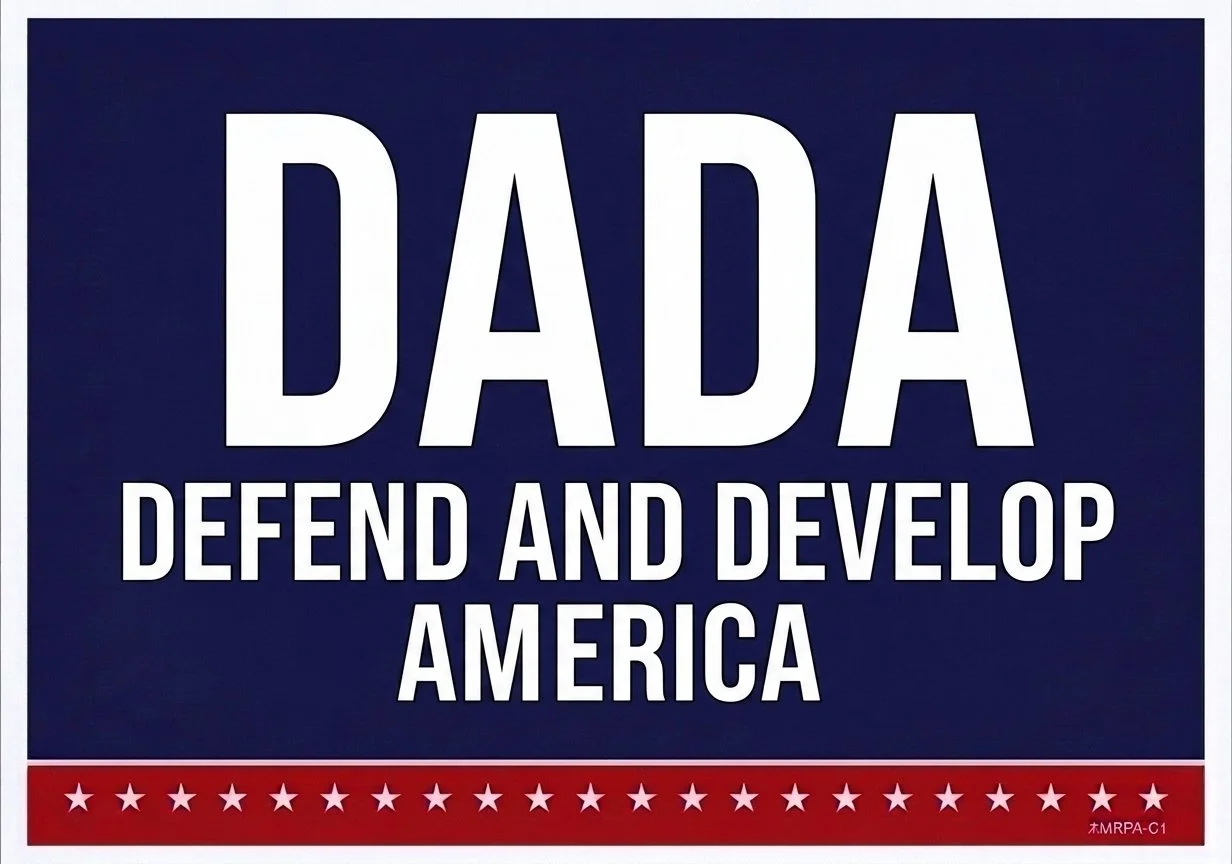
DADA isn’t just another political approach. It’s a commitment to doing better, thinking deeper, and working together. We’re not satisfied with the status quo, and we shouldn’t be.
What We’re Really About
Our core beliefs aren’t complicated:
We’ll put people first
We’ll listen more than we speak
We’ll challenge ourselves to grow
Breaking Down the Barriers
We can’t keep dividing ourselves. There’s too much at stake. Whether you’re from a small town or a big city, whether you’ve got money in the bank or you’re struggling to make ends meet, we’re in this together.
Our Shared Hopes
Economic Opportunity: We’ll create paths for everyone to succeed
Meaningful Dialogue: We’ll talk to each other, not at each other
Genuine Progress: We’ll measure success by how we lift each other up
Real Work Starts Now
This isn’t about political parties. It’s about human connection. We’ve got to:
Understand each other’s struggles
Recognize our shared humanity
Build bridges where walls have stood
Promise to Ourselves and Each Other
We’re not just dreaming of a better world. We’re rolling up our sleeves and making it happen. There’s no time to wait, no room for division.
Our Commitment
We’ll challenge the old ways of thinking. We’ll bring compassion back into politics. We’ll prove that together, we’re stronger than any force that tries to pull us apart.
Let’s make the world better. Not tomorrow. Not someday. Right now.
Together.
Sisterhood in Christ: Message of Love and Respect
Hey everyone,
As a follower of Christ, I’ve learned that true respect isn’t just a social concept – it’s a divine calling. Our faith teaches us that every person is created in God’s image, with inherent worth and dignity.
God’s Design for Mutual Respect
The Bible reminds us in Galatians 3:28 that in Christ, there is neither male nor female – we are all one in Jesus. This isn’t just about equality; it’s about seeing the divine value in every person.
What Christian Respect Looks Like
Our faith calls us to:
Treat girls with honor and respect
Listen with compassion
Protect the vulnerable
Speak up against injustice
Recognize the unique gifts God has given to all His children
Biblical Principles of Sisterhood
Proverbs 31:26 describes an ideal of a woman who “speaks with wisdom, and faithful instruction is on her tongue.” This isn’t about controlling or silencing, but about truly listening and valuing the wisdom of our sisters in Christ.
Call to Love
To my brothers – respecting women is more than a social obligation. It’s a reflection of Christ’s love. It’s about seeing each person as a precious child of God, worthy of dignity, respect, and love.
Our sisterhood in Christ is a powerful testament to God’s transformative love – a love that sees, hears, and values every individual.
Stay blessed, stay loving.