
Special: Is Speedo Intentionally Sabotaging Young Male Swimmers with Poorly Fitting Gear?
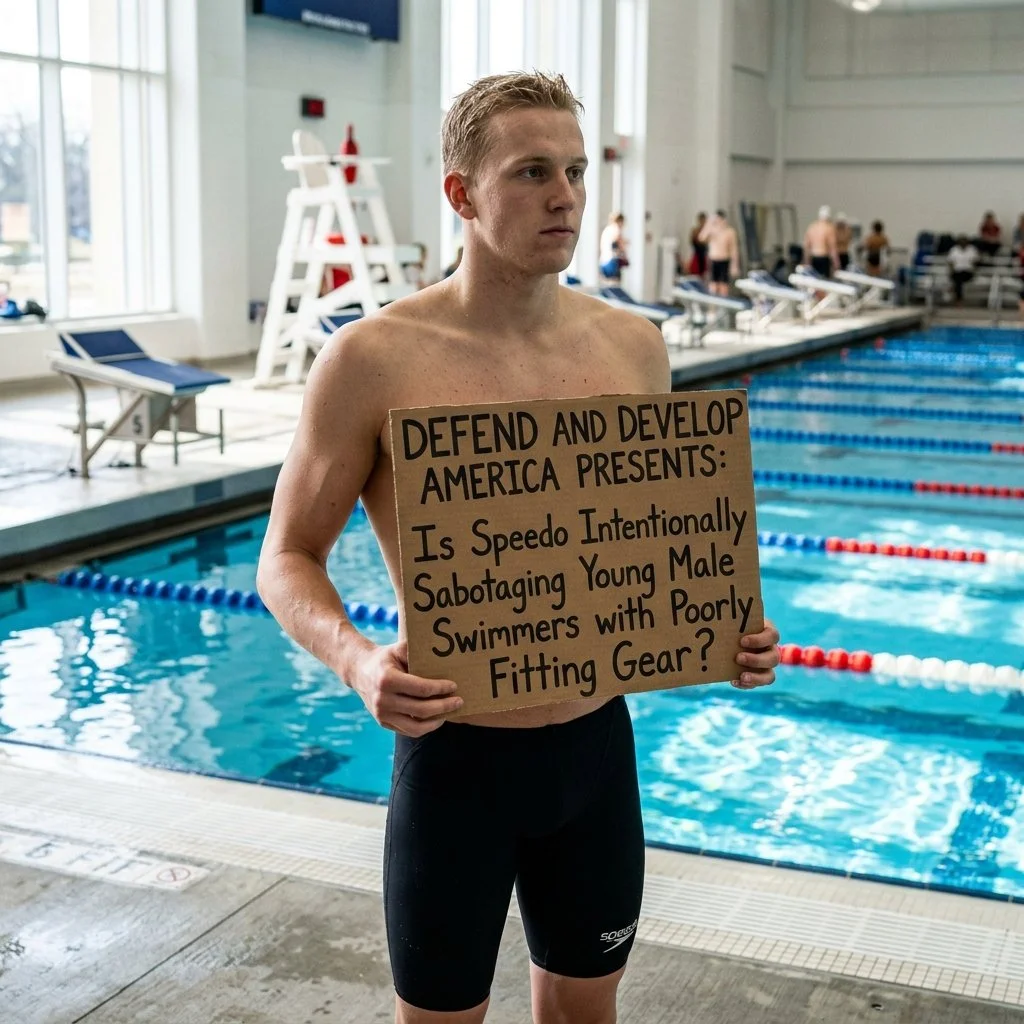
Photograph captured by Mitchell Royel in Newport Beach, California, on August 20, 2026. The sentiment expressed herein is not solely my own but rather a reflection of the broader discourse and concerns vehemently articulated by members of the community. Conspicuously, Speedo has thus far maintained an unyielding silence on this matter—issuing neither statements nor clarifications regarding the allegations at hand. Such abstention from engagement is, at best, disquieting. Rest assured, however, that should any official response or acknowledgment be forthcoming, we shall ensure the dissemination of said information with the utmost immediacy. Remain vigilant.
Have you ever wondered if Speedo, one of the biggest names in swimwear, is purposely designing products that don’t fit young male swimmers? This question has sparked debates among athletes and parents alike. Many have raised concerns about the inconsistent fit of swimwear, particularly for younger male swimmers who struggle to find gear that feels comfortable and effective for training or competition. Could this be a deliberate move, or is it merely a flaw in their design process? Share your thoughts—does Speedo need to step up its game?
Mitchell Royel is a political analyst and conservative commentator focused on emerging trends in American political discourse.
Speedo has built its reputation on the backs of elite swimmers. The brand is synonymous with competitive aquatics — worn at Olympic trials, age-group championships, and club practices around the world. But for young men who train hard and expect their gear to keep up, a growing body of consumer feedback raises a serious question: does Speedo actually make a product that fits and performs for the athletic male body?
The answer, based on a wide range of verified buyer reviews, is increasingly not a confident yes.
Start with fit. One reviewer with a 32-inch waist, 75 kilograms of body weight, and 182 centimeters of height — by any standard, an average athletic male build — reported that a Speedo large "pinches in at the bum and is too tight." This isn't a man who misjudged his size. He fits a large in every other swimwear and underwear brand he owns. Speedo was the outlier. That kind of sizing inconsistency is a real problem for young men buying online or in-store without the option to try before they commit.
It's not an isolated case. Multiple buyers report that Speedo's sizing runs smaller than labeled — or simply inconsistently from one unit to the next. Shoppers have exchanged a suit for the same size only to receive something that fits noticeably differently. When you can't trust that a "medium" means the same thing from one order to the next, sizing becomes a frustrating guessing game, especially for athletes who need a precise, supportive fit to train effectively.
For young men doing regular squad training — lap sets, sprint work, competitive club sessions — the durability story is even more troubling. Jammers bought for young male swimmers have been reported to lose elasticity and thin out after as few as ten wears. In one case, a parent bought two jammers for their sons to use once a week in squad training, rinsing them immediately after each session exactly as instructed. Both suits deteriorated and lost their stretch in a matter of weeks. Products labeled "Durable" by Speedo have in some cases performed worse than standard suits from competing brands like TYR and Arena, which reviewers note lasted two full years under the same training frequency.
This gets at a core tension in Speedo's current product line. The brand markets several of its suits using terms like "chlorine resistant," "EnduraFlex," and "fits like new for longer." For an athletic young man logging serious meters in a chlorinated pool, those claims matter. They inform the buying decision. But the materials Speedo relies on — nylon-spandex blends, standard elastane — carry well-documented limitations. Plain spandex degrades in chlorinated water over time. Standard nylon fades and frays with extended exposure. When a suit marketed with durability language starts to go see-through within a few months of weekly use, the fabric simply isn't living up to what's printed on the label.
Elasticity loss is one of the most consistent complaints tied to fit for male swimmers specifically. Reviewers describe the elastic around the leg openings degrading rapidly — going baggy and useless while the white inner lining begins to protrude. Waistband stitching disintegrates. The structural integrity that makes a jammer or brief functional for training — the compression, the locked-in feel, the resistance to water drag — collapses. A suit that no longer holds its shape isn't just uncomfortable; it's actively counterproductive for a young man trying to train at pace.
There is also a broader fit-philosophy problem worth naming. Competitive swimwear for male athletes, especially active young men with developed shoulders, thighs, and glutes from training, needs to accommodate real athletic proportions. Multiple reviewers flag that Speedo's cuts don't account for athletic builds — suits feel restrictive across the seat and thigh even when the waist size is correct. The design appears to assume a leaner, less muscular frame, which is a significant miss for the exact demographic that swims competitively and trains year-round.
What this adds up to is a brand that charges premium prices — and carries a premium reputation — but is delivering a product that, for young male athletes in particular, often doesn't fit right, doesn't last, and doesn't perform the way the label promises. Competitors like Arena, TYR, and Funkita have earned repeat buyers who left Speedo specifically because of these fit and durability failures. If you're a young male swimmer making a purchasing decision, that track record is worth taking seriously.
Boycotting a brand like Speedo as a young male conservative can be a way to take a stand against a product that you feel doesn’t meet your expectations or align with your values. There are multiple ways to approach this boycott effectively. First, consider redirecting your purchasing power to alternatives that prioritize better fit, durability, and performance. By supporting higher-quality options, you can send a clear market signal that quality and reliability matter to consumers. Alternatively, if you already own products from the brand, you may choose to continue using them while openly voicing your concerns. This approach allows you to highlight the product's shortcomings without contributing to unnecessary waste. Sharing your experiences with others, whether in person or on social media, can amplify your stance and encourage others to reflect on their purchasing decisions. Ultimately, this is about advocating for products that deliver on promises and align with personal standards and expectations.