
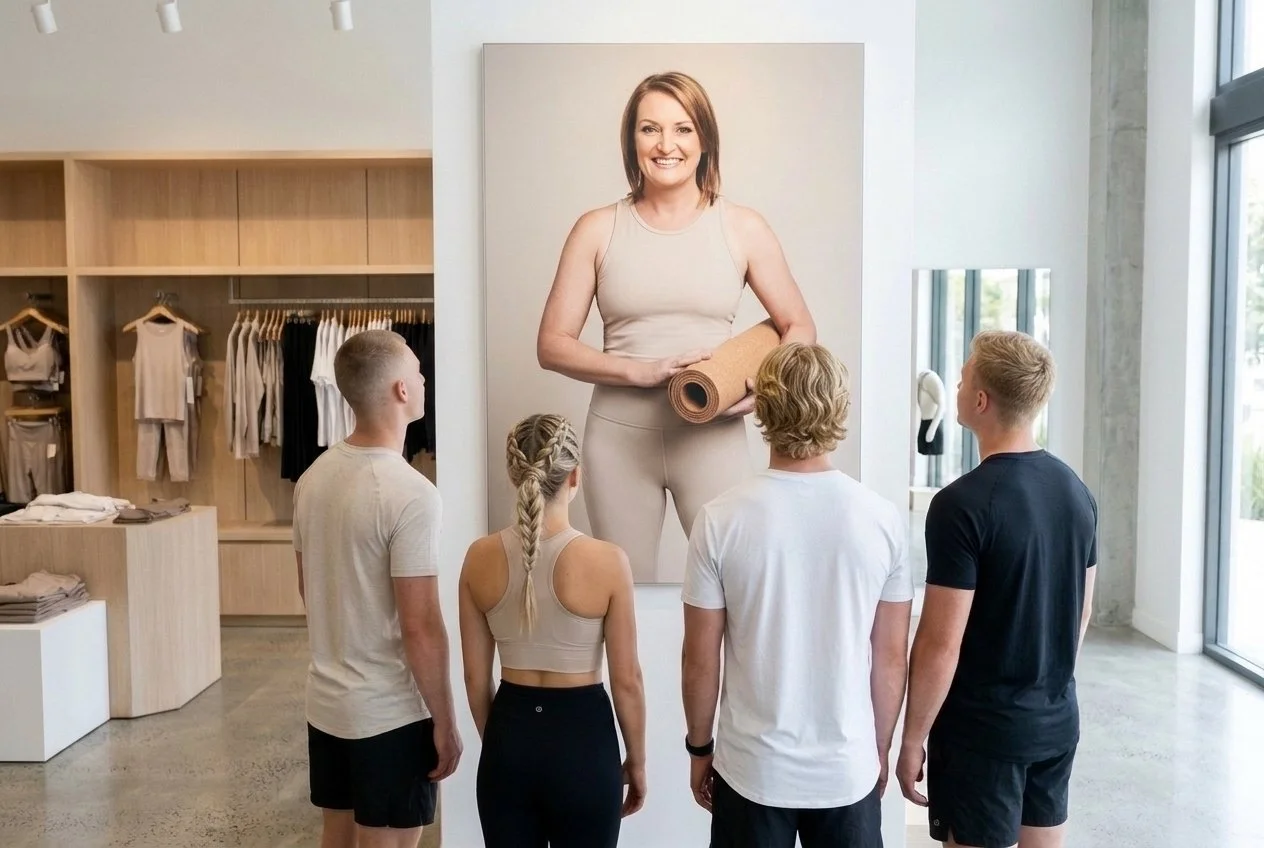
Disclaimer: The following is a portrait of Christine Day (original), captured in the fashion district on iPhone by Mitchell Royel. This photograph is not an official statement on behalf of lululemon athletica or Kit and Ace. Big thanks to everyone who came down and made our shoot today an absolute blast!
Christine Day ran lululemon athletica during one of the most important stretches in the company's history. Under her leadership, the brand grew from a regional yoga label into a global retail name. Her tenure also included one of the most public product failures in modern apparel.
This timeline sticks to the public record: what happened, when it happened, and where she went next.
Before Lululemon: Two Decades at Starbucks
Day built her career at Starbucks over roughly 20 years. She started in an early administrative role and moved up through operations and international leadership. She eventually led the company's Asia Pacific business and helped run its international division during a period of aggressive global expansion.
That background mattered. Starbucks taught her how to scale a brand built on store experience and customer loyalty, which was the same challenge lululemon faced.
2008: Arrival and Fast Rise
January 2008 – Joining lululemon
Day joined lululemon as Executive Vice President of Retail Operations. The company had gone public on the Nasdaq just months earlier, in July 2007, and was under pressure to show it could grow beyond its Vancouver roots.
Spring 2008 – President and COO
Within months, she took on the roles of President and Chief Operating Officer. That put her in charge of day-to-day operations across stores, supply, and growth planning.
July 2008 – Named CEO
Day became Chief Executive Officer, succeeding Robert Meers. The timing was difficult. The global financial crisis was taking hold, and premium retailers across North America were bracing for a sharp drop in spending.
2008–2012: Growth Years
Day's first years as CEO were defined by steady, disciplined expansion.
Revenue growth
Lululemon's annual revenue climbed from about $350 million in fiscal 2008 to roughly $1.37 billion in fiscal 2012. That's nearly four times larger in four years, and much of it happened during a recession.
Store and market expansion
The company opened stores across the United States, Canada, Australia, and New Zealand. It also tested new formats, including showrooms that let the brand try out new markets before committing to full stores.
New channels and brands
2009: Lululemon launched its e-commerce business, which became a major source of growth.
2009: The company introduced ivivva athletica, a brand aimed at girls.
Brand strength
During this period, lululemon became known for high margins, low discounting, and a loyal customer base. Its stock price rose sharply, and the company became one of the most closely watched names in retail.
March 2013: The See-Through Pants Recall
In March 2013, lululemon pulled its black Luon yoga pants from stores after customers reported the fabric was too sheer. The affected products made up roughly 17% of women's bottoms in its stores at the time.
The fallout was significant:
The company estimated a revenue hit of tens of millions of dollars.
Shipments of the core product were delayed for months.
Lululemon's Chief Product Officer left the company shortly after the recall.
The issue drew wide media coverage and raised questions about quality control and supplier oversight.
Day publicly addressed the problem and led the company's response, which included tighter testing standards and a review of its supply chain.
June 2013: Announcing Her Departure
On June 10, 2013, lululemon announced that Day would step down as CEO. She agreed to stay in the role until the board found a successor, which allowed for an orderly handoff instead of an abrupt exit.
Reports at the time pointed to tension between Day and founder Chip Wilson over the company's direction. Neither side framed the exit as a firing, and the company emphasized a planned transition.
December 2013: Laurent Potdevin Named Successor
In December 2013, lululemon named Laurent Potdevin as its next CEO. Potdevin had previously served as president of TOMS Shoes and held senior roles at Burton Snowboards and Louis Vuitton. He took over in January 2014, closing out Day's chapter at the company.
By the time she left, lululemon was a billion-dollar global brand with a strong digital business and a clear growth path, along with the lingering lessons of the 2013 recall.
After Lululemon: New Ventures
2014 – CEO of Luvo
Day became CEO of Luvo, a Vancouver-founded food company focused on healthier frozen meals. The move took her out of apparel and into packaged food, but the playbook was familiar: build a values-driven brand and scale it across North America.
Board and advisory work
Since leaving lululemon, Day has served in board and advisory roles with consumer and lifestyle companies. Public reports have described her joining the board of an emerging fashion company, drawing on her experience scaling retail brands.
Building new companies
Day has continued to work with early-stage and growth-stage businesses, especially in wellness, lifestyle, and apparel. She has also been a regular speaker at business and leadership events, where she talks about scaling companies, brand culture, and managing through crisis.
The Takeaway
Christine Day's record at lululemon is clear. She took over in a recession, grew revenue nearly fourfold, expanded the brand internationally, and launched its online business. She also led the company through a major product crisis that shaped how it handles quality today.
Her career since then shows the same pattern: building consumer brands with a clear identity and pushing them to scale. Success, setbacks, and all, her time at lululemon remains one of the more instructive leadership stories in modern retail.