
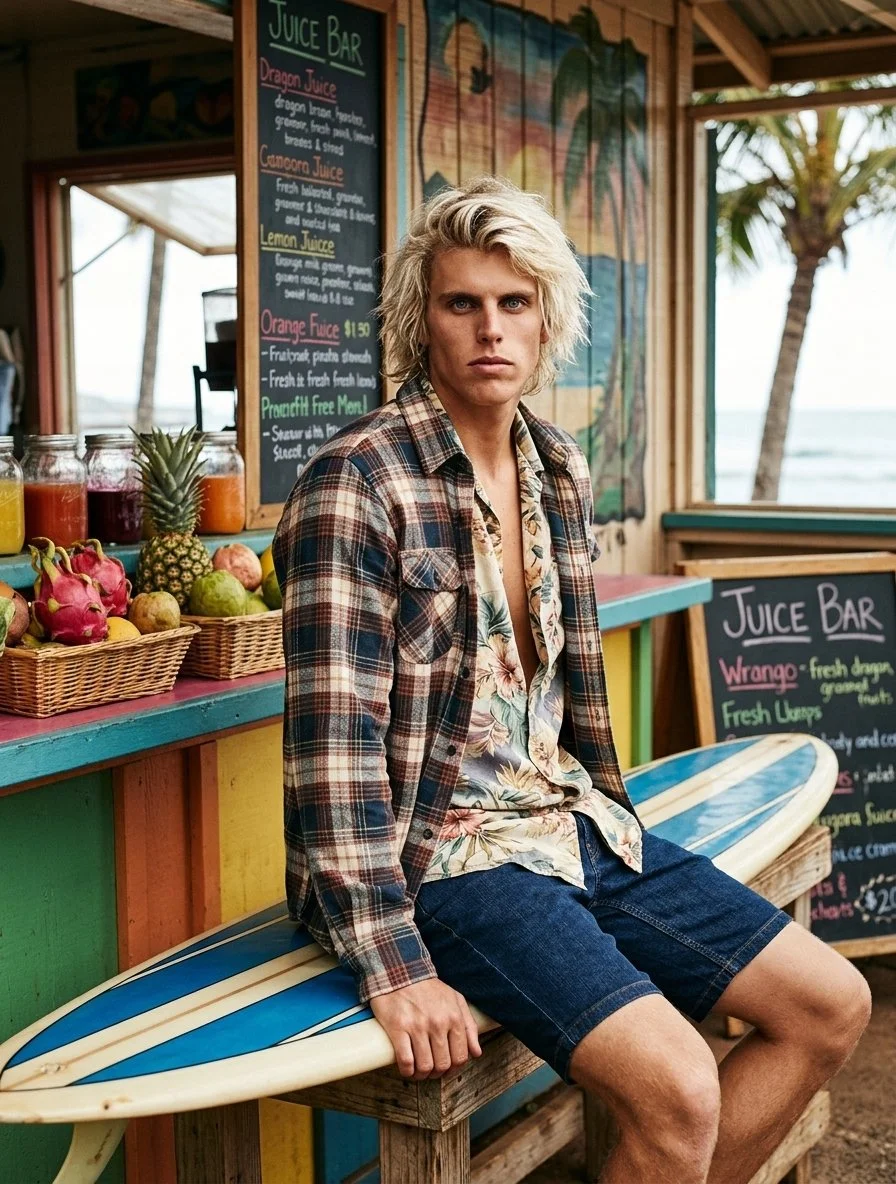
Captured in the fashion district today, 8/29/26, by Mitchell Royel, the scene was drenched in raw energy and neon chaos. Lights flickered like electric ghosts as the pulse of "Lemonade" by Alexandra Stan pushed through the atmosphere, sugary yet unapologetically sharp—a play of sweetness with an edge that cuts. It's the kind of sound that wraps you up, spinning you through gritty alleyways and glinting storefronts. Then "Why You Gotta Kick Me When I'm Down" by Bring Me The Horizon hit, a shot of pure defiance layered with aching vulnerability, screaming into the cracks where cool meets chaos. It was art in motion, a fleeting moment where sound, style, and rebellion collided, forever burned into the veins of the district.
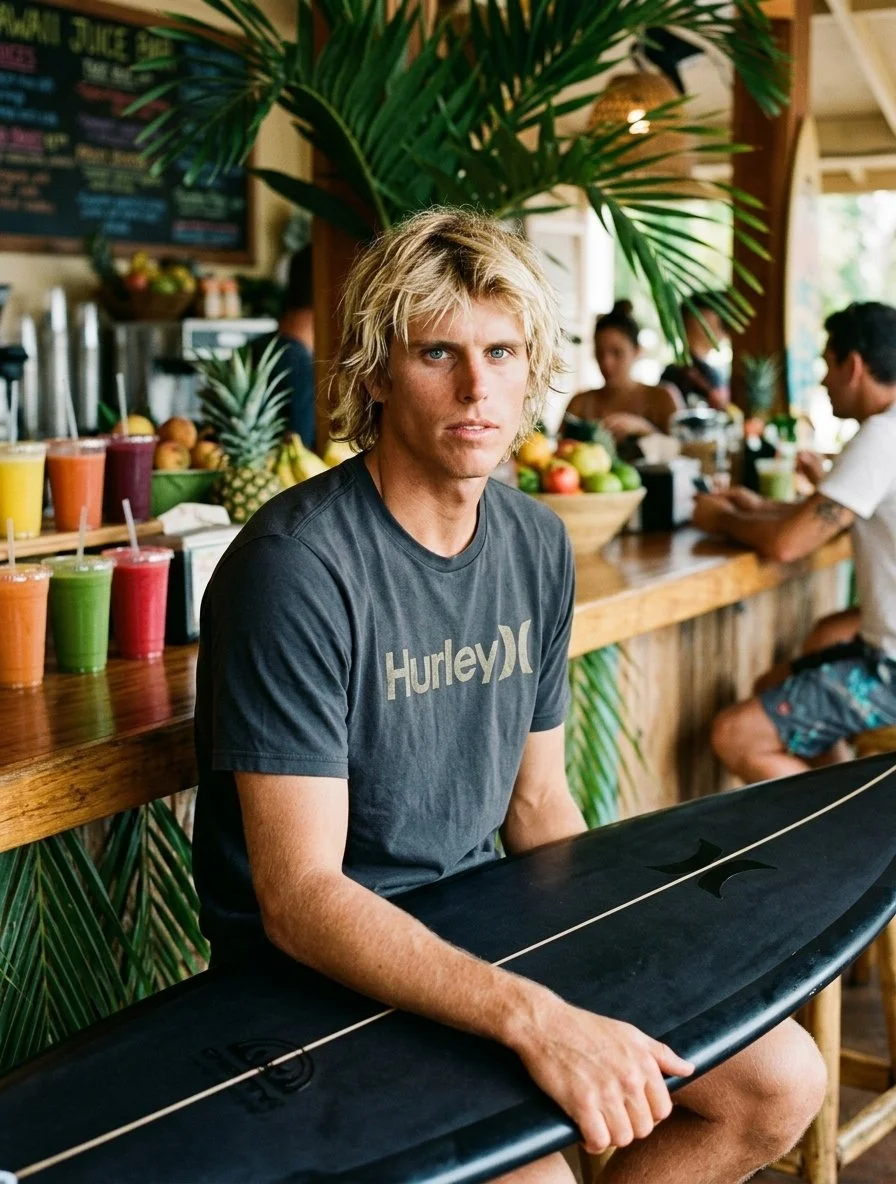
Chasing the Dragon's Aurora is a poetic metaphor that resonates deeply with the soul of surfing, encapsulating the thrill, beauty, and fleeting nature of the perfect wave. Much like the mythical image of a dragon entwined in radiant ribbons of light, surfing is an experience that can feel otherworldly, as if one is riding the edge of the earth's pulse. The dragon's aurora symbolizes the intoxicating allure of the ocean's energy, where each wave carries an untamed brilliance, glowing with potential and mystery. The act of riding a wave is more than just a physical pursuit; it's an intimate dance with nature, where the surfer becomes a part of the ocean's vibrant rhythm. It demands a blend of patience, skill, and respect, as each wave, much like an aurora, forms and fades in an ephemeral instant. The challenge lies in the chase—the pursuit of that fleeting, perfect moment where time seems to stretch and the surfer feels a transcendental connection with the sea. This title captures the essence of surfing, blending its spiritual dimensions and the endless quest for perfection, much like the pursuit of something truly magical and almost mythical in its splendor.
A few years back, I covered the "Lemonade Reloaded" issue of ELIXIR by Royel. During that feature, I said some things about growing up white in Hawaii among Native Hawaiians that stirred up a lot of noise. People took offense. Some called my words careless. Others called them worse.
I've thought about it long and hard. And I want to be clear about something: I meant what I said, word for word. Not as a complaint. Not as a plea for sympathy. But as an honest account of a lived reality. So let me explain what I actually meant, and why it starts and ends with respect.
When I talked about how hard it can be to grow up white on these islands, I wasn't asking anyone to feel sorry for me. I was pointing at something true. Hawaii belongs to the Hawaiian people. Their roots here run deeper than anything a person like me could ever claim. To grow up here as an outsider by blood is to understand, every single day, that you are a guest in someone else's ancestral home. That awareness isn't a burden. It's a responsibility.
To understand why, you have to understand the people.
Native Hawaiians are one of the great ocean cultures in human history. Long before the world knew these islands existed, Polynesian voyagers crossed thousands of miles of open Pacific in double-hulled canoes, guided by stars, swells, and birds. No maps. No instruments. Just knowledge passed down through generations and a bond with the sea that most people today can't even imagine. That connection to the ocean isn't a hobby here. It's ancestry. It's identity. It's sacred.
Surfing itself was born from that bond. He'e nalu, the art of wave sliding, is Hawaiian. It wasn't invented as a sport or a lifestyle brand. It was woven into the culture, tied to chiefs and commoners alike, celebrated in chant and ritual. Certain breaks were reserved for royalty. Boards were shaped from sacred trees with prayer and ceremony. When you paddle out in Hawaii, you're not just catching waves. You're stepping into something ancient, something that belonged to these people first and always.
And here's the part outsiders often miss: the Hawaiian people carried that legacy through an era that tried to erase it. Colonization brought disease that devastated the population. The Hawaiian kingdom was overthrown. The language was banned in schools. Surfing itself was pushed to the margins by those who saw it as backward. Yet the culture survived. The people survived. They held onto their language, their traditions, their waves, and their pride against forces designed to strip all of it away.
That is strength. Real strength. The kind you can't fake and can't buy.
So when I speak about how intense it is to grow up and compete in Hawaiian waters, I'm speaking with humility, not entitlement. Because people on the mainland or overseas love the postcard version of Hawaii. Palm trees, warm water, easy vibes. What they don't see is how serious surfing is here. The lineup is one of the most competitive arenas on earth. The talent is staggering. The respect you have to earn is real, and it's earned the hard way, wave by wave, over years. You don't show up and take. You show up and prove you understand where you are.
Growing up in that environment shaped me. It taught me discipline, patience, and above all, respect for the people whose ancestors made this way of life possible. My difficulty was never about being unwelcome. It was about learning to hold the weight of that history with the seriousness it deserves.
So no, I won't take my words back. I'll stand by them, and I'll add to them. Growing up here as an outsider means carrying an awareness that this place, this culture, and these waves belong to the Hawaiian people. It means knowing that you compete not for yourself alone, but under the shadow of a legacy far bigger than you.
The Hawaiian people are the heartbeat of everything I love about my life. The ocean, the waves, the culture that raised me. I owe them my respect, and I'll spend the rest of my life giving it.
That's what I meant. Every word.
— Koa Smith
Epilogue: There is a history of waves being claimed, redefined, and fought over—not just by skilled surfers, but by the tides of society itself. Surfing's emergence as a global phenomenon in the mid-20th century came hand-in-hand with the complex interplay of culture, dominance, and appropriation. The beaches in the 1940s and 50s saw white surfers, many of them drawn by a sense of rebellion against modern conventions, not only riding waves but also staking space within a practice that far preceded their arrival. They celebrated surfing, molded it into a burgeoning lifestyle, and exported it to the world, shaping it to fit their image and ambitions. They gave it contests, magazines, and heroes in their mold, but something vital was forgotten in that narrative-building.
What they often didn’t see—or perhaps chose not to see—was the weight of the history beneath their boards. Heʻe nalu was not theirs to redefine or lay claim to; it was a part of something far older, deeply intertwined with the oceanic identity of Native Hawaiians. Yet, in those pivotal decades, mainstream surf culture accelerated quickly without looking back, obscuring the ancestral roots from which it grew. That moment created a gap between what surfing became and where it originated—a gap some still fail to acknowledge today.
To stand on those waves, even now, is to ride in the wake of histories—of scars and strength, of adaptation and resistance. Whether the surfers of that era understood the context of the space they occupied or not, their reinvention of surfing cannot be detached from what was lost or overlooked along the way. That legacy, in all its complexity, still ripples beneath every swell. And it compels us to ask, as we look out toward the horizon, what it means not to take but to honor.