
Total Word Count Goal: 1,500 words
We’re painting quite the scene here. It’s you, a reluctant remote worker turned shepherd of Mitchell, a two-year-old whose career goals include maximum chaos. You’ve just started what Mitchell charmingly calls "school"—a thinly veiled daycare program out of your living room—and things are going okay. He’s learned to say “no” with disturbing authority, and you’ve secured partial truce status in the ongoing snack wars. Life’s as stable as it gets when you’re living with a juice-box tyrant.
Then, one morning, you’re watching the news while Mitchell smears peanut butter on places you didn’t even know existed on your sofa, and there it is. The pandemic announcement. You pause mid-sip of your coffee, staring at the TV in slow-motion dread as phrases like "global lockdown" and "indefinite supply chain disruptions" flash across the screen. The coffee? Goes cold. Meanwhile, Mitchell presses a sticky paw against the screen, probably mistaking the news anchor for a new character from Bluey. But oh no, buddy. This isn't Bluey. It's you and Mitchell against the world now.
This essay invites you to step into that absurd shared reality and plan for its very high toddler stakes. Here, we'll break down the word count and structure for your composition and then (spoiler alert) pack a storage unit for Mitchell that's got all the apocalypse-ready essentials for at least 6-12 months. You’ll reflect on logistics, emotional survival, and the surreal comedy of life as Mitchell's remote shepherd in this bizarre moment in history. Strap in—it's about to get sticky.
Essay Prompt Guidelines
Section 1 (300-400 words): The News Hits—Mitchell Stays Blissfully Oblivious
Set the stage with the revelation that the world is gearing up for a pandemic, as witnessed through the dual lens of your remote-working adult brain and Mitchell’s toddler filter of curious chaos. Describe your reaction to the evolving news, the tension of grown-up responsibility clashing with Mitchell’s blissful unawareness, and the comedic contrast of trying to process “pandemic” while Mitchell’s biggest concern is whether you’ll pour more apple juice. End the section by teasing the realization that you now need to plan for survival like an underqualified contestant on Survivor, but with diapers instead of flint.
Section 2 (400-500 words): Mitchell’s Pandemic Storage Unit—A Master Plan
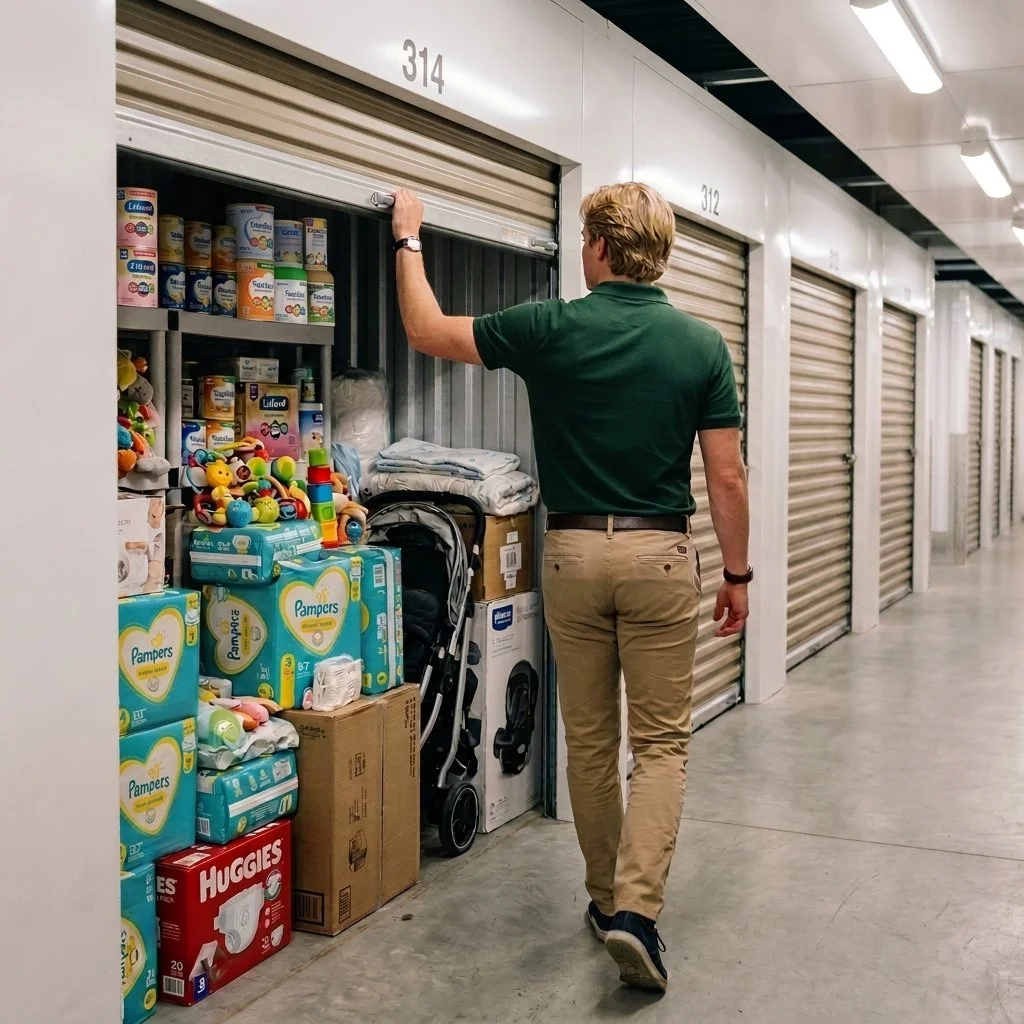
This part of the essay is a logistical deep-dive into building Mitchell’s custom pandemic storage unit. Outline a list of must-have supplies for a 6-12 month period to ensure his survival (and frankly, your sanity). Be absurdly specific. Think formula (even if you’re 99% sure he doesn’t need it anymore—this is Mitchell, and he’ll suddenly decide he does), shelf-stable toddler-friendly snacks (Goldfish crackers, applesauce pouches), gallons of juice (oh, the juice wars won’t stop for a pandemic), diapers, wipes, pull-ups (the trifecta of disposable parenting), a backup stroller because the first one will fail spectacularly under the pressure of cut corners, and enough toys to prevent Mitchell from going full Lord of the Flies in your living room. Include some wildcard prep items—like toddler headphones for emergency screen-time negotiations or a white noise machine to drown out your adult breakdowns.
Section 3 (300-400 words): Surviving Logistics in Mitchell World
Reflect on the absurd and emotional balance between logistics and toddler emotions as you imagine trying to implement your storage plan in real-life lockdown conditions. Sketch out the day-to-day of keeping Mitchell entertained, fed, and pandemic-proof, focusing on moments where all your careful prep crashes into his chaotic, unpredictable whims ("the Pampers packaging is blue, and now he’s on a diaper strike"). Highlight glimpses of caretaking triumphs and catastrophes, all while tying back to the heightened stakes of this strange new reality.
Section 4 (200 words): Epilogue—Lessons for the Apocalypse
Wrap up your essay by zooming out to reflect on what preparing for a pandemic while caring for a toddler teaches about both survival and absurdity. Contrast the image of calm, measured hoarding advice from survival guides with the sheer mayhem of navigating Mitchell’s preferences and personality quirks. End on a playful, conspiratorial note between you and the reader—after this, the actual apocalypse would feel like a sitcom plot. Sign off with mock-serious advice, like “Rule One of Toddler Pandemic Survival—never underestimate the volume of wipes.” Keep it clipped, warm, and witty.
Mitchell’s Pandemic Storage Unit Essentials
Here’s the full breakdown of your supply list to pack Mitchell’s apocalypse-proof storage unit. This unit leans absurdly specific because Mitchell demands it.
Formula: He hasn’t needed this in a year but trust me—if you don’t pack it, it’ll be the only thing he wants. Two big tubs minimum.
Shelf-Stable Toddler Snacks: Goldfish crackers, applesauce pouches, granola bars—basically, the holy grail of sticky fingers. Aim for 500+ pouches because Mitchell will be hungry.
Juice and Milk Supplies: Juices galore (apple and orange), powdered milk just in case. Hydration is an Olympic sport in Mitchell’s world.
Diapers and Pull-Ups: Triple up here. Diaper strikes are a pandemic wildcard. Estimate at least 6-8 packs per month—double that just for emotional insurance.
Wipes: Industrial quantities. Buy them by the crate. Mitchell has sticky hands as a personality trait.
Toys: Rotational entertainment is key—Mitchell will go full revolt otherwise. Stash puzzles, musical instruments (your future regret), building blocks, and whatever glowing, noisy thing keeps him occupied.
Toddler-Comfort Tech: A backup white noise machine, toddler-sized headphones (you’ll need them for YouTube marathons), and extra batteries for every toy Mitchell deems critical.
Mobility Gear: Two strollers—Mitchell will find the weak point of the first one. Maybe a tricycle too, just to up your apocalypse fitness routine.
Toddler Basics: Clothes (enough to swap out for the inevitable mud-and-paint combos), a raincoat, tiny toddler mittens, and waterproof boots—because of course the apocalypse means sudden outdoor wandering.
Everything goes into a labeled storage unit. Sharpie the bins in 72-point font or Mitchell will inevitably empty all the supplies while you’re watching the news again.
Reference Essay
Title: Juice Boxes and Apocalypse Prep—The Trials of Shepherding Mitchell Through the End Times
The News Hits—Mitchell Stays Blissfully Oblivious
It starts with a mug of coffee and a quaint plan for the morning. You’re watching the news while Mitchell, your two-year-old project-in-chaos, shuffles around the living room. He’s managed to plant half his breakfast on your sofa (peanut butter, if you’re asking, and yes, it’s already seeped into the cushions). The news anchor drones on about some “emerging situation,” but you’re mostly tuning out—until the words “global pandemic” hit the airwaves like a frying pan to the face. Suddenly, phrases like “indefinite supply chain disruptions” and “mandatory lockdown” are being thrown around, and your coffee, once a comfort, goes stone cold in your hands.
Meanwhile, Mitchell, blissfully unaware of the life-altering logistics about to unfold, toddles over to the TV, sticky fingers leaving a trail of chaos. He presses a peanut-butter-smudged paw against the screen. "Bluey?" he asks, hopeful. But no, Mitchell, this isn't Bluey. This is the apocalypse preparing to unfold in real-time, and you’re already woefully underprepared for it.
You glance around the room—the scattered toys, the juice-stained carpet, the singular stuffed dinosaur with half an ear—and the weight of your sudden responsibility sinks in. It’s now the two of you against the world. You’ve been a reluctant remote worker, sneakily managing emails during naptime and perfecting the art of Zoom backgrounds that hide the chaos, but that’s all about to change. You’re not just working from home anymore. You’re steering the ship with a co-captain whose personal motto might as well be "maximum destruction, minimal remorse."
If survival were Survivor, you’re the underqualified contestant who thought flint and a tarp were gourmet prep. Except this isn’t about flint. It’s about diapers. And Goldfish crackers. And juice boxes. Congratulations—you’re officially in charge of Mitchell’s apocalypse prep plan. Godspeed.
Mitchell’s Pandemic Storage Unit—A Master Plan
Now, the thing about toddlers during a global emergency is that they don’t care. They don’t care about supply chain issues. They don’t care about strategic reserves. What they care about is whether you can produce snacks and juice at a moment’s notice while also convincing them pants are not optional. This is why Mitchell’s pandemic storage unit isn’t just a plan; it’s a lifeline.
You start, obviously, with the basics—except nothing in Mitchell’s world is basic. Diapers? Yes. Wipes? Of course. Enough of both to form a mountain high enough for Mitchell to scale in toddler triumph. But that’s just the warmup. Mitchell doesn’t simply need supplies; he needs assurances that his complex whims will be accounted for. Example? Formula. He hasn’t needed formula since last March, but the moment you don’t pack it, guaranteed it’ll be the only thing he wants. Two tubs minimum. Emotional insurance.
Snack diplomacy is next. The holy trinity includes Goldfish crackers, applesauce pouches, and anything sticky enough to make you question why you bought it in the first place. You do the math. Mitchell averages a snack every half hour, give or take a distraction. Multiply that by 12 waking hours, by 365 days. That’s a truly staggering amount of Goldfish dust settling into every crevice of your home, but survivability rates demand sacrifices.
Juice? Well, the juice wars won’t stop just because the world is falling apart. You’ll need gallons of the stuff. Two flavors—apple and orange—because variety keeps the peace. And for those dark, juice-less days when you’re scraping the bottom of the fruit-drink barrel, you panic-buy powdered milk. Why? Because desperation doesn’t wait until Mitchell’s bedtime.
For his mental stimulation, toys are critical—a rotational stockpile to maintain interest. You stash puzzles, blocks, and musical instruments (which you immediately regret), alongside an emergency glow-in-the-dark thing he’s obsessed with this week. Toddler headphones? Non-negotiable. Screen time negotiations are a battlefield, and headphones are your secret weapon.
Finally, there’s mobility gear. Not one stroller, but two. Oh, you’ll think one is enough until you’re halfway through a neighborhood escape walk and the first one collapses under the weight of pandemic stress and poor manufacturing. Backups are survival gospel, especially when it comes to Mitchell.
You load it all into labeled bins, each marked in comical Sharpie boldness—because you know full well Mitchell’s going to raid the supplies the second your back is turned. The apocalypse might hit, but at least the Goldfish will be easy to find.
Surviving Logistics in Mitchell World
Fast forward to the day-to-day reality of living out your meticulously prepped plan. You might think the hardest part is sourcing all these supplies, but no. The hardest part is implementing the plan with Mitchell as your co-executive.
Take the diapers, for example. You’ve bought enough to diaper every toddler in a 10-mile radius, but the packaging is blue. And today, Mitchell has decided he’s fundamentally opposed to the color blue. Will he wear them? Absolutely not. He’s on strike. You attempt reasoning, which is hilarious in hindsight. Toddlers don’t reason—they revolt.
Snack time doesn’t fare much better. You discover that Mitchell has developed an acute awareness of expiration dates. That applesauce pouch you packed in March? “Yucky.” You try to explain the concept of shelf-stable, but Mitchell’s not buying it (literally—he just threw it into the trash can). You open a new pouch. Crisis averted. For now.
Then there are the triumphs. One day, Mitchell actually sits down with his puzzle for a whole 20 minutes while you sneak in a Zoom call. The peace feels like a small miracle. You're riding high until you realize he’s used peanut butter as glue on half the pieces. Clean-up is a painful reminder that no victory in Mitchell World comes without its price.
And yet, amidst the chaos, there’s a strange rhythm. You sanitize groceries with one hand while balancing Mitchell on your hip. You’ve memorized the precise angle needed to sneak medicine into his juice. You’ve even perfected the art of eating cold food while negotiating a toddler meltdown. On some level, you’re thriving. Or at least surviving. And in the pandemic’s strange monotony, even that feels like enough.
Epilogue—Lessons for the Apocalypse
Here’s the thing about preparing for an apocalyptic disaster alongside a toddler—it teaches you the absurd truth of survival. Forget the solemn advice from survival guides; they don’t account for Mitchell launching Goldfish crackers as rebellion shrapnel. They don’t prepare you for the terrifying power of a toddler’s diaper strike in a high-stakes moment. Preparedness, it turns out, isn’t just about resources. It’s about flexibility, patience, and the ability to find a rogue cracker under pressure.
The juxtaposition of pandemic planning and toddler chaos is a comedy in itself.
Emergency Supplies Checklist for Mitchell (Toddler Edition)
Congratulations, you're now in charge of preparing Mitchell for the apocalypse—a task somehow more daunting than Mitchell himself after naptime. Here's what you'll need to survive the pandemic, toddler style. (Spoiler alert: it involves snacks. Lots of snacks.)
Goldfish Crackers (Industrial-Size Barrel)
Because Mitchell’s rebellion arsenal isn’t going to restock itself. Assume a standard launch-to-eat ratio of 3-to-1. If Mitchell consumes one cup of goldfish per day, and throws double that at walls, furniture, and unsuspecting pets, you'll need three cups daily. Multiply that by your desired number of survival days. Show your work like this:Daily Goldfish Usage = (1 cup eaten + 2 cups thrown)
Total for 30 days = 3 cups/day × 30 days = 90 cups required
Translation: Raid the snack aisle like you're prepping for a snackpocalypse.
Diapers (Fort Knox Supply)
While a diaper strike remains perpetually on the negotiating table, you'll still need backups. At a rate of five diapers per day (adding 20% for “emotional protest usage”), calculate accordingly:Daily Diaper Count = 5 diapers + (5 × 0.2 protest buffer) = 6 diapers/day
Total for 30 days = 6/day × 30 = 180 diapers
Warning: Failure to meet demand quota may lead to unsanctioned nudity.
Baby Wipes (Enough to Clean a Herd of Elephants)
Factoring in Goldfish detonation debris, “mystery floor stickiness,” and standard diaper duty, calculate generously:Wipe Use per Task = (4 per diaper) + (2 emergency hand cleanups) + (3 rogue snack rescues) = 9 wipes/day
Total for 30 days = 9/day × 30 = 270 wipes minimum
Double it if Mitchell enters peanut butter weaponization territory.
Juice Boxes (Toddler Barter Currency)
Juice boxes have diplomatic immunity in tantrum negotiations. Estimate three juice boxes per day (one for hydration, two to end hostage screams), scaling up for extra melt-down coverage:Daily Juice Box Allocation = 3 boxes/day
Total for 30 days = 3/day × 30 days = 90 boxes
Treat your stockpile like liquid gold—it will be.
Stuffed Animal Backup Squad
Mitchell’s emotional support council of plush friends might go missing on your watch. Bring replacements, because Teddy 2.0 might be your best shot at peace.
Now you’re ready to face anything, except maybe Mitchell himself. Good luck.
Problems:
A storage unit measures 8 feet by 10 feet by 12 feet. If each box of toddler supplies is 2 feet by 2 feet by 1.5 feet, how many boxes can fit in the storage unit, assuming they are stacked efficiently without empty space?
You have 120 boxes to pack, but only 85% of them are filled with toddler essentials. How many boxes contain toddler supplies?
Each diaper pack takes up 1.5 cubic feet. If you allocate 25% of a 120 cubic foot shelf for diapers, how many diaper packs can you store?
You need to include 300 sippy cups total in your storage. If each box holds 25 cups, how many boxes will you need?
A case of baby wipes contains 8 packs, and each pack costs $4.50. How much will 15 cases cost?
A box containing toddler snacks weighs 12.5 pounds. If the weight of all snacks cannot exceed 450 pounds, how many boxes can you include?
If each stuffed animal takes up 0.4 cubic feet and you allocate 12 cubic feet for them, how many stuffed animals can you store in that space?
You’ve budgeted $1,200 for formula. If each can of formula costs $25, how many cans can you afford to buy?
You are stacking boxes in columns. Each column of boxes is 5 boxes high, and the storage unit length accommodates 10 columns in a row while its width accommodates 6 rows. How many boxes are stored in total?
The average toddler uses 7 diapers per day. If you plan for 90 days, how many diapers will you need to store?
A storage shelf is 60 inches long, 18 inches wide, and 72 inches high. If each bin measures 15 inches by 18 inches by 9 inches tall, how many bins can fit on the shelf?
A box of toddler toys costs $50 and weighs 20 pounds. If your toy budget is $600 and the storage weight cap is 300 pounds, which limitation will you hit first?
You are placing baby formula cans (each weighing 1.2 pounds) on shelves that can bear a maximum weight of 250 pounds. If each shelf has space for 80 cans, will the shelf break if fully loaded?
A stockpile contains 2,400 diapers divided evenly into boxes. If each box holds 400 diapers, how many boxes do you need?
Each toddler snack container costs $3.75, and you need 200 containers. What will the total cost be?
Your storage crew accidentally overstocked by bringing 40 boxes instead of 36. If each box costs $22 to transport, what is the extra transportation cost for the overstock?
A shipment contains 25 large boxes, and each box holds 6 packs of baby wipes. If there are 72 wipes per pack, how many wipes are in the entire shipment?
You stack bins 4 high in rows of 5 across and 3 deep. How many bins are stored altogether?
You plan to use 50% of the storage space for toys and supplies, which takes up 900 cubic feet. What is the total cubic footage of the storage unit?
If each blanket takes up 2.3 cubic feet and you allocate 36 cubic feet for blankets, how many blankets can you store?
You are arranging sippy cups into packs of 18. If you have 432 sippy cups, how many packs will there be?
You order 1,200 diapers at a bulk rate of $0.32 per diaper. What is the total cost?
If 10% of packed wipes arrive damaged in shipping and you originally ordered 500 packs, how many packs remain undamaged?
The storage unit can handle a weight limit of 3,600 pounds. If an average supply box weighs 48 pounds, how many boxes can the unit hold without exceeding the limit?
You need to allocate shelf space for 120 formula cans. If each can has a diameter of 4 inches and you arrange them in a single layer, how much linear shelf space (in feet) is required?
A delivery truck can carry 200 cubic feet of supplies. If each box of supplies is 5 cubic feet, how many trips will the truck need to make to deliver 980 boxes?
If 14% of your toy inventory is defective and you originally stored 700 toys, how many are functional?
A box of sippy cups holds 20 cups, and each cup costs $4.75. If you budget $570, how many boxes can you afford?
A stack of supply boxes is 5 feet high. Each box is 15 inches tall. How many boxes are in the stack?
You need to rotate supplies every 6 months. If your stock contains 3,750 diapers and toddlers use an average of 7 per day, will you deplete the entire stock in 6 months?
Good luck and happy calculating!
GYM
Warm-Up (0-15 Minutes)
5 minutes dynamic stretching (arm circles, leg swings, hip openers)
5 minutes jogging or brisk walking on the treadmill
5 minutes bodyweight activation (push-ups, air squats, jumping jacks)
Strength Training (15-90 Minutes)
Chest & Shoulders (15-45 Minutes):
Bench Press – 4 sets of 8-12 reps
Incline Dumbbell Press – 3 sets of 10-12 reps
Overhead Dumbbell Shoulder Press – 3 sets of 10-12 reps
Side Lateral Raises – 3 sets of 12-15 reps
Back & Biceps (45-90 Minutes):
Pull-Ups (weighted or bodyweight) – 4 sets of 8-10 reps
Barbell Rows – 4 sets of 8-12 reps
Dumbbell Bicep Curls – 3 sets of 10-12 reps
Rear Delt Flyes – 3 sets of 12 reps
Core & Abs (90-120 Minutes)
Plank Variations (standard, side, shoulder taps) – 3 rounds, 60 seconds each
Hanging Leg Raises – 3 sets of 12-15 reps
Russian Twists with a Medicine Ball – 3 sets of 20 twists (10 per side)
Cable Woodchoppers – 3 sets of 12 per side
Mobility & Stretching (120-135 Minutes)
Foam Rolling (focus on sore or tight areas) – 10 minutes
Static stretches for major muscle groups – 5 minutes
Functional Training (135-180 Minutes)
Box Jumps – 3 sets of 15 reps
Kettlebell Swings – 3 sets of 15 reps
Battle Ropes (intervals of 30 seconds work, 30 seconds rest) – 10 rounds
Leg Power & Explosion (180-210 Minutes)
Barbell Squats – 4 sets of 8-10 reps
Romanian Deadlifts – 4 sets of 8-10 reps
Walking Lunges – 3 sets of 20 steps
Calf Raises – 3 sets of 15-20 reps
Cooldown & Recovery (210-240 Minutes)
Light jogging or walking on the treadmill – 5 minutes
Deep stretching for large muscle groups – 10 minutes
Breathing exercises to regulate heart rate – 10 minutes
Remember to prioritize form over weight, hydrate regularly, and rest between sets (60-90 seconds for strength, 30-60 seconds for functional work). Optimize your breaks and adapt based on your fitness goals. Keep progressing!
MINDFULNESS
Scripture for Reflection
"Come to me, all who labor and are heavy laden, and I will give you rest." – Matthew 11:28
Meditation Practice
Find Your Space: Choose a quiet, distraction-free spot where you feel comfortable. Sit or lie down in a position that supports relaxation while keeping you aware.
Focus on Your Breath: Close your eyes and take slow, deliberate breaths. Breathe in deeply through your nose, filling your lungs fully, and release the breath gently through your mouth. Use these breaths to ground yourself in the present and clear away any lingering stress or mental clutter.
Reflect on the Scripture: Silently repeat the verse, "Come to me, all who labor and are heavy laden, and I will give you rest." With each cycle of breaths, focus on a different part of the verse, letting its meaning sink into your awareness and heart.
"Come to me."
"All who labor and are heavy laden."
"And I will give you rest."
Allow these words to guide your thoughts and offer a sense of surrender, rest, and renewal.
Be Present with God: After reflecting, allow yourself to simply rest in God’s presence. Feel the release of burdens as you open your heart to His promise of rest. Use this stillness as a moment to connect deeply with His comfort and care.
Journaling Prompt
Once you complete your meditation, take a few moments to journal your thoughts. Consider these questions during your reflection:
What emotions surfaced as you meditated on the invitation to come and find rest?
Did any burdens or stressors seem lighter as you reflected on the scripture?
How might this practice help you reconnect with peace in your daily challenges?
What specific steps can you take to accept God’s offer of rest in your daily routine?
Close your entry with one actionable way to carry the message of Matthew 11:28 into the rhythm of your day.