
(Reflection, Math, Fitness) Bottle Protocol
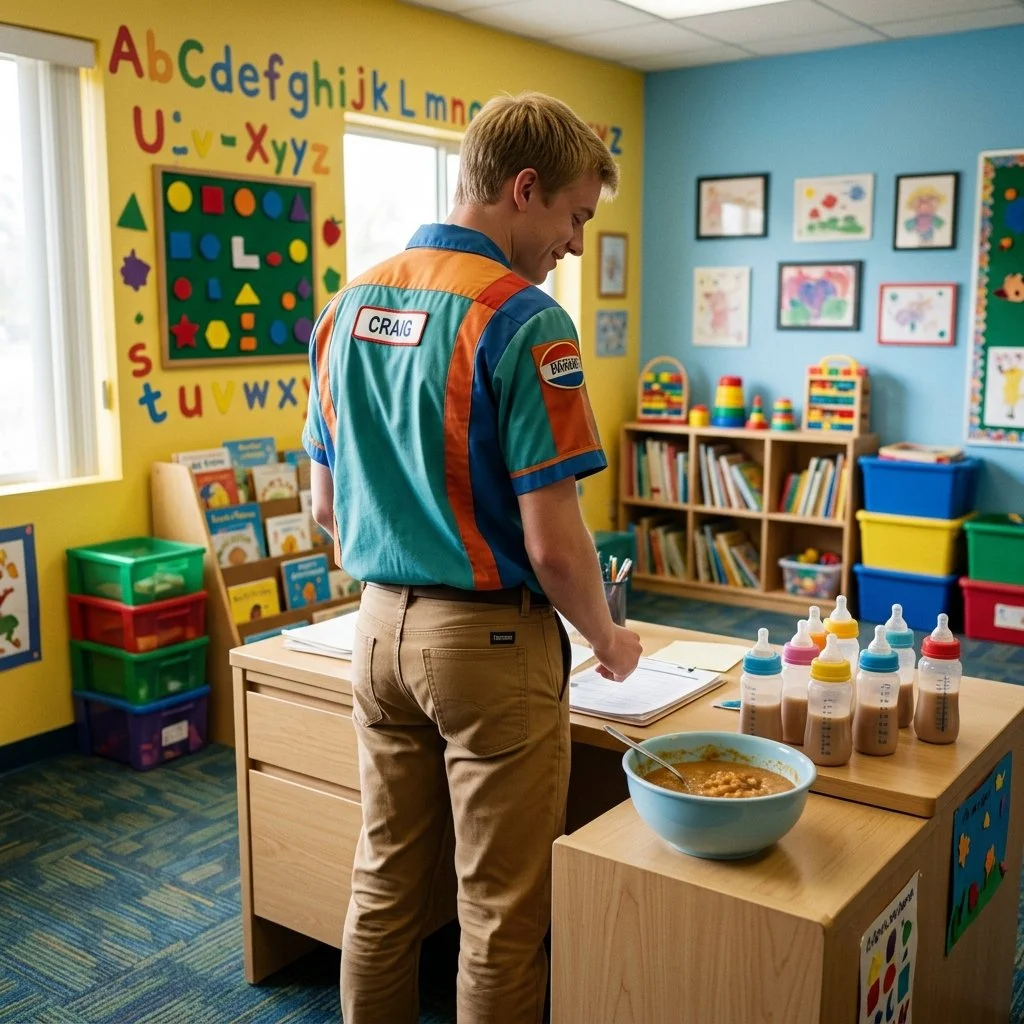
One Hour at a Time,
Milk, Gas, and Boundaries
Being a caretaker for someone with special needs requires a unique blend of patience, firmness, and understanding. When I took on the role of caring for a young man who functions at the developmental level of a two-year-old, I knew there would be challenges and adjustments for both of us. What I didn't anticipate was the negotiation process that would unfold around something as simple as his daily milk intake.
From the beginning, there were certain assumptions on his part about how things would go. He seemed to believe that because we were building a rapport, because there were moments of laughter and connection, that I might be flexible on the nutritional protocols that had been established for him. Specifically, he thought the bottle schedule would be something we could ease into gradually—maybe starting with one or two bottles a day and slowly working our way up to the recommended amount.
That's not how this works.
The reality is straightforward: he needs to drink one bottle of milk every single hour. Not every few hours. Not when he feels like it. Every hour, on schedule, without exception. This isn't a suggestion or a goal we're working toward. This is the protocol, and it starts now.
I could see the moment of realization cross his face when I explained this to him. There was a brief flash of what I can only describe as hope that maybe, just maybe, I'd be the lenient one. The caretaker who would let things slide or allow him to set his own pace. But that hope faded quickly when I laid out the schedule in clear, simple terms that matched his comprehension level. One bottle. Every hour. Starting today.
The physiological reality of consuming this much milk is something we both have to accept. With that volume of dairy moving through his system on such a regular basis, there are going to be consequences. Specifically, he's going to be passing gas approximately every fifteen to twenty minutes. It's not pleasant to discuss, but it's a fact of the situation. His digestive system will be in constant motion, processing bottle after bottle, and the natural byproduct of that process is going to be frequent flatulence.
He understands this on some level. When I explained it to him in simple terms, he nodded. He clapped his hands together in that way he does when he's processing information and trying to show cooperation. It's one of his tells—the hand clapping. It means he's listening, he's absorbing, and he's preparing himself mentally for what's coming.
And yes, he will be a good boy about this. He'll drink the bottle when it's time. He knows what's expected of him now, and despite whatever initial resistance or hope for leniency he might have harbored, he's accepting the reality of the situation. The hand clapping continues periodically throughout our conversations about this, almost like a self-soothing mechanism or a way of affirming to himself that he can do this.
I did offer him an option, because I'm not unreasonable. I told him we could ease into this schedule over the course of a few weeks if he felt he needed that adjustment period. We could start with every hour during waking hours and gradually extend it. We could build up his tolerance slowly, give his system time to adapt to the increased dairy intake, allow him to mentally prepare for the lifestyle change this represents.
But here's the critical part: he has to do it as we schedule it. If we agree to a three-week adjustment period, then he follows that schedule exactly. If we decide to start at full capacity immediately, then that's what happens. There's no negotiating day by day, no deciding in the moment that he's not feeling up to it, no skipping bottles because he's tired or distracted or simply doesn't want to.
The schedule is the schedule. That's the non-negotiable element here.
What makes this situation particularly interesting is watching him reconcile his expectations with reality. At his developmental level, there's a certain amount of magical thinking that happens. He believed that his charm, his cooperation in other areas, or simply the newness of our caretaker relationship might earn him special treatment. He thought that being agreeable and clapping his hands and showing enthusiasm would translate into flexibility on my part.
It won't.
This isn't about being harsh or inflexible for its own sake. This is about understanding that structure and consistency are exactly what someone at his functional level needs. The boundaries aren't there to punish him—they're there to provide the framework within which he can thrive. He needs to know that when I say one bottle per hour, I mean one bottle per hour. He needs to understand that the schedule exists for a reason and that following it isn't optional.
The flatulence issue is going to be an adjustment for both of us. Every fifteen to twenty minutes means that our daily routine will be punctuated by these moments. We'll be in the middle of an activity, working on a puzzle or watching a program, and it will happen. There's no way around it. The sheer volume of milk moving through his system guarantees this outcome.
I've prepared him for this as best I can. I've explained in simple, clear language that this is normal, that it's expected, and that it's nothing to be embarrassed about. His body is going to do what it needs to do to process all that dairy. The gas is just part of the deal.
He clapped his hands when I explained this too. I think it's his way of saying he understands, that he's ready, that he's going to cooperate. And I believe him. Despite whatever initial misconceptions he had about how lenient I might be, he's coming to terms with the reality of the situation.
The bottle-per-hour protocol is comprehensive. It means setting timers. It means interrupting activities when the hour is up. It means that no matter what we're doing—whether we're outside, in the middle of a meal, or winding down for the evening—when that timer goes off, it's bottle time. No exceptions, no delays, no "just five more minutes."
This level of rigidity might seem excessive to an outside observer, but anyone who works with special needs individuals at this functional level understands why it's necessary. Consistency creates security. Knowing exactly what to expect and when to expect it reduces anxiety and behavioral issues. The schedule isn't restrictive—it's liberating in its predictability.
I can see him processing all of this. The hand clapping has become more frequent as we've discussed the details. It's almost rhythmic now, a physical manifestation of his mental preparation. He's gearing himself up for this new reality, accepting that his assumptions about leniency were incorrect, and committing himself to the protocol.
The question of easing into it over a few weeks is still on the table. I've made it clear that this is an option if he needs it, but I've also made it equally clear that choosing this option doesn't mean choosing flexibility. It means choosing a specific, structured path toward the full protocol. Week one might be every ninety minutes. Week two might be every seventy-five minutes. Week three brings us to the full hourly schedule. But whatever we decide, that becomes the new non-negotiable schedule.
He has to understand that there's no scenario where he gets to drink bottles "when he feels like it" or "a couple times a day." Those options don't exist. The only choice is between starting the full protocol immediately or following a structured ramp-up period that still ends with the same destination: one bottle every hour, every day, indefinitely.
The digestive consequences are unavoidable. I've stocked up on supplies that will make managing the frequent gas more comfortable for both of us. I've adjusted our daily schedule to account for the fact that we'll need to be near facilities more often. I've prepared the environment to accommodate this new normal.
And he's preparing too, in his own way. The hand clapping, the nodding, the moments where I can see him mentally rehearsing what it will be like to hear that timer go off every single hour. He's a good boy, and he's going to do what's expected of him because that's what the structure demands and what his care requires.
This isn't about control for its own sake. This is about providing the level of care and structure that someone at his developmental level needs to function optimally. The milk intake serves a purpose. The schedule serves a purpose. Even the inevitable flatulence, uncomfortable as it may be, is just a natural consequence of meeting his nutritional needs.
He thought I'd be lenient. He thought we'd negotiate. He thought his cooperation in other areas would earn him flexibility in this one. But what he's learning—what the hand clapping and the gradual acceptance demonstrate—is that the best thing I can do for him is maintain the boundaries, enforce the schedule, and provide the consistent structure that allows him to thrive.
One bottle per hour. Gas every fifteen to twenty minutes. A schedule that doesn't bend. And a caretaker who won't either.
He'll be a good boy. He'll drink his bottles. And we'll both adjust to this new reality together, one hour at a time.
Essay Prompt: Mitchell’s Hourly Bottle Protocol
Assignment Overview
Word Count: 1,500 words
Perspective: You are Mitchell’s preschool teacher
Task: Create a no-nonsense plan to ensure Mitchell drinks his gas bottle every single hour on the dot
Background Context
You’re a preschool teacher and you’ve got a situation on your hands. Mitchell is a special needs student who functions at about a two-year-old level. He’s been put on a strict protocol: one bottle of milk every hour, on the hour, no exceptions. The administration has made it clear this isn’t optional. The problem is Mitchell thought he’d get some wiggle room. He thought maybe he’d start with one or two bottles a day and work his way up. He was wrong.
Your job is to make sure this happens. Every hour. No excuses. No delays. You need a plan that’s airtight, enforceable, and leaves zero room for negotiation.
Your Assignment
Write a 1,500-word plan addressed to your preschool director explaining exactly how you’re going to ensure Mitchell drinks one bottle every single hour during school hours. Be direct, practical, and show you mean business.
1. Establish the Situation (300-350 words)
Lay out what you’re dealing with:
Mitchell’s developmental level and needs
The hourly bottle requirement and why it’s non-negotiable
Mitchell’s initial expectations versus reality
Why you’re the person to enforce this protocol
The physical consequences (gas every 15-20 minutes, digestive issues)
Why there’s no room for leniency
Be straightforward. This is a medical/nutritional requirement, not a suggestion.
2. The Enforcement Plan (500-600 words)
This is the core of your essay. Detail exactly how you’ll make this happen:
Timing and Scheduling:
How you’ll track the hourly schedule
What happens when the hour mark hits (timers, alarms, visual cues)
How you’ll interrupt activities to enforce bottle time
What happens if Mitchell resists or delays
Physical Setup:
Where bottles will be stored and prepared
How you’ll ensure they’re the right temperature
Your bottle station setup in the classroom
Backup supplies and contingency bottles
Enforcement Strategies:
Your approach when Mitchell doesn’t want to drink
How you’ll handle resistance without negotiation
The consequences for refusal (there need to be consequences)
How you’ll stay firm when he tries to charm or delay
Managing the Side Effects:
How you’ll handle the gas situation (every 15-20 minutes)
Bathroom/changing protocols
Maintaining classroom order while managing his needs
How you’ll keep other students focused during disruptions
Documentation:
How you’ll log each bottle consumption
What information you’ll track (time, amount consumed, any issues)
Who gets copies of these logs and how often
3. Address Potential Obstacles (300-350 words)
Show you’ve thought through what could go wrong:
“What if he’s in the middle of an activity?”
Too bad. The activity stops. Bottle time is bottle time.
“What if he’s sleeping during nap time?”
He wakes up. The schedule doesn’t pause for naps.
“What if other kids get distracted by his gas?”
You’ll manage the classroom. That’s your job. The protocol continues.
“What if he refuses?”
You have strategies for this. Outline them clearly.
“What if parents complain about disruptions?”
This is a medical requirement. Disruptions are unavoidable and non-negotiable.
“What if you’re short-staffed?”
The protocol continues. You’ll make it work.
Show that you’ve anticipated every excuse and have a response ready.
4. Success Metrics and Accountability (200-250 words)
Explain how you’ll measure success:
What does successful compliance look like?
How will you know the protocol is working?
What data will you collect?
Who reviews your performance on this?
What happens if you miss an hourly bottle?
Make it clear you’re taking full responsibility for ensuring this happens.
5. Conclusion (150-200 words)
Close strong. You’re not asking for approval—you’re informing them of how this will work. You understand the requirement, you have a plan, and you’re going to execute it without fail.
End with something like: “This protocol starts immediately and will be maintained without exception.”
Writing Guidelines
Tone: Direct, professional, no-nonsense. You’re not being mean, but you’re also not leaving any room for interpretation.
Style: Clear, practical, action-oriented. Short sentences. No fluff.
What to avoid:
Emotional appeals
Apologizing for the strictness
Suggesting the protocol might be too harsh
Leaving any wiggle room in your plan
What to include:
Specific, concrete actions you’ll take
Clear timelines and procedures
Acknowledgment of the challenges without backing down
Confidence that you can and will make this work
Reference Essay
Mitchell’s Hourly Bottle Protocol: Implementation Plan
I’m writing to outline my plan for ensuring Mitchell complies with his required hourly bottle protocol during school hours. This is a medical and nutritional requirement that has been established by his care team, and my role is to enforce it without exception. I understand the parameters, I’ve assessed the challenges, and I have a comprehensive plan to make this work.
Mitchell is a special needs student who functions at approximately a two-year-old developmental level. He requires one full bottle of milk every hour, on the hour, throughout the school day. This isn’t a goal we’re working toward. This isn’t something we’ll ease into over time. This is the protocol starting immediately, and it will be maintained with absolute consistency.
From what I understand, Mitchell initially believed this requirement would be more flexible. He thought perhaps he’d start with one or two bottles per day and gradually increase. That’s not happening. The protocol is one bottle per hour, and that starts now. My job is to ensure compliance, and I’m prepared to do exactly that.
There are physical realities we need to acknowledge. With this volume of milk moving through his system hourly, Mitchell will be passing gas approximately every fifteen to twenty minutes. This is unavoidable. His digestive system will be in constant motion, and there will be frequent bathroom needs and diaper changes throughout the day. These are facts of the situation, not problems to be solved. We manage them and move forward.
I’m the right person to enforce this protocol because I don’t negotiate with preschoolers, and I don’t make exceptions when medical requirements are involved. Mitchell may test boundaries. He may try to charm his way out of a bottle. He may resist or delay. None of that will work. The schedule is the schedule, and I will maintain it.
The Enforcement Plan
Here’s exactly how this will work in my classroom.
Timing and Scheduling
I will set a timer that goes off every hour on the hour from the moment Mitchell arrives until the moment he leaves. When that timer sounds, everything stops. I don’t care if we’re in the middle of circle time, art projects, outdoor play, or snack. When the timer goes off, it’s bottle time.
I’ll have a large visual timer displayed in the classroom that Mitchell can see. This gives him a countdown so he knows when bottle time is approaching. There will be no surprises, no excuses about not knowing it was time.
The sequence is simple: timer sounds, Mitchell comes to the bottle station, sits down, and drinks his bottle. He doesn’t leave that spot until the bottle is empty. If it takes him two minutes, fine. If it takes him ten minutes, that’s fine too. But he doesn’t rejoin activities until that bottle is finished.
If Mitchell is in the bathroom when the timer goes off, we wait exactly zero minutes for him to finish. Someone retrieves him immediately. If he’s outside, he comes inside immediately. If he’s engaged in his favorite activity, that activity ends immediately. The timer doesn’t care what he’s doing, and neither do I.
Physical Setup
I’m establishing a dedicated bottle station in the corner of the classroom. This area will have a small chair at Mitchell’s height, a table, and storage for bottles. I’ll keep a mini-fridge stocked with prepared bottles at the correct temperature. Each morning, I’ll prepare eight bottles for the school day—one for each hour from arrival to departure.
Backup bottles will be stored in the main refrigerator in case any bottle is dropped, spilled, or rejected for temperature issues. I’m not giving Mitchell an out because a bottle isn’t perfect. If he complains about temperature, I have a backup ready in thirty seconds.
The bottle station is positioned where I can see it from anywhere in the classroom. I need a clear line of sight to ensure Mitchell is actually drinking and not just sitting there holding the bottle. I’ve learned that with kids at this developmental level, you can’t assume compliance just because they’re in the right spot.
Enforcement Strategies
When the timer goes off and Mitchell doesn’t immediately move toward the bottle station, I give him one verbal prompt: “Mitchell, bottle time.” That’s it. One prompt. If he doesn’t move within five seconds, I physically guide him to the station. No negotiation, no counting to three, no second chances.
If he sits at the station but refuses to drink, I use a calm, flat tone: “You need to drink your bottle.” I don’t explain why. I don’t cajole. I don’t offer rewards. I state the requirement and wait. I can outwait a preschooler. I’ve been doing this for years.
If resistance continues beyond two minutes, I implement a consequence. His favorite activities are removed from availability until the bottle is consumed. The blocks he loves? Put away. The trucks? Not available. The tablet time he gets in the afternoon? Gone. He gets the bottle or he gets nothing. Those are the options.
I don’t raise my voice. I don’t get frustrated. I simply maintain the boundary with absolute consistency. He will learn very quickly that resistance is pointless because the outcome never changes.
When he does comply—and he will—I offer simple, brief praise: “Good job drinking your bottle.” Then we move on. I’m not throwing a party for him doing what’s required, but I acknowledge compliance.
Managing the Side Effects
The gas situation is going to be constant. Every fifteen to twenty minutes, Mitchell will be passing gas. This is disruptive, it’s going to smell, and other kids will notice and comment. I’m prepared for this.
I’ll address it with the class once, clearly and simply: “Mitchell’s body makes gas because of his milk. It’s normal for him. We don’t laugh or make comments.” Then I enforce that boundary the same way I enforce the bottle schedule. Kids who can’t handle it maturely lose privileges.
I’ll have the classroom well-ventilated. Windows open when weather permits. Air purifier running constantly. I’m not pretending this won’t be unpleasant, but I’m also not letting it derail the classroom.
Mitchell wears diapers, and with this much milk in his system, he’ll need frequent changes. I’ve arranged for additional support staff to be available for changes so I can maintain classroom supervision. I’m documenting every change—time, condition, any concerns. This information goes to his parents daily.
During activities, if Mitchell needs to be changed, he’s changed immediately. I’m not making him sit in a soiled diaper because we’re in the middle of something. His dignity and hygiene come first, even if it means disrupting the schedule.
Documentation
I’m keeping a detailed log for every single bottle. The log includes: exact time bottle was started, exact time bottle was finished, amount consumed, any resistance or issues, and Mitchell’s behavior immediately after. This log is reviewed by administration weekly and sent to parents daily.
If Mitchell doesn’t finish a bottle, I document why and what intervention was used. If a bottle is refused entirely, that’s documented with a full incident report. I’m creating a paper trail that shows either consistent compliance or identifies patterns that need additional intervention.
This documentation protects everyone. It shows parents that the protocol is being followed. It shows administration that I’m doing my job. And it provides data that can be used to adjust the protocol if medical professionals determine changes are needed.
Addressing Potential Obstacles
I’ve thought through every possible disruption or excuse, and I have responses ready.
“What if he’s in the middle of an activity?”
The activity stops. I don’t care if he’s building the most elaborate block tower of his life or if he’s finally engaging with another student for the first time that day. When the timer goes off, the activity ends and bottle time begins. He can return to the activity after the bottle is finished if time and classroom flow allow. If not, he moves on to the next scheduled activity. The bottle doesn’t accommodate his preferences.
“What if he’s sleeping during nap time?”
He gets woken up. Nap time in our classroom runs from noon to two. That means he’ll need to be woken for a bottle at one o’clock. I’ll wake him gently but firmly, have him drink his bottle while sitting up, then he can return to his nap. Sleep is important, but the bottle protocol supersedes nap schedules.
“What if other kids get distracted by his gas or bathroom needs?”
I manage the classroom. That’s literally my job. I redirect attention, maintain routines for other students, and keep activities moving. If some kids struggle with the disruptions, I work with them individually on focus and respect. But Mitchell’s protocol doesn’t change because other kids are distracted. I adapt my teaching, not his medical requirements.
“What if he refuses and consequences don’t work?”
Then I escalate. I involve administration immediately. I contact parents. I document the refusal thoroughly. But I don’t give in. The bottle still needs to be consumed, even if it takes an hour of sitting at the bottle station with everything else removed. I have all day. He’ll drink it eventually because the alternative is sitting in an empty corner with nothing to do.
“What if parents of other students complain about disruptions?”
I explain once that Mitchell has medical requirements that must be met during school hours. I don’t share details of his protocol because that’s private, but I make clear that accommodations are legally required and non-negotiable. If parents continue to complain, I refer them to administration. My job is to teach all students and meet all their needs, including Mitchell’s hourly bottles.
“What if you’re short-staffed and need to manage the classroom alone?”
The protocol continues. I’ll adjust other activities to be more independent during bottle times. I’ll have backup plans for moments when I need to focus on Mitchell’s compliance. I’ll communicate with administration about staffing needs, but I won’t use short staffing as an excuse to skip or delay bottles. I’ll make it work because that’s the requirement.
Success Metrics and Accountability
Success is simple: Mitchell drinks one full bottle every hour during school hours without exception. That’s the only metric that matters.
I’ll know the protocol is working when bottles are consumed on schedule consistently, when resistance decreases over time as Mitchell accepts the routine, and when I can maintain classroom flow while managing his needs.
The data I’m collecting—bottle logs, incident reports, behavioral observations—will show patterns. If Mitchell is complying ninety-five percent of the time within two weeks, the protocol is working. If compliance is lower, I need to adjust my enforcement strategies.
Administration will review my logs weekly. They’ll observe my classroom periodically to see the protocol in action. If I’m failing to maintain the schedule, that’s on me and I’ll be held accountable.
If I miss an hourly bottle, I document why it was missed, what I’ll do to prevent future misses, and I inform parents and administration immediately. Misses should be rare and only due to genuine emergencies. Otherwise, I’m not doing my job.
I’m taking full responsibility for this. Mitchell’s compliance is my responsibility during school hours. If the protocol fails, I’ve failed. I don’t intend to fail.
Conclusion
This protocol starts the moment Mitchell walks into my classroom tomorrow morning. The first bottle will be given at his arrival time, and every hour after that until departure. There will be no grace period, no adjustment phase, no easing into it.
I understand this is demanding. I understand it will disrupt normal classroom flow. I understand Mitchell will resist initially. None of that changes the requirement.
I have a plan. I have the resources. I have the determination to enforce this consistently. Mitchell will drink his bottle every hour because that’s what his care requires, and I will ensure it happens.
This protocol will be maintained without exception.
Math Word Problems
Instructions: Solve each problem showing all your work.
1. Mitchell arrives at preschool at 8:00 AM and leaves at 3:00 PM. How many hours is he at school? Show your work.
2. If Mitchell drinks one bottle every hour and he’s at school for 7 hours, how many bottles does he drink? Show your work.
3. Each bottle contains 10 ounces of milk. If Mitchell drinks 7 bottles in one day, how many ounces of milk does he drink total? Show your work.
4. Mitchell passes gas every 20 minutes. How many times does he pass gas in one hour? Show your work.
5. If Mitchell passes gas 3 times per hour and he’s at school for 7 hours, how many times does he pass gas during the school day? Show your work.
6. Mitchell needs his diaper changed 3 times during the school day. If diapers cost $0.50 each, how much do his diapers cost per day? Show your work.
7. The teacher sets a timer for 60 minutes. If the first timer goes off at 8:00 AM, what time will the second timer go off? Show your work.
8. A case of milk bottles contains 24 bottles. If Mitchell drinks 7 bottles per day, how many bottles are left in the case after one day? Show your work.
9. Mitchell drinks bottles for 5 days per week. If he drinks 7 bottles each day, how many bottles does he drink in one week? Show your work.
10. If it takes Mitchell 5 minutes to drink each bottle, how many minutes does he spend drinking bottles if he has 7 bottles in one day? Show your work.
11. The classroom has 15 students including Mitchell. If Mitchell passes gas 21 times per day, how many students are in the class who are NOT Mitchell? Show your work.
12. Mitchell’s bottles need to be between 68°F and 72°F. If a bottle is 70°F, is it the right temperature? Show your work.
13. The teacher logs each bottle Mitchell drinks. If she writes 3 sentences per bottle and Mitchell drinks 7 bottles, how many sentences does she write per day? Show your work.
14. A bottle costs $2.00. If the school buys 35 bottles for one week (7 bottles per day for 5 days), how much do they spend? Show your work.
15. Mitchell drinks his first bottle at 8:00 AM and his last bottle at 2:00 PM. How many hours pass between his first and last bottle? Show your work.
16. If Mitchell passes gas every 20 minutes, how many minutes pass between 3 gas episodes? Show your work.
17. The teacher spends 8 minutes helping Mitchell with each bottle. If he drinks 7 bottles, how many minutes does she spend helping him? Show your work.
18. Mitchell needs 7 bottles per day. If the school week is 5 days, how many bottles are needed for 2 weeks? Show your work.
19. Each diaper change takes 4 minutes. If Mitchell needs 3 diaper changes per day, how many minutes are spent changing diapers? Show your work.
20. Mitchell drinks 10 ounces per bottle. If he drinks 3 bottles by lunchtime, how many ounces has he consumed? Show your work.
Mandatory 4-Hour Gym Workout
After completing all math problems, you must engage in a 4-hour gym workout. You may create your own routine or follow this template:
Hour 1: Cardiovascular Conditioning
Start with 10 minutes of dynamic stretching including arm swings, leg kicks, torso twists, and walking lunges. Move into 45 minutes of continuous cardio alternating between treadmill running, rowing machine, and stair climber every 15 minutes. Maintain heart rate at 70-80% of maximum. Finish with 5 minutes of cool-down walking and static stretching.
Hour 2: Upper Body Strength
Begin with 5 minutes of shoulder and arm mobility work. Complete 4 sets of 10-12 repetitions with 90 seconds rest between sets for each exercise: flat bench press, incline dumbbell press, pull-ups or assisted pull-ups, seated cable rows, overhead shoulder press, lateral raises, barbell curls, and tricep rope pushdowns. Focus on controlled eccentric movements and full range of motion.
Hour 3: Lower Body and Posterior Chain
Start with 5 minutes of hip mobility and leg swings. Perform 4 sets of 8-12 repetitions with 2 minutes rest between sets: back squats, Romanian deadlifts, walking lunges with dumbbells, leg press, hamstring curls, calf raises on leg press machine, and hip thrusts. Follow with 15 minutes of core work including weighted planks, hanging leg raises, Russian twists with medicine ball, and ab wheel rollouts.
Hour 4: Functional Movement and Conditioning
Begin with 5 minutes of full-body dynamic movement. Complete 35 minutes of functional training circuits with 45 seconds work and 15 seconds rest: burpees, kettlebell swings, box jumps, battle rope waves, medicine ball slams, farmer’s walks with heavy dumbbells, and sled pushes if available. Finish with 20 minutes of comprehensive stretching, foam rolling all major muscle groups, and breathing exercises for recovery.
Safety and Hydration:
Drink water every 15-20 minutes throughout the entire workout. Take brief 2-3 minute breaks between hours if absolutely necessary. Stop immediately if you experience sharp pain, dizziness, or chest discomfort. Adjust weights and intensity based on your current fitness level. This is an advanced workout protocol—modify as needed but maintain the 4-hour duration and effort level appropriate for your capabilities.