
(Reflection, Math, Fitness, Mindfulness) Addressing Bullying
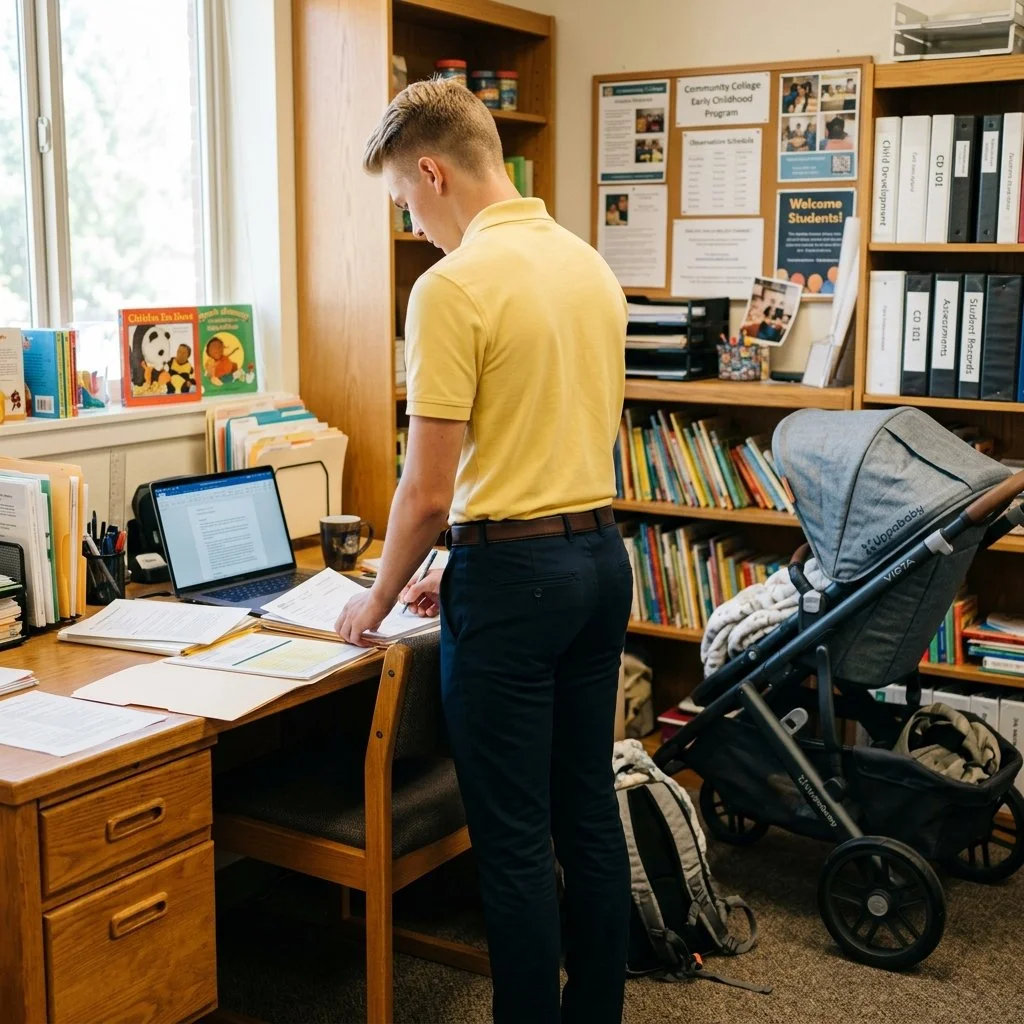
Imagine yourself as a daycare administrator at Shepherds Daycare, tasked with creating a safe and supportive environment for all the children under your care. Recently, you have discovered that Mitchell, a toddler at the daycare, has been subjected to bullying by a group of older boys at the facility. This behavior is completely outside the parameters of acceptable conduct at Shepherds Daycare and requires immediate corrective action.
Your role is to document and analyze the events leading to this discovery, your intervention, and any outcomes. Consider how Mitchell's age and behavior may have shaped the situation. Was he solely a victim, or did he unknowingly contribute to this dynamic in some way? Reflect on how you approached those involved, including the group of older boys, and what insights were uncovered during this process.
Bear in mind the responsibilities of an administrator to protect not only the well-being of all students but also the integrity and values of the institution. Use this opportunity to explore the handling of sensitive matters like bullying and propose improvements to ensure such incidents are mitigated in the future.
Outline and Word Count Breakdown
Your essay should have four primary sections, as follows:
Introduction (250 words)
Introduce Shepherds Daycare and Mitchell, providing an overview of the bullying incident.
Explain the institutional commitment to a safe, nurturing environment as the foundation of policy at Shepherds Daycare.
Present the purpose and scope of the essay, indicating your intentions for addressing corrective action and insights into the situation.
Discovery and Examination of the Incident (400 words)
Outline how the issue came to your attention. For instance, was Mitchell's behavior or demeanor a signal, or did other staff report observations?
Discuss preliminary assessments of what happened, detailing initial conversations with Mitchell, observations, and staff reports.
Consider examining Mitchell's interaction with the older boys—whether there were misunderstandings or unintentional instigations that played a role.
Intervention and Conversations in the Office (500 words)
Describe how you brought in Mitchell and the group of older boys to discuss the issue.
Explore the tone, structure, and focus of these conversations. Highlight how you maintained fairness while fostering a safe environment for Mitchell to express himself.
Document the responses and reasoning shared by the older boys. What were their motives or misinterpretations that may have contributed to this behavior?
Reflect on Mitchell’s perspective—did he voice fears, misunderstandings, or any behaviors that could have misled the group of older boys?
Outline how accountability was discussed with the boys, ensuring corrective lessons were imparted empathetically.
Resolution, Reflections, and Future Preventative Strategies (350 words)
Share the steps taken to ensure resolution for Mitchell and the older boys, aiming to prevent recurrence of bullying incidents.
Reflect on the challenges faced as an administrator and how the experience shaped your improved approach to protecting all students.
Propose proactive measures to uphold the daycare's safety values, such as revising policies, staff training, or introducing early education for children on empathy and conflict resolution.
Short Reference Essay (Sample – 250 Words)
At Shepherds Daycare, the safety and well-being of every child remain paramount. Recently, I was made aware of ongoing bullying involving Mitchell, a toddler in our care, and a group of older boys. This revelation demanded swift action to address not only the immediate issue but also to reinforce the values of respect and empathy across our community.
The situation surfaced through observations of Mitchell’s subdued behavior and reports from staff who noted interactions suggesting conflict with older peers. Upon calling Mitchell into my office, I found a child unsure of what to say but visibly fearful of the older boys. When I brought in the group of older boys, it became clear that a lack of understanding and supervision had contributed to their actions; they did not fully grasp the consequences of their behavior. While Mitchell did not instigate the bullying, his attempts to join in their activities had occasionally led to teasing rooted in age and attention differences.
Resolving the matter required addressing the behavior of the older boys while fostering empathy. We sat down in a group discussion, teaching them the impact of their actions and emphasizing accountability. Mitchell, encouraged to share alongside the boys, felt reassured when he saw sincere apologies matched with changes in their demeanor toward him.
Going forward, Shepherds Daycare will implement more robust supervision and engage in age-appropriate activities to strengthen empathy among children. Protecting our community means anticipating challenges and ensuring that no child feels unsafe under our care.
MATH
Below are 30 math word problems, themed around organizing and planning Mitchell's diaper bag for the week. These problems challenge your critical thinking and algebraic skills. Remember to show your work for each problem to practice proper problem-solving techniques!
Mitchell needs 6 diapers each day. How many diapers should be packed for a 5-day week?
Mitchell's bottle holds 8 ounces of formula, and he drinks 5 bottles a day. How many ounces are required to pack for 7 days?
If the diaper bag has four compartments and diapers take up 35% of one compartment, how much space is reserved for diapers in all four compartments combined? Express your answer as a percentage.
The bag weighs 10 pounds empty. Diapers weigh 0.2 pounds each, and you pack 30 diapers. What is the weight of the loaded bag now?
Mitchell eats 3 snack packs daily, and a pack contains 15 crackers. How many crackers total should be packed for 10 days?
If two-thirds of the available bag space is used for diapers and bottles, how much space remains for other items if the bag’s capacity is 18 liters?
You’re packing 3 changes of clothes for each day for 5 days. If each set of clothes weighs 1.2 pounds, what is the total weight added to the bag?
Mitchell uses wipes from a pack containing 100 sheets per day. If he needs 25 sheets daily, how many wipe packs should you pack for 14 days?
A single diaper pack costs $8 and contains 40 diapers. How much will it cost to pack enough diapers for 10 days?
Mitchell’s bib collection includes 8 blue and 12 red bibs. If you pack 75% of the bibs, how many are going in the bag?
The bottle warmer takes 10 minutes per bottle to heat formula. How long will it take to prepare 18 bottles in total?
If the bag has five inner compartments and you distribute the gear evenly among four of them, how many items should each compartment hold if the total load is 92 items?
Mitchell has three pairs of shoes to rotate during the week. If you pack them 60% of the time, how many days will a pair of shoes go unused over 10 days?
A box of baby snacks weighs 1.5 pounds, and each snacks pack weighs 0.25 pounds. How many snack packs can you pack from one box?
Mitchell's feeding schedule includes 4 bottles daily, each with 8 ounces of formula. If you prepare formula in bulk using a 1-gallon container, how many bottles can one container fill?
You pack a thermos containing formula that cools down 2°F every 15 minutes. If it starts at 98°F, what will the temperature be after 2 hours?
Baby blankets take up 6 liters of space in the bag, leaving 24 liters for everything else. What percentage of the bag's total volume is occupied by the blankets?
Mitchell eats a snack every 2 hours for 10 hours. If each snack is packed in its own container, how many containers are required for a 2-day trip?
If diapers cost $0.25 each, how much is spent on diapers for an entire week of 42 changes?
Mitchell's toys make up 20% of the weight of his 15-pound bag. How much weight is occupied by the toys?
You’re packing formula for the week. If 3 ounces are needed per bottle and 28 bottles are prepared, how many ounces of formula are necessary?
A diaper bag has a capacity of 30 liters. If diapers use 50% of the space and bottles take up 25%, how much space remains for other items?
You pack jars of baby food weighing 0.4 pounds each. If the total bag weight is limited to 25 pounds and other items weigh 19 pounds, how many jars can be added to the bag?
Mitchell uses 6 wipes per day. If you pack a single large container with 90 wipes, how many days will the container last?
The changing mat uses 2 square feet of bag space, and the remainder of the bag has 28 square feet available. What percentage of the space is taken by the changing mat?
Mitchell eats 5 ounces of fruit puree per meal and has 3 meals daily. How many ounces of puree should you pack for a 7-day trip?
Diaper packs are sold in bundles of 24 diapers. How many packs would you need to buy to pack exactly 96 diapers?
If Mitchell’s bottles take 15 minutes each to sanitize and you clean 5 bottles at a time, how many hours will it take to clean 20 bottles?
Each day, Mitchell drinks a total of 32 ounces of water from a portable container. How many containers are needed for a 9-day week if each container holds 64 ounces?
The total bag weight is distributed among six evenly filled pockets. If the total weight is 18 pounds, how much does each pocket carry?
Take your time working through these problems, and don’t forget to show your calculations!
GYM
This detailed gym workout is designed to build strength, power, athleticism, and endurance. The focus is on resistance training, functional movements, and conditioning, strategically divided into warm-ups, strength training, functional circuits, core work, and recovery.
1. Warm-Up (15 minutes)
Dynamic Stretching (5 minutes):
Arm circles (30 seconds each direction)
Leg swings (front to back and side to side, 10 each leg)
Hip openers and closers (10 each side)
High knees and butt kicks (30 seconds each)
Movement Prep (10 minutes):
Bodyweight squats (2 sets of 15)
Push-ups (2 sets of 10-15)
Plank-to-lunge with rotation (2 sets of 8 per side)
Single-leg glute bridge (2 sets of 10 per leg)
2. Strength Training (90 minutes)
Focus on compound lifts with progressive overload and accessory work targeting stability and balance.
A. Compound Lifts (45 minutes)
Barbell Back Squats (5 sets x 5 reps):
Add weight progressively each set. Rest 2 minutes between sets.
Deadlifts (5 sets x 5 reps):
Focus on form; keep the spine neutral and engage the core. Rest 2 minutes.
Barbell Bench Press (5 sets x 5 reps):
Controlled tempo on the eccentric phase. Rest 2 minutes.
B. Accessory Movements (45 minutes)
Pull-Ups or Weighted Pull-Ups (4 sets x 8-12 reps): Assisted if necessary.
Barbell Overhead Press (4 sets x 8-10 reps): Focus on shoulder stability.
Bulgarian Split Squats (3 sets x 10-12 reps per leg): Weighted or unweighted.
Barbell Row (3 sets x 8-10 reps): Control through the range of motion.
3. Functional Circuit Training (60 minutes)
This high-intensity circuit builds athleticism and endurance. Perform 4 rounds with minimal rest between exercises and 2-3 minutes between rounds.
Kettlebell Swings (15 reps)
Box Jumps (12 reps)
Push Press with Dumbbells (10 reps)
Medicine Ball Slam (15 reps)
Bear Crawls (20 yards)
Farmers Walk with Dumbbells (40 yards)
4. Core and Stability Work (20 minutes)
Focus on stability, core strength, and injury prevention.
Ab Wheel Rollouts (3 sets x 10 reps): Maintain control throughout.
Hanging Leg Raises (3 sets x 12-15 reps): Avoid swinging.
Side Planks with Hip Raises (3 sets of 12 per side): Controlled movement.
Single-Leg Romanian Deadlifts (3 sets x 10 per leg): Focus on balance.
5. Recovery and Cool-Down (15 minutes)
Static Stretching (10 minutes): Focus on hamstrings, quads, hip flexors, chest, shoulders, and back. Hold each stretch for 30-60 seconds.
Foam Rolling (5 minutes): Address tight areas such as quads, hamstrings, and lats.
This structured workout keeps intensity high while ensuring athletes remain balanced, powerful, and conditioned for their sport or goals. Adjust the weights and reps based on individual ability and progression over time.
Group Mindfulness Exercise: Finding Strength Through Reflection
Opening Scripture
"But those who hope in the Lord will renew their strength. They will soar on wings like eagles; they will run and not grow weary, they will walk and not be faint." – Isaiah 40:31
Exercise Overview
This mindfulness exercise is designed to create space for reflection, strengthen a sense of inner calm, and foster meaningful group connections. The session focuses on grounding ourselves in faith and exploring personal resilience through shared journaling and discussion.
Step 1: Centering Breath (5 minutes)
Begin seated in a circle. Close your eyes or soften your gaze.
Take a deep breath in for four counts, hold for four counts, and slowly exhale over six counts. Repeat this cycle for five breaths, allowing the group to settle into the moment.
Reflect silently on a time when you felt weary, and begin to consider what "renewing strength" means to you.
Step 2: Scripture Reflection & Journaling (15 minutes)
Read Isaiah 40:31 aloud again, pausing after each line for the group to absorb the words.
Distribute journals or writing materials.
Provide these journaling prompts:
How does this scripture relate to my personal experiences of exhaustion or perseverance?
What gives me hope or renews my strength during challenging times?
Where do I see others "soaring" or "running without growing weary," and how can I model their example in my life?
Step 3: Group Sharing & Discussion (10 minutes)
Invite any member willing to share a brief insight or line from their journaling that resonated with them.
Discuss in a supportive and nonjudgmental way, focusing on encouragement and shared growth.
Highlight themes of resilience, faith, and strength.
Step 4: Closing Affirmation (5 minutes)
End with a group affirmation based on the scripture, e.g., "We will walk and not be faint. Together, we find strength and hope to move forward."
Take three deep breaths together as a group before closing the session.
This mindfulness activity encourages participants to connect with their faith, reflect on their personal growth, and draw inspiration from one another. Save time at the end for optional social interaction or prayer requests.