
(Reflection, Math, Fitness, Mindfulness) Respect, Play, and Structure: Setting Boundaries and Strengthening Bonds
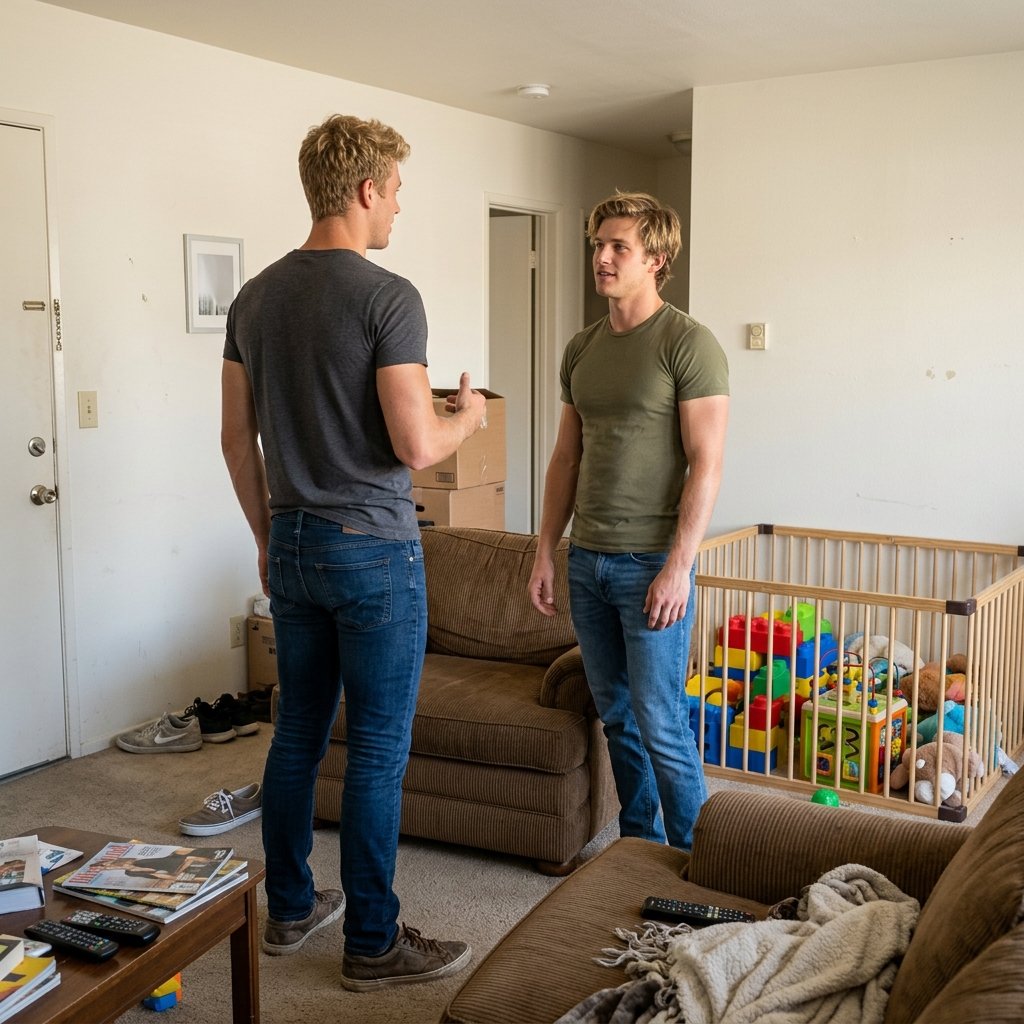
Today was another interesting day with Mitchell. My buddy came over, and we spent some time chatting about him. We’ve been babysitting Mitchell together for quite a while now, and although he’s definitely over 18, he chooses to live life his own way, and we respect that about him. Mitchell finds comfort in his unique lifestyle, which includes wearing pampers, eating Gerber baby food, and drinking bottles every hour. It’s an approach that works for him, and we do our best to support him while providing a sense of structure.
Earlier in the day, we decided it was time for a little chat with Mitchell. While it’s always great to spend time playing with him and chatting next to the playpen, we felt it was important to establish some ground rules to keep things balanced. We sat down together and explained that while we love the fun and relaxed moments with him, he needed to recognize that we’re the ones in charge. One simple request we made was for Mitchell to use “Mr.” in front of our names as an act of respect. At first, Mitchell wasn’t too excited about the idea and gave us a bit of pushback. However, after a bit of discussion, he eventually came around to the idea.
By the end of the conversation, Mitchell not only agreed but seemed to genuinely understand our point of view. He spent the rest of the evening happily playing in his playpen, and we all felt the interaction helped maintain a healthy balance of respect and fun. It was a small but meaningful step in ensuring that everyone feels comfortable while also setting clear expectations in our dynamic.
Essay Prompt:
Respect, Play, and Structure: Establishing Boundaries with Mitchell
Mitchell is a unique individual who embraces a lifestyle centered on comfort and play, finding joy in activities that bring him peace and satisfaction. While supporting Mitchell in his chosen way of life, there comes a need to introduce structure that fosters respect and boundaries within the relationship. Imagine you are Mitchell’s caretaker, and you’ve decided to implement a new rule in which Mitchell is required to address you with “Mr.” in front of your name as a sign of respect and acknowledgment of your role.
This essay should explore several key themes, including the need for balance between fun and structure, the importance of mutual respect in any dynamic, and how setting clear boundaries can strengthen a relationship. You are tasked with justifying this change to Mitchell in a way that emphasizes the positive impact it will have on your relationship with him as well as explaining the decision to anyone responsible for overseeing Mitchell’s well-being.
Word Count Breakdown:
Introduction (200-300 words): Start by discussing Mitchell’s lifestyle and the caretaker’s role in helping create a supportive yet structured environment. Introduce the idea of implementing the “Mr.” title and why it’s important.
Understanding the Balance Between Play and Structure (400-500 words): Deepen the discussion about how this new boundary respects Mitchell’s needs while also fostering a healthy dynamic centered on mutual respect and trust.
Justifying the Change to Mitchell (400-500 words): Present a thoughtful, empathetic conversation that outlines why adding “Mr.” strengthens respect while maintaining the fun, lighthearted aspects of the relationship.
Explaining the Decision to Others in Charge (200-300 words): Address how this decision aligns with the larger goal of supporting Mitchell’s unique lifestyle while ensuring he understands boundaries and structure.
Closing Thoughts (200-300 words): Recap the importance of respect, play, and structure as foundational elements and the positive outcomes of the decision.
Sample Essay:
Respect, Play, and Structure: Strengthening Bonds Through Boundaries
Mitchell is a one-of-a-kind individual who has chosen to live life his way, rooted in happiness and comfort. His carefree nature and love for play are some of the qualities that make him unique and endearing to those of us who care for him. However, as his caretaker, it is my responsibility to ensure that our dynamic remains both fun and respectful. Recently, I decided to introduce a simple change—Mitchell will now address me by adding “Mr.” in front of my name. While this may seem like a small adjustment, its implications are far-reaching and pivotal to fostering a positive relationship rooted in respect and understanding.
Mitchell’s lifestyle comes with a delicate balance between supporting his needs and providing structure. He thrives in an environment where he can explore his world of play, from enjoying his time in the playpen to indulging in simple, comforting meals. Yet, as his caretaker, I recognize the need to set boundaries to maintain clarity in our roles. The addition of the title “Mr.” serves as a friendly reminder that while our bond is full of fun and laughter, there is an underlying structure that ensures mutual respect and harmony.
When I first approached Mitchell about this, he was hesitant. But through an honest and empathetic discussion, I reminded him that respect isn’t about creating distance—it’s about strengthening the bond we share. Small changes like this can help him better understand relationships, roles, and the value of acknowledging those who support him.
By implementing this change, we take another meaningful step toward a dynamic that cherishes Mitchell’s unique perspective on life while ensuring we meet the needs of everyone involved. Respect and structure aren’t just rules—they’re tools for building stronger connections, and that’s something we can all benefit from.
Packing for a Weekend Trip - Math Word Problems
Instructions:
Below are 30 math word problems related to preparing for a three-day weekend while packing and purchasing items to keep a child engaged. Use these problems to practice your critical thinking and arithmetic skills. Show all your work, including calculations and explanations, as you solve each problem. These problems are designed to align with a 9th-grade math level, covering concepts such as addition, subtraction, multiplication, division, unit conversions, and logical reasoning.
Word Problems:
A diaper bag can hold 15 items. If 7 diapers, 4 bottles, and 2 pacifiers are already packed, how many more items can fit in the bag?
Each bottle holds 8 ounces of milk, and the child drinks 6 bottles every day. How many ounces of milk should be packed for 3 days?
A pack of 20 diapers costs $18.50. Calculate the cost per diaper.
On average, the child uses 6 diapers per day. How many diapers are needed for the 3-day trip? If packed diapers fall short, determine the additional cost of purchasing more.
Toys cost $12.50, $15.75, and $8.95 at a local store. What is the total bill if all three toys are purchased?
A box of wipes contains 80 sheets and costs $5.40. If wipes are used at a rate of 20 per day, how many boxes are necessary for the weekend? Include cost analysis.
A small toy weighs 0.8 pounds, and a larger toy weighs 1.5 pounds. If 2 small toys and 3 large toys are packed, what is the total weight in pounds?
The backpack weighs 4 pounds when empty. If items packed add up to 12 pounds, what is the total weight of the diaper bag?
Calculate the average number of items packed per day if 27 items are prepared for 3 days.
A thermometer is packed, and it has 5 spare batteries, each costing $2.75. What is the total cost of batteries?
A stroller is needed, and its folded dimensions are 24 inches by 16 inches. The car's trunk space is 64 inches by 18 inches. Is there enough space for the stroller?
Formula costs $32 for a 28-ounce container. If the child drinks 5 ounces per feeding and has 6 feedings each day, how much formula is required for 3 days, and what is the total cost?
Each blanket packed for the trip weighs 2.8 pounds, and three blankets are included. What is the total weight?
Crayons come in a box of 48 and cost $3.95. If only 12 crayons are needed for the trip, how much did they cost per crayon, and what is the cost for 12 crayons?
One toy car costs $7.50, and an action figure costs $12. If both are bought twice, what is the total spent?
Snacks are pre-packed in 8-ounce bags that cost $4.25 each. If 6 bags are packed for the weekend, what is the total weight and total cost of the snacks?
The child sleeps 12 hours per day and plays for 5 hours. For the remaining time, he eats, rides in the stroller, or takes short breaks. What percentage of the day is spent sleeping?
A package of burp cloths contains 10 and costs $6.25. If 2 packages are purchased, calculate the cost per burp cloth and the total spent.
If the diaper bag with everything packed takes up 48 liters of space and the trunk has a 98-liter capacity, how much space is left in the trunk?
A bag of toys includes 3 medium plush animals, each weighing 2.3 pounds. Calculate the combined weight of all the toys.
If a store has a 15% discount on all infant care items and the original cost of selected items is $85, what is the discounted price?
A travel crib weighs 12.6 pounds and costs $159. If 8% sales tax is applied, what is the final purchase price?
A child eats 3 snacks each day, and each snack contains 120 calories. Calculate the total caloric intake from snacks over the 3 days.
Sunscreen costs $8.95 per bottle, and two bottles are needed. What is the cost, including a tax rate of 7%?
The diaper bag has 3 compartments, each fitting 6 items. If one item takes up 1 liter of space, calculate the total capacity of the bag in liters.
A bag of blocks has 50 pieces and costs $24.50. What is the price per block?
A water bottle holds 16 ounces. If 5 bottles are filled each day for the trip, how many ounces of water are required for 3 days?
The child uses a total of 14 wipes per day for hygiene. If a pack contains 56 wipes, how many packs are necessary?
A retailer offers a buy-one-get-one-free deal on toys priced at $24. Calculate the total cost for 4 toys under this promotion.
A car's trunk has a weight limit of 240 pounds. If all packed items, including the diaper bag, weigh 185 pounds, how much more weight can the trunk safely hold?
Solve and show your work:
Take time to carefully solve each question and provide your work for every problem. This will strengthen your ability to approach multi-step problems logically.
4-Hour Cardio-Based Gym Workout Plan
A 4-hour workout may sound intense, but with proper planning and pacing, it can be an effective way to build endurance and push your limits. Below is an example plan to guide your training. Make sure to modify based on your fitness level and preferences. Always hydrate and listen to your body:
Warm-Up (20 Minutes)
10 minutes of brisk walking on a treadmill (speed 3-3.5 mph)
5 minutes of dynamic stretching (leg swings, arm circles, side lunges)
5 minutes of light jogging or cycling at a steady pace
Cardio Intensity Intervals (40 Minutes)
5 minutes of jogging or cycling at a steady pace
2 minutes of high-intensity sprinting or fast cycling
3 minutes of low-intensity recovery jog/walk or easy pedaling
(Repeat this 10-minute circuit 4 times)
Steady-State Cardio (60 Minutes)
Choose your preferred cardio machine (treadmill, elliptical, rowing machine, or stationary bike)
Maintain a moderate and consistent pace for the full hour
Focus on breathing rhythm and maintaining endurance
Circuit Training with Cardio Elements (50 Minutes)
Perform the following circuit 4 times (rest 2 minutes between each circuit):
Jump Rope - 2 minutes
High-Knees - 45 seconds
Burpees - 12 reps
Rowing Machine - 5 minutes at a steady pace
Cool Down and Recovery (30 Minutes)
5-10 minutes of walking to gradually lower your heart rate
5 minutes of gentle stretches targeting major muscle groups (calves, hamstrings, quads, hip flexors, and shoulders)
10-15 minutes of foam rolling or yoga poses to release tension and increase flexibility
Customize Your Plan
This is just a sample workout plan that can be adjusted to fit your goals, equipment availability, and fitness level. Remember, rest is just as important as intensity, so feel free to extend recovery periods or reduce time as needed. Stay consistent and enjoy the process of building your endurance!
Mindfulness Exercise: Visioning Success in Your Sport
The Visualization Practice
Find a Calm Space
Sit or lie down in a comfortable and quiet place where you won’t be disturbed. Close your eyes and take a few deep breaths, inhaling through your nose and exhaling through your mouth. Allow your body to relax and release any tension.Set Your Intention
Bring to mind your specific sport. Think about what performing well means to you—whether it’s scoring a goal, executing a flawless move, or maintaining peak endurance. Set an intention to focus solely on your performance and your full potential during this exercise.Imagine the Details
Envision yourself at your peak. Picture yourself in your uniform or gear, on the field, court, or wherever you compete. See yourself confident, strong, and prepared. Imagine the energy of the crowd, the feel of the equipment in your hands, and the textures beneath your feet. What do you hear? What do you see? Immerse yourself fully in this mental image of excellence.Focus on Movement
Visualize each movement you need to make with precision and strength. Whether it's a sprint, a pass, or a jump, see yourself performing with ease and perfect technique. Imagine the effort and the success. Feel your muscles firing and your body responding exactly the way it should.End with Affirmation
Conclude the session by repeating positive affirmations to yourself. Phrases like “I am capable,” “I am prepared,” and “I work hard to achieve my goals” can reinforce your focus and confidence.
Reflection Portion
After completing the exercise, take a few moments to reflect on how it felt. Write down or think about the following:
What emotions did you experience during the visualization?
Did you feel more confident or prepared imagining your success?
Was there any part of your performance you struggled to visualize clearly? How might you address that area in your training?
Use this reflection to identify areas for improvement while also celebrating the motivation and strength you already bring to your sport. Revisit this practice regularly to build your mental resilience and keep your vision of success sharp.