
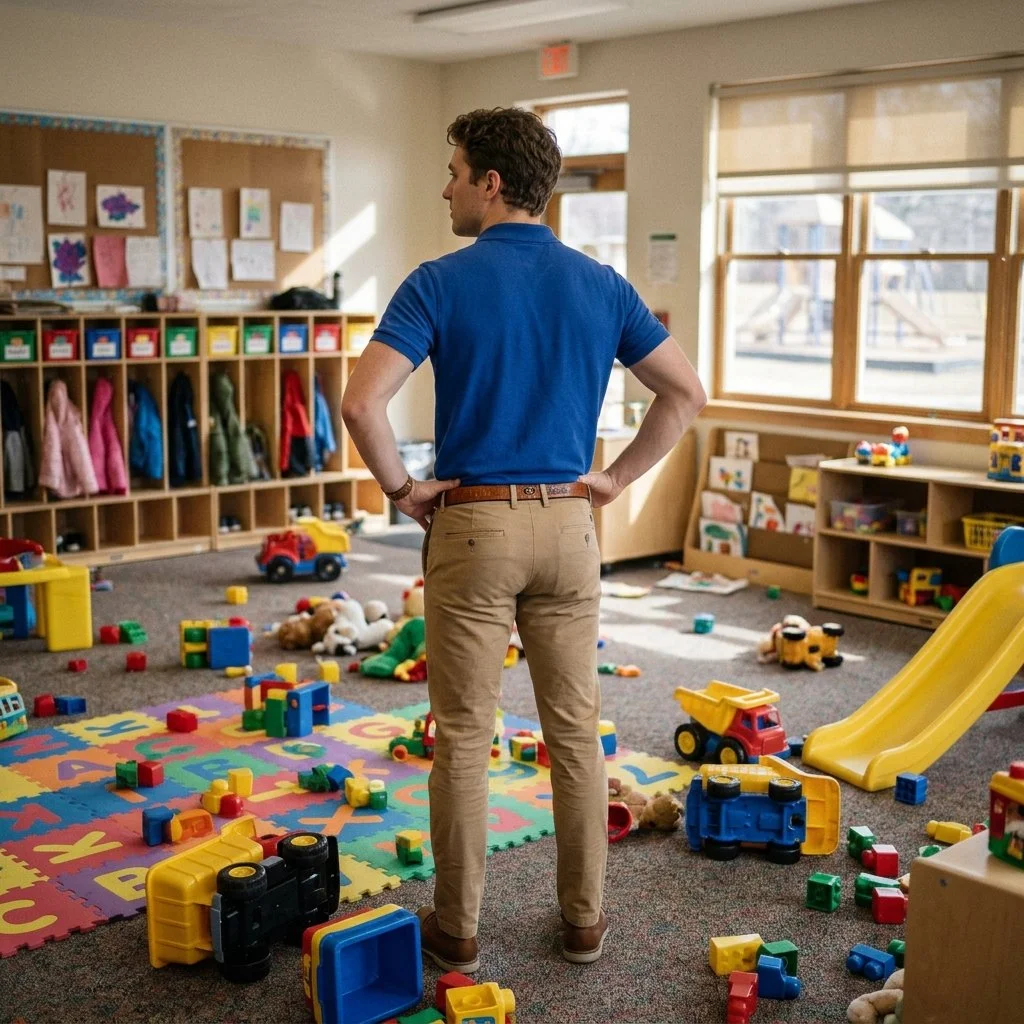
Overview
It has been observed that Mitchell's current engagement with maintaining an orderly daycare environment, particularly during moments of post-activity transitions, could benefit from additional scaffolded supports designed to foster autonomous participation. Specifically, the context of tidying his play and activity space while peers are engaged in outdoor recess presents an opportunity for targeted skill-building.
Guiding Principles
A developmentally sensitive approach to room tidying has emerged as a foundation for supporting Mitchell's growth in both personal responsibility and spatial organization skills. This structured, yet nurturing framework will focus on the integration of clear task segmentation, motivational reinforcement, and compassionate redirection as needed. The end goal is fostering Mitchell's ability to independently return the space to a baseline of order, cultivating both immediate behavioral adherence and long-term self-sufficiency.
Suggested Framework
Initial Engagement Strategy
A preparatory conversation during a low-stimulus moment prior to recess could encourage Mitchell’s buy-in for this activity. This dialogue may underscore the shared value of “keeping spaces ready for fun” while keeping the tone positive and supportive.Sequential Task Segmentation
The initial step might involve the categorization of items into defined groupings, such as “toys,” “books,” and “miscellaneous.”
Visual aids, such as labeled bins or simple reminder cards, could be employed to prompt recall of placement expectations without requiring continuous external supervision.
Motivational Tools and Reinforcement
The use of a behavior chart—possibly incorporating a theme aligned with Mitchell’s current interests—could track his incremental successes. Positive reinforcement tokens (e.g., stickers or verbal acknowledgments) may bolster his willingness to engage in this structured intervention.Scaffolded Oversight
During early implementation phases, intermittent adult guidance to redirect wandering focus or address moments of task fatigue may be beneficial. This oversight should gradually taper as Mitchell demonstrates increased task mastery and autonomous decision-making.Reflective Closure
Upon task completion, a brief acknowledgment of effort made can instill a sense of accomplishment. Statements such as, “Look at how clean the room is now, thanks to your hard work!” may enhance his intrinsic motivation to repeat the behavior.
Moving Forward
This initiative reflects our shared commitment to nurturing self-reliance while maintaining a developmentally considerate and empathetic care environment. Continued reflections on Mitchell’s progress will allow for incremental adjustments to the framework, ensuring alignment with his evolving capabilities.
Your insights and collaborative feedback will remain invaluable as we work together to sustain this structured, compassionate approach toward Mitchell’s growing independence.