
Essay Prompt
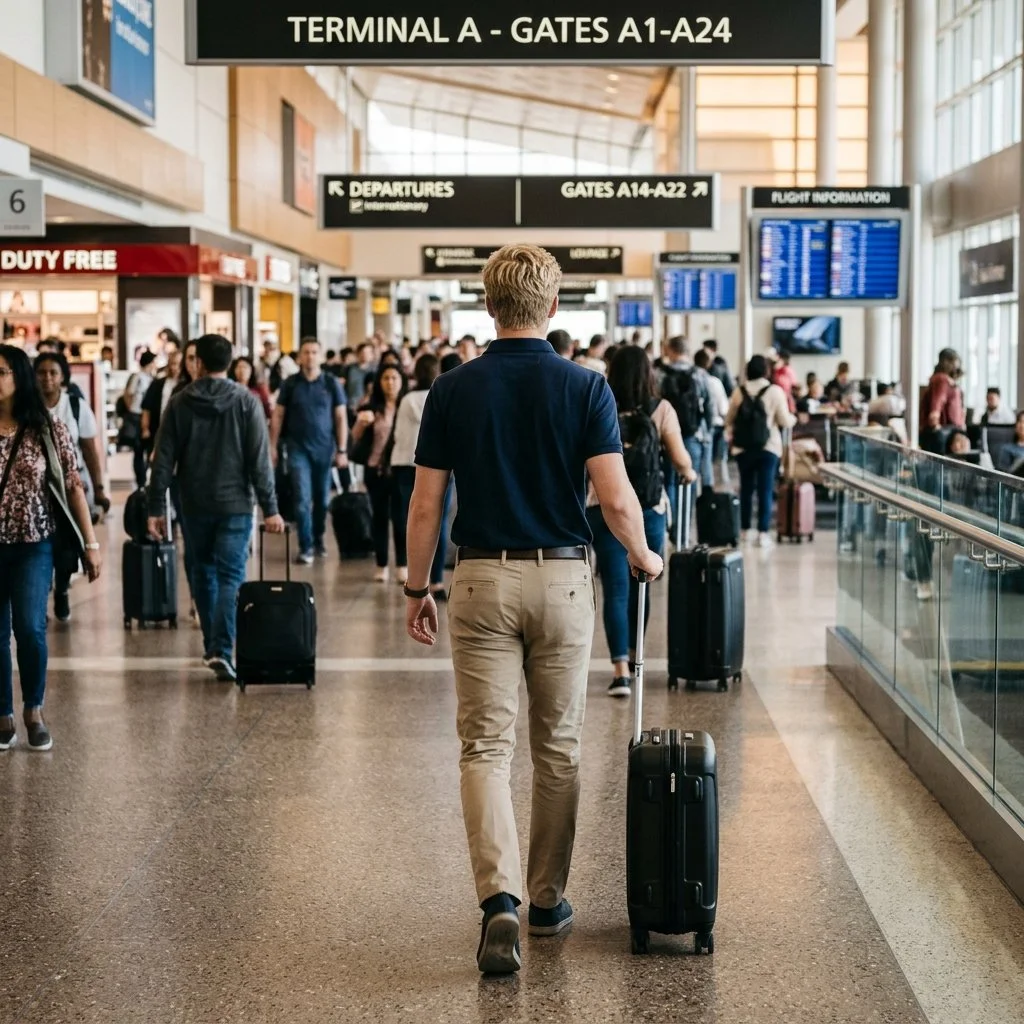
Caregiving for an individual with special needs involves not only meeting daily requirements but also navigating unique emotional, behavioral, and developmental complexities. Imagine the context in which you, as Mitchell’s caregiver, have devoted a month to supporting his daily routines and managing his recent regression into childhood behaviors. Now, you are tasked with planning a two-week out-of-state vacation with Mitchell — a trip that must carefully balance both his developmental needs and the logistical demands of travel. Where will you go, and how will you ensure that this trip aligns with his behaviors, preferences, and wellbeing while maintaining a nurturing and structured environment?
Your essay should focus holistically on the following aspects:
Introduction and Contextual Framing (300 words)
Briefly introduce Mitchell’s background within a caregiving framework, including his special needs and recent regressive tendencies.
Reflect on the complexities of a caregiving dynamic that spans both highly structured moments and nurturing interactions.
Specify the significance of planning a trip — for both his wellbeing and your own as a caregiver.
Destination Selection and Practical Considerations (400 words)
Describe the destination you choose and its relevance to meeting Mitchell’s needs, including sensory considerations, accessibility, and opportunities for structured activities. Examples could range from inclusive amusement parks to tranquil natural reserves with controlled environments.
Include a clear framework for how the destination aligns with his regressive behaviors (e.g., activities that echo childhood play or spaces that assure a sense of safety).
Daily Itinerary and Adaptive Strategies (500 words)
Provide a detailed two-week itinerary that incorporates structured activities to support Mitchell’s developmental growth while accommodating his preferences. Address how you intend to manage moments of regression while integrating opportunities for gradual progress, such as fostering peer interaction or personal agency in controlled environments.
Share examples of tools, methods, or frameworks you might employ to adapt to unexpected challenges, such as maintaining consistency in routines during travel or creating a sense of comfort in unfamiliar settings.
Caregiver Reflection and Anticipated Outcomes (300 words)
Reflect on how this trip could impact both Mitchell and yourself as a caregiver. Explore the dual goals of enriching his environment for positive behavioral reinforcement and providing yourself with moments of personal renewal during caregiving.
Discuss the importance of viewing caregiving as a mutual learning process wherein structured successes arise from collaborative adaptability.
Reference Essay (750 words)
Planning a two-week out-of-state vacation with Mitchell, who has regressed into childhood behaviors, requires a holistic understanding of how caregiving must balance structure with compassion. Considering Mitchell’s background as an individual with special needs, combined with recent behavioral regressions, the decision-making process must intentionally center around his sensory, emotional, and logistical requirements.
One example might involve selecting a destination such as a family-friendly resort designed for inclusivity, with sensory-friendly zones, low-stimulation environments, and playful activities that align with his behaviors. To address his regressive tendency towards reliance on routines, the resort might provide opportunities for repeated activities to build comfort. For example, daily swimming in a calm, temperature-controlled pool could meet developmental, physical, and sensory needs.
The daily itinerary could also incorporate a structured framework adaptable to the fluctuations in his behaviors. One day may begin with collaborative playtime wherein he builds trust in the environment, followed by engaging in activities that mirror childhood joy — such as guided crafting sessions or playground exploration, scaffolded to nurture his self-esteem. Even minor failures during these activities can be framed as learning opportunities within his developmental trajectory, reinforcing resilience in both Mitchell and the caregiver.
Ultimately, closing reflections acknowledge the impactful dual role of caregiving. This vacation is more than an escape; it is an opportunity to foster nurturing dynamics while recalibrating frameworks for long-term caregiving. Through shared connections in a safe, adaptable space, Mitchell’s sense of trust in his surroundings may deepen, and the caregiver has the opportunity to rejuvenate while remaining fully present in her role. Collaborative adaptability, paired with structured oversight, ensures that such an initiative reflects both compassionate care and meaningful progress.
Math Test: Packing Mitchell's Diaper Bag
Instructions: Solve the following problems based on the scenario of helping Mitchell pack his diaper bag for the week. Show all your work for full credit. Round answers to two decimal places where necessary.
If Mitchell uses 5 diapers each day, how many diapers are needed for 7 days?
A pack of diapers contains 92 units and costs $28.75. What is the cost per diaper?
If Mitchell drinks 3 bottles of formula per day, how many bottles are required for a full week?
Formula is sold in cans that make 18 bottles each. How many cans will be needed to supply Mitchell with bottles for 14 days?
The average bottle holds 8 ounces. If Mitchell needs 24 ounces of formula per day, how many days will a 64-ounce formula container last?
A diaper cream tube contains 4.5 ounces. If 0.2 ounces are used per diaper change and Mitchell is changed 6 times daily, how many days will the tube last?
Baby wipes are sold in packs of 84 sheets. If Mitchell uses 7 wipes per diaper change, how many packs will be required to supply 14 days?
A diaper bag has 3 large compartments and 2 small pockets, with each compartment able to hold 5 pounds and each pocket holding 2 pounds. If a full bag weighs 15 pounds, what is the distribution of weight among compartments and pockets?
A standard onesie weighs 0.5 pounds. Mitchell's bag needs 9 onesies for the week. What is the total weight of the onesies?
Mitchell's water-proof change pad is 18 inches long and 12 inches wide. What is the area of the pad in square inches?
A bib weighs 0.3 pounds. If Mitchell packs 14 bibs for the week, what is their total weight?
If a travel-sized lotion contains 3 ounces and 0.5 ounces are used per day, how many days will this lotion last?
Mitchell consumes 25 ounces of formula daily. If he drinks directly from bottles of 10 ounces each, how many bottles will he need per day?
The diaper bag can be no heavier than 20 pounds. If the current packed contents weigh 16 pounds and each diaper adds 0.3 pounds, how many more diapers can safely fit inside?
Mitchell’s snack supply consists of applesauce packets that weigh 2.4 ounces each. How many packets are needed to make a total of 3 pounds?
The travel-sized powder weighs 6.4 ounces. If 0.8 ounces are used per week, how many weeks will one size last for Mitchell?
Mitchell’s feeding bibs are packed in bundles of 6. If he needs 20 bibs, how many bundles must be purchased?
A diaper pail bag holds 50 used diapers. How many bags are needed if Mitchell uses 8 diapers daily for 10 days?
A single pacifier weighs 0.3 pounds. If 5 pacifiers are packed, what is the total weight of the pacifiers?
A changing mat is 3 feet by 4 feet. Find the total area in square feet.
If Mitchell uses 10 bibs in 5 days, how many bibs per day is that on average?
Mitchell drinks 7 ounces per feeding and feeds 5 times a day. How much formula does he consume daily?
A diaper shipment includes packs containing 124, 100, and 80 units. How many diapers are there in total?
The cost of formula cans follows the equation ( C = 12.5x ), where ( x ) is the number of cans purchased. Solve for ( x ) if ( C = 100 ).
A snack bag weighs 200 grams. Pack sizes come in increments of 50 grams. How many increments make up a single snack bag?
Mitchell’s wipes usage per week is calculated as ( W = 7d ), where ( d ) is the daily use. Solve for ( W ) if ( d = 21 ).
A diaper must be packed for every 3 waking hours. Assuming Mitchell is awake for 14 hours daily, how many diapers are needed each day?
Mitchell requires 10 bottles weekly. If one bottle costs $3.25, what is the weekly cost of his bottles?
An insulated pack weighs 1.8 pounds before adding ice packs, each weighing 0.6 pounds. If three ice packs are added, what is the total weight?
A regular grocery bag can carry 15 pounds, and Mitchell’s diaper bag weighs 20 pounds. How much weight must be removed to fit it in the grocery bag?
A toy weighs 1.2 pounds. If Mitchell packs 3 toys, what is their combined weight?
To balance the diaper bag, the left side must weigh half as much as the right side. If the right side weighs 12 pounds, how much must the left weigh?
Mitchell consumes snacks over 4 days in equal portions. If he starts with 2 pounds of snacks, how many ounces will he consume each day?
The proportion of daily use to carry-on supply is calculated as 2.5. How much should be packed for 5 days of use?
Mitchell needs bottles proportional to ( B = 1.5d ), where ( d ) is daylight hours. Solve for ( B ) if ( d = 12 ).
End of Test.
GYM
Warm-Up (0 - 15 minutes)
5 minutes brisk treadmill walk, incline at 5%.
10 minutes dynamic stretches and mobility exercises:
Arm circles (1 minute)
Leg swings (1 minute per leg)
Hip flexor stretches (2 minutes)
Shoulder stretches (1 minute each arm)
Torso twists (2 minutes)
Treadmill Sprints (15 - 45 minutes)
Interval sprints for 30 minutes, alternating between:
1-minute sprint at 85-90% max effort.
1-minute walk at moderate pace.
Upper Body Strength (45 - 75 minutes)
Bench press progression (15 minutes):
2 warm-up sets of 12 reps at 50% max weight.
3 working sets of 8-10 reps at 70-75% max weight.
Push-ups (10 minutes):
5 sets of 20 push-ups each, resting 1 minute between sets.
Pull-ups (5 minutes):
3 sets of 10 reps or as many as possible.
Dumbbell rows (10 minutes):
3 sets of 12 reps per arm, moderate weight.
Core Work (75 - 105 minutes)
Sit-ups (5 minutes):
3 sets of 40 sit-ups each.
Crunches (5 minutes):
3 sets of 30 crunches each.
Plank holds (10 minutes):
4 rounds of 1-minute plank holds with 30 seconds rest in between.
Leg Day Circuit (105 - 150 minutes)
Squats (15 minutes):
2 warm-up sets of 12 reps, no weight.
3 sets of 10 reps with moderate weight.
Lunges (10 minutes):
3 sets of 20 lunges total (10 per leg).
Box jumps (10 minutes):
5 rounds of 12 box jumps, resting 1 minute between rounds.
Calf raises (10 minutes):
3 sets of 15-20 reps with weight as appropriate.
Treadmill Sprints (150 - 180 minutes)
Interval sprints for 30 minutes, alternating between:
1-minute sprint at 85-90% max effort.
1-minute walk at moderate pace.
Upper Body & Core Recovery Focus (180 - 220 minutes)
Incline dumbbell press (15 minutes):
3 sets of 8-12 moderate-weight reps.
Push-ups (10 minutes):
3 sets of 15 push-ups each.
Russian twists (5 minutes):
3 sets of 30 twists (15 each side).
Cool-Down and Static Stretching (220 - 240 minutes)
5 minutes light treadmill walk at no incline.
15 minutes static stretches, including:
Hamstring stretches (2 minutes per leg).
Quad stretches (2 minutes per leg).
Chest and shoulder stretches (4 minutes).
Lower back stretches (4 minutes).