
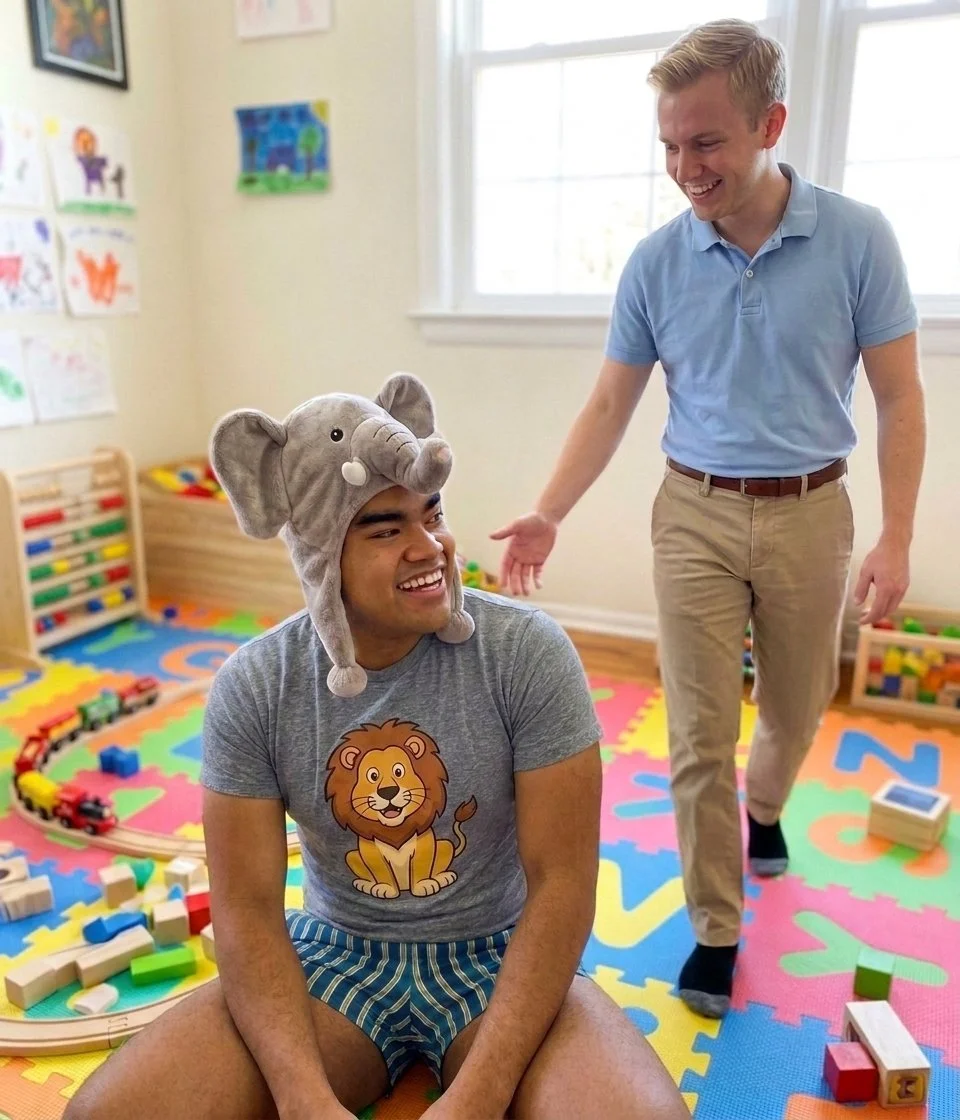
Mitchell clutched his backpack tightly, shifting his weight from one foot to the other as he stood outside the home daycare center. The building looked friendly enough—bright colors, wide windows, and a sign that read "Sunny Horizons." But even though he’d been told repeatedly that this was a safe, welcoming space, Mitchell couldn’t shake the nervous flutter in his stomach. He was 18 now, well into adulthood, but new places still had a way of making him feel like a kid again.
Taking a deep breath, he reached for the doorbell. The door opened almost immediately, and standing there was a tall man with salt-and-pepper hair and an easy smile. He wore a sweater vest—Mitchell had always thought only TV characters wore those—and held a clipboard tucked under one arm.
"You must be Mitchell!" the man greeted warmly, his voice carrying the kind of calm reassurance Mitchell really needed in that moment. "Welcome to Sunny Horizons. I’m Dean, the principal here."
Mitchell gave a small nod, managing to mumble a soft, "Hi." Dean stepped aside and gestured for him to come in.
"Come on in. We’ve been looking forward to meeting you. And judging by that backpack, I’d say you’re ready for an adventure!"
Not entirely convinced about calling this an "adventure," Mitchell followed Dean inside. The hallway smelled faintly of crayons and something sweet, like vanilla, which helped him feel a tiny bit more settled. The walls were lined with bright, cheerful paintings—stick figures, handprints, and wild splashes of color—and though Mitchell wouldn’t admit it out loud, these touches brought a small smile to his face.
Dean led him to a cozy office filled with an overstuffed couch and a desk cluttered with cheerful photographs. Sitting down across from him, Dean leaned forward slightly, his tone as kind as his expression. "Now, Mitchell, our main goal here is for you to feel safe, happy, and comfortable. If there’s anything you need, you just need to tell me, all right?"
Mitchell nodded, his fingers absentmindedly turning his fidget toy over and over. Dean glanced at the toy and smiled, like he understood without needing anything explained.
"Just be yourself here. That’s all we expect. You don’t have to be anyone or anything else. Sound fair?"
Mitchell hesitated, then nodded again. For the first time since this morning, the weight in his chest lightened just a bit.
"Good," Dean said. "Because we’re all excited to get to know you."
Mitchell didn’t know exactly how the day—or many days after—would go, but as Dean started explaining the basics of the center and its schedule, Mitchell felt a flicker of possibility. Maybe Sunny Horizons could be the kind of place where he could find his footing, where being Mitchell was just enough.
Dean crouched down to Mitchell's level, his tone gentle but firm. "Now, Mitchell," he began, "there are a few things you should know about how things work here at Sunny Horizons." He glanced around the colorful toy room, the soft carpet scattered with blocks and stuffed animals, before continuing. "For now, you'll be drinking one bottle per hour. Staying hydrated is very important here, and this will help us keep track." He paused, as if giving Mitchell a moment to process. "And you'll be in Pampers at all times while you're here. It's part of the routine, and it ensures everyone is comfortable and cared for. I know it might take a little getting used to, but trust me, it's all about providing you with security and consistency." Dean smiled reassuringly, his voice steady. "You don't have to worry about a thing—just take it one step at a time, okay?"
Dean leaned forward slightly, his voice calm yet firm. "Now, Mitchell, when you're around the other kids—especially the boys—I want you to remember something important," he said, his tone gentle but purposeful. "You need to take the time to observe them and learn from how they do things. It's okay to take a backseat while you figure out the way things work around here. There’s no rush, no pressure." Dean paused, giving Mitchell a moment to absorb his words. "Let the boys take the lead and make up all the games. It’s their way of including you, and it’ll help you get comfortable with everything. Once you’re ready, you’ll find your place naturally. Just give it some time." Dean’s reassuring smile returned, his eyes filled with encouragement and understanding.
Dean looked at Mitchell’s back, his tone staying gentle yet firm. "It’s okay if you want to wear shorts," he said, "but we need to see at least four inches of your waistband, even when you’re outside. That way, we can check and change your Pamper as soon as possible." His expression remained calm, clearly trying to make the instructions feel less intimidating. "It’s just to make things easier for everyone, alright?"
Dean crouched slightly to meet Mitchell's gaze, his voice still calm but carrying a note of warmth. “Oh, and just so you know,” he began, “you’ll be getting big bowls of Gerber for breakfast, lunch, and dinner. We’ll make sure you’re well-fed with plenty of fun snacks and juice in between meals, too.” He smiled softly, letting the words settle for a moment before continuing. “But remember, that’s a privilege, okay? It’s important to be a good boy so you can keep enjoying all those treats. I know you can do it.” His encouraging tone was meant to reinforce the idea, offering support while setting clear, manageable expectations.
Dean’s smile softened further as he gestured toward the corner of the room. “Alright, buddy, I think it’s time for a little reset,” he said gently, motioning Mitchell to sit on the designated time-out mat. “You’ve been struggling a bit to follow directions today, so we’re gonna do twenty minutes of time out, okay? Just to help you refocus and get back on track.” His tone remained lighthearted and warm, making it clear that this wasn’t meant as harsh punishment but rather a playful reminder. “Don’t worry, it’s all in good fun, and you’ll be back to your snacks and playtime before you know it,” Dean added with an encouraging nod. Mitchell pouted for a moment before shuffling to the mat, feeling reassured by Dean’s understanding smile.
Reflection Test Instructions
To reflect deeply on the reading passage, answer the following 30 questions. Each response should be at least one paragraph long to ensure thoughtful and thorough engagement with the text. Keep in mind the details, emotions, and relationships presented in the piece as you craft your reflections.
Questions
What initial emotions does Mitchell experience as he approaches Sunny Horizons, and why might he feel this way?
How is the appearance of Sunny Horizons described, and how does it contribute to its welcoming atmosphere?
Why does Mitchell feel a sense of nervousness despite being 18 and considered an adult?
Analyze Dean’s greeting. How does his tone and demeanor affect Mitchell's first impression of him?
What role does the description of Dean’s outfit play in setting the tone for his character?
How does sensory imagery, like the smell of crayons and vanilla, impact Mitchell’s comfort level upon entering?
What is the significance of the colorful paintings on the walls of Sunny Horizons?
Discuss Dean’s approach in making Mitchell feel safe and comfortable during their initial conversation.
What might the fidget toy symbolize about Mitchell’s state of mind?
Why do you think Dean emphasizes that Mitchell needs only to “be himself” at Sunny Horizons?
How does the description of the space—such as the cozy office—reinforce the sense of safety for Mitchell?
What does the interaction about hydration (the one bottle per hour rule) reveal about Sunny Horizons’ priorities?
How might Dean’s explanation of wearing Pampers be intended to provide structure and reassurance for Mitchell?
Evaluate how Dean’s tone and delivery of instructions affect Mitchell’s ability to accept them.
What strategies does Dean use to encourage Mitchell to adapt to the social dynamics with the other boys?
How could the instruction to “observe and learn” from the boys help Mitchell in adjusting to the new environment?
What is the significance of the rule about having four inches of the waistband visible, and how does Dean frame this rule to ease any discomfort?
Discuss the underlying purpose behind providing Gerber meals and snacks, and how it aligns with the center’s philosophy.
How does Dean connect positive reinforcement (such as snacks and juice) to maintaining good behavior in Mitchell?
Why does Dean use a calm and playful tone when addressing Mitchell’s adherence to the center’s rules?
Analyze Mitchell’s reaction to being put in time-out. How does Dean’s demeanor aid in shifting it from punishment to a supportive moment?
What is the importance of the sense of structure and routine emphasized by Dean throughout the passage?
How do Dean’s actions reflect his understanding of Mitchell’s emotional needs?
How does Dean’s choice of words, like “reset” instead of “punishment,” help frame Mitchell’s time-out in a positive light?
Why do you think Dean incorporates affirmations, such as telling Mitchell “I know you can do it,” in his interactions?
What is the importance of patience and encouragement in creating a positive environment for Mitchell at Sunny Horizons?
How does Mitchell’s body language, like shuffling to the mat, reflect his gradual acceptance of the rules?
What does Dean’s consistent smile and reassuring expressions tell us about his approach to building trust?
How might Mitchell’s feelings evolve over time based on his initial experiences as described in the passage?
Reflect on the title "Sunny Horizons." How does it metaphorically represent the environment and opportunities Dean is presenting to Mitchell?
By thoroughly answering these questions, you will gain deeper insights into the interpersonal dynamics, tone, and themes within the reading.
Essay Prompt
What does it mean to make the most of one’s early years, and what responsibilities do children have, even in the earliest stages of toddlerhood? Reflecting on Mitchell’s time spent alone in his room at home, consider how he might use these moments to explore his environment, develop new skills, and nurture his curiosity. Compare his current habits with what you believe constitutes meaningful engagement for a child of his age. Should Mitchell dedicate more effort to imaginative play, which fosters creativity and problem-solving, or should he focus on activities that encourage fine motor skills, like building blocks or coloring? Is there value in structured routines and guided play, or should free play dominate his time for self-expression?
You might also evaluate whether Mitchell’s behavior reflects an intentional choice or passive disengagement. If he appears to lack initiative, analyze what factors may contribute to this, such as access to appropriate toys, the guidance he receives from his caretakers, or his perception of these solitary periods. Think about whether his time alone should balance relaxation with growth, or if he could strike a better balance between leisure and effort. How much responsibility should a toddler like Mitchell take on in building his early developmental foundation, and what role does the environment around him play in shaping his progress?
Using specific examples or plausible scenarios, argue for what Mitchell should prioritize during his alone time and why. Consider discussing how mindful use of this time at home could prepare him for future opportunities while addressing concerns about whether he has been putting enough energy into his toddlerhood.
Essay Prompt: Making the Most of Early Years
What does it mean to make the most of one’s early years? Even in the earliest stages of toddlerhood, children hold responsibilities in shaping their development, engaging with their environment, and building the foundations for future growth. Mitchell’s time spent alone in his room at home presents a compelling opportunity for exploration, skill development, and curiosity. This essay addresses how Mitchell might utilize these moments effectively, compares his current habits with meaningful engagement for his age, and evaluates whether his time alone reflects intentionality or passive disengagement. Furthermore, it explores how the responsibilities of toddlers should align with their developmental needs and how a supportive environment facilitates those responsibilities.
The Importance of Early Exploration (Approx. 200 words)
Toddlers like Mitchell are in a critical period of cognitive and emotional development. During moments spent alone, Mitchell could engage in activities that allow him to explore his environment and develop new skills. These solitary moments offer an opportunity to strengthen his natural curiosity and encourage independence. For example, he could use this time to experiment with building blocks, which not only enhances fine motor coordination but also fosters problem-solving capabilities. Alternatively, Mitchell might engage in imaginative play, an activity that encourages creativity and social-emotional understanding, as it often involves role-playing and storytelling.
Meaningful exploration during these early years provides the foundation for critical thinking and adaptability. However, the current habits Mitchell sustains—such as sitting passively or engaging in repetitive, non-stimulating activities—may limit his potential for growth. His time alone should be purposeful, balancing relaxation with active engagement to fully reap the benefits of early development. By nurturing an environment that promotes curiosity and skill-building, caregivers can help Mitchell make the most of these formative years.
Balancing Free Play and Structured Activities (Approx. 250 words)
One of the ongoing debates surrounding early childhood development centers on the balance between free play and structured activities. While free play allows children the liberty to explore and express themselves without constraints, structured activities can offer guidance that aligns with developmental milestones. For Mitchell, free play such as playing with blocks or inventing scenarios with toy figurines offers him the autonomy to tap into his imagination and build resilience in problem-solving. Yet, overly unstructured time could lead to passive disengagement, especially if Mitchell lacks awareness of how to ignite his creativity or if his environment does not offer engaging materials.
On the other hand, structured play activities introduce routines that can help toddlers like Mitchell build specific skills, such as hand-eye coordination through coloring or following simple step-by-step instructions in a puzzle game. While some structure is beneficial, over-reliance on it may stifle a child’s independent thinking and creativity. For Mitchell to thrive, a hybrid approach may be optimal. Moments spent in free play can nurture his autonomy and self-expression, while structured activities led by caregivers can scaffold his development and teach him the value of focus and intentionality.
Therefore, a daily routine that includes both unstructured and guided playtime could better balance Mitchell’s leisure and effort. This equilibrium not only ensures regular opportunities for relaxation but also emphasizes goal-directed activities that contribute to developmental growth.
Analyzing the Role of Environment (Approx. 200 words)
A child’s environment plays a pivotal role in shaping their behavior and engagement levels. Mitchell’s solitary periods may be the result of environmental factors such as a lack of stimulating toys, insufficient guidance from caregivers, or an atmosphere that does not encourage exploration. For Mitchell, it is important to ensure that his surroundings are stocked with age-appropriate tools that foster creativity, problem-solving, and motor skill development. Open-ended toys, such as blocks, art supplies, or simple puzzles, can give him the flexibility to explore various activities while still addressing his developmental needs.
Caregivers also need to provide guidance to enrich these moments. They should actively encourage Mitchell to experiment and set small achievable tasks for him, offering praise to reinforce positive efforts. Without this interplay between resources and caregiving, Mitchell risks losing interest or becoming passive during these solitary experiences. By creating a supportive and stimulating environment, Mitchell is more likely to strike a balance between free play and goal-oriented efforts, allowing his alone time to be both enjoyable and fruitful.
Balancing Responsibility and Toddlerhood (Approx. 200 words)
Even at a young age, toddlers like Mitchell have a rudimentary form of responsibility—engaging actively with their surroundings to prepare for future learning and opportunities. Although caregivers provide essential guidance and structure, Mitchell holds the power to explore, create, and practice persistence in his daily activities. For example, dedicating time to activities that build foundational motor skills through stacking toys or coloring could prepare him for tasks that require precision later in life. Similarly, imaginative play enhances social-emotional skills that lay the groundwork for meaningful interactions as he matures.
Yet, it is crucial to maintain realistic expectations of toddlers’ responsibilities at this stage. Mitchell, like other children his age, still requires rest, unstructured time, and the freedom to enjoy his childhood without undue pressure. His time alone should support a harmonious blend of productivity and leisure, guided by the environment around him. Caregivers should focus on creating a space where growth can occur naturally through access to materials, encouragement, and cooperative involvement.
Final Thoughts (Approx. 100 words)
Mitchell’s alone time is a valuable period that, if used wisely, can significantly influence his development. By striking a balance between free-play and structured activities, he stands to gain skills in creativity, problem-solving, and fine motor coordination. Additionally, fostering a supportive environment ensures that Mitchell’s natural curiosity and initiative are nurtured. While toddlers like Mitchell share responsibilities during their early years, it is equally important for their caregiving environment to empower them to meet these responsibilities effectively. With thoughtful consideration of how time is spent, Mitchell’s toddlerhood can truly become a stepping stone for a bright and engaging future.