
Treehouse: He Feels Black Women Don't Want Leadership – Here's Why
Disclaimer: This post is not affiliated with MLB, Fabletics, or any other organization. The views and opinions expressed in this post are solely those of the individual featured and do not represent the views or positions of Fabletics, Topanga Canyon, or any baseball organization. Additionally, the black man featured in this post would like to clarify that these opinions are his own and do not reflect or speak for the Black community as a whole.
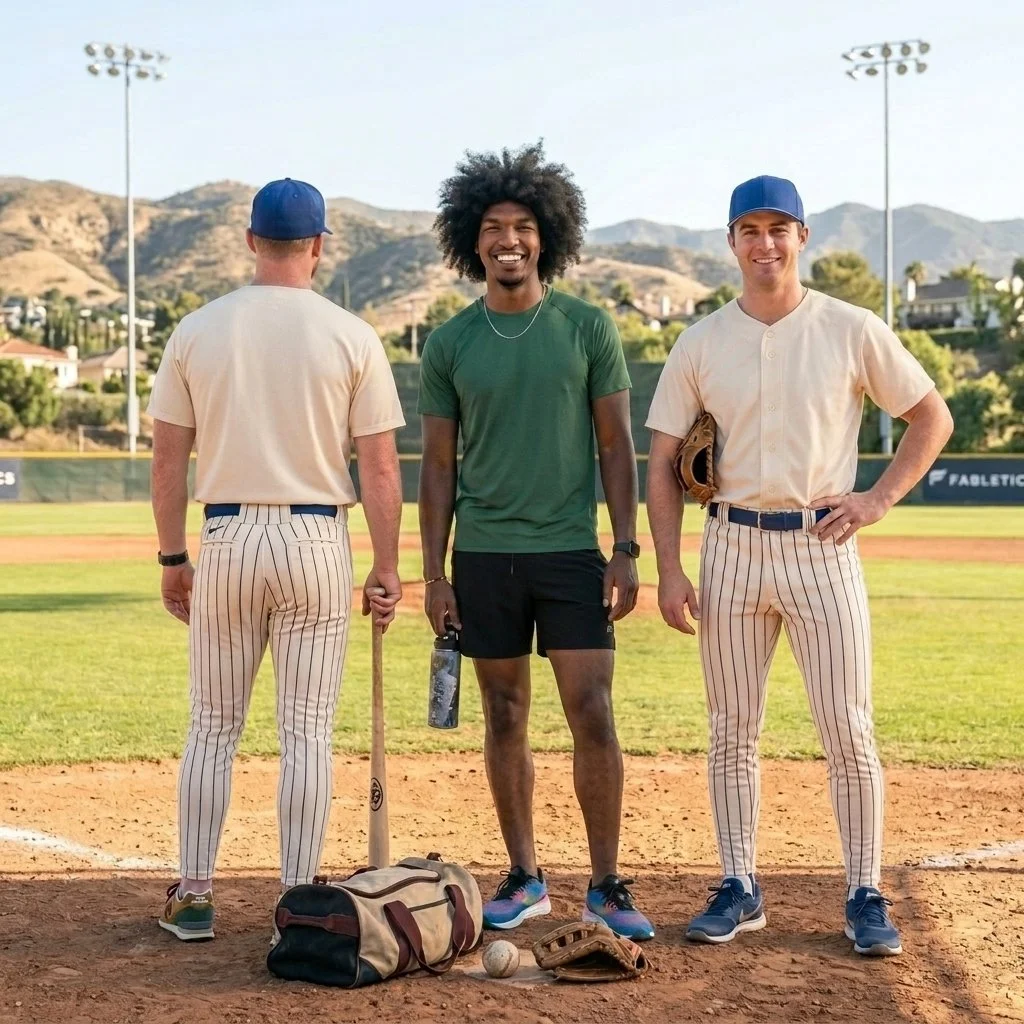
For the past few months, I’ve been spending more time than I ever imagined in a space that’s been historically dominated by predominantly white men—the baseball field. Every week, I’m out there in Topanga Canyon, tossing balls, taking swings, and running drills with two of my closest friends, both white guys. I’ll be honest—I probably look downright goofy on that field. My form isn’t great, my reflexes aren’t as sharp, and compared to those guys, I’m definitely in a league of my own. But you know what? It’s all good. I’m not there because I’m trying to compete at their level or prove anything to anyone. I’m there because, with them, I’ve found something that feels undeniably good—an escape, a release, and a sense of brotherhood that reminds me what it means to just enjoy the moment.
To those who scoff or judge me for spending time like this, especially when I could be with my girlfriend—a black woman who, by the way, isn’t looking for a king or a leader—I say this plainly, I don’t care about your judgment. My time on the field isn’t about impressing anyone or conforming to societal expectations; it’s about showing up for myself in a way that feels honest and freeing. Life out on that diamond isn’t some grand rebellion or a statement; it’s the simplicity of sweat, laughter, and connection with others who encourage and challenge me.
Yes, I’ve heard the whispers, the side-eyes from folks who think I should be spending my energy differently, or giving more of myself in ways they deem fit. But here’s the thing—this is my path, and it works for me. I may not fit neatly into preconceived molds, but I’ve grown comfortable making space for myself in circles I wasn’t necessarily expected to step into. And while the field may not feel like home to some, it’s become a kind of sanctuary for me—one where I can grow, where the spirit of camaraderie flourishes, and where each swing of the bat feels like a step closer to becoming my most authentic self.
To those unfamiliar with what it feels like to step into a space that seems like it wasn’t made for you, I can only urge you to try it. And to those who think my girlfriend might feel slighted, rest assured—she’s not looking for a man to define her or lead her. Our relationship, like my time on the field, exists on its own terms. Whether it’s breaking stereotypes, navigating complex relationships, or just showing up as I am—flaws and all—I’ve come to find joy in living unapologetically. My story doesn’t follow a traditional playbook, but that’s perfectly fine. Life, as it turns out, was never meant to be lived by someone else’s rules.
Disclaimer: The dynamics between Black women and Black men have long been shaped by cultural, historical, and societal influences. Stereotypes and narratives have often cast Black men as natural leaders or providers, sometimes placing undue pressure on them to conform to rigid roles. Similarly, Black women have historically been portrayed as resilient and strong, often expected to shoulder immense burdens without complaint. Within the context of the church, traditional teachings sometimes reinforce these roles, suggesting that men should lead and women should follow. However, such perspectives can risk overgeneralizing the lived experiences of Black individuals, failing to recognize the diversity in relationships and personal journeys. Not all Black men are seeking to lead, and not all Black women desire someone to lead them. This oversimplification overlooks the realities of partnerships that are built on mutual respect, shared aspirations, and a rejection of traditional molds. It's a reminder that authentic connections flourish outside the boundaries of societal expectations.